Artwork
A Lady Tuning a Theorbo
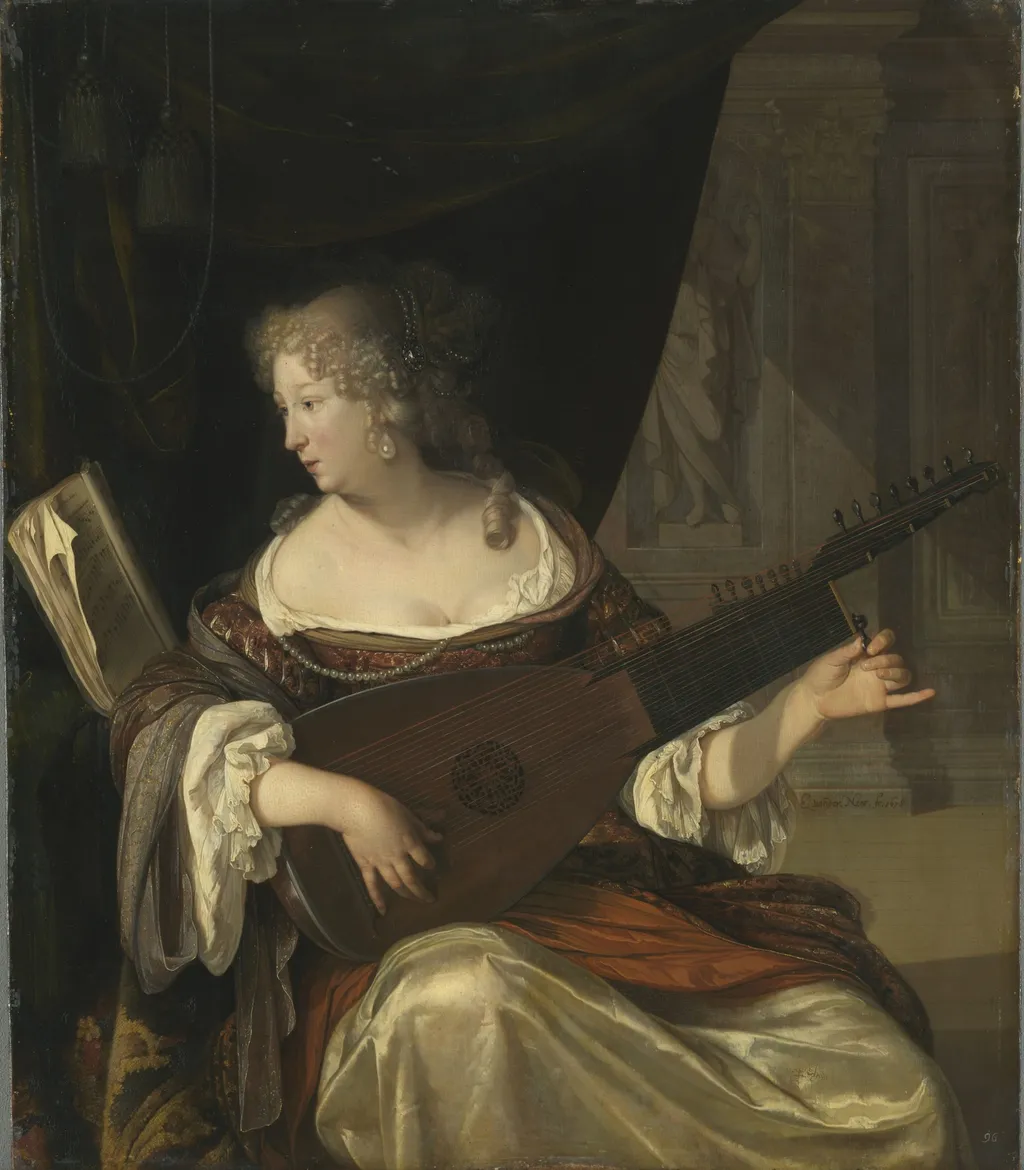
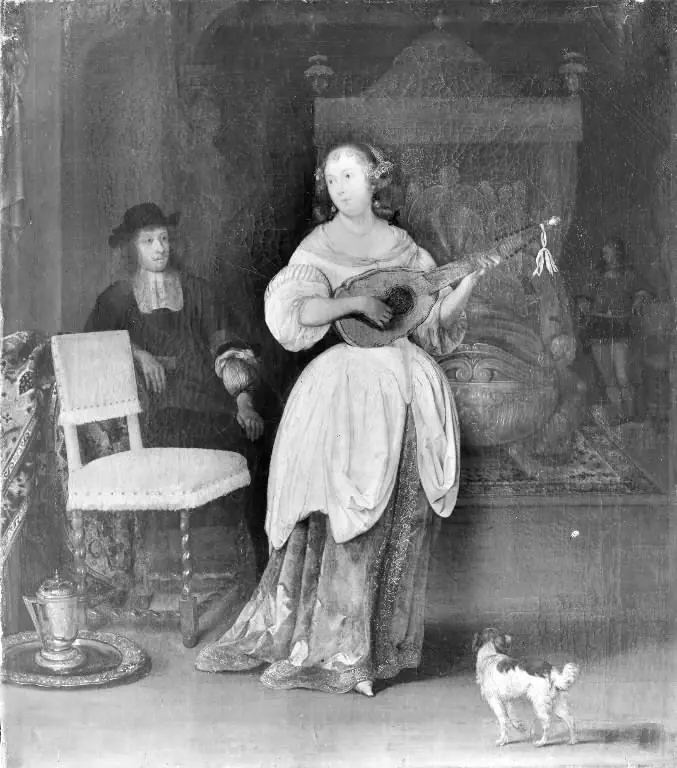
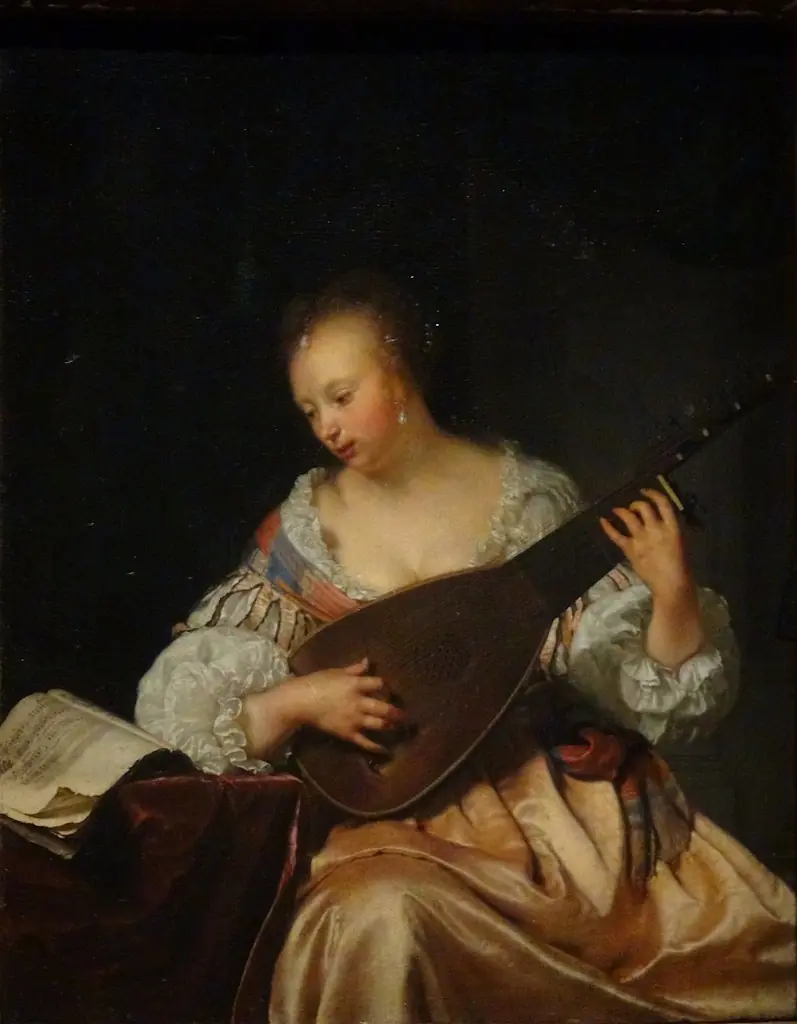
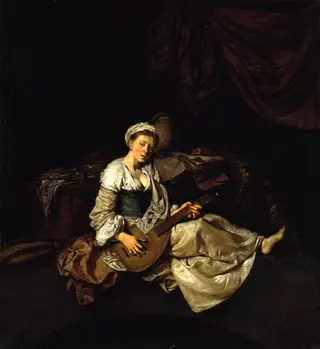
A Lady Tuning a Theorbo is an oil painting by the Dutch Golden Age artist Eglon van der Neer. It dates from 1690 and is held in the collection of the Bavarian State Painting Collections.
About this work
Subject & Meaning
A Lady Tuning a Theorbo presents an intimate genre scene of a woman attending to a theorbo, a large multi-stringed lute-like instrument.
A Lady Tuning a Theorbo presents an intimate genre scene of a woman attending to a theorbo, a large multi-stringed lute-like instrument. The subject belongs to the Dutch Golden Age tradition of domestic music-making imagery, in which a solitary female figure engaged with an instrument typically signaled themes of harmony, refinement, and cultivated leisure. The act of tuning the theorbo, rather than actively playing it, suggests a quiet, contemplative moment of preparation, often read as an evocation of the tuning of the soul or of amorous anticipation in seventeenth-century Dutch iconography.
As a genre painting by Eglon van der Neer dated 1678, the work participates in a broader visual vocabulary shared with contemporaries such as Vermeer, linking female musicians with notions of domestic virtue, sensory pleasure, and the arts. The theorbo itself, an instrument associated with sophisticated courtly and chamber music, reinforces the sitter's status as a refined participant in cultivated sociability.
The painting was later included in the exhibition "Vermeer and the Masters of Genre Painting. Inspiration and Rivalry," underscoring its place within the lineage of Dutch genre imagery concerned with music, intimacy, and meaning.
Technique & Style
Executed in 1678, this genre scene by Eglon van der Neer is rendered in oil paint on a wooden panel. The work measures 42.5 cm in height and 36.7 cm in width. Visually, the composition focuses on a solitary female figure engaged in the act of tuning a theorbo, a large stringed instrument.
The painting is held within the collection of the Bavarian State Painting Collections, specifically associated with the Johann Wilhelm von der Pfalz assembly, and is housed at the Alte Pinakothek. Its stylistic classification aligns with Dutch genre art, emphasizing domestic interior activities. The piece has been featured in exhibitions exploring the relationships between Vermeer and his contemporaries.
History & Provenance
The painting A Lady Tuning a Theorbo was created in 1678 by Eglon van der Neer. It entered the collection of Johann Wilhelm von der Pfalz, who commissioned the work and housed it in his gallery. The painting remained in the Bavarian State Painting Collections and has been displayed at the Alte Pinakothek since its acquisition. It was featured in the exhibition "Vermeer and the Masters of Genre Painting. Inspiration and Rivalry."
The painting is held by the Bavarian State Painting Collections at the Alte Pinakothek, Munich, as part of the Johann Wilhelm von der Pfalz collection.
The work was exhibited in "Vermeer and the Masters of Genre Painting. Inspiration and Rivalry."
Legacy
The painting has been featured in exhibitions such as Vermeer and the Masters of Genre Painting. Inspiration and Rivalry, highlighting its role in discussions of Dutch Golden Age genre painting. Its inclusion in the Bavarian State Painting Collections underscores its recognized significance within the period.
Overview
Eglon van der Neer’s 1690 oil painting captures a solitary woman in an interior setting, absorbed in the preparation of a large lute‑like instrument. The composition centers on the figure, whose elegant white blouse and richly colored red‑gold gown contrast with a darkened backdrop, creating a focused, intimate scene typical of Dutch genre painting.
Own this work as a print
Artist & collection
Artist
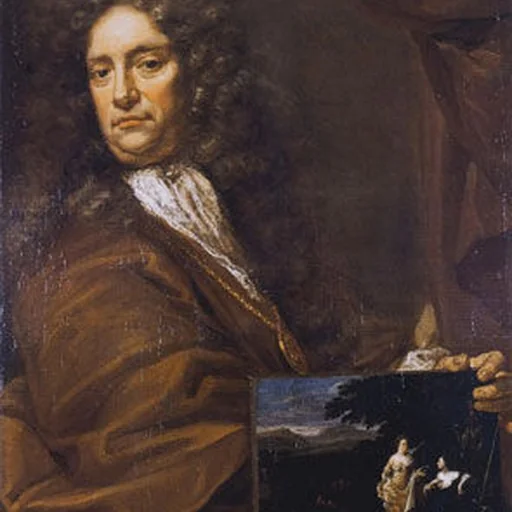
Eglon van der Neer (1635/36 – 3 May 1703) was a Dutch painter of historical scenes, portraits and elegant, fashionable people, and later of landscapes.