Artwork
Cistern Player
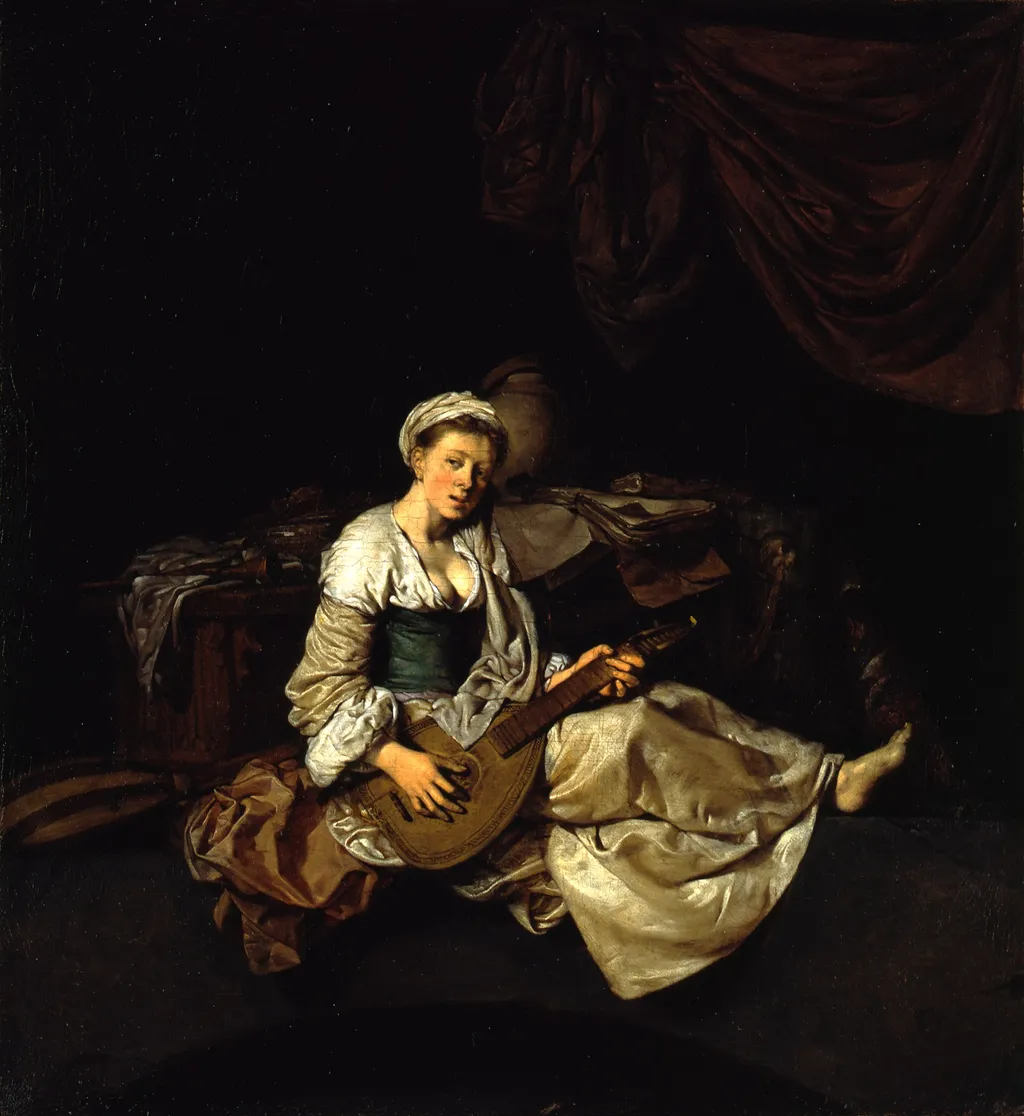
Cistern Player is an oil painting by the Dutch Golden Age artist Cornelis Bega. It dates from 1662 and is held in the collection of the Gemäldegalerie Berlin.
About this work
Overview
The painting is held in the collection of the Gemäldegalerie Berlin, where it remains an important example of Bega's mature work.
Cistern Player is an oil on canvas painting by the Dutch Golden Age artist Cornelis Pietersz Bega, dated 1662. Measuring 35 by 32 centimeters, this small-scale genre scene depicts a seated woman holding a cittern, a stringed instrument, against a dark, atmospheric background. The painting is held in the collection of the Gemäldegalerie Berlin, where it remains an important example of Bega's mature work. Though Bega died prematurely in 1664 at approximately age 32, he produced a significant body of genre paintings and etchings during his brief career, and this work demonstrates his sophisticated handling of light, texture, and allegorical content within the Haarlem tradition of Dutch genre painting.
Subject & Meaning
The central figure is a woman seated on a gray stone arch that spans the lower quarter of the composition, holding a cittern across her lap. She wears a white headscarf and blouse, a dark green bodice, and a pale skirt that spreads around her, with her left foot extending outward, bare. Her gaze turns slightly toward the viewer, her eyes directed leftward as if distracted by something outside the pictorial space. Her left hand grips the neck of the instrument in a chord position, while the fingers of her right hand rest inactive, only the thumb near the strings, suggesting she has just paused or is about to begin playing.
The iconography of musical figures carried satirical or moral connotations in much Dutch Golden`elan art, yet this figure is stripped of anecdotal detail. Her costume, freely draped from loose cloths rather than reflecting actual seventeenth-century fashion, creates an artificial symmetry with the fabric billowing to the left of the cittern. The shimmering quality of these textiles initially suggests wealth, but this impression is contradicted by the woman's sun-weathered complexion and hands, which identify her as belonging to a less privileged social class. The composition's deliberate ambiguity, its refusal of narrative plausibility, and its single-figure format indicate that Bega intended this as an allegory of Music rather than a straightforward genre scene. The uncertain spatial reading, with its play between interior and exterior reminiscent of Dutch window pictures, further destabilizes literal interpretation.
Technique & Style
The painting is executed in oil on canvas with a predominantly dark tonal palette of deep browns, blacks, and muted greens, relieved by creamy whites and pale yellows concentrated on the figure. Strong chiaroscuro structures the composition, with light falling from the upper left to illuminate only a shallow foreground zone, leaving the background overwhelmingly dark, nearly black. This dramatic contrast focuses attention on the woman's face, hands, and instrument.
The brushwork displays smooth blending on skin and fabric surfaces, with visible texture in the drapery and subtle craquelure across the paint layer. The lights are applied in finest linear strokes, often consisting of dense sequences of small pastose dabs that build luminosity. The figure is rendered from a slight low viewpoint, as the upper edge of the stone arch lies at the viewer's eye level, creating a subtle foreshortening that enhances the monumentality of the compact composition. The surface condition shows craquelure consistent with the painting's age. The overall effect combines the earthy tonalities Bega inherited from his teacher Adriaen van Ostade with a more refined, contemplative handling suited to allegorical content.
History & Provenance
The painting is signed and dated at lower left of center: "c bega A°1662," placing it in the final two years of Bega's life. The work's provenance and early ownership history are not documented in the available sources. It entered the collection of the Gemäldegalerie Berlin, where it remains today, though the specific accession details are not provided. The painting has been exhibited and made accessible through the museum's digital platforms. The existence of several closely related versions, differing only slightly in format, attests to the composition's success and suggests it held particular significance for Bega or found receptive patrons. No exhibition history beyond its museum presentation is recorded in the available sources.
Context
Cornelis Pietersz Bega was born in Haarlem around 1631 or 1632 into an established artistic family: his father Pieter Jansz Begijn was a sculptor and goldsmith, and his mother Maria was the illegitimate daughter of the prominent Mannerist painter Cornelis van Haarlem. He trained under Adriaen van Ostade, absorbing the Haarlem tradition of peasant and tavern scenes rendered in earthy tones with loose brushwork. In 1653, Bega undertook a brief Grand Tour through Germany and Switzerland with fellow artist Vincent Laurensz van der Vinne, returning to Haarlem without reaching Italy. He was admitted to the Haarlem Guild of St. Luke in 1654 and died in 1664, reportedly of plague.
Within this context, Cistern Player represents a departure from Bega's typical multi-figure genre compositions. Where his usual works depicted groups of peasants in interior or rustic settings with satirical overtones, this single-figure allegory aligns him with the broader Dutch tradition of musical imagery while transcending its conventional moralizing. The Haarlem school, including Ostade and his circle, provided the technical foundation, but the painting's contemplative stillness and symbolic ambition suggest Bega's evolution toward more independent artistic statement in SOS in his final years.
Legacy
Cistern Player occupies a significant position within Bega's limited oeuvre as evidence of his capacity for allegorical refinement beyond the rustic genre scenes that dominate his output. The existence of multiple versions indicates the composition's resonance, though the painting's subsequent influence on other artists or its roleatures in later art historical scholarship is not documented in the available sources. The work's preservation in the Gemäldegalerie Berlin ensures its accessibility for study and public engagement, and its reproduction through digital platforms and commercial outlets has extended its visibility. As a product of Bega's mature period, created only two years before his premature death, the painting represents the unrealized potential of an artist whose career spanned merely a decade. Its critical value lies in demonstrating how a painter associated with low-life genre could elevate his subject matter toward allegorical significance while maintaining the tonal and textural qualities of the Haarlem tradition. The painting continues to serve as a key work for understanding the range of Dutch Golden Age genre painting and the specific contributions of Bega's short but productive career.
Own this work as a print
Artist & collection
Artist
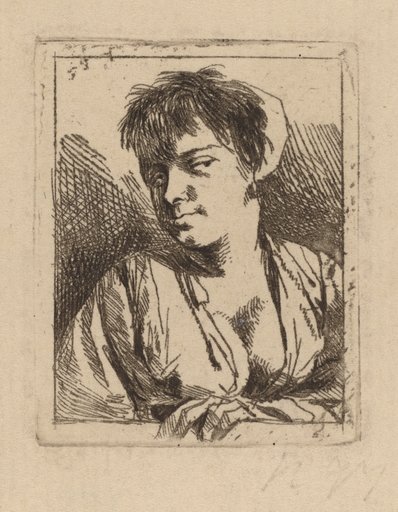
Cornelis Pietersz Bega, or Cornelis Pietersz Begijn (1631/32 – 27 August 1664) was a Dutch Golden Age painter and engraver.