Artwork
Interior of a Protestant Church
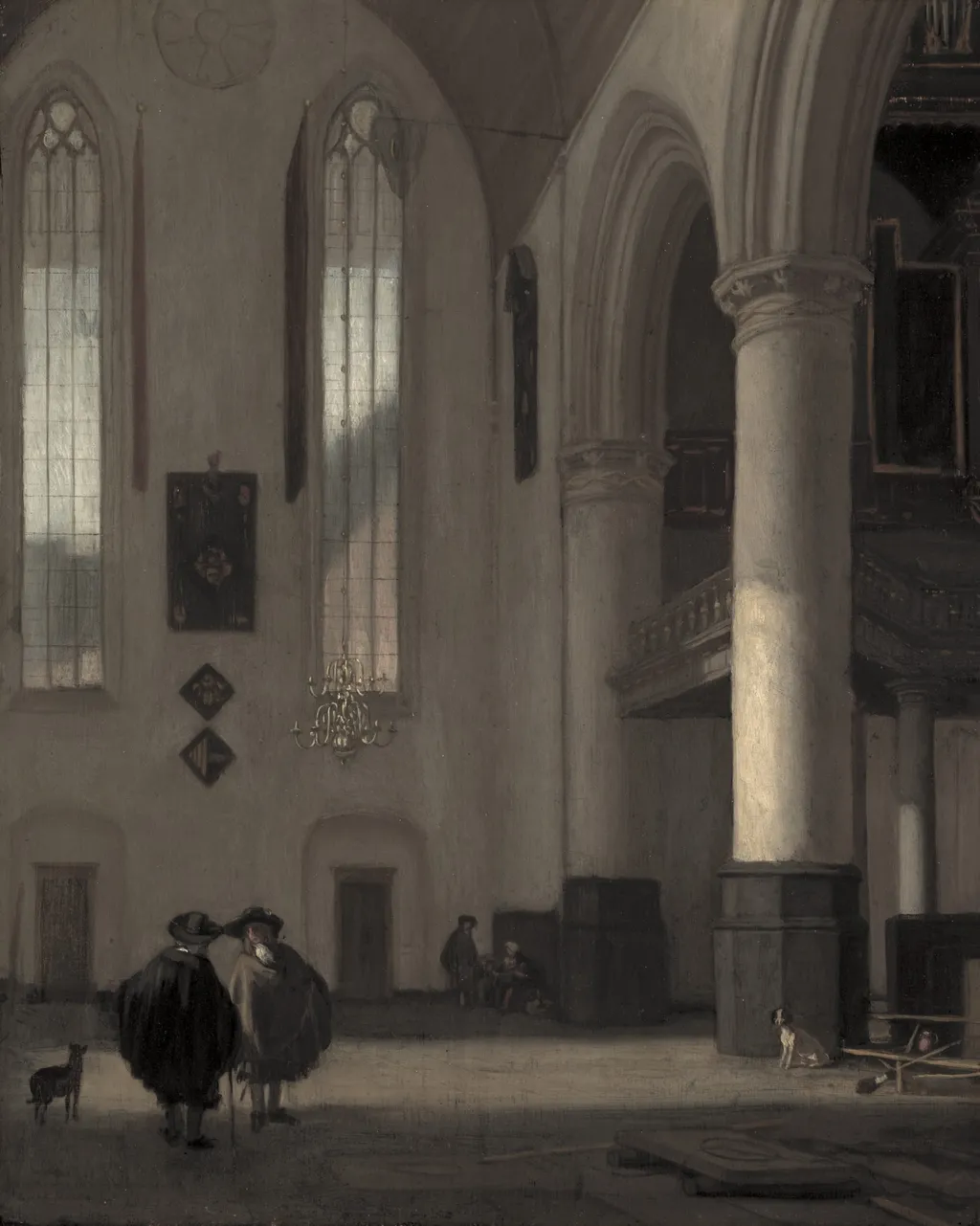
Interior of a Protestant Church is an unspecified painting by the Dutch Golden Age artist Emanuel de Witte. It dates from 1689 and is held in the collection of the Detroit Institute of Arts.
About this work
Technique & Style
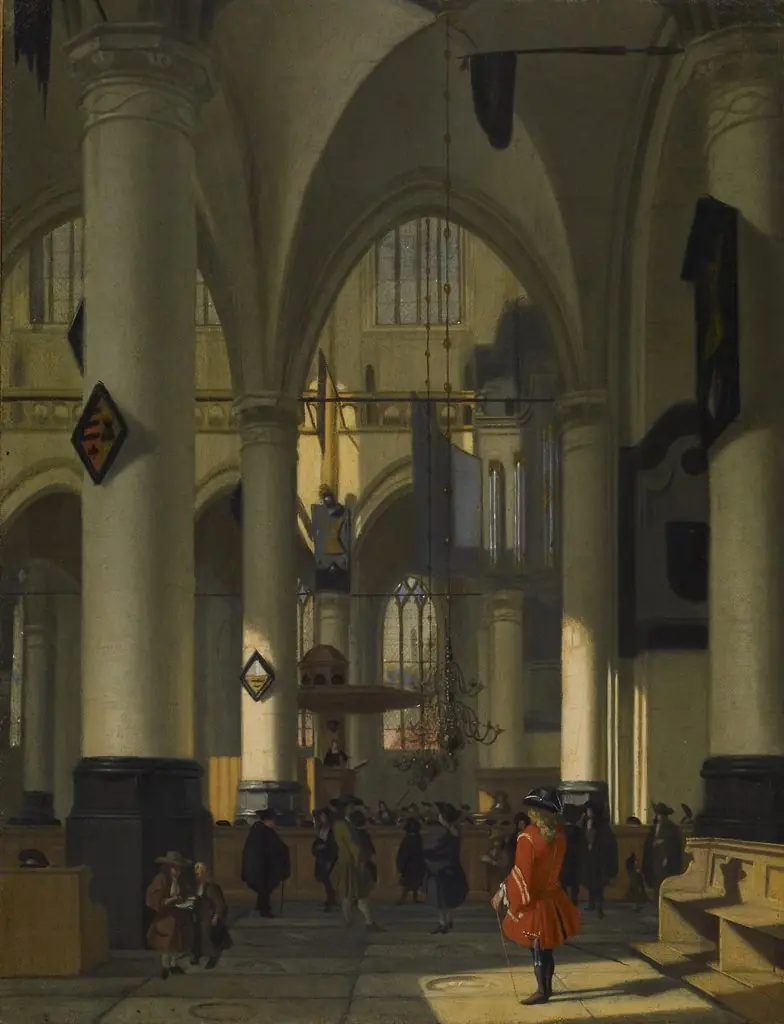
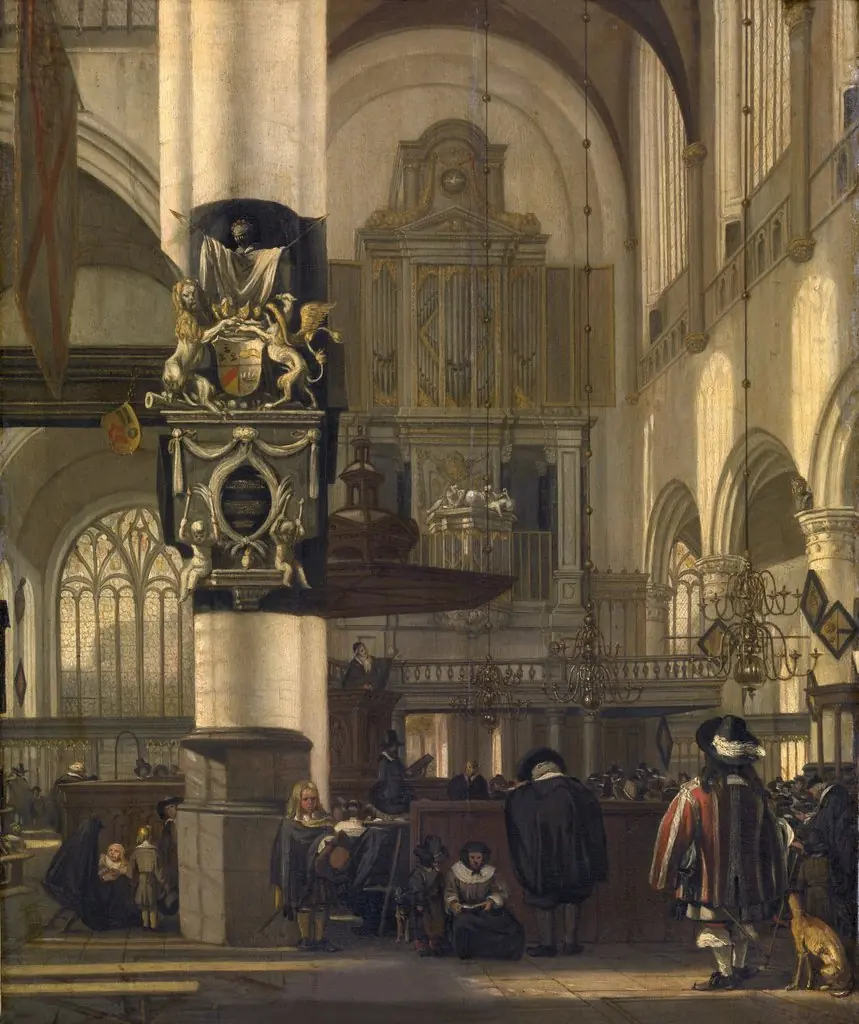
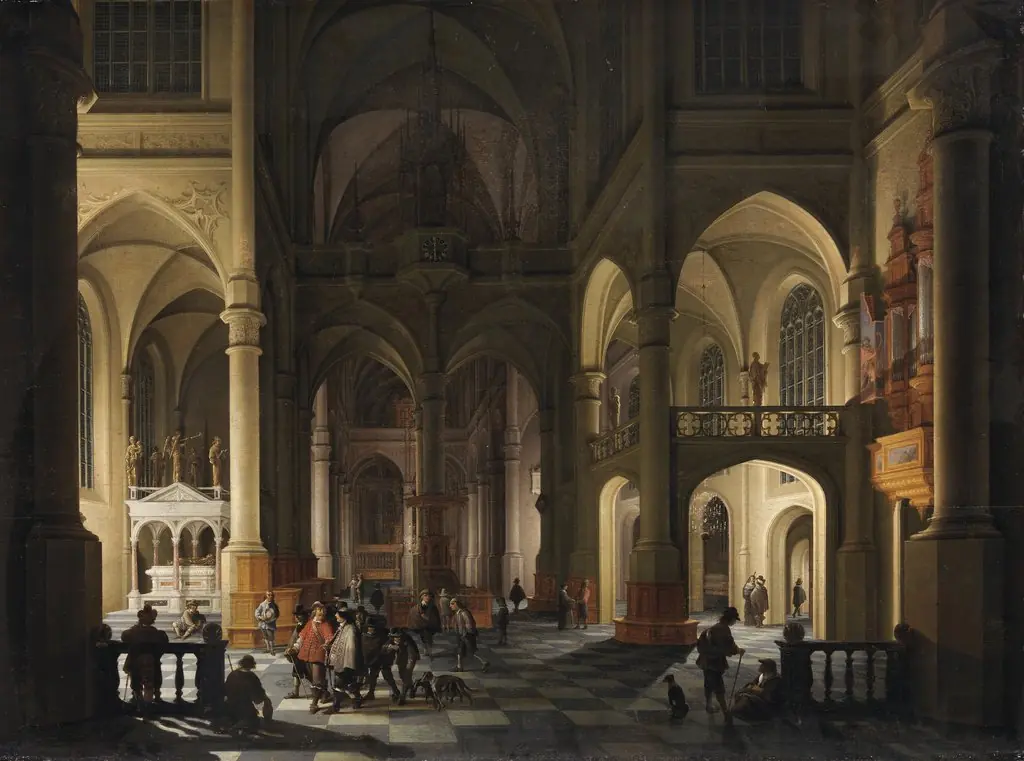
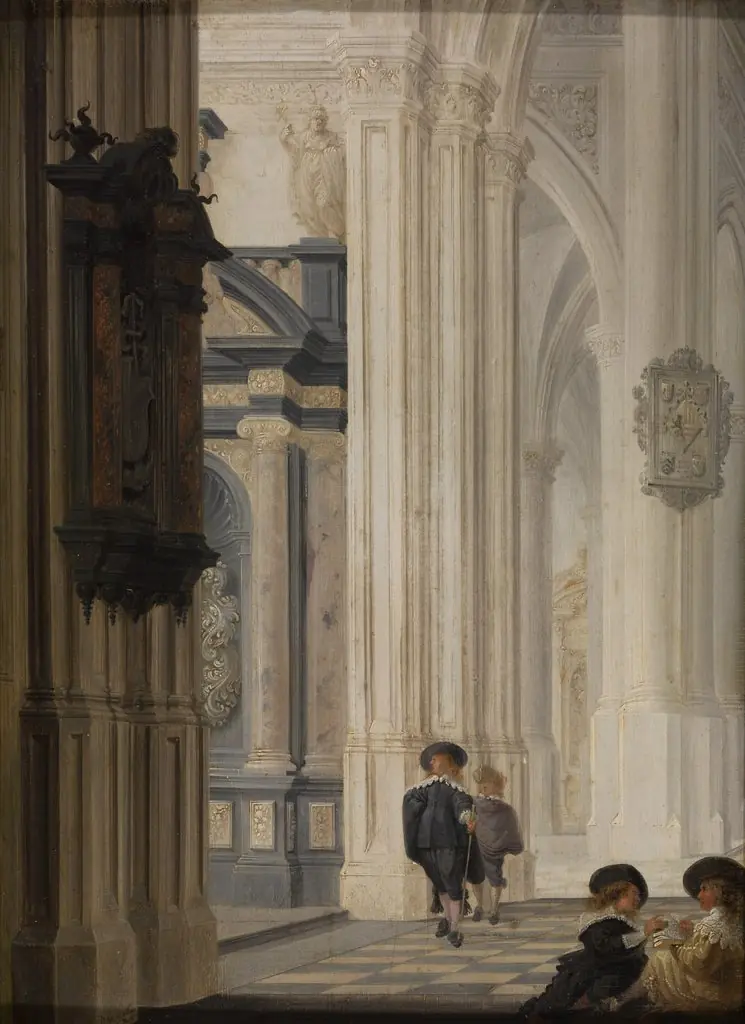
The work depicts a church interior featuring architectural elements such as arches, columns, and windows, alongside human figures and a dog.
Created in 1677, Interior of a Protestant Church is an oil painting on canvas by Emanuel de Witte. The work depicts a church interior featuring architectural elements such as arches, columns, and windows, alongside human figures and a dog. Stylistically, the piece exemplifies de Witte's focus on the spatial dynamics and light within Dutch Protestant church settings. The painting is currently held in the collection of the Detroit Institute of Arts.
History & Provenance
The painting was created in 1677 by the Dutch artist Emanuel de Witte, depicting an interior of a Protestant church with architectural elements such as an arch, window, and column. It entered the collection of the Detroit Institute of Arts, where it remains on display. The work is part of the museum's permanent holdings and was acquired as part of its European painting collection.
Legacy
The painting's church interior genre influenced later artists who explored sacred spaces, particularly those emphasizing architectural precision and atmospheric lighting. Emanuel de Witte's meticulous rendering of structural elements and spatial depth established a precedent for church interior depictions in Dutch Golden Age painting, shaping approaches to religious subjects in the 18th century. His work contributed to the DIA's reputation as a key repository for Dutch Baroque art, though specific later exhibitions or direct citations of influence are not documented in the provided sources.
Overview
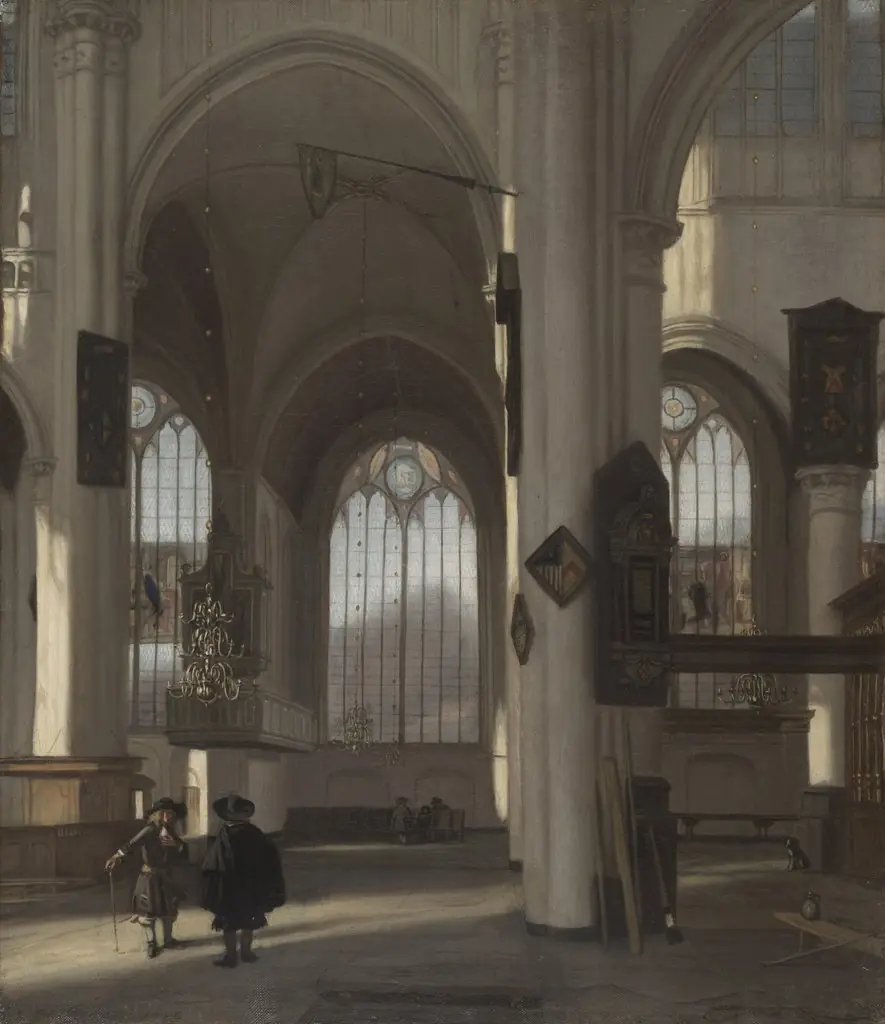
Emanuel de Witte’s 1689 oil painting, Interior of a Protestant Church, presents a spacious ecclesiastical interior rendered with meticulous attention to architectural detail. The work is part of the Detroit Institute of Arts’ collection and exemplifies the Dutch artist’s focus on interior spaces during the late seventeenth century.
Subject & Meaning
The canvas captures a Protestant sanctuary defined by lofty ceilings, stone flooring, and expansive windows that admit diffused daylight. Two figures, accompanied by a dog, move along the nave toward the rear, suggesting a quiet, everyday moment of worship or passage rather than a formal ceremony.
Context
During the Dutch Golden Age, Protestant churches were often depicted without overt religious iconography, focusing instead on spatial harmony and light. De Witte’s work aligns with this tradition, offering a secular appreciation of sacred architecture that resonated with contemporary viewers interested in realism and atmospheric perspective.
Own this work as a print
Artist & collection
Artist
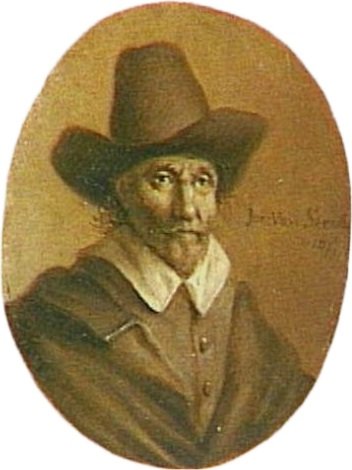
Emanuel de Witte (1617–1692) was a Dutch perspective painter. In contrast to Pieter Jansz Saenredam, who emphasized architectural accuracy, De Witte was more concerned with the atmosphere of his interiors. Though few in…

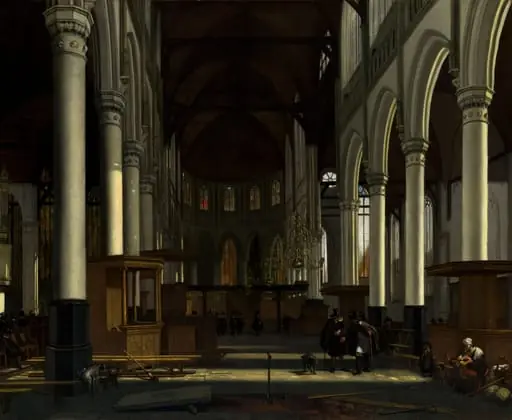 The Interior of the Oude Kerk, Amsterdam
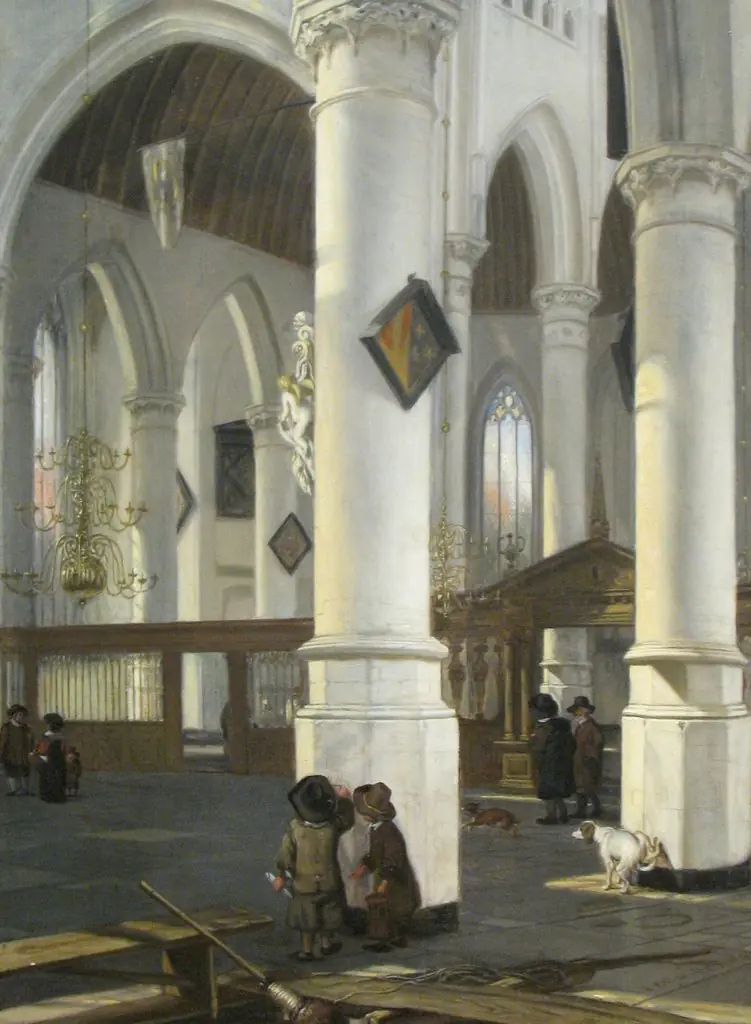 Interior of the Oude Kerk, Delft
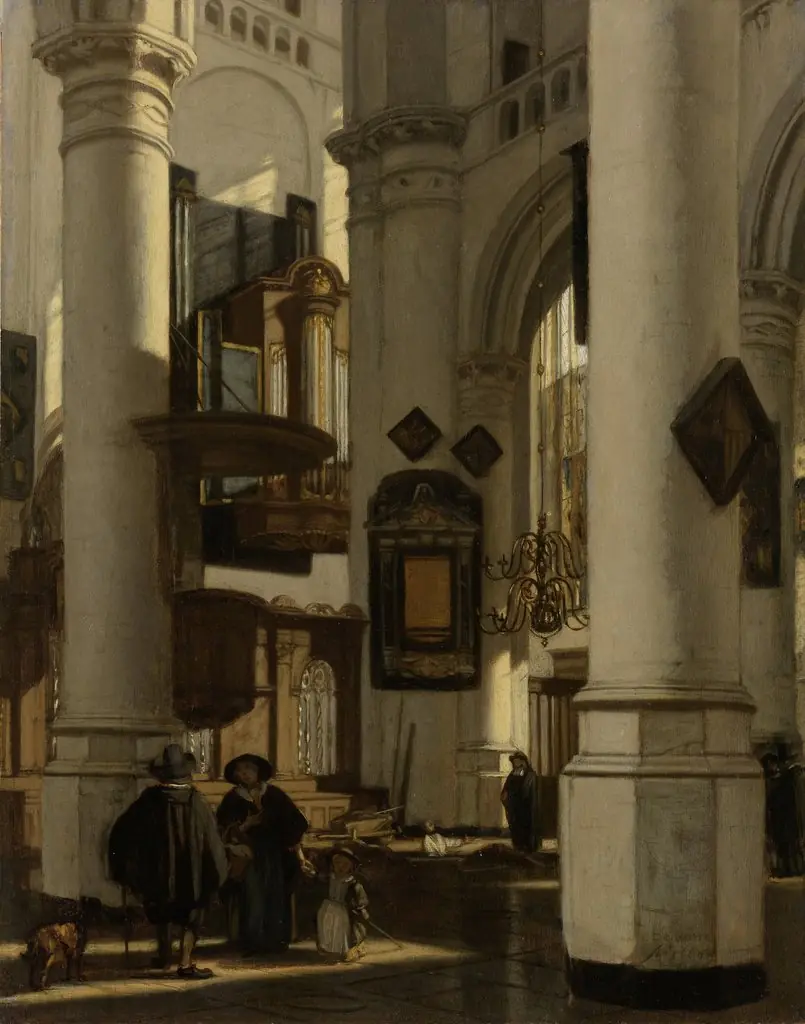 Interior of a Protestant, Gothic Church, with a Gravedigger in the Choir
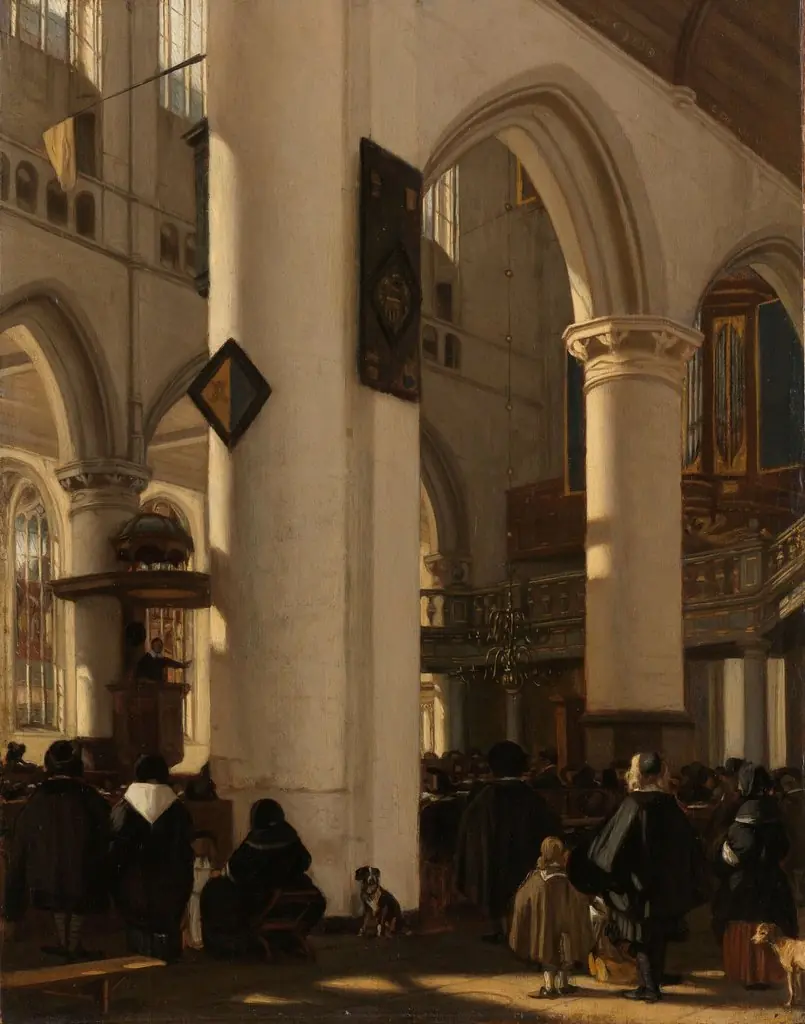 Interior of a Protestant, Gothic Church during a Service
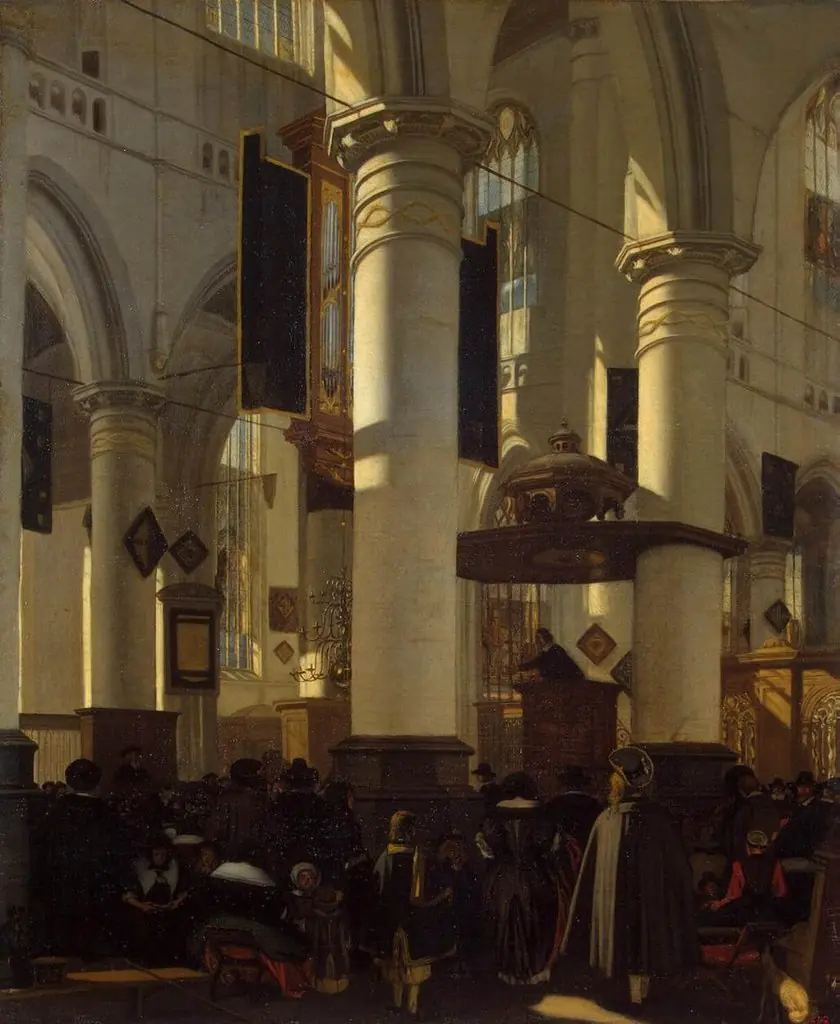 Interior of a Church
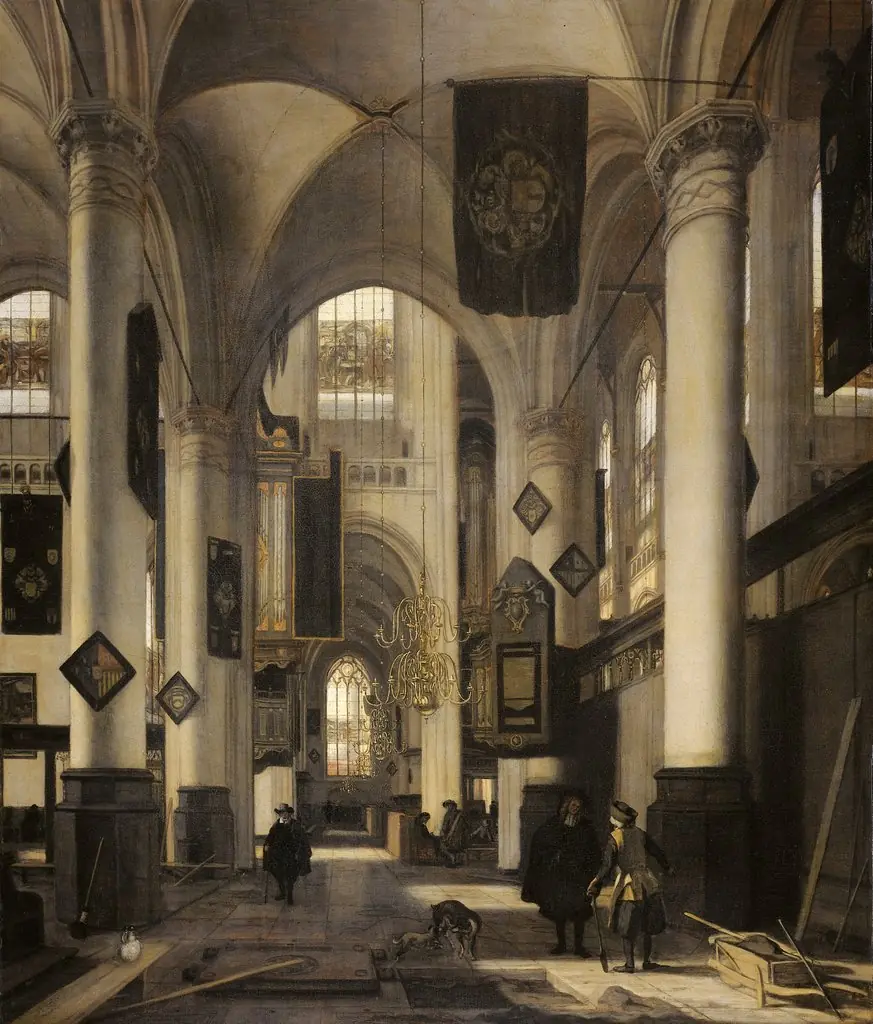 Interior of a Protestant Gothic Church
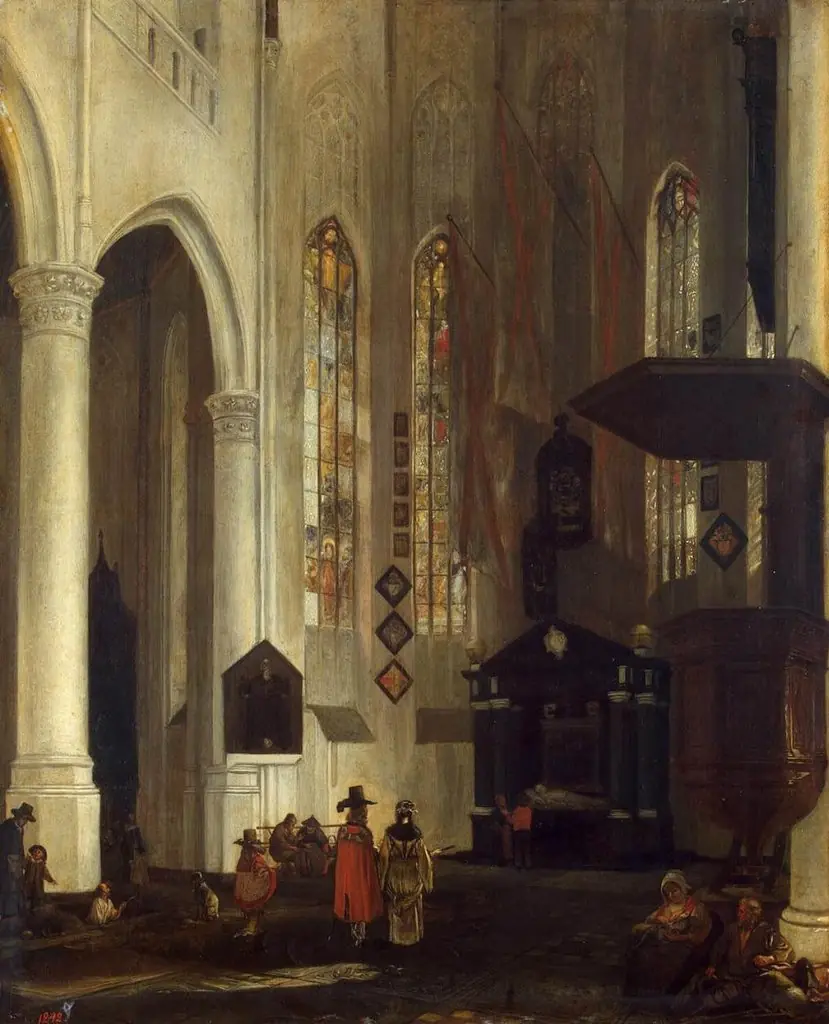 Old Church (Oudekerk) in Delft with the Tomb of Admiral Pieter Pieterszoon Hein (Heyn)
- Interior of a Church