Artwork
The Arab Falconer
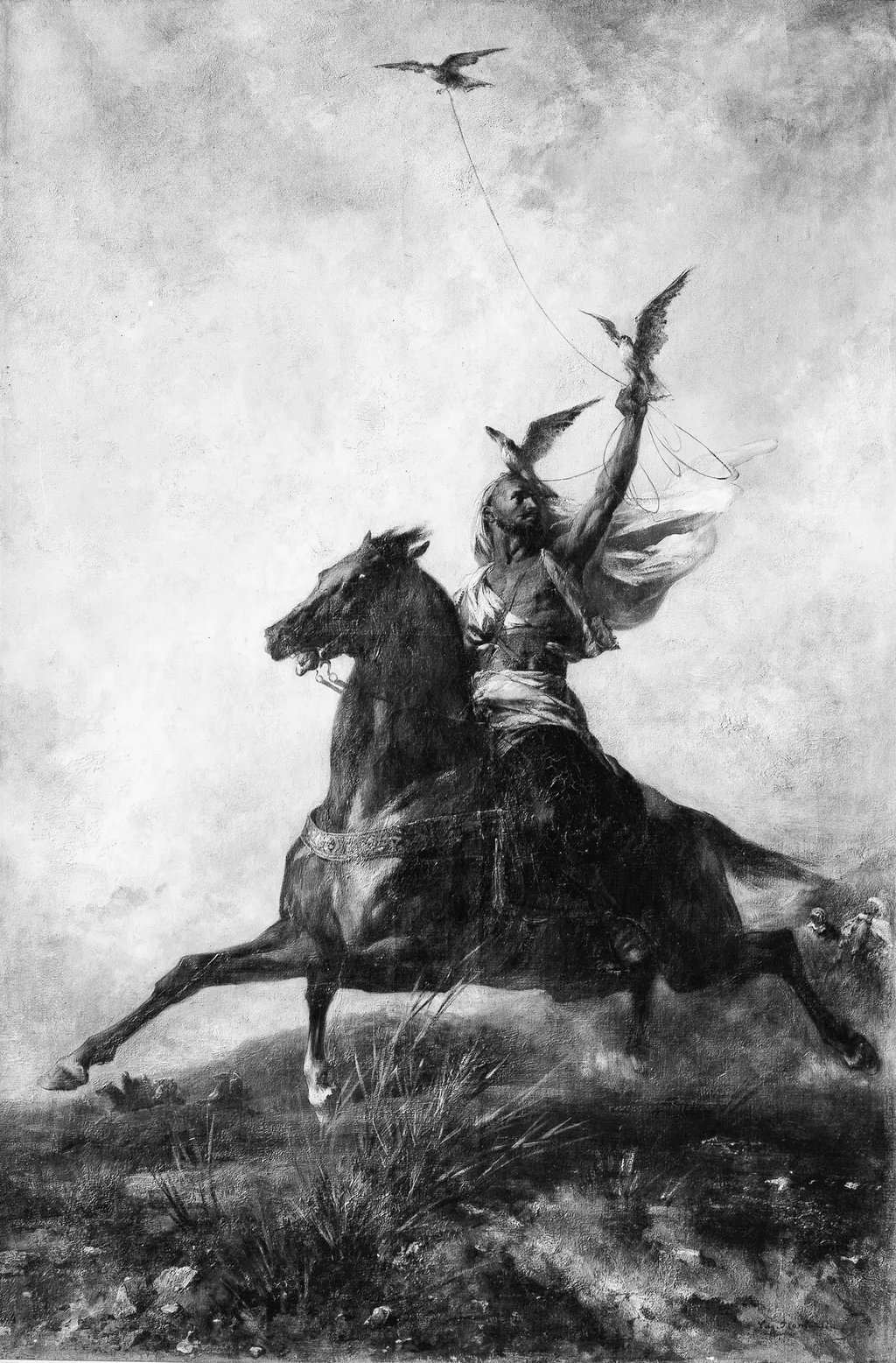
The Arab Falconer is an oil painting by the Orientalist artist Eugène Fromentin. It dates from 1864 and is held in the collection of the Metropolitan Museum of Art.
About this work
Subject & Meaning
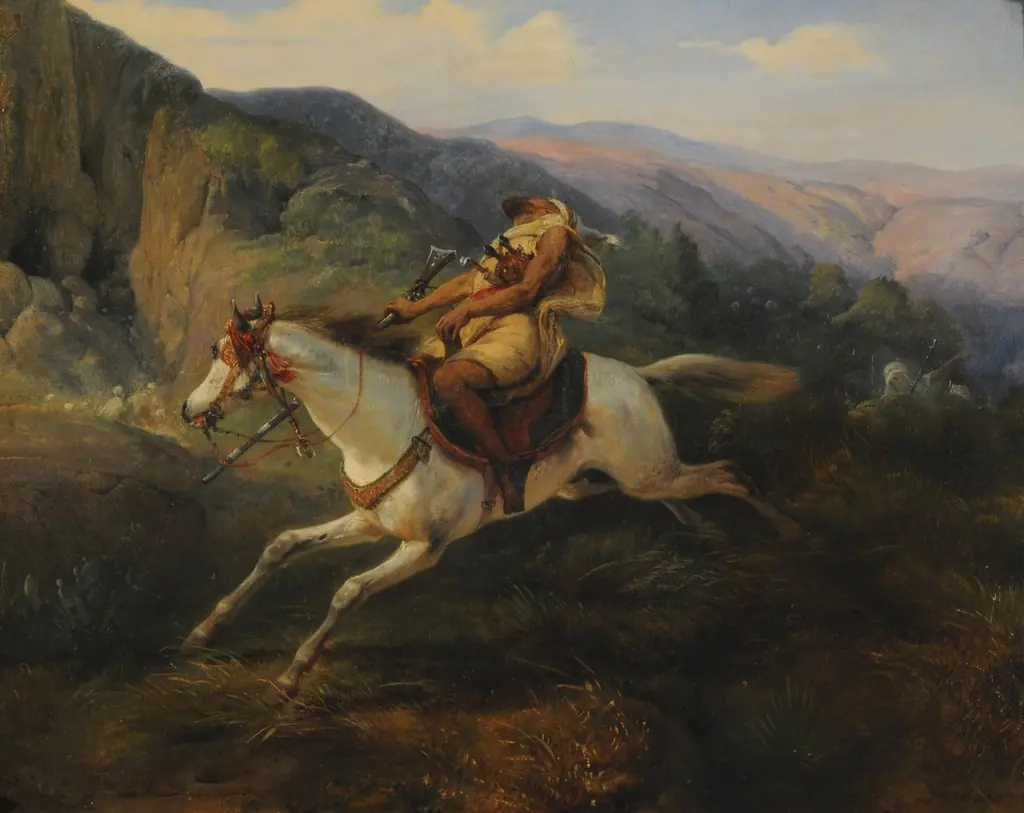
The Arab Falconer depicts a solitary man mounted on horseback, accompanied by a falcon, embodying the conventions of Orientalist painting.
The Arab Falconer depicts a solitary man mounted on horseback, accompanied by a falcon, embodying the conventions of Orientalist painting. Created in 1864 by Eugène Fromentin, the work centers on the practice of equestrianism and the specific cultural tradition of falconry within an North African context. The composition presents the rider and bird as the primary subjects, utilizing these elements to explore themes of mastery over nature and the exoticized landscape favored by 19th-century European artists.
The imagery of the falconer serves as a focal point for representing the perceived nobility and distinct customs of the Arab world as interpreted through the artist's lens.
Technique & Style
Created in 1864, The Arab Falconer is an oil painting executed on a canvas support. The work measures 108.6 centimeters in height and 72.4 centimeters in width. Classified within the Orientalist tradition, the piece depicts an equestrian scene featuring a man and a falcon.
The application of oil paint allows for the rendering of these figures within the specific context of the artist's exploration of North African subjects. As a painting held in the collection of the Metropolitan Museum of Art, the work stands as a representative example of Eugène Fromentin's mid-19th-century practice in this medium and genre.
History & Provenance
The Arab Falconer, an oil on canvas painting by French Orientalist Eugène Fromentin, was completed in 1864. Executed in Paris, the work measures 108.6 × 72.4 cm and depicts a mounted Arab figure with a falcon, reflecting the artist’s fascination with North African subjects. Fromentin is believed to have produced the piece for a private patron interested in Orientalist themes, though documentary evidence of the commission is absent.
After its creation, the painting entered the collection of the Metropolitan Museum of Art in New York, where it remains on public view. Its provenance is therefore traced from the artist’s studio to the museum’s holdings, with no recorded intermediate owners.
Eugène Fromentin's 1864 oil painting, The Arab Falconer, is held in the collection of the Metropolitan Museum of Art. The work, which depicts a man engaged in equestrianism with a falcon, measures 108.6 by 72.4 centimeters. While the artwork's current location and physical attributes are documented, the provided sources do not contain specific inventory or accession numbers, nor do they list any past or current exhibitions for the piece.
Overview
Eugène Fromentin's 'The Arab Falconer,' painted in 1864, is a quintessential example of French Orientalist art. The composition centers on a solitary figure mounted on a dark brown horse, captured in a moment of dynamic motion with the animal's front legs raised. The rider, dressed in traditional North African attire including a flowing white robe and headscarf, holds a falcon aloft in his right hand, emphasizing the theme of falconry.
Fromentin, who traveled extensively in Algeria and Egypt, renders the scene with a focus on atmospheric light and the vastness of the desert landscape, which serves as a muted, sandy backdrop. The painting reflects the artist's interest in documenting the customs and daily life of the Maghreb region through a European lens, blending observational detail with a romanticized sense of the exotic. Executed in oil paint, the work demonstrates Fromentin's characteristic loose brushwork and his ability to convey the heat and stillness of the Algerian environment.
Created during the height of his career as an Orientalist painter, this piece contributes to the 19th-century European fascination with the East, showcasing the artist's skill in portraying both human subjects and their interaction with the natural world.
Own this work as a print
Artist & collection