Artwork
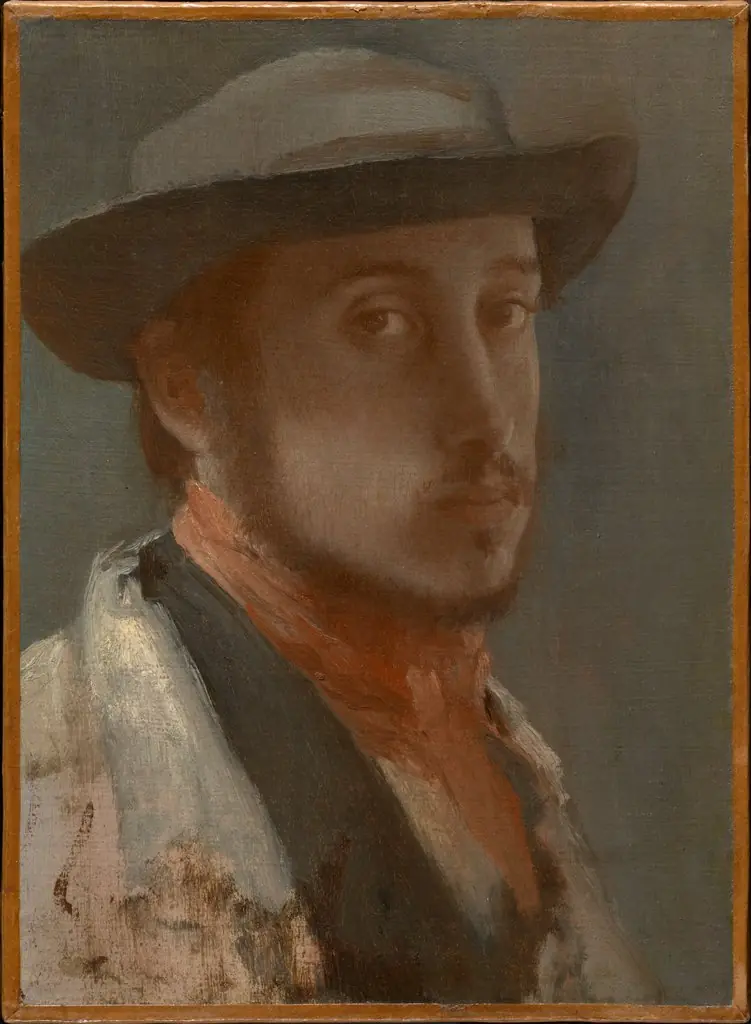
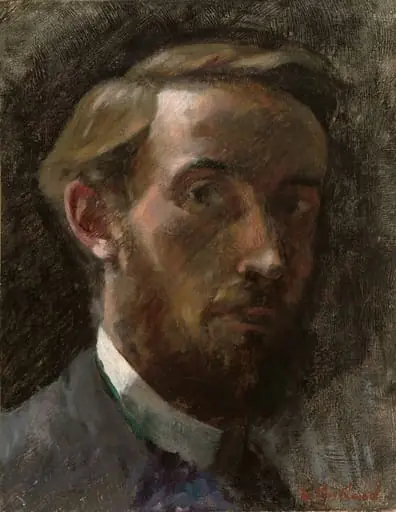
Self-Portrait with White Collar
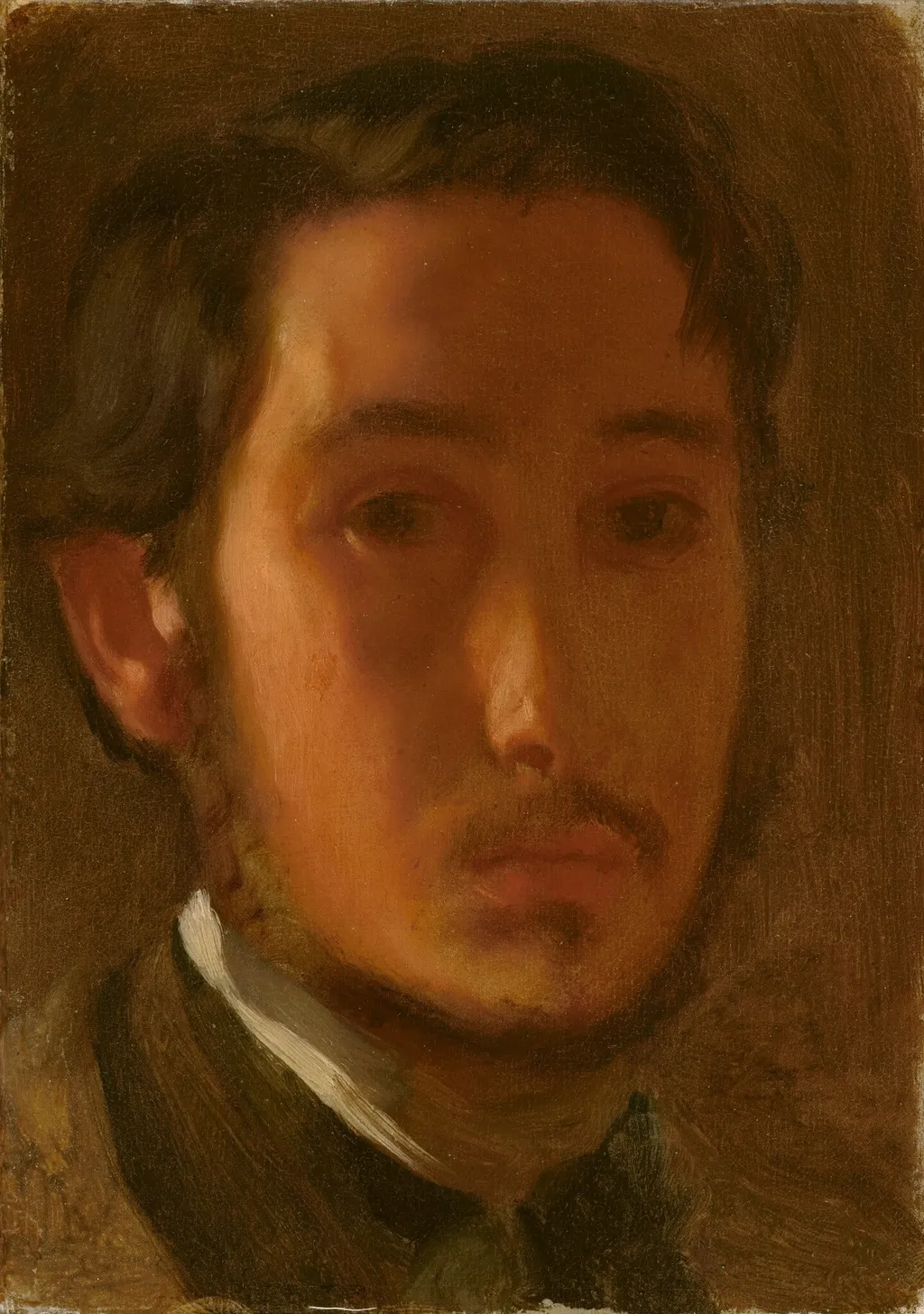
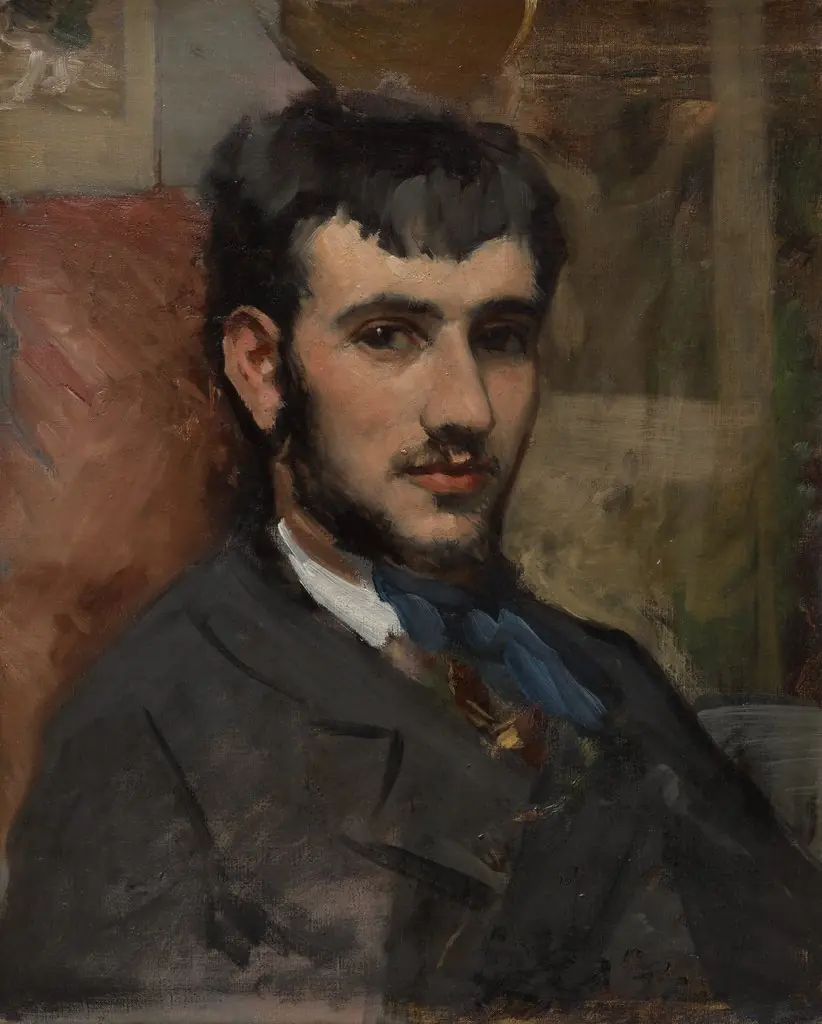
Self-Portrait with White Collar is an oil painting by the Impressionist artist Edgar Degas. It dates from 1857 and is held in the collection of the National Gallery of Art.
About this work
A young man in a white collar looks straight out, calm and plainly dressed. This is early Degas, before the dancers and horses, the colors and composition kept simple as he tried out his technique. Oil on paper on canvas, 1857.
Technique & Style
Self-Portrait with White Collar is executed in oil on paper laid down on canvas, a support combination that Degas employed in his early self-portraiture.
Self-Portrait with White Collar is executed in oil on paper laid down on canvas, a support combination that Degas employed in his early self-portraiture. The work measures 20.5 by 15 centimeters, a modest scale consistent with an intimate study rather than a formal commission. It is classified as a portrait within the genre of self-portraiture, depicting the artist himself around 1857.
An inscription on the center horizontal stretcher member, attributed to the artist, identifies the work as a self-portrait and notes that it was not included in the first studio sale of May 1918.
History & Provenance
Executed around 1857, the painting descended from the artist to his nephew Edmond Degas, who retained it into the early twentieth century. By 1924 Marcel Guérin owned the work and lent it to a Paris exhibition that year. In 1958 it was sold through Arthur Goldschmidt to Walter Feilchenfeldt in Zurich, evidenced by an inscription on the stretcher noting his ownership.
The following year Feilchenfeldt transferred it through Germain Seligmann to Paul Mellon of Upperville, Virginia, who gifted it to the National Gallery of Art, Washington, in 1995, where it currently resides. Curatorial files document the 1958 transaction.
Overview
Edgar Degas' Self-Portrait with White Collar, created around 1857, is an oil painting on paper mounted on canvas. It presents the artist as a young man, directly engaging the viewer with a calm expression. This work offers insight into Degas' formative years, capturing a moment before he developed the distinctive style and subject matter for which he would later become widely recognized.
Subject & Meaning
The painting depicts Degas himself, portrayed with a quiet demeanor and dressed in unadorned clothing, highlighted by a crisp white collar. His direct gaze suggests introspection and a nascent artistic identity. As a self-portrait from his early career, it serves as a personal record of the artist during a period of self-discovery, prior to the extensive exploration of dancers and horses that would define much of his later work.
Context
Although often associated with Impressionism, Edgar Degas personally identified more strongly with realism. His early career, exemplified by this self-portrait, frequently involved exploring portraiture, a genre he returned to throughout his life. Notably, Degas diverged from many of his Impressionist contemporaries by largely rejecting plein air painting, preferring studio work and a focus on drawing mastery, even in these initial stages of his artistic journey.
Own this work as a print
Artist & collection
Artist
Born Hilaire-Germain-Edgar De Gas on 19 July 1834 in Paris, Edgar Degas came from an affluent banking family with aristocratic roots and spent his childhood among the cultivated circles of the French capital.