Artwork
Nativity
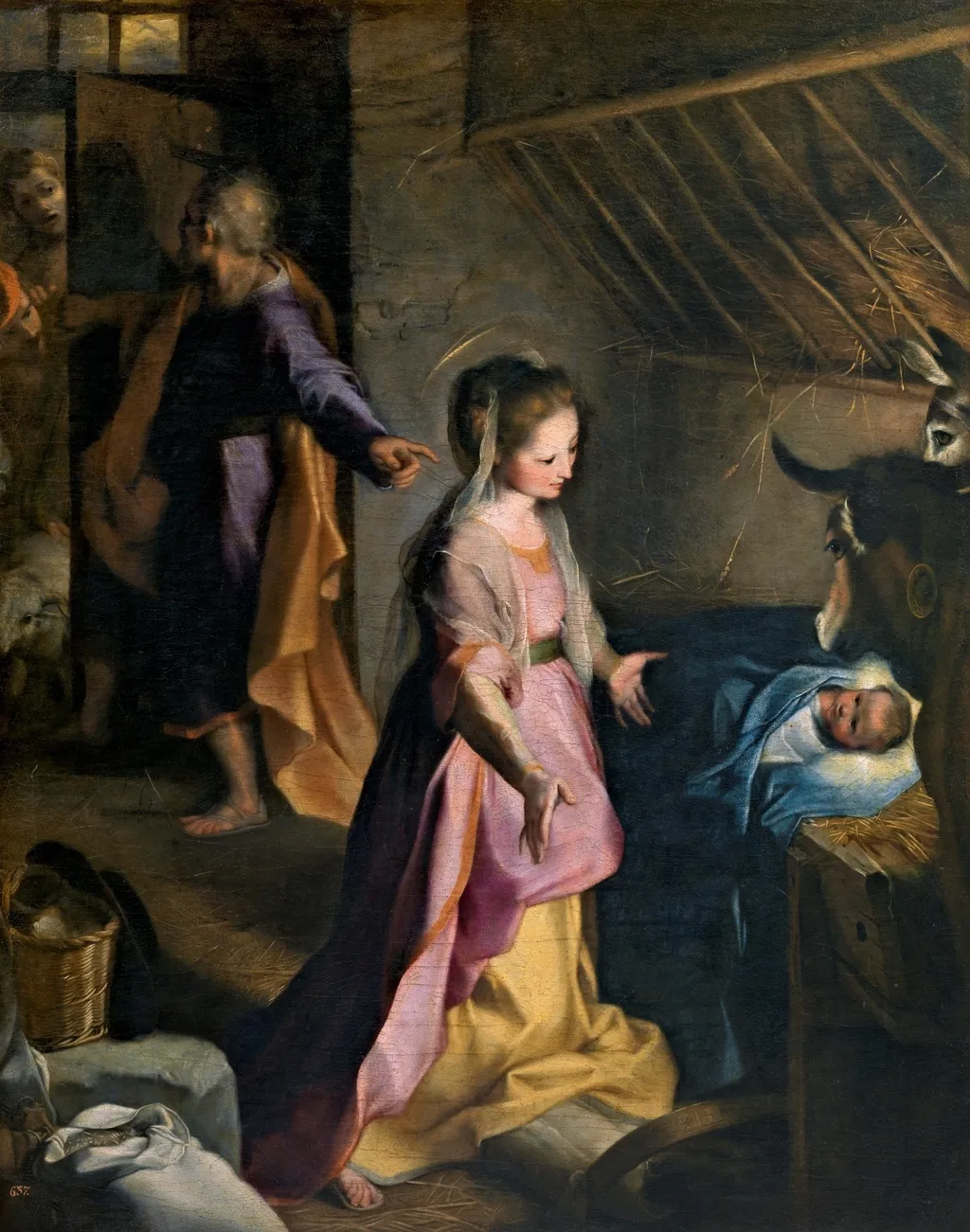
Nativity is an oil painting by the Mannerist artist Federico Barocci. It dates from 1599 and is held in the collection of the Museo del Prado.
About this work
The painting is called Nativity, made by Federico Barocci in 1597. It's an oil paint work. The painting is now at the Museo del Prado, which is a museum in Madrid.
It shows a scene from the Bible, the birth of Jesus. This scene is often painted by artists, but each one does it differently. You can learn more about this type of painting by looking at the work of Federico Barocci.
Subject & Meaning
Beneath Jesus and Mary, the signs of the zodiac are engraved on a metal ring, a detail that signals the cosmological significance of the event being witnessed.
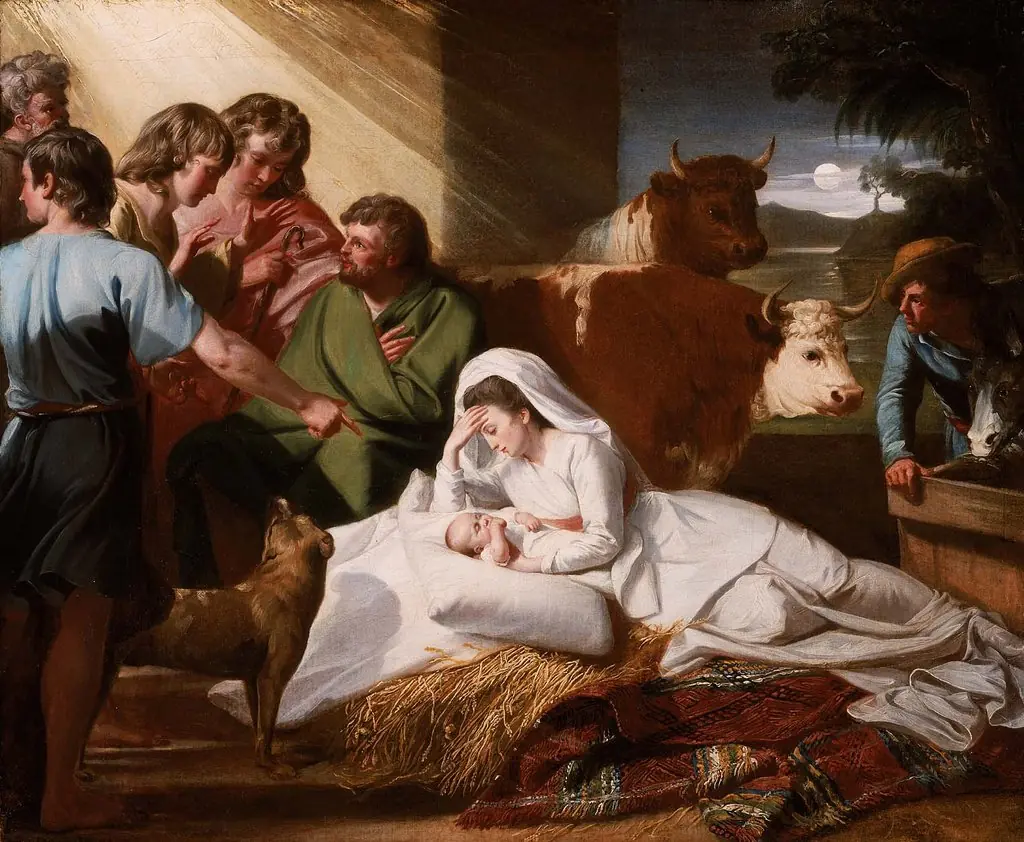
The painting depicts the Nativity of Jesus, set inside a stable where the newborn Christ Child lies on straw in a manger. A donkey and an ox appear partially at the right edge of the composition, gazing toward the infant. The scene has no external light source; instead, a divine radiance emanates directly from the Christ Child himself, falling especially on the Virgin Mary, who kneels in adoration and tenderly extends her arms to receive it.
Joseph stands further back in shadow, opening the stable door to admit two shepherds who peer in from the threshold, and he points them toward the child.
Beneath Jesus and Mary, the signs of the zodiac are engraved on a metal ring, a detail that signals the cosmological significance of the event being witnessed. The mood is intimate and domestic, rendered in warm pastel tones, with Barocci's characteristically careful treatment of the hands. The diagonally structured composition is described as unusual for the Nativity subject.
Technique & Style
Federico Barocci executed Nativity in 1597 using oil paint on a canvas support. The work measures 134 cm in height and 105 cm in width. Stylistically, the painting is characterized by an intimate and familiar atmosphere, achieved through the use of warm pastel tones.
The composition is structured diagonally, a formal choice described as unusual for the Nativity subject. Barocci demonstrates his typical attention to detail through the careful depiction of hands within the scene. A divine light emanates directly from the Christ Child, illuminating the Virgin Mary while leaving Joseph in the shadows.
The setting includes a stable with a donkey and an ox, and specific iconographic elements such as zodiac signs engraved on a metal ring beneath the figures.
History & Provenance
The Nativity was commissioned in 1597 by Francesco Maria II della Rovere, Duke of Urbino, and painted by Federico Barocci that same year.
In 1604 or 1605 the duke, responding to a request made through the Spanish ambassador Bernardo Maschi on behalf of Queen Margaret of Austria, donated the work to Spain. Margaret praised the painting as “very cheerful and devout.” The original entered the collection of the Museo del Prado in Madrid, where it remains.
Barocci executed a slightly larger autograph replica around 1599, which he kept in his study and later bequeathed to the Pinacoteca Ambrosiana in Milan.
Federico Barocci's Nativity (1597) is currently held by the Museo del Prado in Madrid, Spain. The work was originally commissioned by Francesco Maria II Della Rovere, Duke of Urbino, before being gifted to the Spanish court. It entered the Spanish royal collection in 1605 as a donation from the Duke to Queen Margaret of Austria, who described the canvas as "very cheerful and devout."
The painting was subsequently acquired by Ferdinand VII of Spain. While the Prado holds the original oil on canvas, a slightly larger replica created by the artist around 1599 is located in the Pinacoteca Ambrosiana in Milan. The sources do not list specific accession numbers or a detailed exhibition history for the Prado version.
Context
Federico Barocci's Nativity (1597) is recognized for its intimate and familiar atmosphere, achieved through warm pastel tones and a distinctive diagonal composition that deviates from traditional arrangements for the subject. The work is noted for its specific attention to the depiction of hands and the use of divine light radiating from the Christ Child to illuminate the Virgin Mary. Contemporary reception was favorable; upon receiving the painting in 1605, Queen Margaret of Austria described the canvas as "very cheerful and devout."
Barocci held the work in such high regard that he created a slightly larger replica for his own study, considering it one of his most precious possessions. The original remains a key example of Barocci's late religious output, now housed in the Museo del Prado, while the artist's personal copy resides in the Pinacoteca Ambrosiana.
Overview
Federico Barocci’s Nativity, executed in oil on canvas in 1597, presents the biblical moment of Jesus’s birth. The work measures roughly the size of a modest altar panel and now hangs in Madrid’s Museo del Prado, where it forms part of the museum’s collection of late‑Renaissance Italian paintings.
Own this work as a print
Artist & collection
Artist
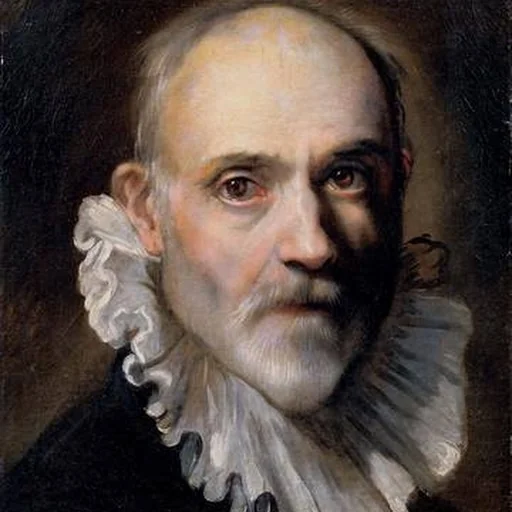
Federico Barocci (also written Barozzi) (c. 1535 – 30 September 1612) was an Italian Renaissance painter and printmaker. His original name was Federico Fiori, and he was nicknamed Il Baroccio. His work was highly…