Artwork
Quintilia Fischieri
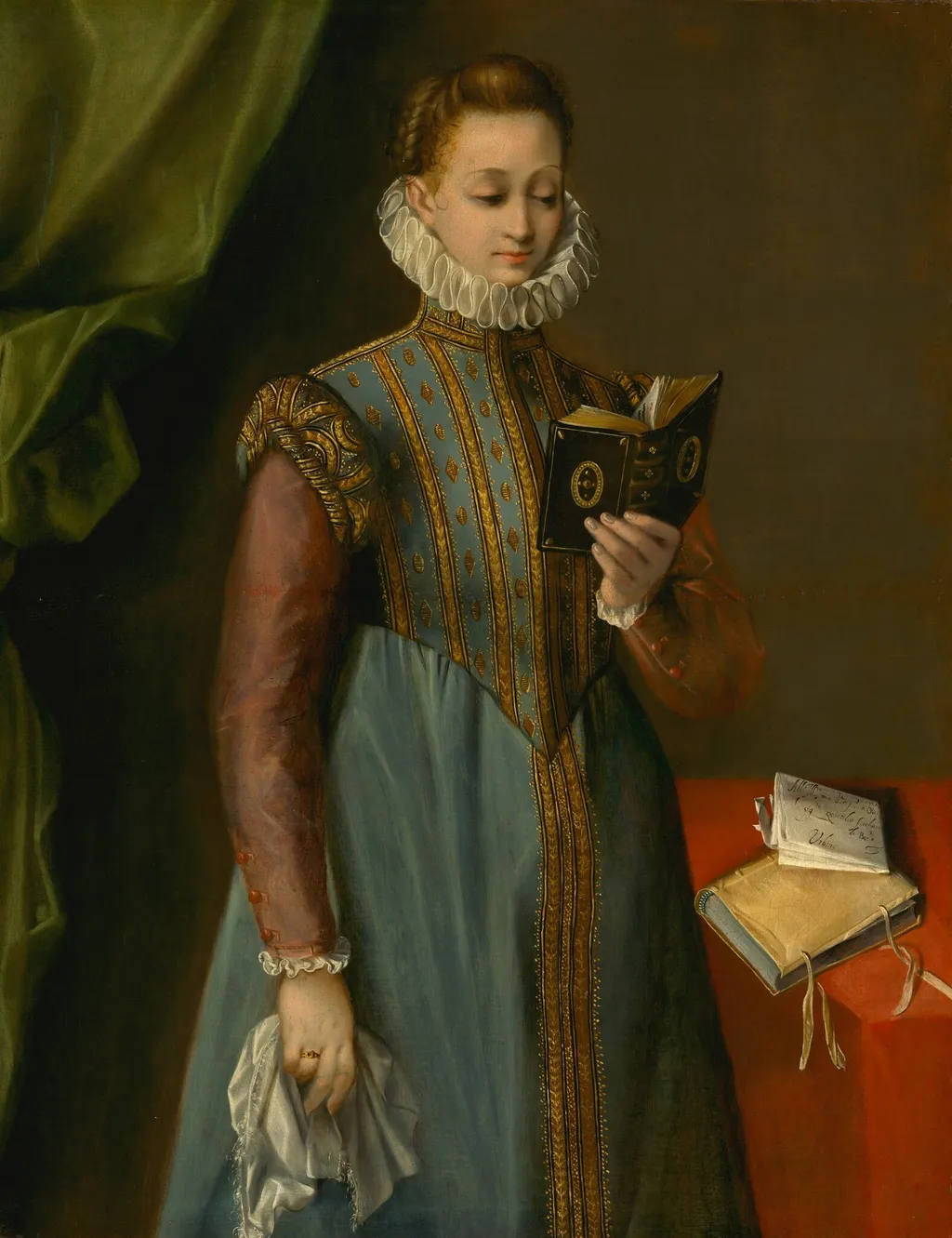
Quintilia Fischieri is an oil painting by the Baroque artist Federico Barocci. It dates from 1600 and is held in the collection of the National Gallery of Art.
- Inscription
- Inscribed:center right on folded paper: All'Ill[ust]re mia s[igno]rae p[at]rona Oss[ervandissi]ma la sig[no]ra quinti lia fischieri de Bon[oni]a Urbino (To my illustrious lady and most respected patroness, Signora Quintilia Fischieri of Bologna / Urbino)
About this work
Technique & Style
Formal qualities include a balanced, three-quarter-length format and restrained elegance, aligning with late Renaissance portrait conventions.
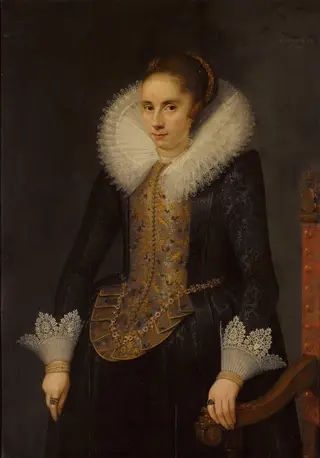
The portrait Quintilia Fischieri is painted in oil on canvas, a technique associated with Federico Barocci’s mature works. Measuring 123.8 cm in height and 95.3 cm in width, the composition emphasizes the sitter’s poised presence through delicate chiaroscuro and softly blended modeling. Barocci’s handling of the medium reveals a refined, luminous palette and subtle transitions in tone, characteristic of his late style.
Formal qualities include a balanced, three-quarter-length format and restrained elegance, aligning with late Renaissance portrait conventions. The figure’s posture and refined attire convey social status, while Barocci’s atmospheric background and delicate sfumato contribute to a serene, introspective mood.
History & Provenance
Federico Barocci created the oil-on-canvas portrait of Quintilia Fischieri around the year 1600. The work’s ownership history begins with Count Alessandro Contini Bonacossi, who held the painting in his collections in Florence and Rome. In 1935, the portrait was sold to the Samuel H. Kress Foundation in New York.
The foundation subsequently transferred the artwork to the National Gallery of Art in Washington, D.C., as a gift in 1939, where it remains part of the Samuel H. Kress Collection.
Overview
Federico Barocci's Quintilia Fischieri, created around 1600, is an oil-on-canvas portrait from the early Italian Baroque period. Barocci, known as Il Baroccio, was a prominent central Italian painter whose work is recognized for its transitional qualities, bridging the artistic traditions of the High Renaissance with the emerging Baroque style. This painting exemplifies his refined approach to portraiture.
Subject & Meaning
The painting depicts a woman, likely Quintilia Fischieri, adorned in elaborate early 17th-century attire, including a dark blue gown with gold embellishments and a stiff, white ruff collar. She holds a small book and a folded paper, suggesting literacy or personal correspondence. Her relaxed posture and contemplative expression, enhanced by soft illumination, convey a sense of calm introspection against the indistinct, shadowed background.
Own this work as a print
Artist & collection
Artist
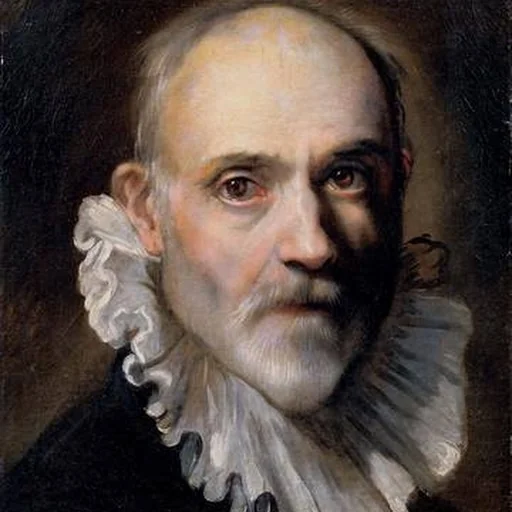
Federico Barocci (also written Barozzi) (c. 1535 – 30 September 1612) was an Italian Renaissance painter and printmaker. His original name was Federico Fiori, and he was nicknamed Il Baroccio. His work was highly…

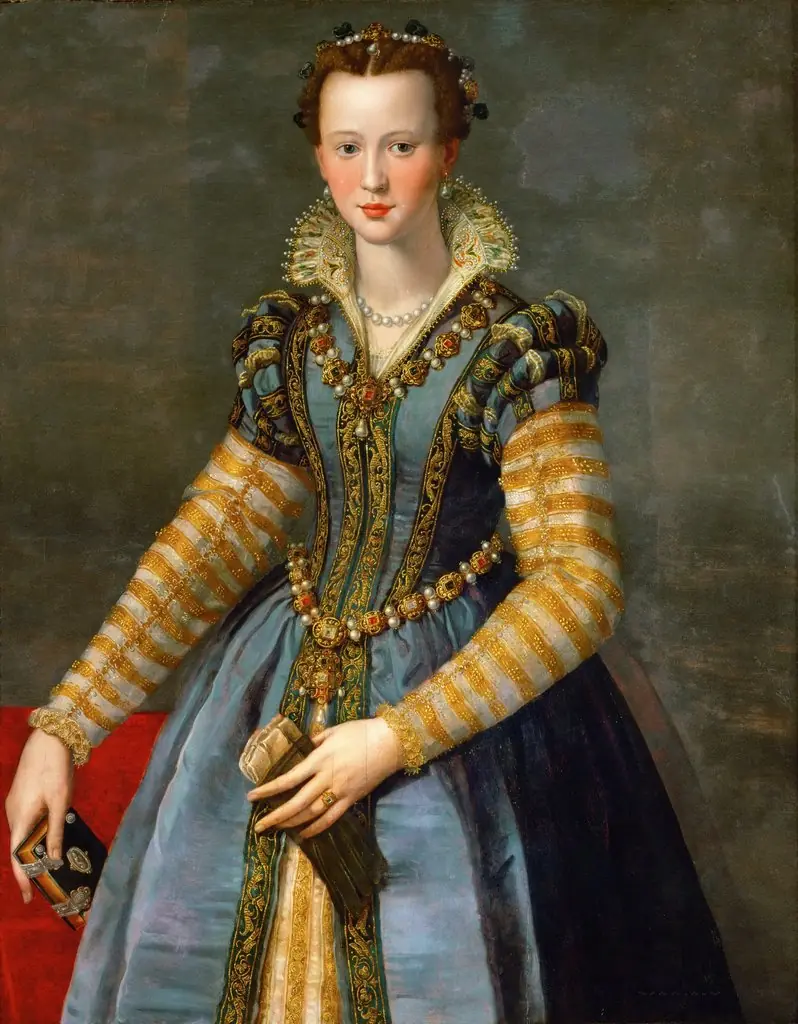
- Portrait of a lady, traditionally identified as Maria de' Medici
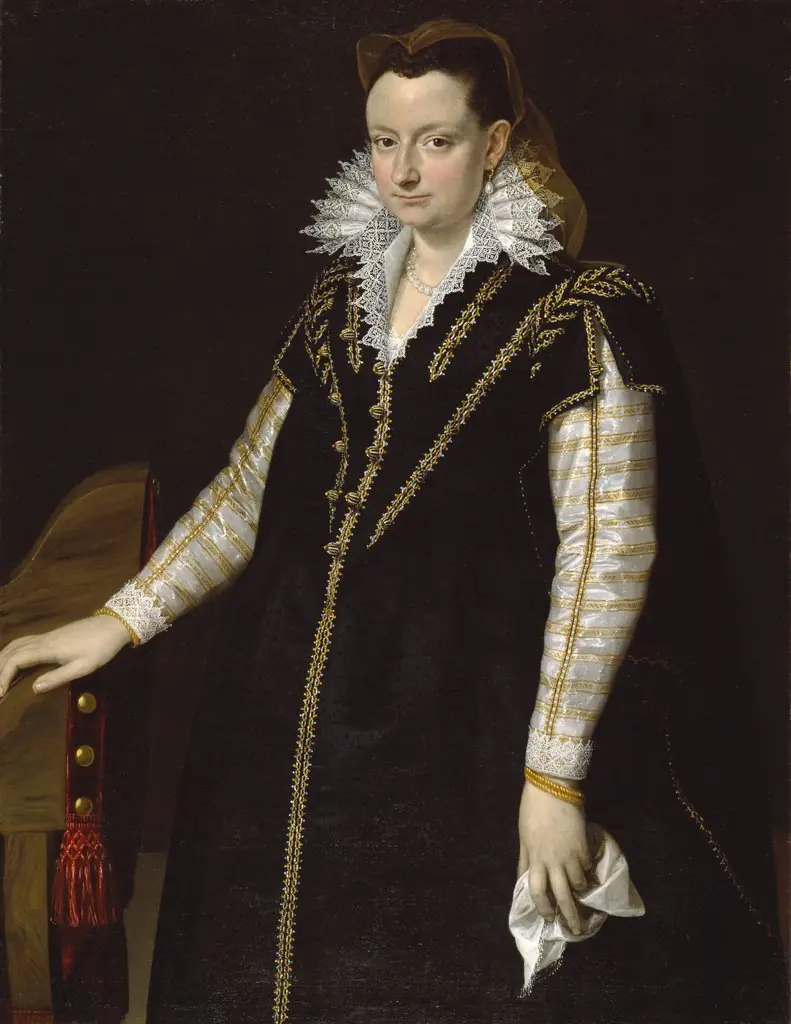 Portrait of a Lady
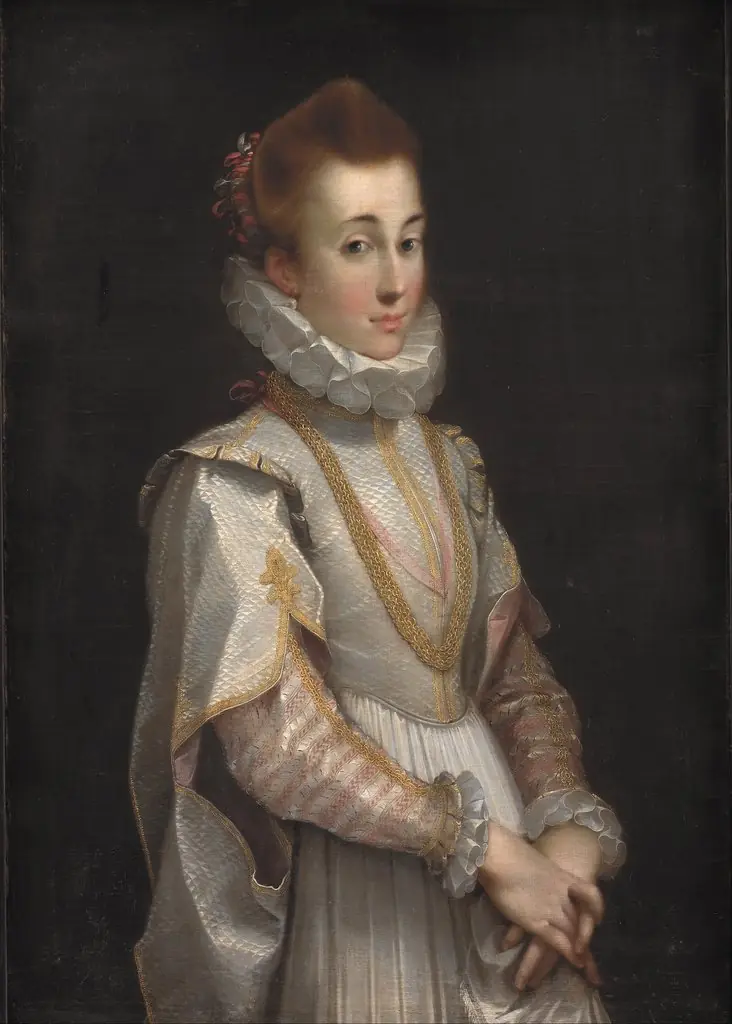 Portrait of a Young Lady
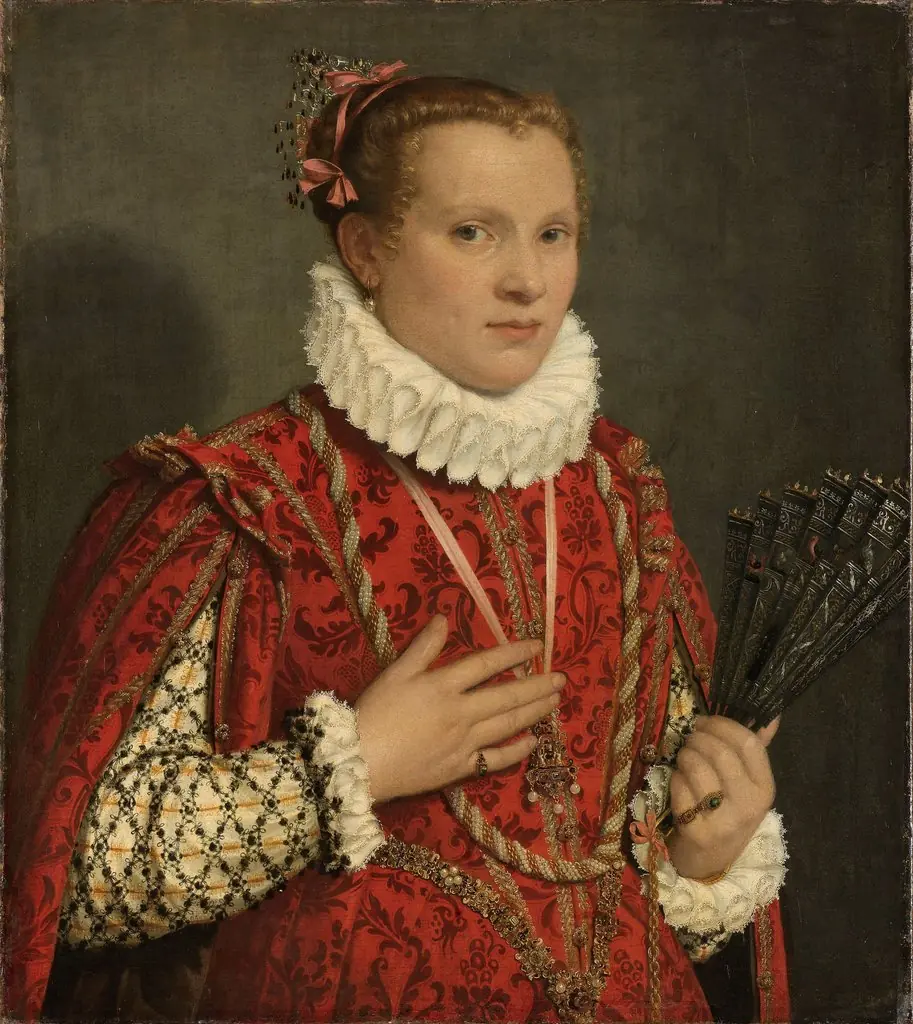 Portrait of a young Woman
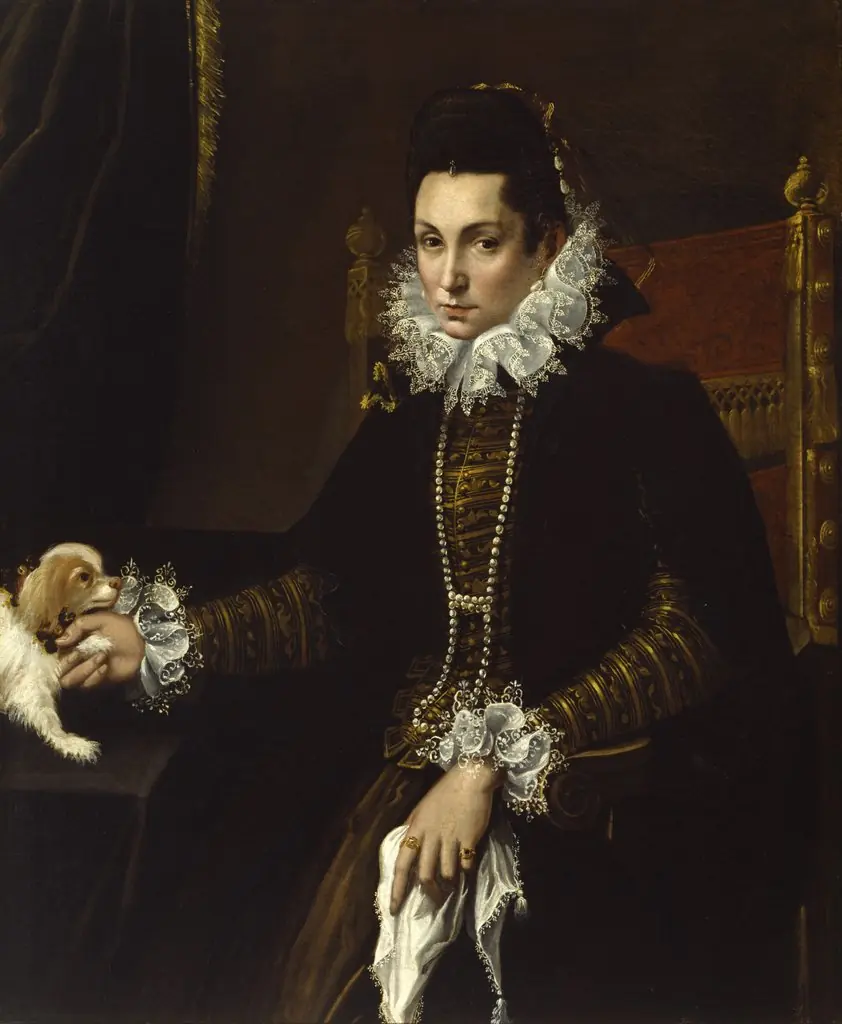 Portrait of Ginevra Aldrovandi Hercolani
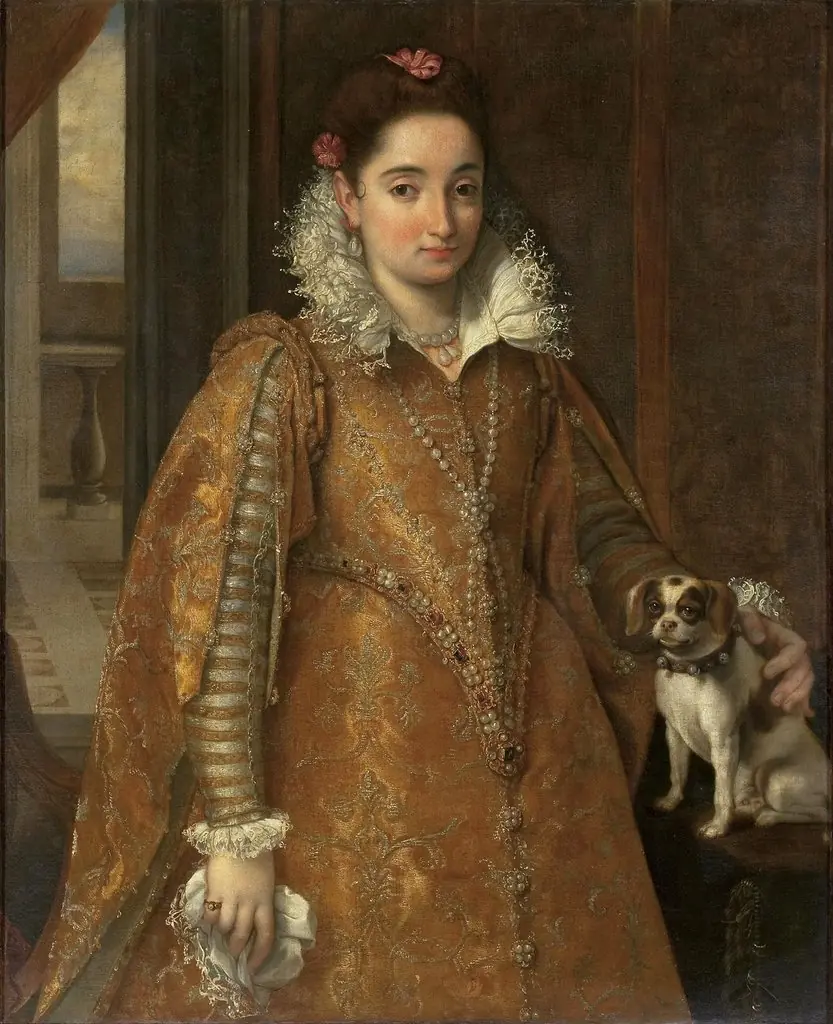 Portrait of a Lady
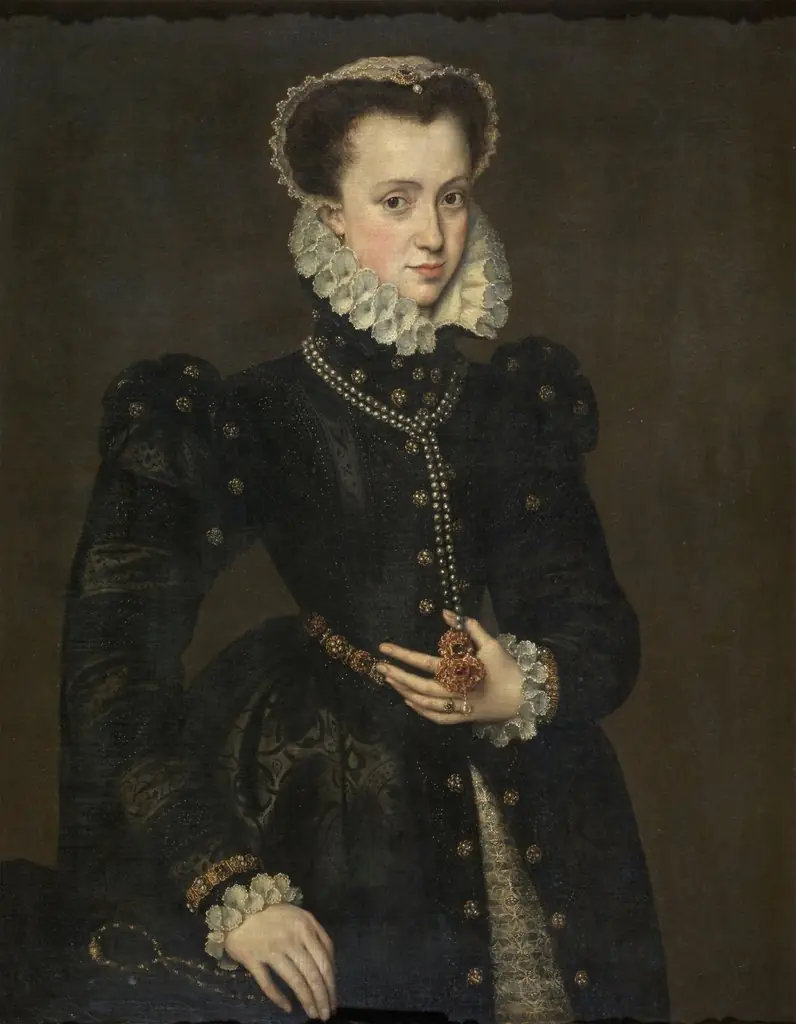 Portrait of a Lady
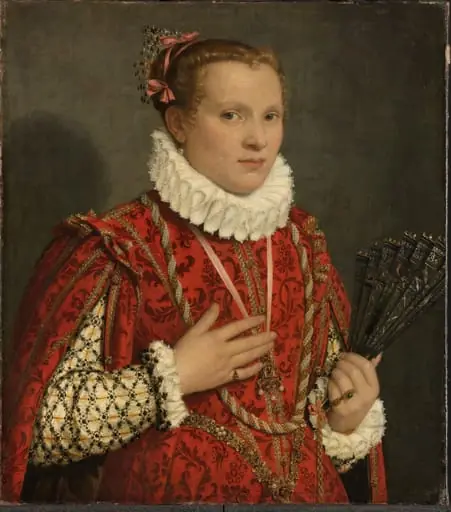 Portrait of a young woman holding a fan
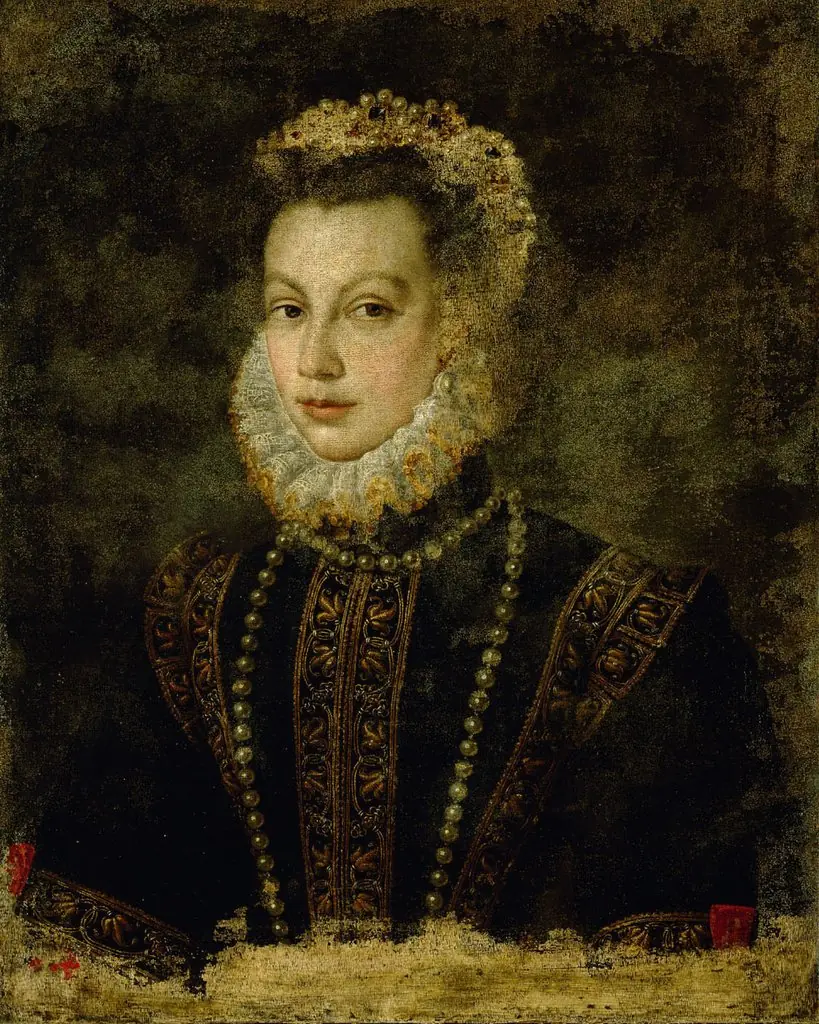 Portrait of Queen Elisabeth of Spain (1545-1568)
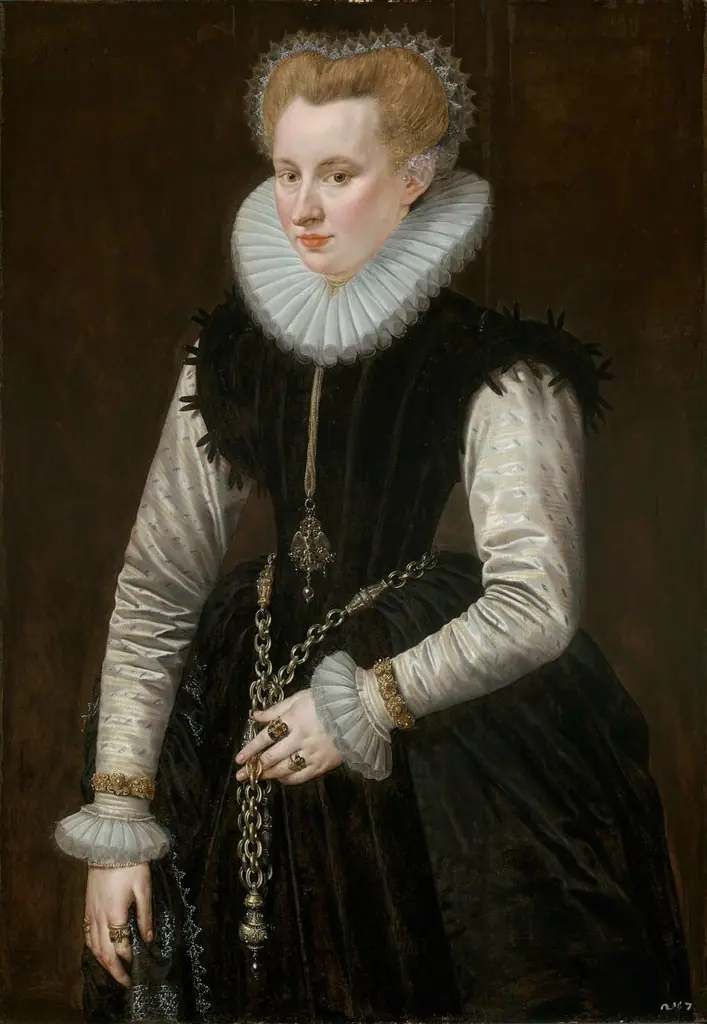 Portrait of a Woman
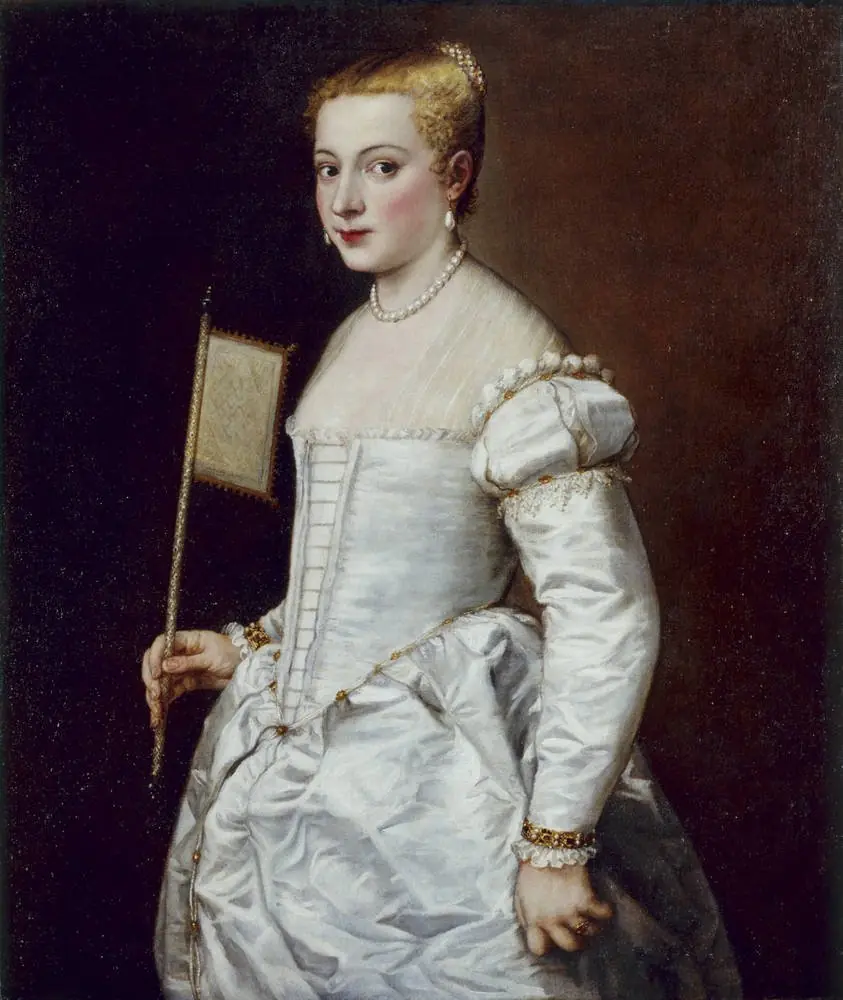 Portrait of a Lady in White
 Untitled