Artwork
Adoration of the Shepherds
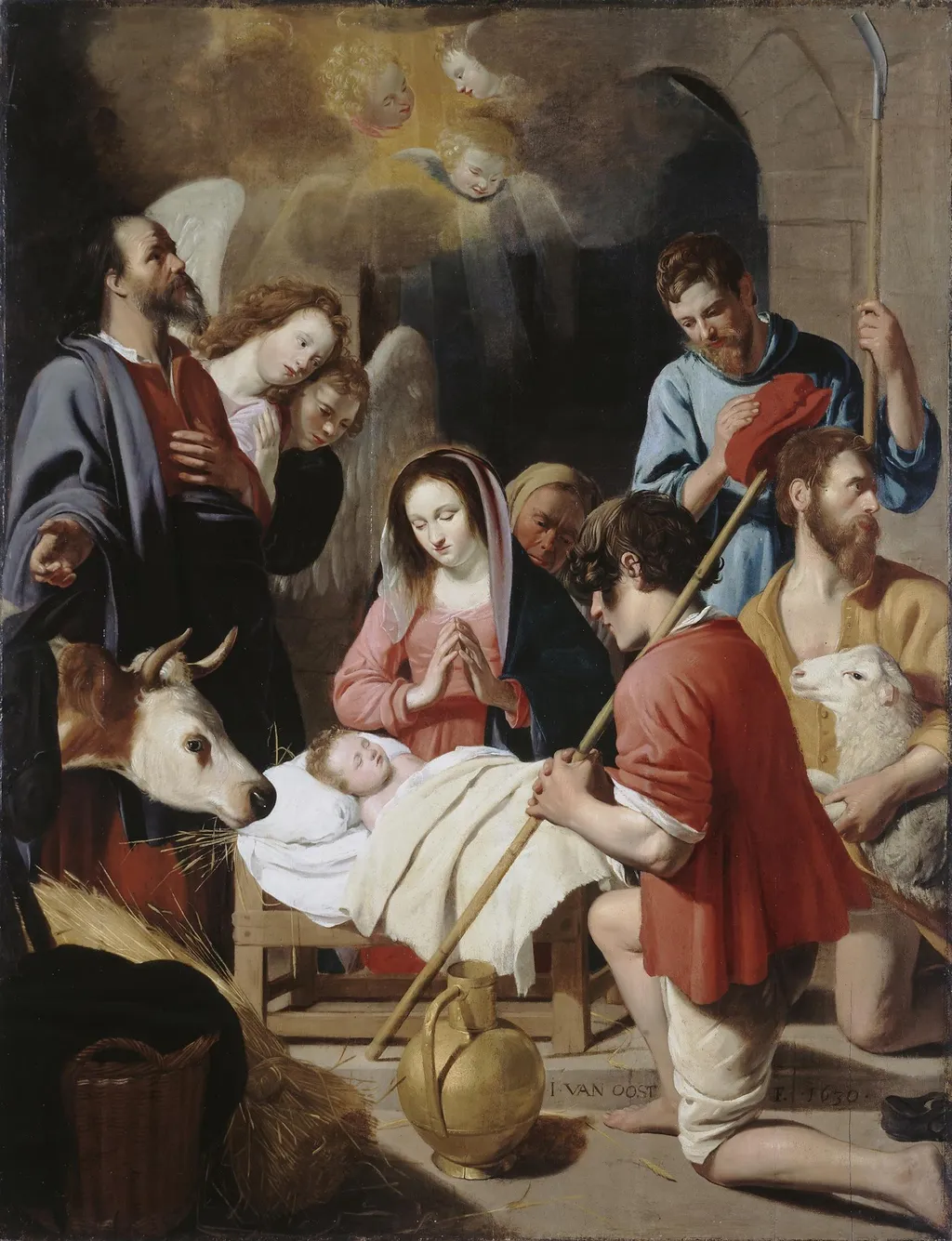
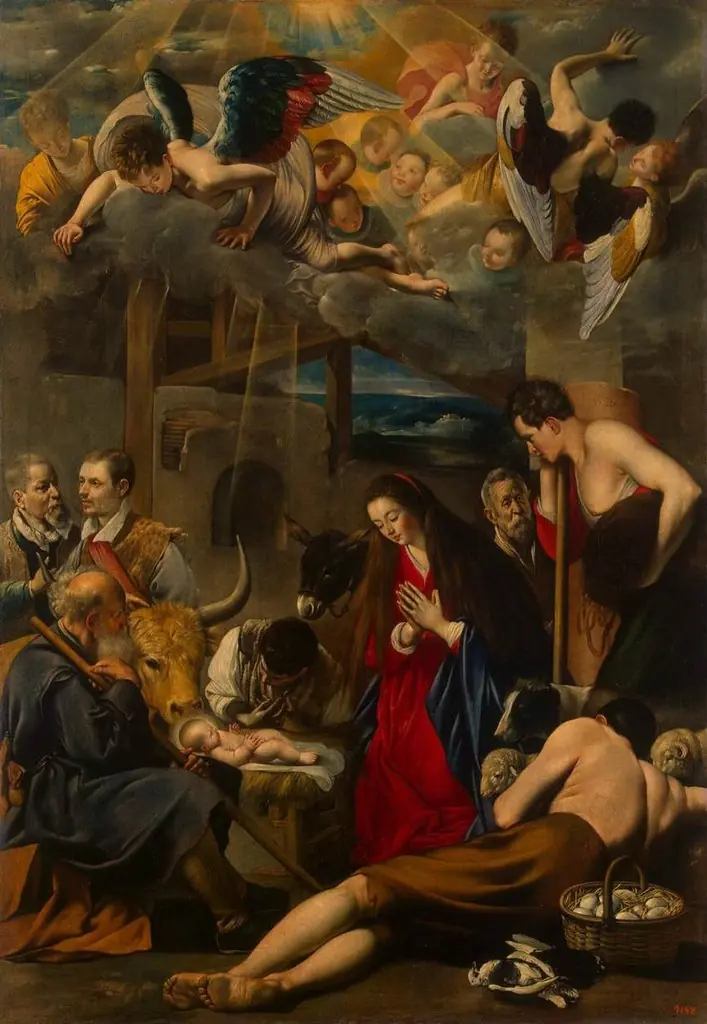
Adoration of the Shepherds is an oil painting by the Flemish Baroque painting artist Jacob van Oost. It dates from 1630 and is held in the collection of the Hermitage Museum.
About this work
Overview
The Adoration of the Shepherds is an oil painting on panel by the Flemish artist Jacob van Oost, dated 1630 and now held in the Hermitage Museum in Saint Petersburg. Measuring 147 by 114 centimetres, it is the earliest dated work in Van Oost's surviving oeuvre and occupies a significant place in the history of Flemish Baroque painting as a prime example of Caravaggist influence transmitted through an artist who had spent seven years in Italy. The painting depicts the biblical scene of shepherds paying homage to the infant Christ, rendered with striking chiaroscuro and a notable naturalism in its figures. Its importance lies in demonstrating how Caravaggio's revolutionary approach to light and ordinary human subjects was absorbed and adapted by Northern European painters returning from Rome, while simultaneously retaining a distinctly Flemish sensibility.
Subject & Meaning
A cow with prominent horns occupies the lower left, near a woven basket and scattered straw, with a brass or golden jug resting on the floor near the centre.
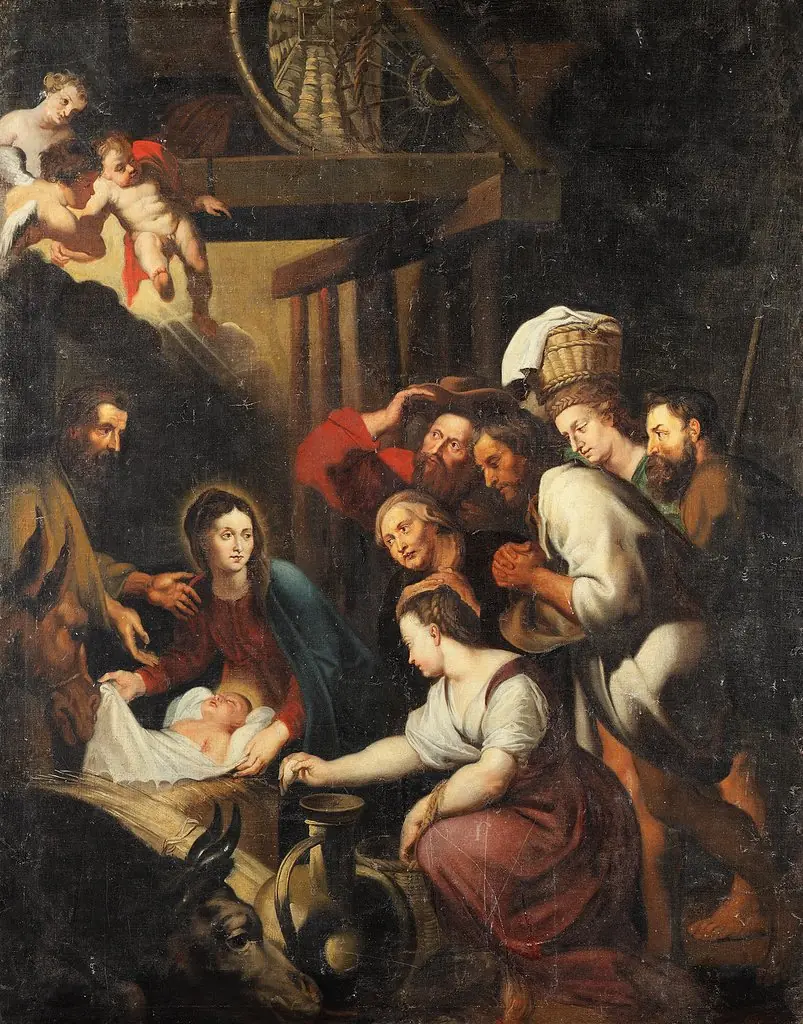
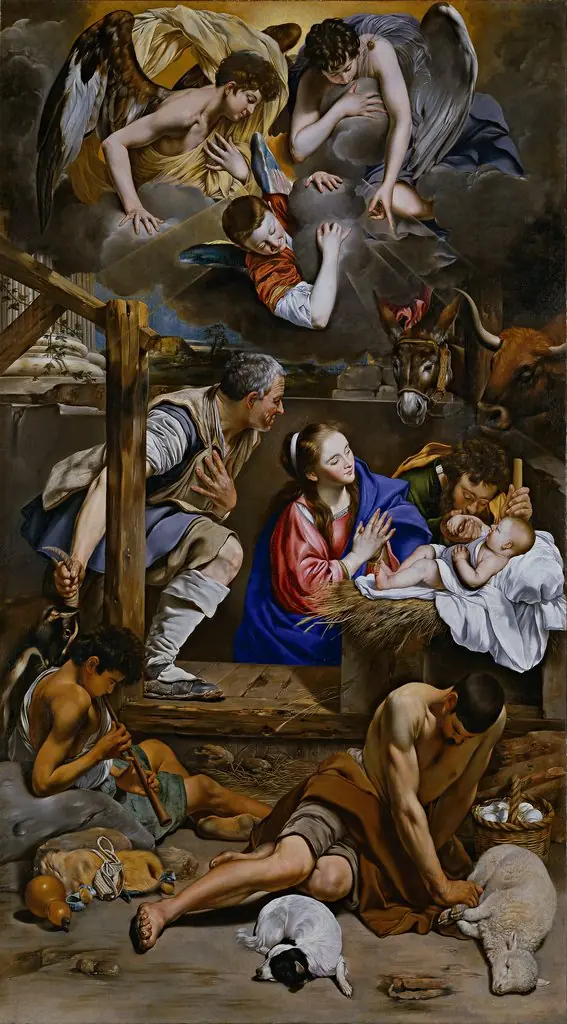
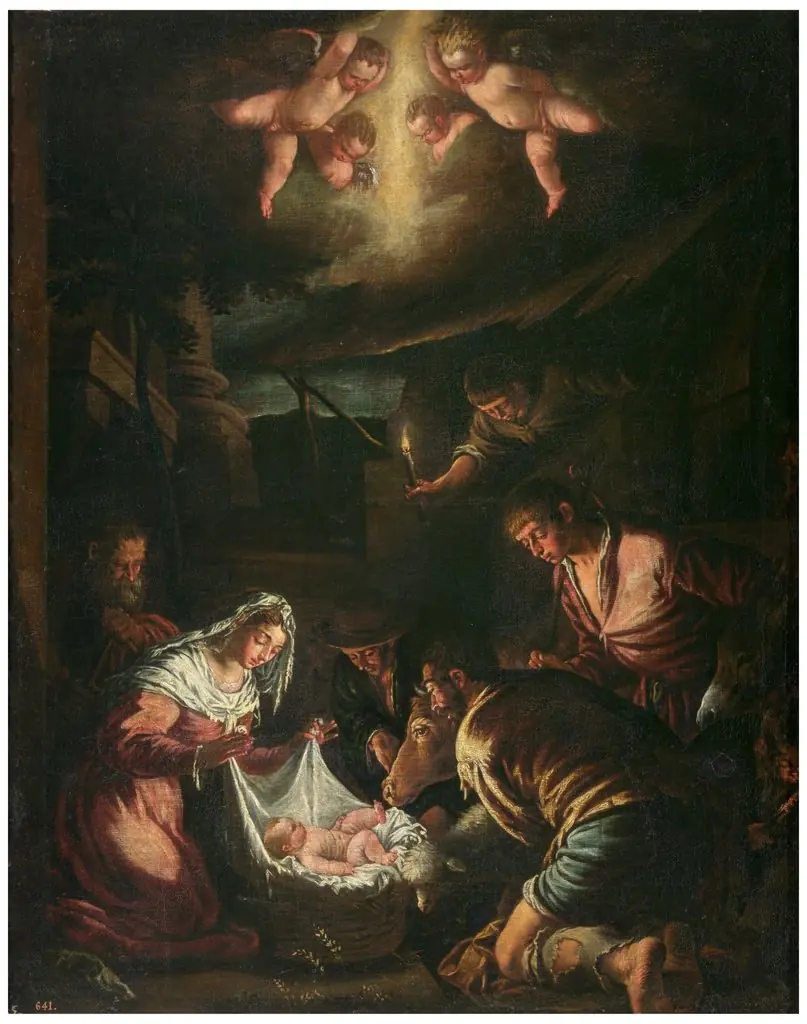
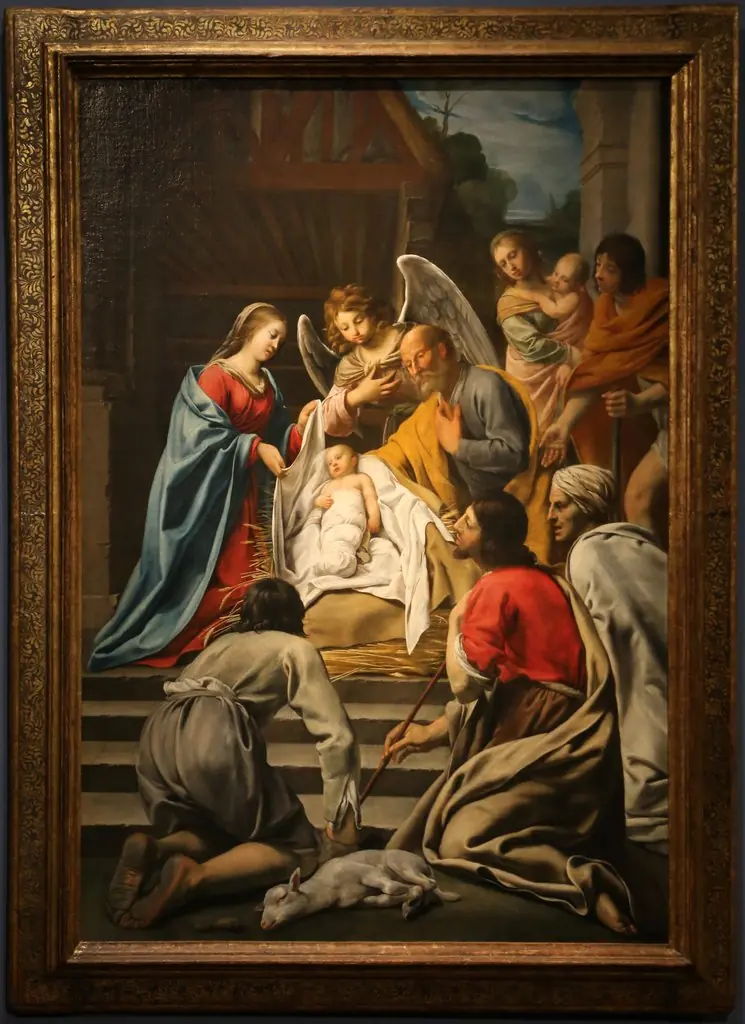
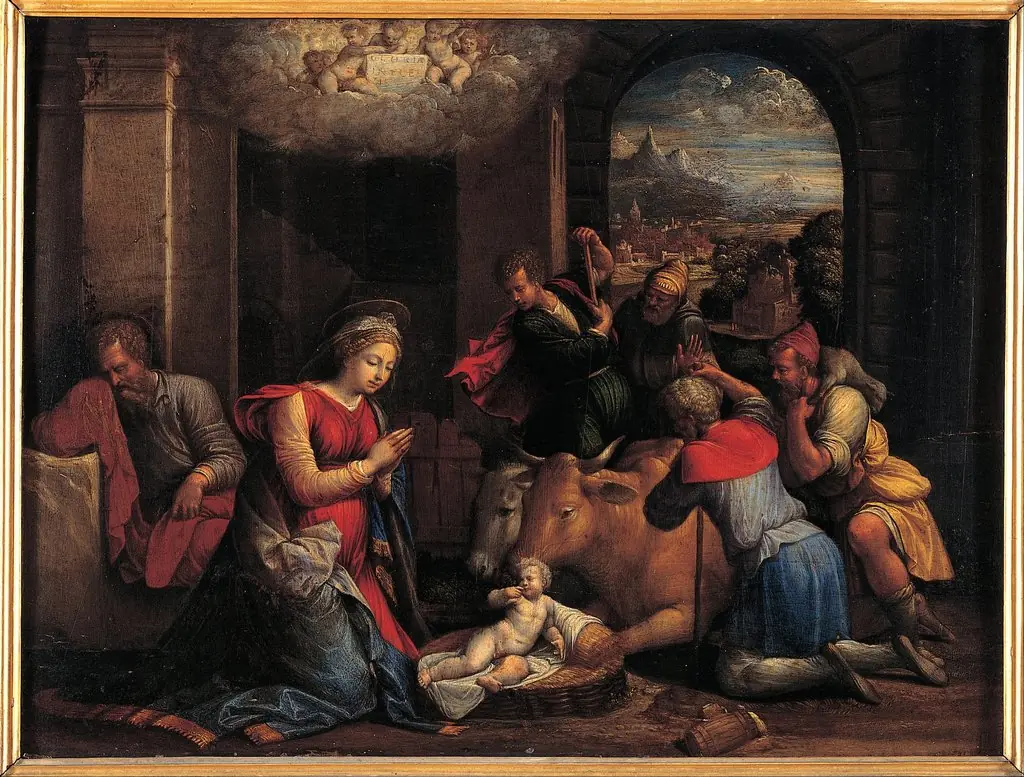
The painting presents the Nativity episode in which shepherds, following the angelic announcement, arrive to worship the newborn Christ. The infant lies on a raised wooden manger, wrapped in white swaddling cloths that serve as the compositional and symbolic focal point, their brightness contrasting with the dim stable setting. The Virgin Mary, identifiable by her traditional pink and blue garments with hands clasped in prayer, kneels in adoration before her son. The shepherds surrounding the scene include a kneeling figure in red with a staff, a man holding a sheep, a figure with a scythe, and an older bearded man gesturing toward the child, alongside other onlookers including a woman and child. Three winged cherub heads emerge from golden clouds above, providing the only overtly supernatural element in an otherwise grounded scene. A cow with prominent horns occupies the lower left, near a woven basket and scattered straw, with a brass or golden jug resting on the floor near the centre. The iconography adheres to Counter-Reformation devotional requirements, emphasising the humility of Christ's birth and the accessibility of divine grace to the simplest of people, a message particularly resonant in the Catholic Southern Netherlands.
Technique & Style
Executed in oil on panel, the painting displays a smooth, polished finish with careful modelling of faces and fabrics. The technique reveals the dual influences shaping Van Oost's mature style: the deep reds, blues, and warm browns of his Flemish training, particularly under the influence of Rubens, combined with the dramatic tenebrism he encountered in Italy. Strong chiaroscuro illuminates the central figures while the background recedes into shadow, creating powerful three-dimensionality. The handling of light shows direct Caravaggist derivation, with a single concentrated source highlighting the Christ Child and the immediate surrounding figures. Yet the overall mood differs markedly from Caravaggio's theatrical intensity; Van Oost employs a sweeter, more idyllic tone in the shepherd's adoration. The stone walls and arched opening of the stable setting provide a restrained architectural framework, while the detailed rendering of humble objects, the woven basket, scattered straw, and metal jug, demonstrates the naturalistic observation characteristic of the artist's approach to religious narrative.
History & Provenance
Jacob van Oost painted the Adoration of the Shepherds in 1630, shortly after his return to Bruges from Italy, where he had resided from 1621 to 1628. The signature and date, I. VAN OOST and 1630, appear near the bottom of the panel. Nothing is known of any work he produced during his Italian sojourn, making this painting the earliest dated witness to his post-Italian development. The work entered the collection of the Hermitage Museum in Saint Petersburg, where it remains today. Its acquisition history prior to the Hermitage's holding is not documented in the available sources. The painting's status as Van Oost's earliest dated work gives it particular value for understanding the chronology of his artistic development and the immediate impact of his Italian experience on his practice in Flanders.
Context
Jacob van Oost the Elder spent his formative years in Italy during the 1620s, a period when Caravaggio's legacy dominated Roman painting and when Northern artists were actively absorbing and transmitting his innovations throughout Europe. Upon returning to Bruges in 1628, Van Oost established himself as a painter of altarpieces, responding to the unceasing demand from churches for decoration in the spirit of the Counter-Reformation. The Catholic Southern Netherlands represented a particularly fertile market for such works, as religious imagery played a crucial role in reaffirming Catholic identity against Protestant challenges. Van Oost's Adoration of the Shepherds of 1630 demonstrates how quickly and thoroughly he had assimilated Italian developments, yet it also reveals the persistence of local Flemish traditions in colour and emotional register. Scholarship has noted the tension between the painting's Caravaggist naturalism, its ordinary-looking common people, its dramatic lighting, and its fundamentally gentle, approachable devotional character, a synthesis that distinguishes Van Oost's interpretation from both his Italian model and his Flemish predecessors.
Legacy
As Jacob van Oost's earliest dated painting, the Adoration of the Shepherds serves as a foundational document for understanding the dissemination of Caravaggism in Northern Europe. It demonstrates that by 1630, the year of his return to active practice in Bruges, Van Oost had already achieved a confident synthesis of Italian tenebrism and Flemish colouristic tradition. The work's influence lies less in direct stylistic imitation by subsequent artists than in its exemplification of how Caravaggio's revolutionary naturalism could be domesticated for Counter-Reformation devotional purposes in the Spanish Netherlands. The painting's continued residence in the Hermitage Museum ensures its accessibility for study of this crucial moment in Flemish art, when artists returning from Italy recalibrated their native traditions in light of transformative Mediterranean experiences. Its value for art history resides in its precise datability and its clear articulation of the problems, pictorial, emotional, and theological, that occupied Flemish painters of religious subjects in the decades following Rubens's emergence and Caravaggio's death.
Own this work as a print
Artist & collection
Artist
Jacob van Oost or Jacob van Oost the Elder (1603–1671) was a Flemish painter of history paintings and portraits.


- Adoration of the Shepherds
 Adoration of the Shepherds
 Adoration of the Shepherds
 Adoration of the Shepherds
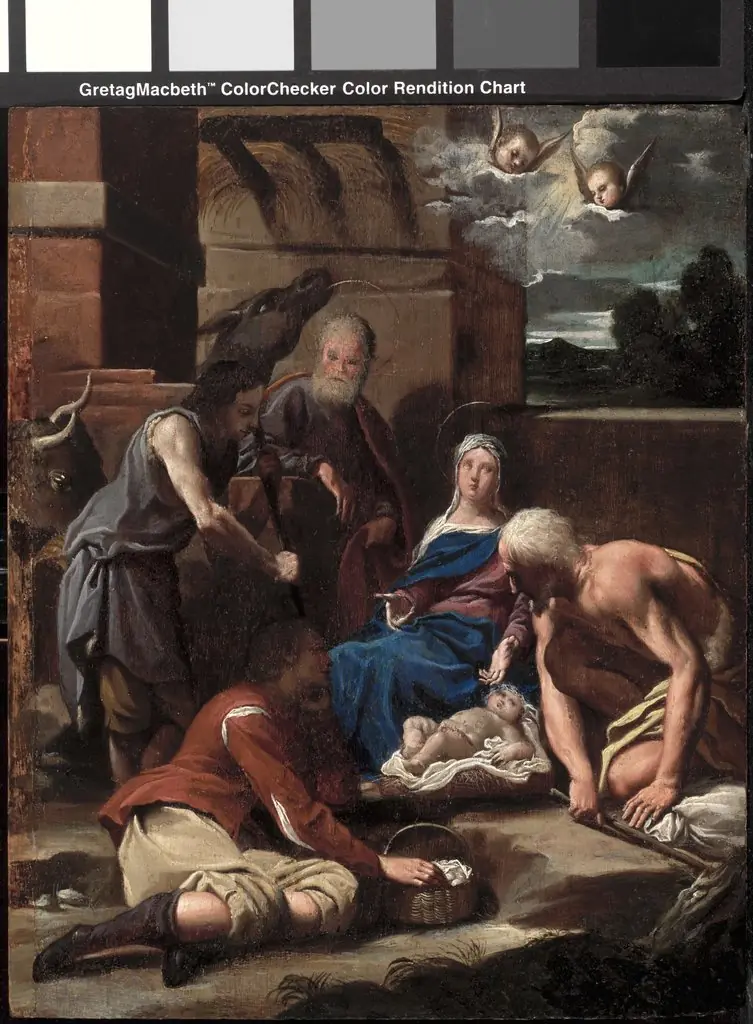 Adoration of the Shepherds
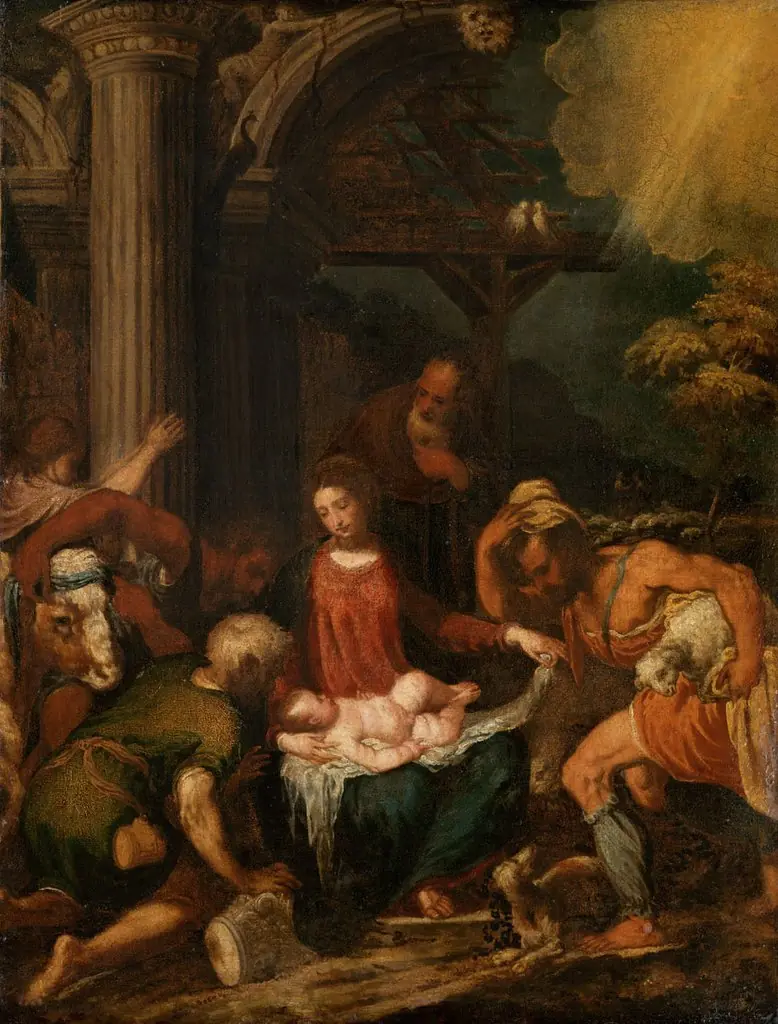 Adoration of the Shepherds
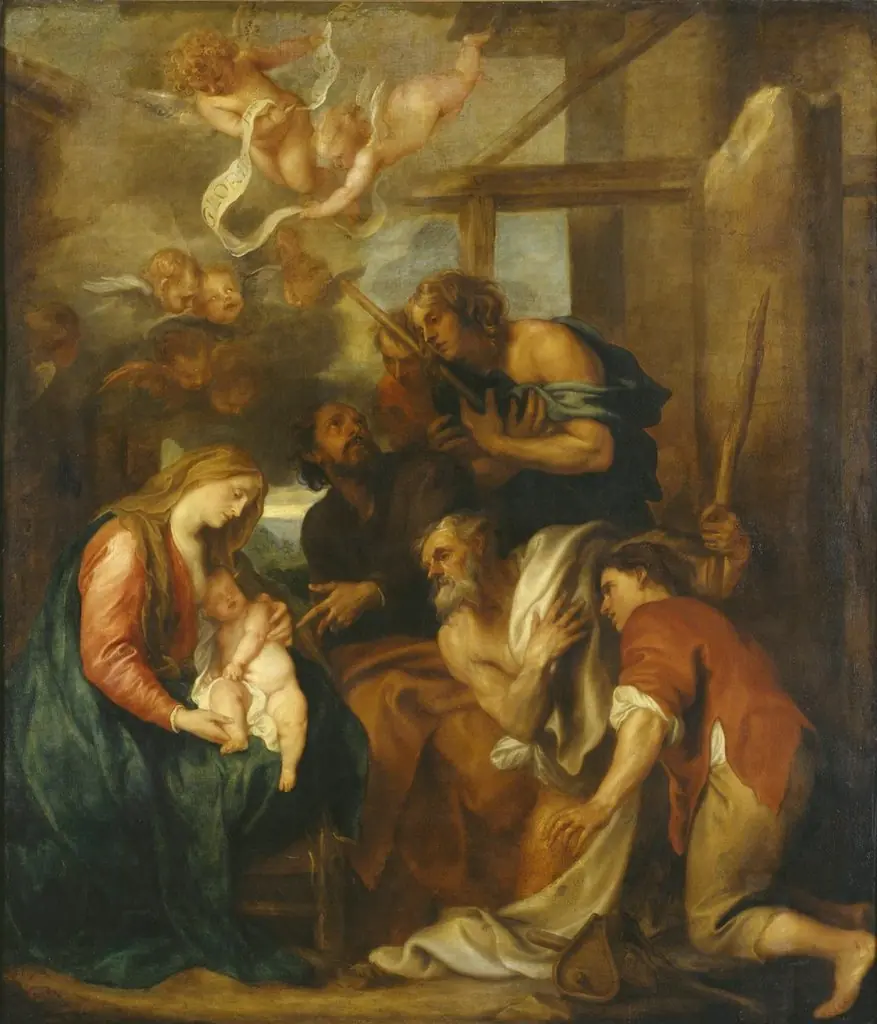 Adoration of the Shepherds
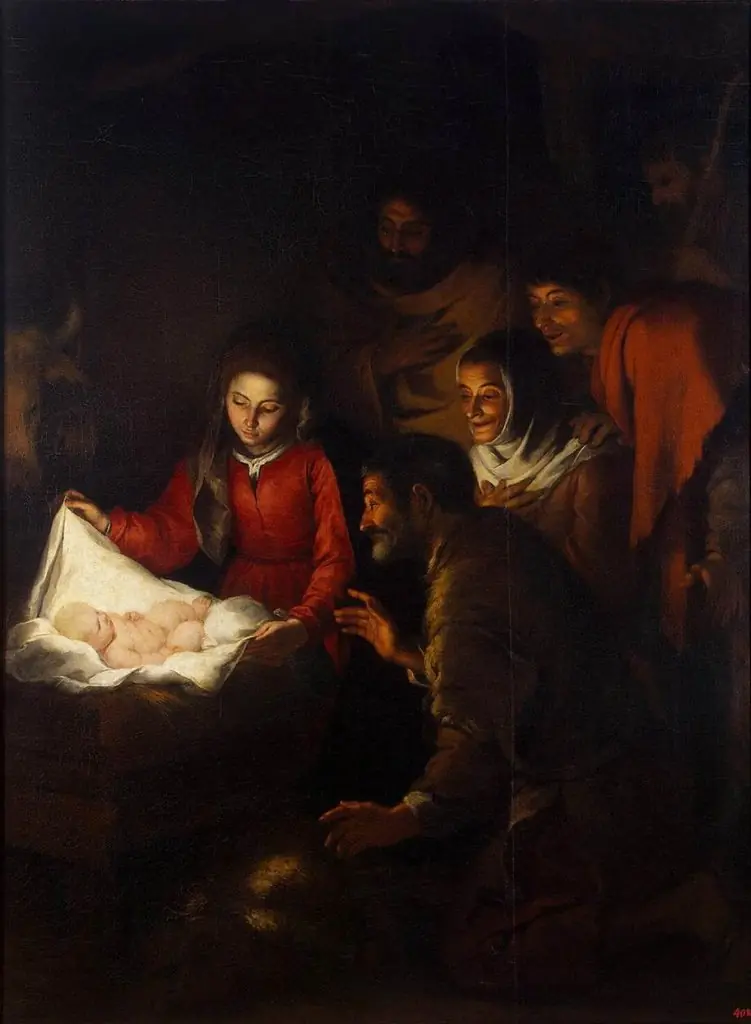 Adoration of the Shepherds
 Adoration of the Shepherds
 Adoration of the Shepherds
 Adoration of the Shepherds
 Adoration of the Shepherds