Artwork
A new device to cleave wild beasts from Head to Tail
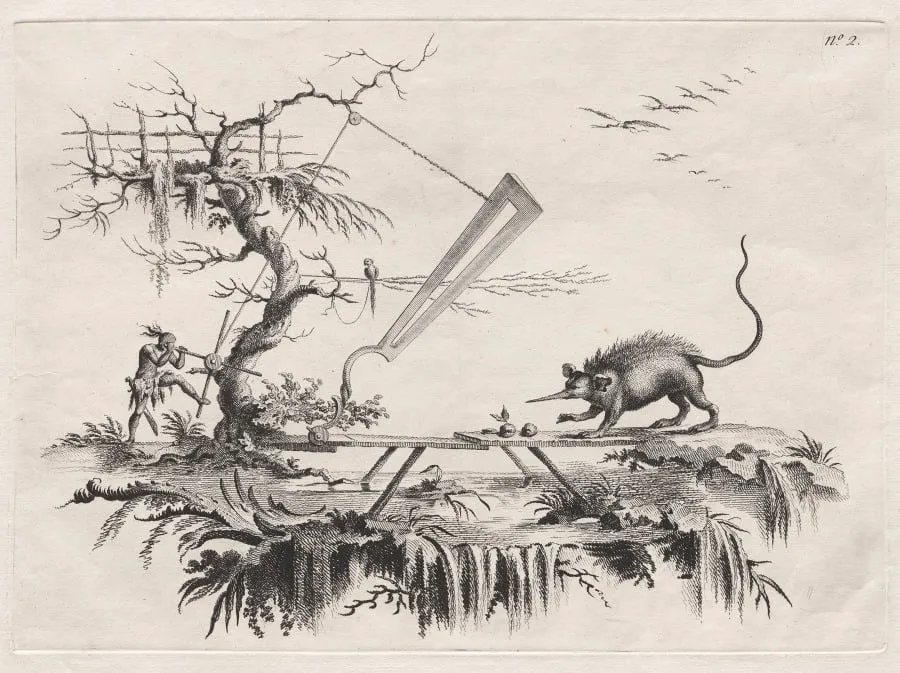
A new device to cleave wild beasts from Head to Tail is a print by the Romanticist artist Filippo Morghen. It dates from 1769 and is held in the collection of the Cleveland Museum of Art.
- Accession no.
- 2023.19.3
- Credit line
- Purchased with funds from the Estate of Muriel Butkin
About this work
Overview
This etching is part of a series of ten prints by Filippo Morghen, depicting a fantastical lunar world. The series showcases the artist's imagination and creativity in representing an otherworldly society.
Subject & Meaning
The print illustrates a scene where a giant pair of scissors is used to cleave a wild, rat-like creature. The image is crowded with strange machines and lunar inhabitants, reflecting the artist's interpretation of an imaginary lunar culture.
Technique & Style
The etching features bold lines, characteristic of Morghen's work. The style is reminiscent of the decorative and visual arts of 18th-century Europe, with influences from chinoiserie and turquerie, which incorporated elements from Asian, Ottoman, and Native American cultures.
Context
The series was created during a time when European audiences were fascinated by literary and visual narratives of imaginary voyages to the moon. Morghen's work reflects this interest, presenting a fantastical and imaginative representation of lunar life.
Artist & collection

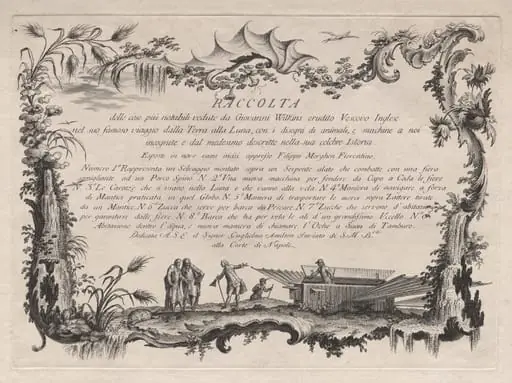 Title and Dedication Page
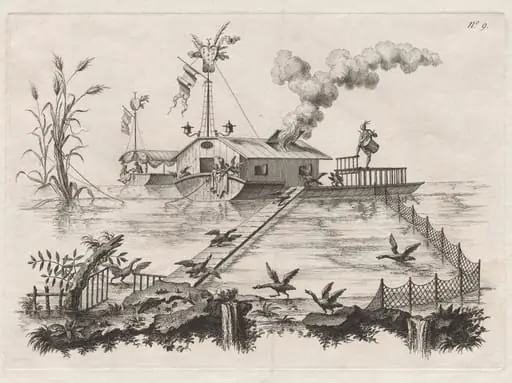 A House on Water, and a New Way to Summon Geese by the Beat of a Drum
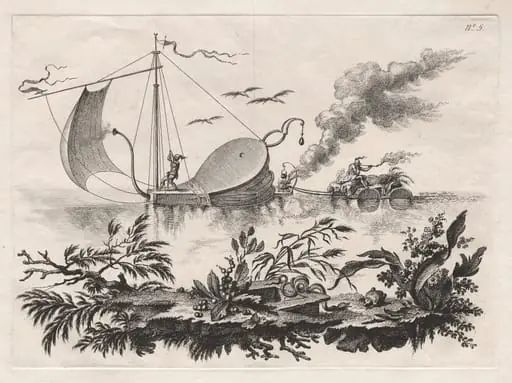 The Manner of Transporting Wares on Barges Drawn by a Bellows
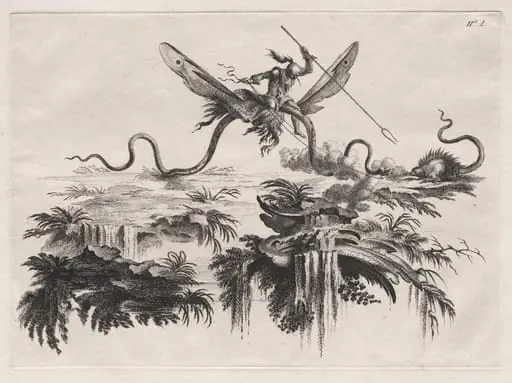
- A Savage mounted on a winged Serpent battling with a wild beast resembling a Porcupine
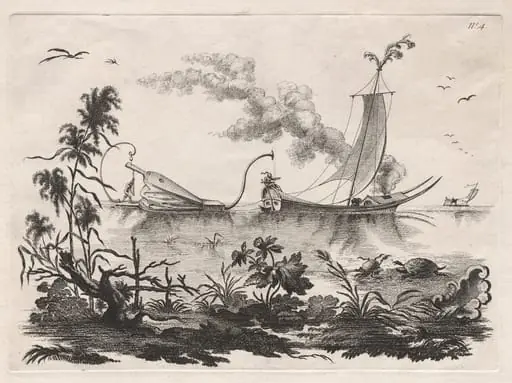 The Manner of sailing by the power of Bellows practiced on that Planet
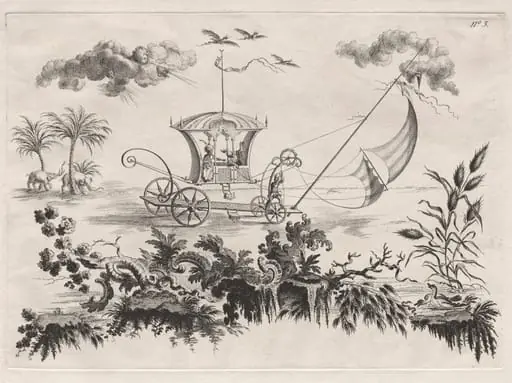 The Carriages used on the Moon and which move by sails
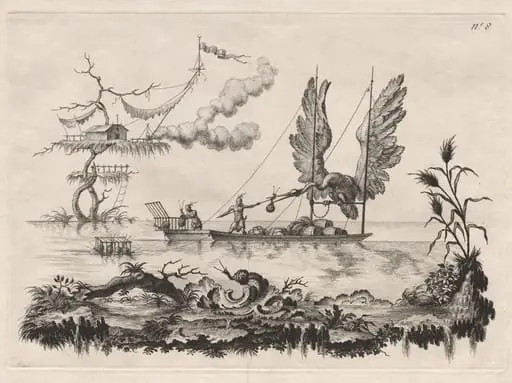 A Boat That Has for Sails the Wings of a Huge Bird
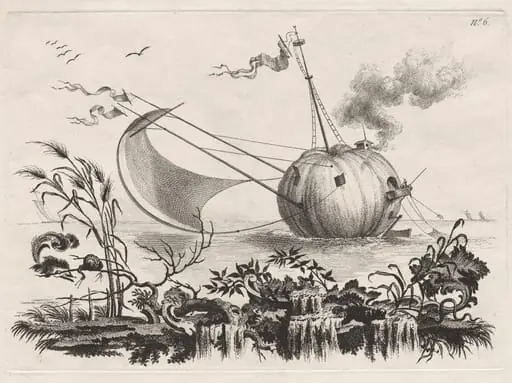 A Pumpkin Used as a Fishing Boat