Artwork
The Carriages used on the Moon and which move by sails
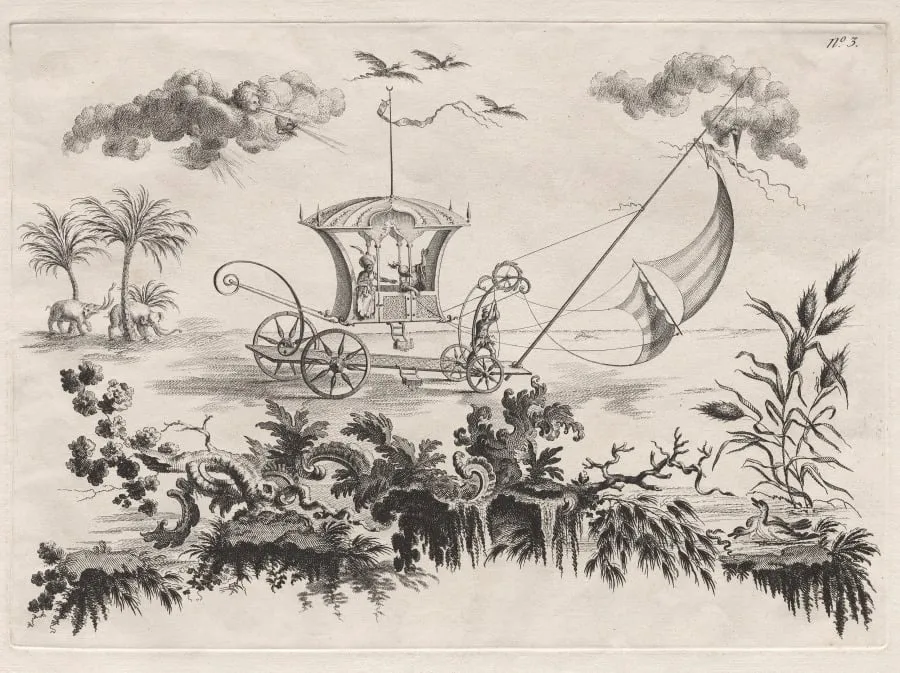
The Carriages used on the Moon and which move by sails is a print by the Romanticist artist Filippo Morghen. It dates from 1769 and is held in the collection of the Cleveland Museum of Art.
- Accession no.
- 2023.19.4
- Credit line
- Purchased with funds from the Estate of Muriel Butkin
About this work
This etching is part of a series imagining life on the moon, complete with pumpkin houses and scissor-wielding hunters.
You see a strange carriage with sails rolling across the moon’s surface, pulled by giant birds.
This etching is part of a series imagining life on the moon, complete with pumpkin houses and scissor-wielding hunters. People in the 1700s loved wild stories about space, and Morghen turned them into playful, detailed pictures. The moon here feels almost like Earth, just weirder.
If you like this kind of quirky imagination, look up more works by Filippo Morghen (Italian, 1730–after 1807).
Overview
This etching is one of a series of ten prints by Filippo Morghen depicting a fantastical journey to the moon. The series showcases the artist's imaginative vision of lunar life and culture.
Subject & Meaning
The print features a carriage propelled by sails and pulled by giant birds, illustrating the fantastical modes of transportation used by the moon's inhabitants. The depiction is influenced by European interpretations of non-Western cultures, reflecting the era's fascination with exoticism.
Technique & Style
The work is an etching, a technique that allowed Morghen to achieve detailed and intricate designs. The style is characterized by playful and imaginative representations of lunar life, blending elements of chinoiserie and turquerie.
Context
The series was created during a time when European audiences were captivated by stories of imaginary voyages to the moon, reflecting the era's interest in speculative fiction and the unknown.
Artist & collection

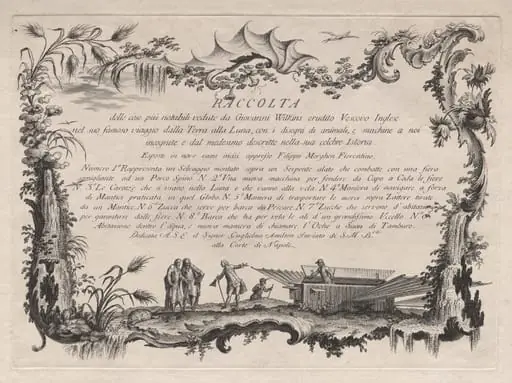 Title and Dedication Page
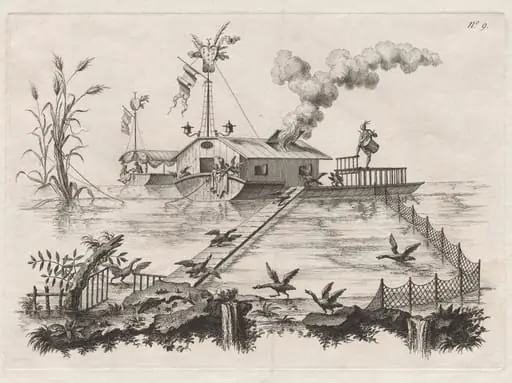 A House on Water, and a New Way to Summon Geese by the Beat of a Drum
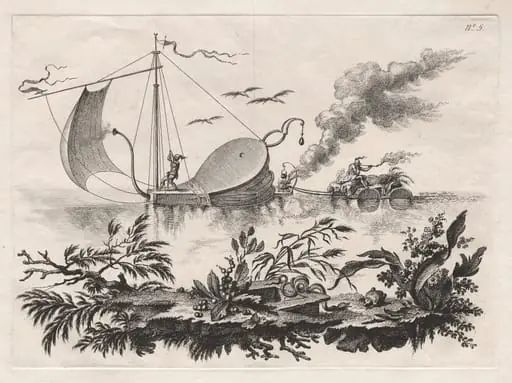 The Manner of Transporting Wares on Barges Drawn by a Bellows
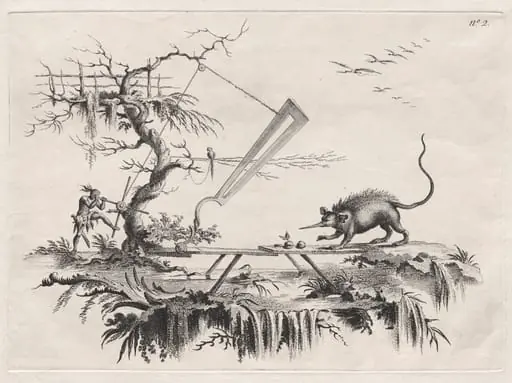 A new device to cleave wild beasts from Head to Tail
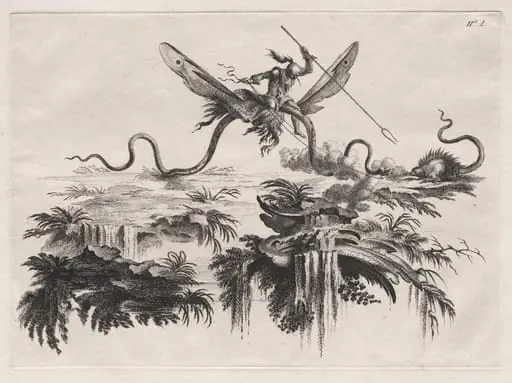
- A Savage mounted on a winged Serpent battling with a wild beast resembling a Porcupine
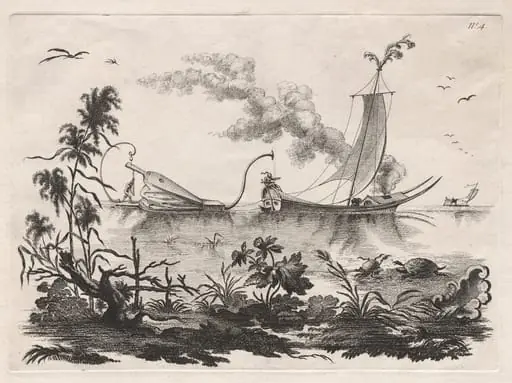 The Manner of sailing by the power of Bellows practiced on that Planet
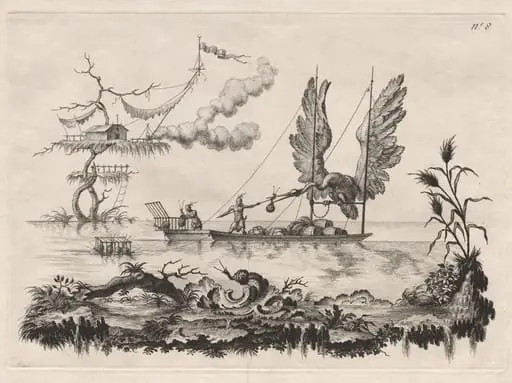 A Boat That Has for Sails the Wings of a Huge Bird
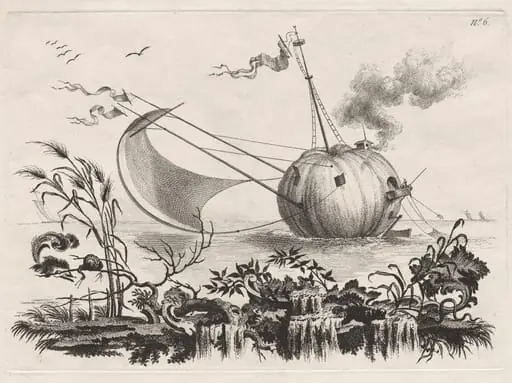 A Pumpkin Used as a Fishing Boat
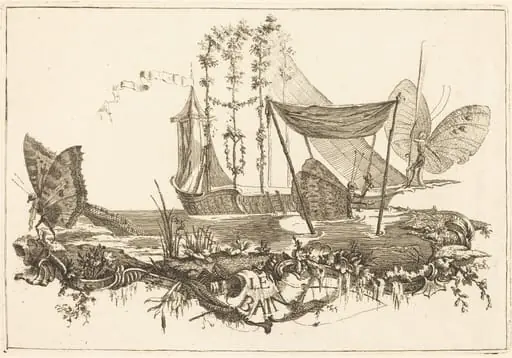 Le Bain (The Bath)
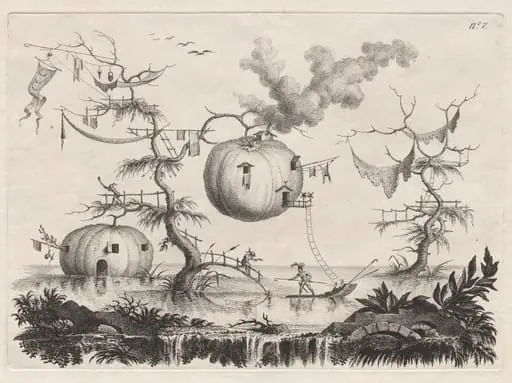 Pumpkins Used as Dwellings to Be Secure against Wild Beasts
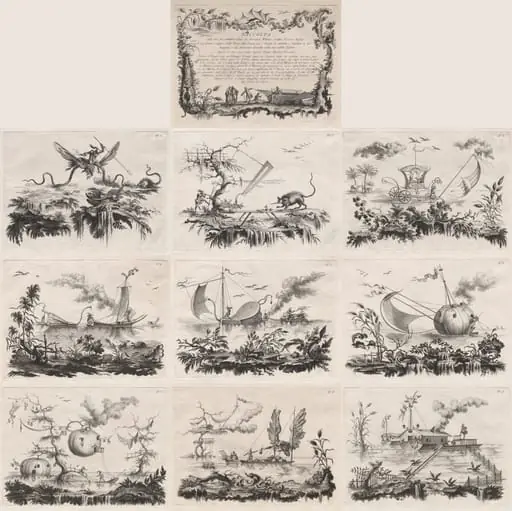 Suite of the most notable things seen by John Wilkins erudite English Bishop during his famous voyage from the Earth to the Moon … dedicated to Sir William Hamilton ambassador to the Court of Naples
 The Tomb of Nero
 Blomster på en sten. I baggrunden et bjerglandskab
 Blomster på en sten. I baggrunden et bjerglandskab
 The Deities: Nox
 St. John on the Island of Patmos