Artwork
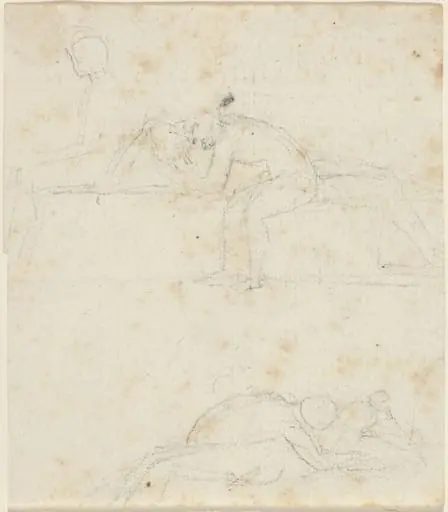
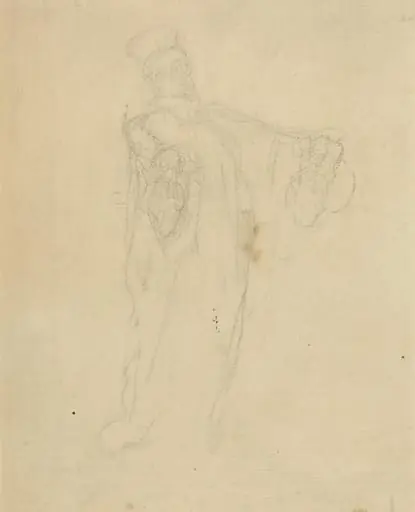
Figure Seen from behind Praying to an Apparition of a Head with Lions Below
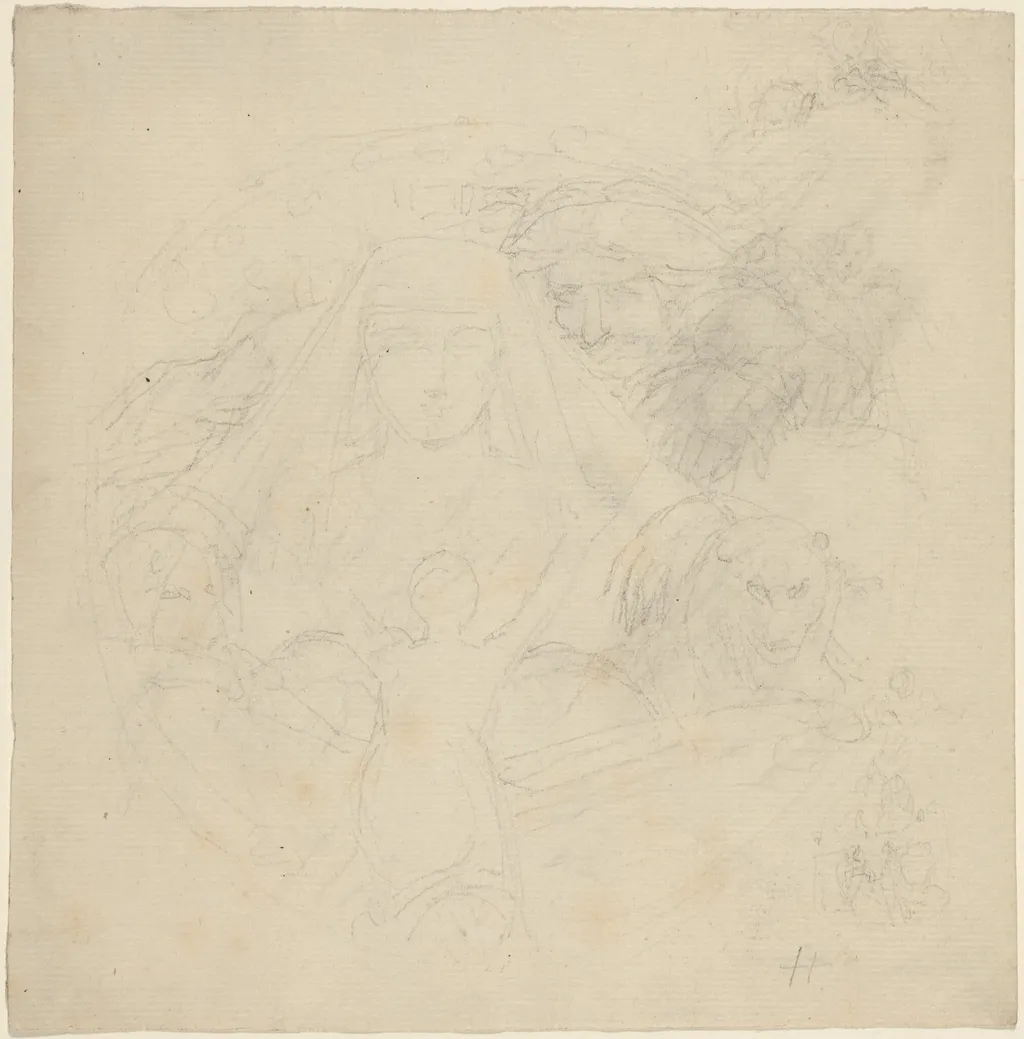
Figure Seen from behind Praying to an Apparition of a Head with Lions Below is a graphite drawing by the Romanticist artist John Flaxman. It dates from 1790 and is held in the collection of the National Gallery of Art.
- Inscription
- Inscribed:lower left verso: ?Design for Hesiod
About this work
Overview
Created in 1790, this graphite drawing on laid paper is one of John Flaxman’s intimate studies in Neoclassical symbolism.
Created in 1790, this graphite drawing on laid paper is one of John Flaxman’s intimate studies in Neoclassical symbolism. As both a sculptor and illustrator, Flaxman used drawing to explore spiritual and mythological themes. The work’s restrained medium and focused composition reflect his preference for linear clarity over decorative detail, aligning with broader European trends that favored ancient ideals over Baroque excess.
Subject & Meaning
A lone figure, viewed from behind, kneels in devotion before a floating head surrounded by lions. The apparition suggests a divine or mythic presence, possibly evoking ancient oracles or guardian spirits. The lions, recurring in Flaxman’s work, may symbolize strength, vigilance, or mythological guardianship. The scene conveys quiet reverence rather than dramatic spectacle, emphasizing inner contemplation over external action.
Technique & Style
Flaxman employed fine graphite lines to define form with precision and economy. The drawing’s flatness and lack of shading reflect his training in engraved illustration and his admiration for ancient relief sculpture. Contours are clean and deliberate, prioritizing silhouette and rhythm over texture or volume.
This approach aligns with his broader aesthetic, which sought to distill classical narratives into essential, almost architectural forms.
History & Provenance
The drawing was made during Flaxman’s time in Rome, where he immersed himself in classical antiquities and developed his signature illustrative style. It likely served as a preparatory study for larger projects, possibly related to his commissions for Josiah Wedgwood or his later illustrated editions of Homer and Dante. Its survival as a standalone work suggests it was valued for its conceptual clarity even outside its original context.
Context
In late 18th-century Britain, Neoclassicism was gaining momentum as a reaction against ornamental excess. Flaxman’s work, influenced by his Roman sojourn and Wedgwood’s ceramic designs, contributed to a visual language that prized simplicity, moral seriousness, and references to antiquity. This drawing reflects a broader cultural turn toward symbolic, introspective imagery in art and literature.
Legacy
Flaxman’s drawings, including this one, helped define a new mode of narrative illustration that prioritized line and symbolic content over realism. His influence extended to later generations of artists and designers, particularly in book illustration and decorative arts. Though less celebrated than his sculptures, these works remain key to understanding the intellectual underpinnings of British Neoclassicism.
![Studies for a Monument with the Crowning of a Figure [recto and verso]](https://artifactworldgallery.com/img/john-flaxman--studies-for-a-monument-with-the-crowning-of-a-figure-recto-a--20bffea3c9de8b94-w320.webp)
Own this work as a print
Artist & collection
Artist
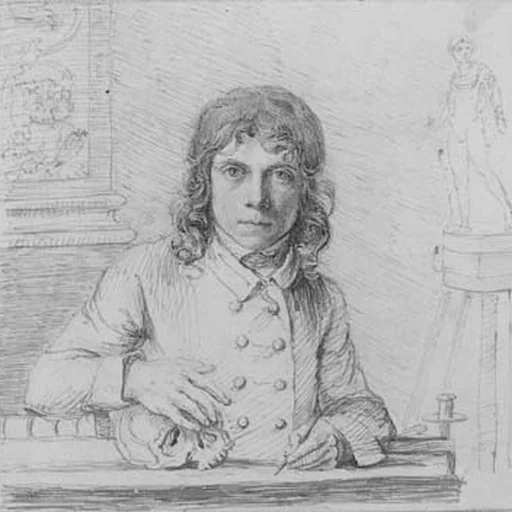
John Flaxman (6 July 1755 – 7 December 1826) was an English sculptor and draughtsman who was a leading figure in British and European Neoclassicism.

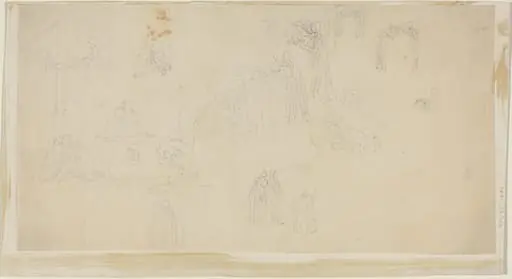
![Studies for a Monument with Angels Reaching Down to a Praying Figure [recto and verso], by John Flaxman](https://artifactworldgallery.com/img/john-flaxman--studies-for-a-monument-with-angels-reaching-down-to-a-prayin--9d789ab993a76a50-w320.webp) Studies for a Monument with Angels Reaching Down to a Praying Figure [recto and verso]
Studies for a Monument with Angels Reaching Down to a Praying Figure [recto and verso]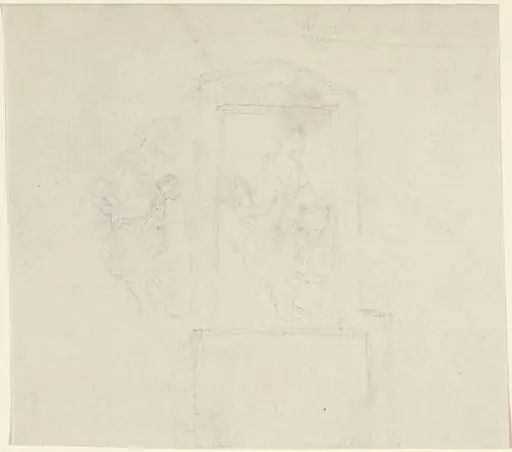 Monument to Agnes Cromwell (?)
![Time's Triple Bow [recto], by William Blake](https://artifactworldgallery.com/img/william-blake--time-s-triple-bow-recto--dc15bf51bd241980-w320.webp) Time's Triple Bow [recto]
Time's Triple Bow [recto]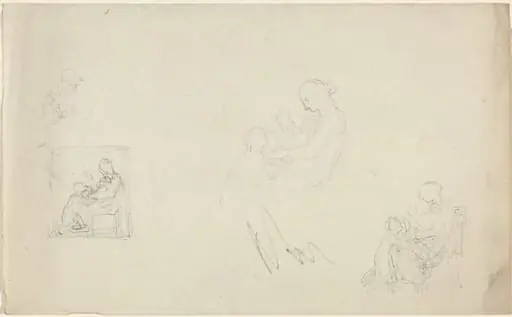 Four Studies of a Seated Woman with Children at Her Feet (Sketches for the Monument to Lady FitzHarris?)
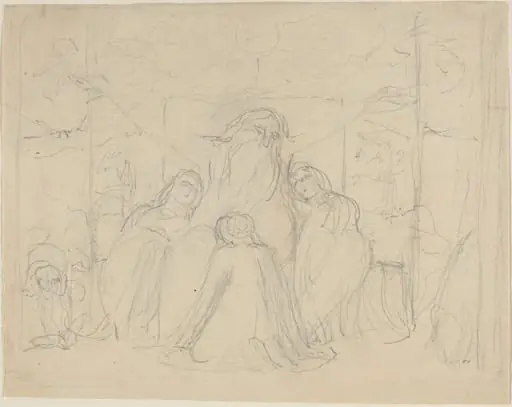 Job and His Daughters
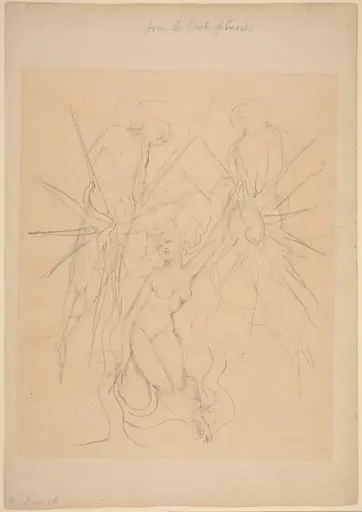 The Descent of the Angels to One of the Daughters of Men
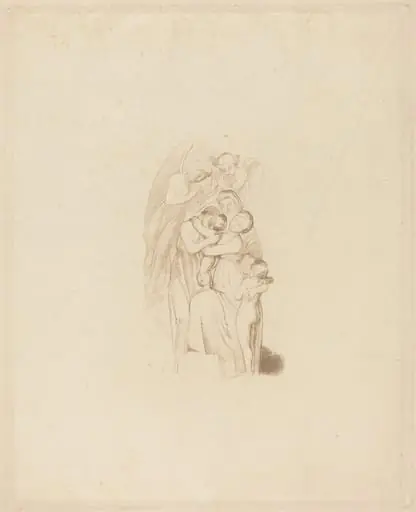 Holy Family? with Angels l.1: The March of the Intellect
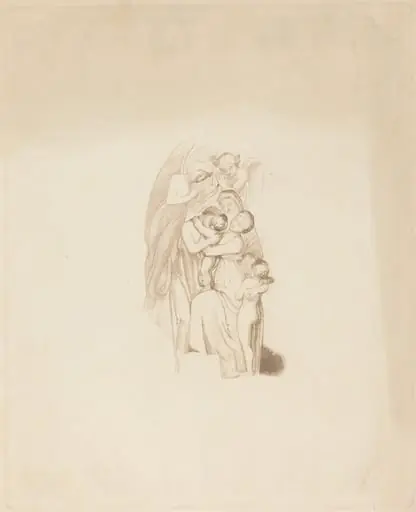 Holy Family? with Angels
 Lawyer
 The Vision of the Lord of Spirits
 An Angel Teaching a Daughter of Men the Secrets of Sin
- Studies for a Monument with the Crowning of a Figure [recto and verso]