Artwork
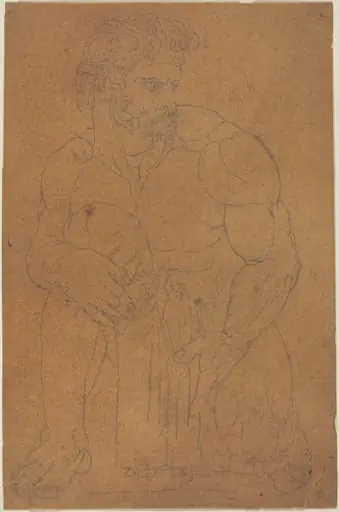
Otus and Ephialtes Holding Mars Captive
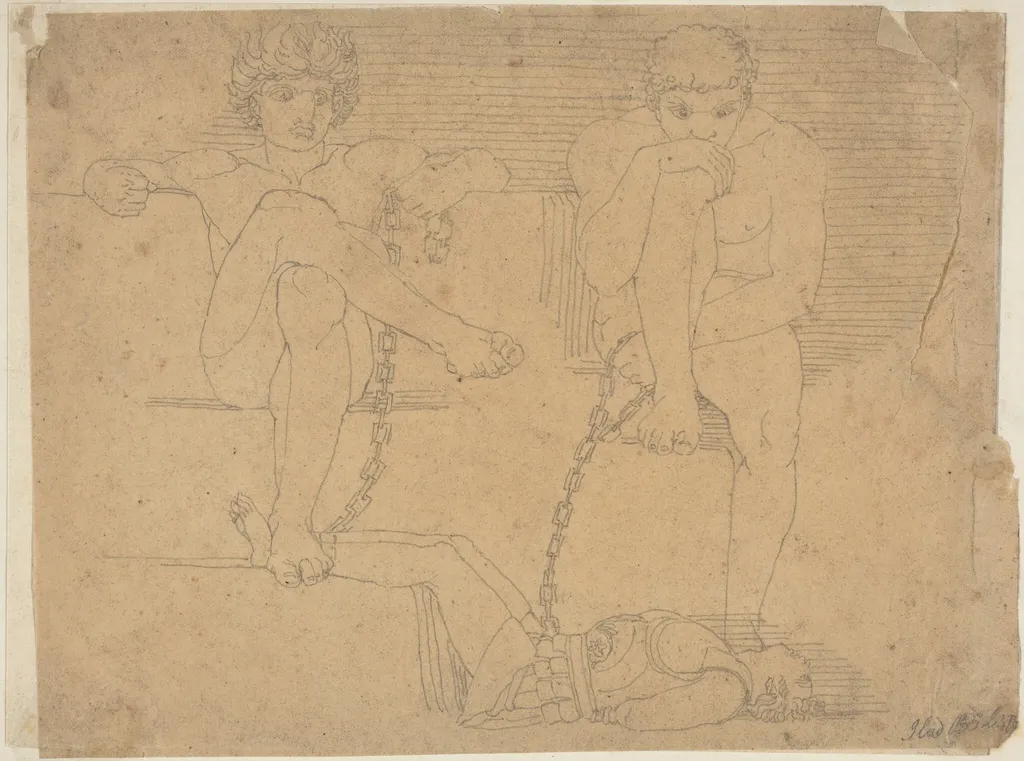
Otus and Ephialtes Holding Mars Captive is a graphite drawing by the Romanticist artist John Flaxman. It dates from 1794 and is held in the collection of the National Gallery of Art.
- Inscription
- Inscribed:lower right: Iliad [...?]
About this work
Overview
John Flaxman’s graphite drawing Otus and Ephialtes Holding Mars Captive, dated around 1794, presents a compact narrative scene in which the mythic twin brothers subdue the Roman god of war. Executed in a restrained linear manner, the work reflects Flaxman’s characteristic Neoclassical approach to composition and form.
Subject & Meaning
The composition draws on the Greek myth of Otus and Ephialtes, the Aloadae, who are shown overpowering Mars, a figure traditionally associated with martial power. By portraying the giants restraining the god, Flaxman underscores themes of human (or semi‑divine) triumph over warlike forces, a motif common in Enlightenment‑era classical scholarship.
Technique & Style
Rendered entirely in graphite, the drawing relies on clean, precise lines and a limited tonal range to model muscular bodies and convey spatial depth. Contrasting values create the illusion of volume, while the simplified background, suggested by faint horizontal strokes, keeps attention on the dynamic interaction of the three figures.
History & Provenance
Flaxman, originally trained as a modeller for Josiah Wedgwood’s pottery, spent formative years in Rome where he refined his linear style. The drawing likely emerged during his early mature period, shortly after his return to England, and exemplifies the practice of producing narrative studies that informed his later monumental reliefs and book illustrations.
Context
Created at the height of the Neoclassical movement, the work aligns with contemporary interests in antiquity and the moralizing potential of myth. Flaxman’s focus on clear contour and compositional clarity mirrors the aesthetic ideals promoted by academies and patrons who favored didactic, historically grounded art.
Own this work as a print
Artist & collection
Artist
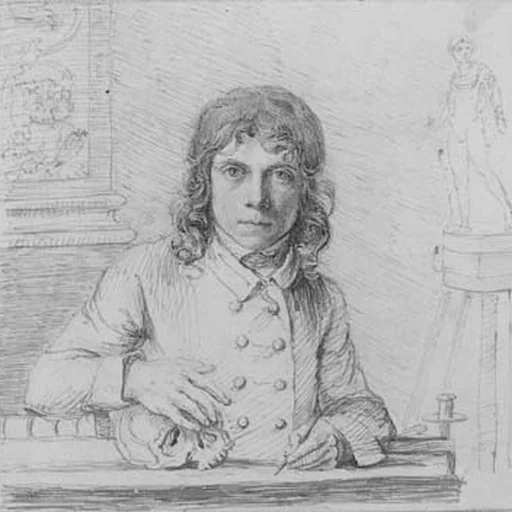
John Flaxman (6 July 1755 – 7 December 1826) was an English sculptor and draughtsman who was a leading figure in British and European Neoclassicism.

- Figure Standing over Corpses, Blowing a Horn
 Frightened Man Looking Up; Woman and Children
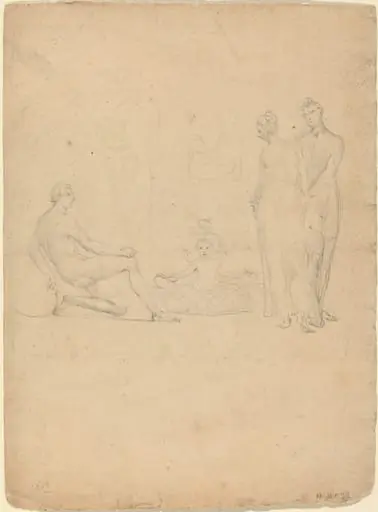 The Infant Hercules Throttling the Serpents
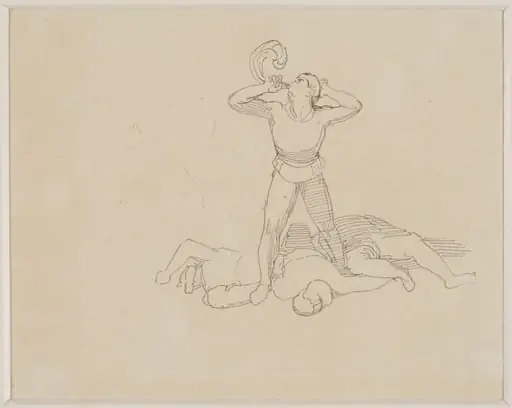 Untitled
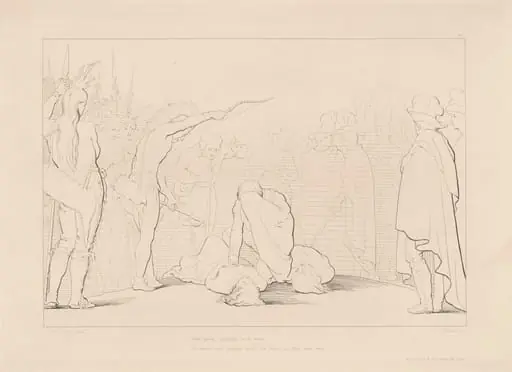 Mute, Gazing, Agonizing...
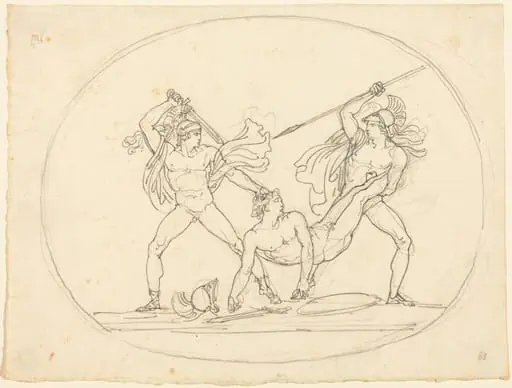 Two Ancient Warriors Fighting over a Dead Comrade
 Seated Woman and Man Sprawling on the Ground
 From "Bizzarie di varie Figure"
 The Circle of the Corrupt Officials; the Devils Tormenting Ciampolo
 He Bids Me Dry the Last...
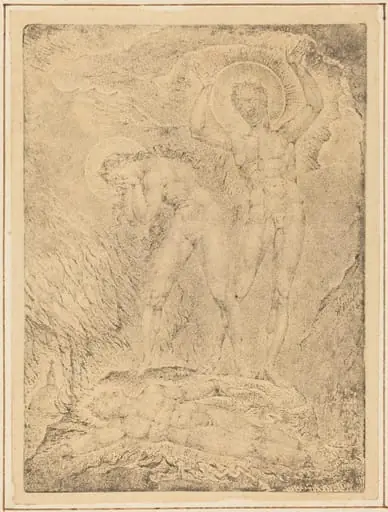 The Chaining of Orc
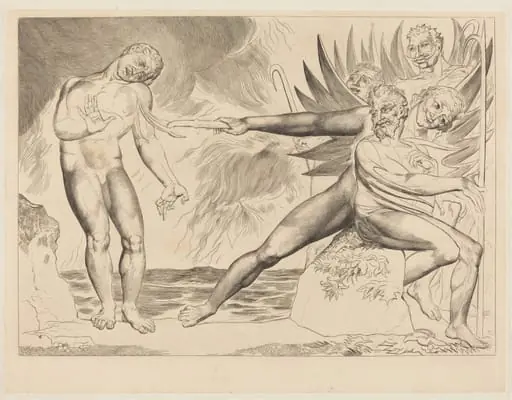 The Circle of the Corrupt Officials; the Devils Tormenting Ciampolo