Artwork
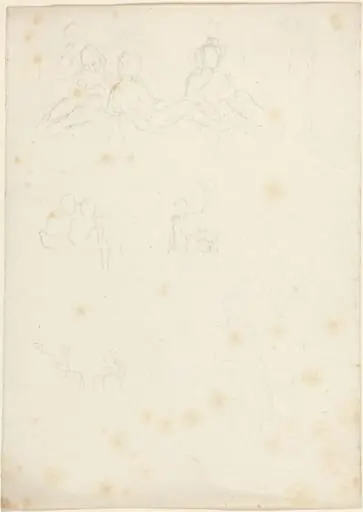
Seated Figure with Arms Outstretched
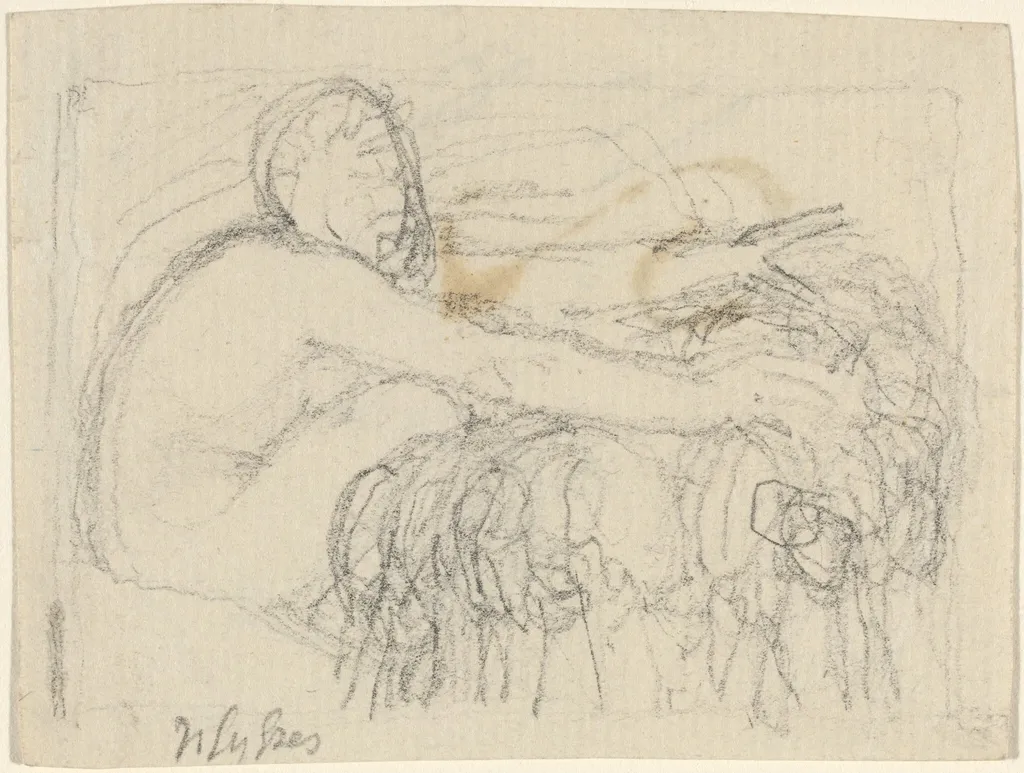
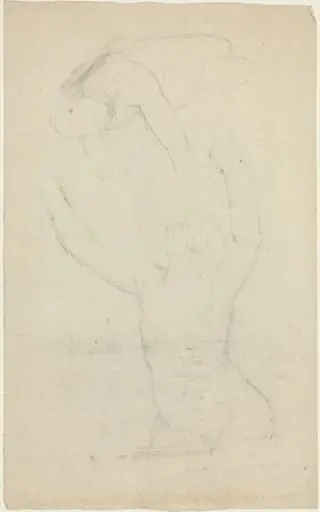
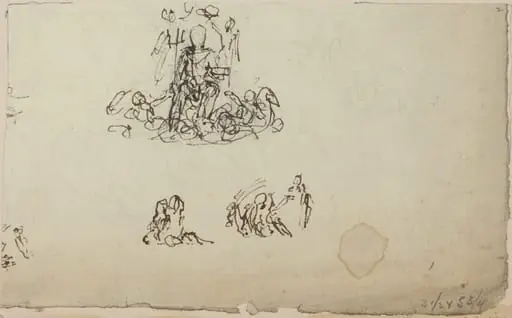
Seated Figure with Arms Outstretched is a graphite drawing by the Romanticist artist John Flaxman. It dates from 1790 and is held in the collection of the National Gallery of Art.
- Inscription
- Inscribed:Illegible inscription bottom recto; unknown hand on verso in ink: Mr. / B (edge of sheet)
About this work
Overview
Created in 1790, this graphite drawing by John Flaxman captures a seated figure with arms extended in a gesture of openness or supplication.
Created in 1790, this graphite drawing by John Flaxman captures a seated figure with arms extended in a gesture of openness or supplication. Executed with minimal detail and soft, fluid lines, the work reflects the artist’s focus on essential form rather than finish. Its delicate, almost ephemeral quality suggests a rapid study, made without color or heavy shading, emphasizing gesture over polish.
Subject & Meaning
The figure’s pose, seated, arms outstretched, evokes classical motifs of prayer, offering, or mourning, common in funerary art. Though unaccompanied by narrative context, the posture aligns with Flaxman’s broader interest in human expression rooted in antiquity. The ambiguity of the gesture invites interpretation without imposing a specific story, consistent with Neoclassical restraint.
Technique & Style
Flaxman employed graphite with a light, spontaneous touch, using loose, uneven lines that suggest movement rather than definition. The paper’s thinness and faint shading contribute to a translucent, ghostly effect. There is no modeling of volume or fine detail; instead, the drawing prioritizes rhythm and posture, revealing his skill in capturing anatomy through economy of line.
History & Provenance
This drawing emerged during Flaxman’s mature period, following his formative years working with Josiah Wedgwood and his extended stay in Rome. It belongs to a larger corpus of preparatory sketches linked to his sculptural projects, particularly funerary monuments. While its exact provenance is undocumented, it reflects the private, exploratory nature of his draftsmanship outside commissioned work.
Context
Flaxman’s approach aligns with Neoclassical ideals of clarity and idealized form, yet this sketch’s informality contrasts with the polished finish of his published illustrations. Its roughness anticipates later Romantic sensibilities that valued emotional immediacy over technical precision, positioning the work as a bridge between Enlightenment discipline and emerging expressive modes in early 19th-century art.
Legacy
Though not a finished sculpture or illustration, this drawing exemplifies Flaxman’s enduring influence on British drawing practices. Its emphasis on gesture and anatomical truth informed later generations of artists seeking to capture the human form with simplicity and emotional resonance, reinforcing his role as a pivotal figure in the transition from Neoclassicism to Romanticism.
Own this work as a print
Artist & collection
Artist
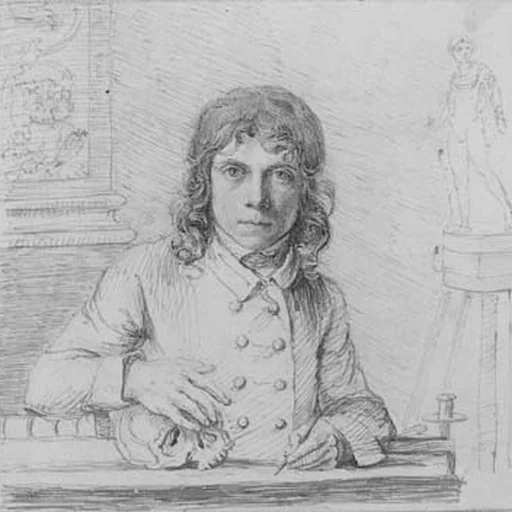
John Flaxman (6 July 1755 – 7 December 1826) was an English sculptor and draughtsman who was a leading figure in British and European Neoclassicism.

![Seated Bather [verso], by Paul Cézanne](https://artifactworldgallery.com/img/paul-cezanne--seated-bather-verso--4cc110a5000a6bd3-w320.webp)
![Time's Triple Bow [recto], by William Blake](https://artifactworldgallery.com/img/william-blake--time-s-triple-bow-recto--dc15bf51bd241980-w320.webp)