
Subject
Bed
Bed is a subject in art. The gallery holds 114 works in this subject in art, including works by Titian, Gustave Courbet and Jean Honoré Fragonard.
A bed is a piece of furniture used as a place to sleep, rest, and relax; most modern beds consist of a soft, cushioned mattress on a frame. Yet for as long as artists have depicted human life, the bed has carried far more than its practical function. As the site of birth, sex, sickness, dreams, and death, it is among the most charged objects in Western art—a small enclosed world where the most private human experiences become visible. Because everyone is born, sleeps, and dies in one, the bed offered painters a stage on which the whole arc of mortal existence could be compressed into a single furnished space.
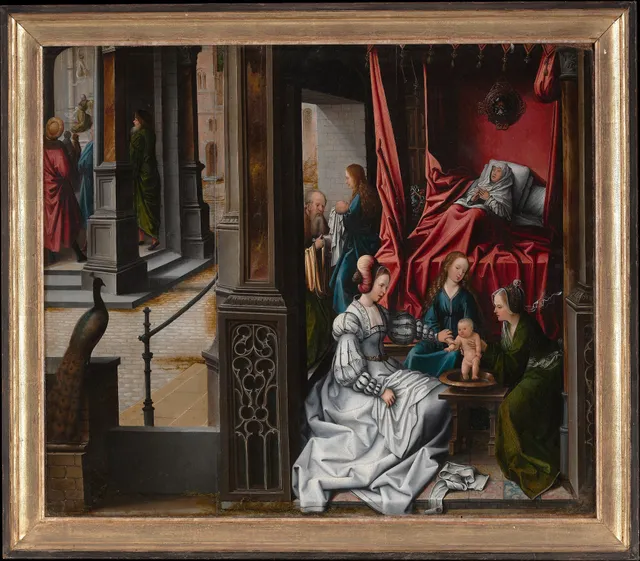
In earlier periods the bed appears chiefly as a setting rather than a subject. Religious cycles placed it at scenes of birth and death, as in Bernard van Orley's *Birth and Naming of Saint John the Baptist*, while mythological painting used the curtained bed as the locus of desire and exposure—Titian's *Venus and Music*, and his *Venus of Urbino* (1534), establishing the reclining nude on rumpled sheets that would dominate the genre for centuries. Jacopo Tintoretto's *Venus and Mars Surprised by Vulcan* turns the bed into the comic and erotic hinge of the narrative. Dutch genre painters such as Jan Steen exploited the curtained bedstead in their lovesick-maiden and physician scenes, where the bed signals illness, longing, or moral disorder. The bed could equally frame high tragedy, as in Jacques-Louis David's *The Death of Socrates*.
The modern era made the bed itself the protagonist. Édouard Manet's *Olympia* (1863) borrowed Titian's pose but planted an unmistakably contemporary woman—read as a courtesan—on the bed, scandalising the Paris Salon and recasting the reclining nude as social truth-telling, a lineage to which Gustave Courbet's frankly sensual *Woman with a Parrot* belongs. Vincent van Gogh's *The Bedroom* (1888) made his own narrow bed an emblem of longed-for repose and psychological state.
In the twentieth century the bed migrated off the wall and into real space. Robert Rauschenberg's *Bed* (1955), one of his first "combines," mounted an actual quilt, sheet, and pillow, paint-splashed, as a vertical canvas. Tracey Emin's *My Bed* (1998), shortlisted for the 1999 Turner Prize, presented her own unmade bed strewn with intimate debris as confessional self-portrait—confirming the bed's enduring power as a mirror of the self.

Key artists


Overview
The bed is a piece of furniture used for sleeping, resting, and relaxation, consisting typically of a mattress on a frame, yet in art it transcends its utilitarian function to become one of the most symbolically charged and frequently depicted objects across cultures and periods. Appearing in at least 131 works in the collection under review, the bed serves as a stage for the fundamental human experiences of birth, love, illness, and death. Its recurrence in art reflects its status as perhaps the most anthropomorphic shape in human civilization, a private territory where the boundaries between public and personal life dissolve. From ancient Egyptian funerary chambers to contemporary installations, the bed has provided artists with a versatile motif through which to explore intimacy, power, vulnerability, and the human condition itself.
Iconography & meaning
The iconography of the bed in art encompasses multiple registers of meaning that shift according to context, period, and culture. In classical and Renaissance painting, the bed frequently signals wealth and social status through its size, choice of wood, workmanship, and linens, as in Jan van Eyck's Arnolfini Portrait where elaborate red hangings and dyed fabrics testify to the owners' fortune. The bed operates as a symbol of domestic intimacy and erotic encounter, its presence in genre scenes and mythological subjects implying seduction, consummation, or the aftermath of passion. In religious art, the bed can signify birth, as in depictions of the Nativity or the birth of saints, or death and martyrdom, as in scenes of terminal illness or assassination. The unmade bed carries particular semiotic weight, suggesting recent occupation, absence, or psychological disarray. Political meaning accrues when the bed becomes a platform for protest, transforming private space into public statement. Across these uses, the bed maintains its association with vulnerability, the body at rest or in extremis, and the threshold between consciousness and oblivion.
Across movements & periods
The treatment of the bed in art has evolved considerably across movements and periods, reflecting broader changes in domestic architecture, social customs, and artistic priorities. In ancient Egypt, high bedsteads with steps, bolsters, and curtains signified elite status, a convention continued in Assyrian, Median, and Persian cultures with elaborate metal, mother-of-pearl, and ivory decoration. Greek and Roman antiquity saw the bed diversify into specialized forms: the lectus cubicularis for sleeping, the lectus genialis for marriage, the lectus discubitorius for dining, and the lectus funebris for carrying the dead. Medieval Europe introduced the canopy bed with hangings that created an enclosed alcove, while Renaissance and Baroque artists exploited the bed's dramatic potential for scenes of birth, death, and seduction. The Dutch Golden Age made the bed a staple of genre painting, with Jan Steen and others using it to signal domestic virtue or its violation. In the nineteenth century, Realists like Gustave Courbet employed the bed to challenge academic conventions, depicting contemporary subjects in monumental formats previously reserved for history painting. The twentieth century saw the bed's transformation into a vehicle for personal expression and political statement, from Surrealist dream imagery to feminist and conceptual installations.
Notable depictions
Among the most celebrated depictions of beds in Western art history are several works that have shaped how the motif is understood. Jan van Eyck's Arnolfini Portrait (1434, National Gallery, London) features an imposing bed with red sheets and elaborate hangings that serve as indicators of wealth and marital status, though the painting's exact meaning remains debated. Vincent van Gogh's Bedroom in Arles series (1888), of which three versions survive, uses the bed as a symbol of tranquility and personal refuge; the artist wrote that he sought to express absolute rest through the painting's varied tones. Henri de Toulouse-Lautrec employed beds as stages for intimacy and human connection, capturing private moments that contrasted with his subjects' public working lives. Gustave Courbet's The Sleep (1866) depicted two women naked and asleep in bed, their scattered clothes and jewelry indicating a recent carnal encounter, in a deliberate break with academic conventions of appropriate subject matter. Tracey Emin's My Bed (1998) presented the artist's actual unmade bed with vodka bottles, cigarette butts, and used condoms as an autobiographical installation, making the bed a confessional object of raw vulnerability. Felix Gonzalez-Torres's billboard image of an empty bed with pillows retaining head shapes used the undone bed as a universal symbol of absent presence.
Legacy
The bed's afterlife in art and culture extends far beyond individual works to inform broader movements of social and artistic change. John Lennon and Yoko Ono's Bed-In for Peace (1969) transformed the honeymoon bed into a political instrument, demonstrating the motif's capacity to collapse distinctions between private space and public protest. This legacy of the bed as activist platform has influenced subsequent generations of artists who have used domestic space as a site of resistance. In contemporary practice, the bed persists as ready-made and sculptural material, with artists including Damien Hirst, Sarah Lucas, and Rachel Whiteread employing actual beds or their representations to explore themes of memory, absence, and embodiment. The bed's appearance in popular culture, from Charlie and the Chocolate Factory to Bedknobs and Broomsticks, maintains its hold on the imagination as a site of magical transformation or familial compression. Meanwhile, the historical study of beds in art, as evidenced by exhibitions such as Sleepless. Beds in History and Contemporary Art, continues to generate scholarly interest in how this most intimate of objects reflects evolving understandings of the self, the body, and the boundaries between public and private life.
Works
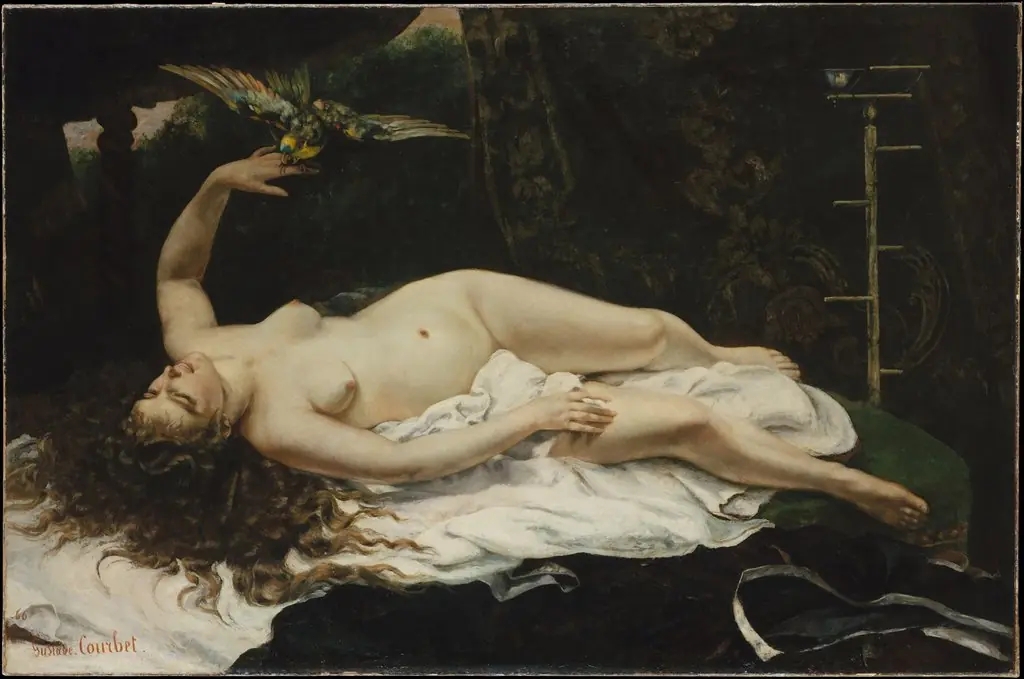 Woman with a Parrot
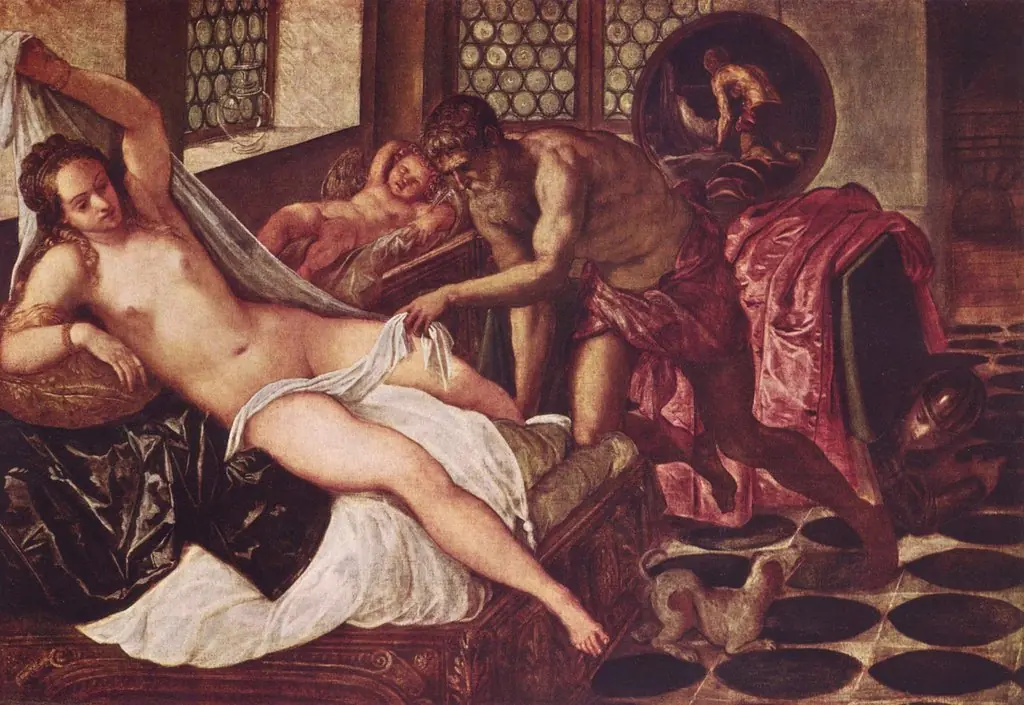 Venus and Mars Surprised by Vulcan
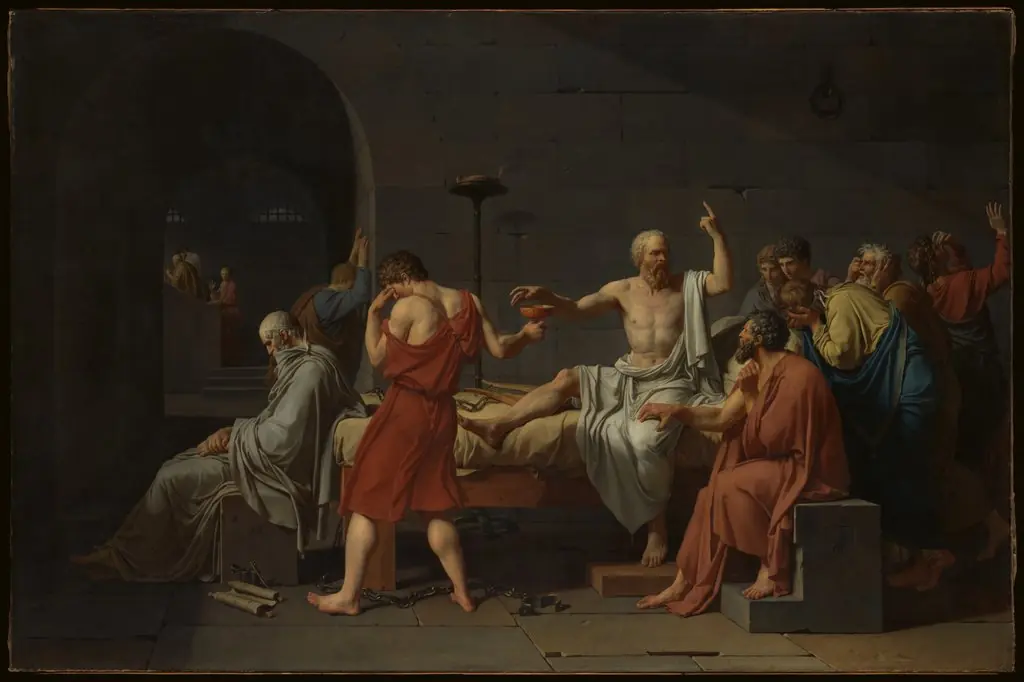 The Death of Socrates
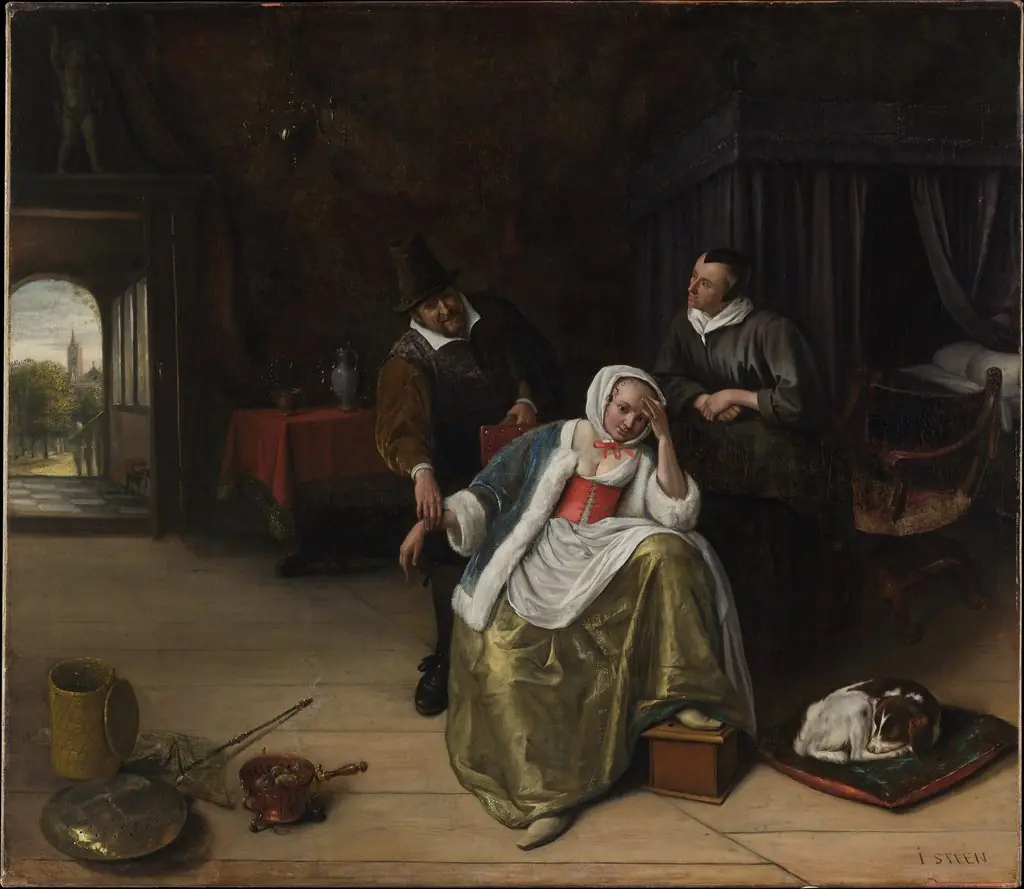 Paintings of physicians by Jan Steen
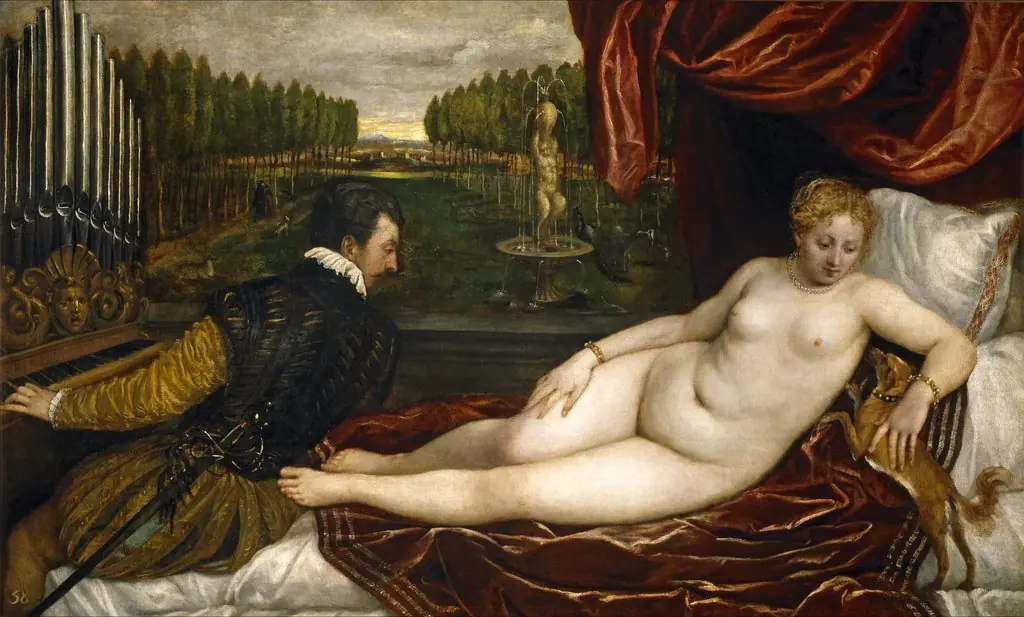 Venus and Music
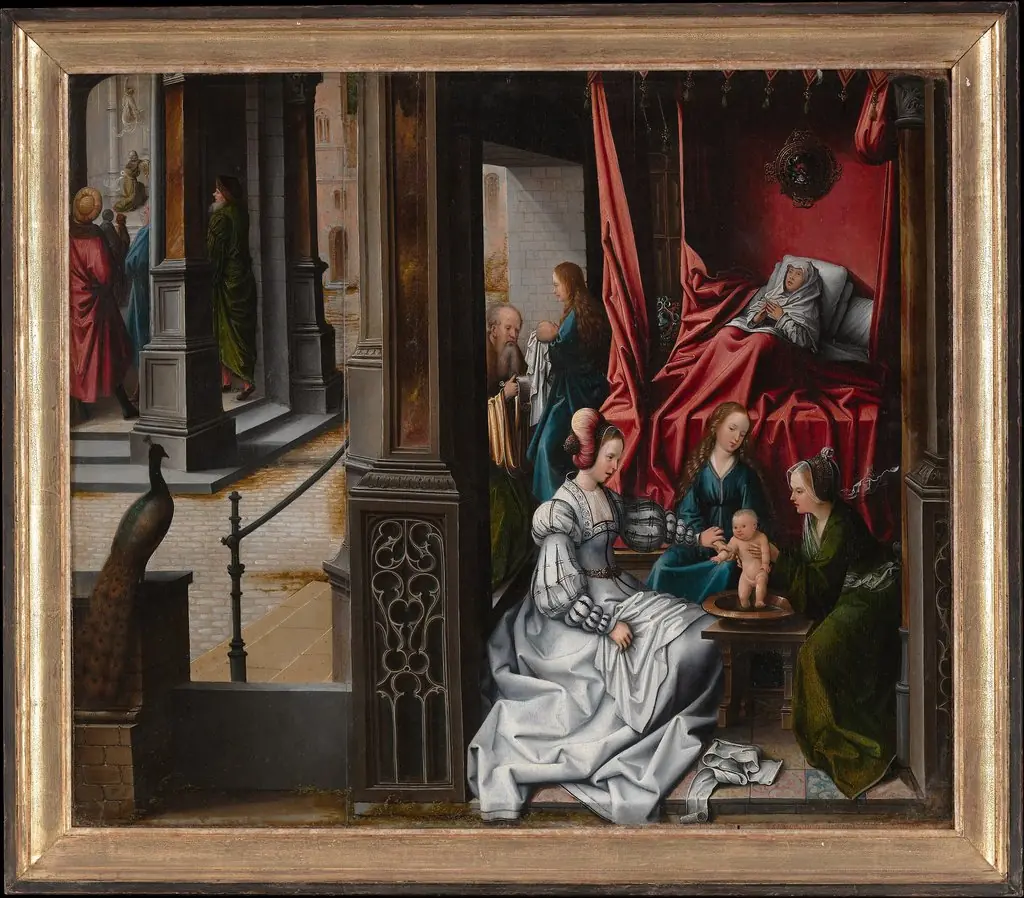 The Birth and Naming of Saint John the Baptist; (reverse) Trompe-l'oeil with Painting of The Man of Sorrows
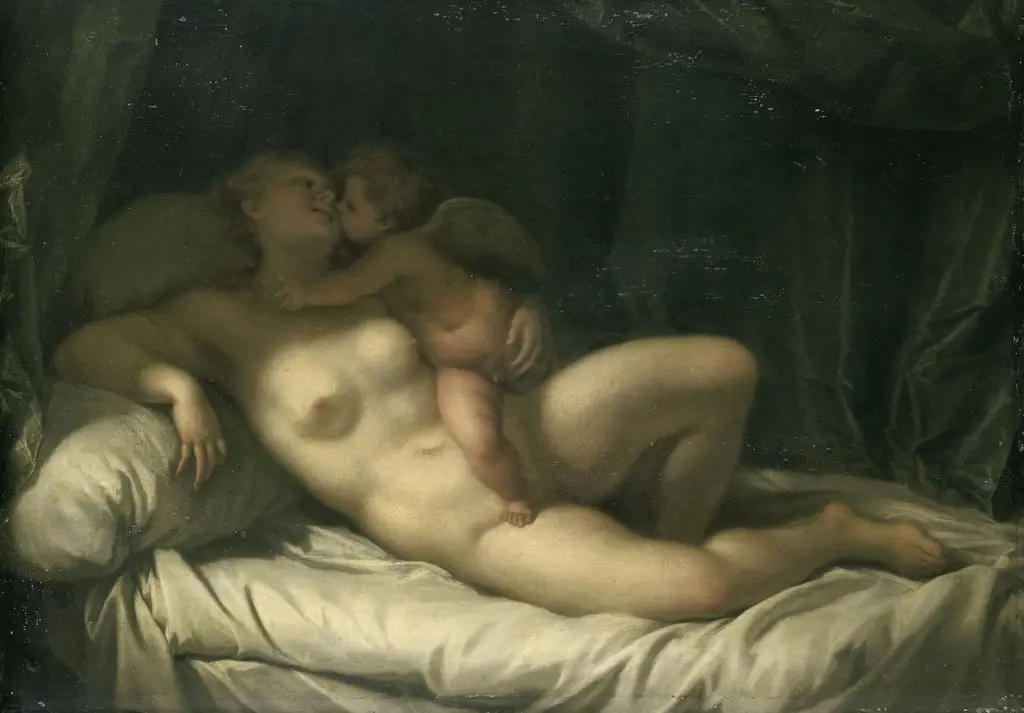 Cupid Kissing Venus (Venus Kissed by Amor)
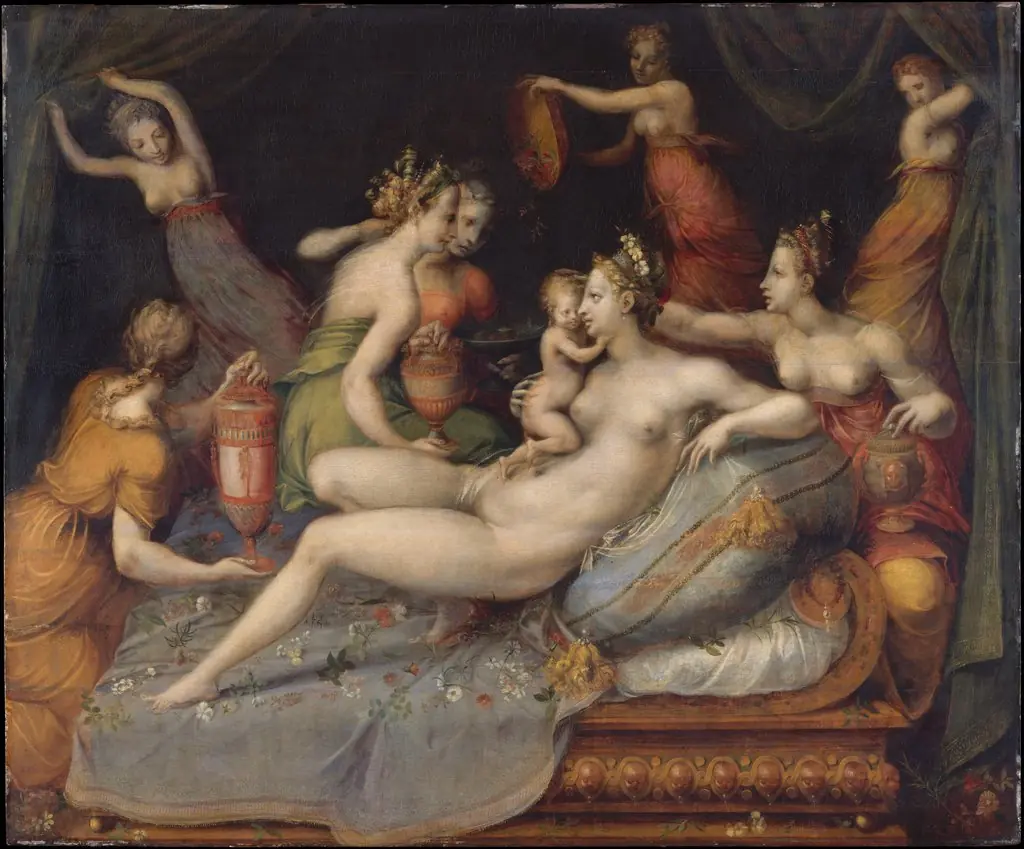 The Birth of Cupid
 Joseph Accused by Potiphar's Wife
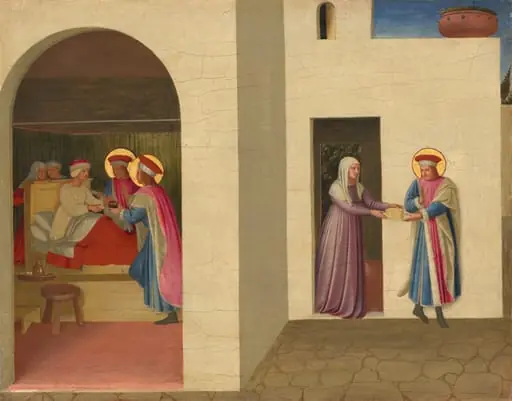 The Healing of Palladia by Saint Cosmas and Saint Damian
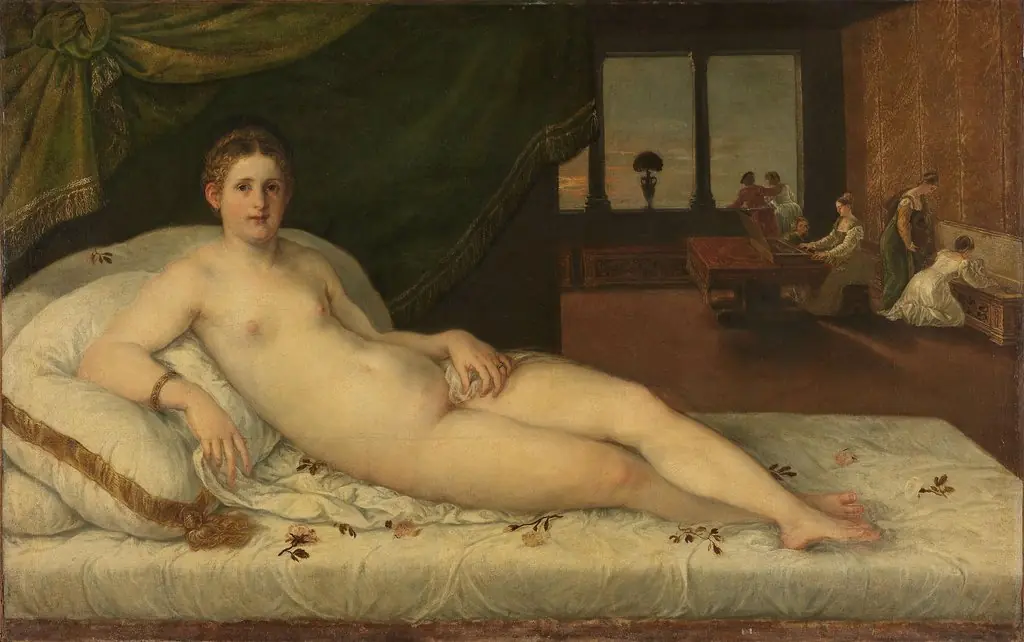 Reclining Venus
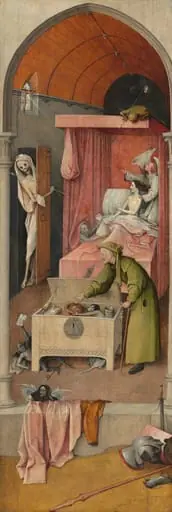 Death and the Miser
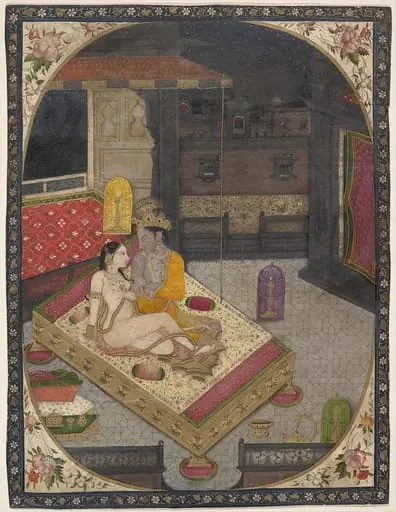 Untitled
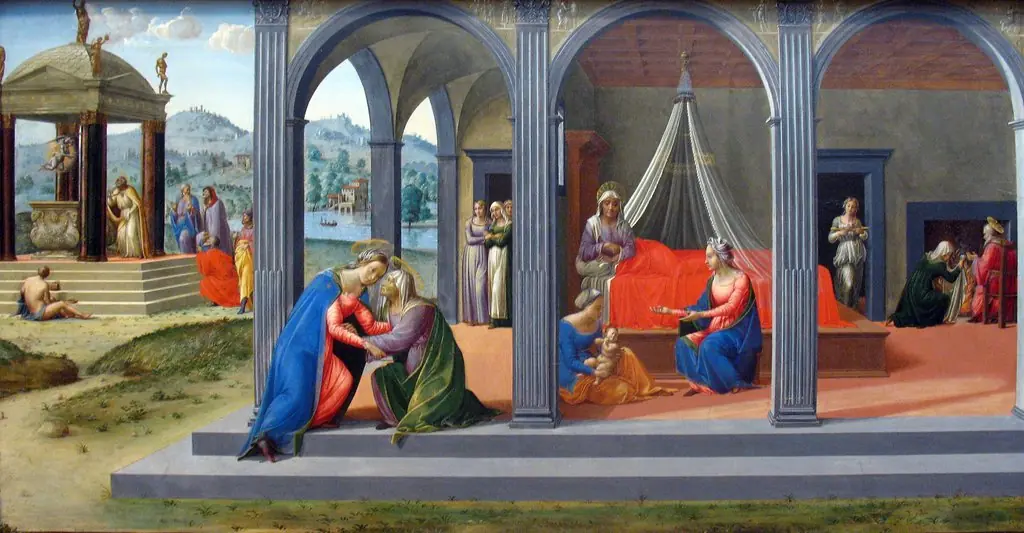 Scenes from the Life of Saint John the Baptist
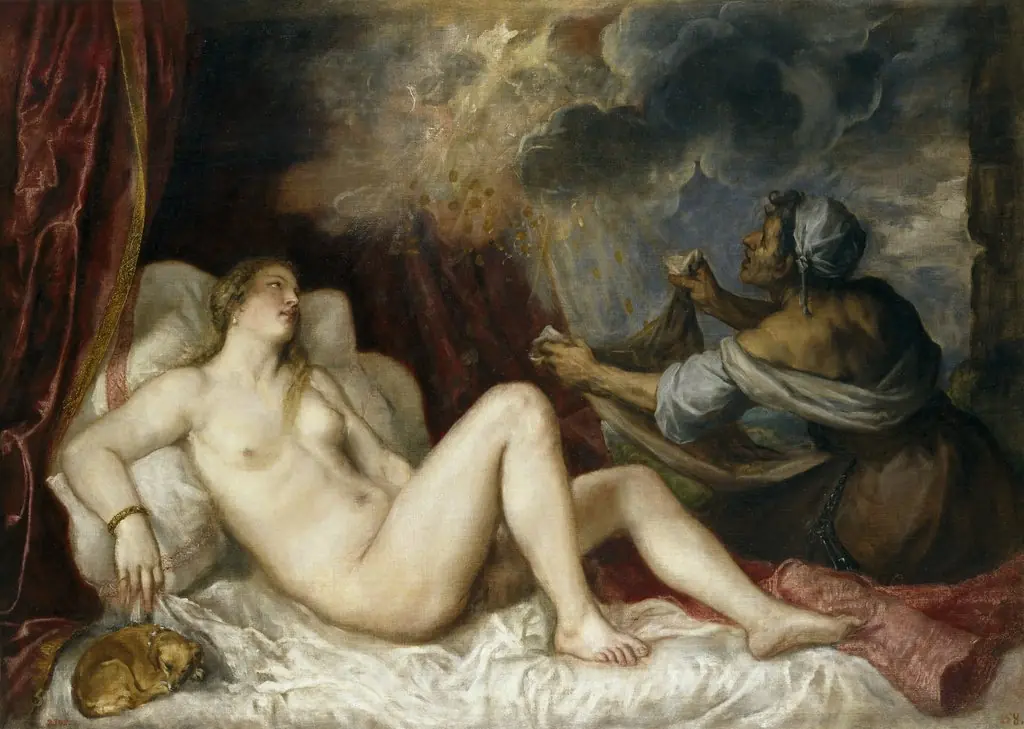 Danaë
Danaë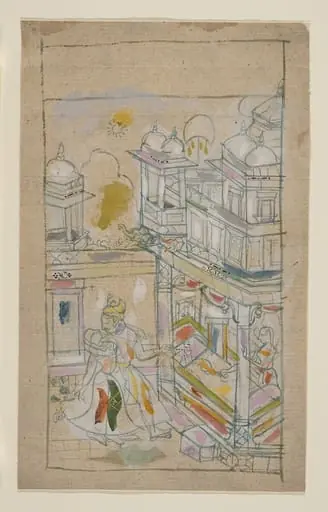 Untitled
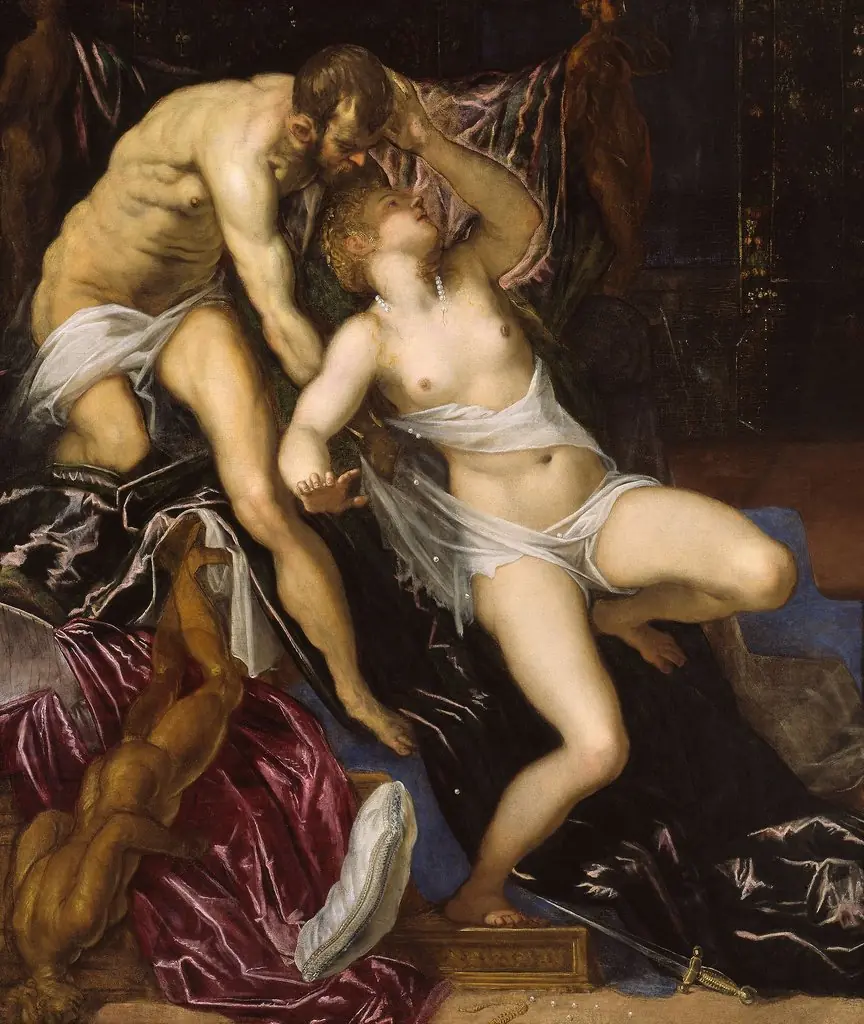 Tarquin and Lucretia
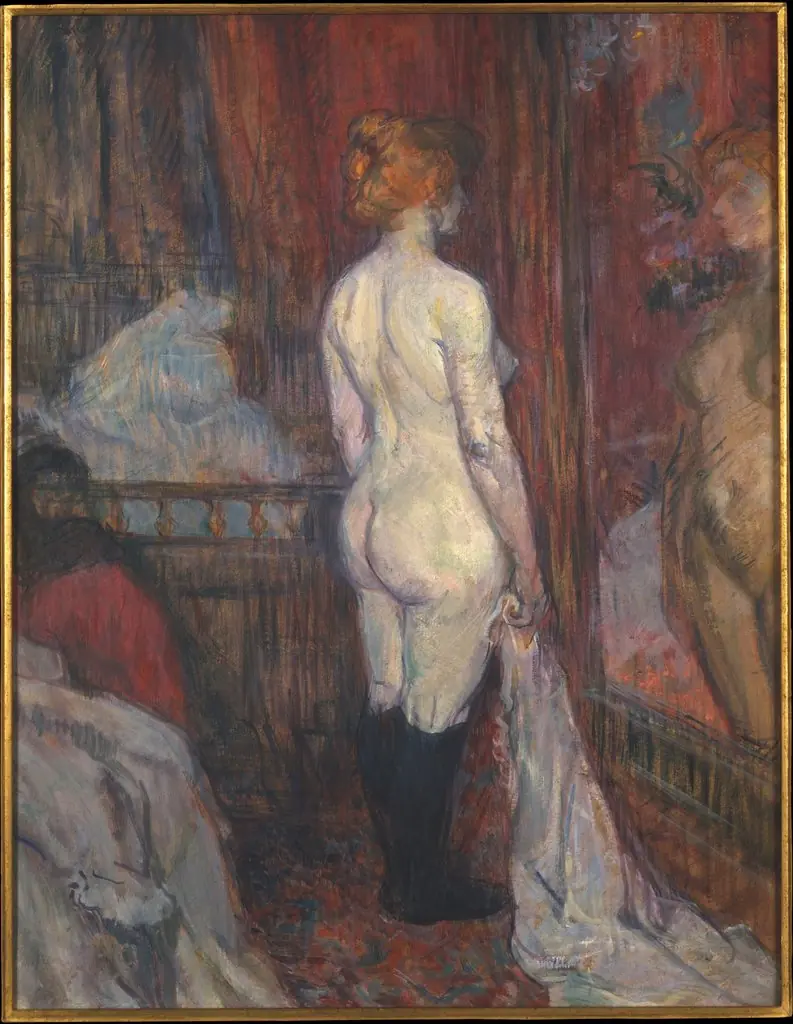 Woman before a Mirror
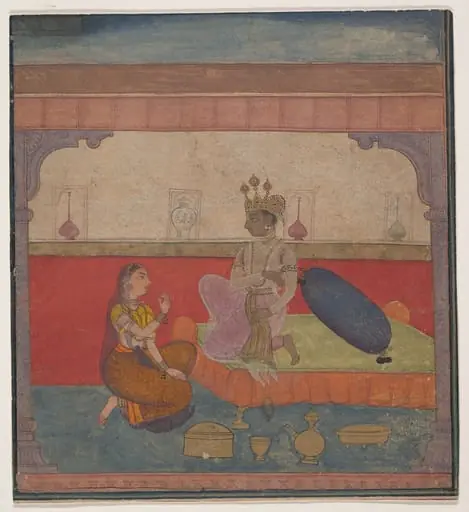 Untitled
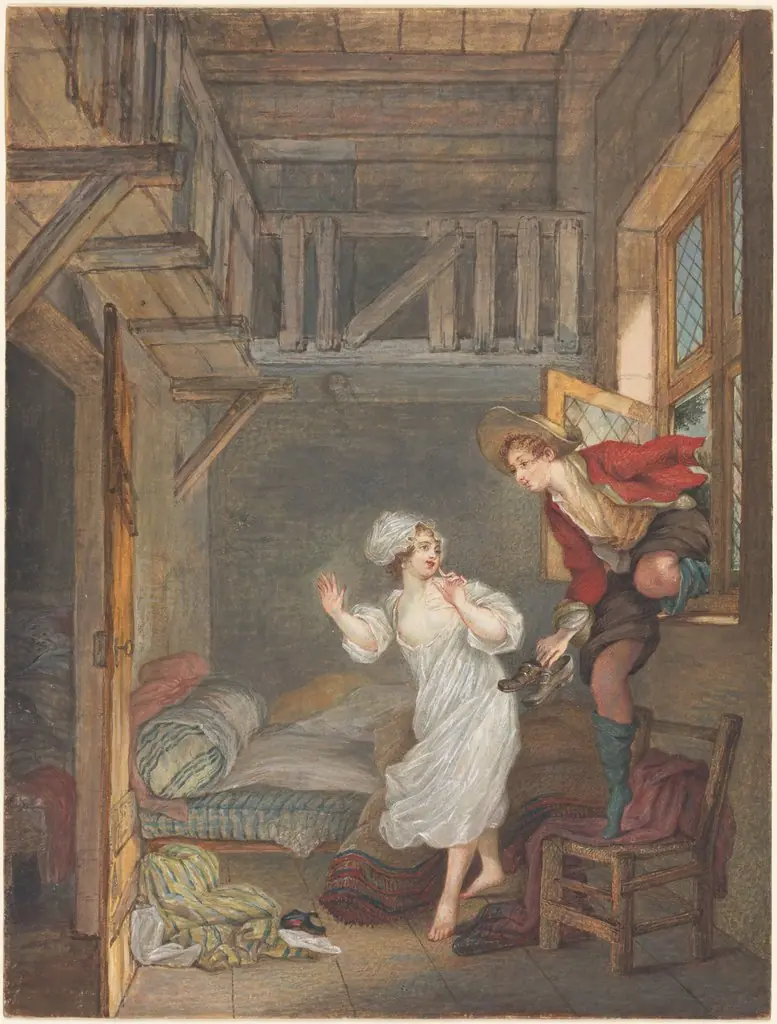 The Lover's Visit
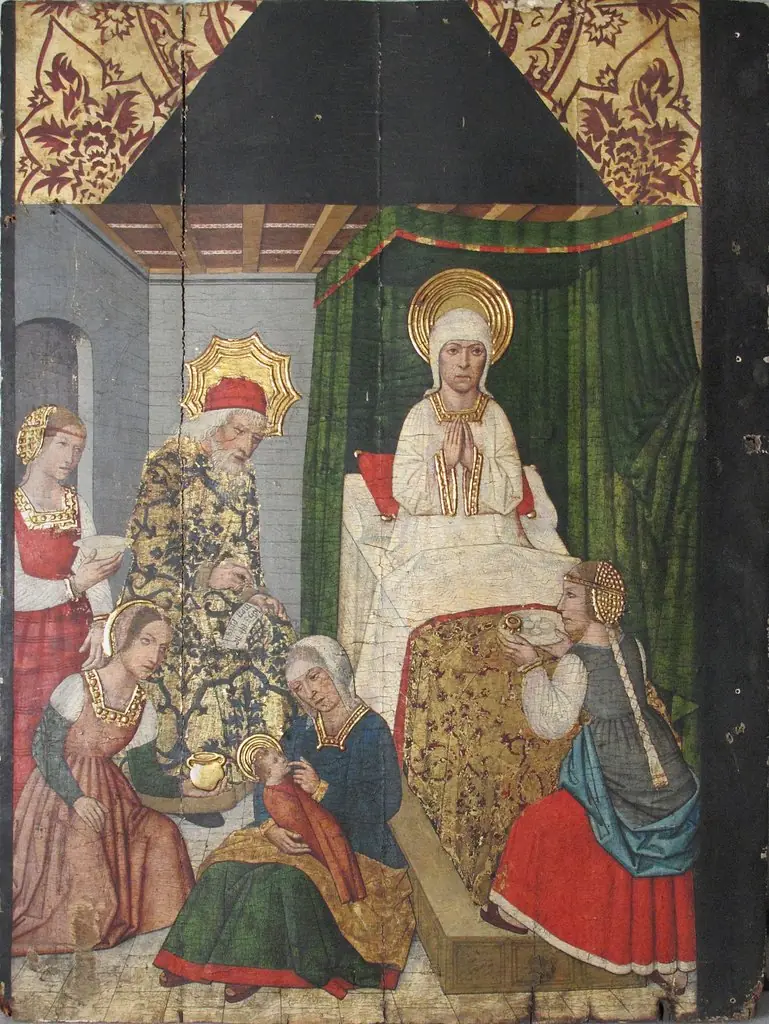 Panel with the Birth of St. John the Baptist from Retable
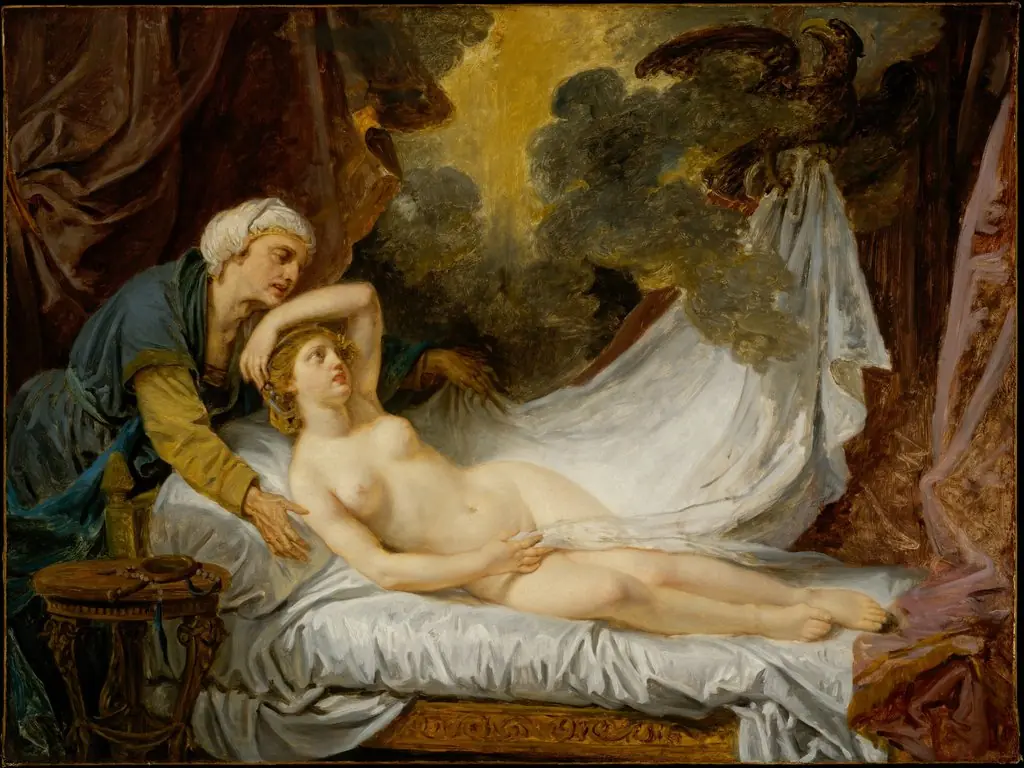 Aegina Visited by Jupiter
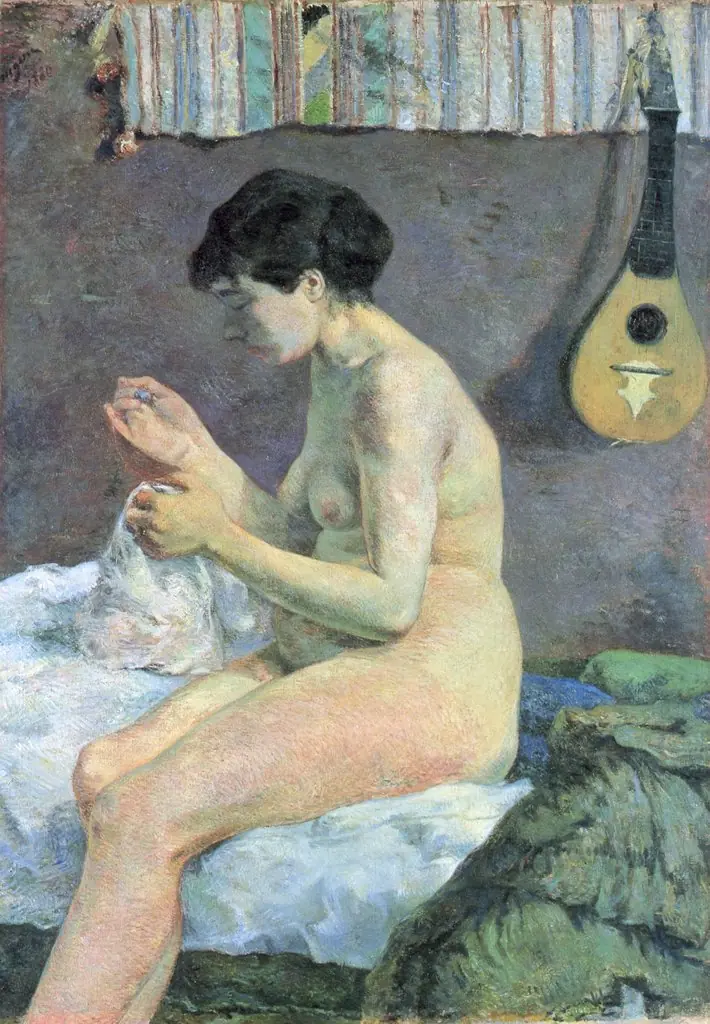 Study of a Nude
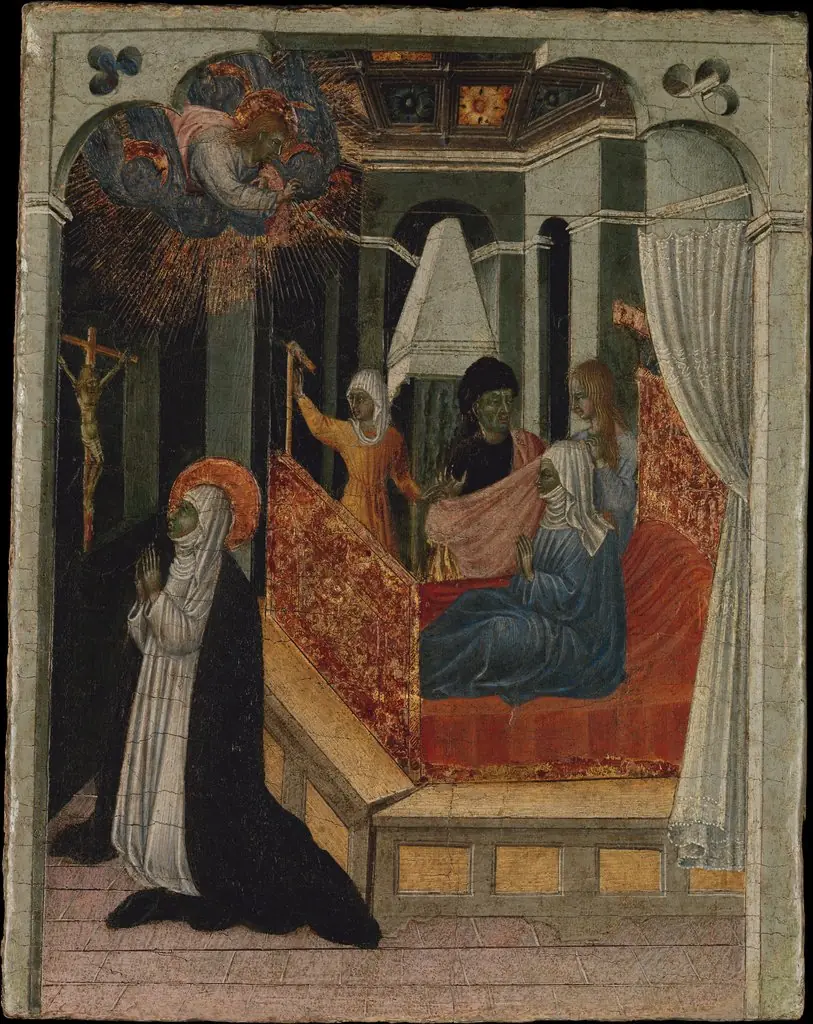 Saint Catherine of Siena Beseeching Christ to Resuscitate Her Mother
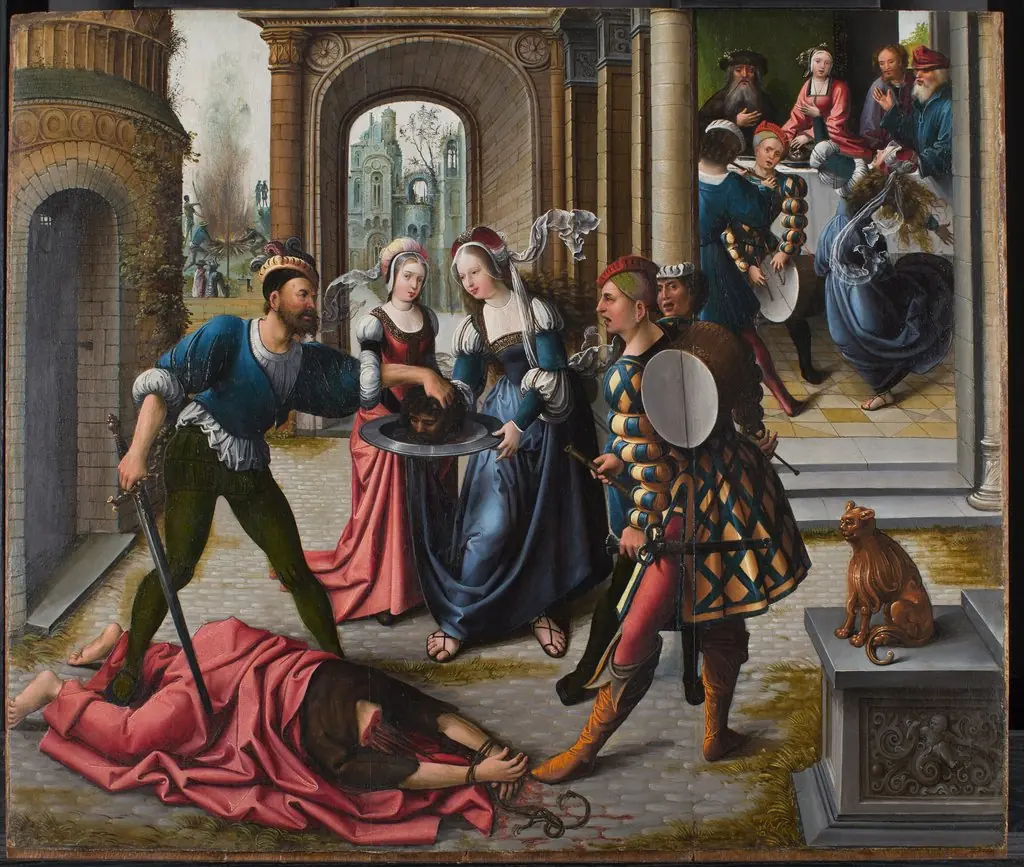 The Martyrdom of Saint John the Baptist
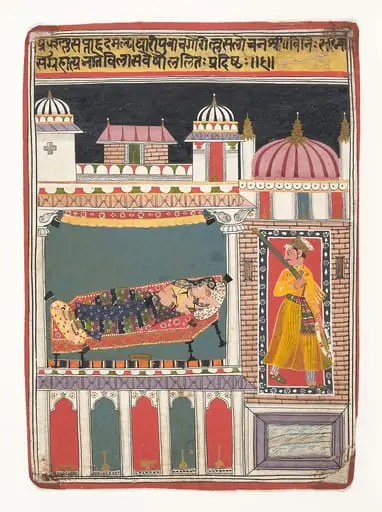 Untitled
 Untitled
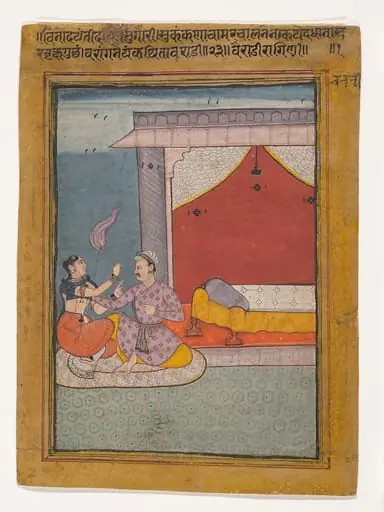 Untitled
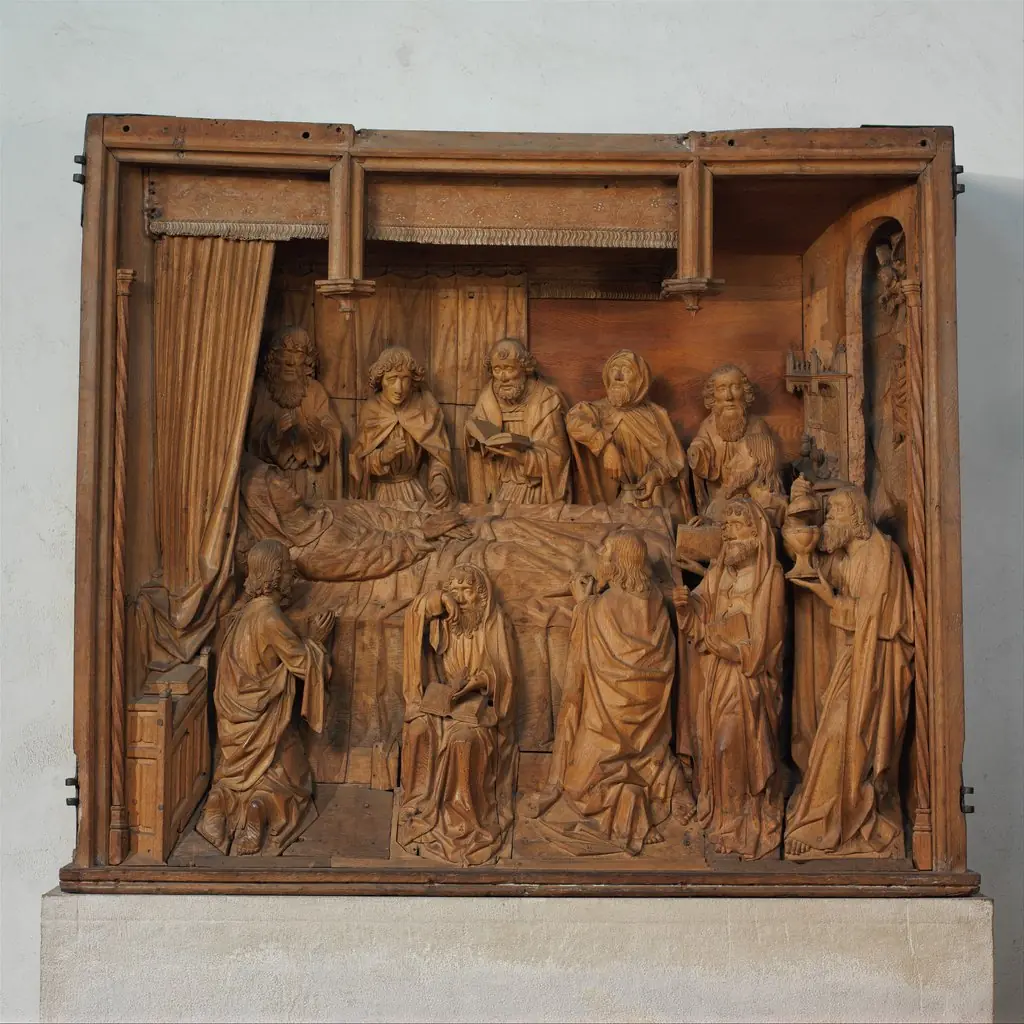 The Death of the Virgin (The Dormition)
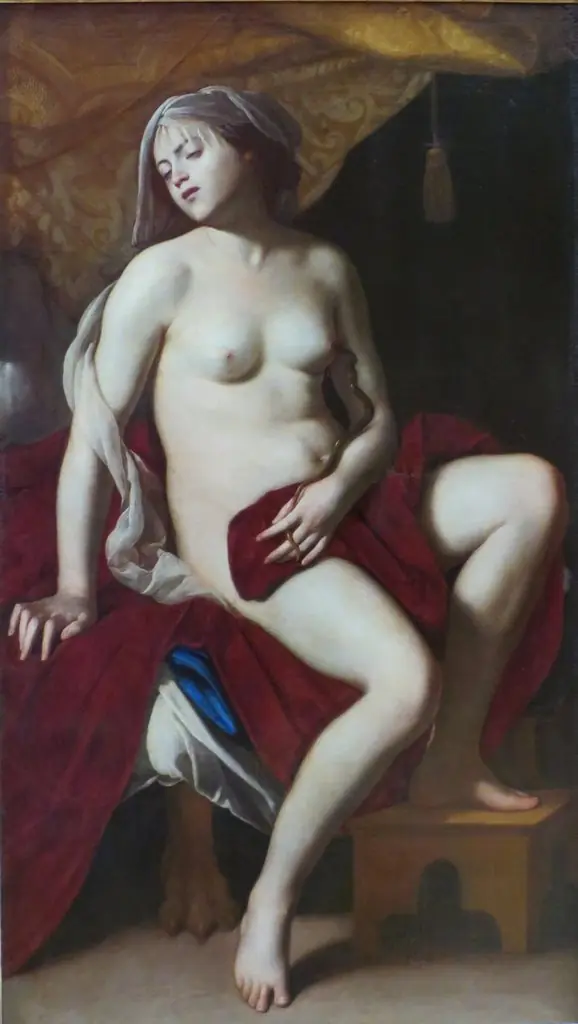 The Death of Cleopatra
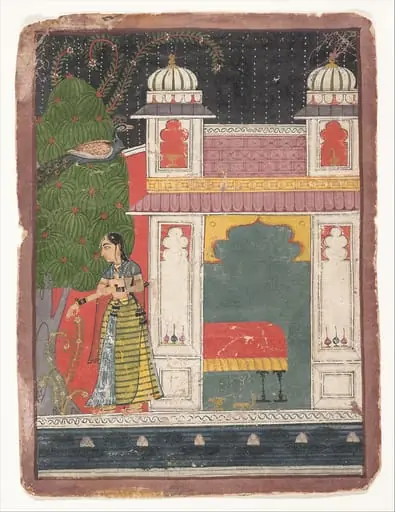 Untitled
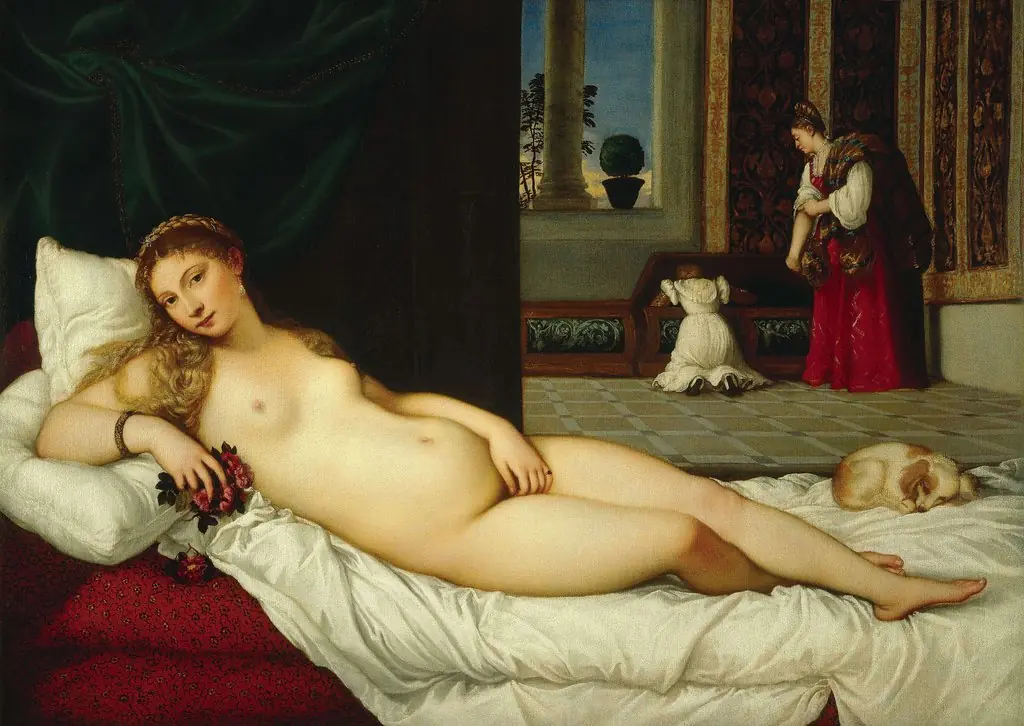 Venus of Urbino
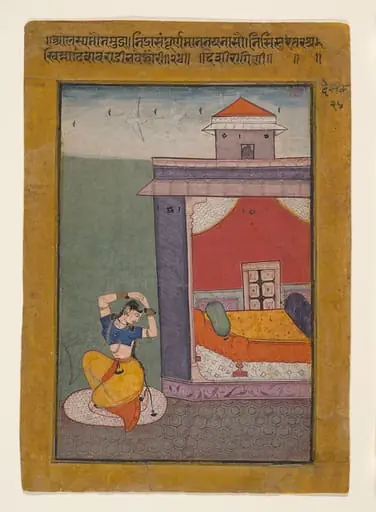 Untitled
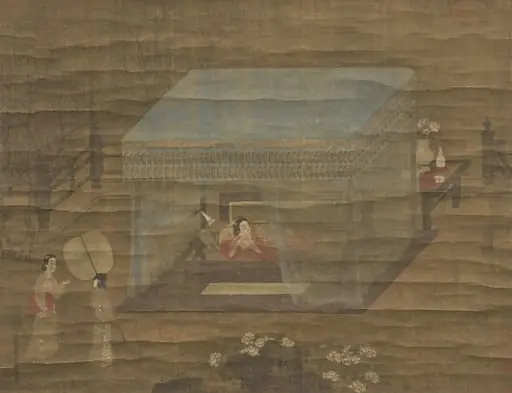 Untitled
 Untitled
 Untitled
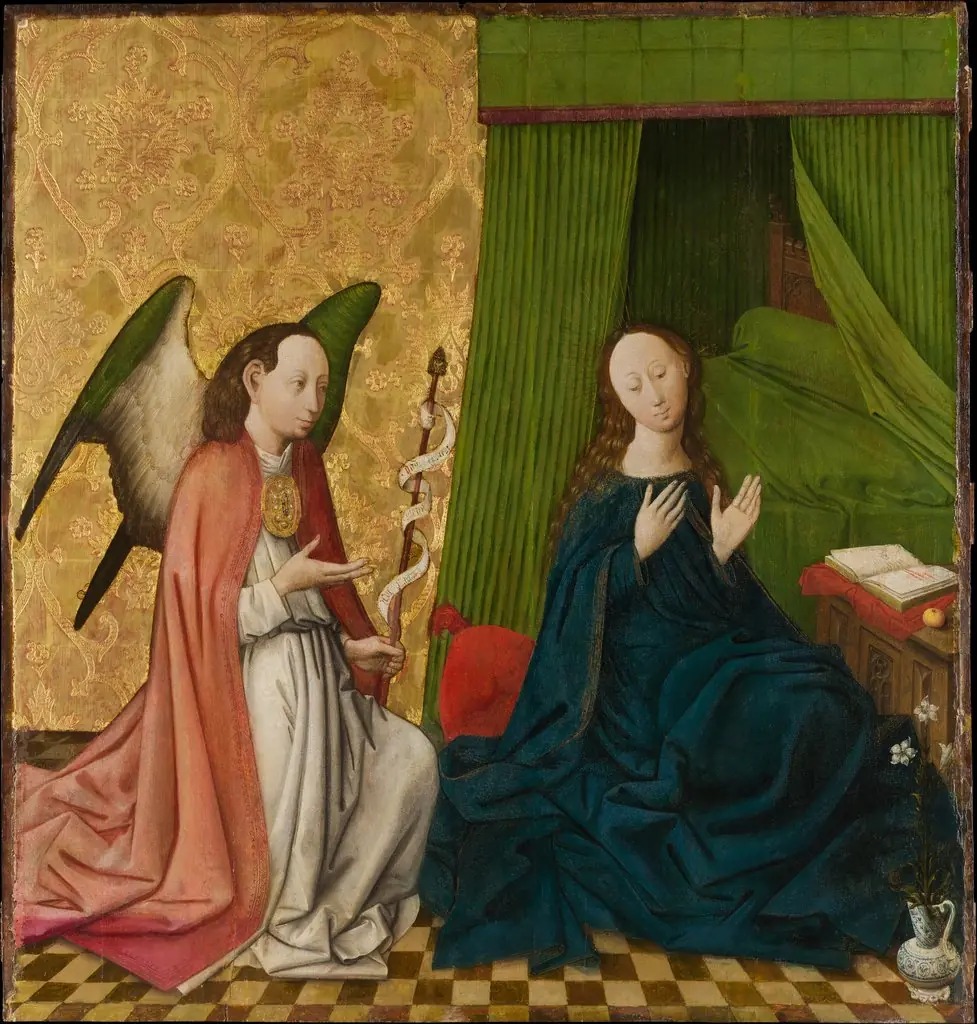 The Annunciation
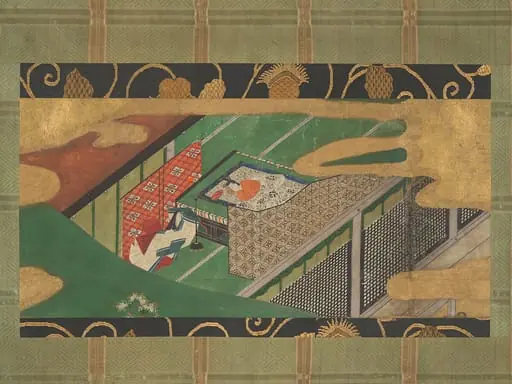 伝俵屋宗達筆 源氏物語図「宿木」 |“Trees Encoiled in Vines of Ivy” (Yadorigi)
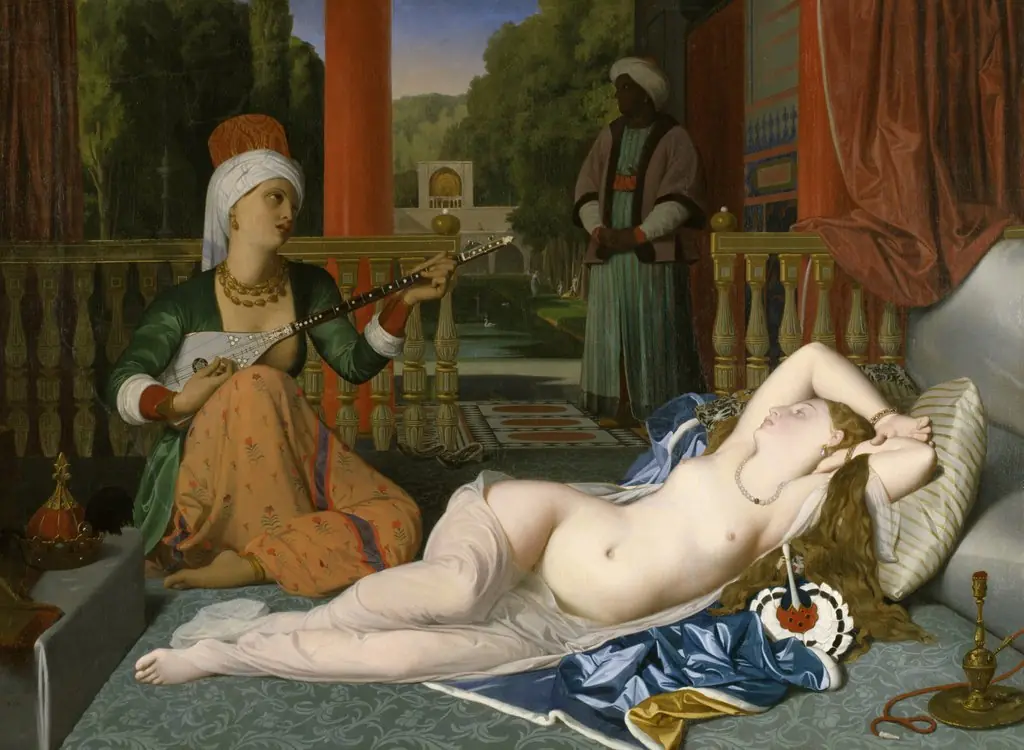 Odalisque with Slave
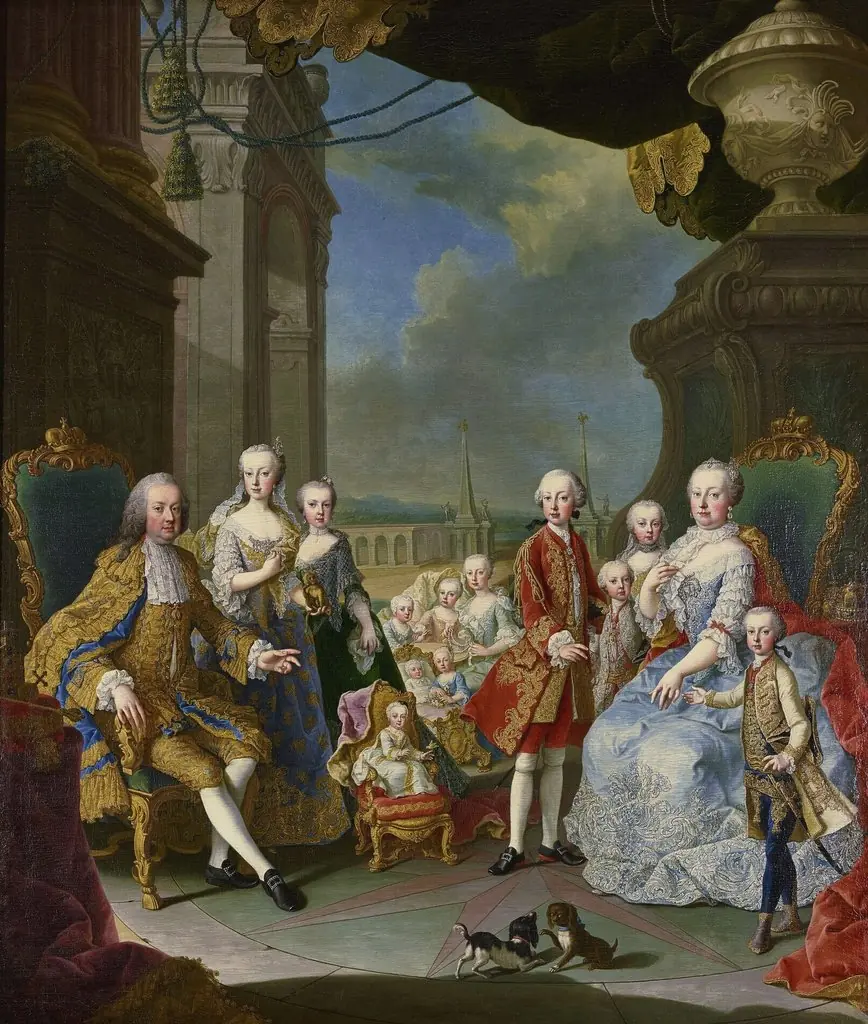 The Imperial family in 1756
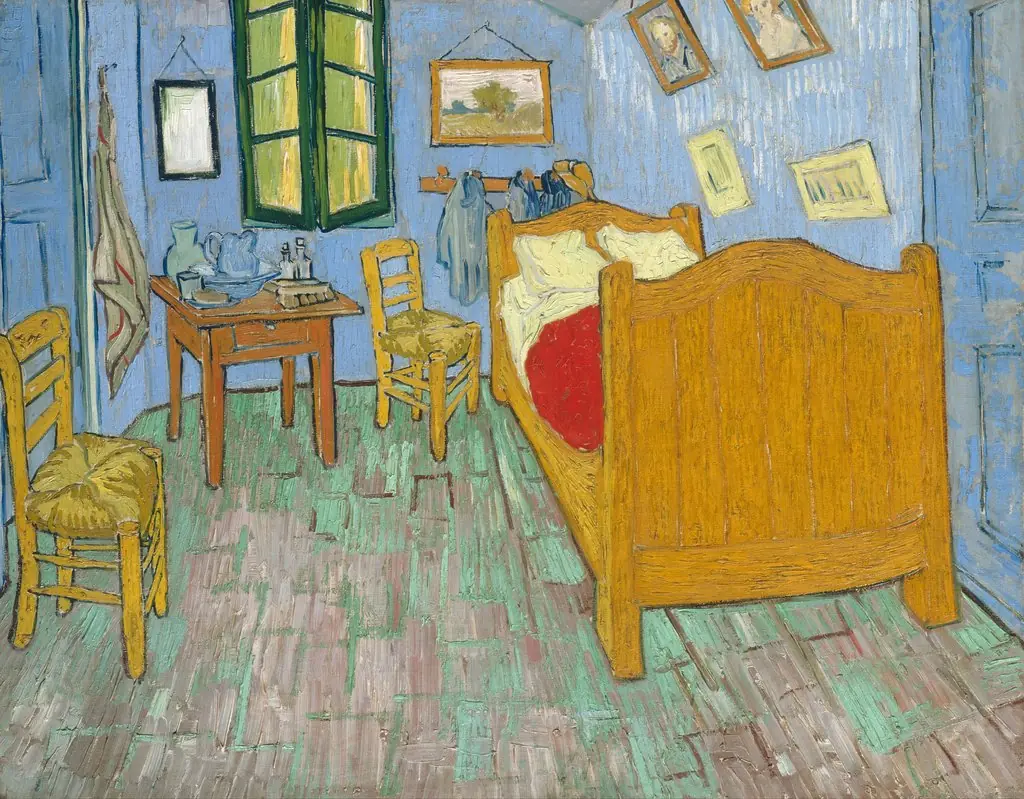 Bedroom in Arles
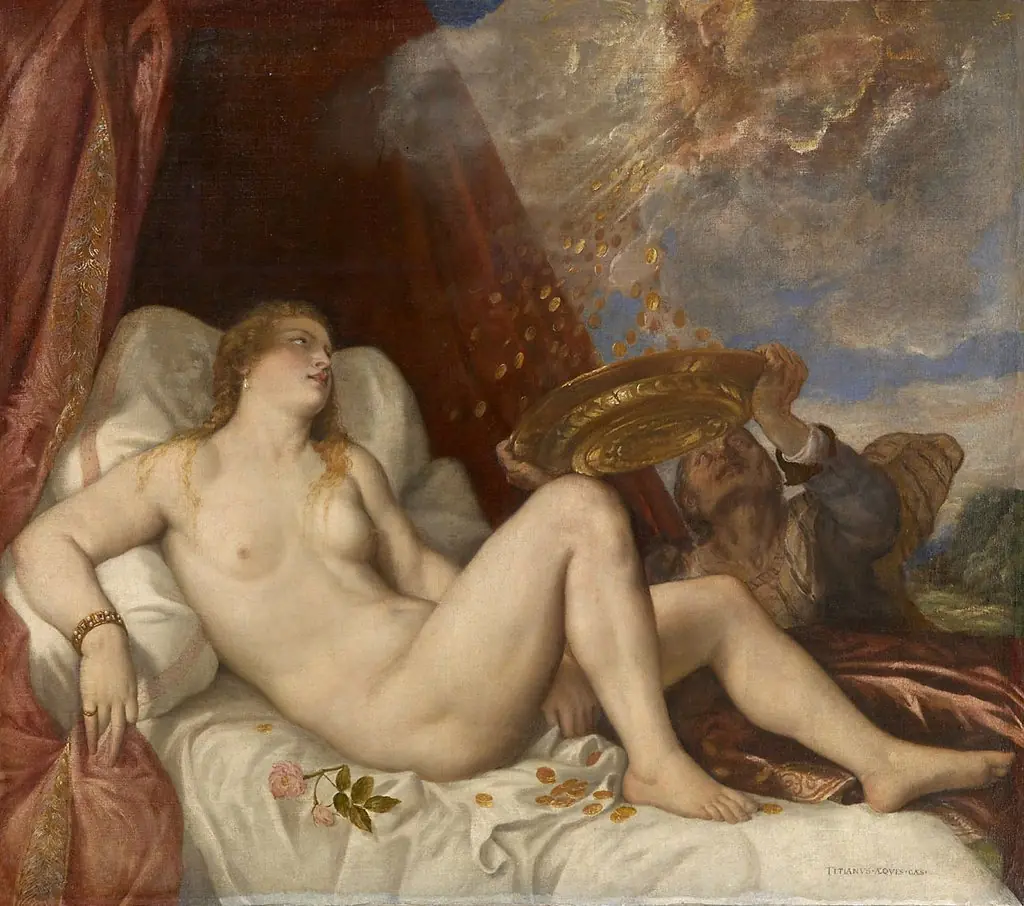 Danaë
Danaë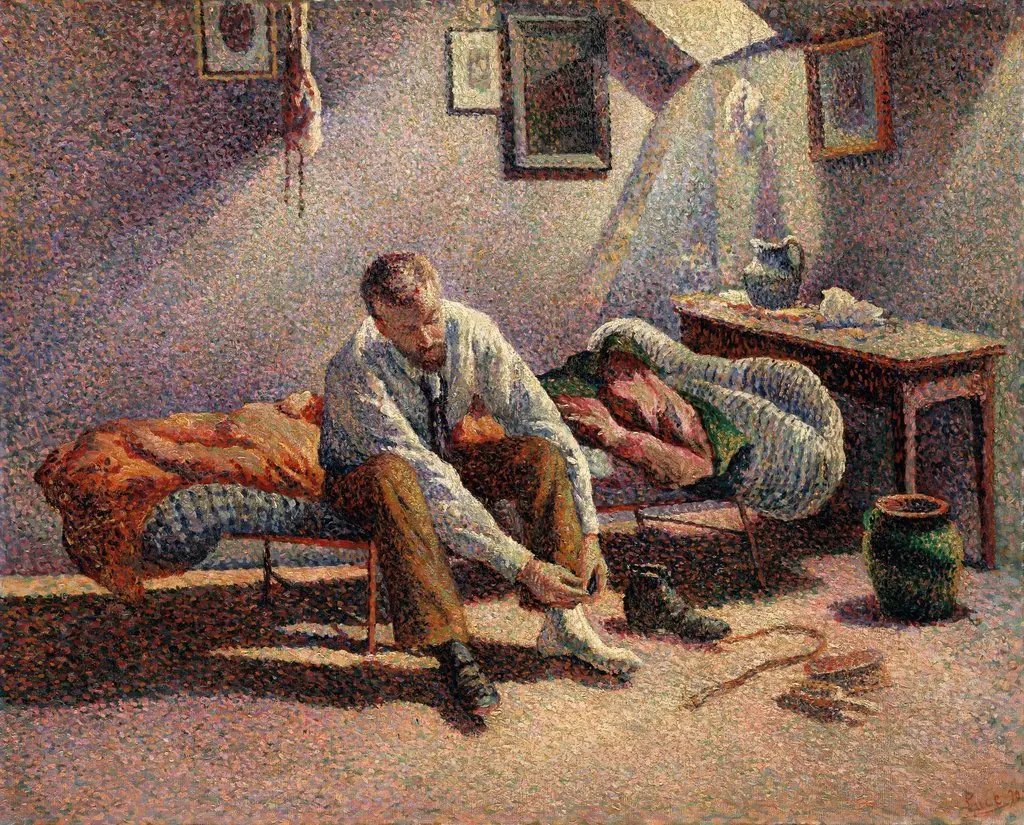 Morning, Interior
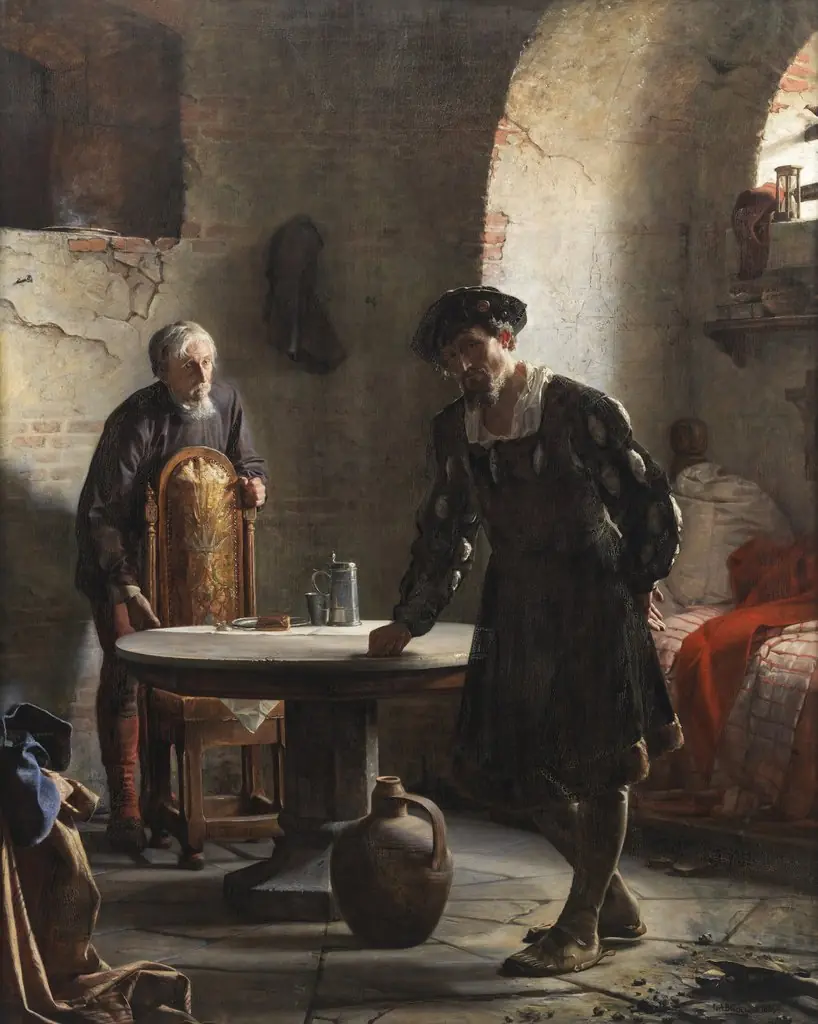 Christian II i fængslet på Sønderborg Slot
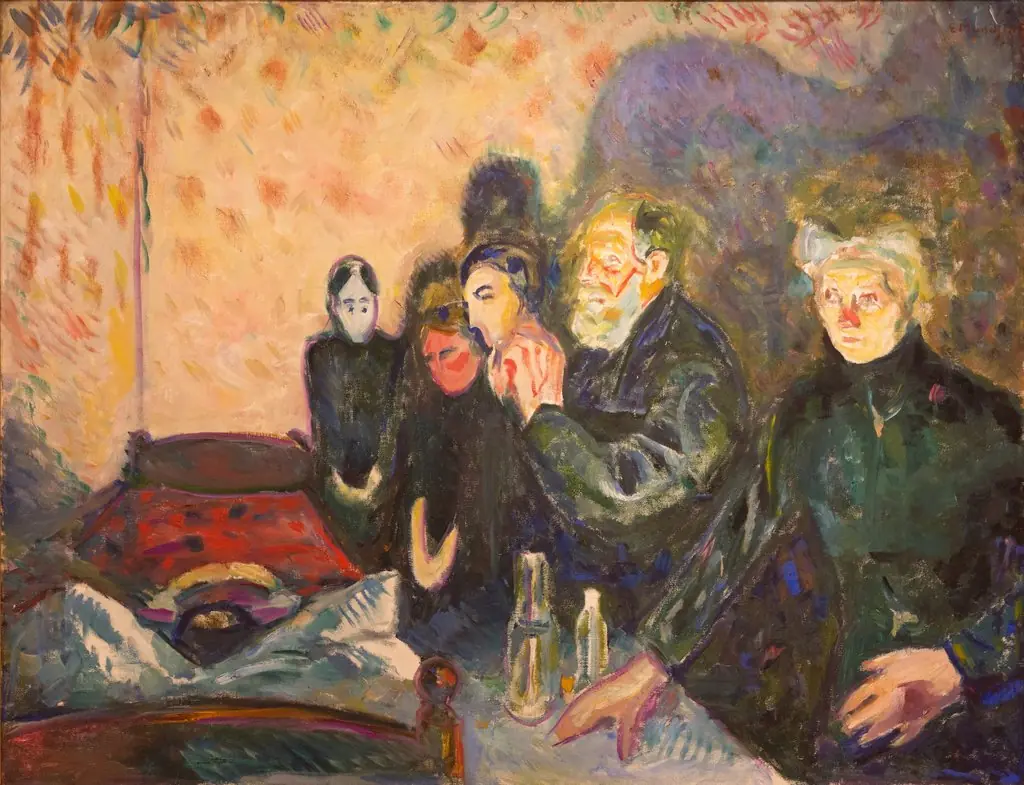 Death Struggle
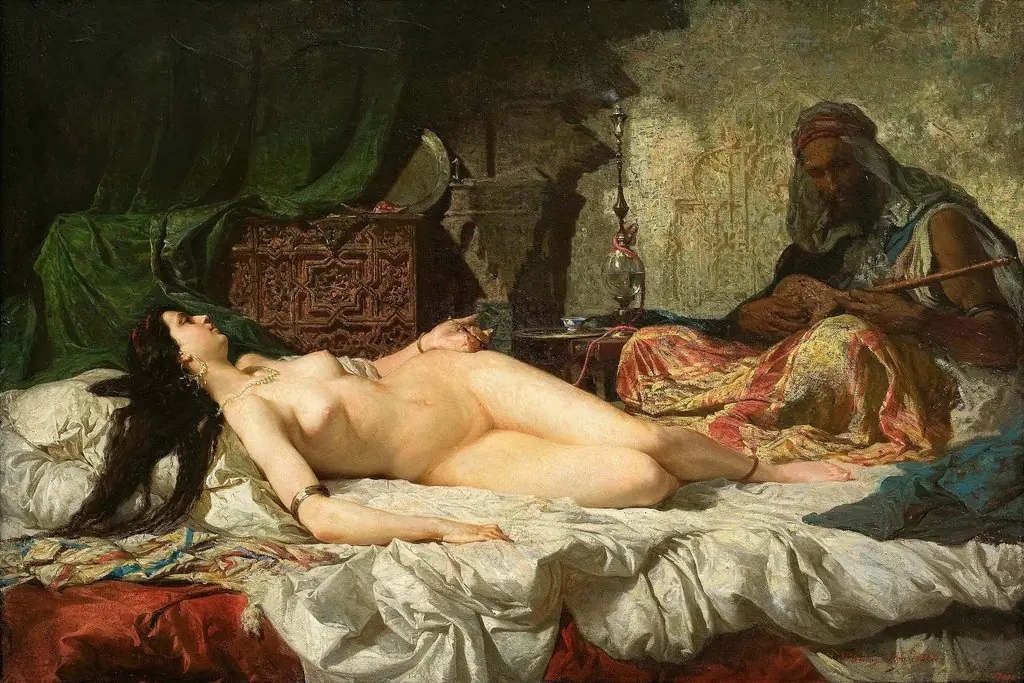 The Odalisque
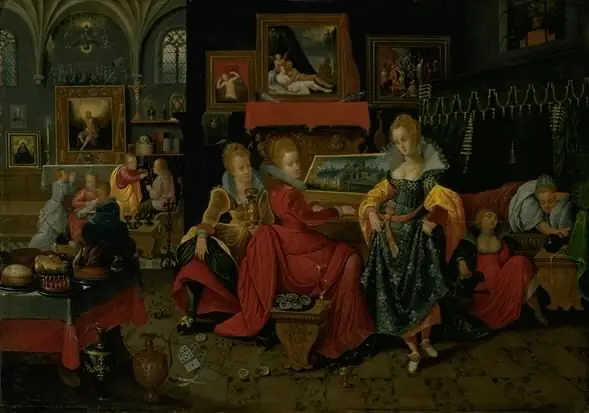 The Parable of the Wise and the Foolish Virgins
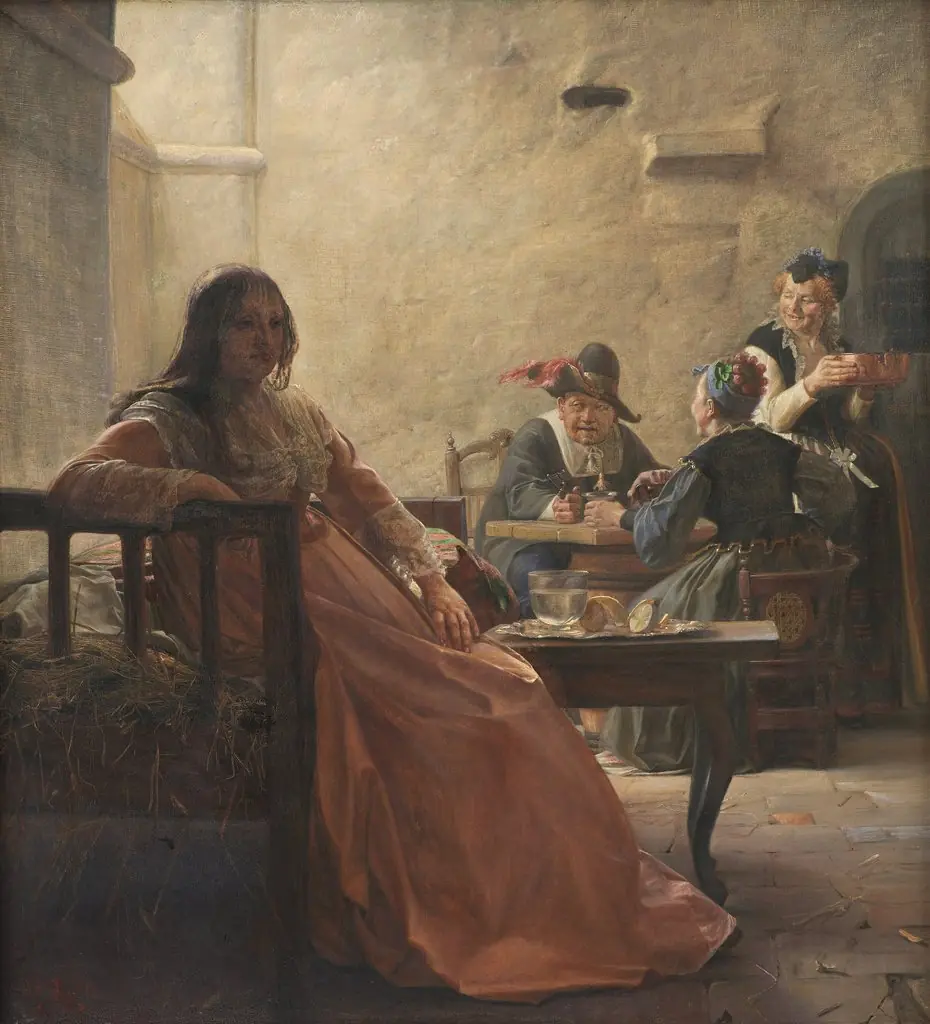 Leonora Christina in Prison
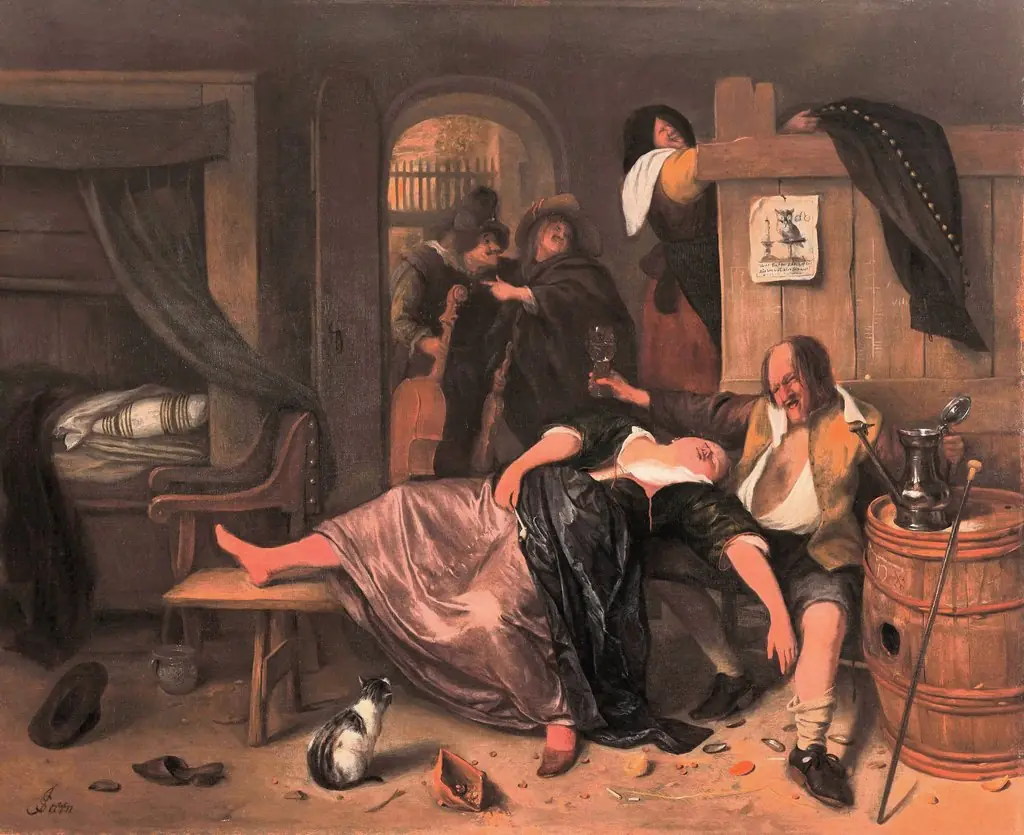 The Drunken Couple
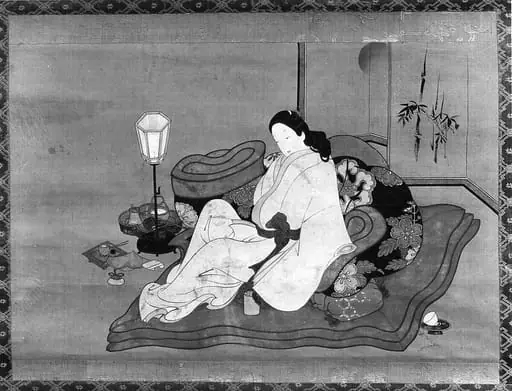 Untitled
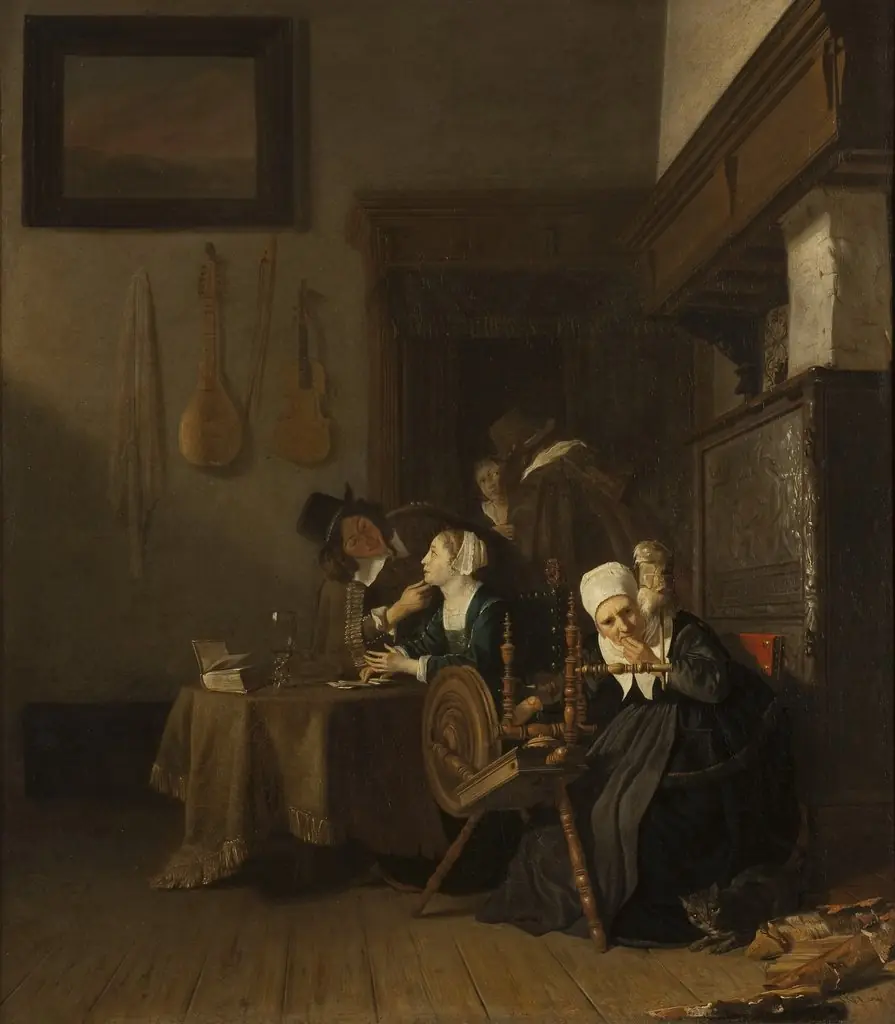 Indulgent Old Lady
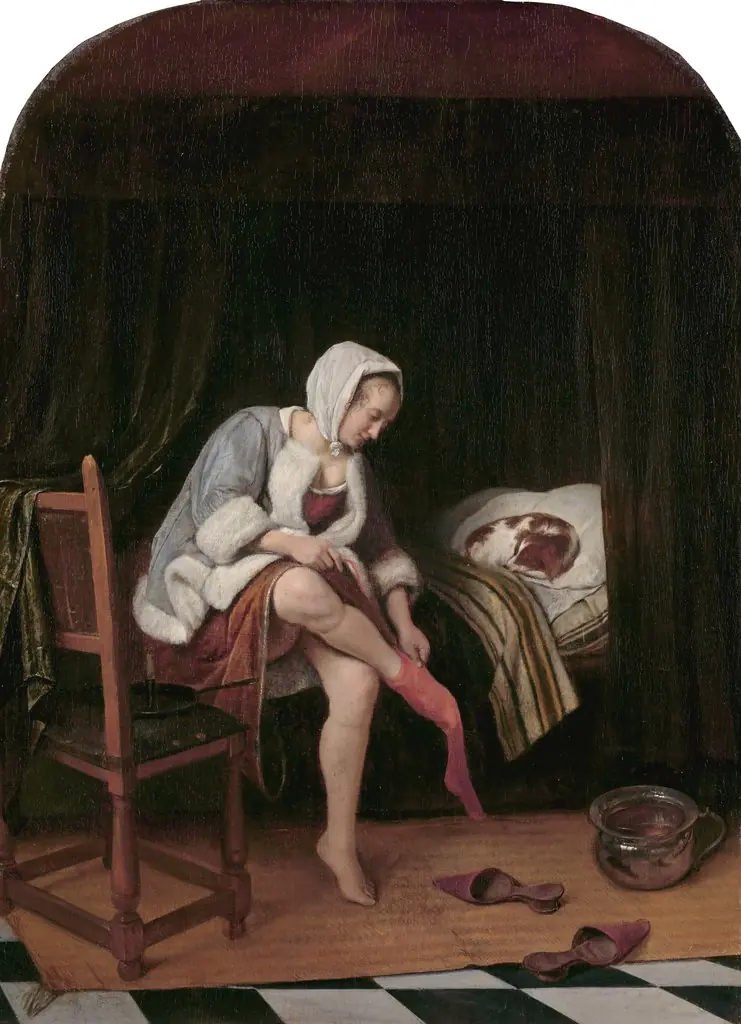 Woman at her Toilet
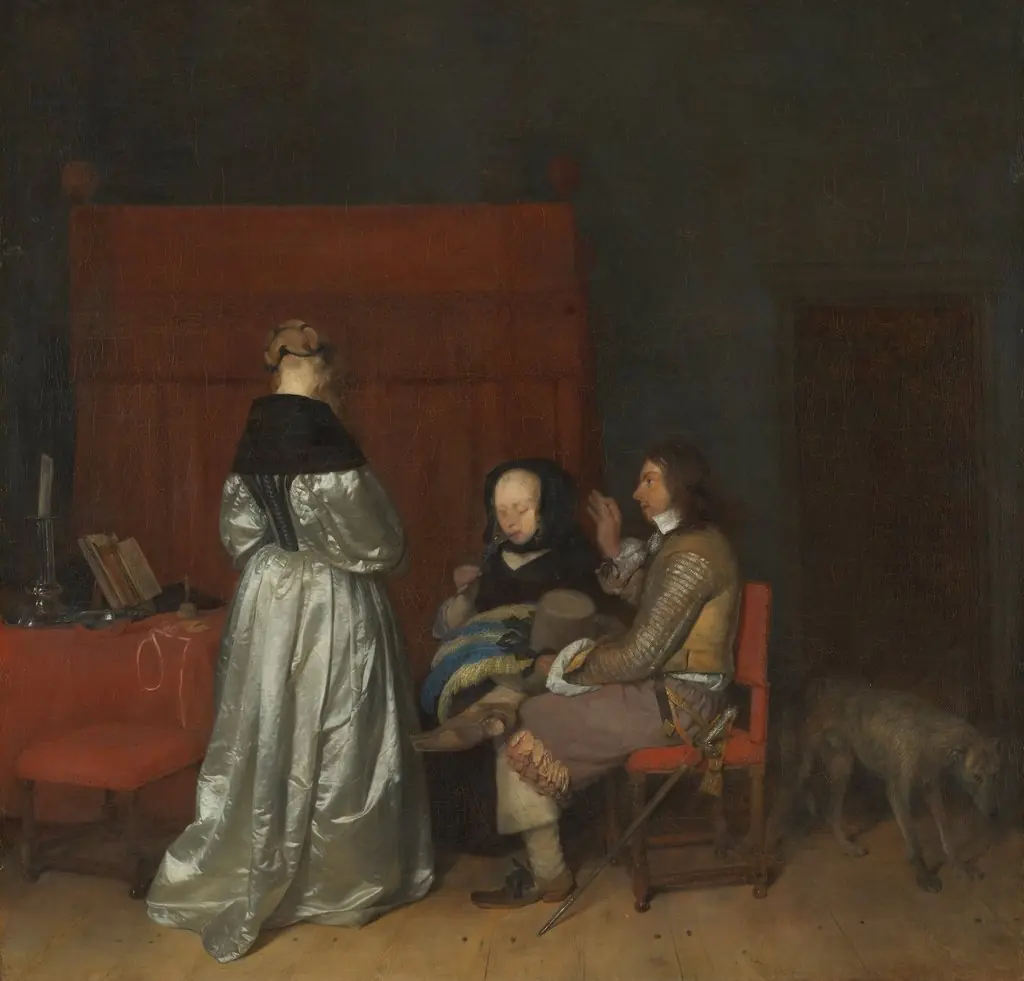 The Gallant Conversation, known as Paternal Admonition
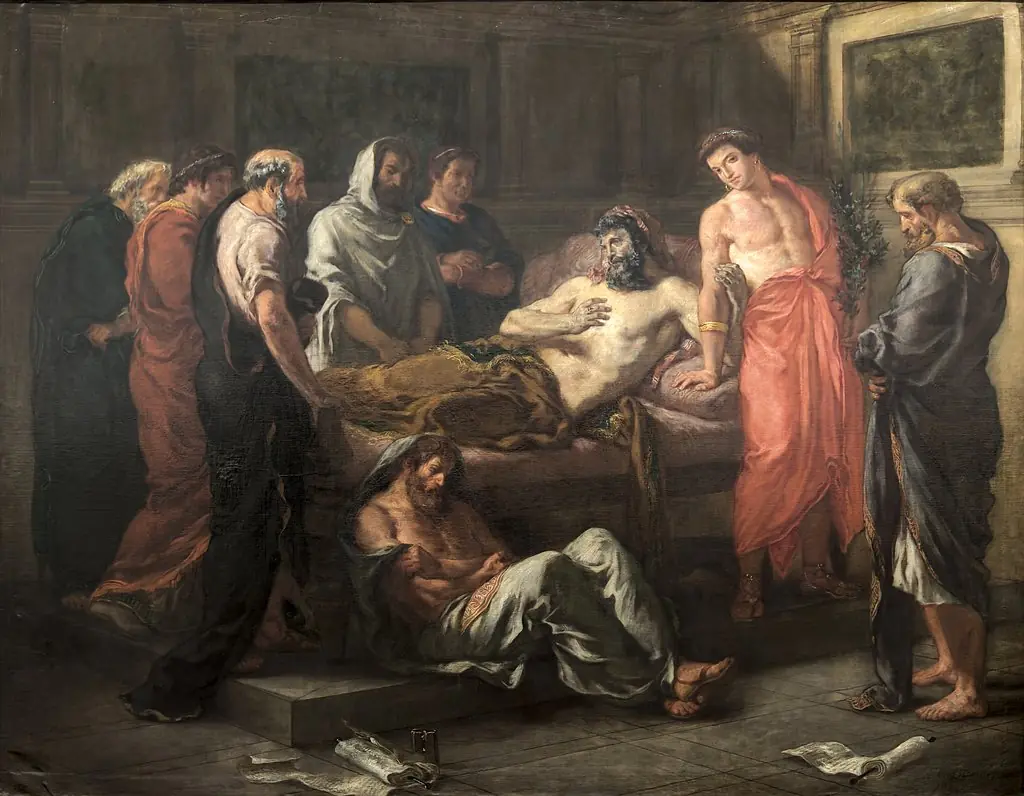 Last Words of the Emperor Marcus Aurelius
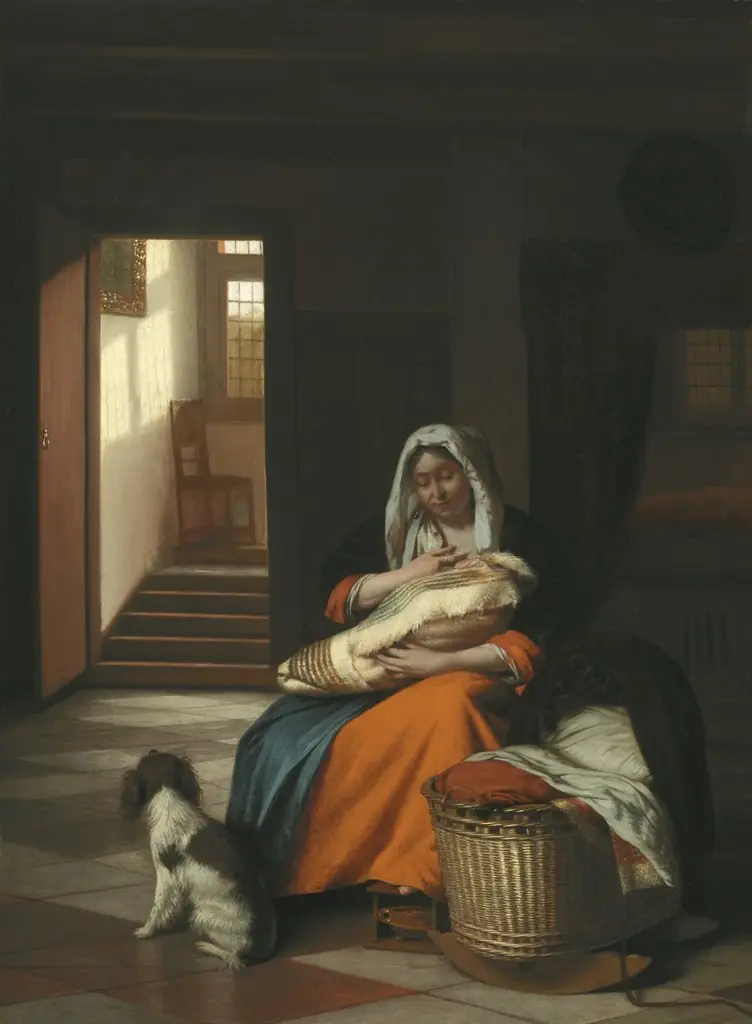 Woman nursing by a cradle with a dog at her feet
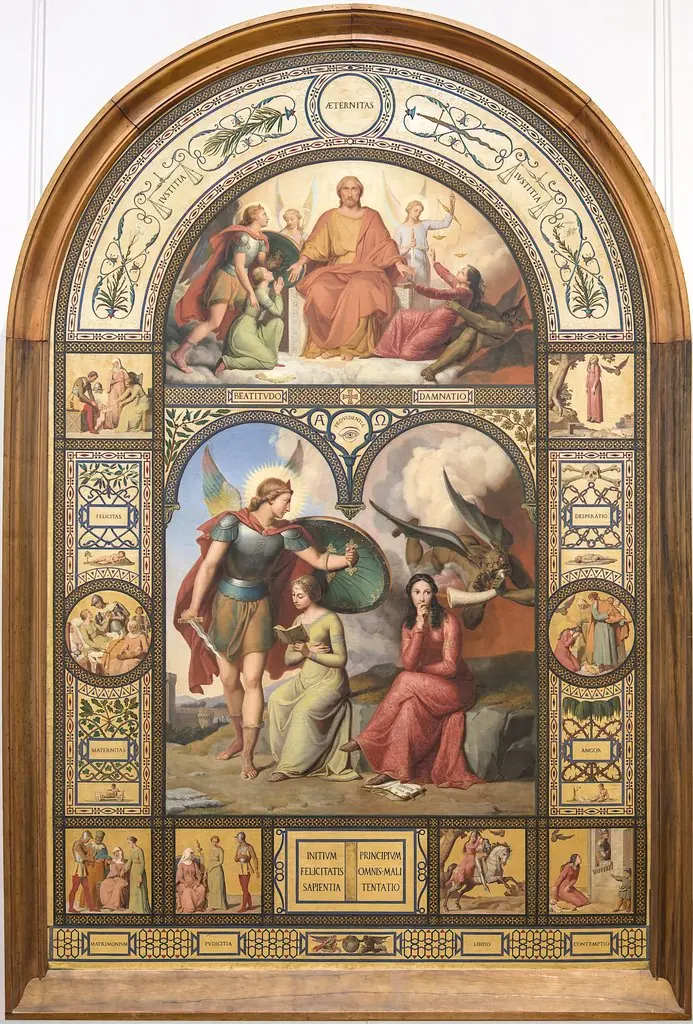 Good and Evil
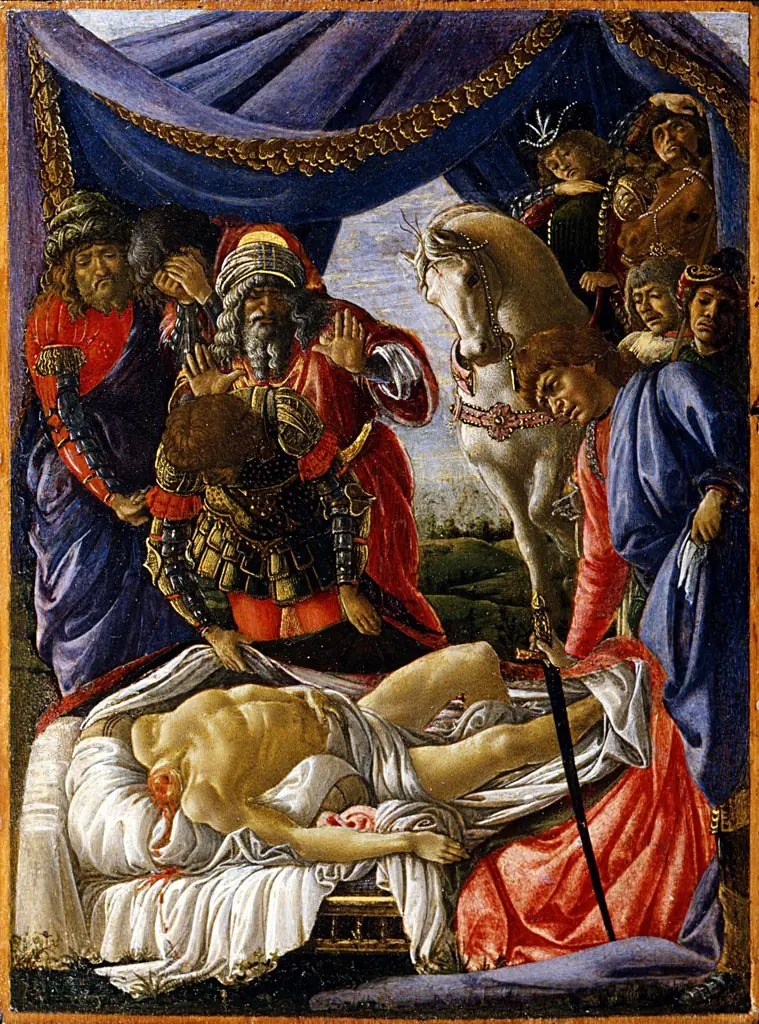 The Discovery of the Body of Holofernes
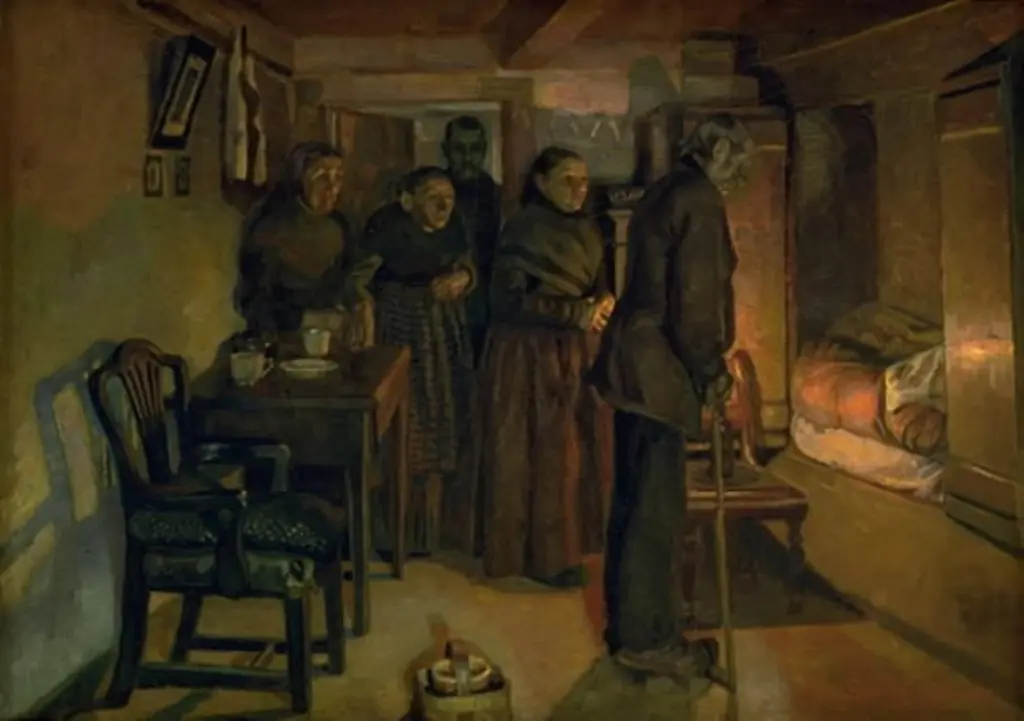 At a Deathbed
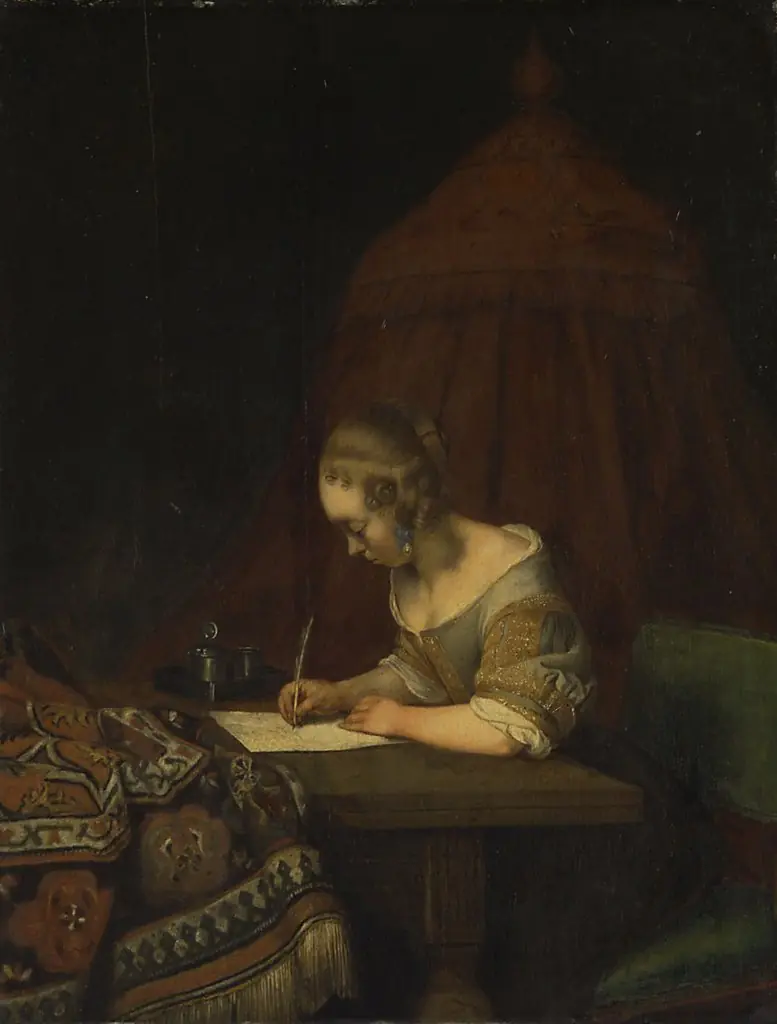 A woman writing a letter
 Altarpiece of St. Nicholas
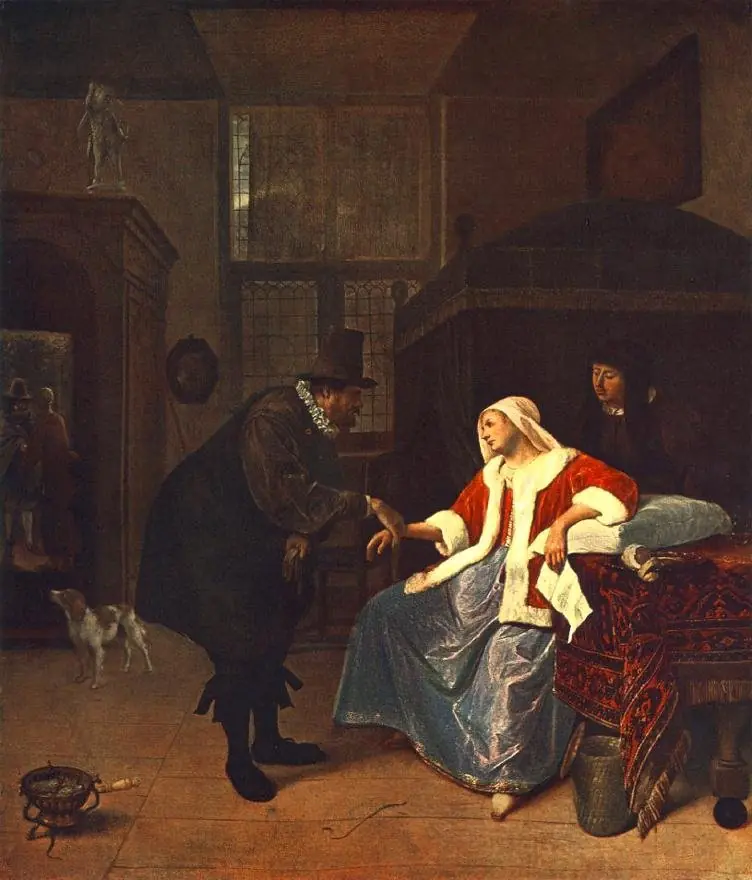 Love Sickness
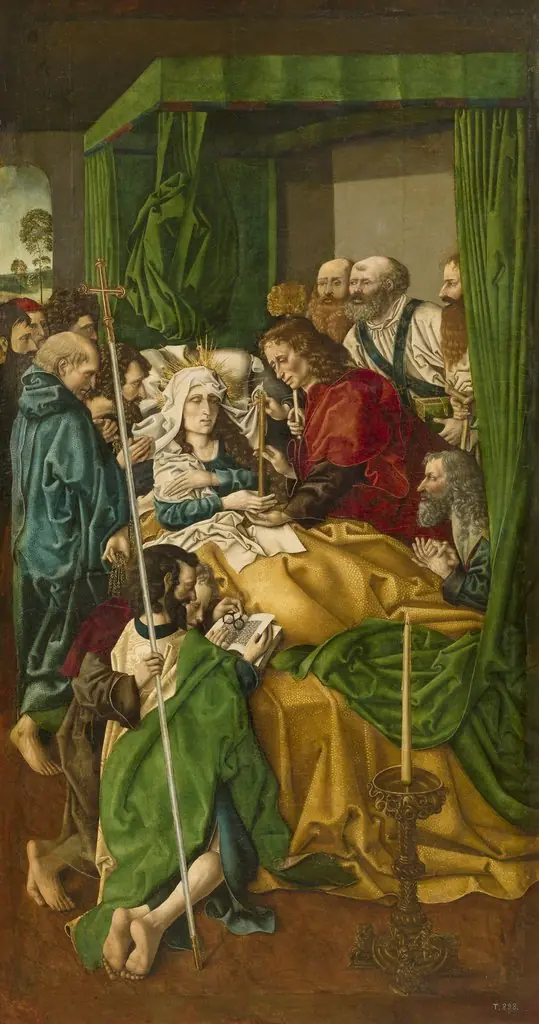 The Death of the Virgin
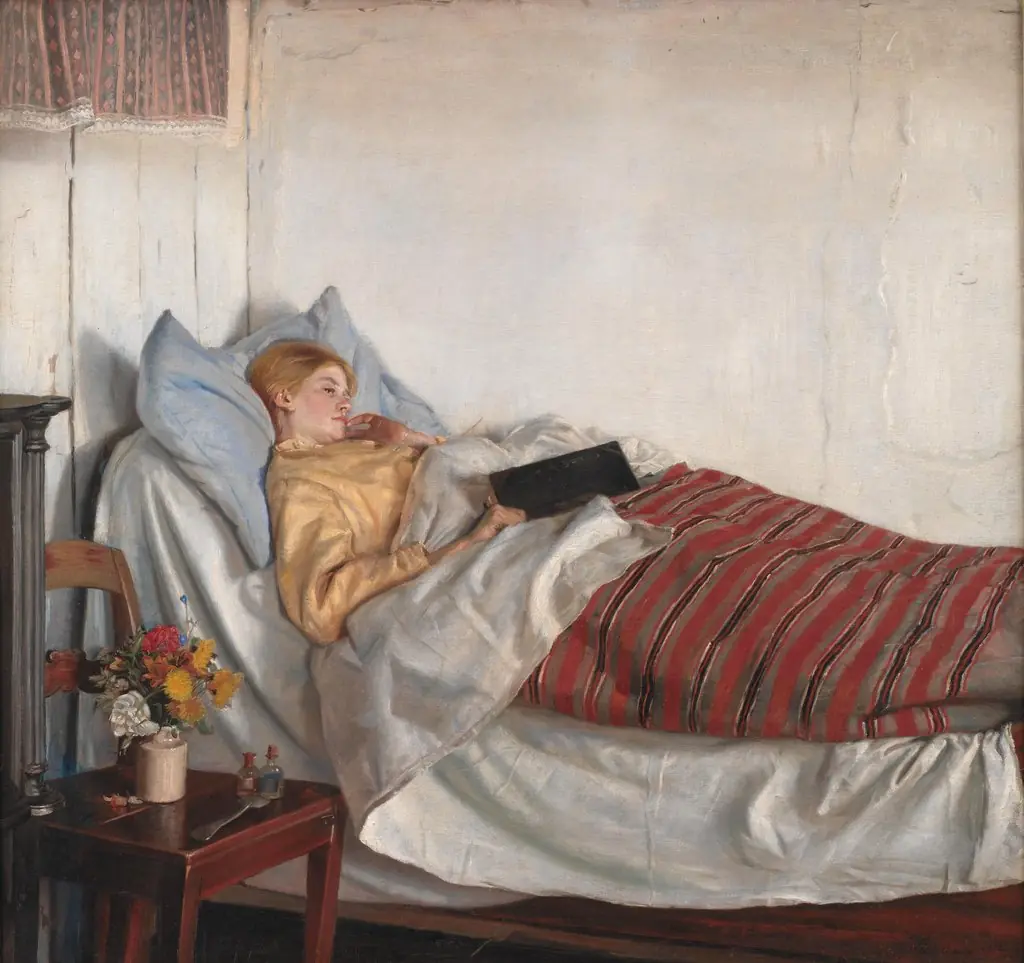 The Sick Girl
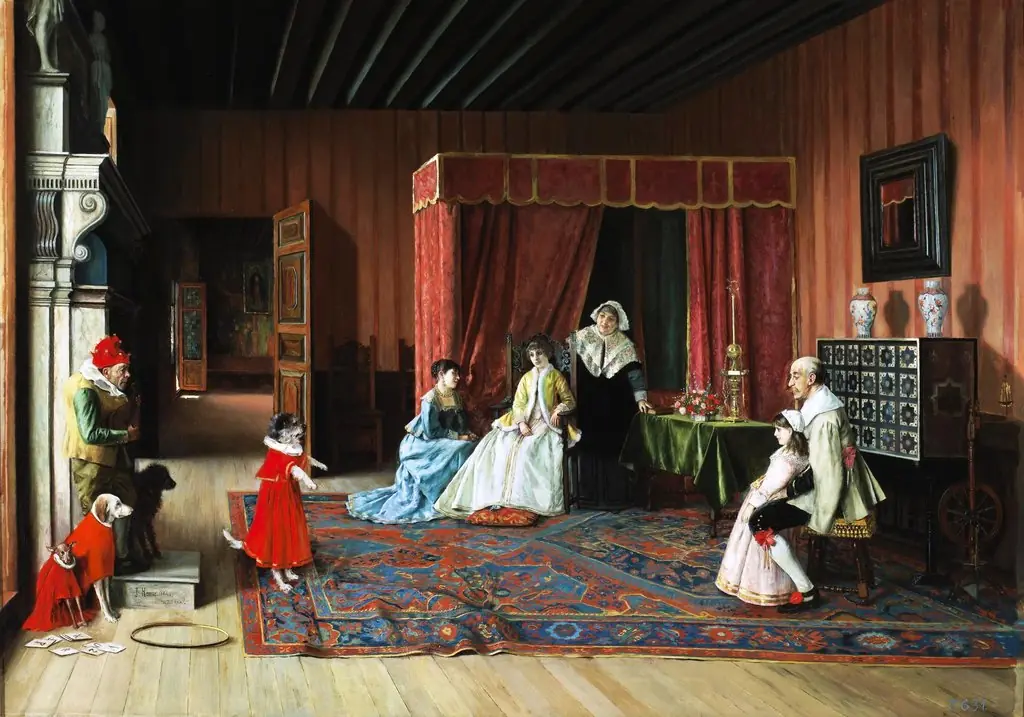 El pasatiempo
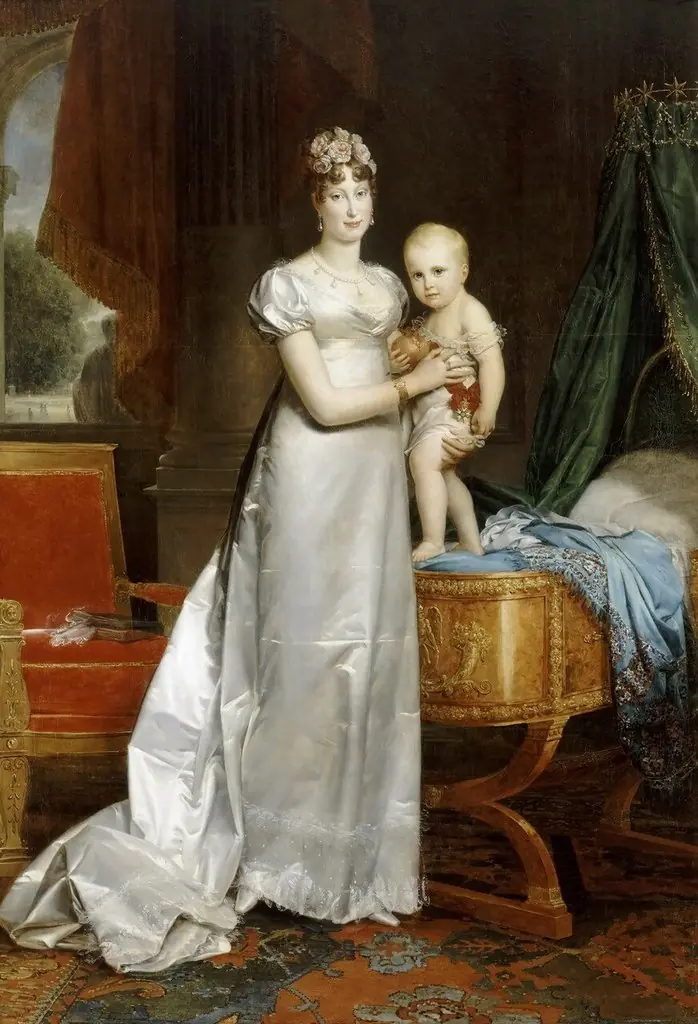 Marie-Louise, Empress of the French, and the Roi de Rome
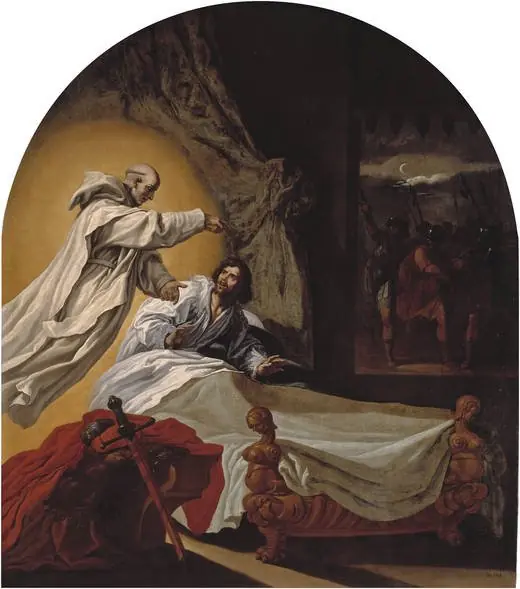 Saint Bruno Appears to Rogerio Guiscardo Count of Apulia and Calabria
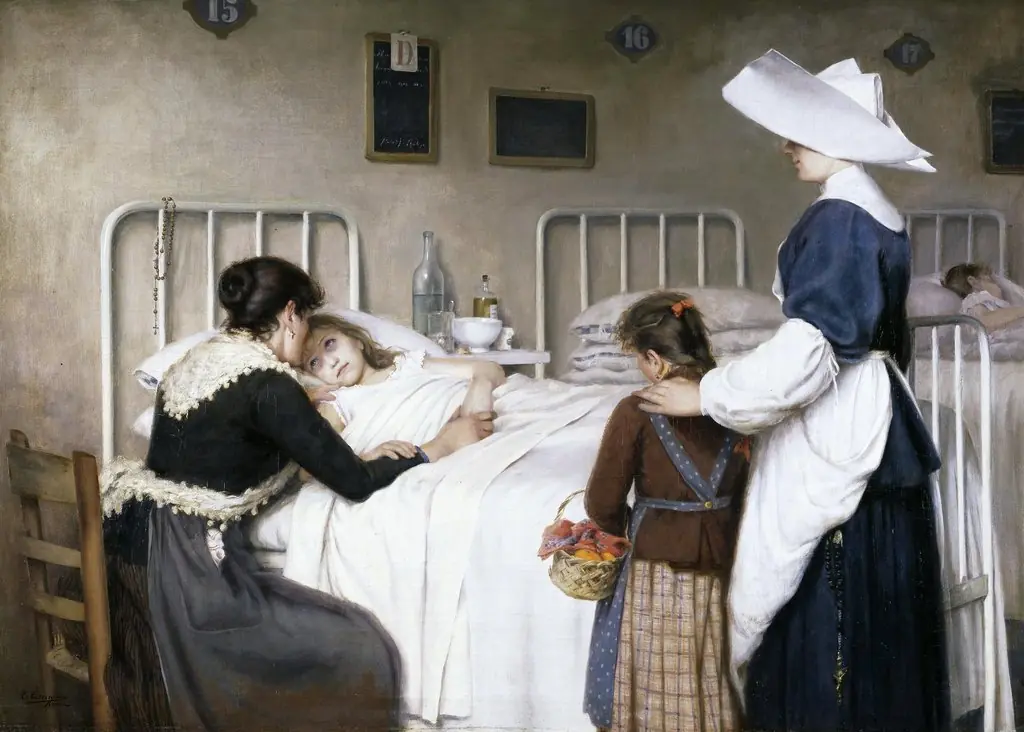 La visita de la madre al hospital
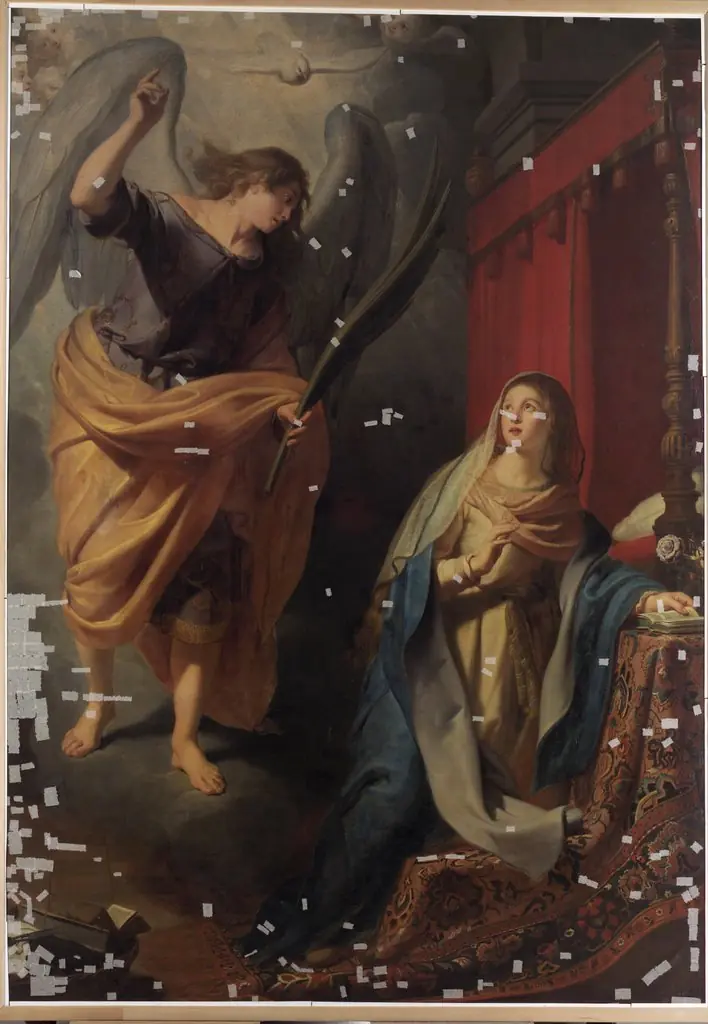 The Annunciation
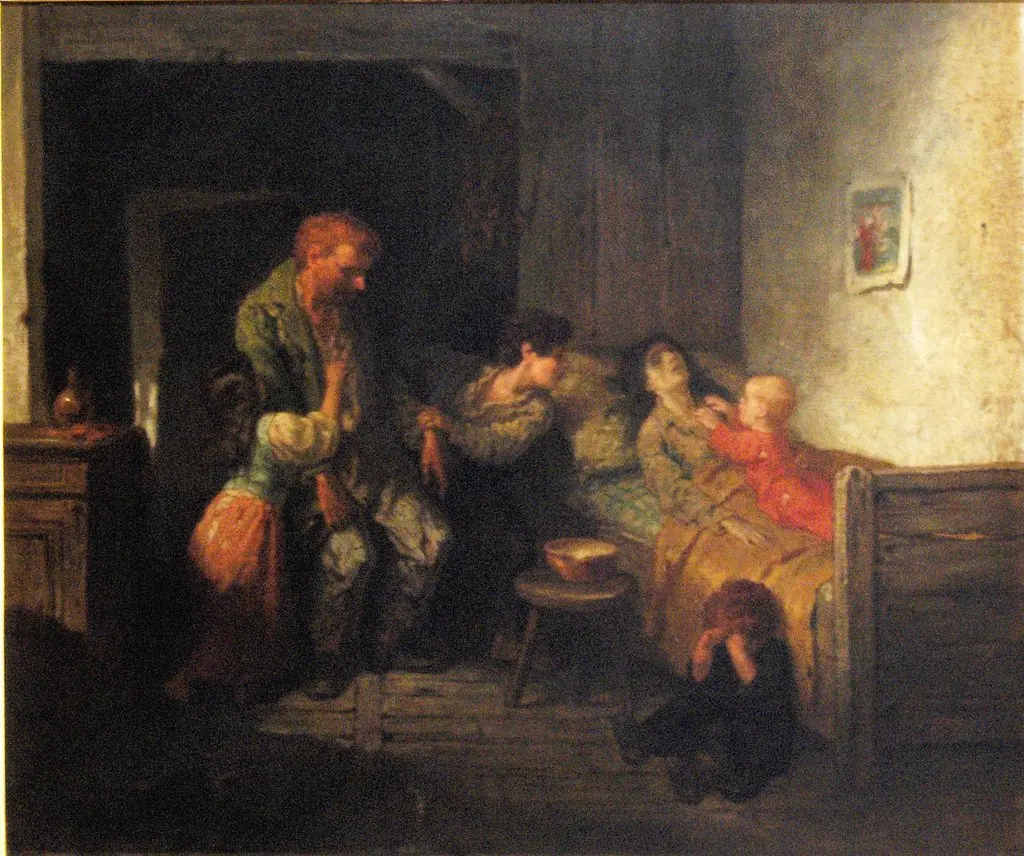 The drunkard
 Joseph accused by Potiphar's wife
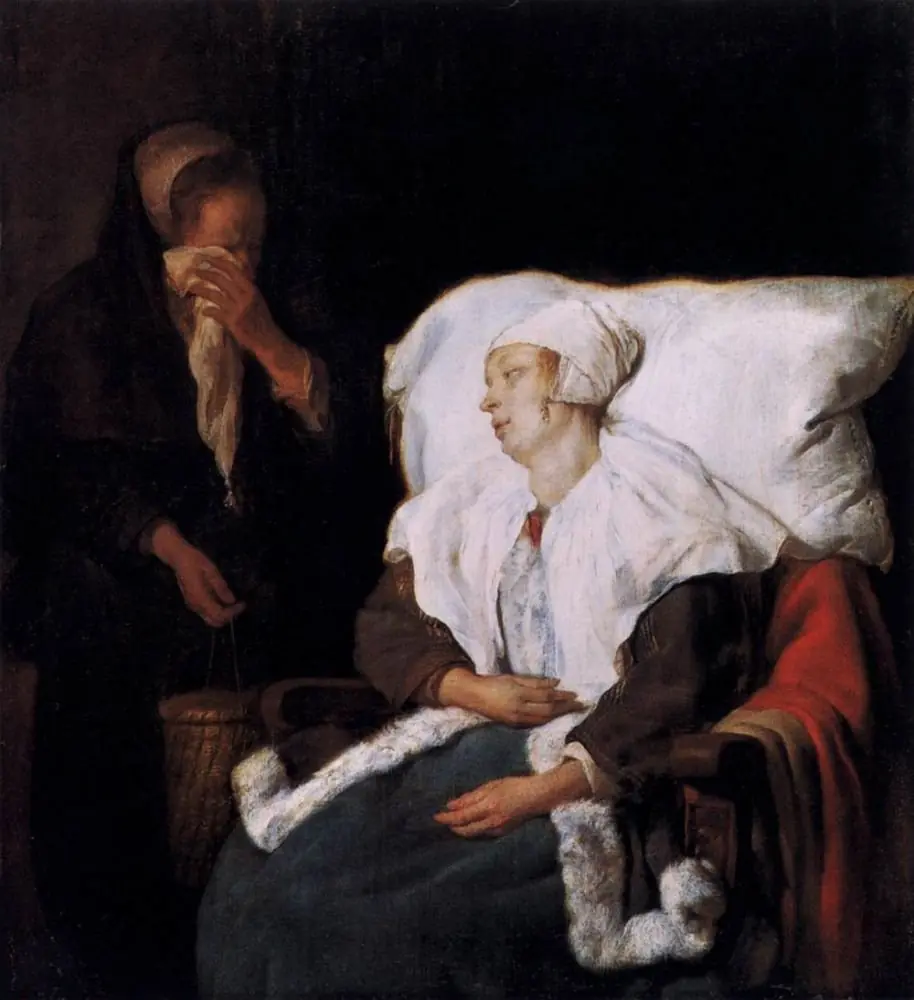 The Sick Lady and the Weeping Maidservant
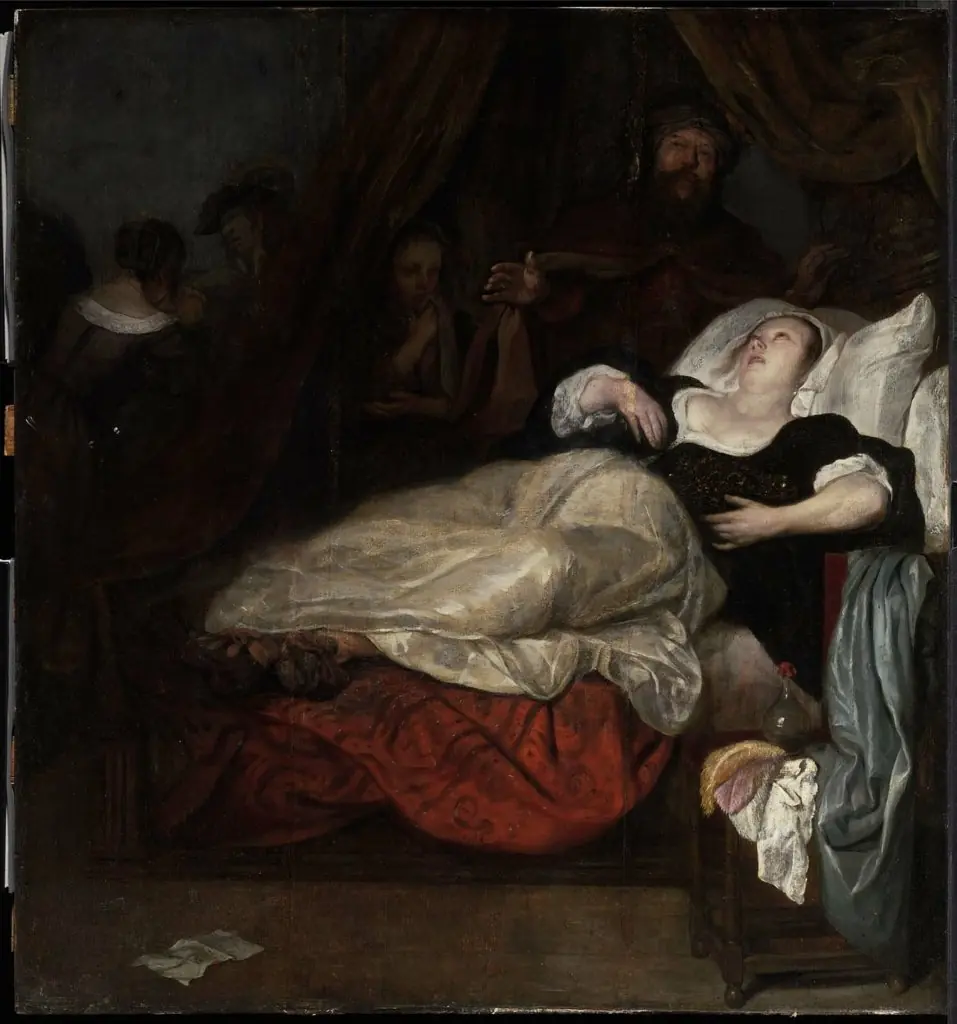 Woman in Agony (the Death of Sophonisba?)
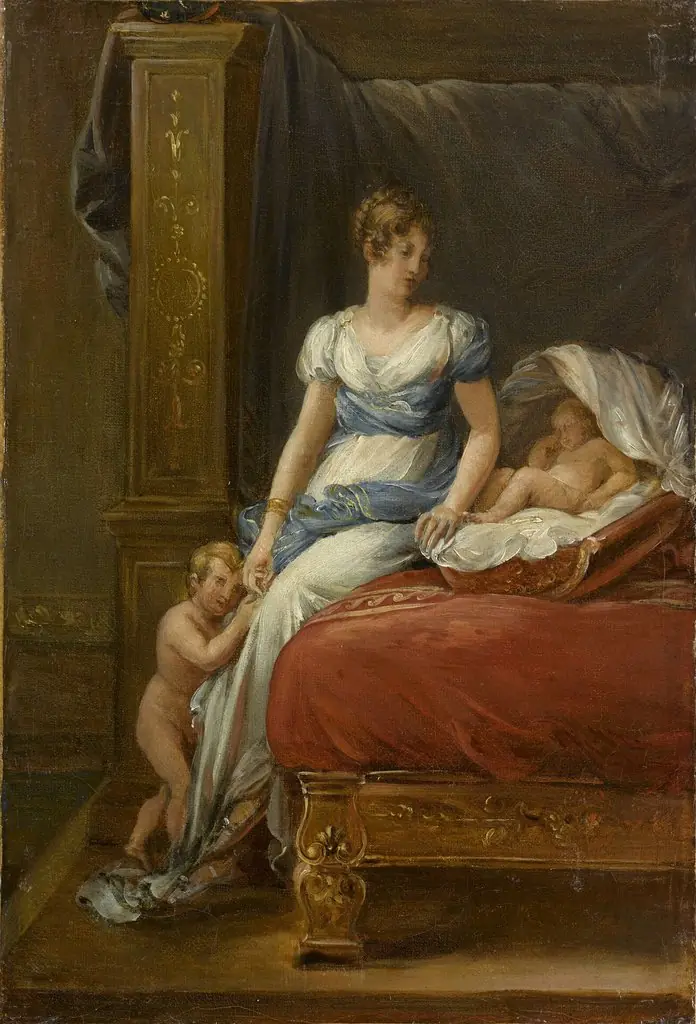 Marie-Annunciade-Caroline Bonaparte, Queen of Naples and her children
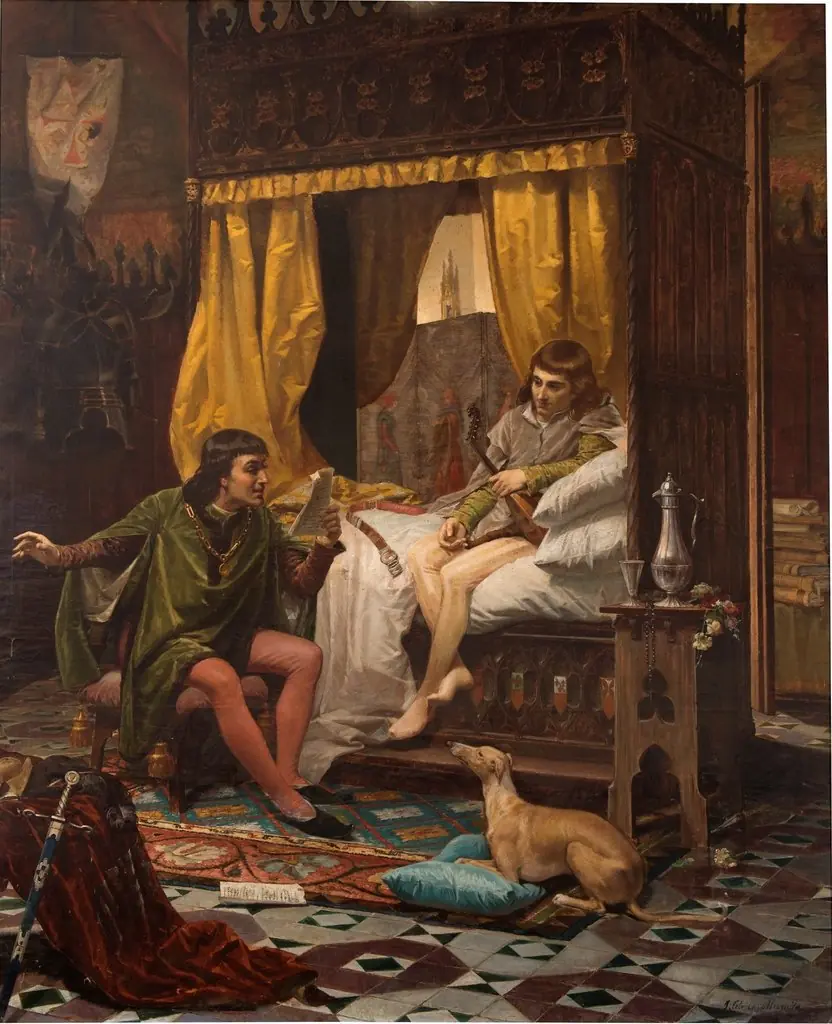 Ausias March leyendo sus trovas al Príncipe de Viana
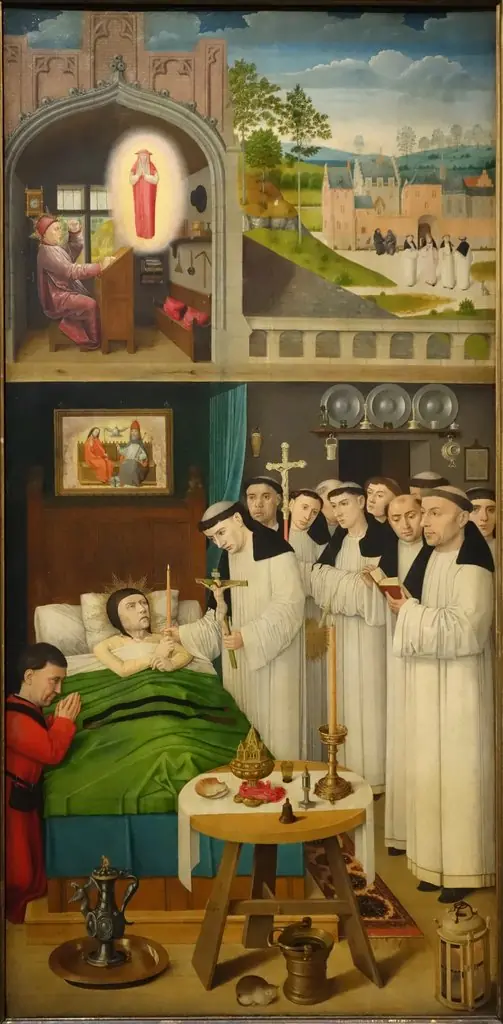 Scenes from the Life of Saint Augustine
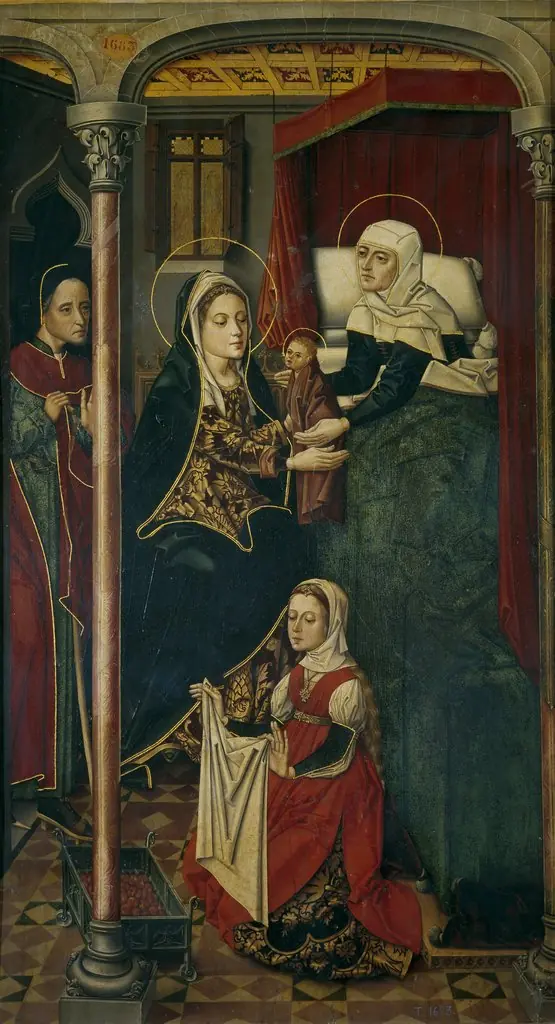 The Birth of Saint John the Baptist
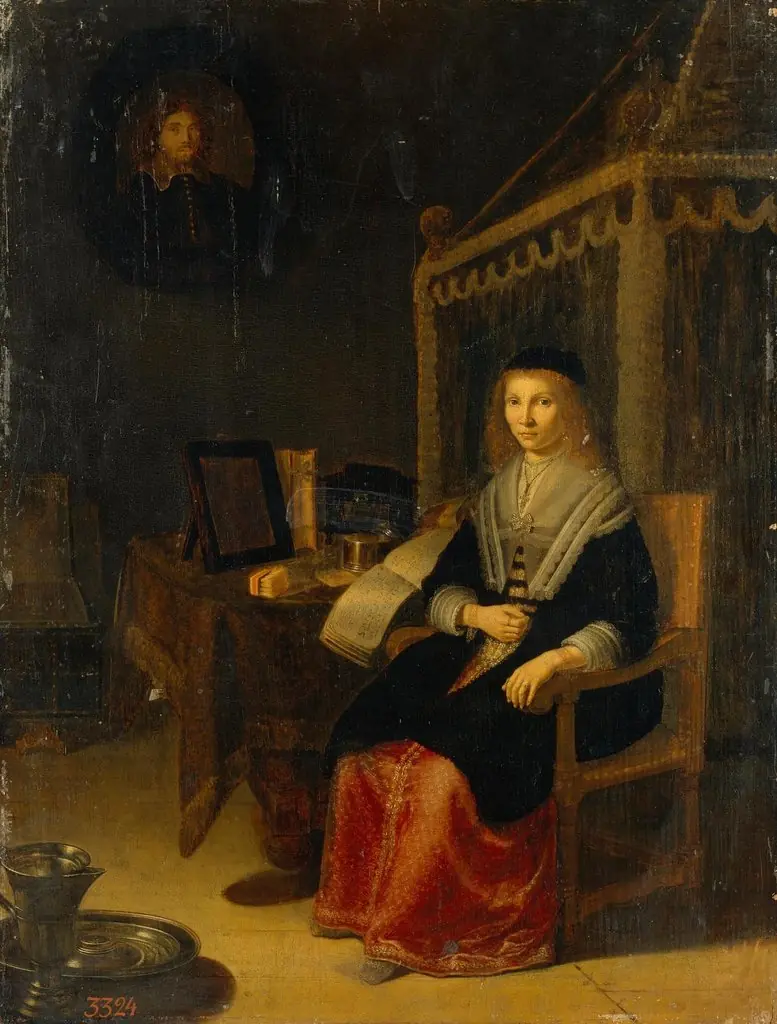 Portrait of a Lady at the Table with Music
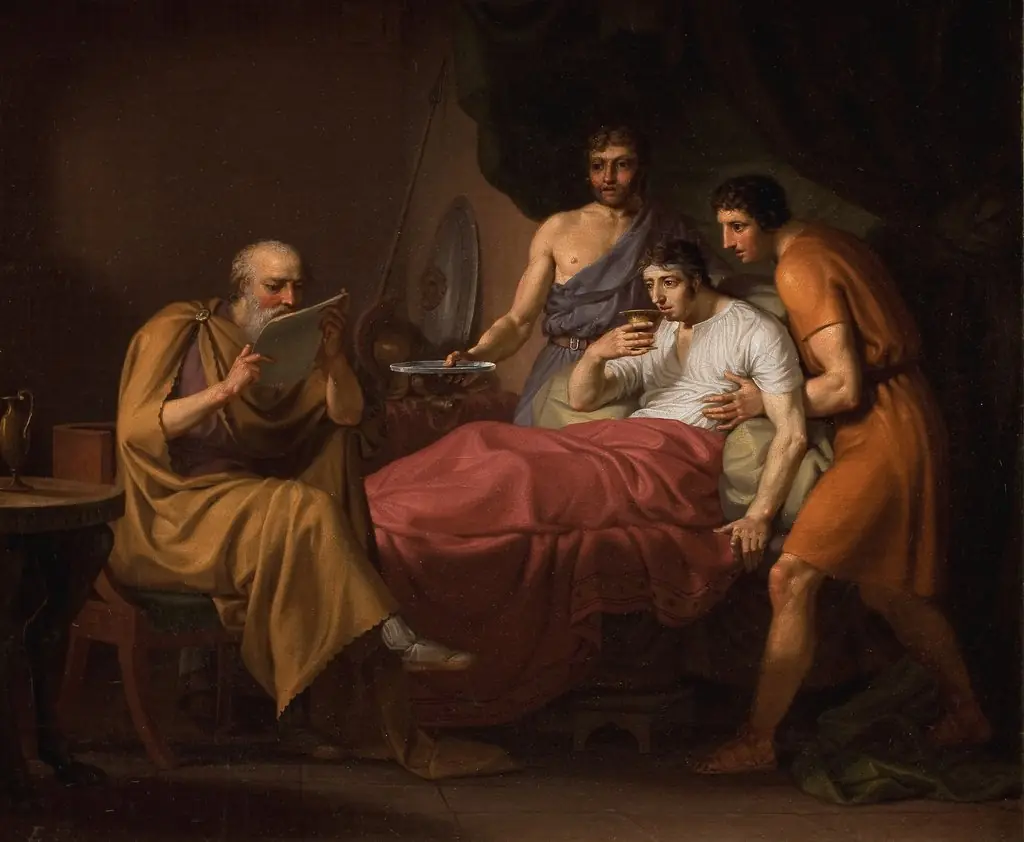 Alexander den Store på sygelejet
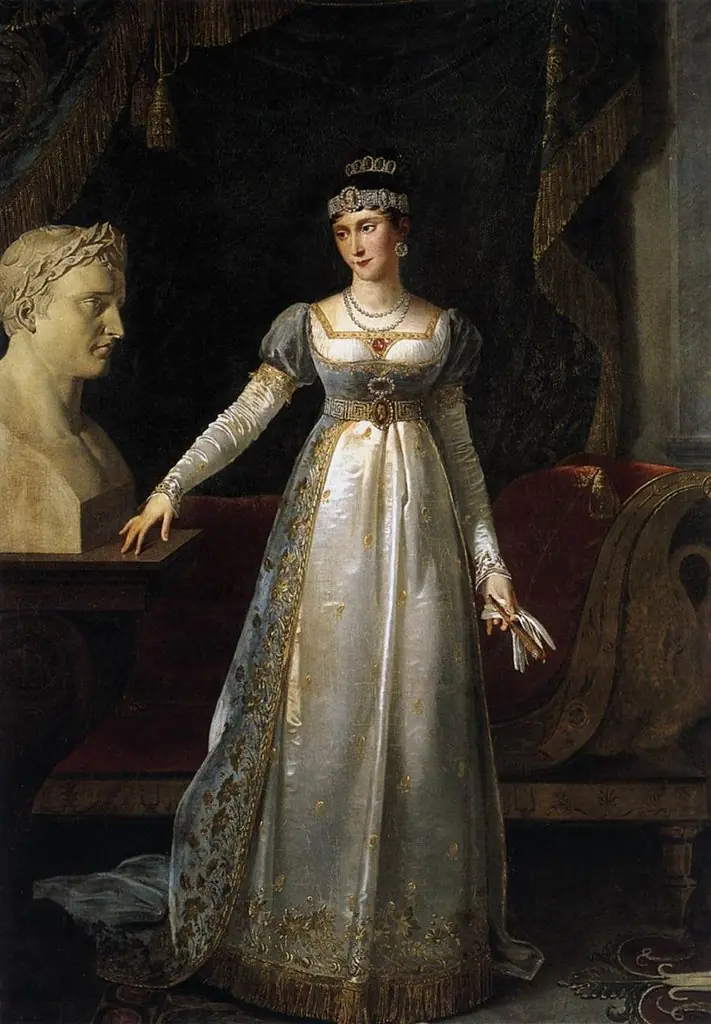 Pauline Bonaparte, Duchess of Guastalla, Princess Borghese
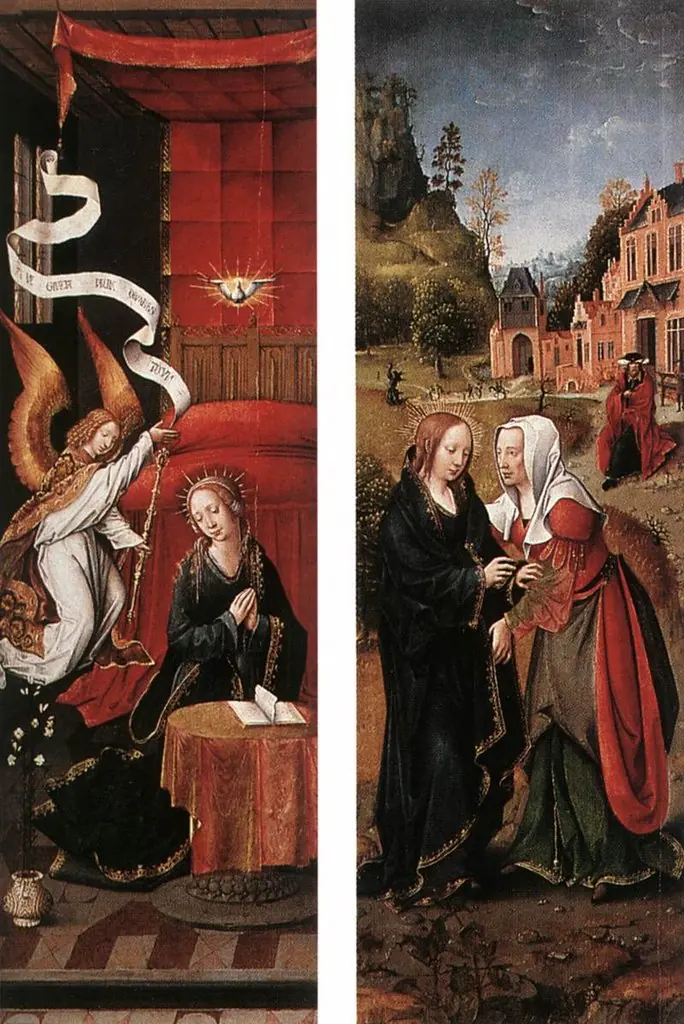 Annunciation and Visitation
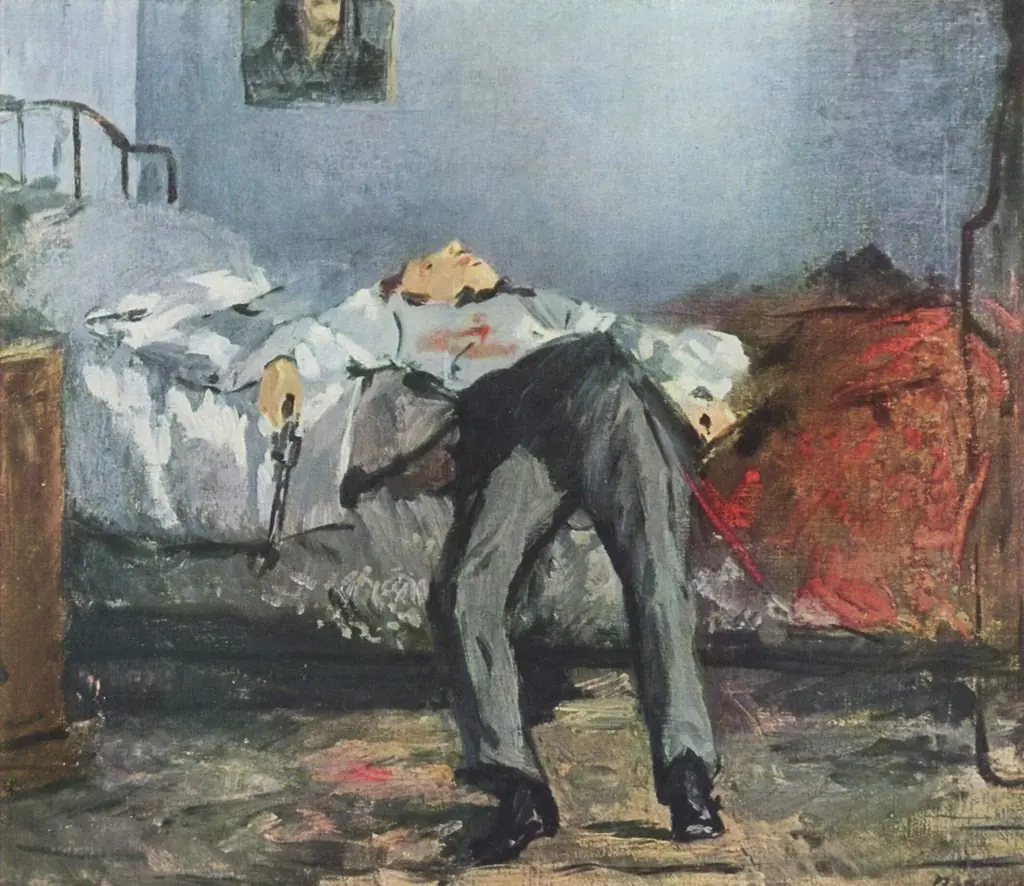 Le Suicidé
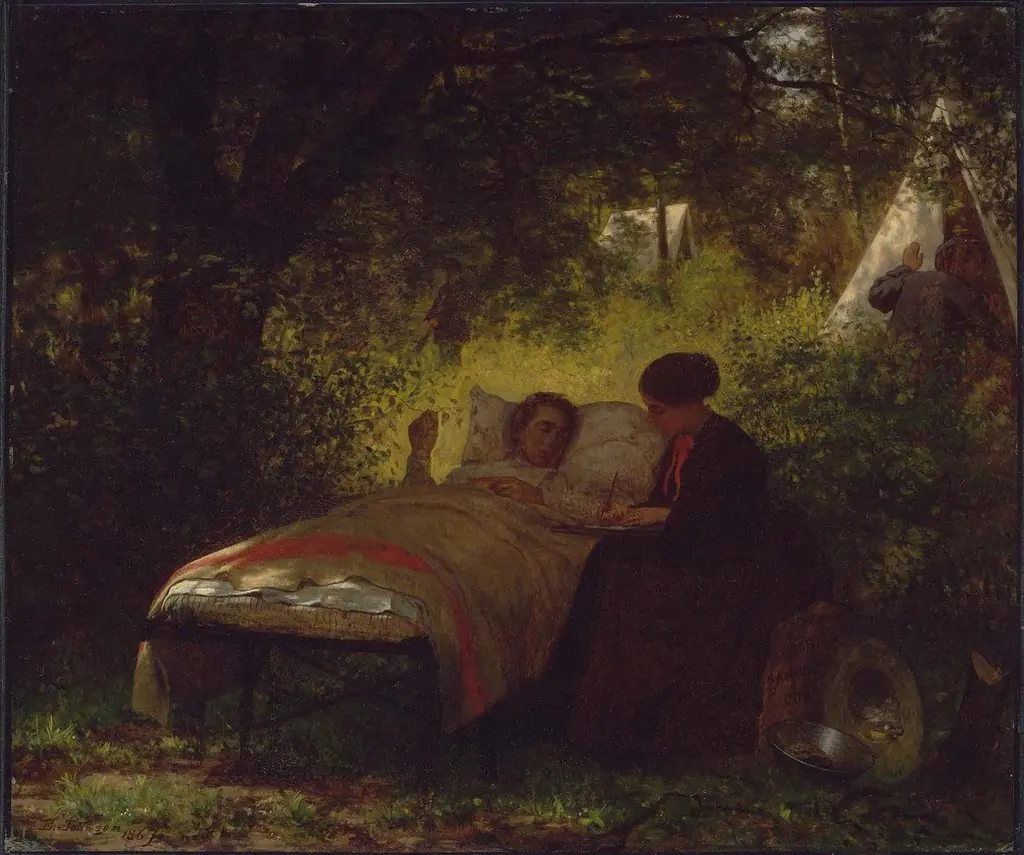 The Field Hospital
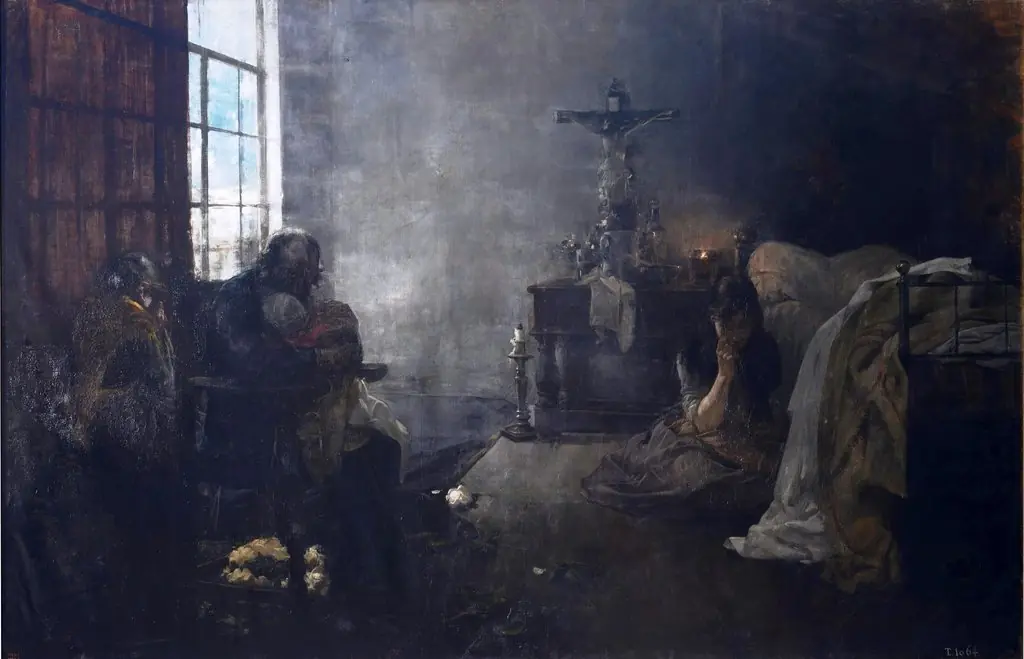 Huérfanos
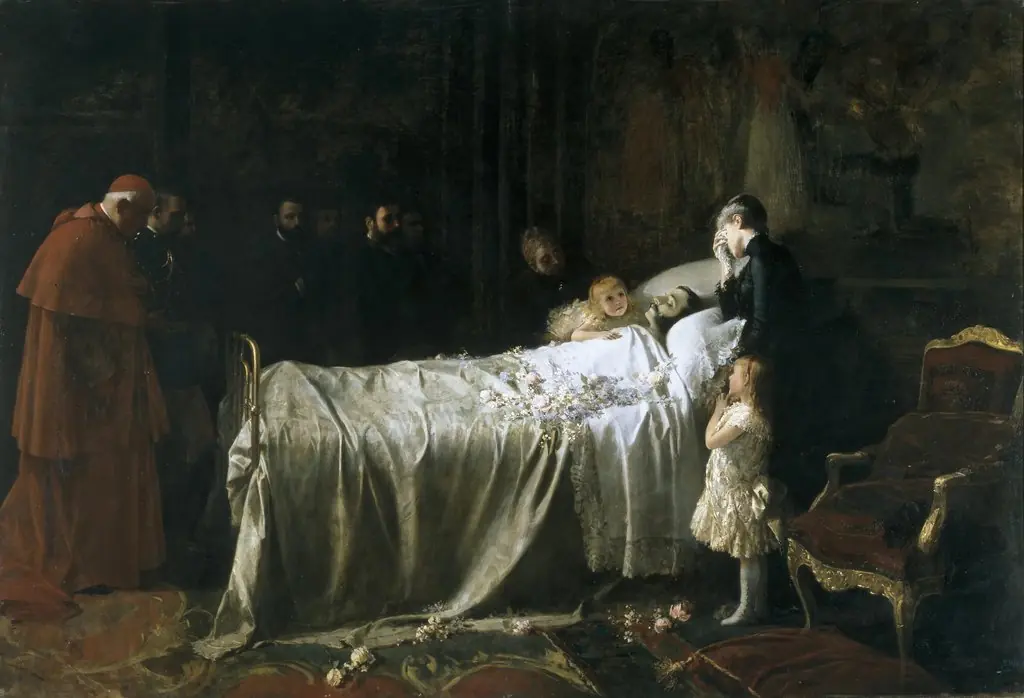 el Último Beso
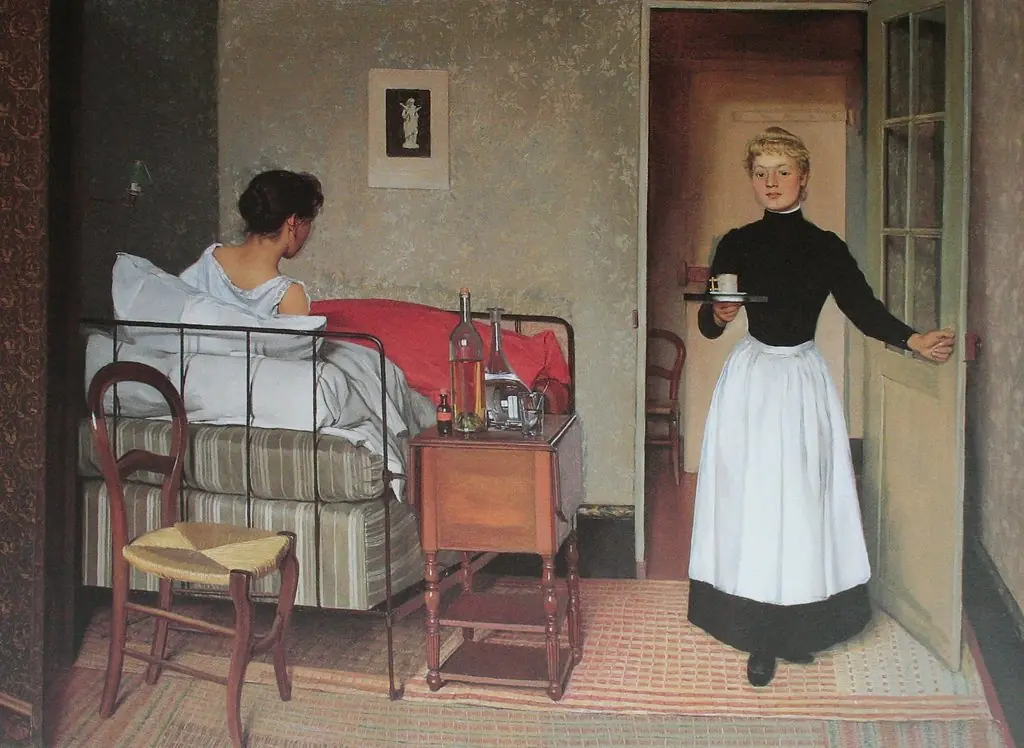 The Sick Girl
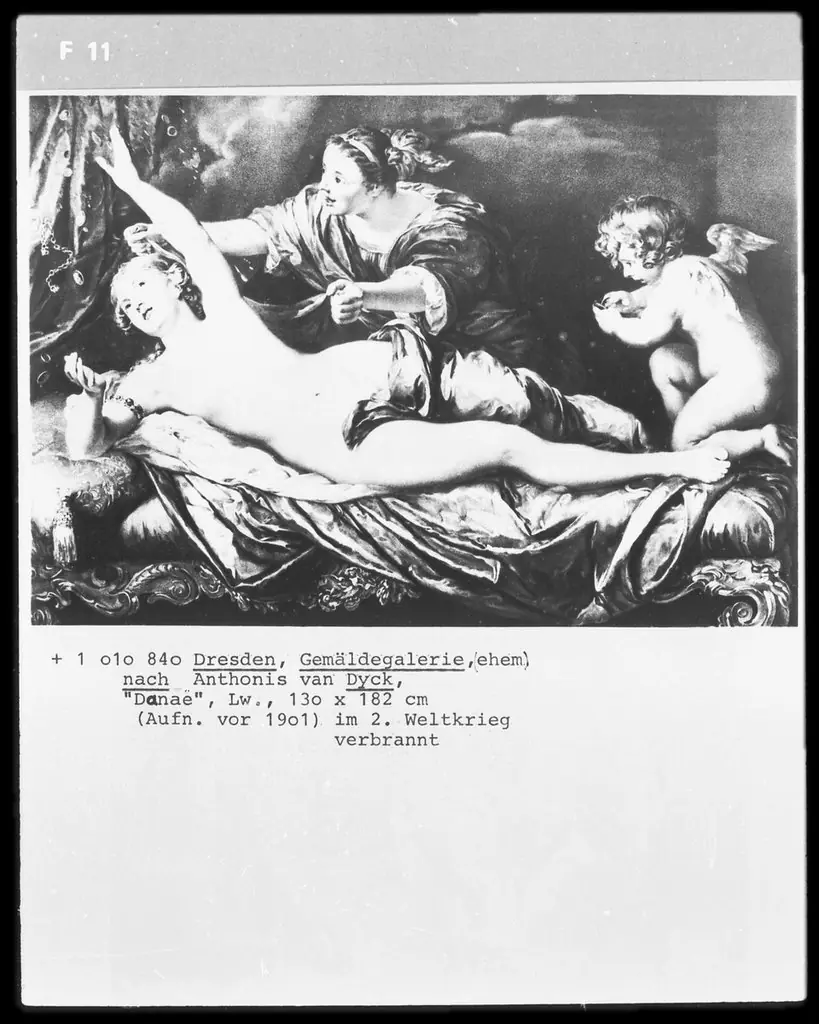 Danaë
Danaë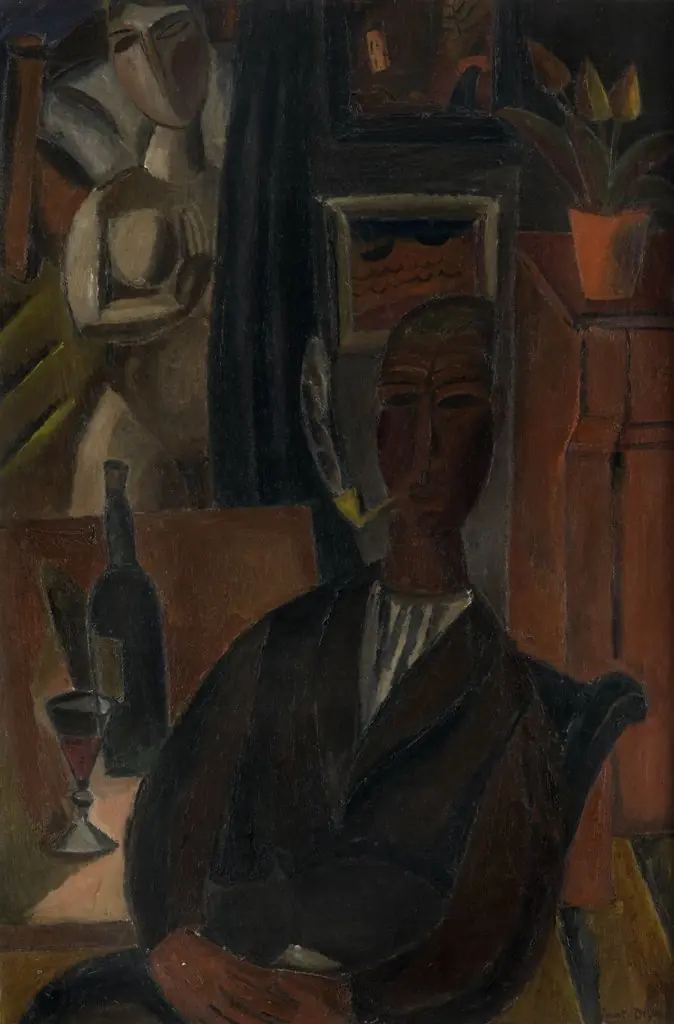 The man with the bottle
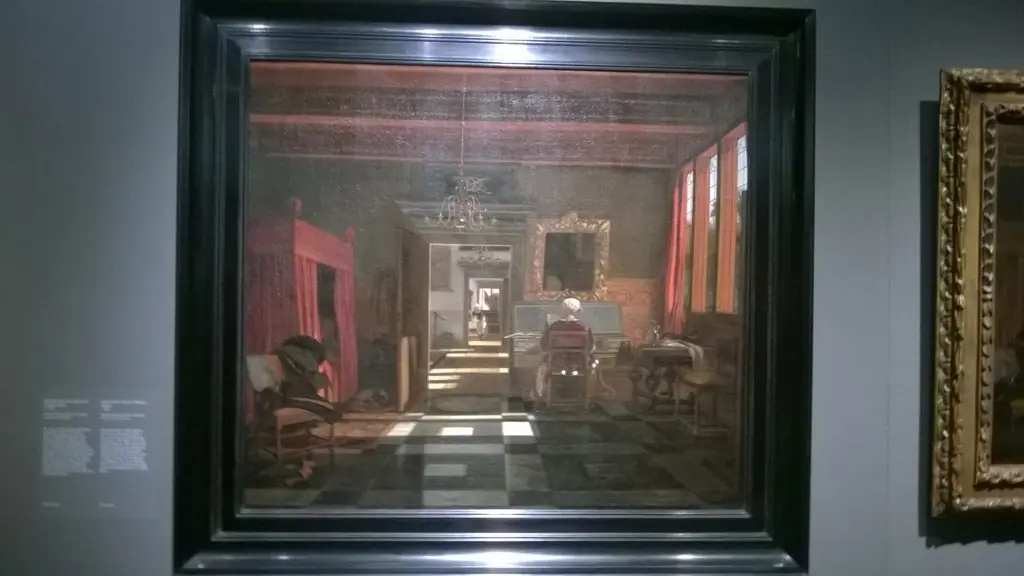 Interior with a Woman playing a Virginal
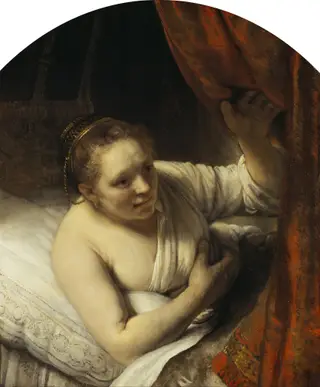 A Woman in Bed
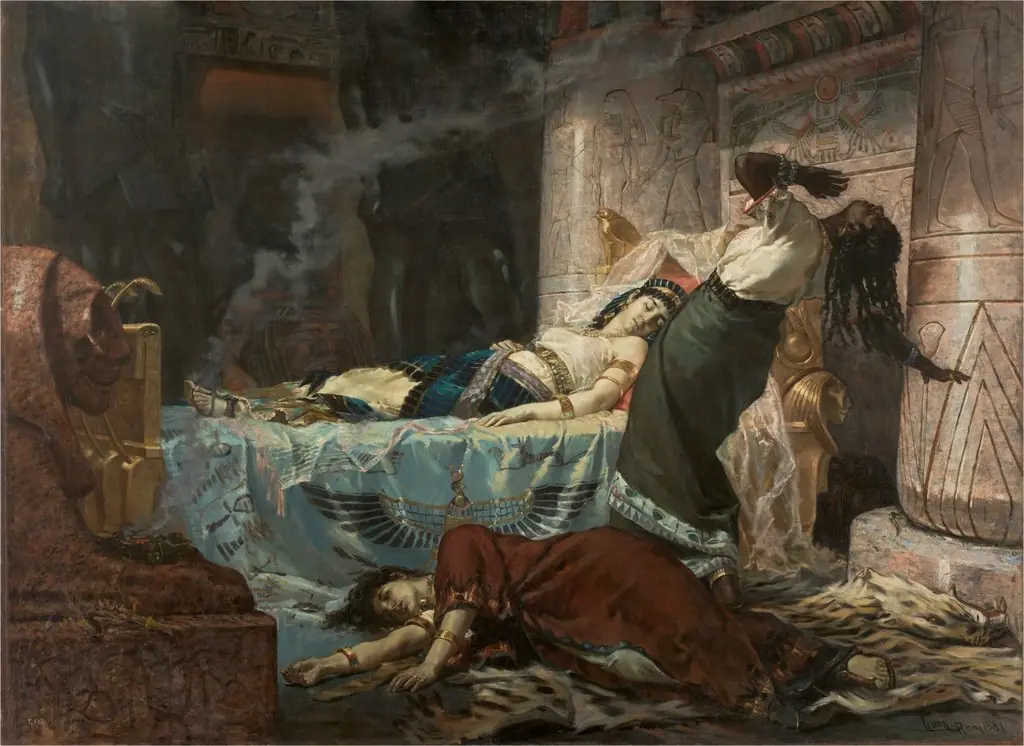 Cleopatra
 Felipe III de Francia moribundo bendiciendo a sus hijos
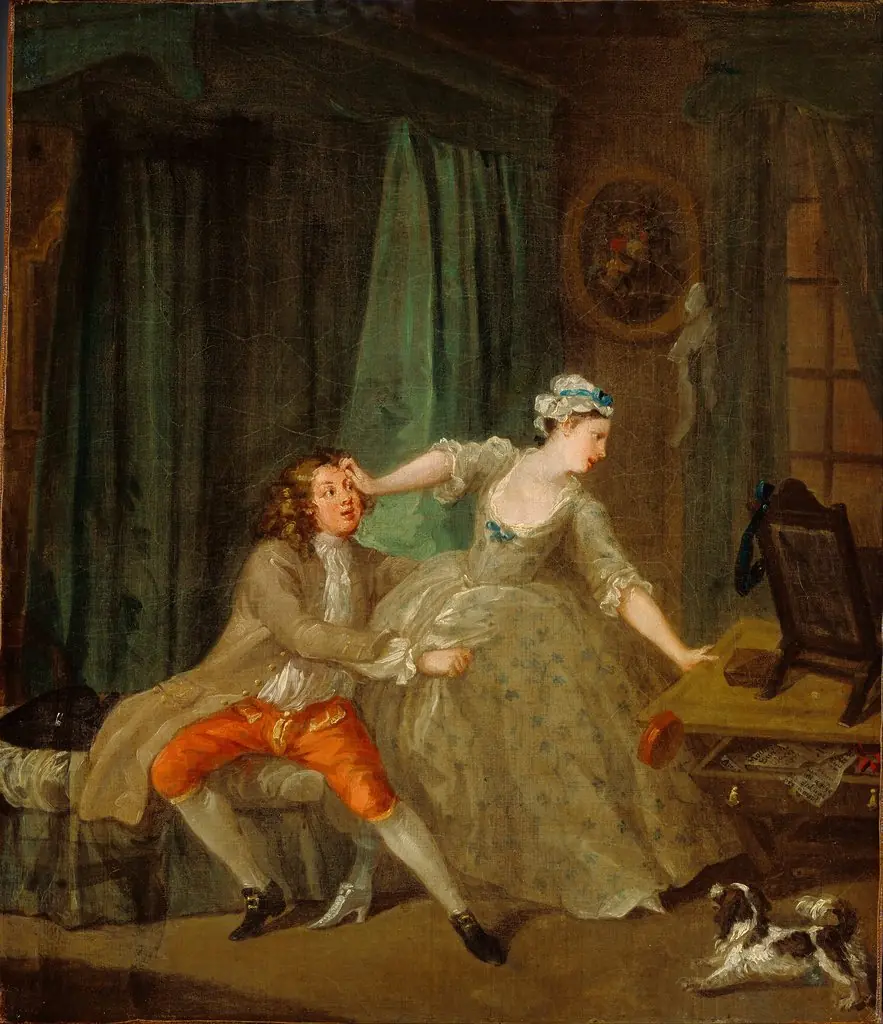 Before
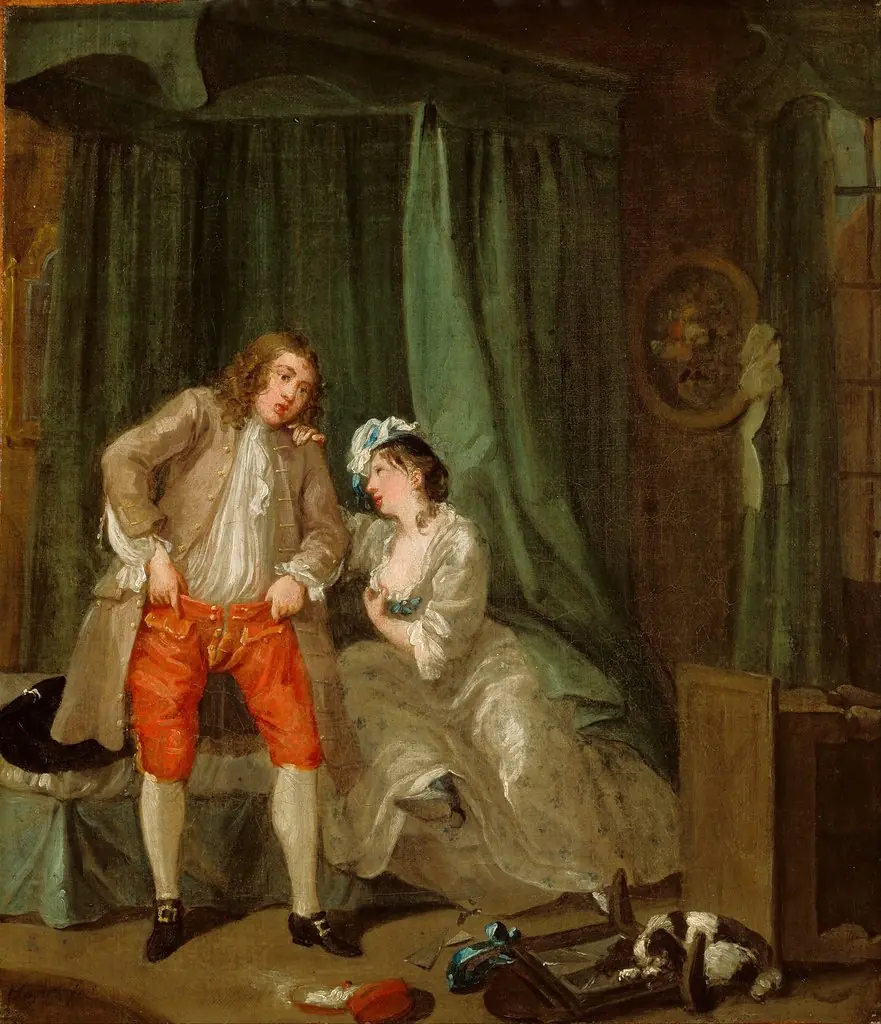 After
After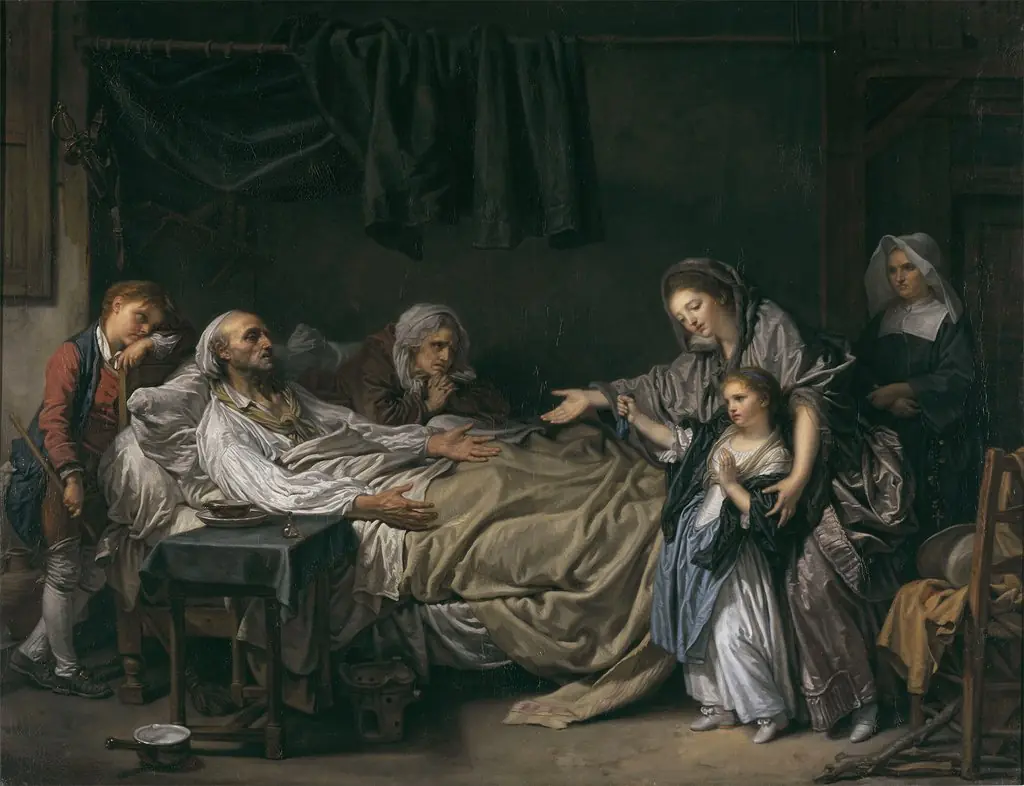 The Lady Giving Charity
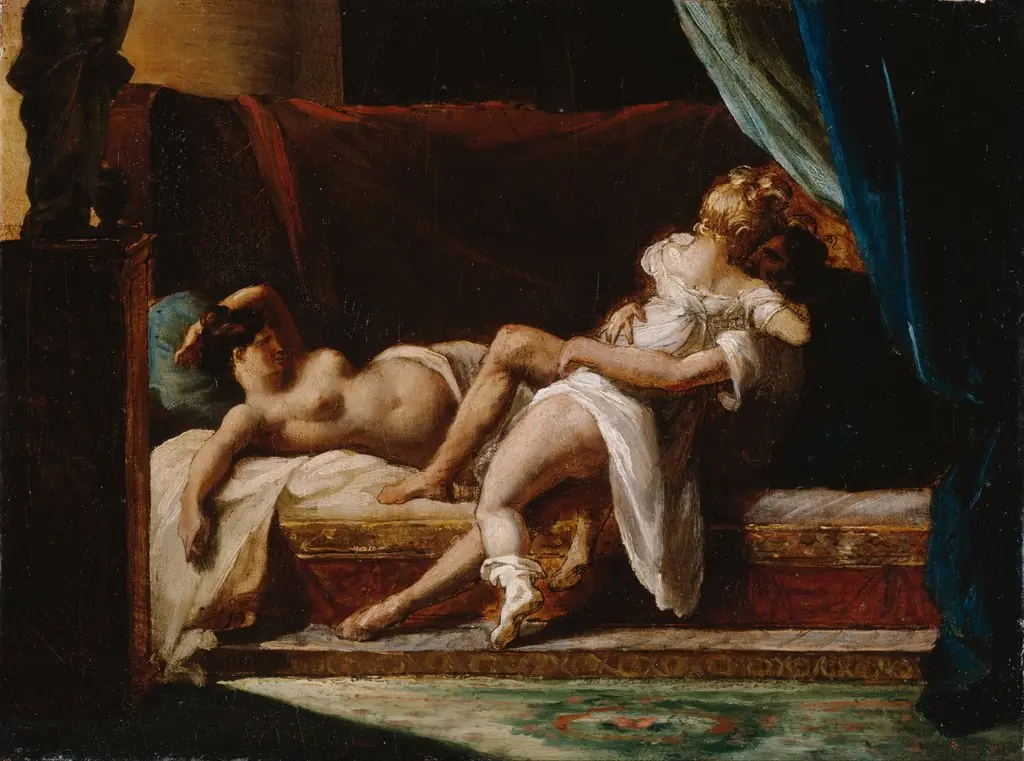 Three Lovers
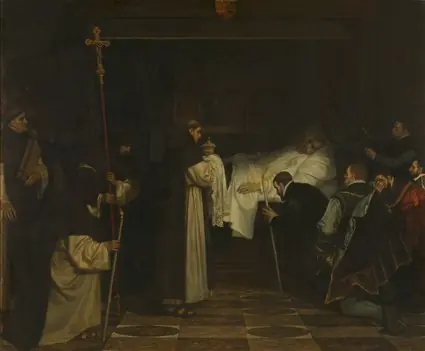 The death of Charles V
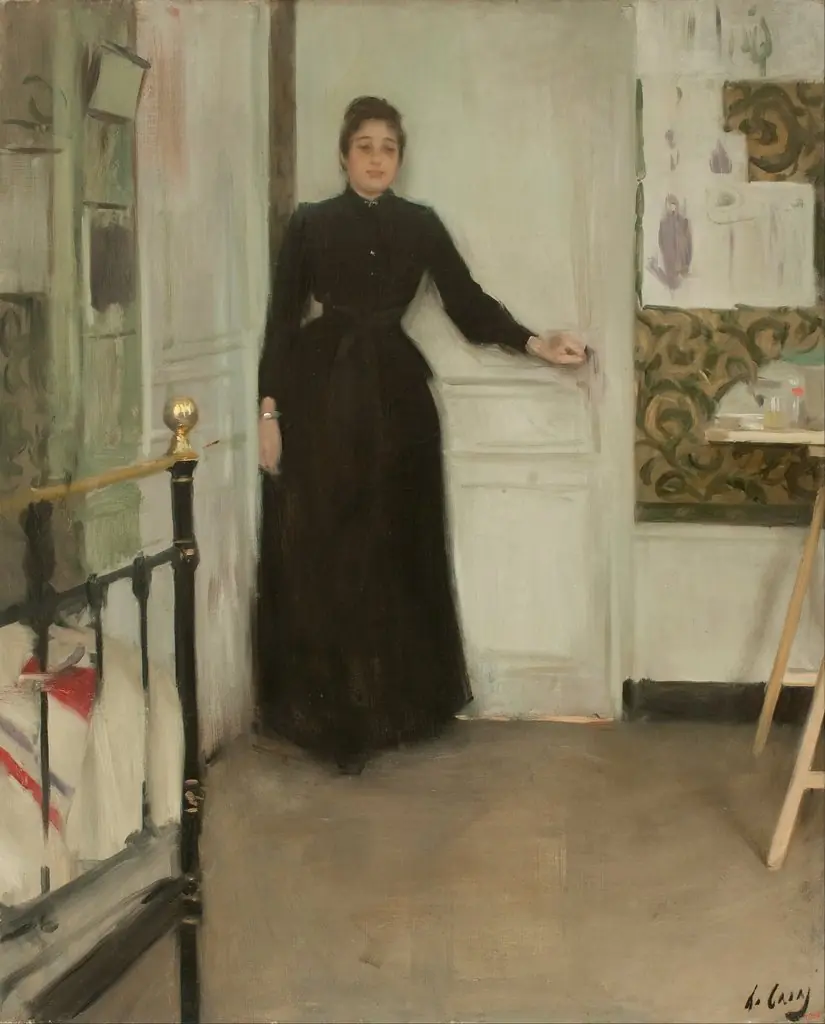 Interior
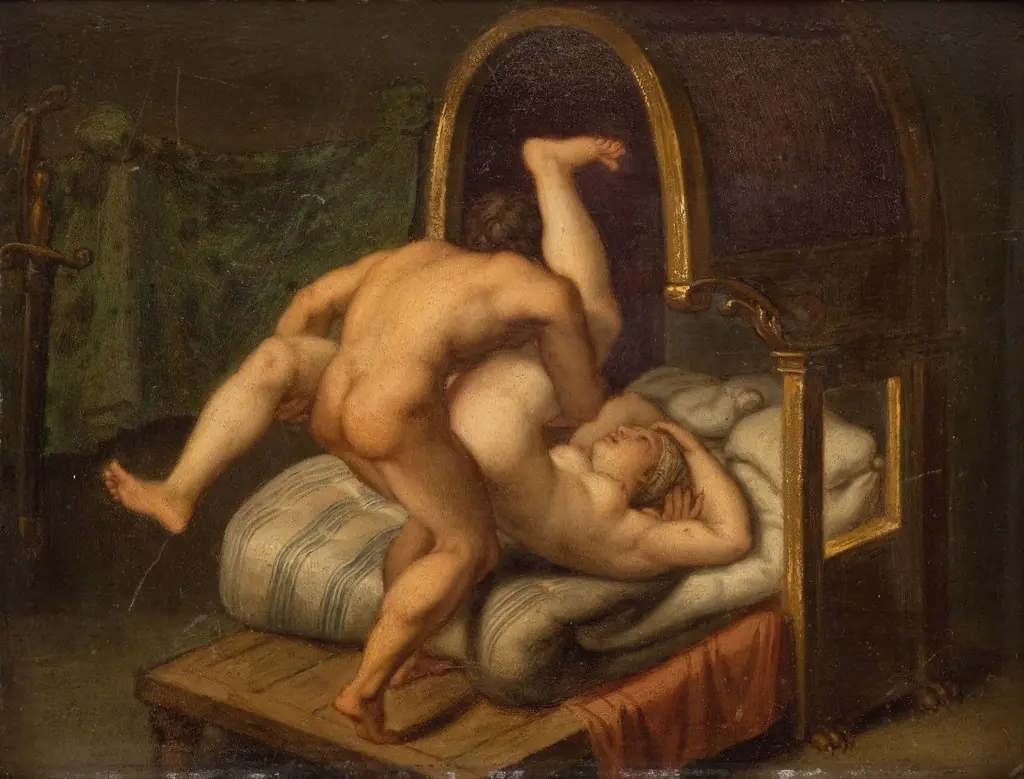 Nuditet med mand og kvinde
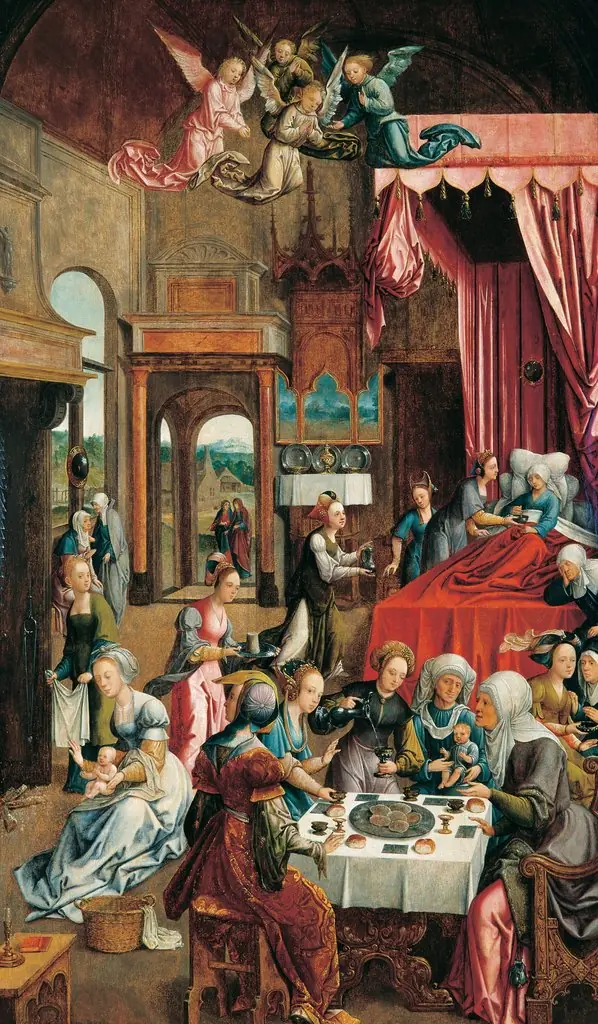 Nativity of the Virgin
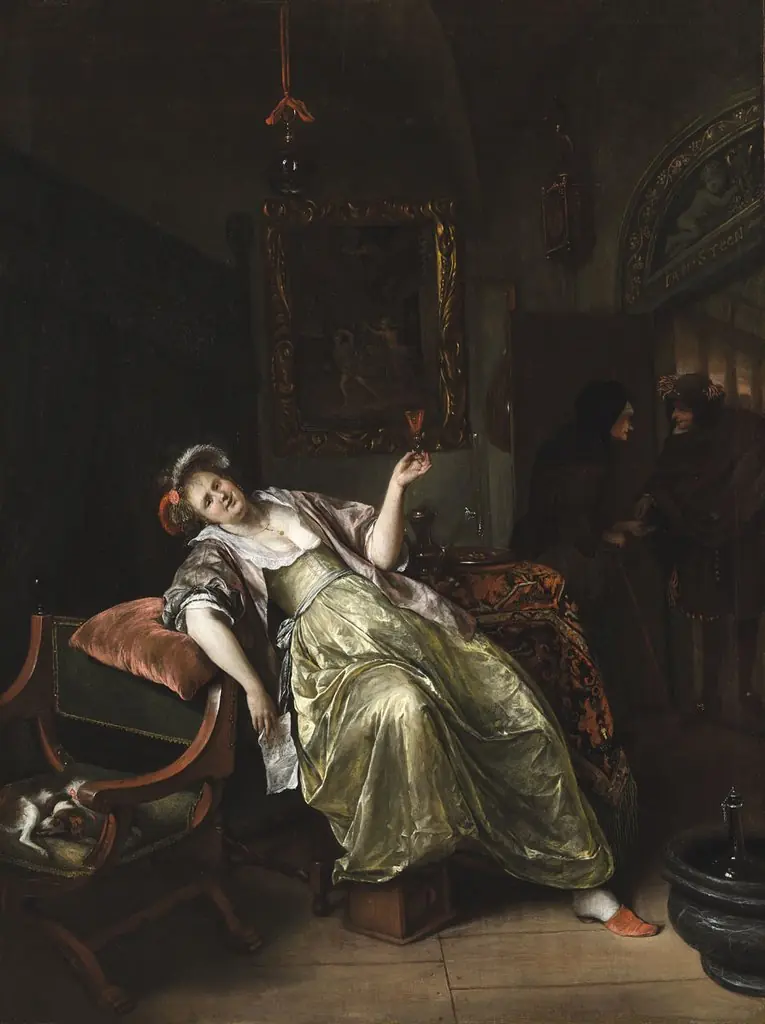 The Courtesan
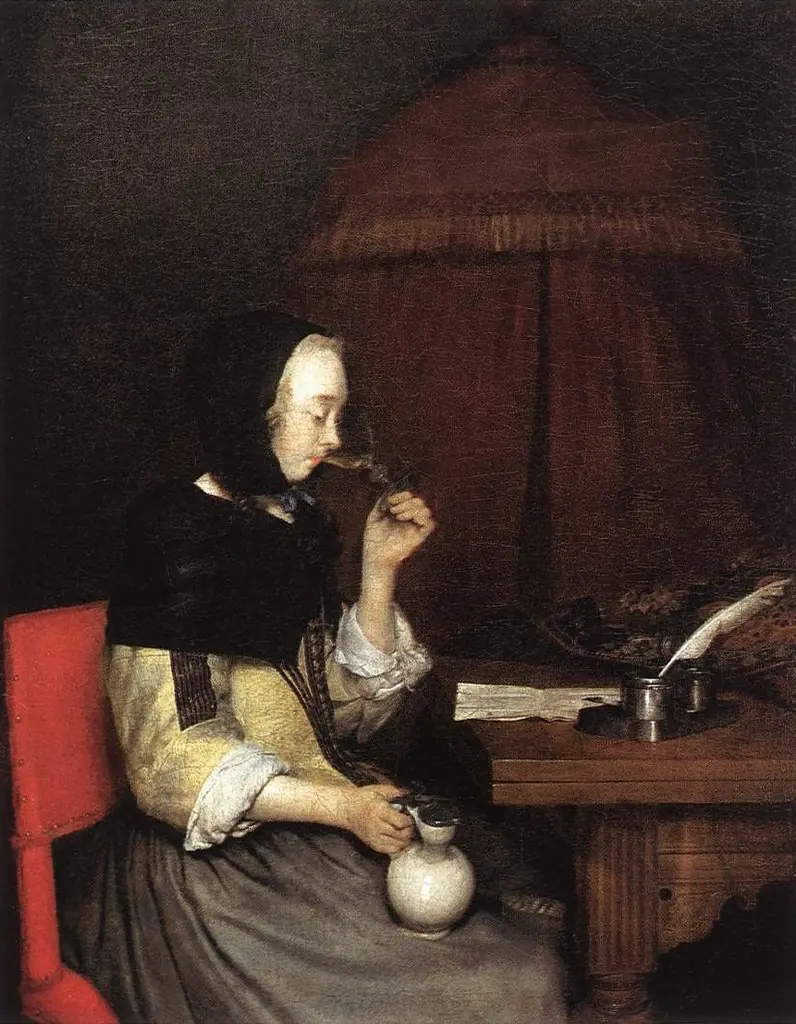 Woman Drinking Wine
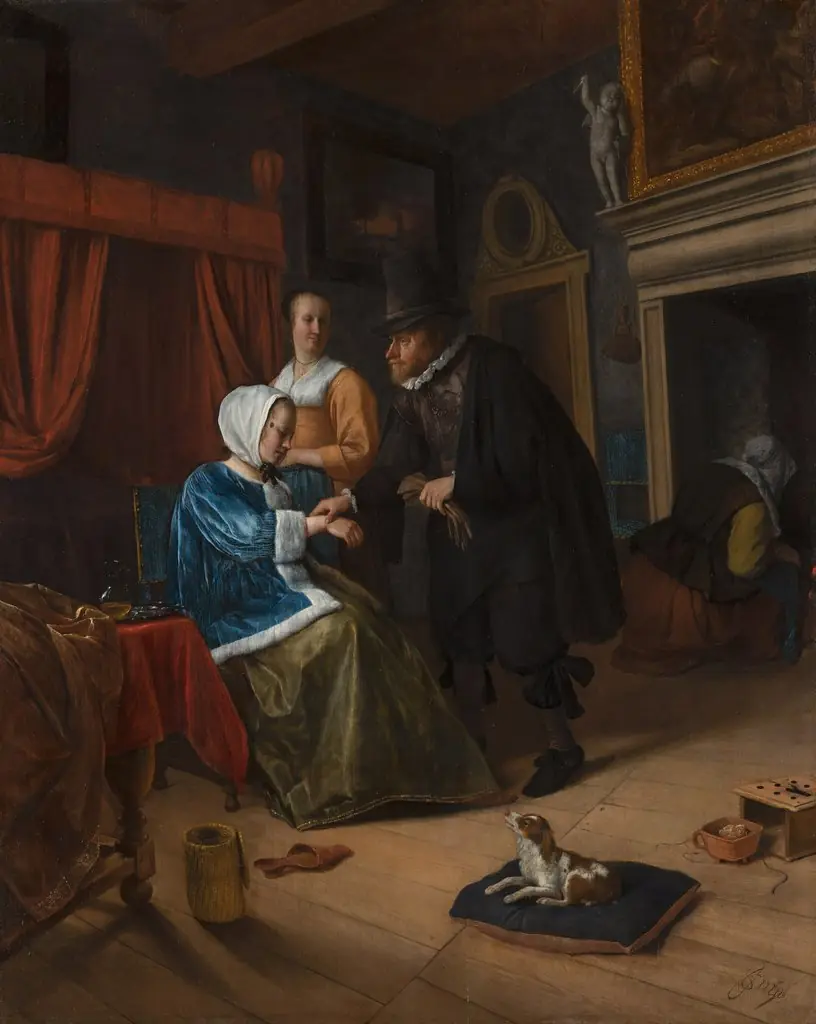 The Sick Girl
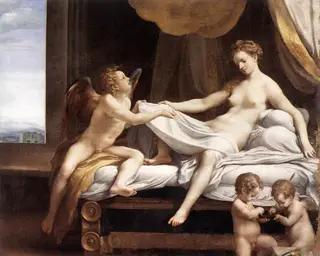 Danaë
Danaë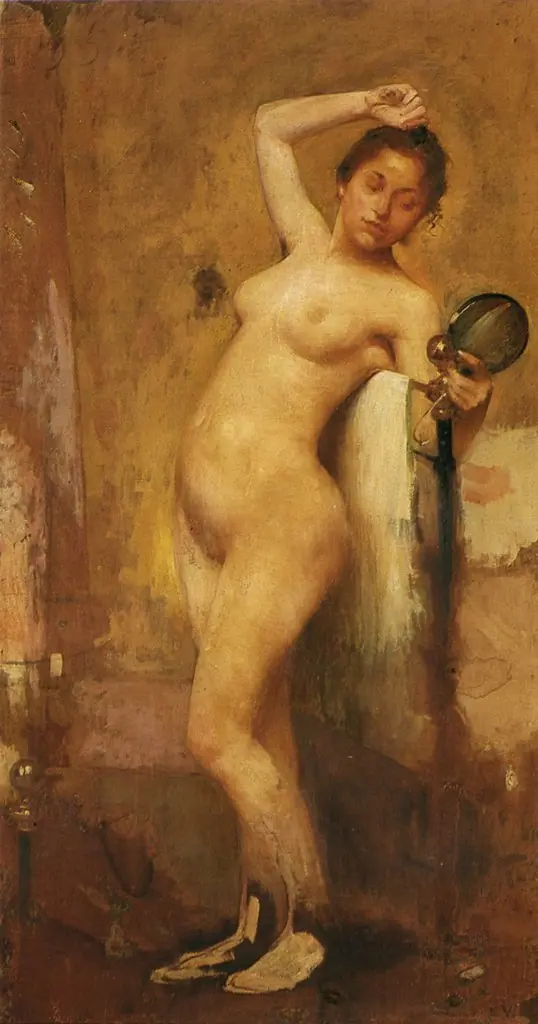 Nude
Nude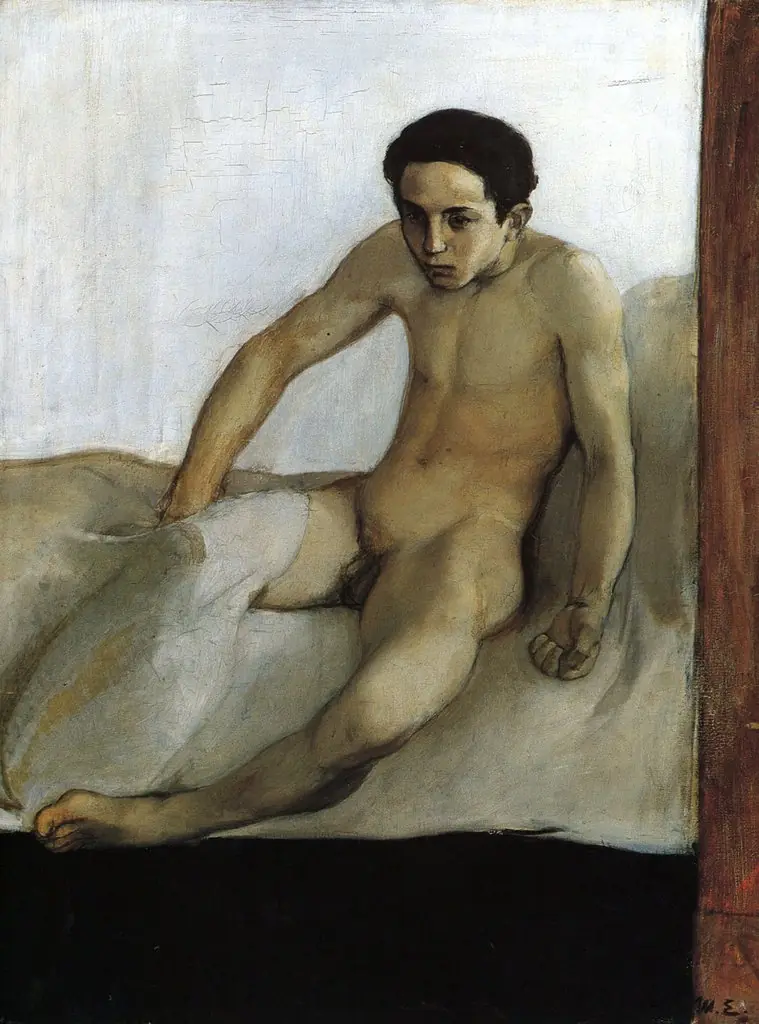 The Awakening
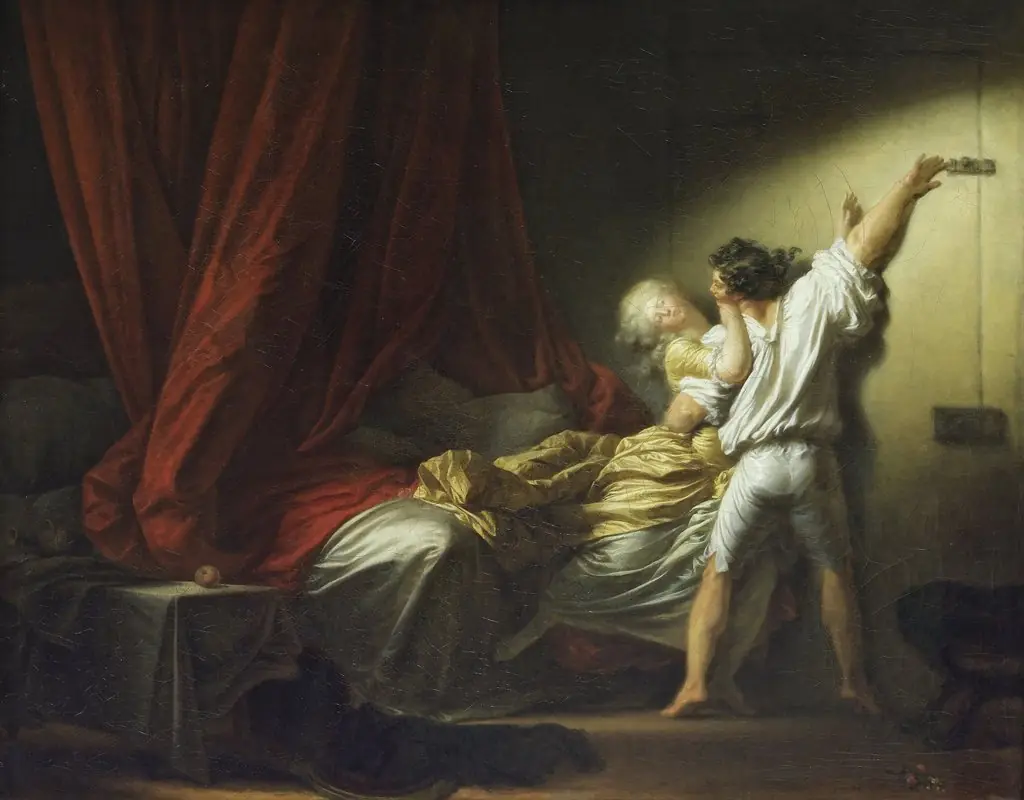 The Lock
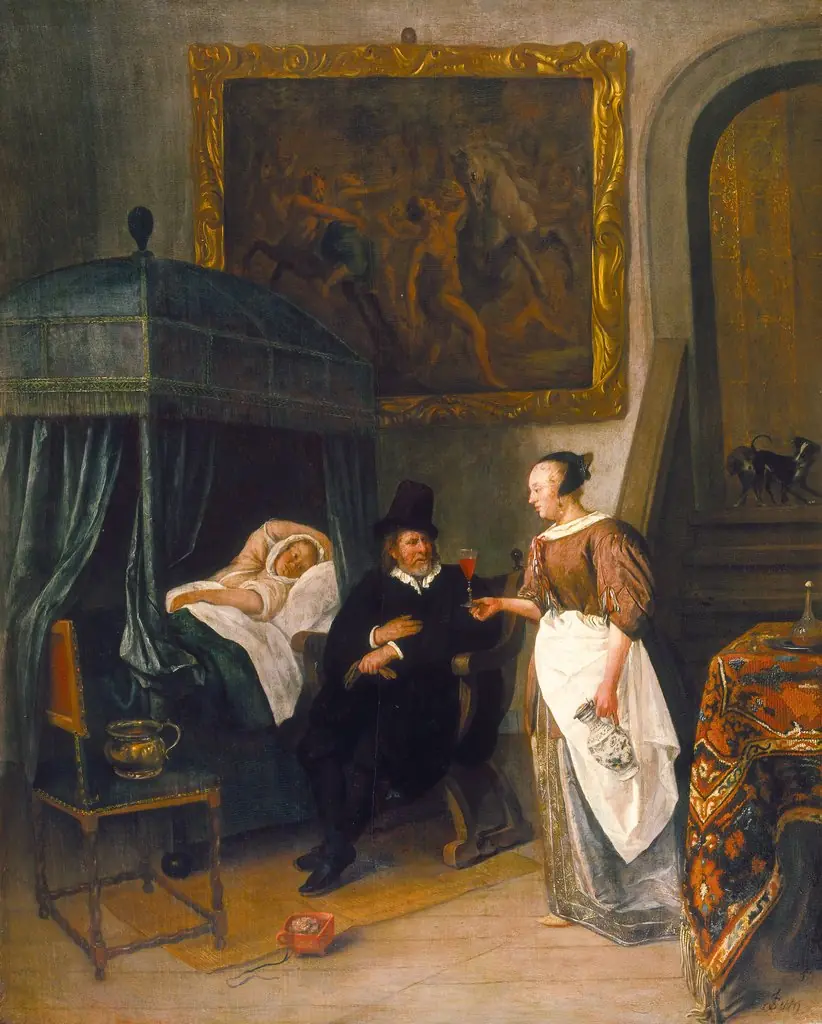 The Doctor's Visit
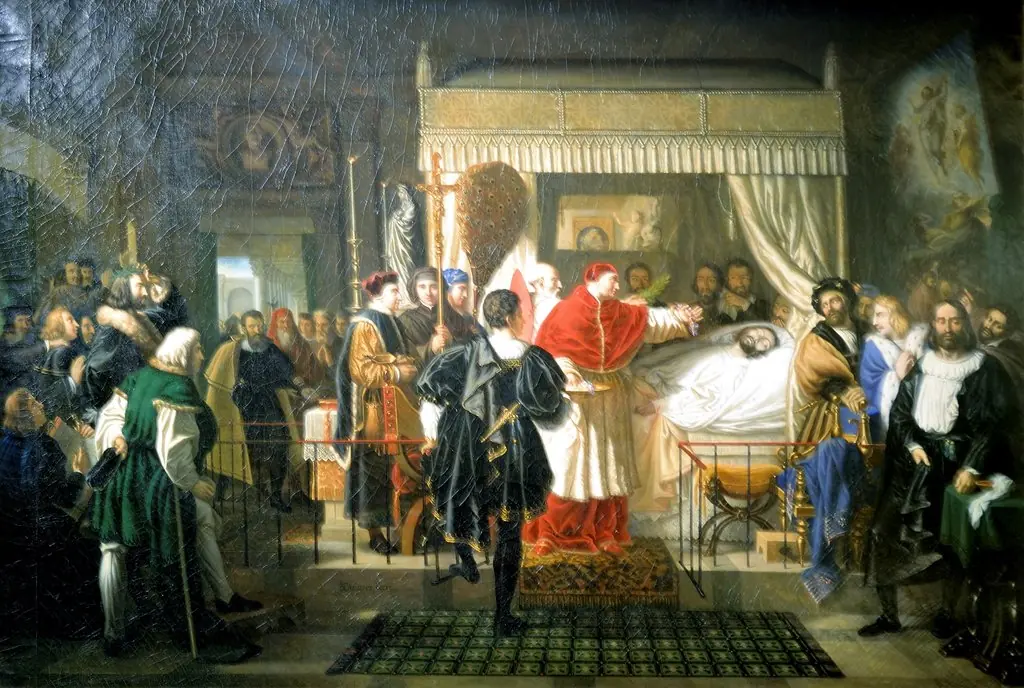 Honors Rendered to Raphael on His Deathbed
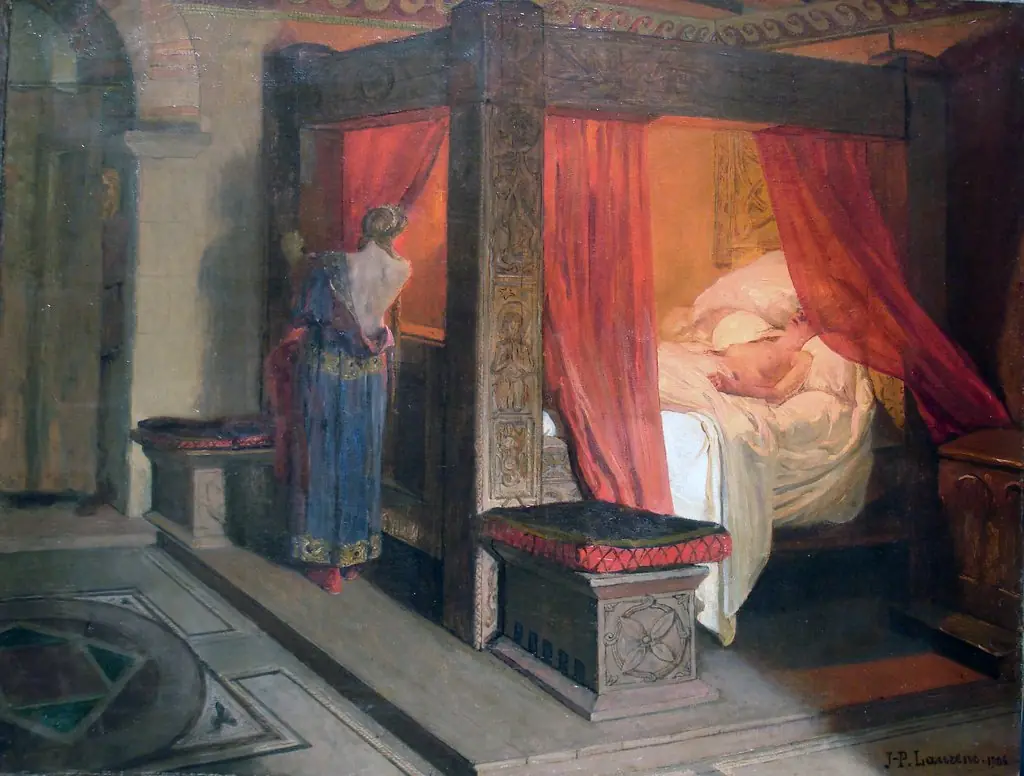 La muerte de Galeswinthe
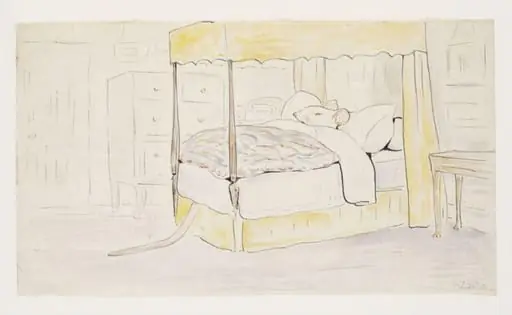 A white mouse in a four-poster bed
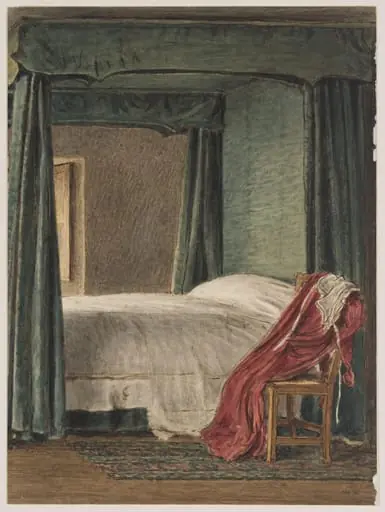 Interior of a bedroom
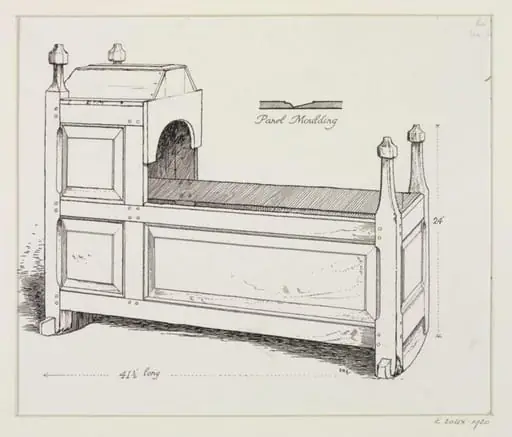 Untitled
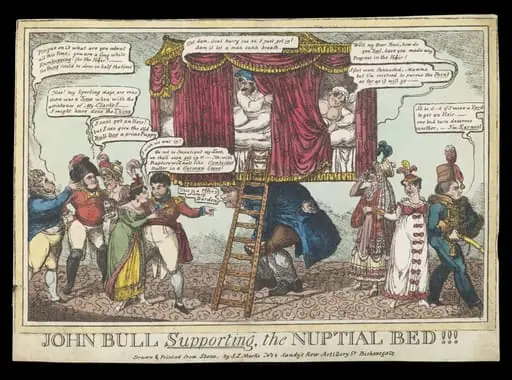 H Beard Print Collection
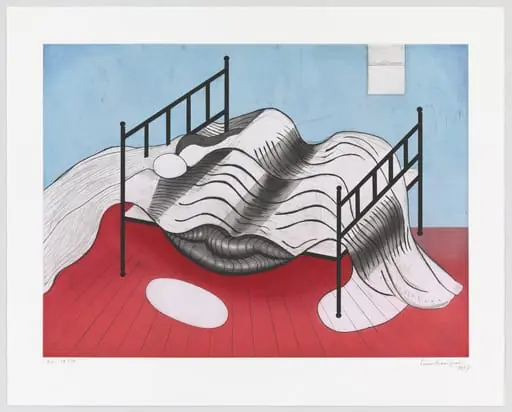 Untitled
Frequently asked questions
What is Bed?
Bed is a subject in art. A bed is a piece of furniture that is used as a place to sleep, rest, and relax.
How many Bed works does Artifact World Gallery have?
Artifact World Gallery holds 114 public-domain Bed works, all free to view and download.
Who are the key Bed artists?
Key Bed artists in the collection include Titian, Gustave Courbet and Jean Honoré Fragonard.
Where can I see Bed works?
Bed works in the collection are held by Metropolitan Museum of Art, Museo del Prado and Statens Museum for Kunst.