Artwork
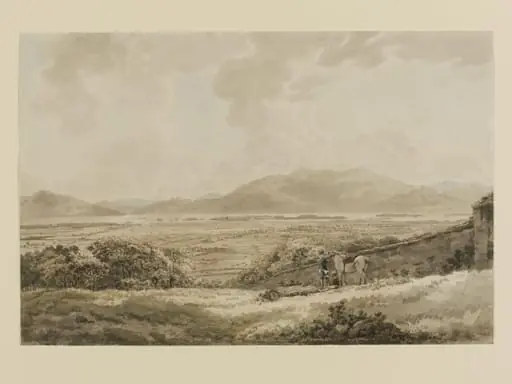
View of the Midwest Plains
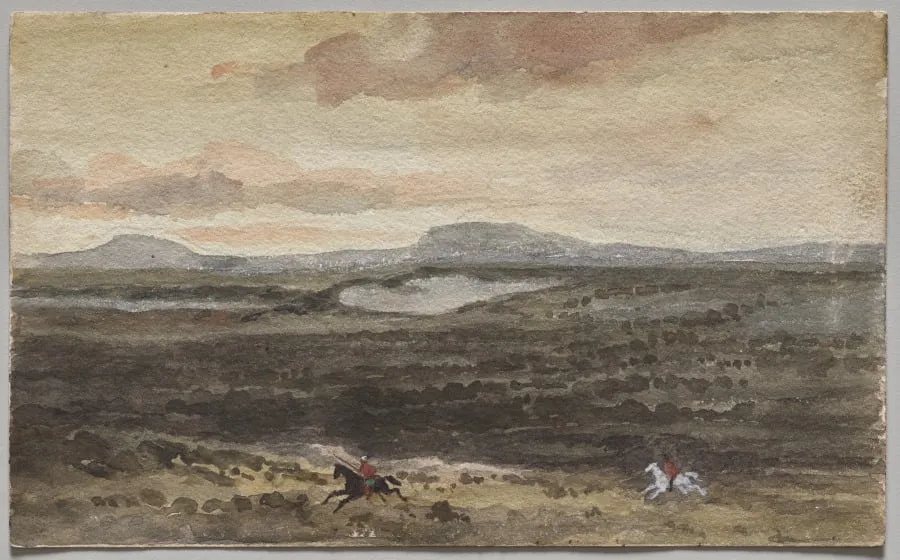
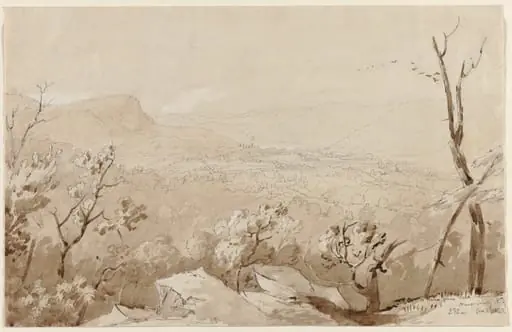
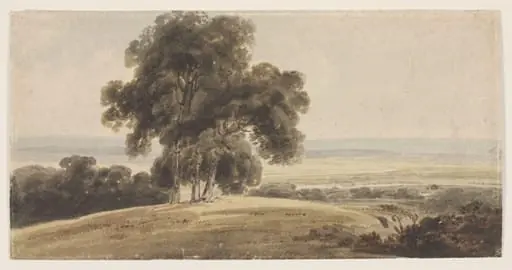
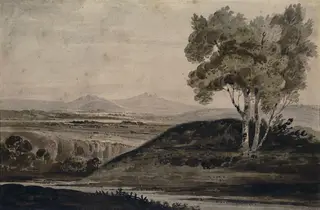
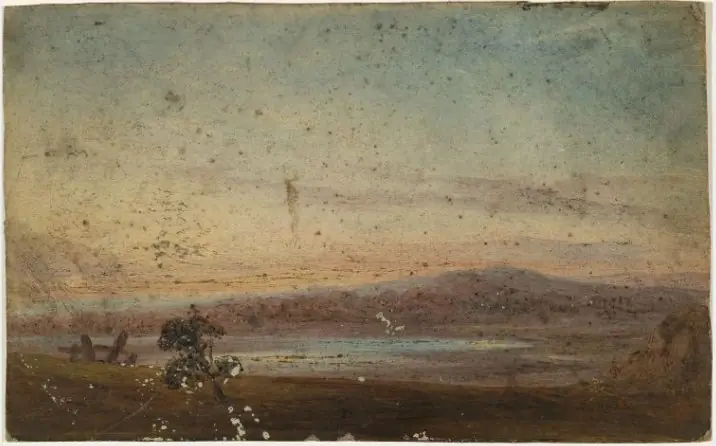
View of the Midwest Plains is a drawing by the Impressionist artist Frédéric-Auguste Bartholdi. It dates from 1871 and is held in the collection of the Cleveland Museum of Art.
- Accession no.
- 2025.146
- Credit line
- James Parmelee Fund
About this work
Overview
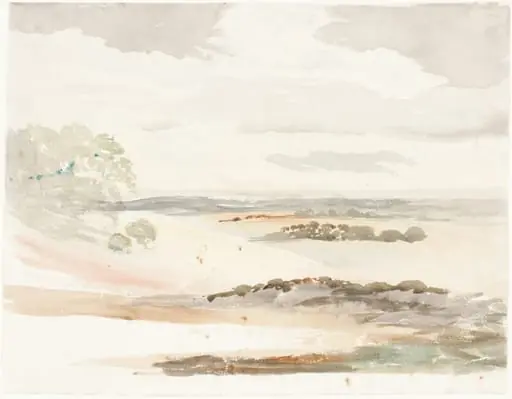
This drawing, created en plein air, captures a quiet moment of two riders crossing an open plain.
Auguste Bartholdi, primarily recognized for designing the Statue of Liberty, produced a series of landscape watercolors during a 1871 journey across the American Midwest. This drawing, created en plein air, captures a quiet moment of two riders crossing an open plain. It reflects his practice of documenting the terrain he encountered while searching for a suitable location to site the monument, revealing a personal, observational side of his work.
Subject & Meaning
The two horseback riders, small against the vastness of the plains, suggest movement and solitude rather than grandeur. The distant buttes frame the horizon without dominating it, evoking a sense of open space and quiet autonomy. Bartholdi’s choice to depict ordinary figures in a sweeping landscape implies an appreciation for the American West as a space of personal freedom, aligning with the ideals the Statue of Liberty would later embody.
Technique & Style
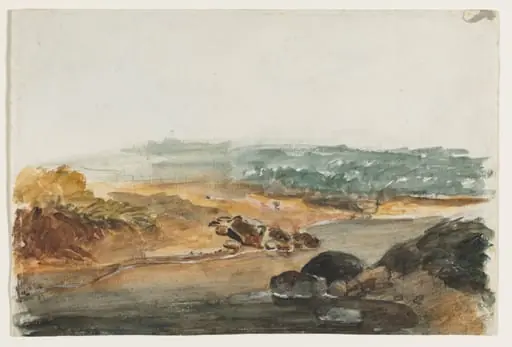
Executed in watercolor, the drawing employs loose, rapid brushwork and muted tones to convey immediacy. The sky is pale and washed, the ground softly graded, and the buttes rendered with minimal detail, suggesting a sketch made on the move. Bartholdi’s approach prioritizes atmosphere over precision, capturing the light and scale of the landscape with a sense of spontaneity rather than finished composition.
History & Provenance
Created during Bartholdi’s 1871 tour of the United States, this work was part of a larger effort to assess potential sites for the Statue of Liberty. Though the final location was determined elsewhere, these watercolors served as visual records of the American landscape he encountered. The piece remained in private hands until its acquisition by a public collection, where it now stands as a lesser-known but significant part of his artistic output.
Context
In the post-Civil War era, American identity was being redefined through its geography and ideals. Bartholdi, a French observer, sought to understand the nation’s spirit through its land. His watercolors, unlike official commissions, reveal an intimate engagement with rural and western vistas, offering a counterpoint to the monumental symbolism he would later create.
Legacy
This drawing illustrates Bartholdi’s role not only as a sculptor of national symbols but as a keen observer of place. While overshadowed by the Statue of Liberty, his landscape studies provide insight into the visual and emotional foundations of his vision. They affirm that monumental ideas often arise from quiet, personal encounters with the world.
Artist & collection