Artwork
Queen's Gate at Aigues-Mortes
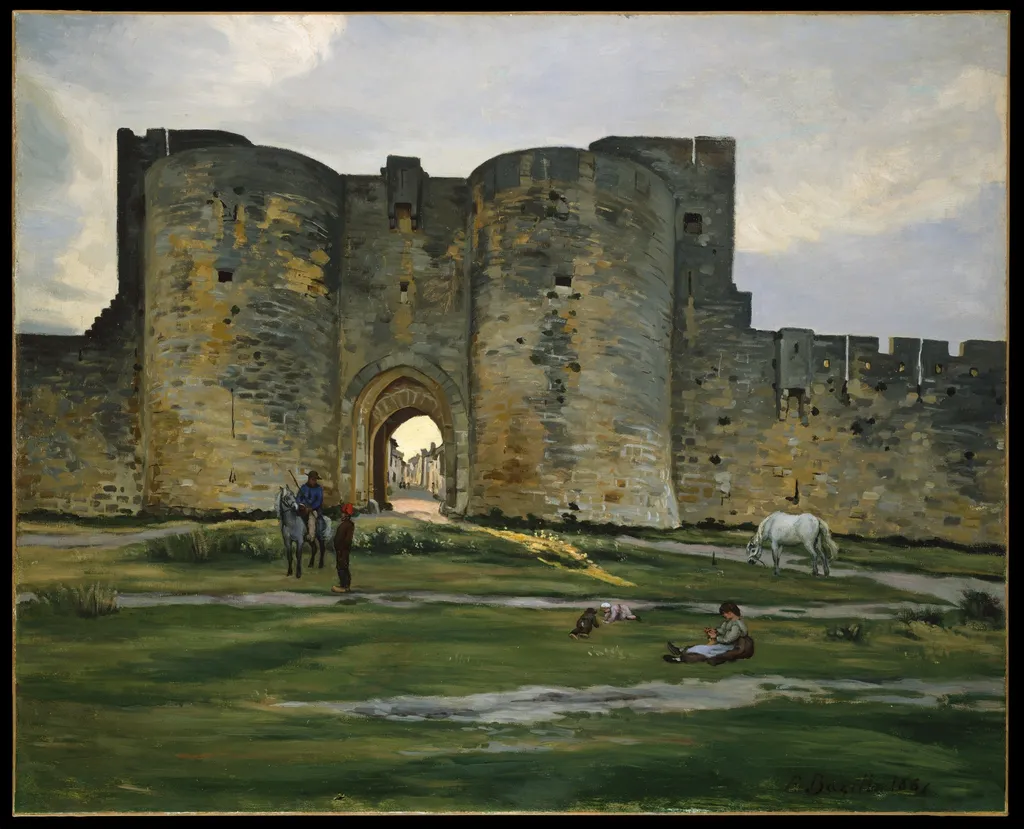
Queen's Gate at Aigues-Mortes is an oil painting by the Realist artist Frédéric Bazille. It dates from 1867 and is held in the collection of the Metropolitan Museum of Art.
About this work
Subject & Meaning
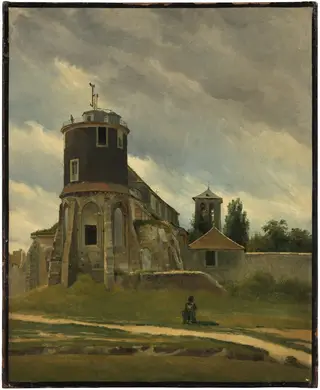
Frédéric Bazille's 1867 oil painting, Queen's Gate at Aigues-Mortes, depicts a landscape centered on the historic Queen's Gate structure in Aigues-Mortes.
Frédéric Bazille's 1867 oil painting, Queen's Gate at Aigues-Mortes, depicts a landscape centered on the historic Queen's Gate structure in Aigues-Mortes. The composition includes a horse positioned near the gate, anchoring the scene in a specific architectural and natural setting. As a landscape work, the piece focuses on the visual representation of the fortified gateway and its immediate surroundings rather than conveying complex allegorical narratives or symbolic layers.
The subject matter emphasizes the physical presence of the medieval fortification and the inclusion of an animal figure within the frame. The work is recognized primarily for its depiction of these concrete elements, the gate and the horse, situated within the broader context of the French landscape tradition.
Technique & Style
Queen's Gate at Aigues-Mortes is an oil painting on canvas, executed by Frédéric Bazille in 1867. The work measures 80.6 by 99.7 centimeters, a landscape-oriented format that accommodates the broad view of the fortified gateway and surrounding terrain. Classified as a landscape painting, it is held in the collection of the Metropolitan Museum of Art.
The use of oil paint on canvas is consistent with Bazille's broader practice of the period, allowing for layered handling suited to outdoor light and architectural massing. The support is a standard stretched canvas of moderate scale, well suited to a plein-air study of the medieval gate and the figures and horses depicted before it.
History & Provenance
Frédéric Bazille painted Queen's Gate at Aigues‑Mortes in 1867, an oil on canvas measuring 80.6 × 99.7 cm. The work remained in the artist’s studio until his death, after which it entered the collection of the Metropolitan Museum of Art, where it is listed as part of the museum’s holdings. No record of a specific commission survives, but the painting is documented as a landscape completed that year and has been exhibited as part of the museum’s French nineteenth‑century collection. Its provenance thus traces from Bazille’s studio to the Met’s ownership.
Queen's Gate at Aigues-Mortes (1867) is housed in the Metropolitan Museum of Art in New York, where it is part of the museum's collection of paintings. The work is listed in the museum's catalogue entries but no specific accession or inventory number is published in the available records. Exhibition history is not detailed in the cited documentation, and the painting has not been identified in major exhibition catalogues referenced in the sources.
Overview
Frédéric Bazille, an artist associated with the nascent Impressionist movement, completed Queen's Gate at Aigues-Mortes in 1867. This oil painting captures a historic architectural structure within a natural setting. While Bazille frequently included figures in his outdoor scenes, this work emphasizes the monumental gate and its surrounding environment, showcasing his early exploration of landscape themes. It is part of The Metropolitan Museum of Art's collection.
Own this work as a print
Artist & collection

Artist
Jean Frédéric Bazille (French pronunciation: ; December 6, 1841 – November 28, 1870) was a French Impressionist painter.

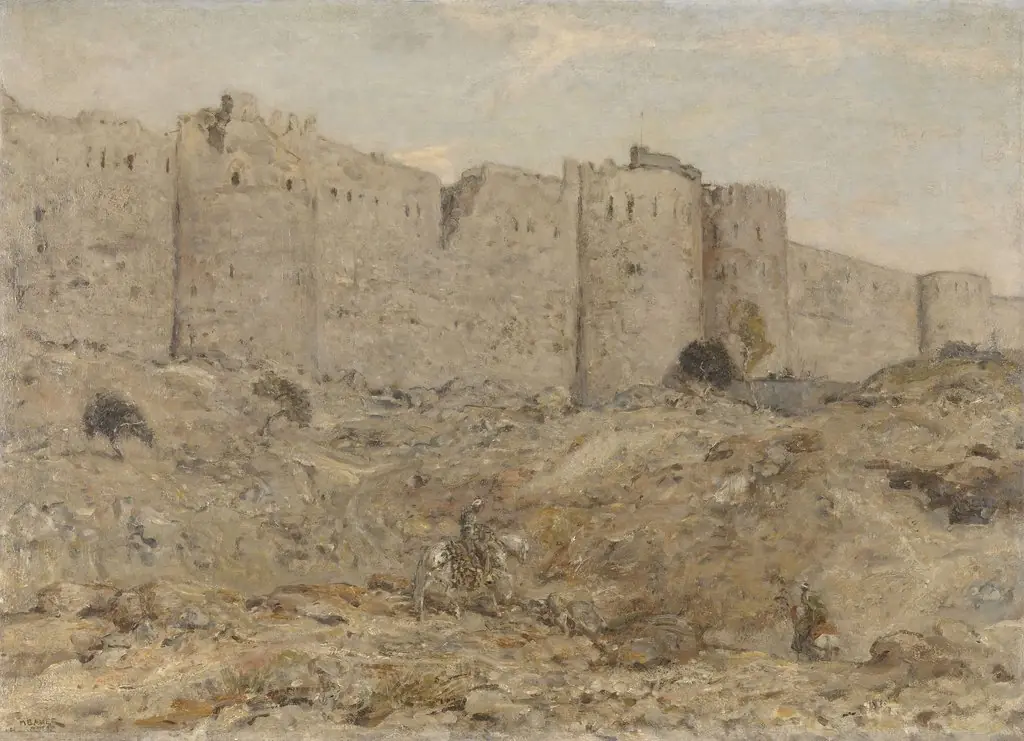 City wall in India
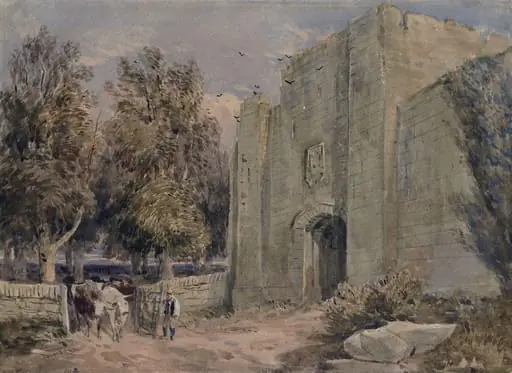 Gateway of Rhuddlan Castle, North Wales
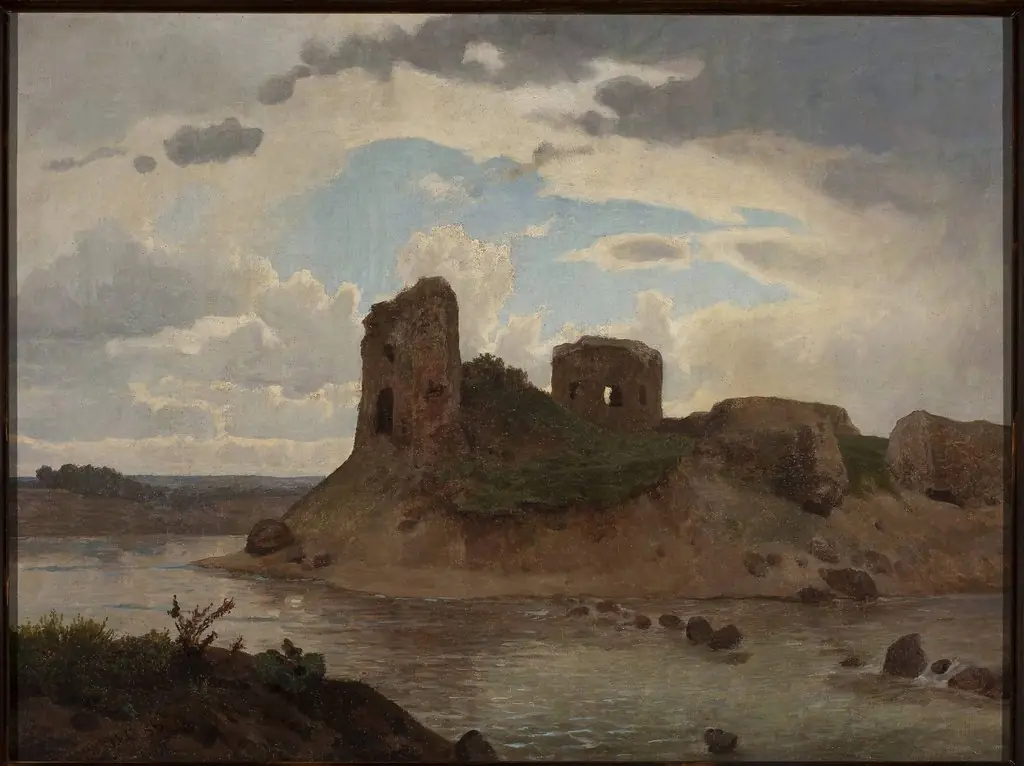 Ruins of the Bobrowniki castle by the Vistula River
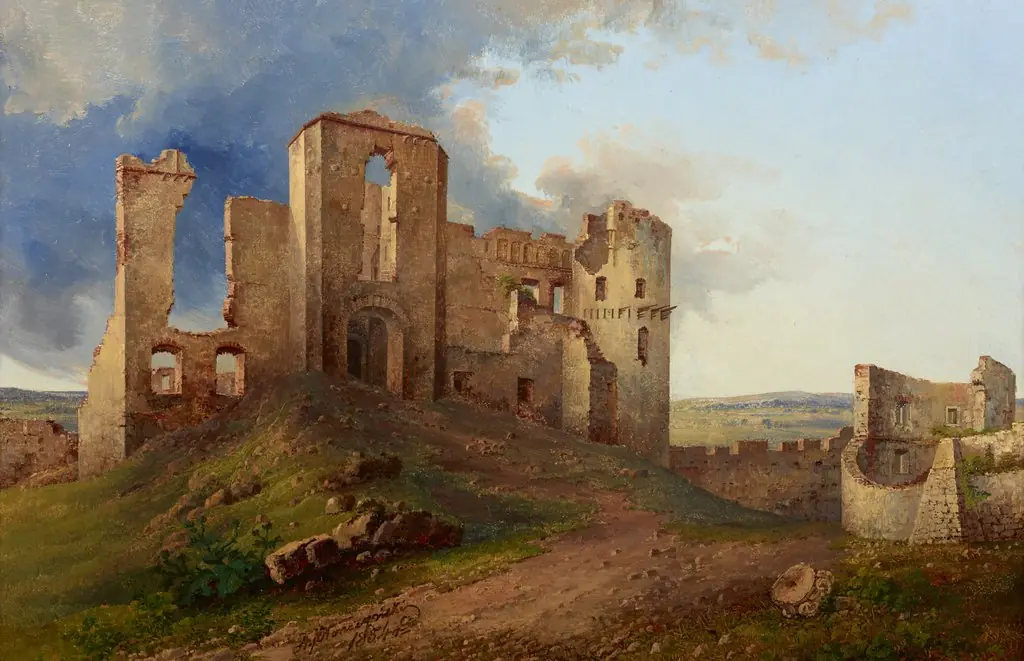 Ruins of the Tenczyn Castle
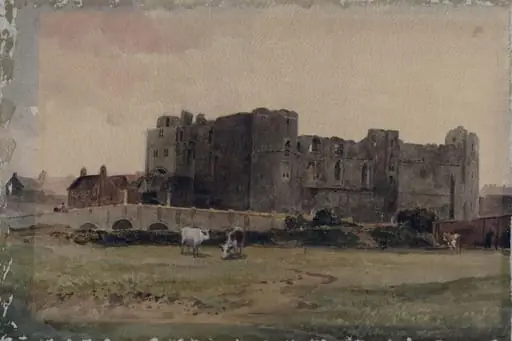 Newark Castle, Nottinghamshire
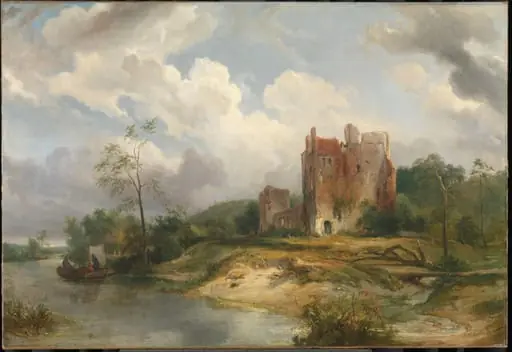 River Landscape with Ruin
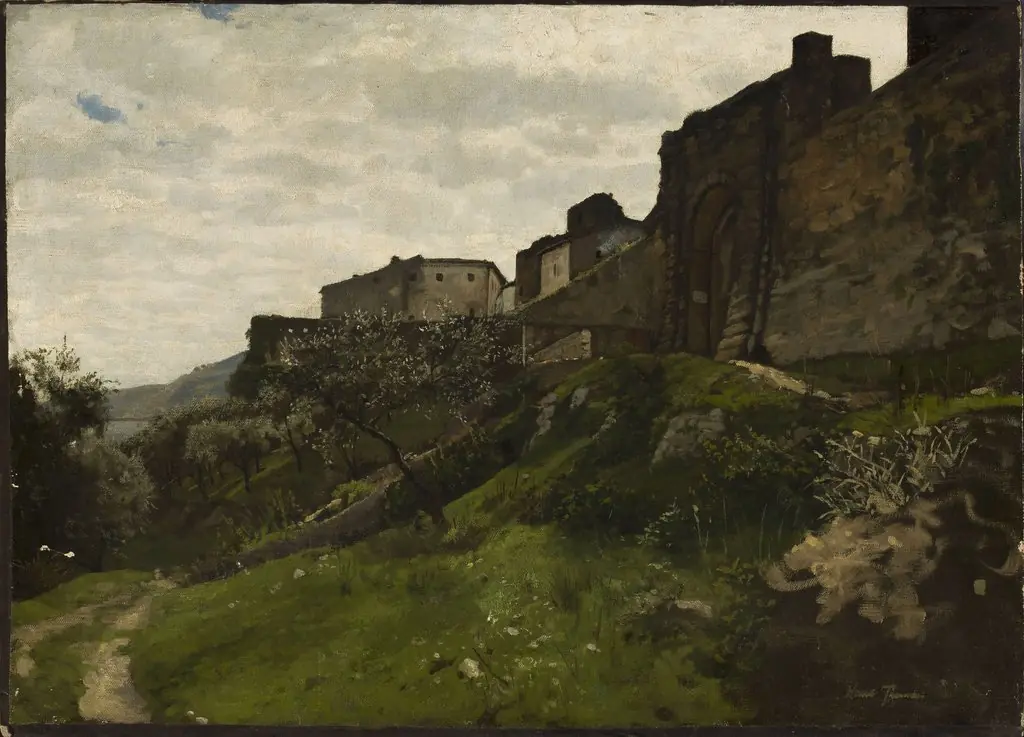 Fragment of defensive walls
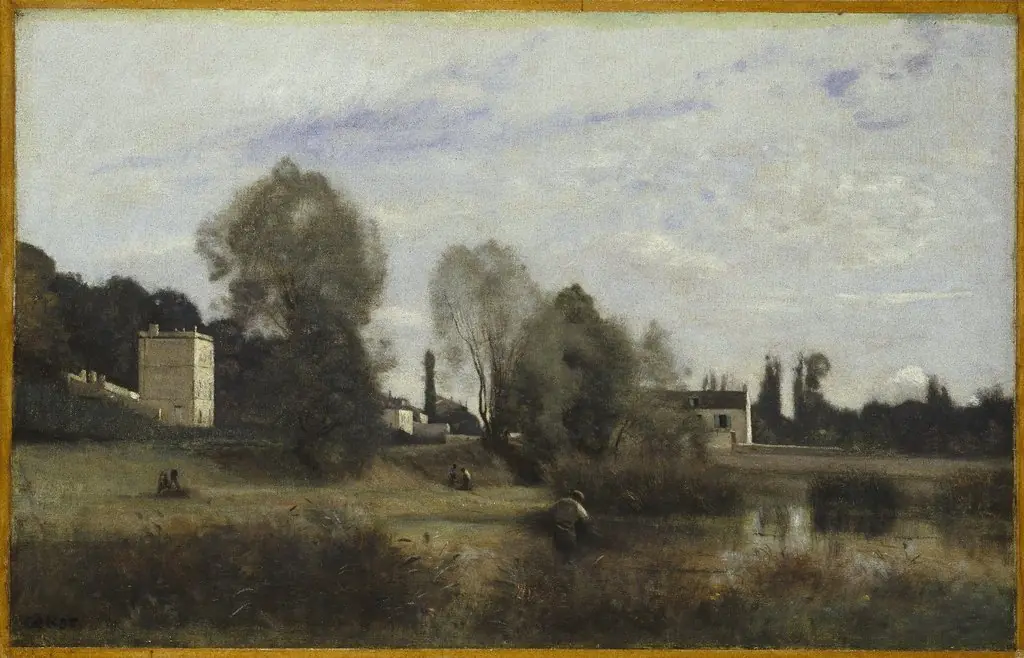 Ville d'Avray
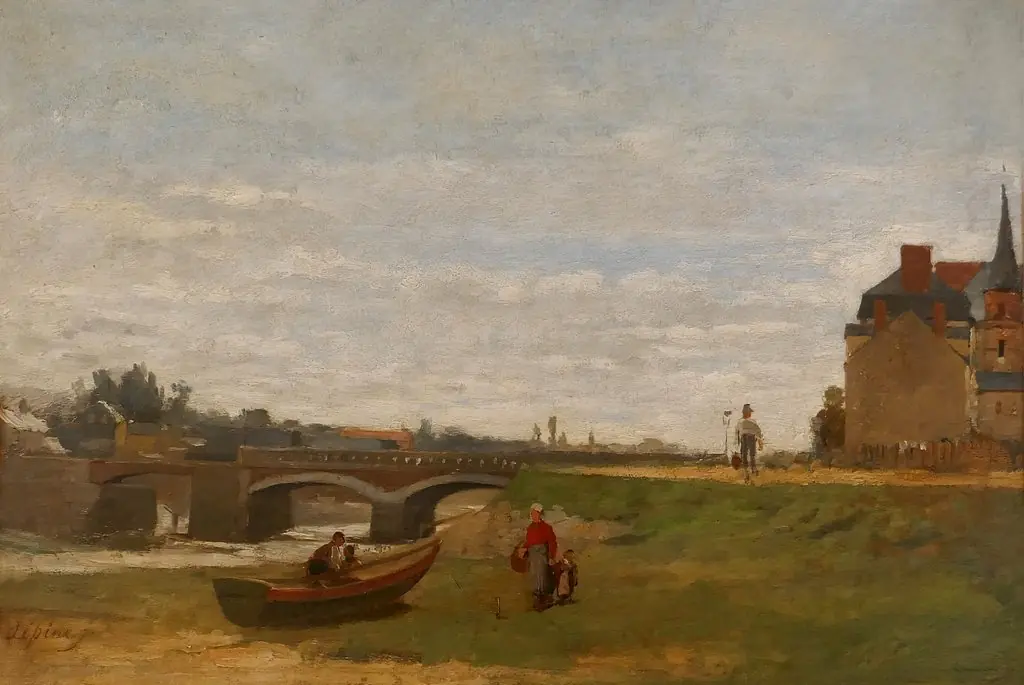 Landscape with a Bridge
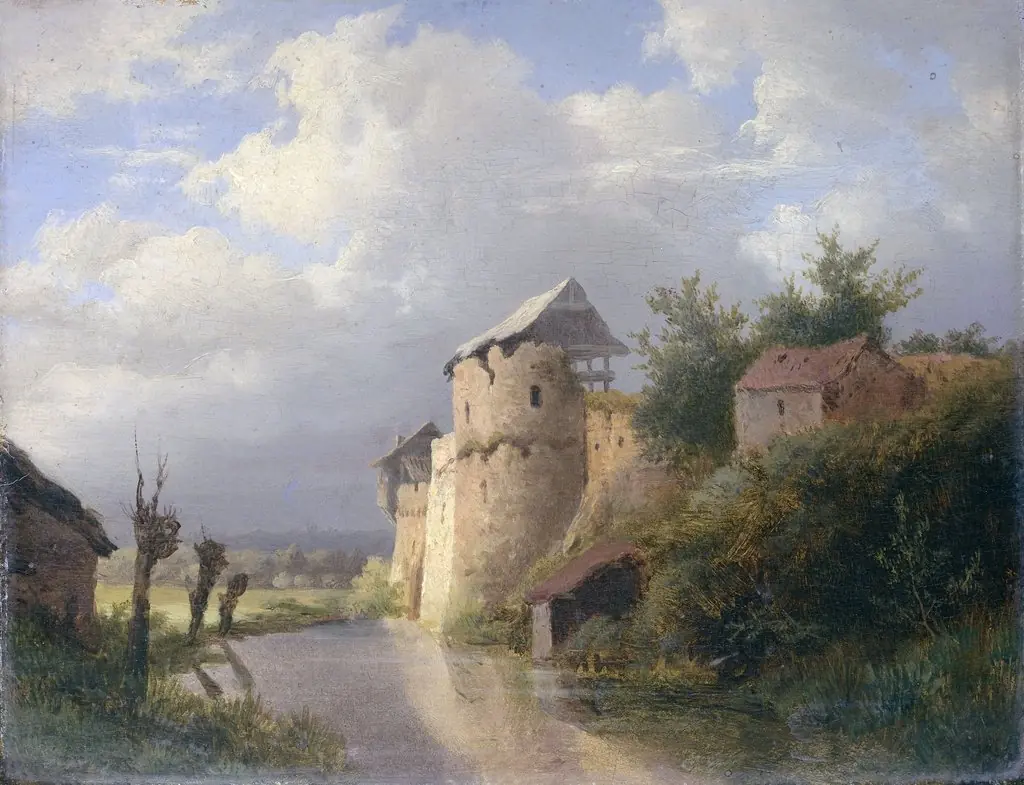 The Old Fortress
 The Telegraph on the Church Saint Pierre in Montmartre, Paris