Artwork
River Landscape with Ruin
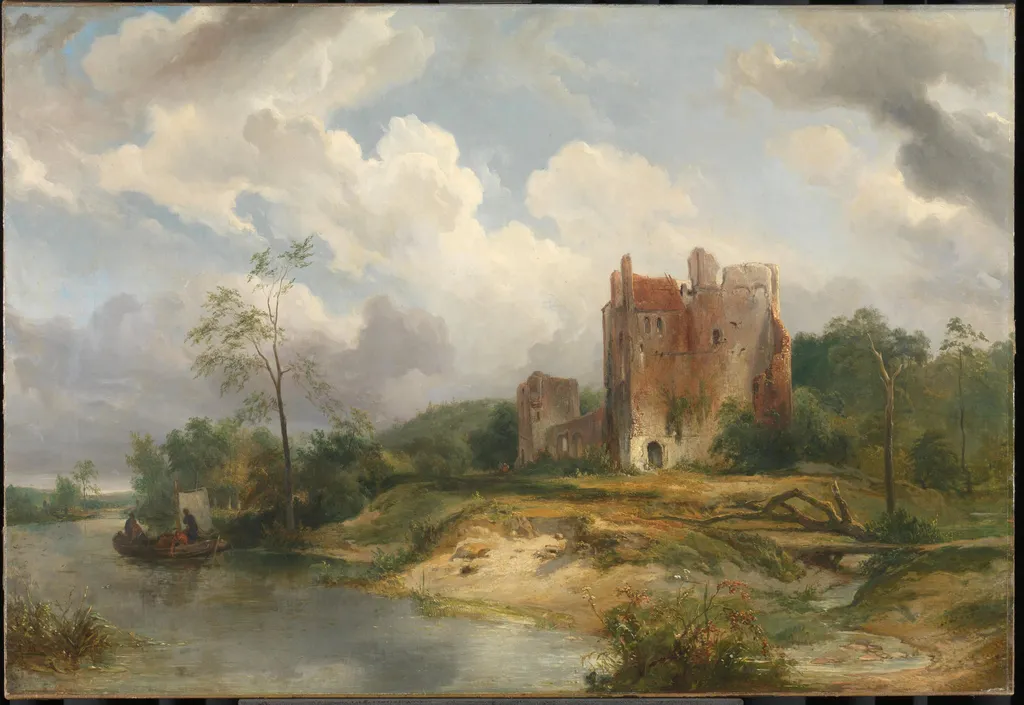
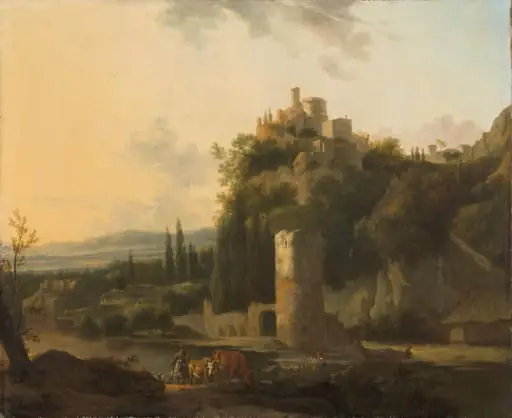
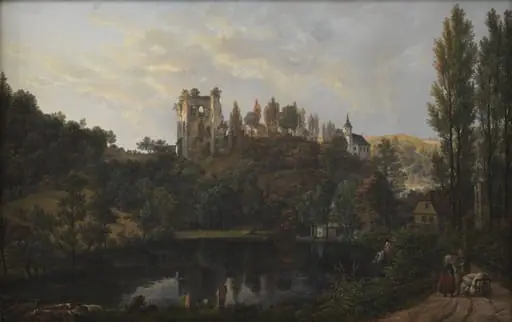
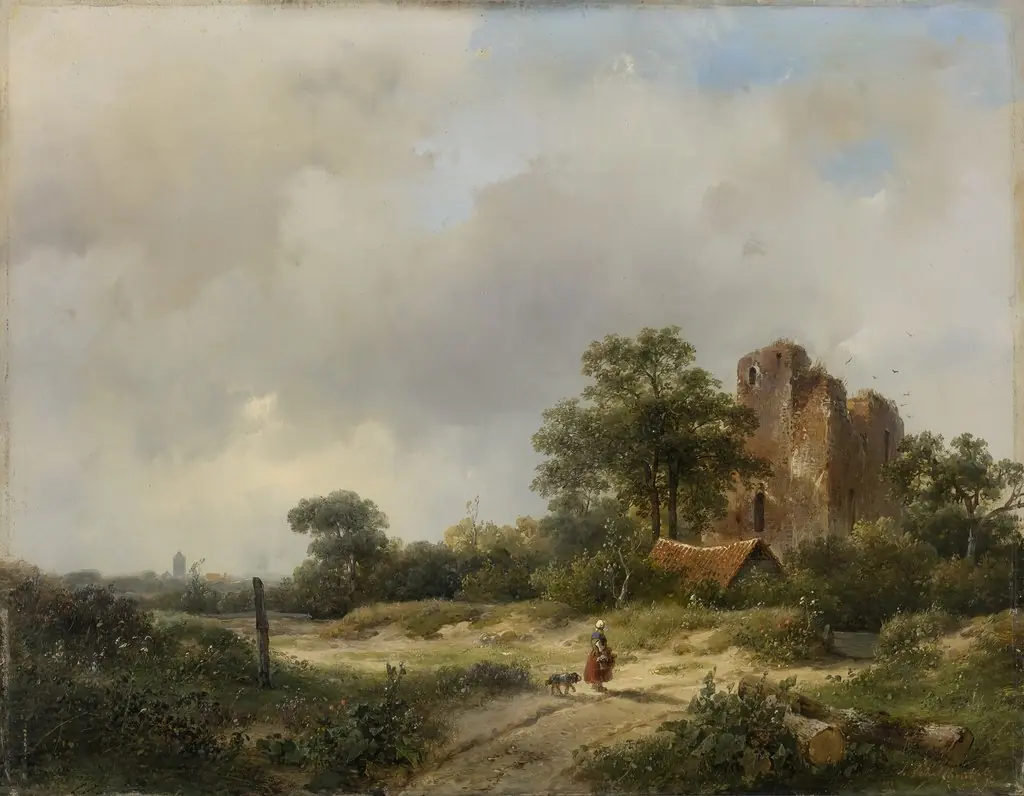
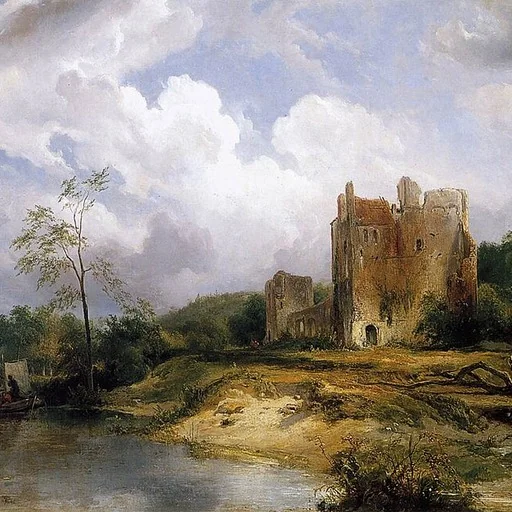
River Landscape with Ruin is an unspecified painting by the Barbizon school artist Wijnand Nuijen. It dates from 1835 and is held in the collection of the Rijksmuseum. The work depicts a tranquil river scene in which a modest, crumbling castle ruin stands on the bank.
About this work
Subject & Meaning
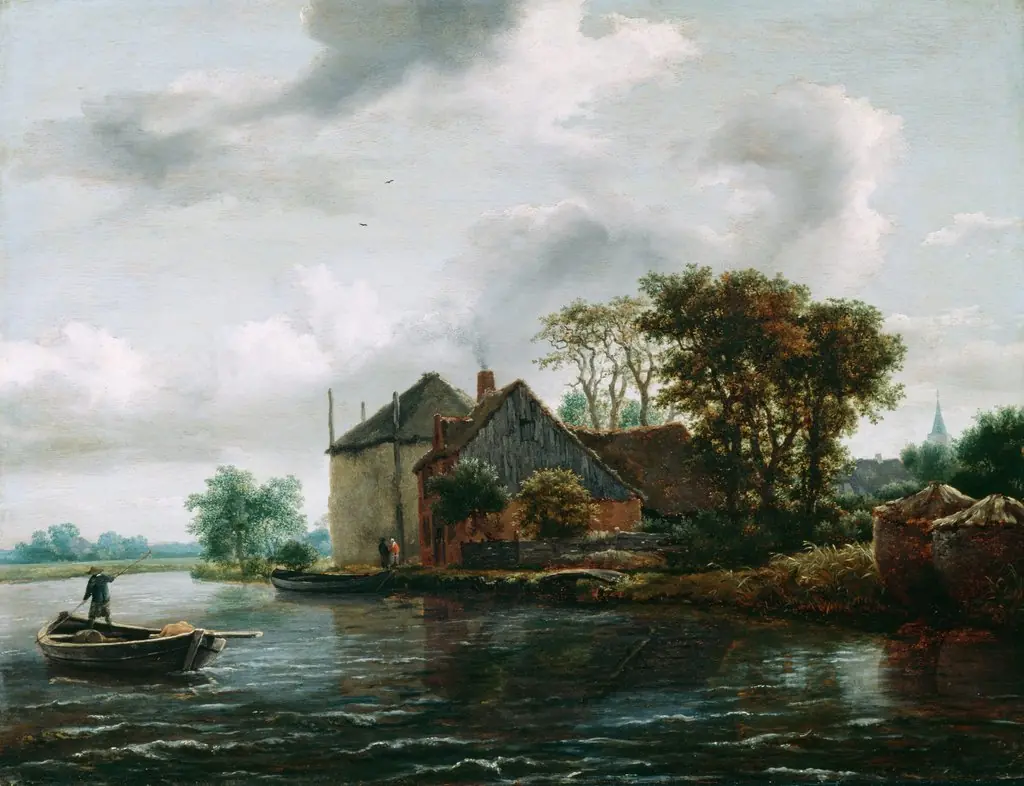
Figures in small boats navigate the river, contributing a sense of scale and human presence without disrupting the mood of quiet contemplation.
River Landscape with Ruin depicts a river scene framed by a prominent, weathered ruin that anchors the composition and signals the Romantic preoccupation with fragments of the past. The ruin, likely a remnant of a once-grand structure, rises from the left bank and is set against a low horizon, allowing the expanse of water and distant landscape to dominate the right side. Figures in small boats navigate the river, contributing a sense of scale and human presence without disrupting the mood of quiet contemplation.
The ruin’s crumbling state and placement evoke themes of transience and the sublime, hallmarks of early nineteenth-century Romanticism in Dutch landscape painting. Such imagery invited viewers to reflect on the passage of time and the fragility of human achievements, aligning with the era’s fascination with historical decay and the picturesque.
Technique & Style
River Landscape with Ruin is painted in oil on canvas and measures 99 × 141 cm. The handling reflects a Romantic sensibility, emphasizing dramatic contrasts and poetic atmosphere rather than strict naturalism. The composition integrates a prominent ruin as a focal motif, framed by a winding river and atmospheric sky, aligning with the period’s taste for picturesque decay. The palette and textural effects show Nuijen’s admiration for English and French Romantic landscapists, particularly in the treatment of light and the layered, expressive brushwork.
History & Provenance
Wijnand Nuijen created the oil-on-canvas painting *River Landscape with Ruin* in 1835. The work measures 99 × 141 cm and is currently held by the Rijksmuseum in Amsterdam. While specific details regarding a private commission for this piece are not recorded in the available sources, the painting exemplifies Nuijen's mature style developed after his travels to Normandy and northern France. These journeys, undertaken partly with Antonie Waldorp, exposed the artist to the works of Richard Parkes Bonington and Eugène Isabey, influencing his romantic treatment of ruins and spontaneous technique. The creation of this landscape occurred during a period of intense productivity for Nuijen, shortly before his admission to the Royal Academy in Amsterdam in 1836 and his marriage to the daughter of his former tutor, Andreas Schelfhout, in July 1838.
River Landscape with Ruin (1835) is held by the Rijksmuseum Amsterdam under inventory number SK-A-2557. It was exhibited in the 1843 King William II acquisition of the work, and later featured in the Rijksmuseum's 2019 exhibition 'Dutch Romantic Landscapes' (catalogue no. 112).
Legacy
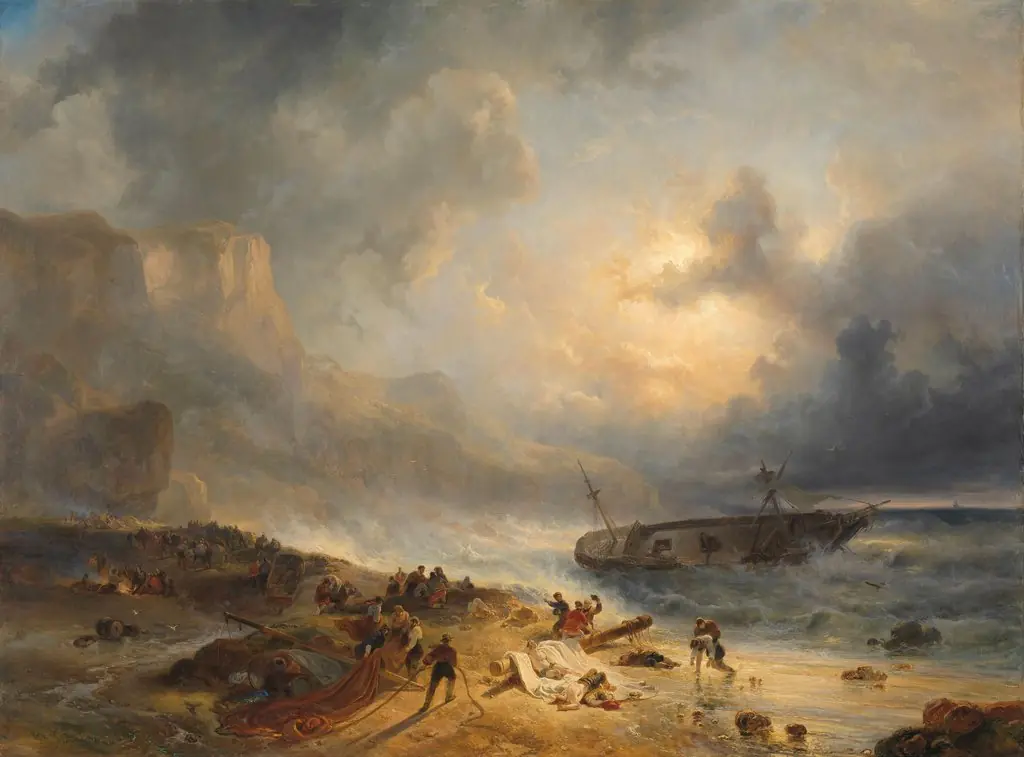
Wijnand Nuijen’s short career left a durable mark on Dutch Romantic landscape painting. His fusion of Dutch tradition with Anglo-French colorism and compositional drama influenced later generations of Dutch landscapists, who adopted his theatricality and bold color contrasts. Critiques of his work after mid-century acknowledged his Romantic strain, noting how his ruins, storms, and coastal scenes broke from the prevailing Dutch preference for restrained naturalism. The posthumous admiration of King William II, who collected multiple works including the famous Shipwreck, sustained Nuijen’s reputation in the 1840s and beyond.
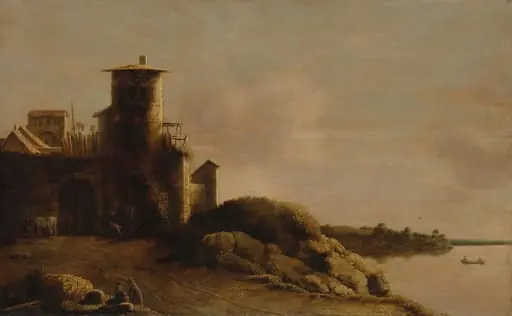
Own this work as a print
Artist & collection
Artist
Wijnand Jan Josephus Nuijen (4 March 1813 – 2 June 1839) was a Dutch painter and printmaker who specialised in landscapes, and was greatly influenced by the French Romantics.