Artwork
Tobias and his wife say goodbye to his in-laws in order to return to his father
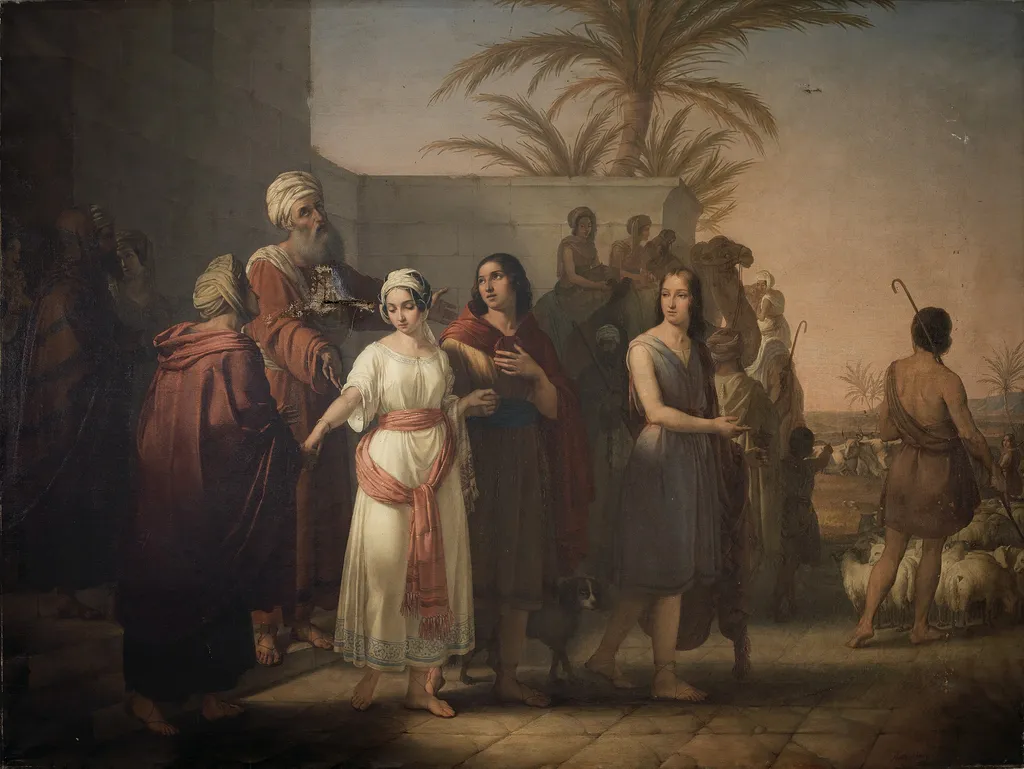
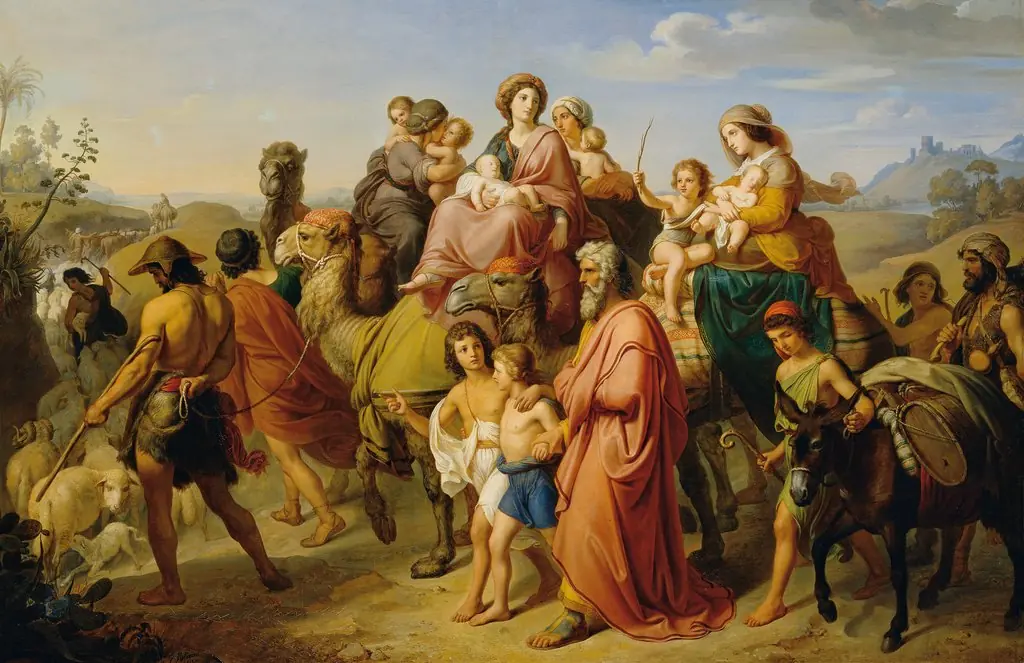
Tobias and his wife say goodbye to his in-laws in order to return to his father is an oil painting by the Biedermeier artist Francesco Antonibon di Venezia. It dates from 1840 and is held in the collection of the Kunsthistorisches Museum.
About this work
Subject & Meaning
The work is executed in oil on canvas, measuring 169 cm in height and 229 cm in width, and was painted in 1840 by Francesco Antonibon di Venezia.
The painting portrays Tobias and his wife bidding farewell to his in-laws as they set out to return to his father. The scene draws from the Book of Tobit, depicting a moment of familial parting imbued with spiritual significance. Symbolically, the gesture underscores themes of obedience, duty, and the journey of faith, central to the narrative’s religious context. The composition emphasizes emotional farewell within a sacred narrative framework.
The work is executed in oil on canvas, measuring 169 cm in height and 229 cm in width, and was painted in 1840 by Francesco Antonibon di Venezia. It belongs to the religious art genre and is housed in the Belvedere collection at the Kunsthistorisches Museum.
The subject reflects a biblical moment of departure, where familial bonds intersect with divine purpose, rendered through traditional iconography of farewell and pilgrimage.
Technique & Style
The painting is executed in oil on canvas, measuring 169 cm in height and 229 cm in width. Its handling aligns with mid-19th-century academic practice, characterized by smooth blending and controlled brushwork to render figures and interior details with clarity. The composition emphasizes narrative clarity, with Tobias and his wife positioned at the center as they bid farewell to their in-laws, framed by architectural elements that guide the viewer’s eye through the scene.
Stylistically, the work adheres to religious genre conventions of the period, employing naturalistic modeling and subdued lighting to convey the solemnity of the moment. The figures are arranged in a balanced, symmetrical layout, with the muted palette and restrained gestures reinforcing the devotional tone.
History & Provenance
The painting was created by Francesco Antonibon di Venezia in 1840, executed in oil paint on canvas. Its dimensions are 169 cm in height and 229 cm in width. The work is held in the collection of the Belvedere, part of the Kunsthistorisches Museum, where it is currently located.
No further details regarding commission, intermediate ownership, or acquisition history are documented in the available sources.
The painting Tobias and his wife say goodbye to his in-laws in order to return to his father by Francesco Antonibon di Venezia is held in the collection of the Belvedere, part of the Kunsthistorisches Museum in Vienna. The work is located at the Belvedere site. While the source identifies the institution and location, no specific inventory or accession number is provided in the available documentation. The painting has not been linked to any specific exhibition history within the provided records.
Overview
Francesco Antonibon di Venezia’s 1840 oil painting, titled Tobias and his wife say goodbye to his in‑laws in order to return to his father, is part of the collection of the Kunsthistorisches Museum. The work presents a small group gathered in a courtyard, rendered in warm, earthy tones and illuminated by soft, diffused light that lends the scene a quiet, intimate atmosphere.
Context
The work belongs to a broader tradition of 19th‑century religious genre painting in Venice, where biblical narratives were rendered in domestic, relatable settings. By placing the farewell in a courtyard rather than a grand biblical landscape, Antonibon aligns the sacred story with everyday human experience, a characteristic of the period’s devotional art.
Own this work as a print
Artist & collection
Artist
Francesco Antonibon di Venezia
Francesco Antonibon di Venezia (1809–1883) was an artist, born in Bassano del Grappa.

- Moïse enfant présenté à Pharaon
 The Banquet of Cleopatra
 Cleopatra’s Banquet
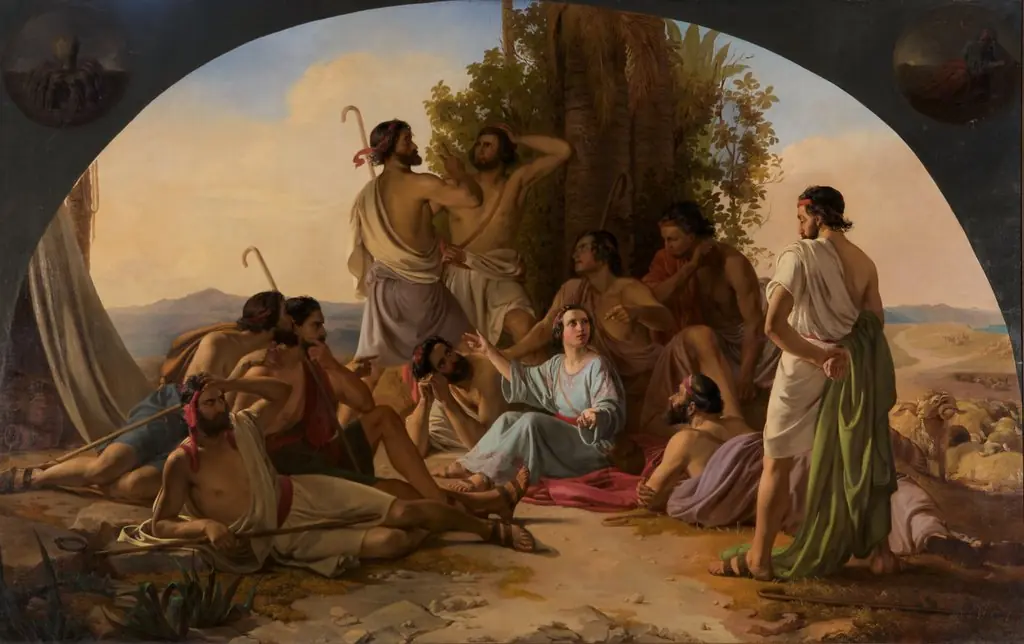 Joseph tells his dream
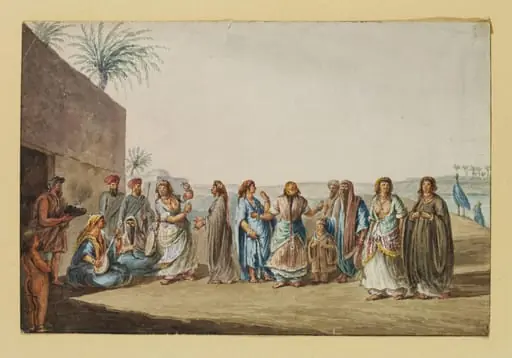 An Egyptian Ball, At Ned Sili
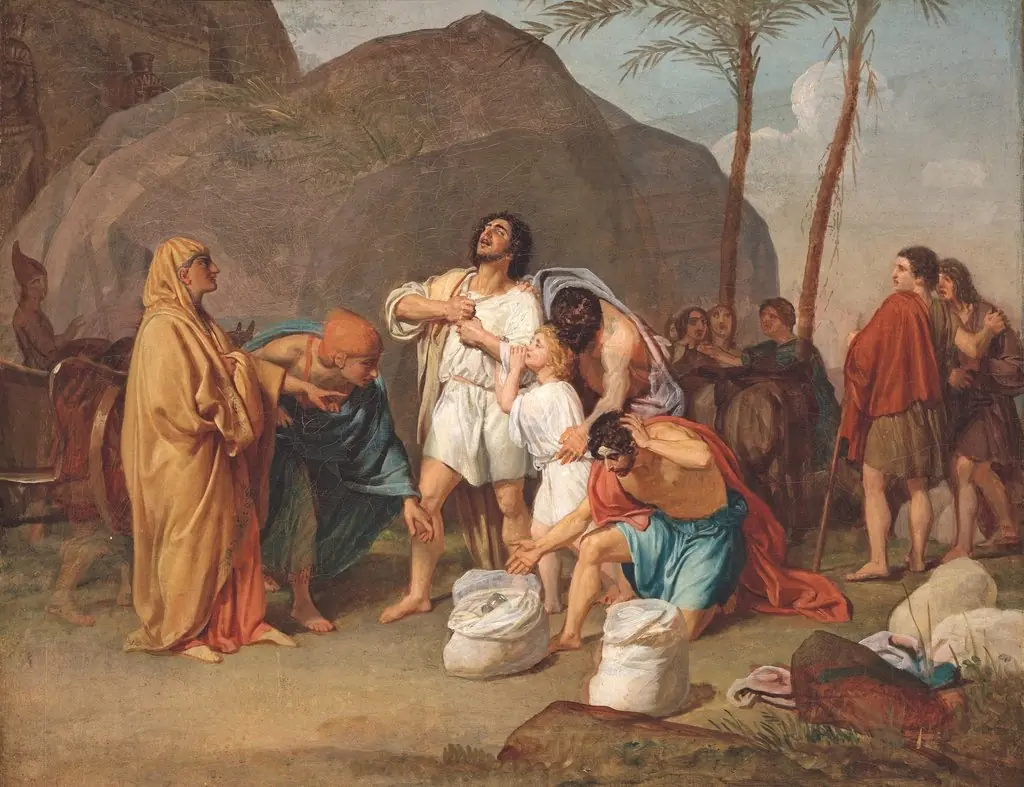 Joseph's Brothers Find the Silver Goblet in Benjamin's Pack.
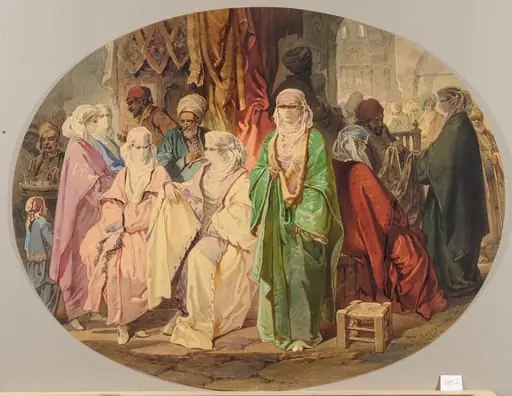 Bazar
Bazar Sacrifice of Iphigenia
 The Departure of Abraham
 Abraham und Melchisedek
 A Dorcas meeting in the 6th century
 Jacob's homecoming