Artwork
Capriccio
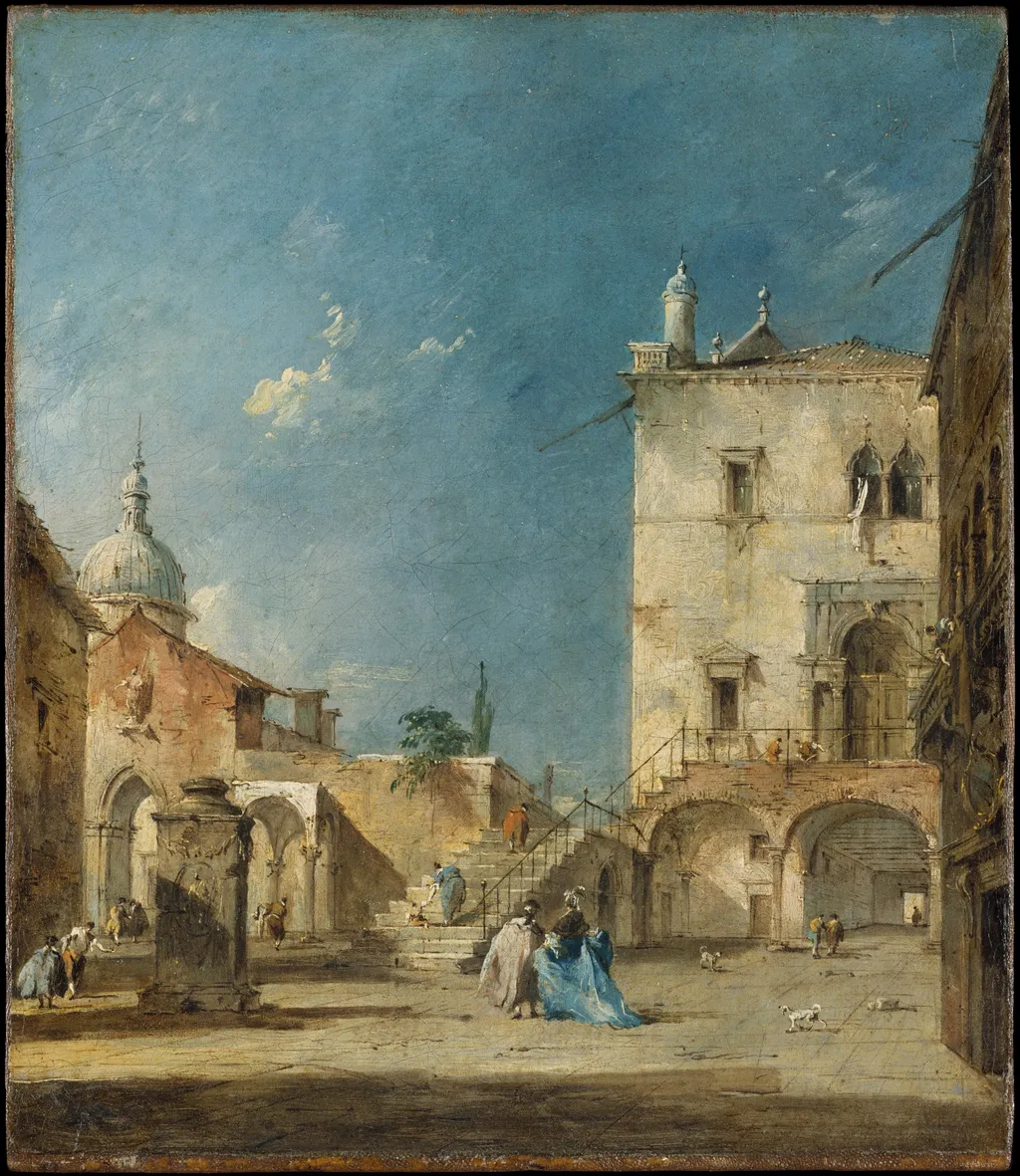
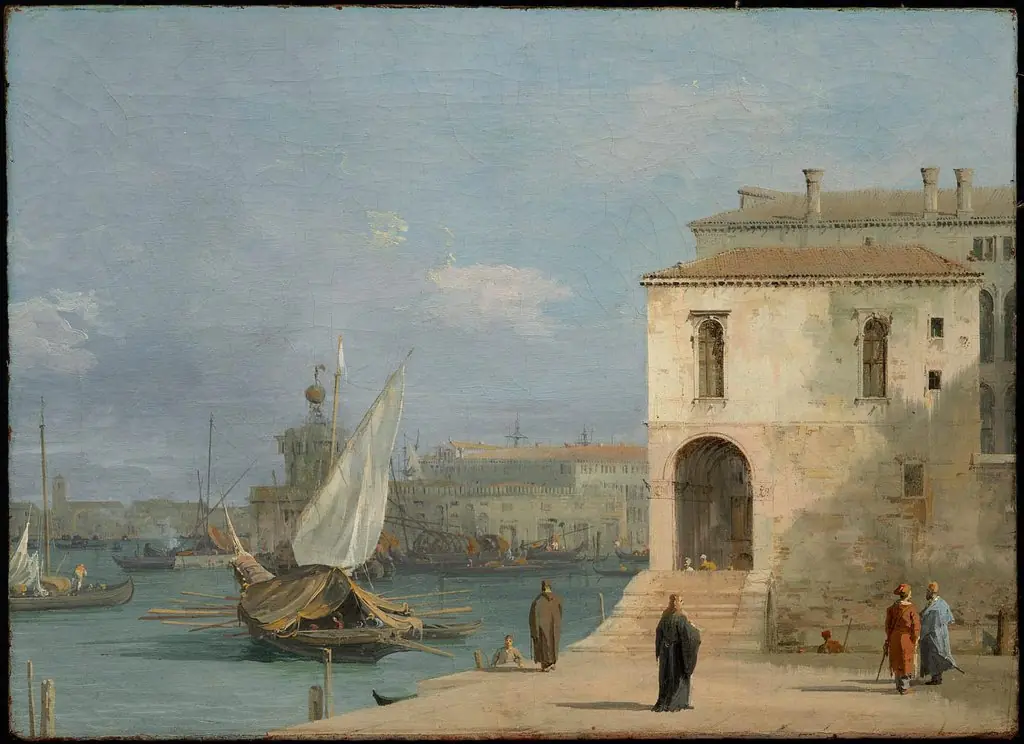
Capriccio is an oil painting by the Rococo painting artist Francesco Guardi. It dates from 1790 and is held in the collection of the Metropolitan Museum of Art.
About this work
Subject & Meaning
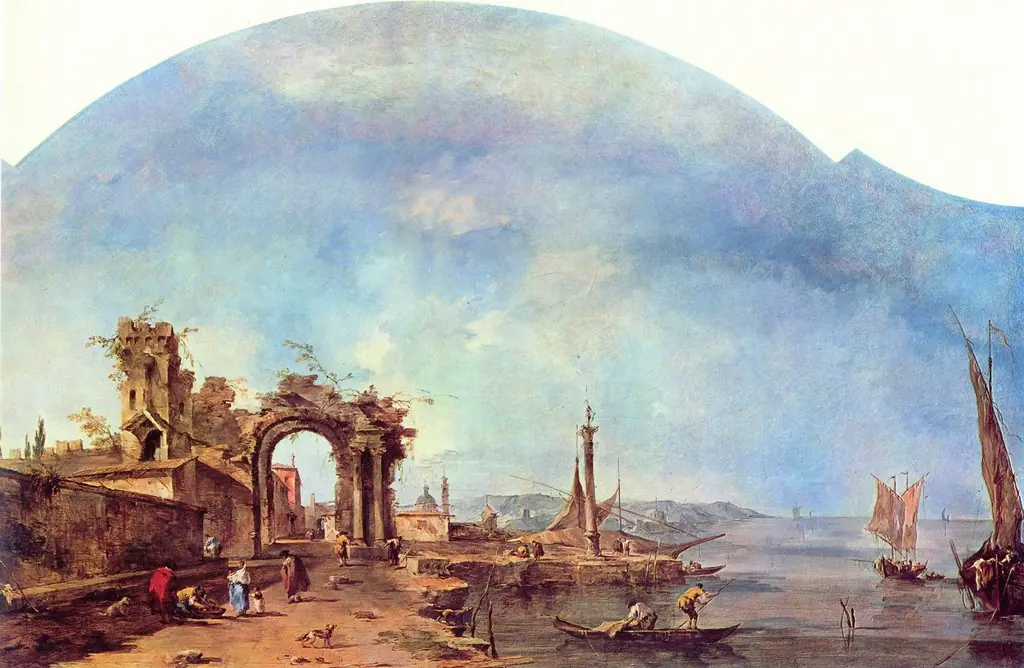
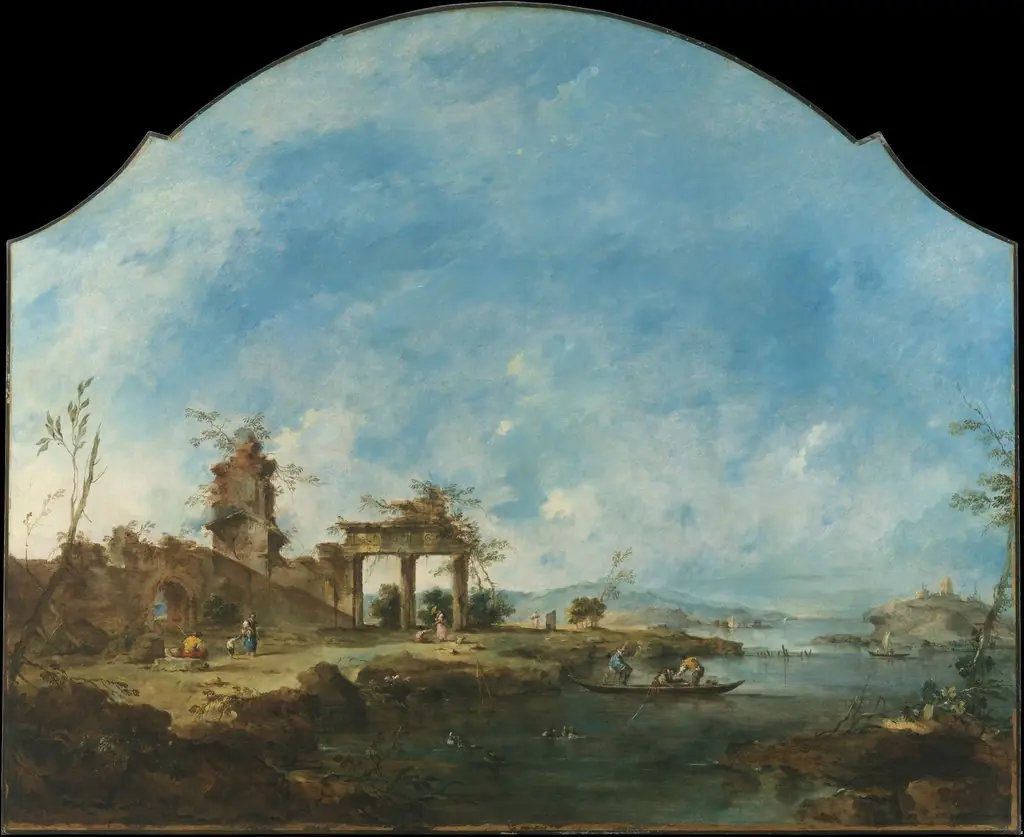
In this capriccio Guardi depicts figures amid an imagined setting of architectural fragments and ruins, a genre that freely combines invented and recollected motifs rather than recording a specific place. Such fanciful views were popular in 18th-century Venice, where the picturesque juxtaposition of crumbling antique architecture and small staffage figures appealed to collectors. The painting's loose, atmospheric handling and idyllic mood are characteristic of Guardi's approach to the capriccio, in which the architectural setting is treated as a poetic invention rather than a topographical record.
Technique & Style
Handling aligns with Guardi's characteristic feathery brushwork and delicate glazing, which animate the scene without heavy impasto.
The work is executed in oil paint on canvas, a medium typical of Guardi's late Venetian production. Dimensions are 31.4 cm in height by 27 cm in width. Handling aligns with Guardi's characteristic feathery brushwork and delicate glazing, which animate the scene without heavy impasto.
The composition's capriccio nature is evident in the imaginary urban setting, rendered with quick, rhythmic strokes to suggest architectural volumes and atmospheric recession. Formal qualities include a muted palette and soft, diffused lighting that dissolves contours, producing an evanescent, poetic effect characteristic of Guardi's views.
History & Provenance
Francesco Guardi executed this oil on canvas painting, titled Capriccio, in 1790. The work measures 31.4 cm in height and 27 cm in width and is held in the collection of the Metropolitan Museum of Art under accession number 1974.356.28, having been accessioned in 1974. No specific exhibition history for this work is provided in the available sources.
Overview
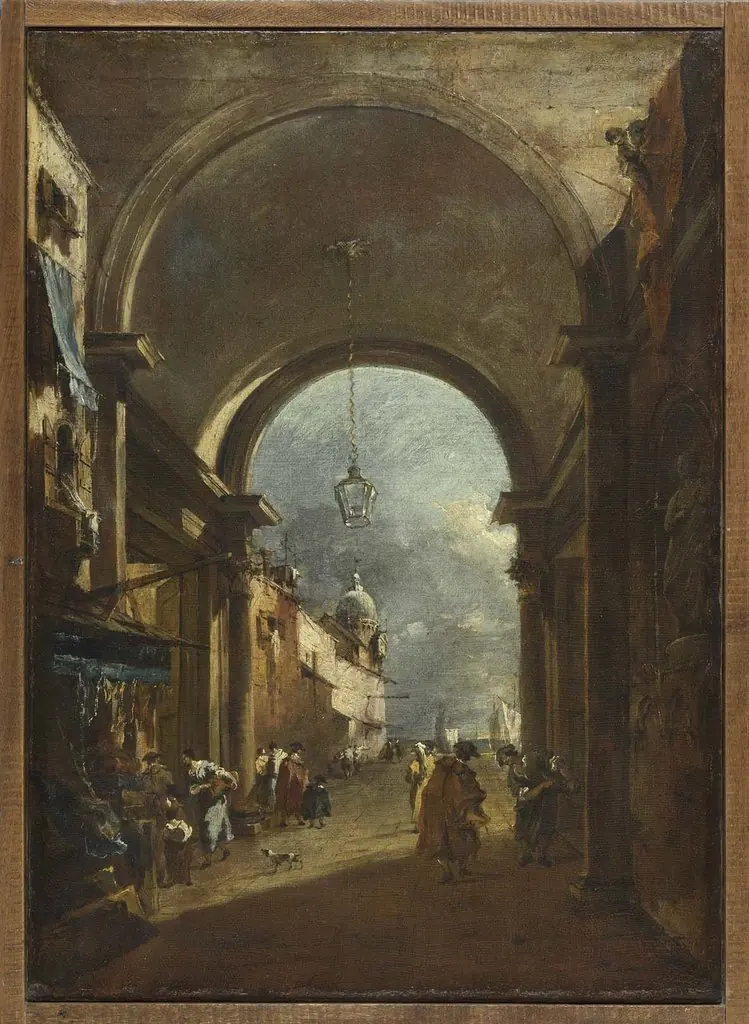
Francesco Guardi, an 18th‑century Venetian aristocrat and painter, produced the oil work titled Capriccio in 1790. The canvas presents a bustling urban piazza framed by historic façades and arched portals, under a clear blue sky. Two elegantly dressed women move through the centre, accompanied by a seated dog, while other figures linger in conversation.
Context
Guardi, originally known for collaborative religious commissions with his brother, turned to vedute, detailed cityscapes, after 1760, reflecting the growing demand for picturesque urban views among travelers and collectors. Capriccio exemplifies his later period, where imaginative city scenes merged with his established skill in rendering light and architecture.
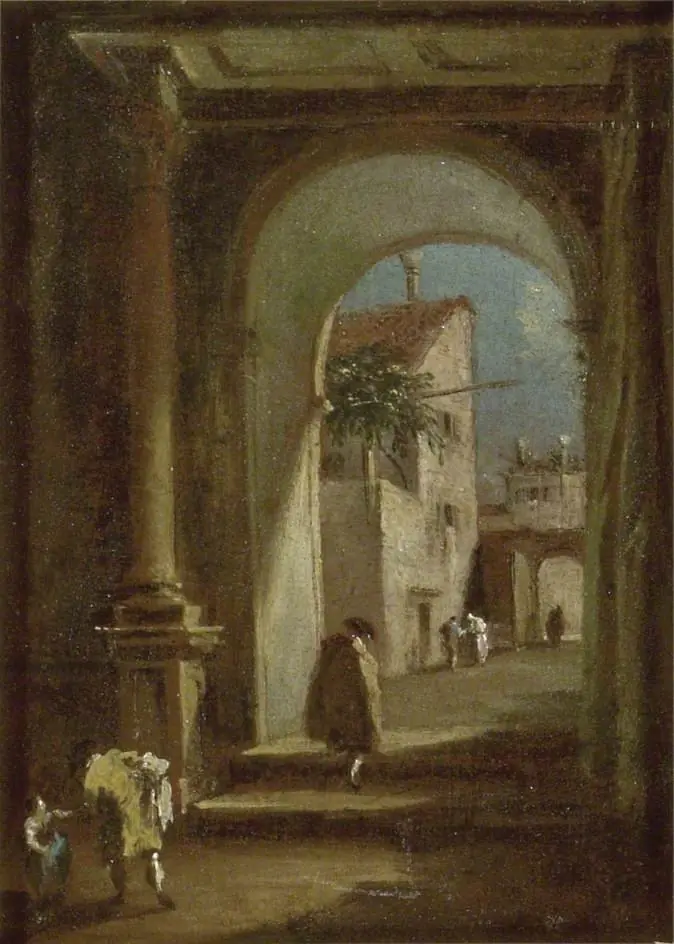
Own this work as a print
Artist & collection
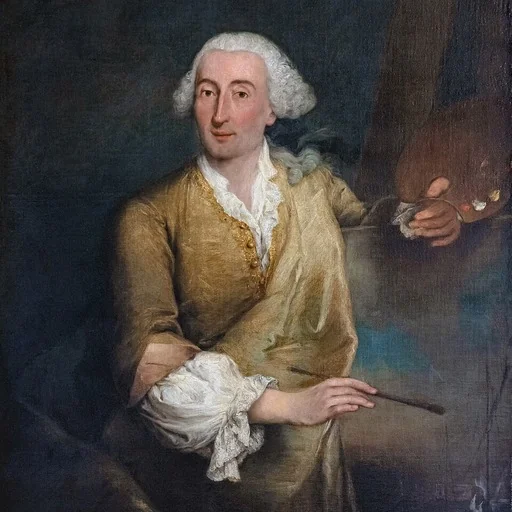
Artist
Francesco Lazzaro Guardi (Italian pronunciation:; 5 October 1712 – 1 January 1793) was an Italian painter, nobleman, and a member of the Venetian School.

 Tordurchblick
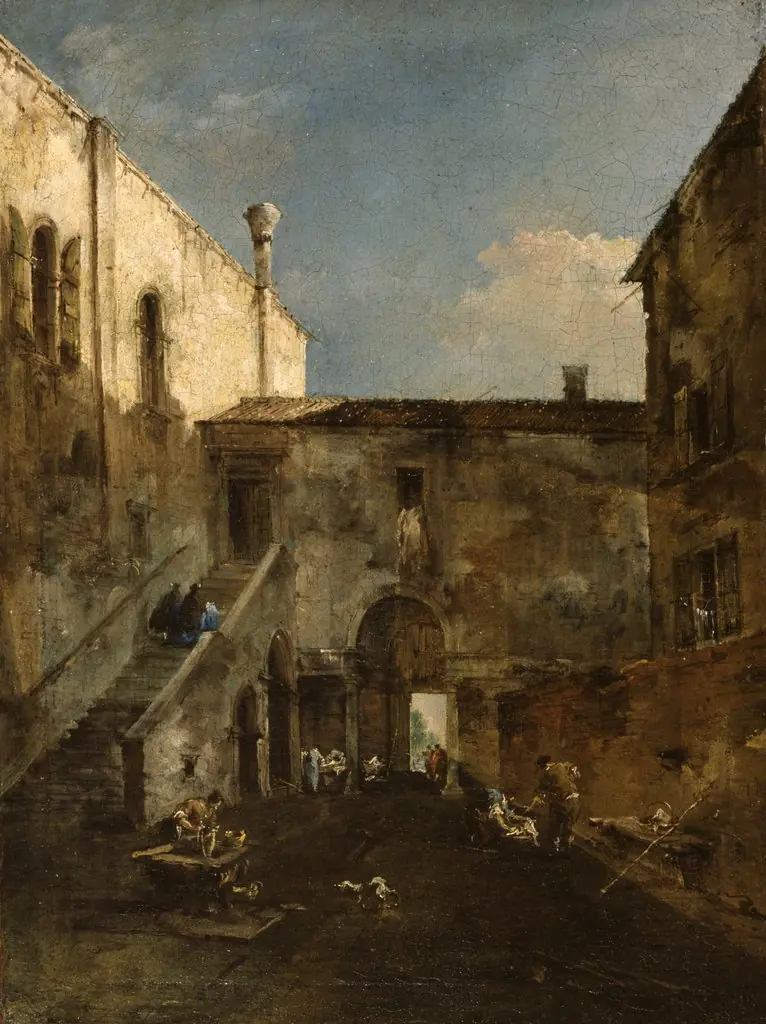 A Venetian Courtyard
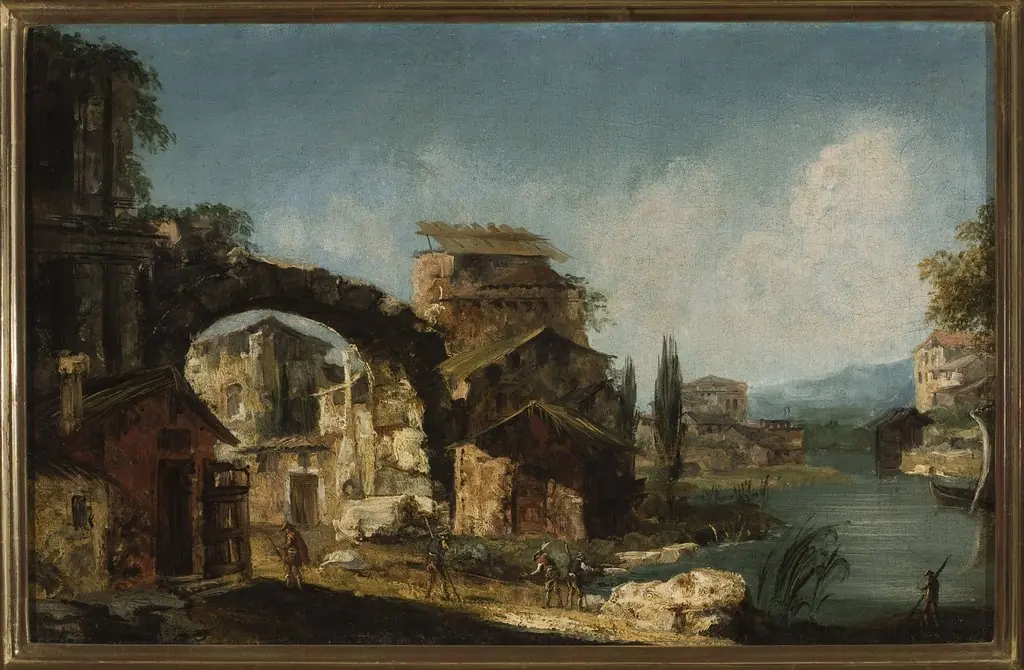 Landscape with ruins
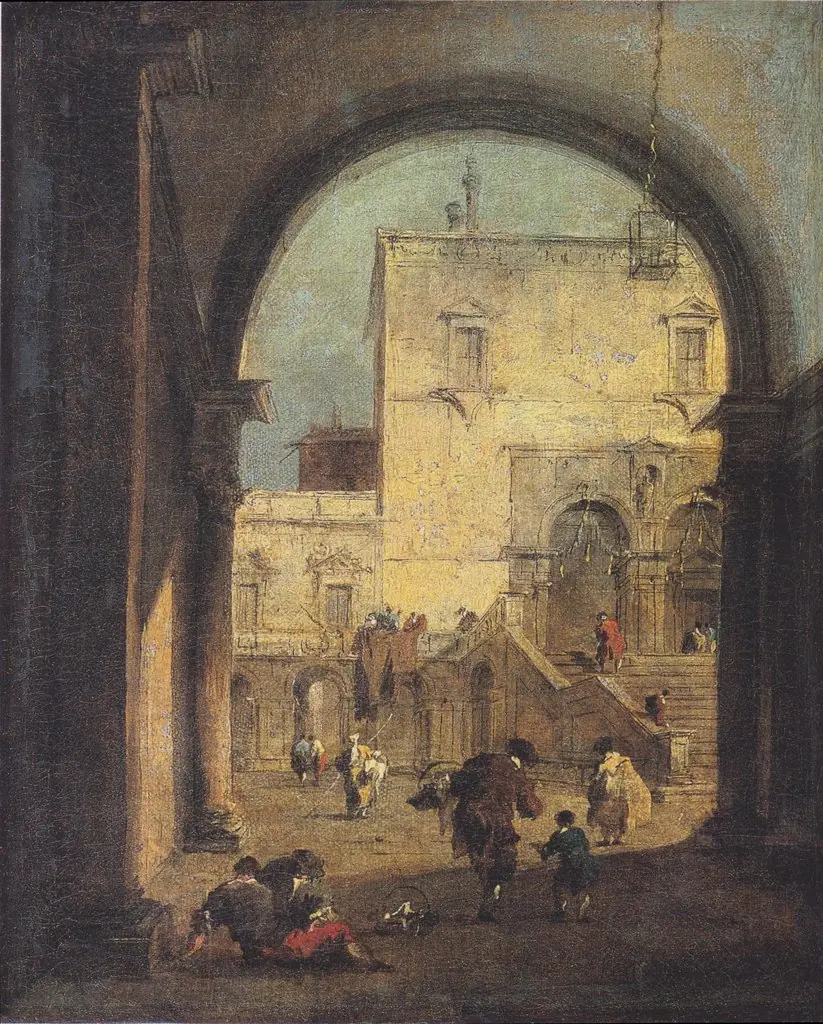 Venetian Capriccio: View of a Square and a Palace
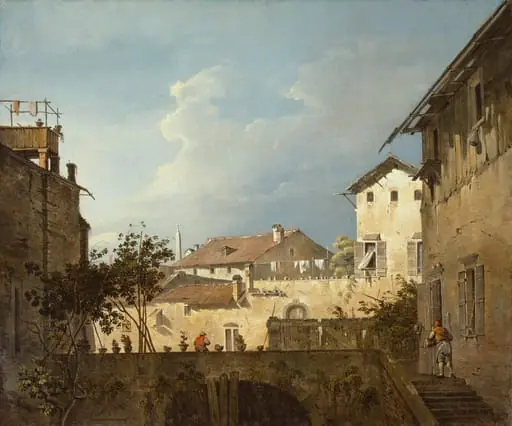 The Terrace
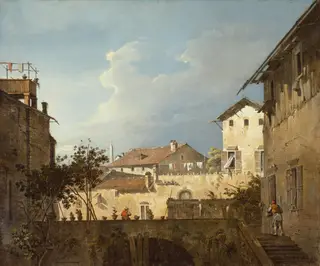 The Terrace
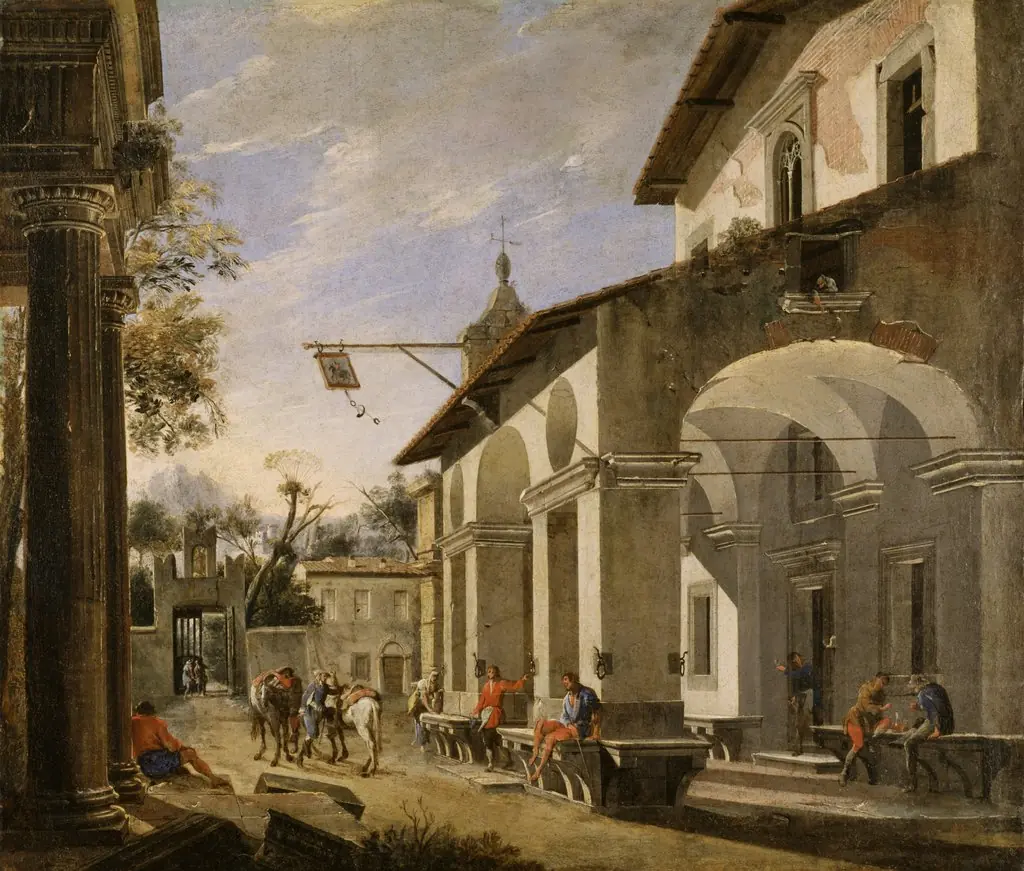 Courtyard of an Inn with Classical Ruins
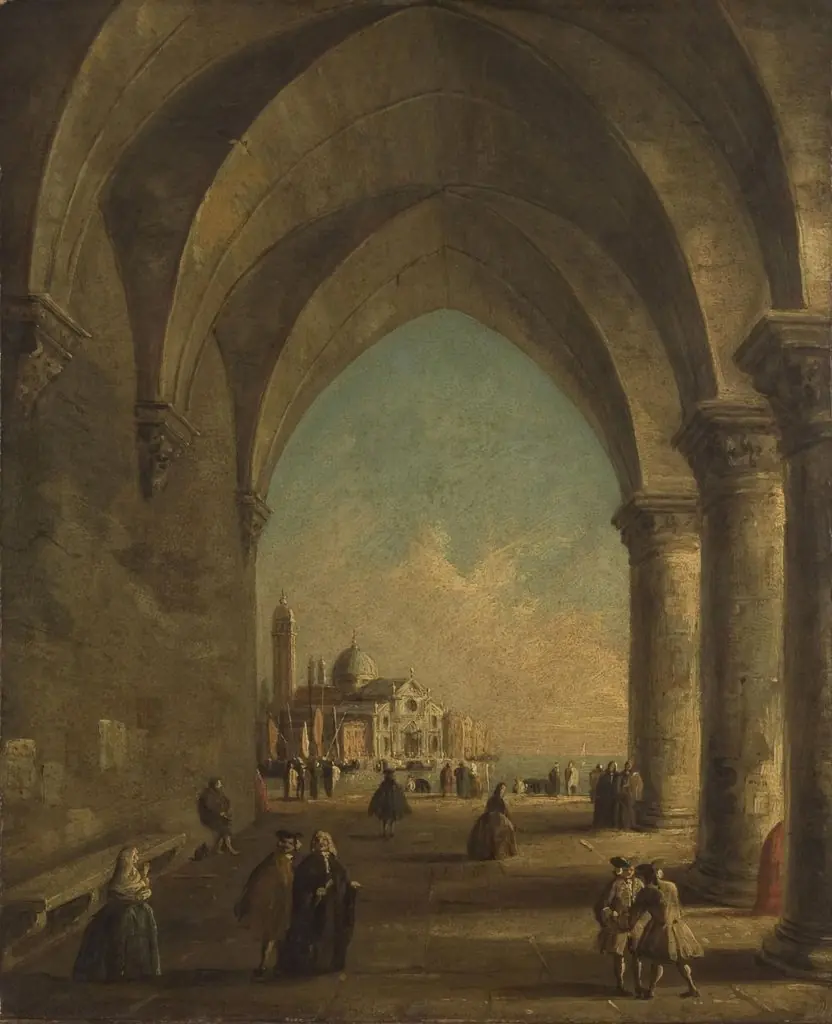 San Giorgio Maggiore Seen through the Arches of the Doge's Palace
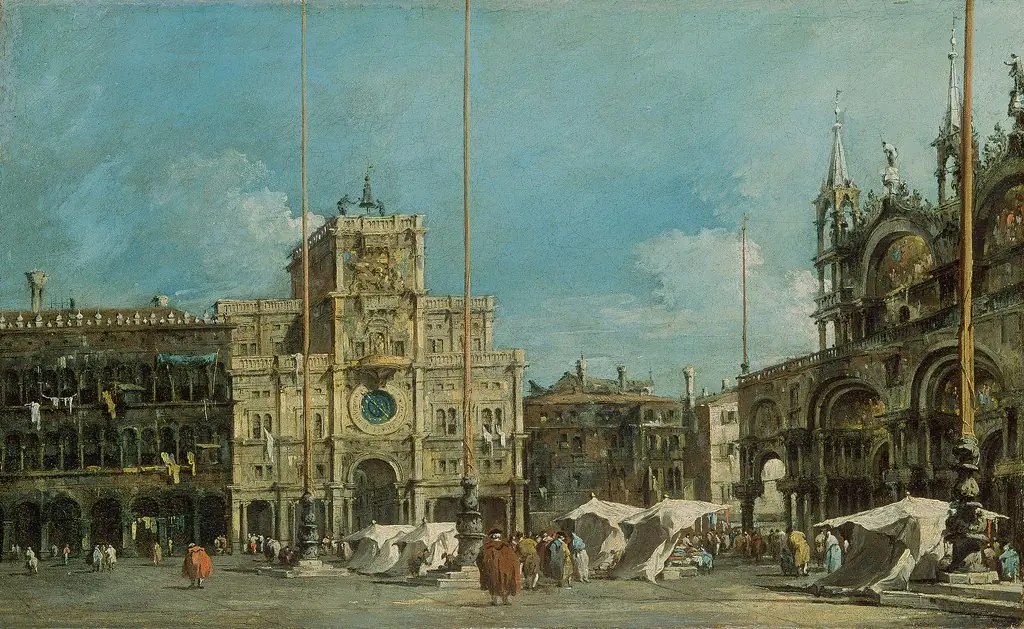 The Torre dell’Orologio in Piazza San Marco
 Fonteghetto della Farina, Venice