Artwork
The Torre dell’Orologio in Piazza San Marco
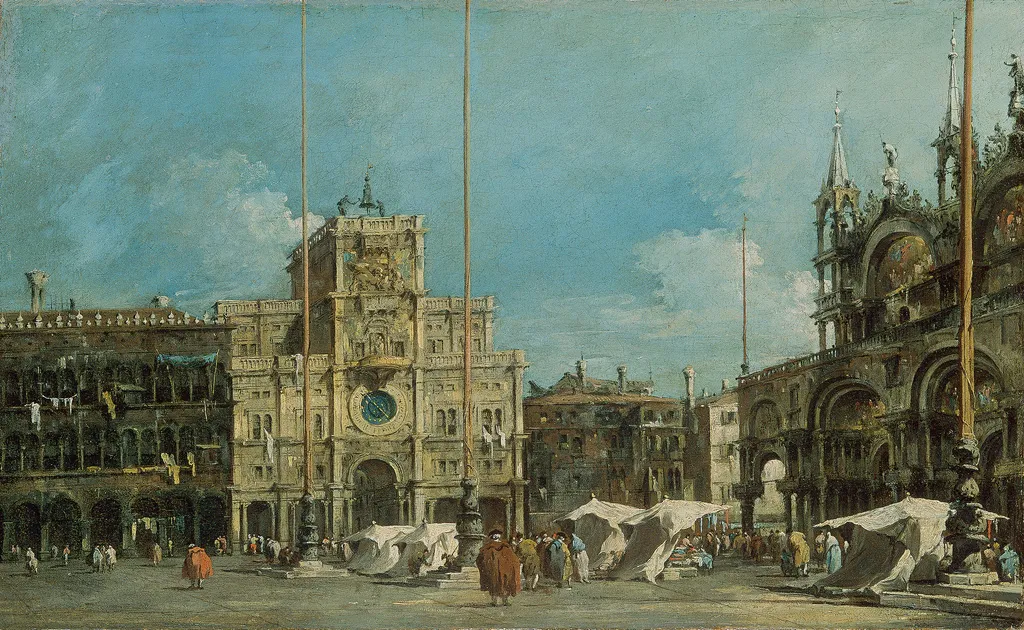
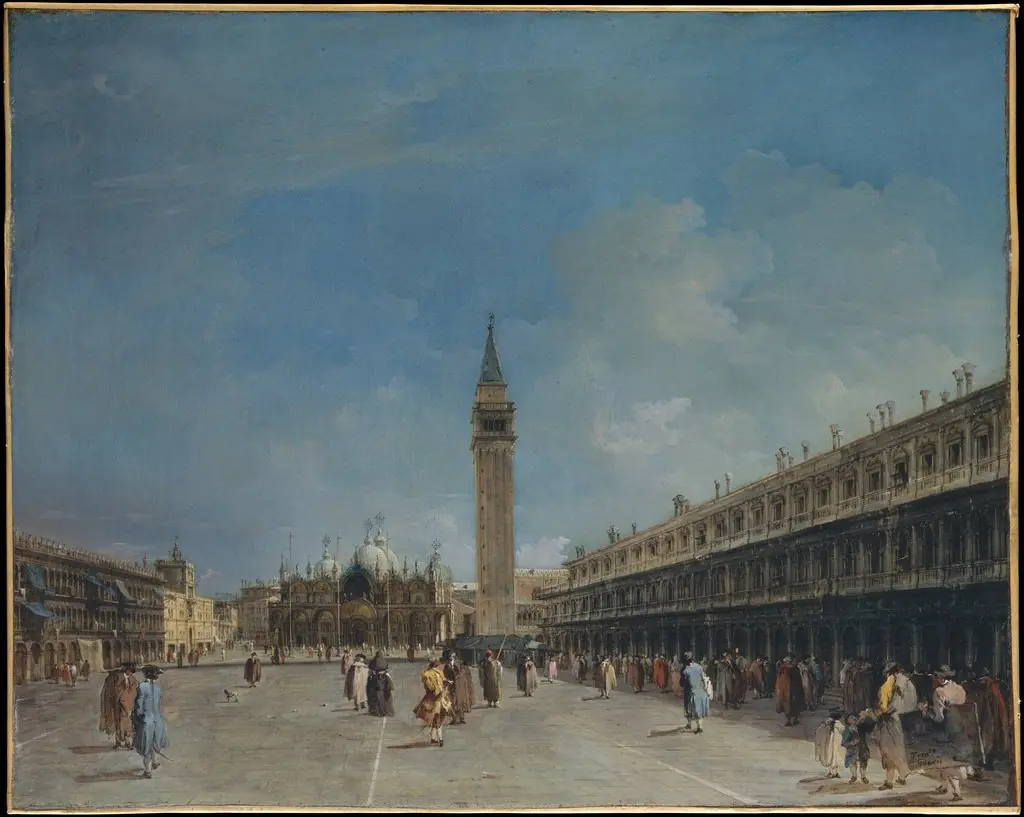
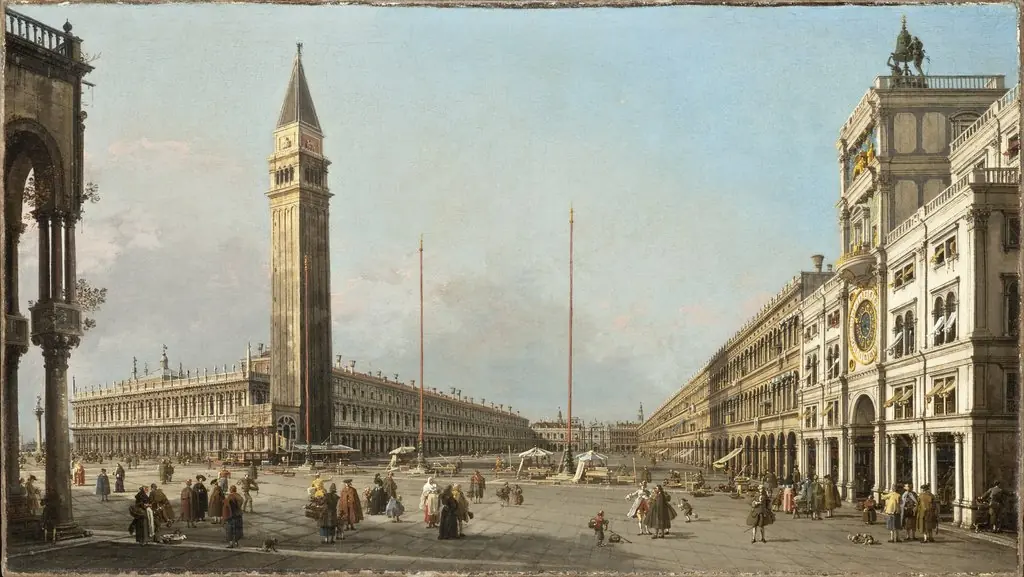
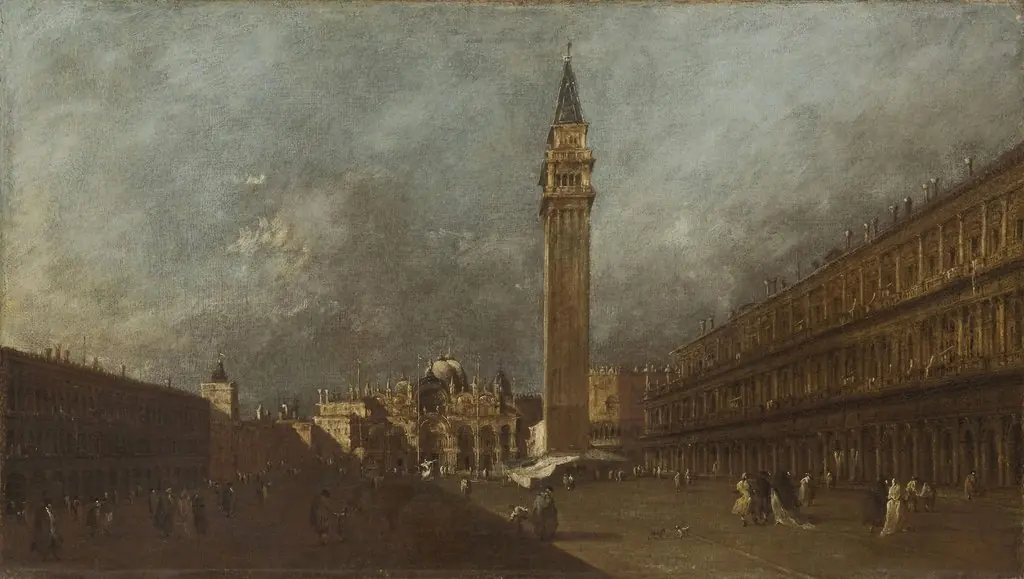
The Torre dell’Orologio in Piazza San Marco is an oil painting by the Rococo painting artist Francesco Guardi. It dates from 1775 and is held in the collection of the Bavarian State Painting Collections.
About this work
History & Provenance
The artwork entered the collection of the Bavarian State Painting Collections and has been housed at the Alte Pinakothek in Munich since its acquisition.
The painting titled The Torre dell’Orologio in Piazza San Marco was created in 1775 by Francesco Guardi. Executed in oil on canvas, the work measures 44 cm by 70.5 cm and depicts the eponymous clock tower in Venice’s St. Mark’s Square. It is classified as a Veduta and falls within the cityscape genre, reflecting Guardi’s interest in Venetian urban vistas.
The artwork entered the collection of the Bavarian State Painting Collections and has been housed at the Alte Pinakothek in Munich since its acquisition.
Francesco Guardi's 1775 oil painting depicting the Torre dell'Orologio in Piazza San Marco is held within the collection of the Bavarian State Painting Collections. Specifically, the work is located at the Alte Pinakothek in Munich. The provided sources do not list a specific inventory or accession number for this canvas, nor do they record any exhibition history for the piece.
Overview
Francesco Guardi’s 1775 oil on canvas presents a bustling view of Venice’s Piazza San Marco, centering on the prominent clock tower. The composition captures the square’s architectural rhythm, arched façades, columned porticoes, and market stalls beneath white awnings, under a clear, light‑blue sky. Guardi’s palette emphasizes bright, airy tones, conveying the lively atmosphere of daily Venetian life.
Subject & Meaning
The painting records a typical moment in the civic heart of Venice, where commerce, social interaction, and civic architecture converge. By foregrounding the clock tower with its ornate carvings and golden hands, Guardi highlights the passage of time amidst the ordinary activities of pedestrians and vendors, suggesting a harmonious blend of public order and everyday vitality.
Technique & Style
Guardi employs a looser, more animated brushstroke than his contemporary Canaletto, infusing the scene with a sense of movement. His handling of light, bright skies and reflective surfaces, creates depth, while the swift delineation of figures and market stalls conveys immediacy. The work reflects Rococo sensibilities through its decorative detail and graceful composition.
Context
The depiction of Piazza San Marco aligns with the 18th‑century fascination for grand urban vistas that catered to the Grand Tour audience. Guardi’s lively interpretation influenced later vedutisti, who adopted his energetic approach to cityscapes. The work continues to serve as a visual document of Venice’s public spaces before modern alterations.
Artist & collection

Artist
Francesco Lazzaro Guardi (Italian pronunciation:; 5 October 1712 – 1 January 1793) was an Italian painter, nobleman, and a member of the Venetian School.