Artwork
The Angels Appearing to Abraham
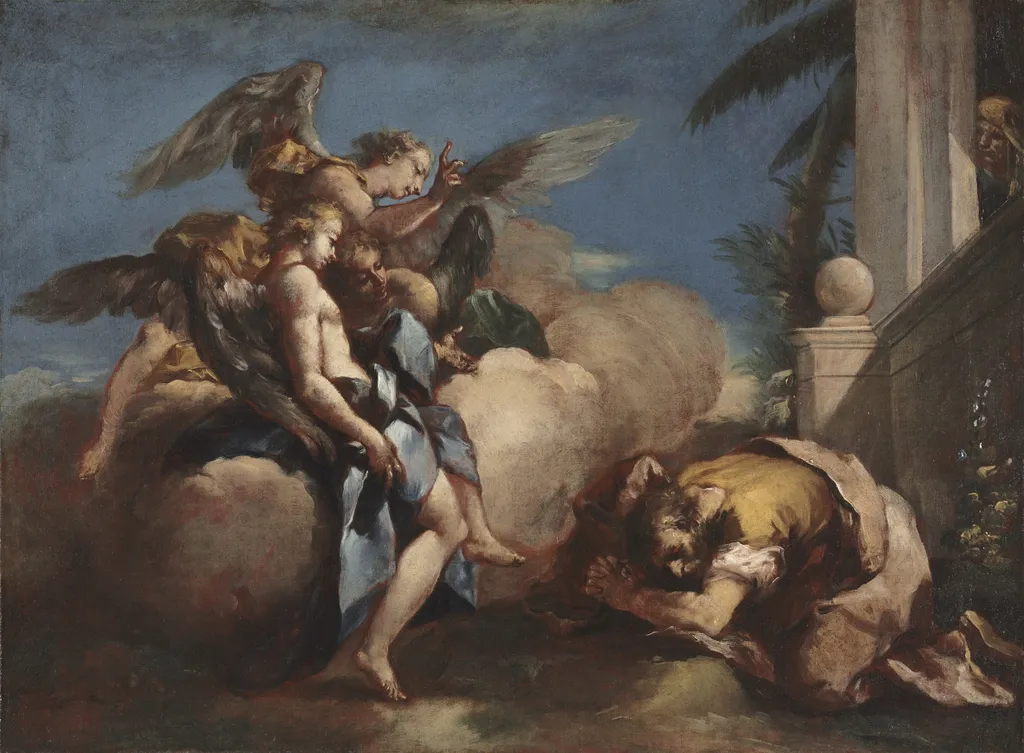
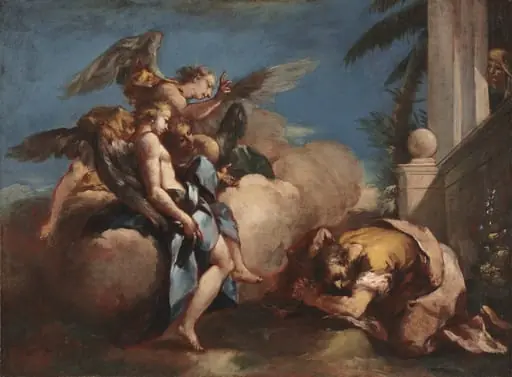
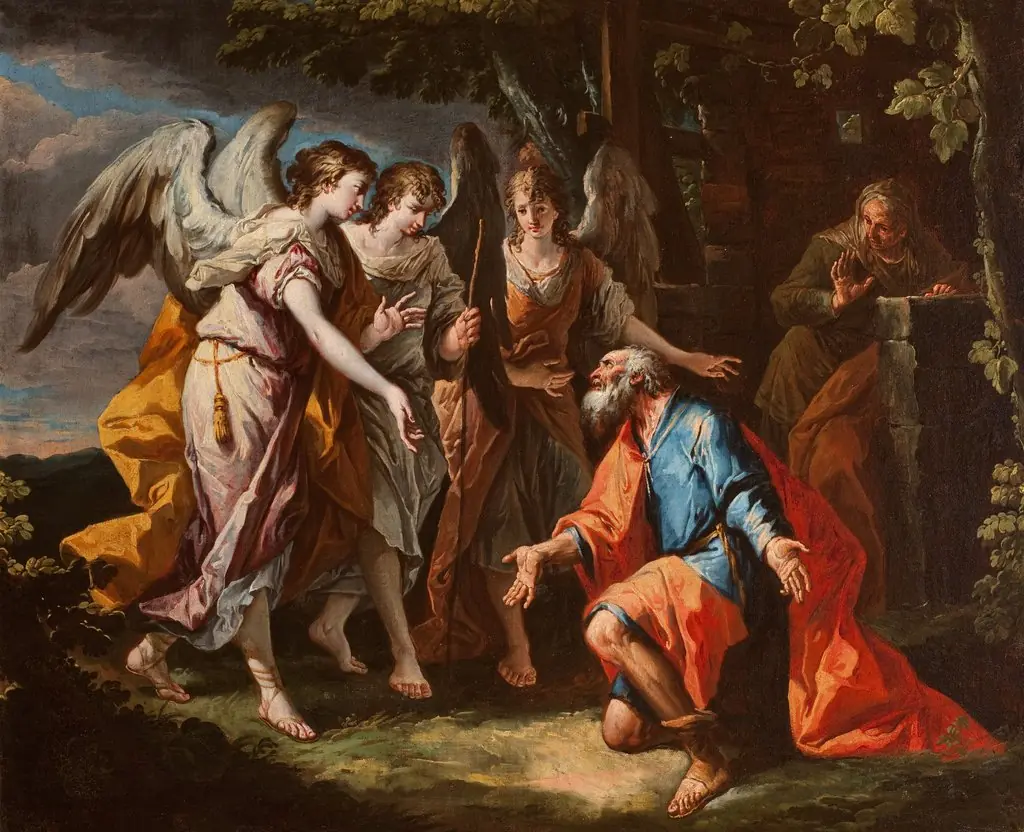
The Angels Appearing to Abraham is an oil painting by the Rococo painting artist Francesco Guardi. It dates from 1754 and is held in the collection of the Cleveland Museum of Art.
About this work
Subject & Meaning
The painting shows the biblical moment in which the Lord, accompanied by two angels, appears to Abraham beneath the oak of Mamre, a scene drawn from Genesis.
The painting shows the biblical moment in which the Lord, accompanied by two angels, appears to Abraham beneath the oak of Mamre, a scene drawn from Genesis. Guardi’s composition emphasizes the divine encounter through the presence of the celestial messengers and the ancient tree that marks the site of hospitality, symbolizing both covenantal promise and the welcoming of strangers. The work thus conveys themes of revelation, faith, and the anticipation of salvation, reflecting 18th‑century devotional interest in narrative biblical episodes.
Its iconography aligns with traditional depictions of Abraham’s hospitality while highlighting the luminous presence of the heavenly visitors.
Technique & Style
Executed in oil on canvas in 1754, The Angels Appearing to Abraham exemplifies Francesco Guardi’s Venetian rococo manner through its fluid handling and luminous palette. The composition is rendered with quick, feathery brushstrokes that animate the drapery and foliage, while the figures retain a refined, sculptural solidity. The scene’s warm tonality, dominated by ochres, umbers, and soft blues, creates a luminous glow around the angelic apparitions, contrasting with the darker, more earthbound tones of the oak grove.
The canvas’s dimensions (56.5 × 75.5 cm) allow for a compact yet dynamic arrangement, with the vertical thrust of the tree and the upward gestures of the figures guiding the viewer’s eye toward the divine revelation. The work’s condition appears stable, with no significant losses reported in recent records.
History & Provenance
The painting The Angels Appearing to Abraham by Francesco Guardi is dated 1754, aligning with the artist’s early mature period. It entered the Cleveland Museum of Art in 1952 as accession number 1952.235.3, where it has remained in the permanent collection. The work’s subject derives from the biblical episode in Genesis 18, depicting the Lord appearing to Abraham under the oaks of Mamre.
Guardi’s canvas was created in Italy, likely Venice, during a period when the artist was expanding his religious iconography beyond traditional Venetian subjects.
Francesco Guardi's painting The Angels Appearing to Abraham, executed in 1754, is currently held in the permanent collection of the Cleveland Museum of Art in Cleveland, Ohio. The work, an oil on canvas measuring 56.5 by 75.5 centimeters, is cataloged under the accession number 1952.235.3. The museum's records identify the subject as the biblical scene where the Lord appears to Abraham by the oaks of Mamre.
No specific exhibition history or loan records for this piece are detailed in the available documentation, though its inclusion in the museum's collection dates to the mid-20th century acquisition.
Overview
Francesco Guardi, a Venetian painter, completed The Angels Appearing to Abraham in 1754. This oil painting depicts a scene from the biblical narrative, specifically the moment when the Lord manifests to Abraham. The work showcases Guardi's early engagement with religious themes, before his later focus on cityscapes. It is currently housed in the collection of The Cleveland Museum of Art.
Context
Hailing from a noble Venetian family, Francesco Guardi was a prominent member of the Venetian School. While he later became widely recognized for his vedute, or detailed cityscapes, his early career, often in collaboration with his brother, included significant religious commissions like this one. The Angels Appearing to Abraham thus represents an important phase in Guardi's artistic development, preceding his shift towards secular subjects.
Own this work as a print
Artist & collection
Artist
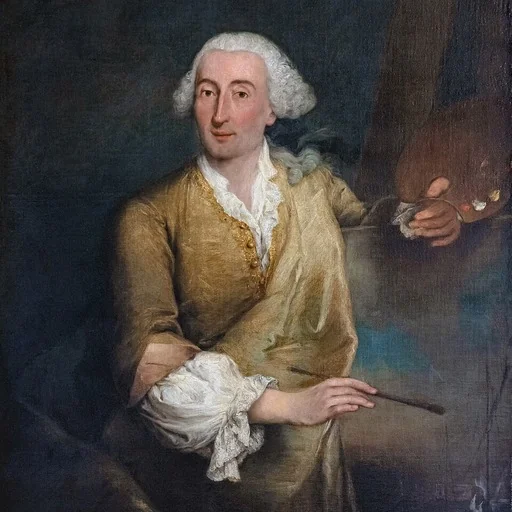
Francesco Lazzaro Guardi (Italian pronunciation:; 5 October 1712 – 1 January 1793) was an Italian painter, nobleman, and a member of the Venetian School.