Artwork
The Virgin and Child
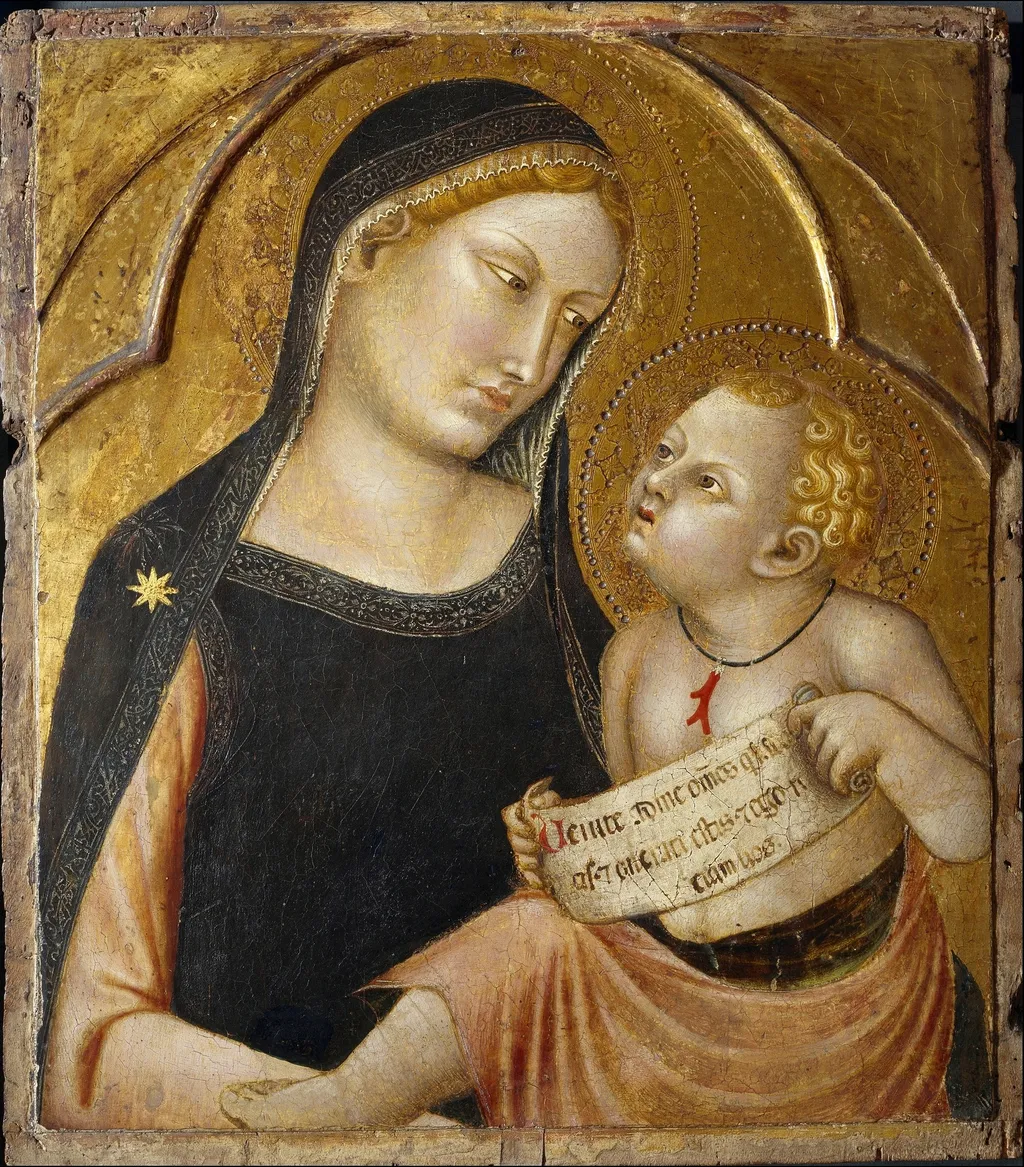
The Virgin and Child is an unspecified painting by the Byzantine icon painting artist Francesco Traini. It dates from 1345 and is held in the collection of the Museo del Prado.
About this work
Subject & Meaning
The painting portrays the Virgin Mary holding the infant Christ, embodying the traditional Madonna and Child theme central to medieval religious art. Mary's contemplative gaze and the Child's blessing gesture underscore their spiritual roles, while the work's composition and iconography reflect 14th-century devotional practices emphasizing maternal tenderness and divine incarnation.
History & Provenance
The Virgin and Child by Francesco Traini is held in the Museo del Prado, Madrid, with an inventory number not specified in the cited sources.
The Virgin and Child is a religious painting created by Francesco Traini in 1345. The work depicts the Madonna and Child and measures 48 cm in height and 42 cm in width. It is currently held in the collection of the Museo del Prado.
The inception of the artwork is recorded as 1345, establishing its mid-14th-century origin within the context of Italian religious art.
No specific details regarding the original commission, the initial patron, or the intermediate ownership chain prior to its arrival at the museum are provided in the available records. The painting remains a documented example of Traini's output from this specific period.
The Virgin and Child by Francesco Traini is held in the Museo del Prado, Madrid, with an inventory number not specified in the cited sources.
It has not been recorded in the provided sources as having been exhibited since its creation in 1345.
Context
The Virgin and Child by Francesco Traini is a 14th-century religious painting housed in the Museo del Prado, reflecting Trecento devotional practices through its depiction of the Madonna and Child. Scholarship situates it within the stylistic lineage of Italian Gothic art, emphasizing its role in mediating mystical spirituality in pre-Renaissance sacred imagery.
Overview
Francesco Traini, an Italian painter active in the first half of the 14th century, completed the panel titled The Virgin and Child in 1345. The work is a small devotional image that now belongs to the Prado Museum’s collection. It follows the conventional Byzantine model of the Virgin holding the infant Christ, a subject commonly used for private contemplation.
Technique & Style
Executed in tempera on panel, the painting employs the flat gold background typical of Byzantine iconography, which creates a luminous field that isolates the figures. The handling of drapery and facial features shows Traini’s adherence to the stylized, linear approach of the period, with limited modeling and a restrained use of chiaroscuro that emphasizes surface over depth.
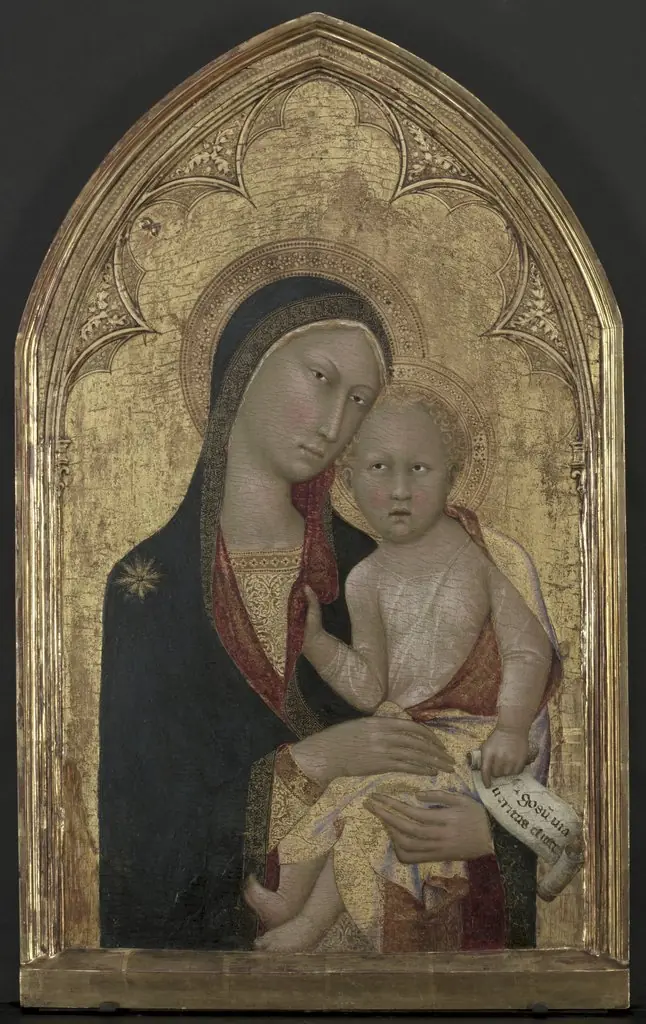
Own this work as a print
Artist & collection
Artist
Francesco Traini was an Italian painter who was documented as working from 1321 to ca 1365 in Pisa and Bologna.

- Madonna and Child
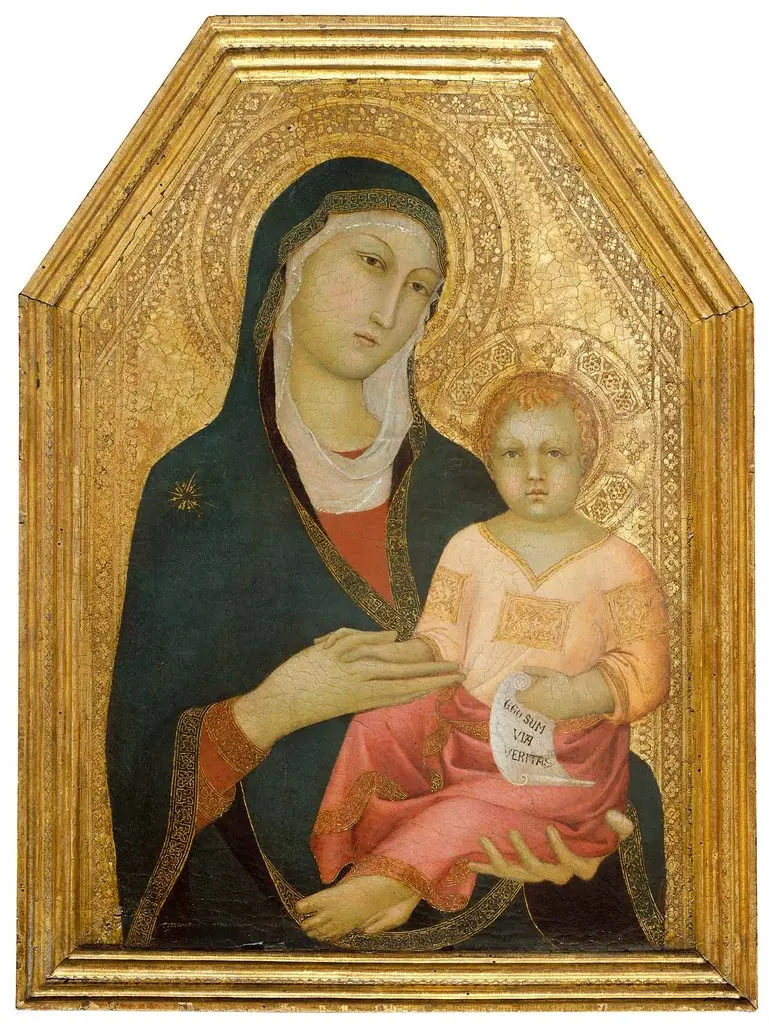 Virgin and Child
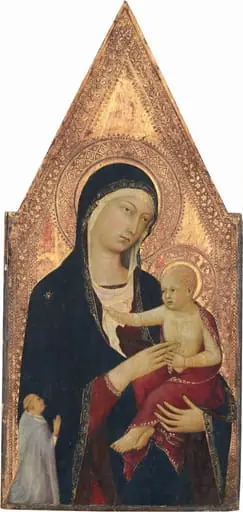 Madonna and Child with Donor
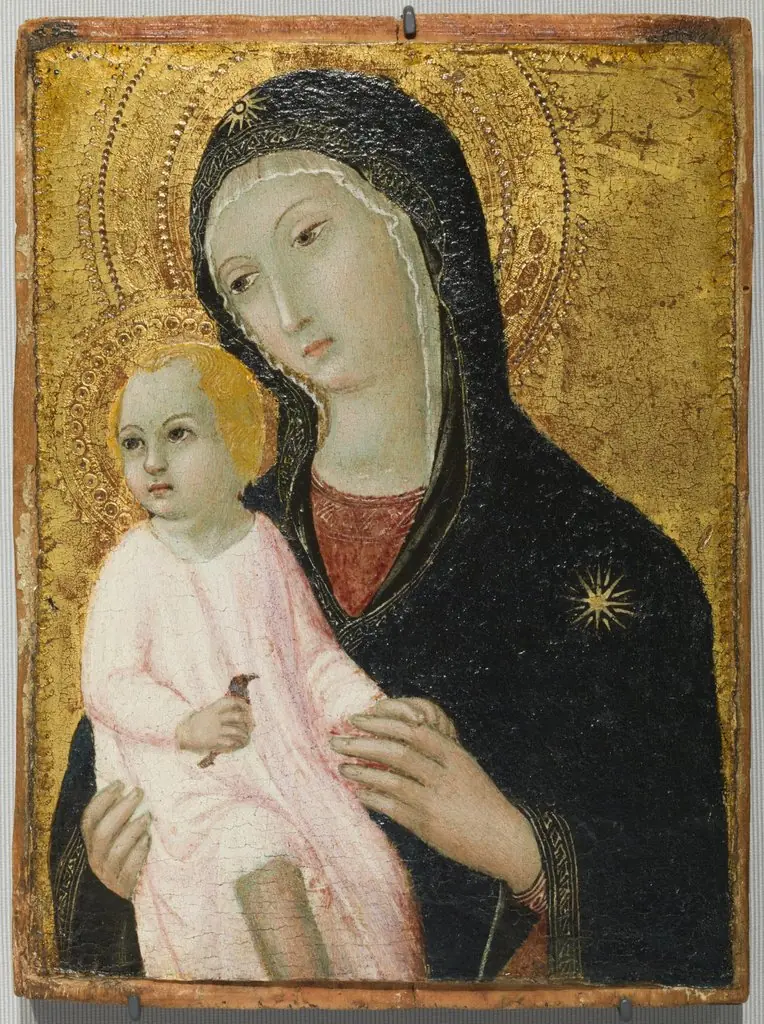 Madonna and Child
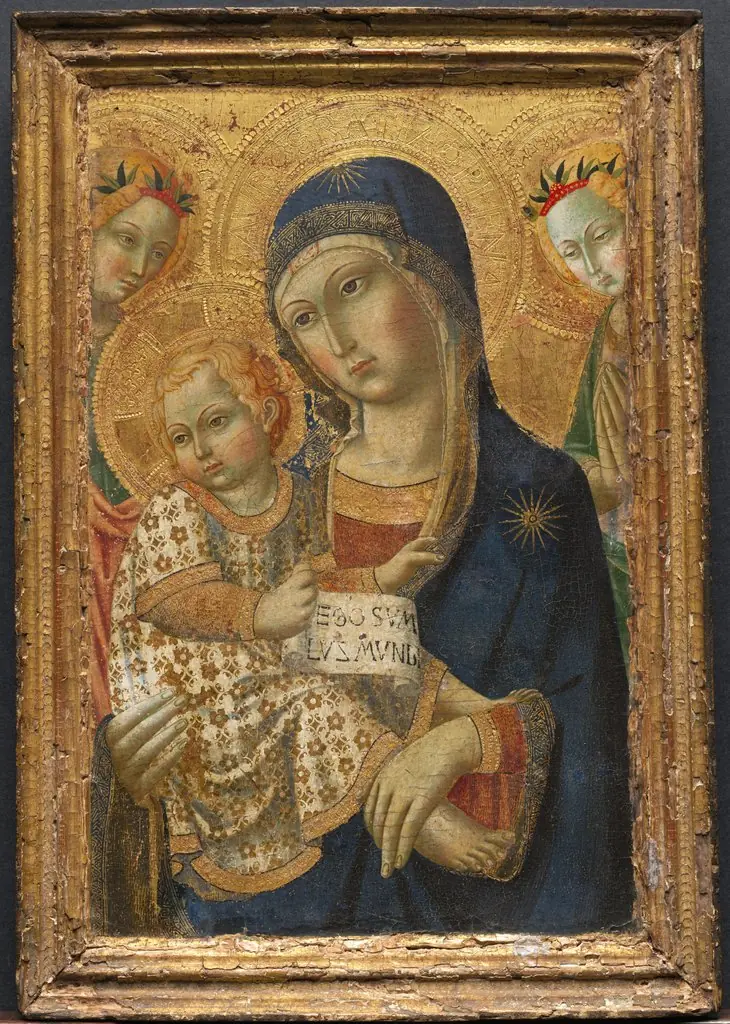 Virgin and Child Enthroned
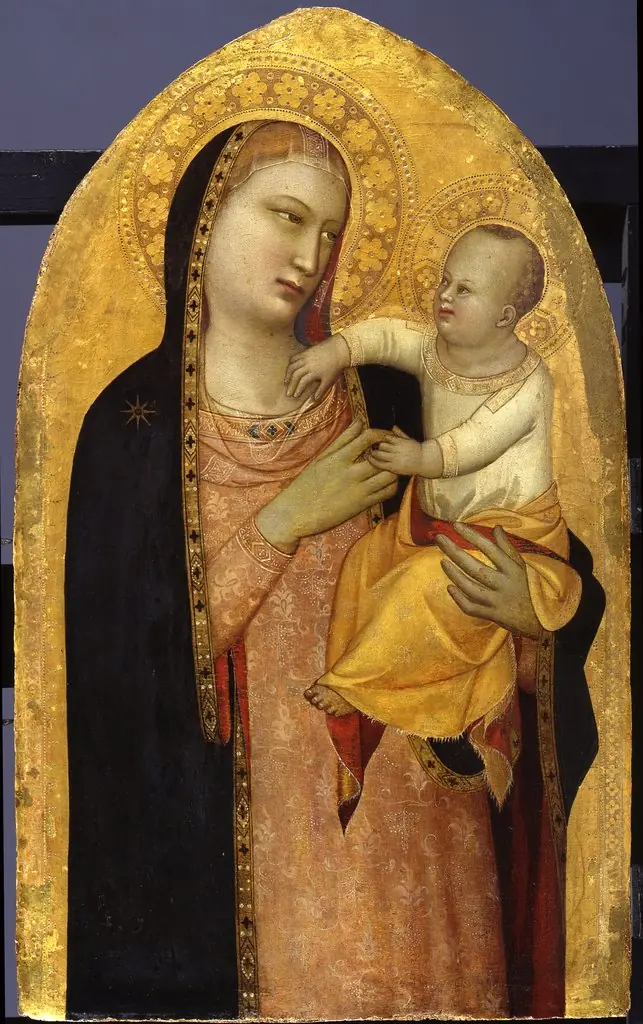 Mary and child
![Madonna and Child, with the Blessing Christ [middle panel], by Pietro Lorenzetti](https://artifactworldgallery.com/img/pietro-lorenzetti--madonna-and-child-with-the-blessing-christ-middle-panel--02357aa6ff04175b-w320.webp) Madonna and Child, with the Blessing Christ [middle panel]
Madonna and Child, with the Blessing Christ [middle panel]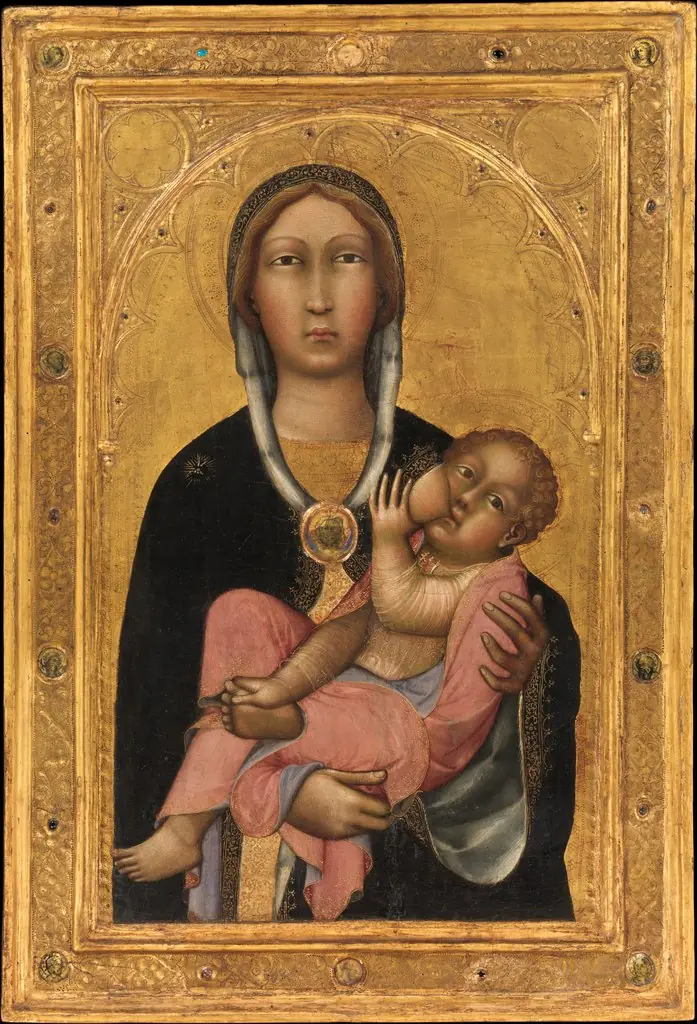 Madonna and Child
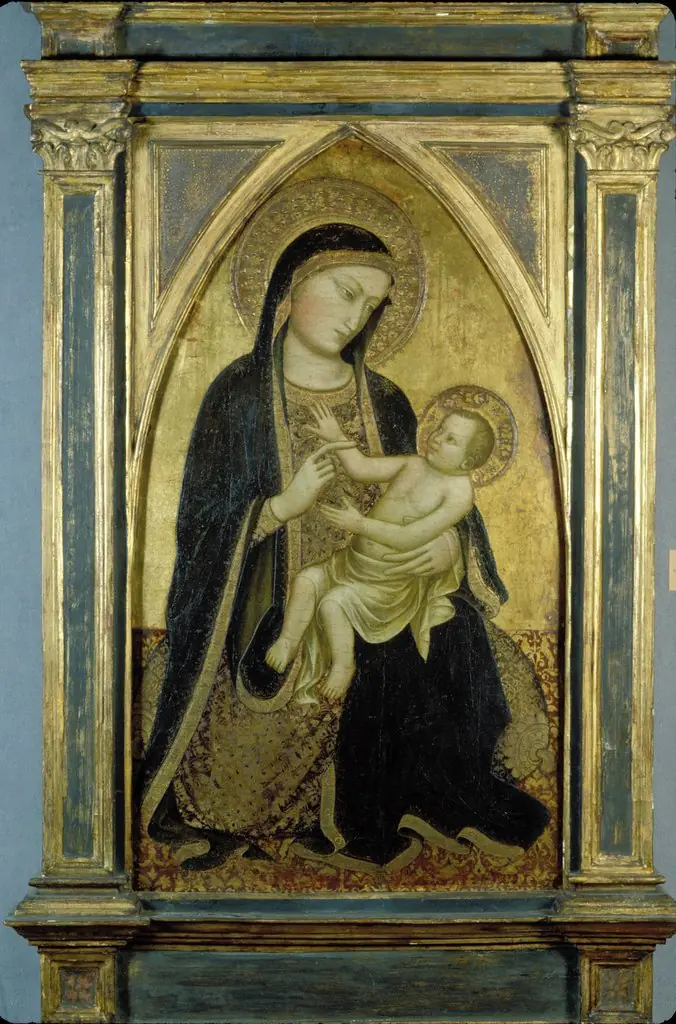 Madonna and Child
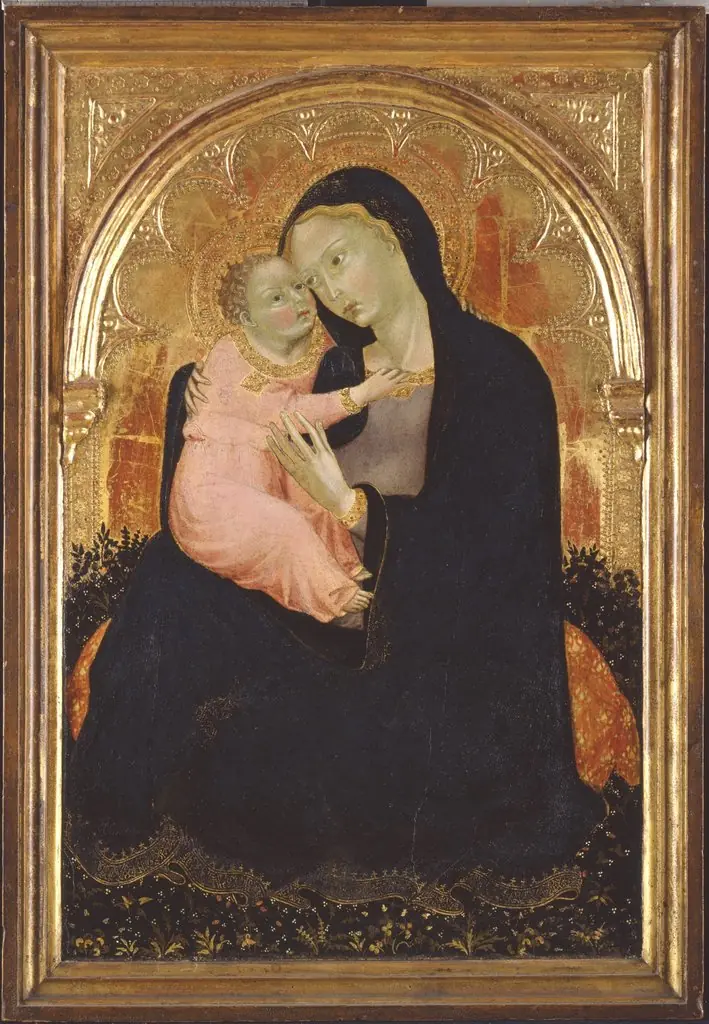 Madonna and Child
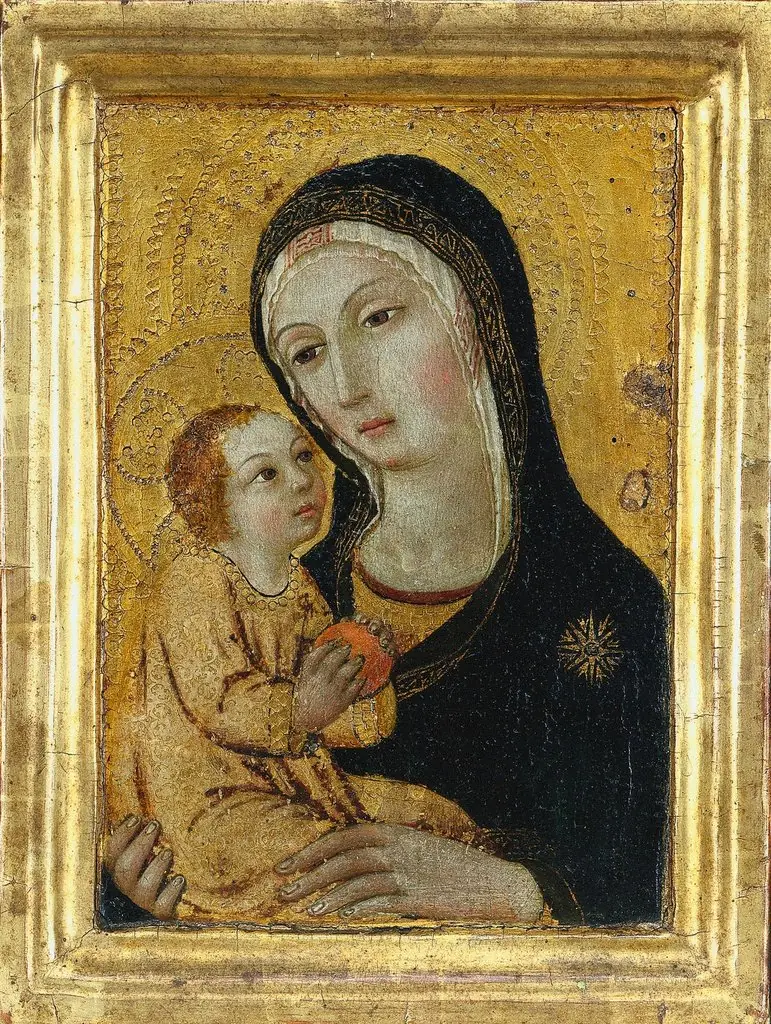 Virgin and Child
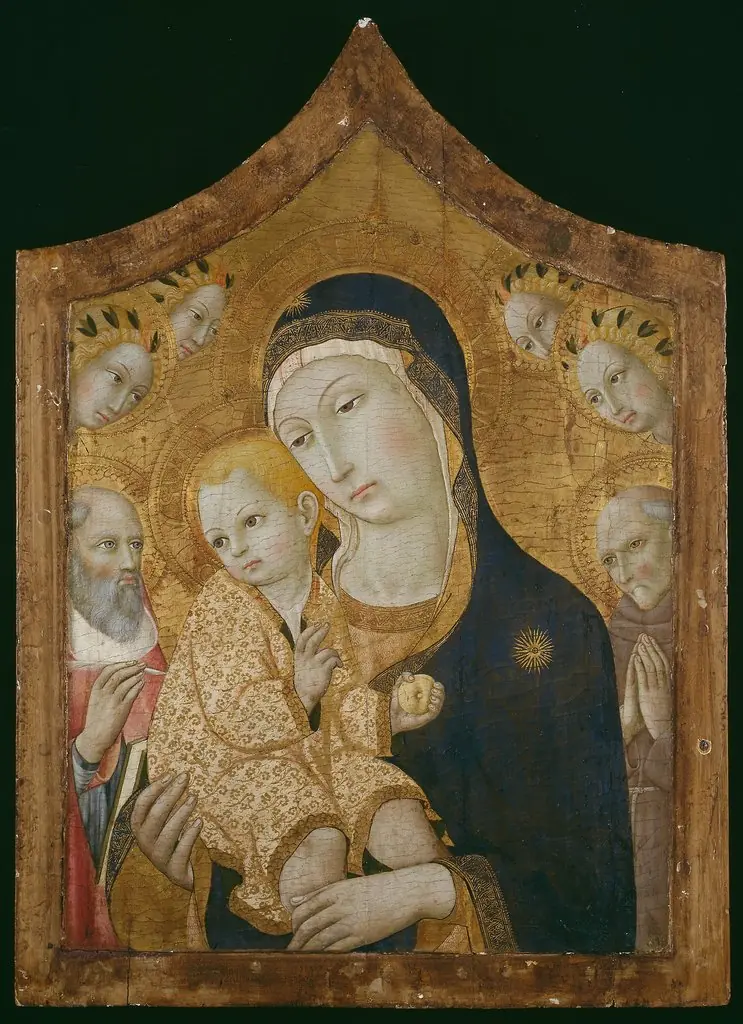 Virgin and Child with Saints Jerome, Bernardino of Siena, and Angels