Artwork
Thames Fisherman
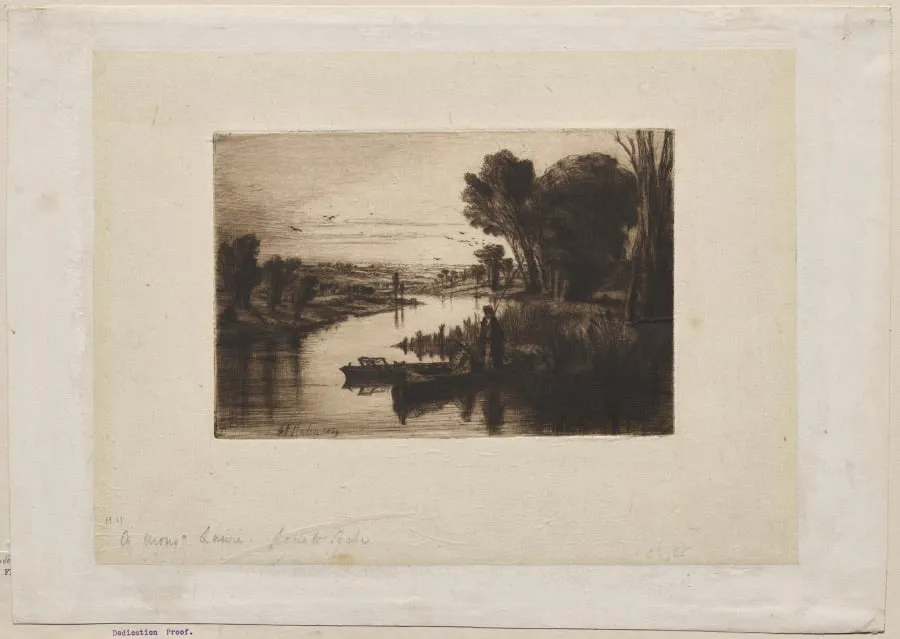
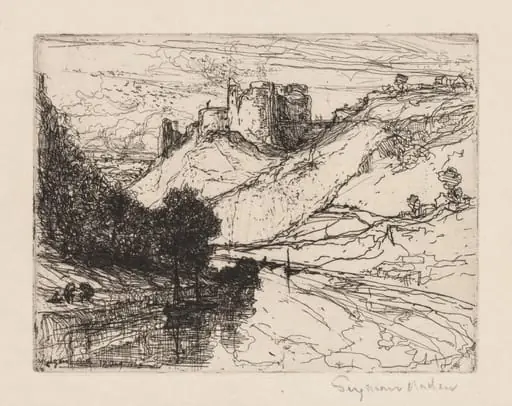
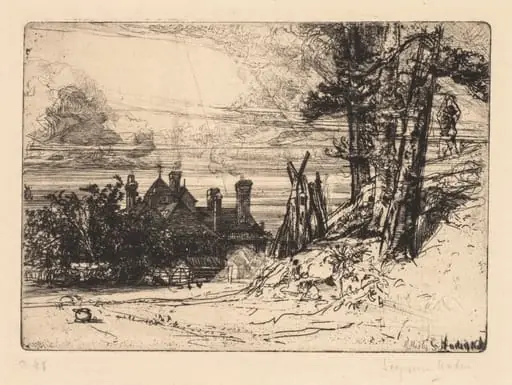
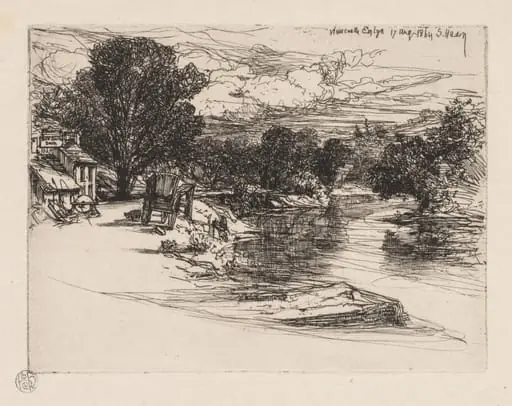
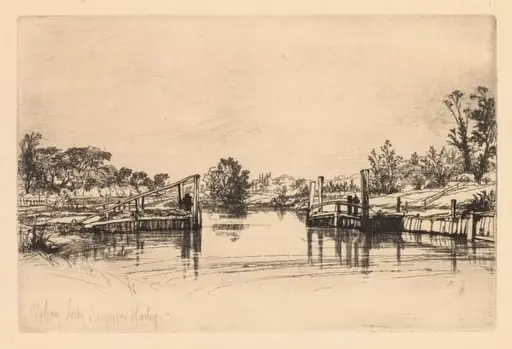
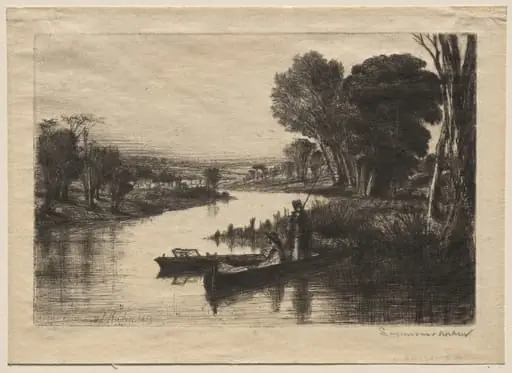
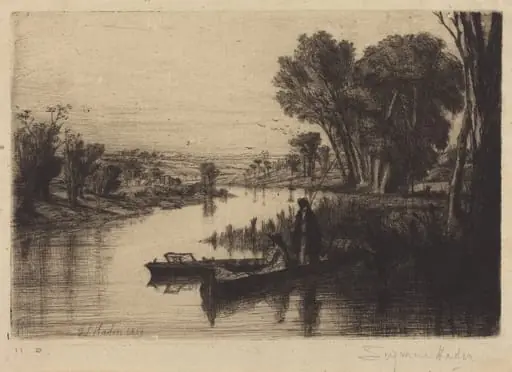
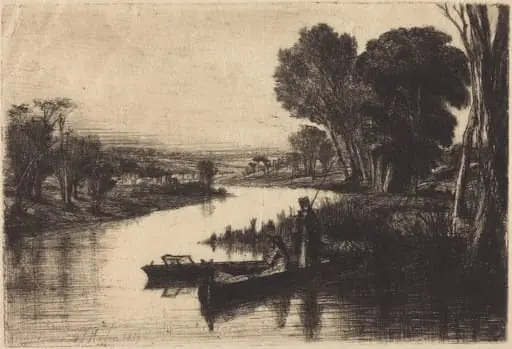
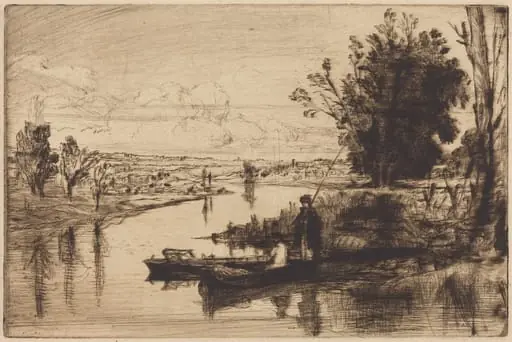
Thames Fisherman is a print by the Impressionist artist Francis Seymour Haden. It dates from 1859 and is held in the collection of the Cleveland Museum of Art.
- Accession no.
- 1947.393
- Credit line
- Gift of Leonard C. Hanna Jr.
About this work
Overview
The work is part of the collection at The Cleveland Museum of Art and exemplifies Haden’s interest in capturing subtle atmospheric effects through printmaking.
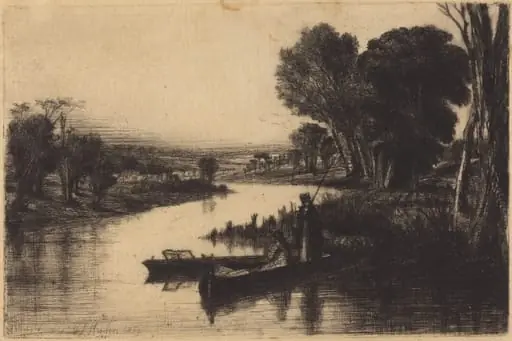
Thames Fisherman is a black-and-white etching by Francis Seymour Haden, completed in 1859. It depicts a solitary figure in a small boat near the riverbank, surrounded by quiet natural elements. The work is part of the collection at The Cleveland Museum of Art and exemplifies Haden’s interest in capturing subtle atmospheric effects through printmaking. Its restrained palette and composed stillness reflect the aesthetic priorities of mid-nineteenth-century British etchers.
Subject & Meaning
The scene portrays an ordinary moment of river life: a fisherman at rest, his vessel gently anchored beside the shore. No dramatic action is present, emphasizing instead the quiet rhythm of daily labor. The isolation of the figure and the muted environment suggest contemplation, aligning the image with a broader cultural interest in the dignity of ordinary existence during the Industrial Age.
Technique & Style
Haden employed etching to achieve delicate tonal gradations, using fine lines and soft washes to render mist, water, and foliage. The composition avoids sharp contrasts, favoring a hazy equilibrium between land, water, and sky. This approach reflects his commitment to the drypoint and etching revival, where technical precision served emotional restraint rather than dramatic effect.
History & Provenance
Created in 1859, the print emerged during Haden’s most active period as an etcher, before he turned fully to medical practice. It entered The Cleveland Museum of Art’s collection through established acquisition channels in the twentieth century. The work has remained largely unaltered since its creation, preserving the original plate’s subtle textures and atmospheric intent.
Context
Thames Fisherman aligns with the rise of Realism in British art, where artists turned from idealized subjects to scenes of everyday life. Haden’s focus on the Thames River, then a working waterway, echoes contemporaneous efforts by painters and printmakers to document the changing landscape and labor of the English countryside amid urban expansion.
Legacy
Haden’s etchings, including this one, influenced later generations of printmakers who valued tonal nuance over bold line work. Though not widely exhibited during his lifetime, his technical innovations helped elevate etching as a serious artistic medium in Britain. Thames Fisherman remains a quiet testament to his belief in the expressive potential of understated observation.
Artist & collection