Artwork
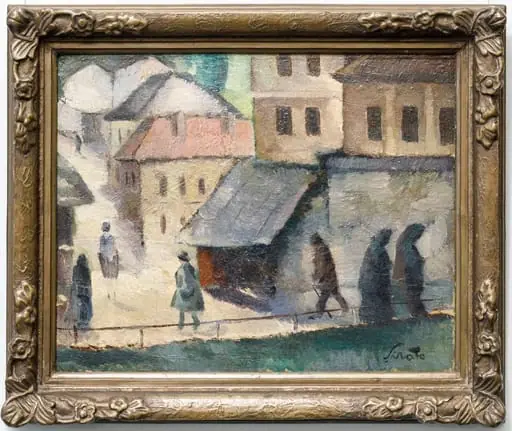
Stradă din Balcic după ploaie
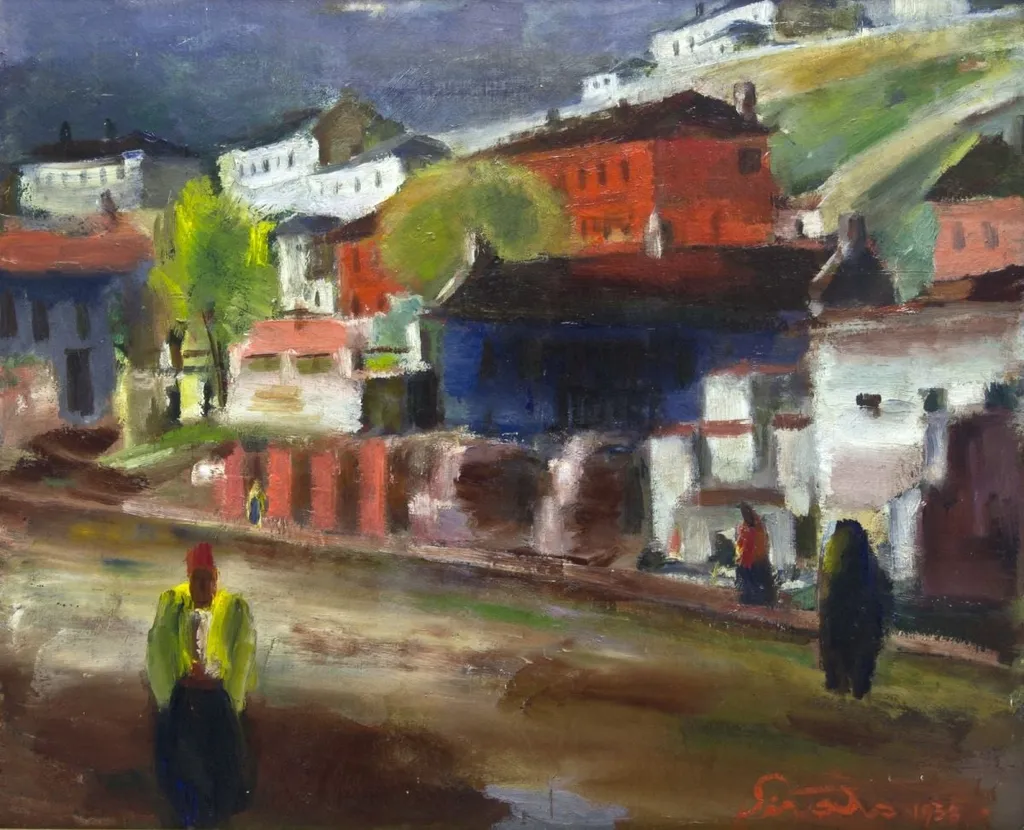
Stradă din Balcic după ploaie is an unspecified painting by Francisc Șirato. It dates from 1938 and is held in the collection of the National Museum of Art of Romania.
About this work
Overview
Șirato employs a palette of bright, saturated hues to convey the luminosity of wet surfaces and the clarity of the air following precipitation.
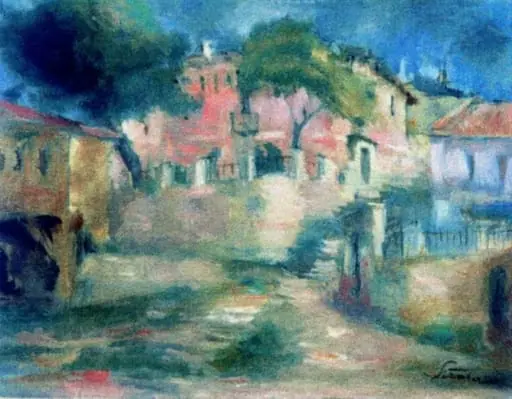
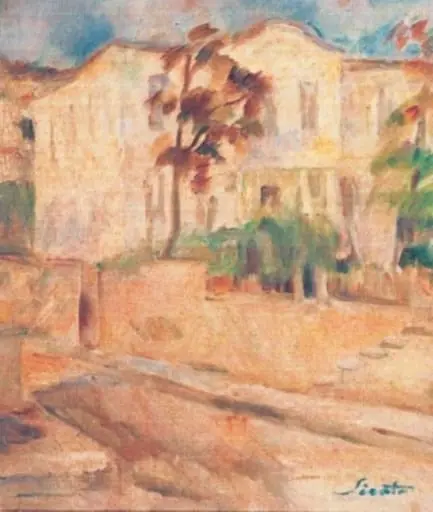
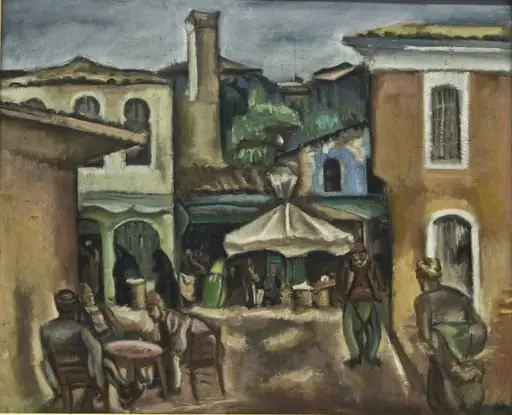
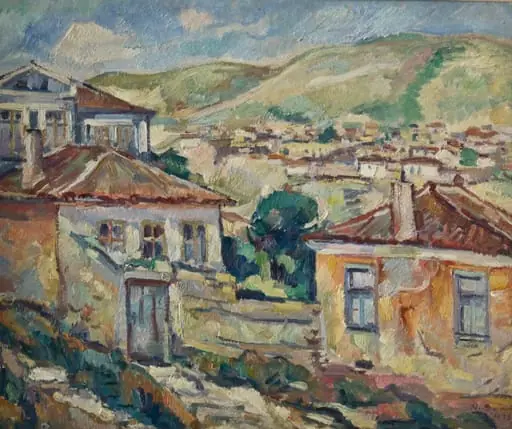
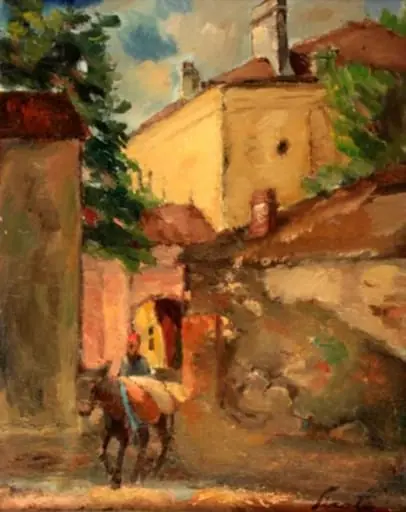
Stradă din Balcic după ploaie (Street in Balcic after Rain), painted by Francisc Șirato in 1938, captures a post-rainfall scene in the coastal town of Balcic, then part of Romania. The composition depicts a narrow street flanked by buildings with distinct red and white facades and dark, sloping roofs, reflecting the local architecture of the Dobruja region. Șirato employs a palette of bright, saturated hues to convey the luminosity of wet surfaces and the clarity of the air following precipitation. Small figures clad in coats traverse the sidewalk, adding a sense of scale and daily life to the urban landscape.
Executed with thick, visible brushstrokes, the work emphasizes texture and the tactile quality of the environment, characteristic of Șirato's mature style which blends Impressionist light effects with a robust, graphic sensibility. Created during a period when the artist frequently returned to Balcic, a location that profoundly influenced his coloristic approach, this painting stands as a significant example of his dedication to capturing the specific atmosphere of the Romanian Black Sea coast. It reflects his broader contribution to 20th-century Romanian art, where he merged national themes with modernist techniques to elevate local scenery into a universal visual language.
Subject & Meaning
The work portrays the transformative effect of rain on everyday life, emphasizing how water alters colour, texture and atmosphere. The contrast between the bright yellow coat of a lone figure on the left and the surrounding muddy tones underscores a moment of individual resilience amid a collective, damp environment. The scene suggests both the melancholy of a post‑storm city and the quiet continuity of daily routines.
Technique & Style
Șirato employs a pronounced impasto technique, laying on thick, tactile brushstrokes that give the wet surfaces a palpable depth. Bold, saturated hues, particularly the vivid yellows and reds, are juxtaposed with darker, more subdued tones, creating a dynamic visual rhythm. The visible texture of the paint enhances the sense of moisture and movement, while the overall handling remains expressive rather than strictly realistic.
History & Provenance
Created in the interwar period, the painting reflects Șirato’s interest in Romanian urban landscapes during a time of rapid social change. It entered private collections shortly after its completion and has since been exhibited in several retrospectives of the artist’s oeuvre, serving as a representative example of his late‑1930s output.
Context
Balcic, a seaside resort on the Black Sea coast, was a popular destination for artists and intellectuals in the early twentieth century. Șirato’s depiction of a rain‑slicked street situates the work within a broader tradition of Romanian painters documenting regional life, while also resonating with European trends toward atmospheric urban scenes, as seen in the works of contemporaries such as Luchian and Brâncuși’s early figurative period.
Artist & collection
Artist
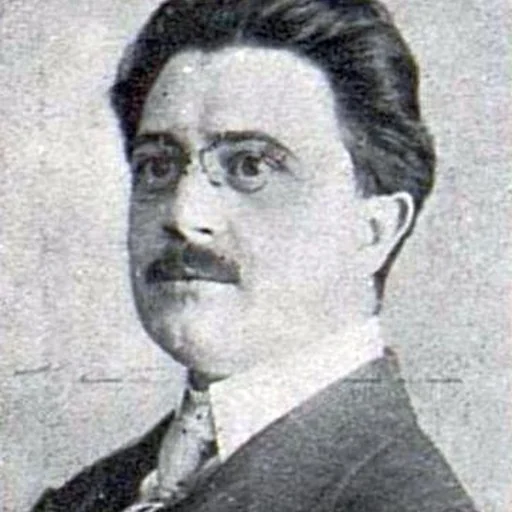
Francisc Şirato (15 August 1877-4 August 1953) was a Romanian painter, graphic artist, art critic, and designer.