Artwork
View of Olinda, Brazil
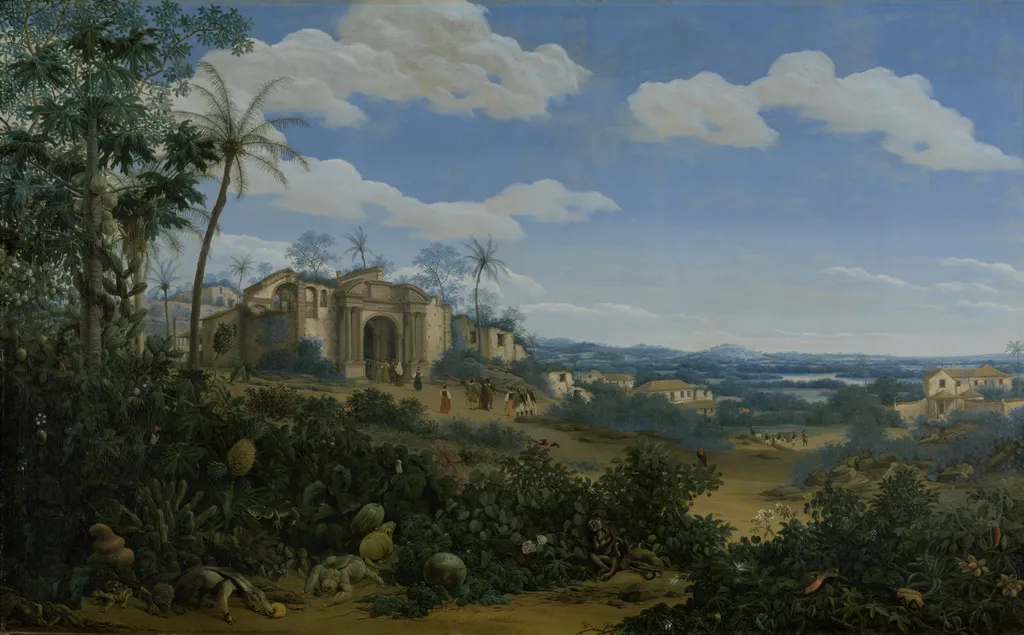
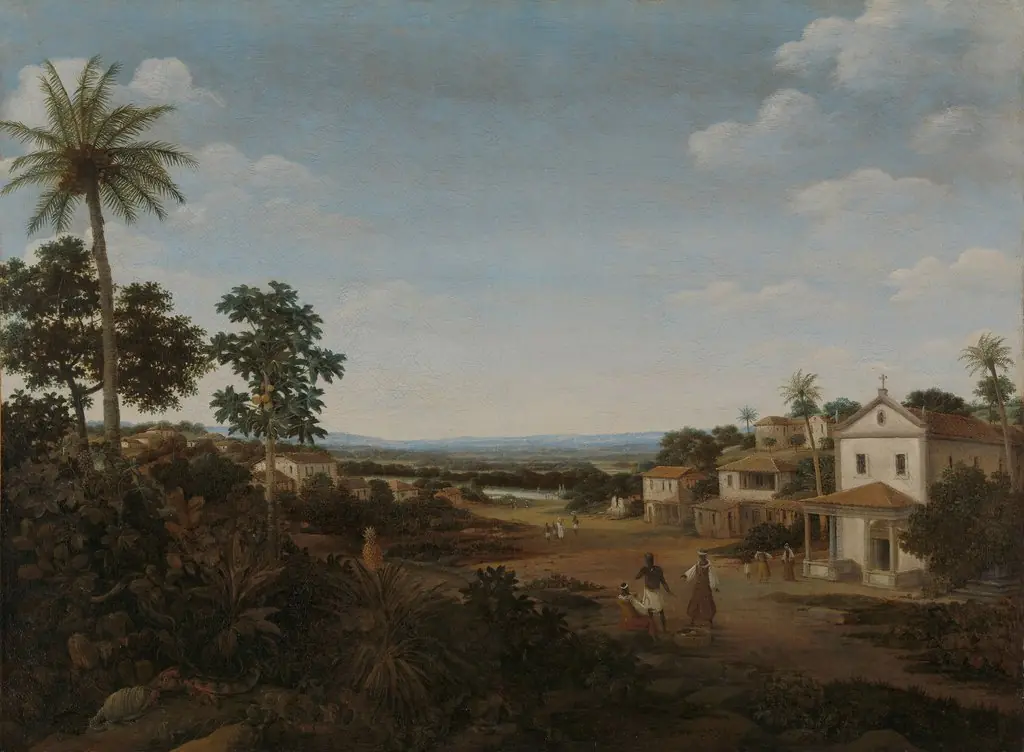
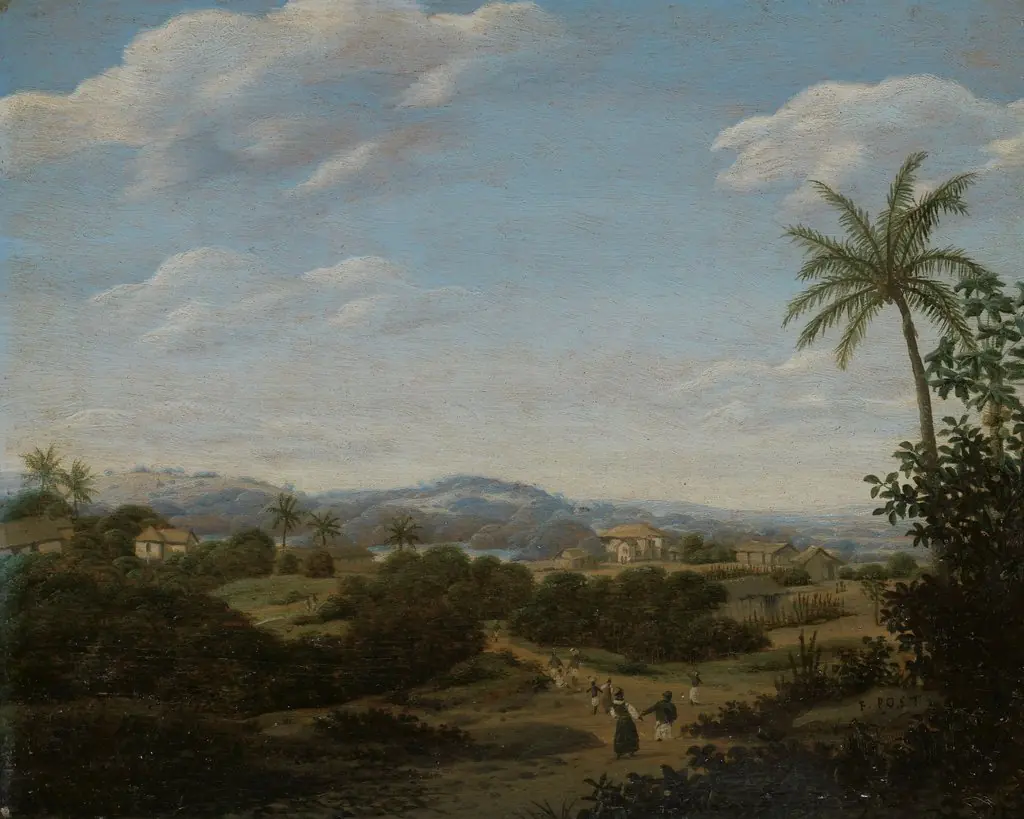
View of Olinda, Brazil is an oil painting by the Dutch Golden Age artist Frans Post. It dates from 1662 and is held in the collection of the Rijksmuseum.
About this work
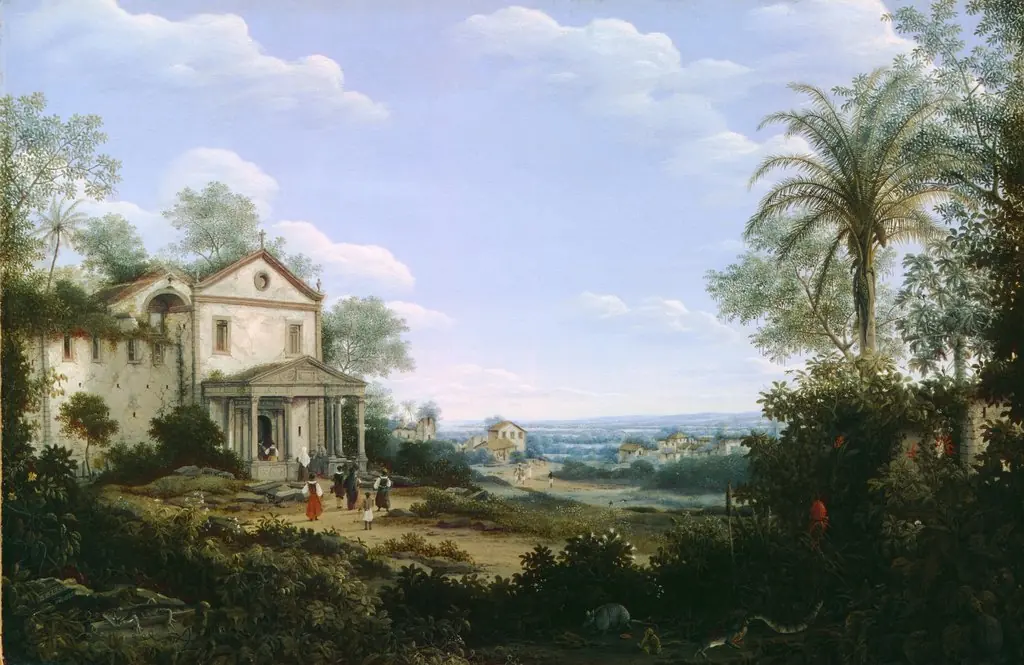
It shows the ruined Olinda Cathedral after Dutch forces took control of the area.
Frans Post painted View of Olinda, Brazil in 1662. It shows the ruined Olinda Cathedral after Dutch forces took control of the area. The work is an oil painting with a frame covered in nature motifs.
Post painted this while traveling with John Maurice of the WIC. The scene mixes European and Brazilian plants and animals he sketched from life.
Look up the Rijksmuseum to see this painting in person.
Subject & Meaning
The painting depicts the ruins of Olinda Cathedral, illustrating the damage sustained when Dutch forces seized territory from the Portuguese. This imagery of broken stone pillars and dilapidated structures amidst lush tropical vegetation serves as a complex symbol of colonial conflict and transition. While intended to celebrate Dutch pride and colonization, the work ironically centers on Portuguese-built architecture within a Brazilian landscape.
The foreground teems with specific fauna, including sloths, armadillos, and anteaters, alongside a mix of flora native to Brazil, Europe, and Africa. This botanical convergence represents the global reach of Dutch colonial interests. The human figures further articulate social hierarchies, showing Portuguese colonizers, enslaved Africans carrying a palanquin, and Dutch observers, thereby documenting the multicultural yet stratified society of the occupied region.
Technique & Style
The work is executed in oil on canvas, measuring roughly 107.5 cm by 172.5 cm. Post applied thin, translucent layers to achieve atmospheric perspective, rendering distant terrain with a muted, bluish tone while foreground vegetation is rendered in dense, varied greens. The composition combines European compositional conventions with meticulous observation of Brazilian flora and fauna, including an iguana, armadillo and sloth, each rendered naturalistically. The original frame, carved with mixed European and exotic motifs such as laurel, acanthus and tropical plants, frames the scene.
The painting’s surface remains intact, preserving the original brushwork and the subtle inscription of the artist’s name on a gourd in the lower left foreground.
History & Provenance
View of Olinda, Brazil was painted by Frans Post in 1662, roughly eighteen years after the artist returned to Haarlem from the Dutch Brazilian colony, where he had traveled in 1637 as part of Johan Maurits's entourage of artists and naturalists. The work was produced from drawings and studies Post had made during his time in Brazil, well after the Dutch occupation had ended, and it belongs to a body of roughly 155 oils he completed over subsequent decades based on his Brazilian subjects. No contemporary commission or patron for the canvas is documented in the available sources.
The painting is now held by the Rijksmuseum, and a recorded prior owner is Cornelia Elisabeth Anna de Lange. The work retains its original frame, which is believed to have been made specifically for this painting by an unknown maker and is carved with naturalistic motifs drawn from Post's imagery and contemporary natural-history illustrations.
View of Olinda, Brazil is held in the collection of the Rijksmuseum. The painting was previously owned by Cornelia Elisabeth Anna de Lange. No specific inventory or accession numbers are recorded in the available sources. Similarly, no exhibition history for the work is documented in the provided sources.
Overview
Frans Post's 1662 oil painting, View of Olinda, Brazil, presents a landscape from the Americas. As a Dutch artist, Post was among the earliest European painters to capture the scenery of the New World. The work offers a perspective on the Brazilian region of Olinda, specifically depicting its cathedral in a state of disrepair.
This piece is notable for its detailed rendering of local wildlife and vegetation, drawn from the artist's direct observations during his travels.
Context
Frans Post created this work following his journey to Brazil, where he accompanied John Maurice of Nassau, then governor of Dutch Brazil for the Dutch West India Company. His presence in the region allowed him to witness and record the landscapes and natural life firsthand. The depiction of Olinda's ruined cathedral serves as a visual testament to the territorial struggles between the Dutch and Portuguese during the colonial period, capturing a specific moment in the region's contested history.
Own this work as a print
Artist & collection
Artist
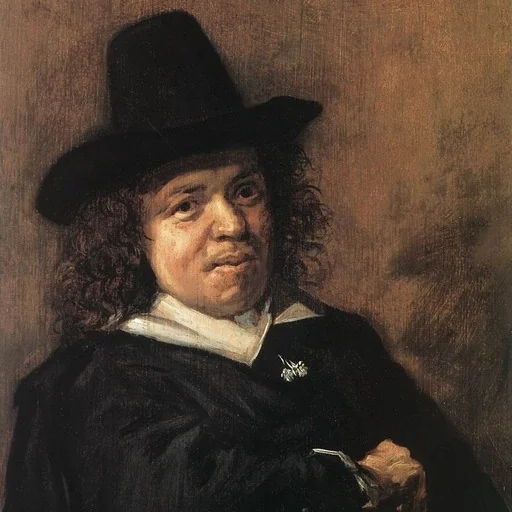
Frans Janszoon Post (17 November 1612 – 17 February 1680) was a painter during the Dutch Golden Age.