Artwork
Still Life with Nautilus Cup
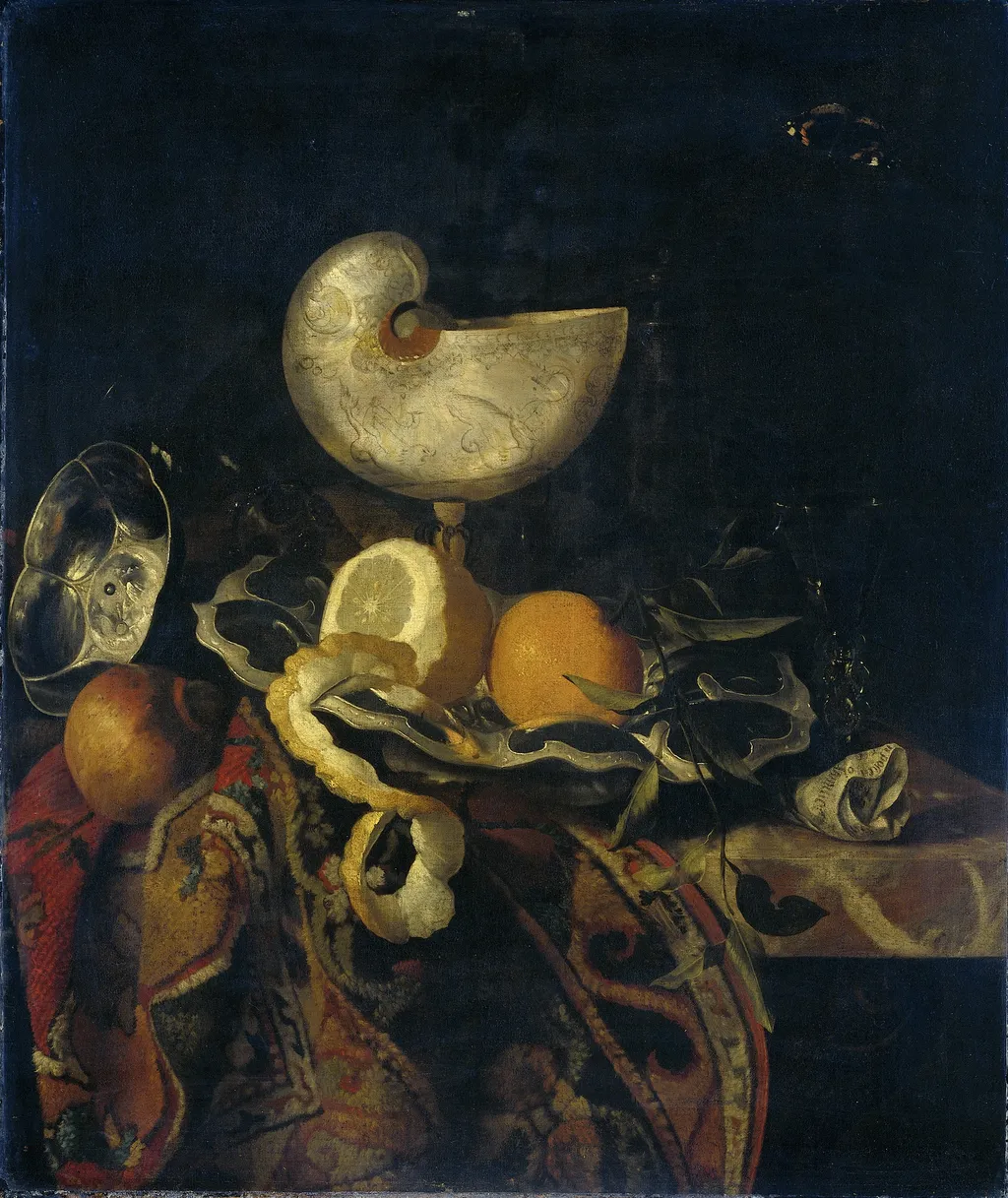
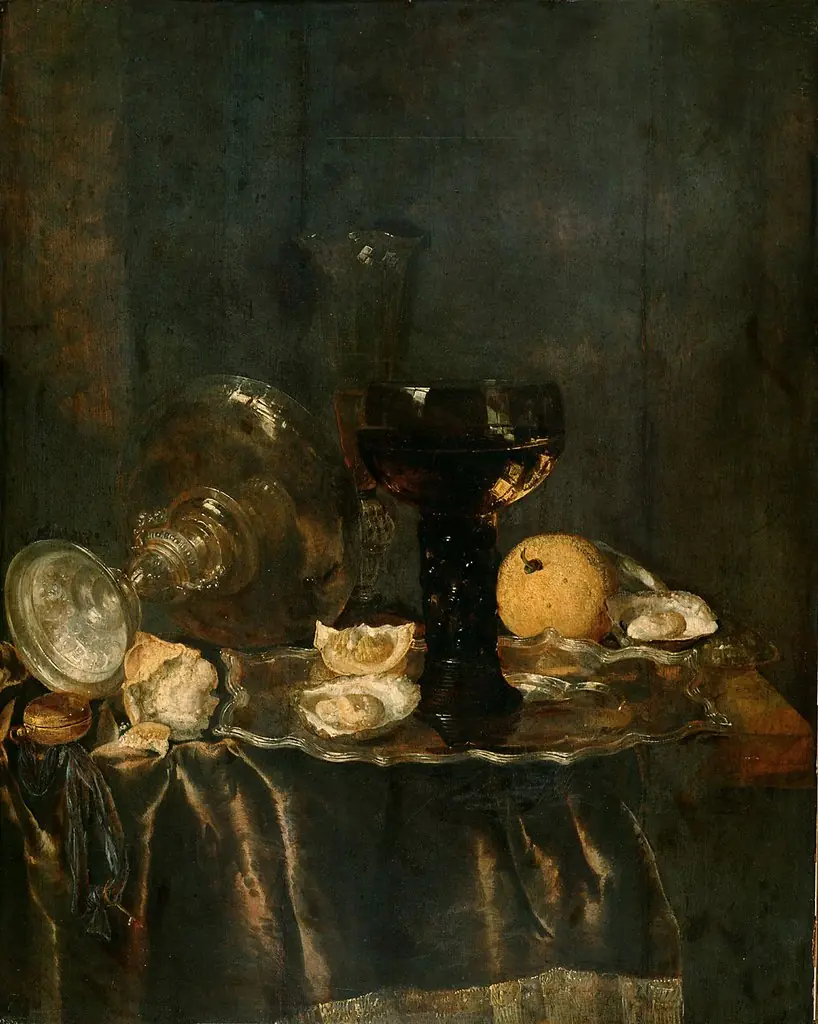
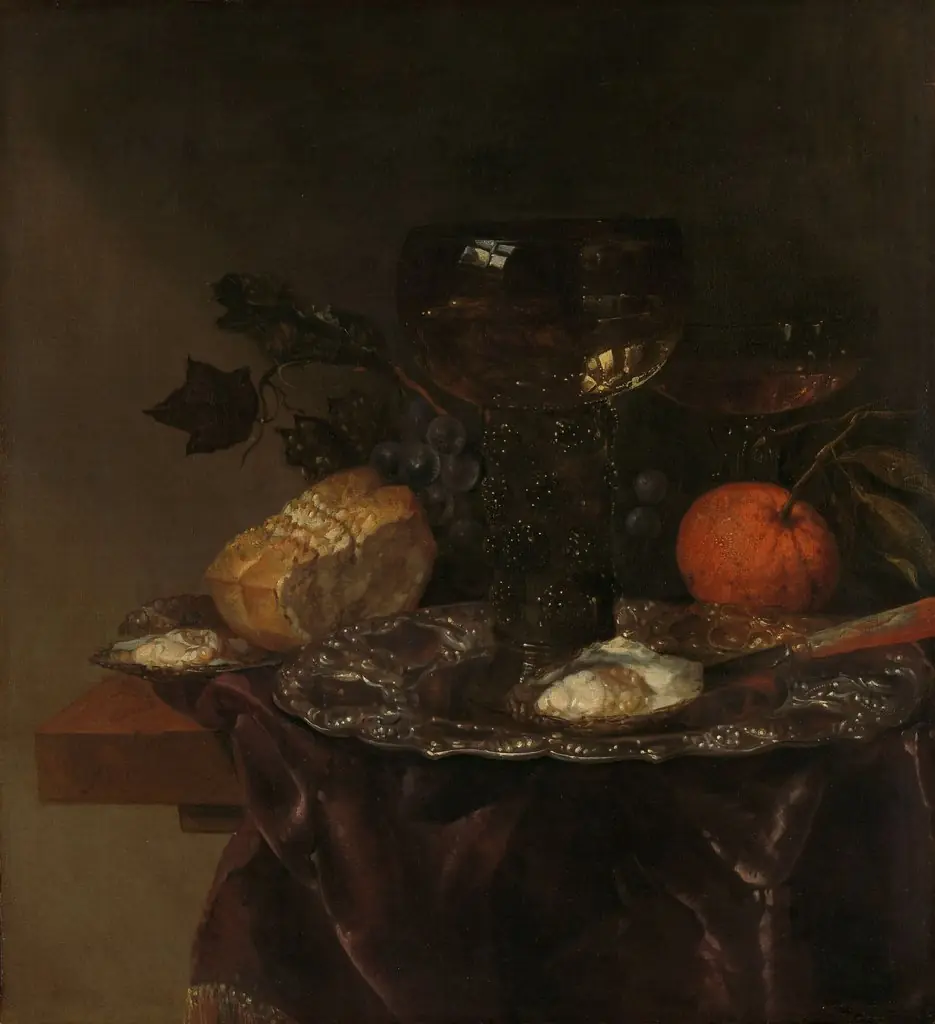
Still Life with Nautilus Cup is an oil painting by the Dutch Golden Age artist Frans Sant-Acker. It dates from 1650 and is held in the collection of the Rijksmuseum.
About this work
Technique & Style
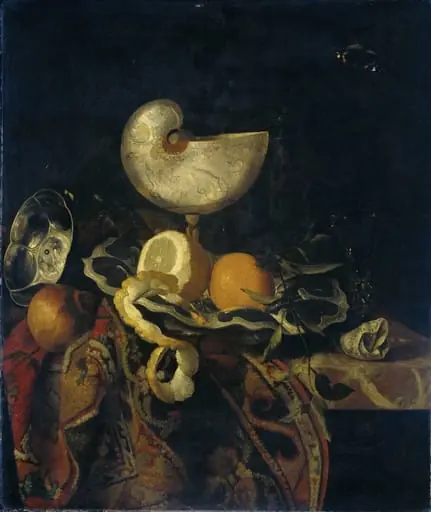
Executed in 1650, this still life by Frans Sant-Acker is an oil painting on canvas. The work measures 66 cm in height and 56.5 cm in width. As a representative example of the genre, the composition focuses on the depiction of a nautilus cup, utilizing the textural capabilities of oil paint to render the subject's intricate details.
History & Provenance
The provided sources do not document a specific inventory or accession number for the work, nor do they record any exhibition history.
The painting Still Life with Nautilus Cup was created by Frans Sant-Acker in 1650. Executed in oil on canvas, the work measures 66 cm in height and 56.5 cm in width. It currently resides in the collection of the Rijksmuseum.
The provided sources do not contain specific details regarding the original commission, the initial ownership, or a detailed chain of custody prior to its arrival at the museum.
Still Life with Nautilus Cup is held in the collection of the Rijksmuseum in Amsterdam. The painting's location is recorded there, and it is part of the museum's holdings as a work by Frans Sant-Acker, dated 1650 and executed in oil paint on canvas, measuring 66 by 56.5 cm.
The provided sources do not document a specific inventory or accession number for the work, nor do they record any exhibition history.
Context
Still Life with Nautilus Cup, painted by Frans Sant-Acker in 1650, exemplifies Dutch Golden Age still-life genre conventions through its meticulous depiction of a nautilus shell cup rendered in oil on canvas, reflecting contemporary scientific curiosity about natural specimens, as documented in the Rijksmuseum's collection metadata and scholarly cataloging of the artist's oeuvre, situating the work within the painter's broader exploration of botanical and marine subjects within the established still-life tradition of 17th-century Holland, where such compositions served both decorative and intellectual purposes, demonstrating the era's fusion of artistic skill with emerging empirical observation, and the painting's precise rendering of texture and form underscores the technical mastery characteristic of Dutch still-life artists who elevated everyday objects into subjects of aesthetic and scholarly interest, as evidenced by its inclusion in the Rijksmuseum's holdings and its consistent appearance in studies of Dutch Golden Age still-life painting, where it contributes to the narrative of artistic representation intersecting with scientific discovery during the period.
Overview
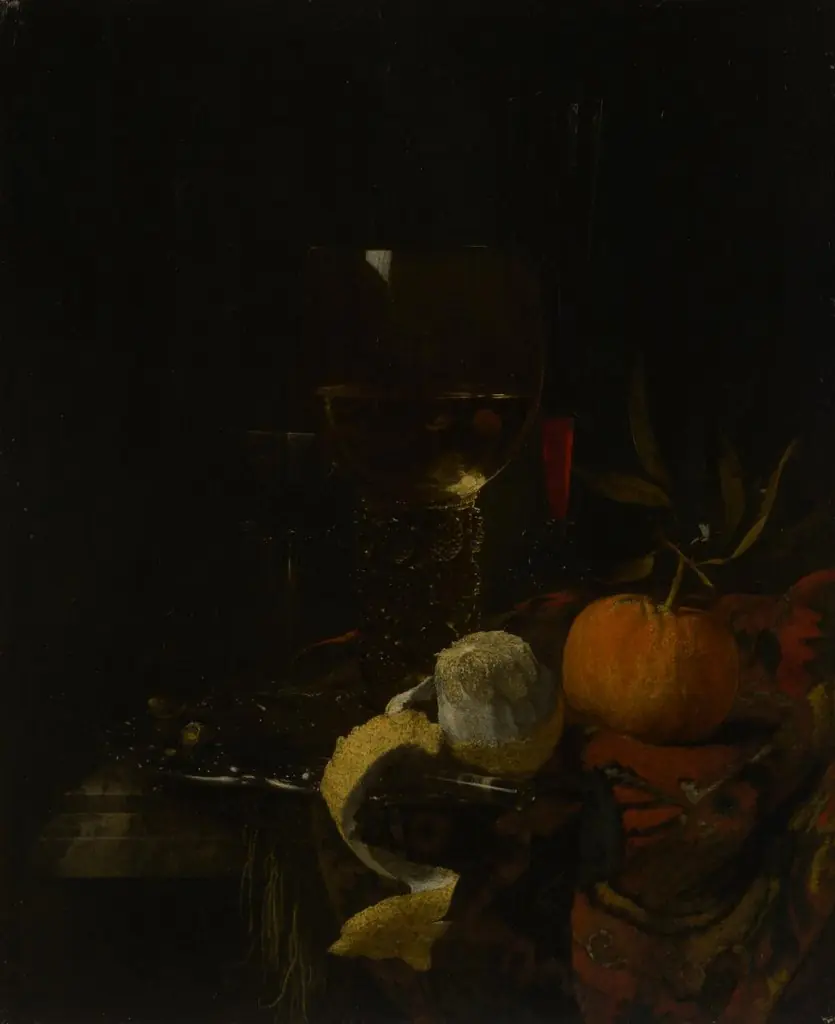
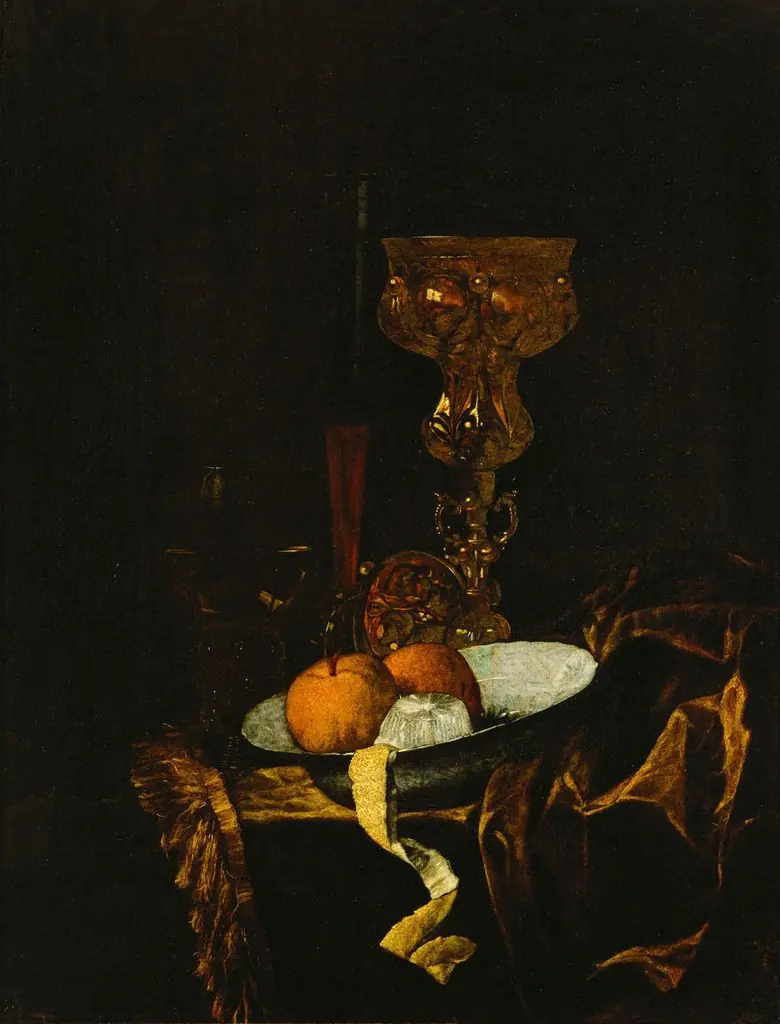
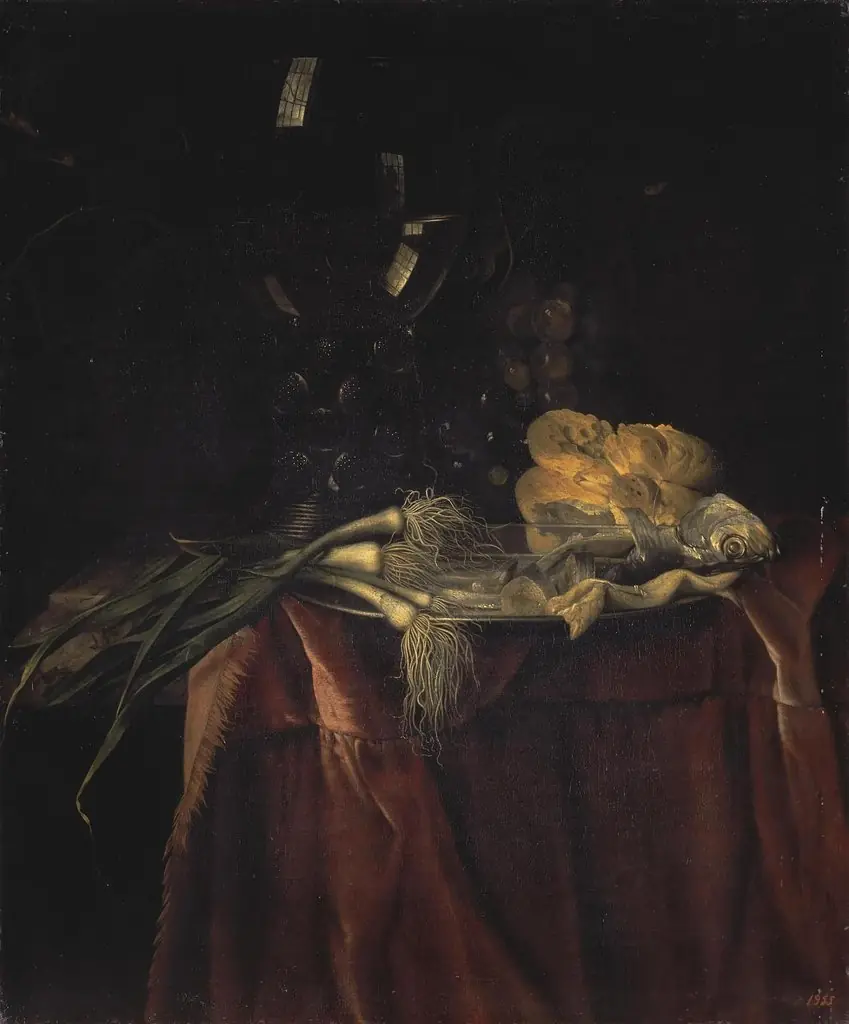
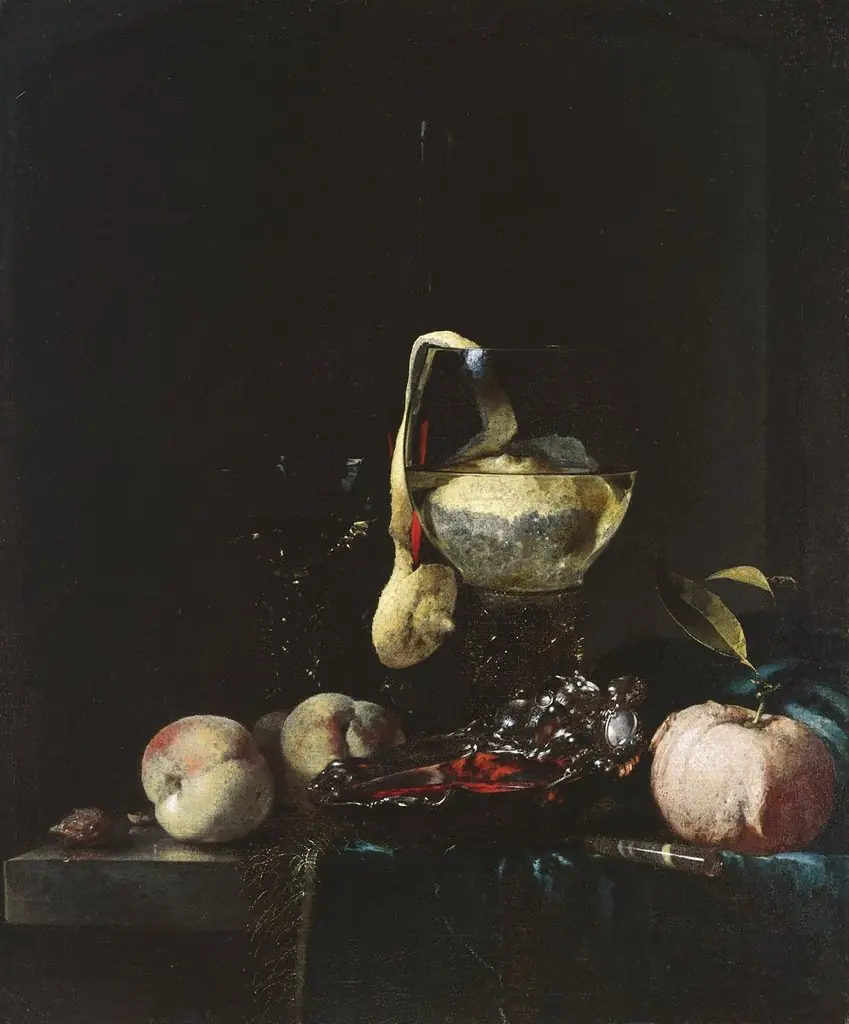
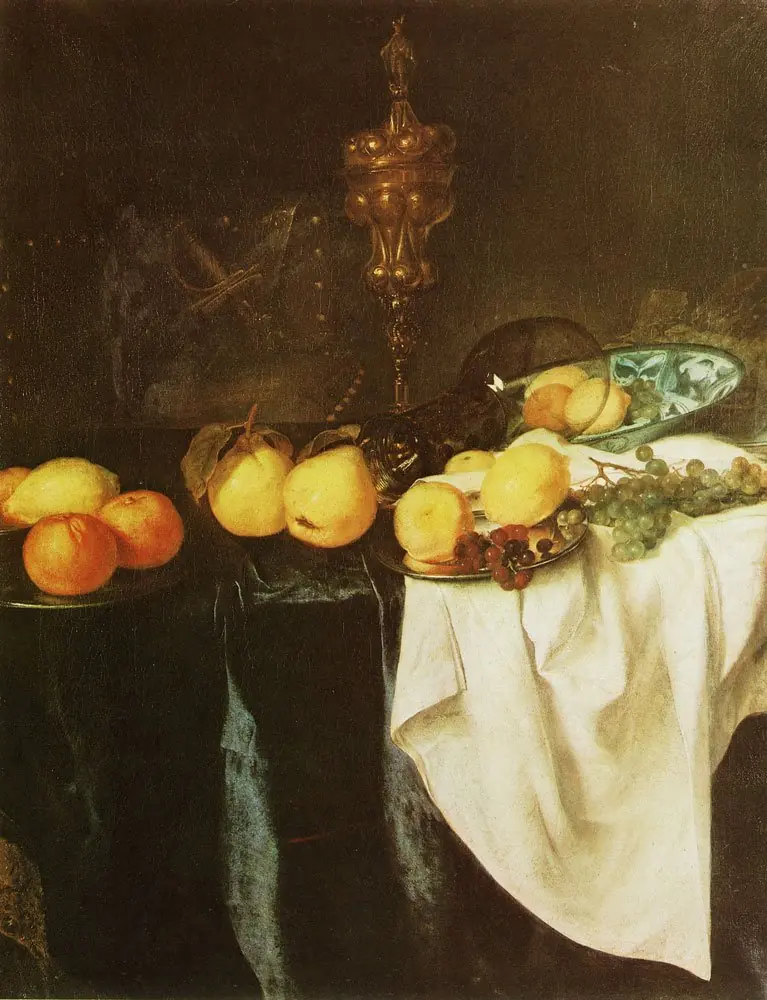
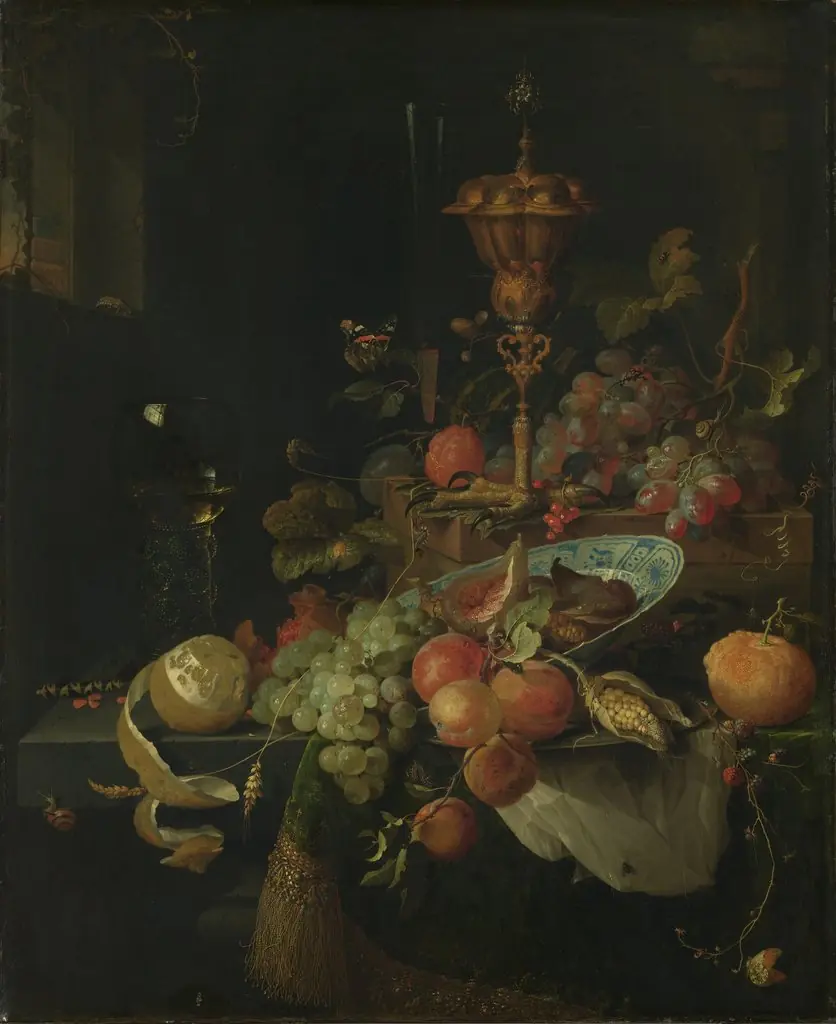
Frans Sant‑Acker’s oil painting, Still Life with Nautilus Cup, dates from around 1650. The composition centers on a carved nautilus cup accompanied by a sliced lemon and an orange, all set upon a richly patterned rug. A deep, shadowed backdrop isolates the objects, drawing the viewer’s eye to their textures and forms. The work is part of the Rijksmuseum’s collection.
Subject & Meaning
The arrangement juxtaposes exotic and everyday items: the spiraled nautilus cup, a symbol of natural wonder, alongside citrus fruits, common motifs in Dutch still lifes that often allude to transience and the senses. The careful placement suggests a study of material wealth and the fleeting pleasures of taste and sight.
Own this work as a print
Artist & collection