Artwork
Still life
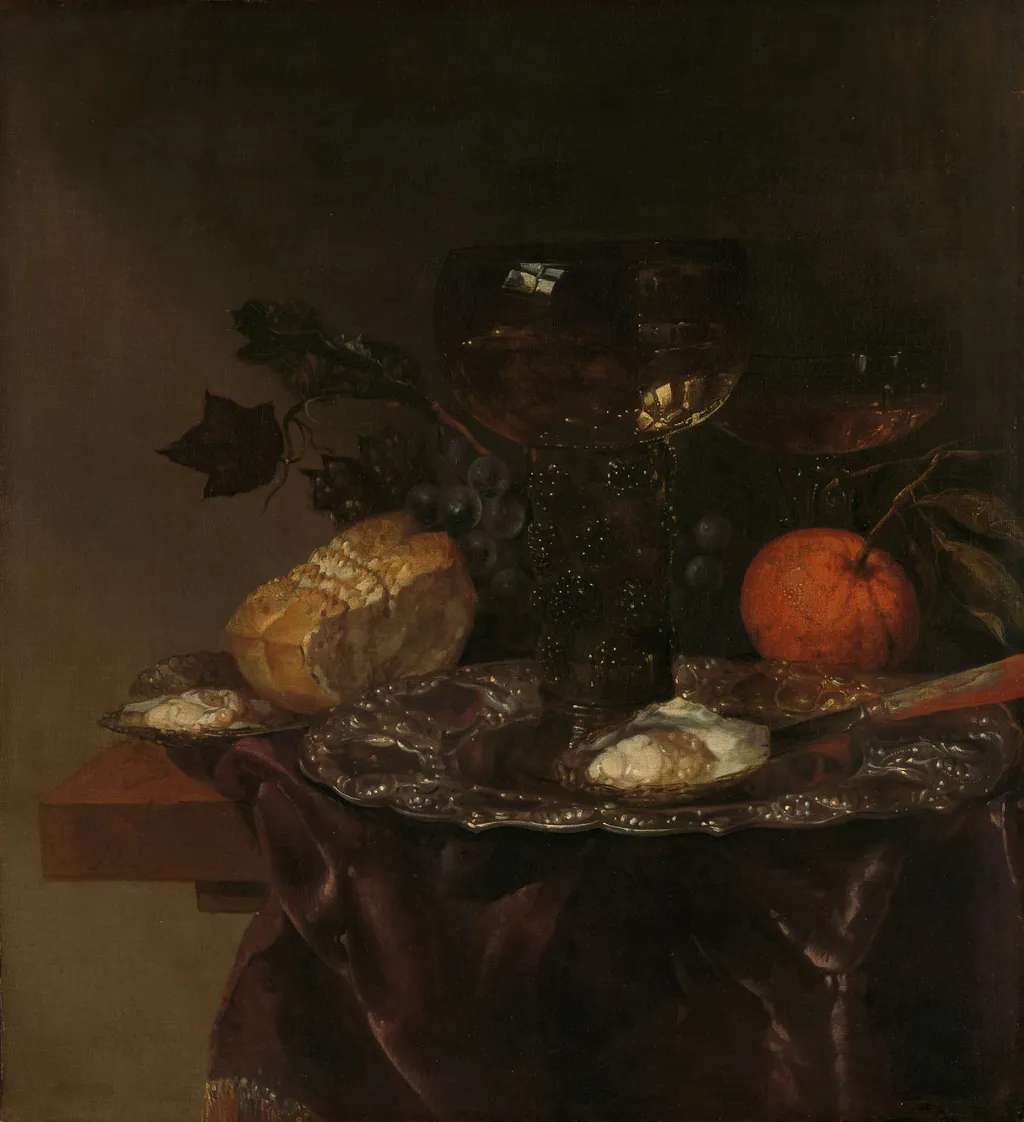
Still life is an oil painting by the Dutch Golden Age artist Abraham van Beijeren. It dates from 1650 and is held in the collection of the Rijksmuseum.
About this work
Subject & Meaning
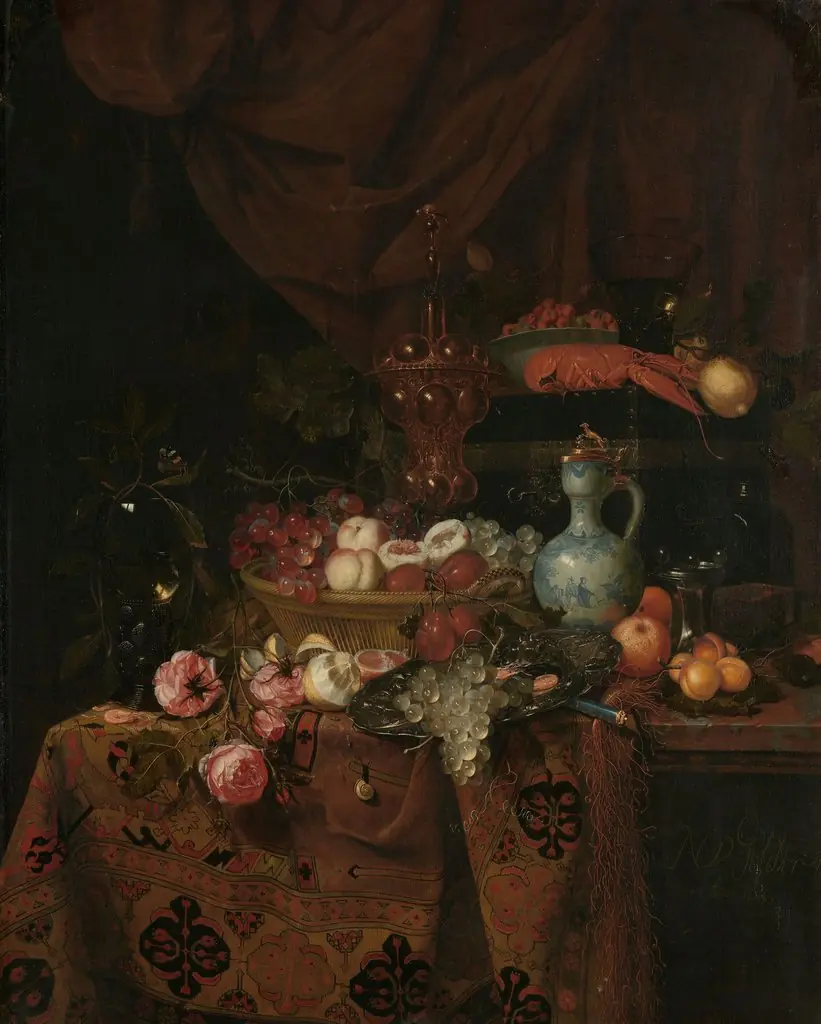
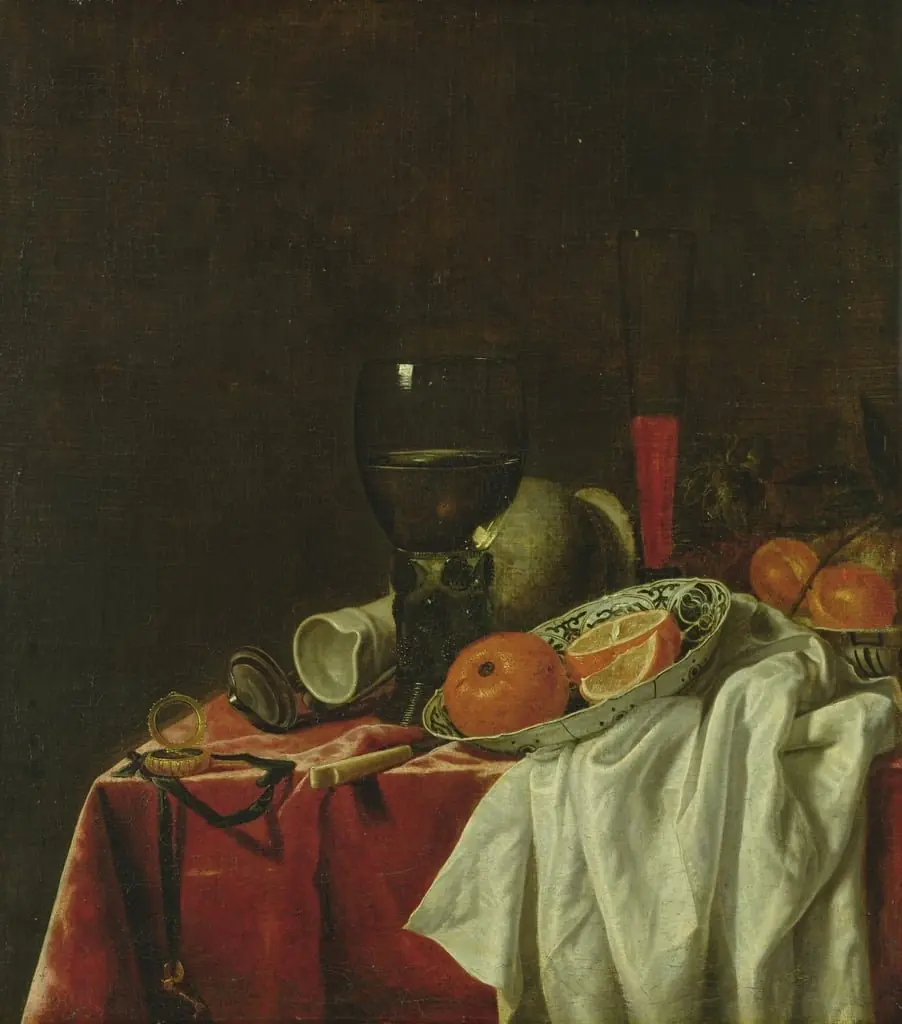
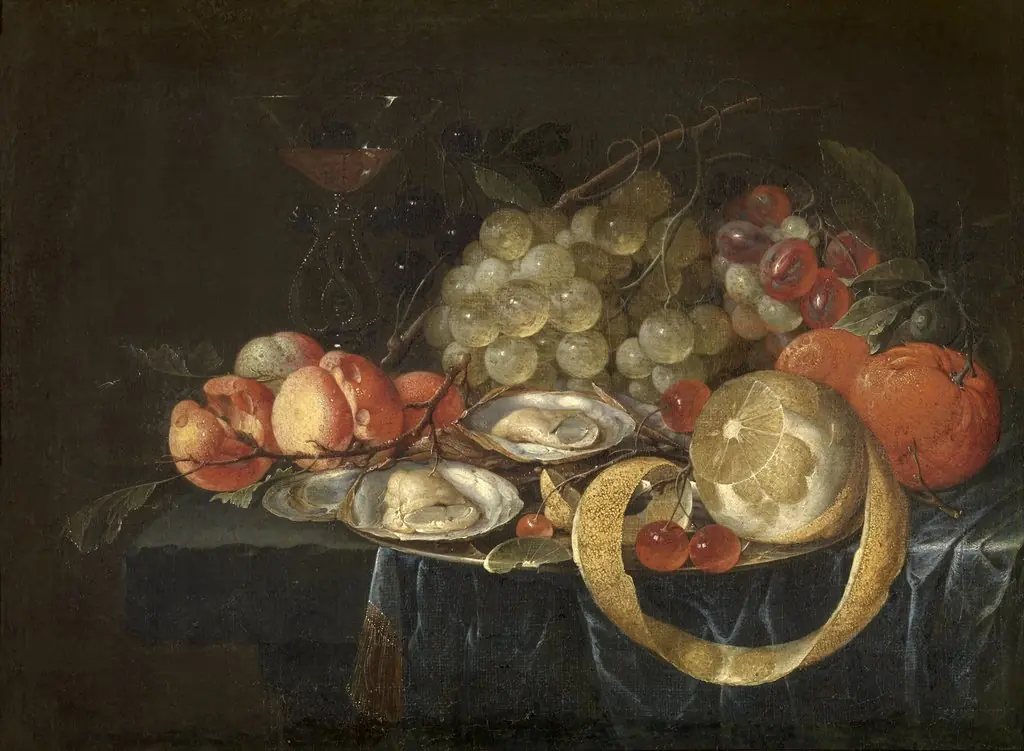
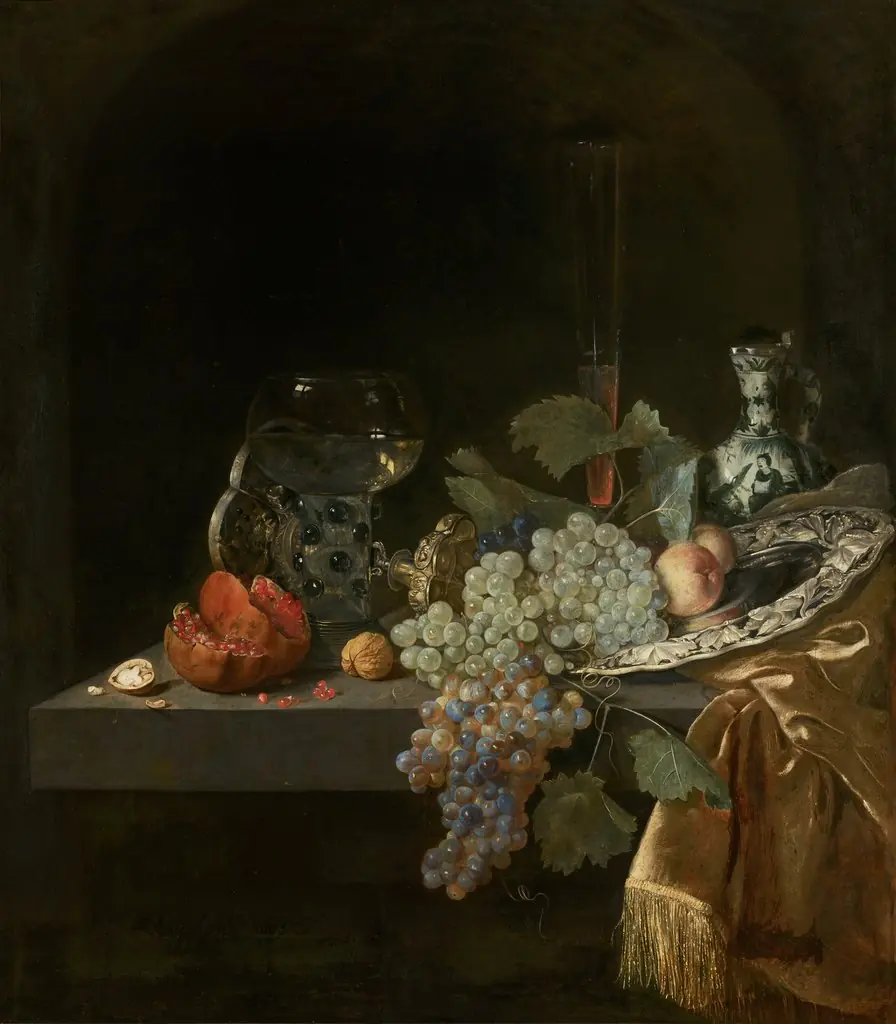
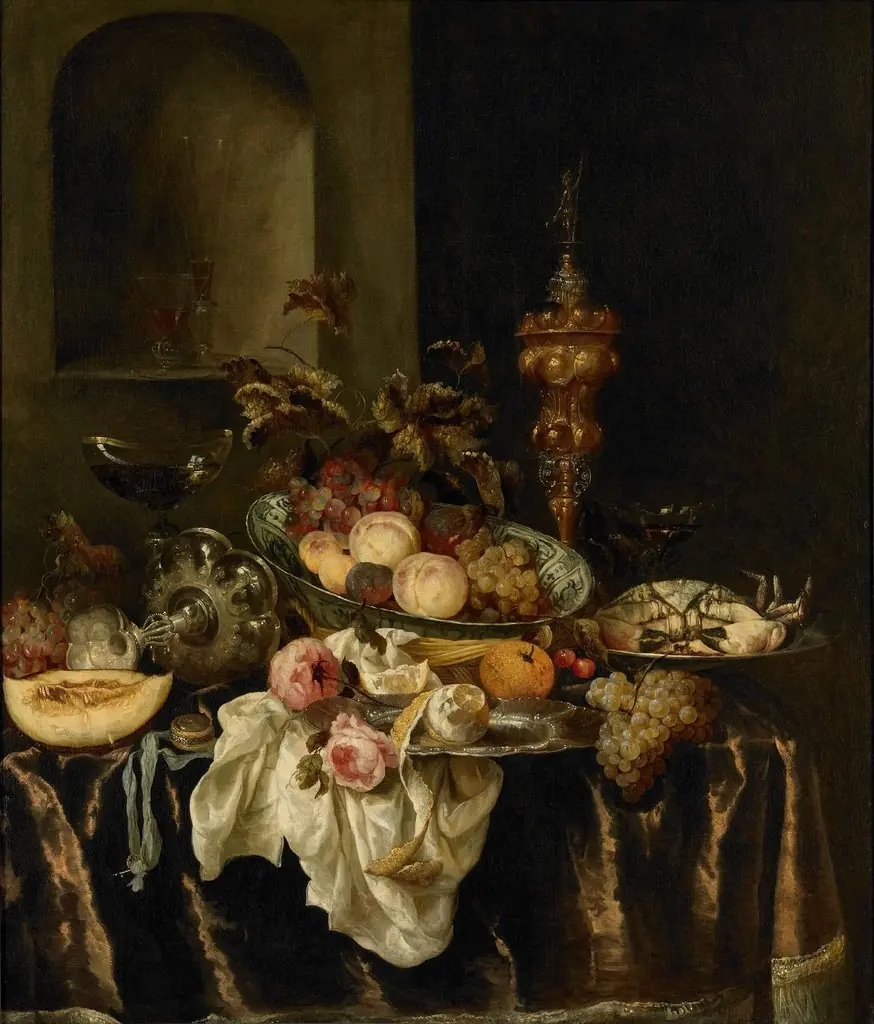
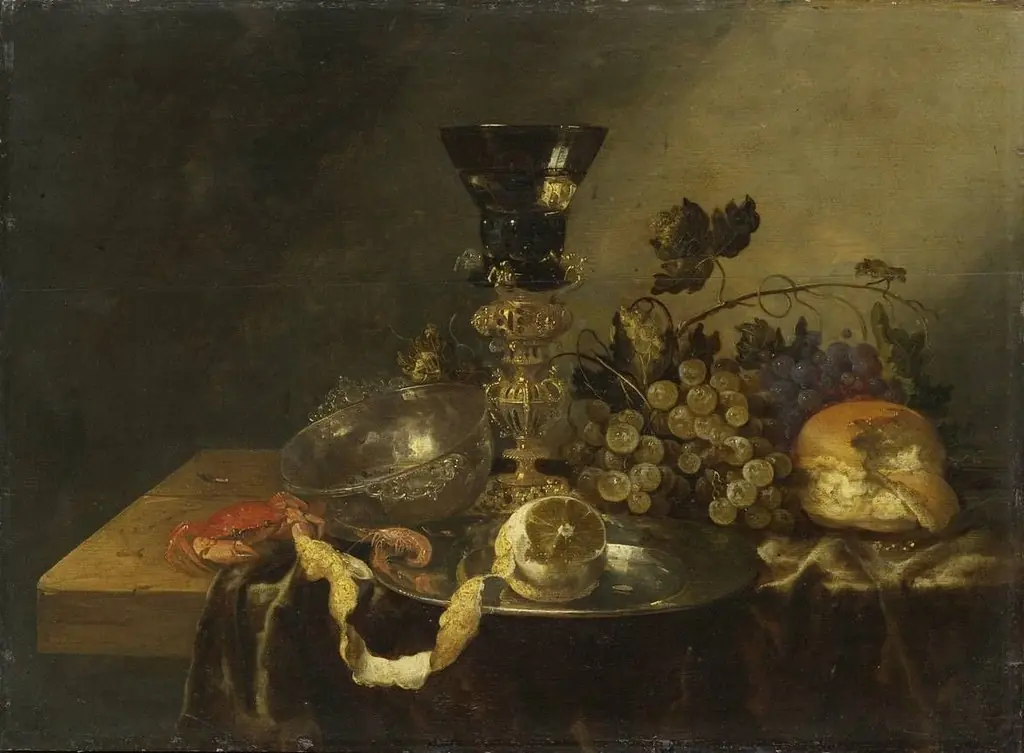
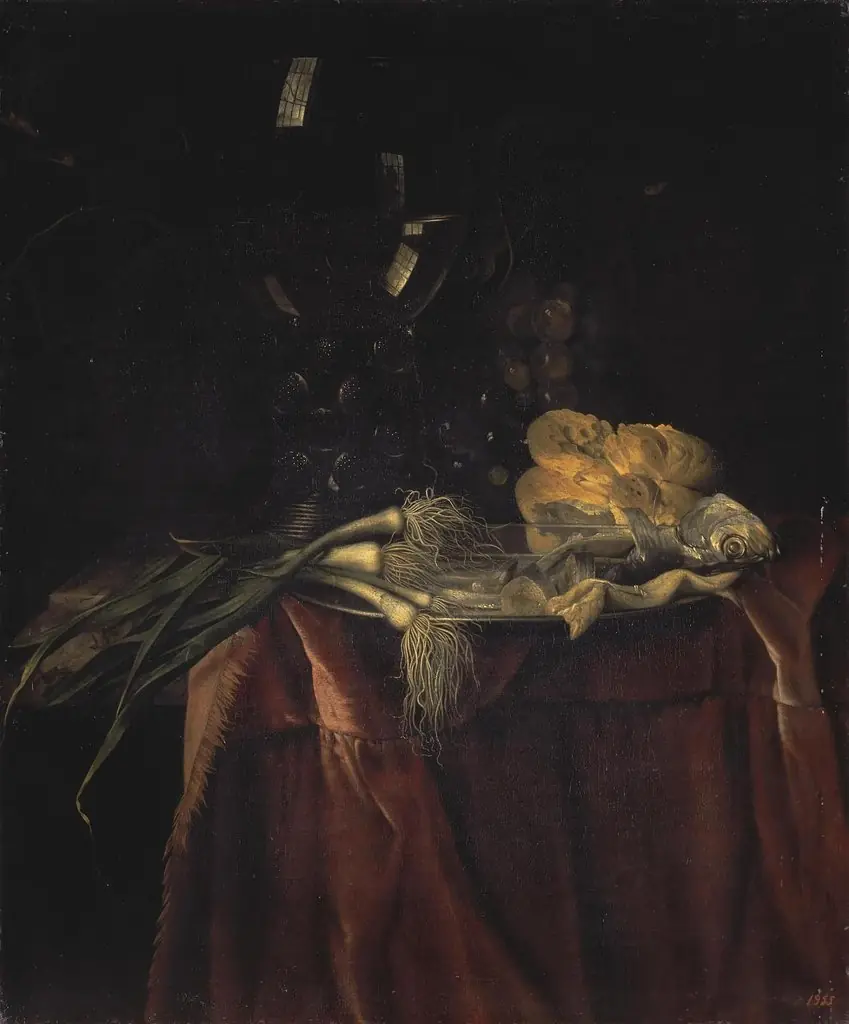
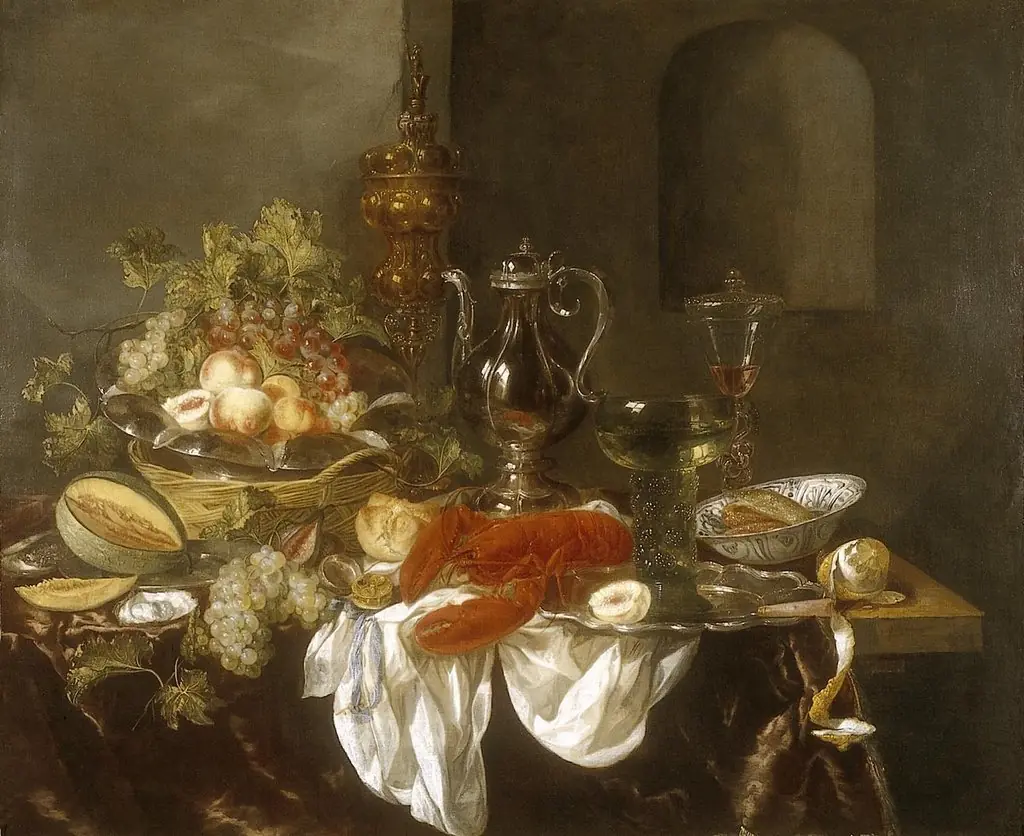
The painting presents a sumptuous arrangement of food and drink on a banquet table, featuring oysters, lobster, lemon, and a partially opened oyster shell, all rendered with meticulous detail and dramatic chiaroscuro. These elements symbolize transience and moral warning, reflecting the vanitas theme common in Dutch Golden Age still lifes, where abundance hints at mortality and the futility of material excess. The work’s composition draws on the tradition of banquet scenes, yet its lavishness is tempered by subtle cues of decay, reinforcing the genre’s didactic purpose.
Technique & Style
Abraham van Beijeren's still life is executed in oil paint on canvas, a standard support for Dutch Golden Age cabinet pictures.
Abraham van Beijeren's still life is executed in oil paint on canvas, a standard support for Dutch Golden Age cabinet pictures. The work measures 57 cm in height by 52.5 cm in width, a modest scale suited to close-range viewing of still-life subjects. Its medium and format are consistent with van Beijeren's broader practice of composing carefully arranged arrangements of objects rendered through oil-based layering on a woven textile ground.
History & Provenance
The painting entered the Rijksmuseum in Amsterdam with inventory number SK-C-1839, where it remains today. Earlier in the twentieth century it was held by the dealer Franz Kleinberger in Paris. The work is dated by the museum to 1650, aligning with the period associated with Abraham van Beijeren’s early still-life production.
A later date of 1663 is also cited, suggesting either a reappraisal of the canvas’s execution or the inclusion of a secondary phase of work.
The painting Still life by Abraham van Beijeren is held in the collection of the Rijksmuseum. While the work's inception is recorded with dates of 1650 and 1663, the museum currently houses the oil-on-canvas piece measuring 57 cm by 52.5 cm. Historical records indicate the work was previously owned by Franz Kleinberger before entering the public collection.
The provided sources do not list a specific inventory or accession number for this artwork, nor do they document any exhibition history or past loan records for the piece.
Legacy
The painting's significance is anchored in its presence at the Rijksmuseum where it remains on public view, a status documented in its provenance and institutional records. Its attribution to Abraham van Beijeren has been central to scholarly assessments of 17th-century Dutch still life, influencing later interpretations of compositional detail and painterly technique within the genre. The work's inclusion in major collections such as that of Franz Kleinberger prior to museum acquisition contributed to the historical narrative of Dutch art commerce and collecting practices, reinforcing its role in the broader legacy of still life painting.
Overview
Still life, an oil painting created by Abraham van Beijeren around 1650, exemplifies the Dutch Baroque style during the Netherlands' Golden Age. The composition features a sparse, elegantly arranged tabletop still life.
Context
Created during the Dutch Golden Age, a period of unparalleled cultural and artistic flourishing in the Netherlands, this still life reflects the era's emphasis on meticulous detail, everyday subjects, and the expressive use of light.
Own this work as a print
Artist & collection
Artist
Abraham Hendriksz van Beijeren or Abraham van Beyeren (c. 1620, The Hague – March 1690, Overschie (Rotterdam)) was a Dutch Baroque painter of still lifes. Little recognized in his day and initially active as a marine…

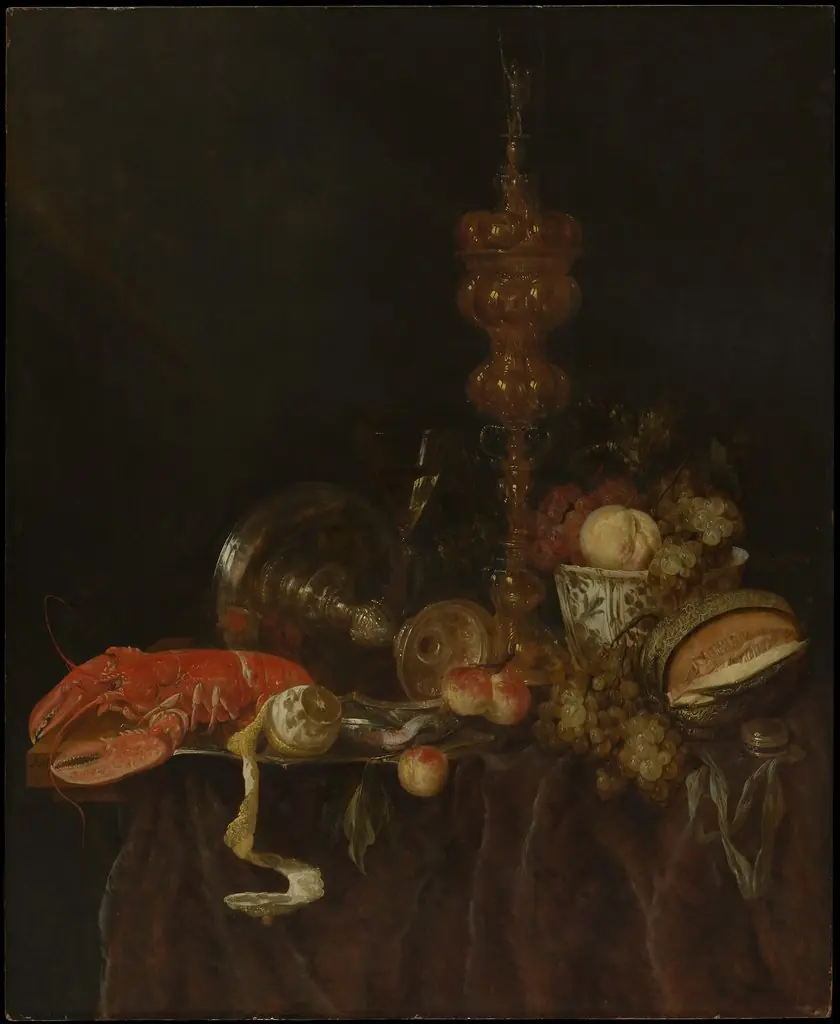 Still Life with Lobster and Fruit
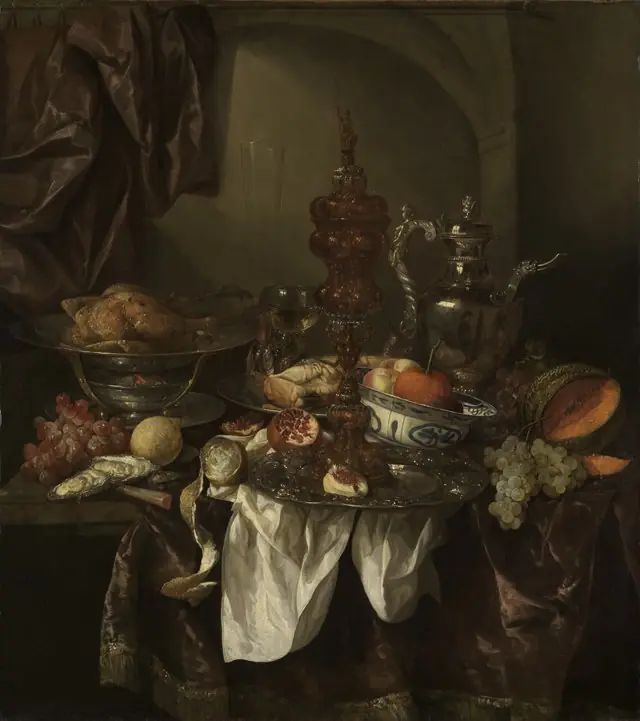 Still life with fruit, roast, silver- and glassware, porcelain and columbine cup on a dark tablecloth with white serviette
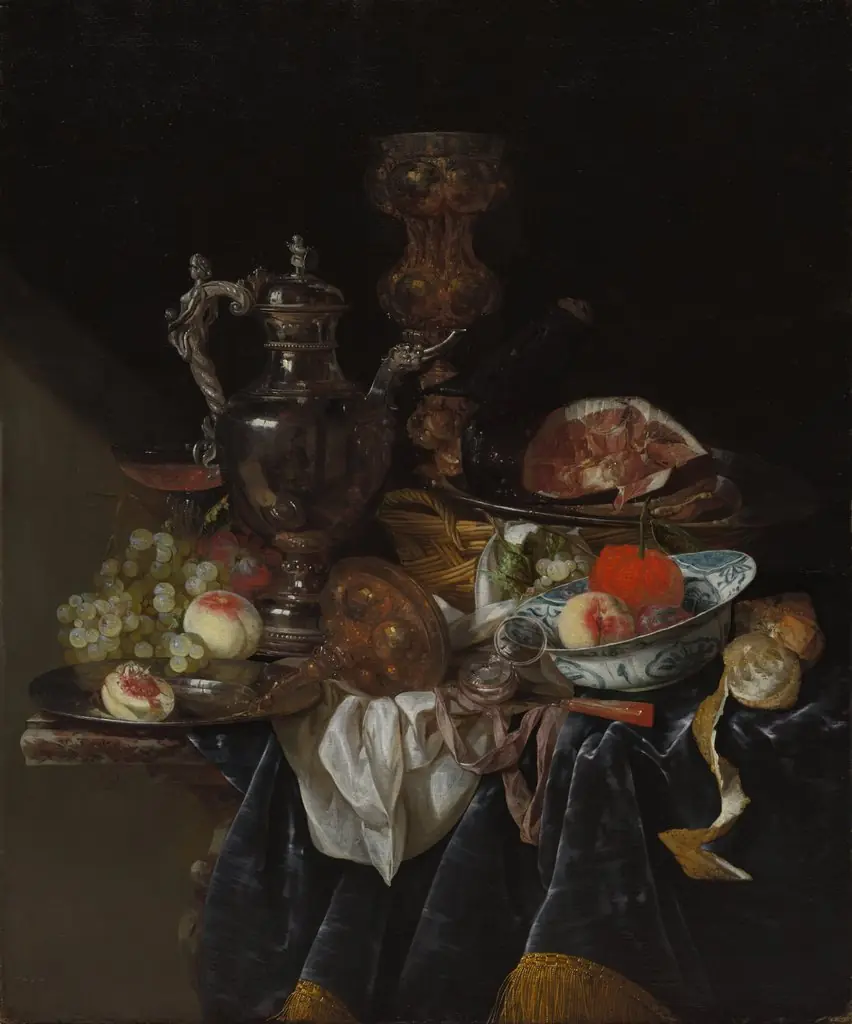 Silver Wine Jug, Ham, and Fruit
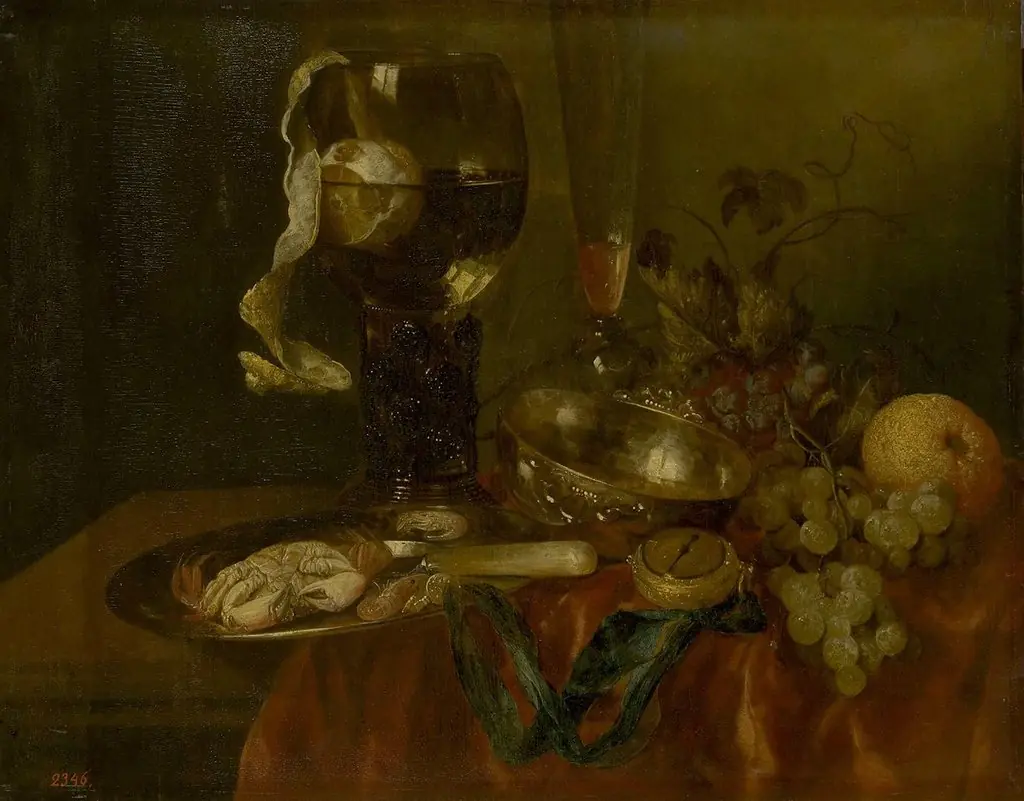 Snack (Still Life with Crab, Fruit and Clock)
 Still life with flowers
 Still life on a draped table with a sculpture of Venus in a niche behind a curtain
 still-life
 Still Life with Silver-gilt Bekerschroef with Roemer