Artwork
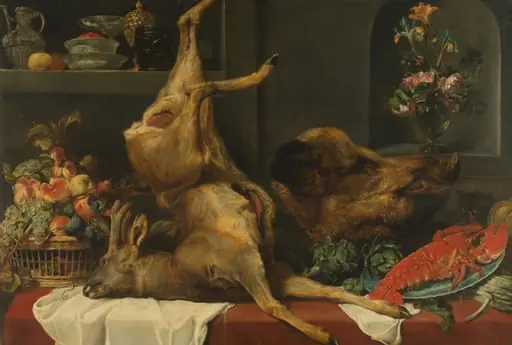
Still Life with a Dead Stag
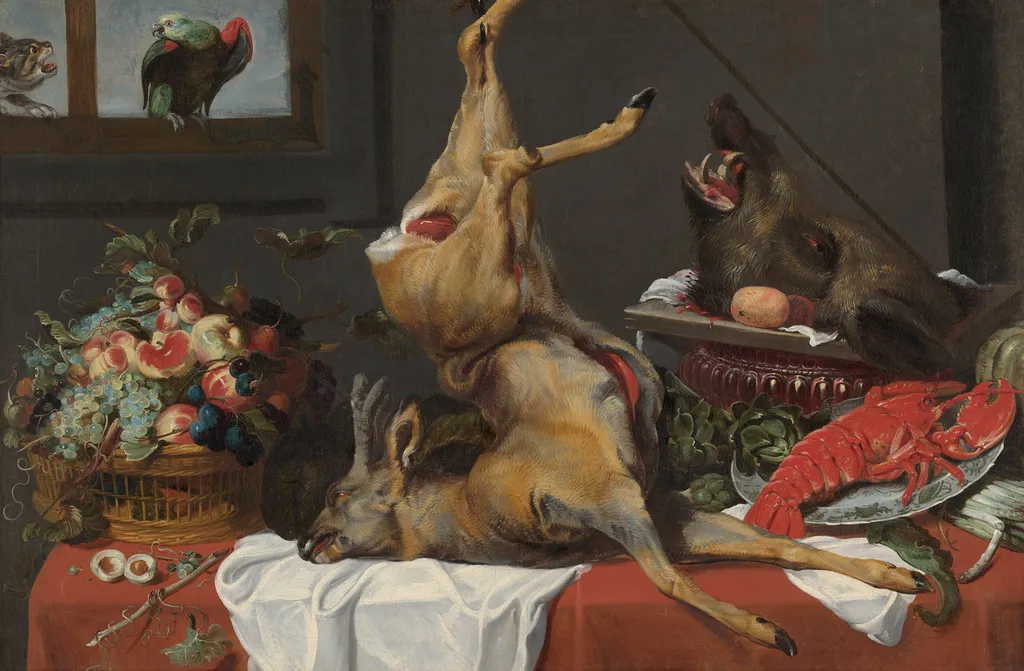
Still Life with a Dead Stag is an oil painting by the Flemish Baroque painting artist Frans Snyders. It dates from 1650 and is held in the collection of the Mauritshuis.
About this work
Subject & Meaning
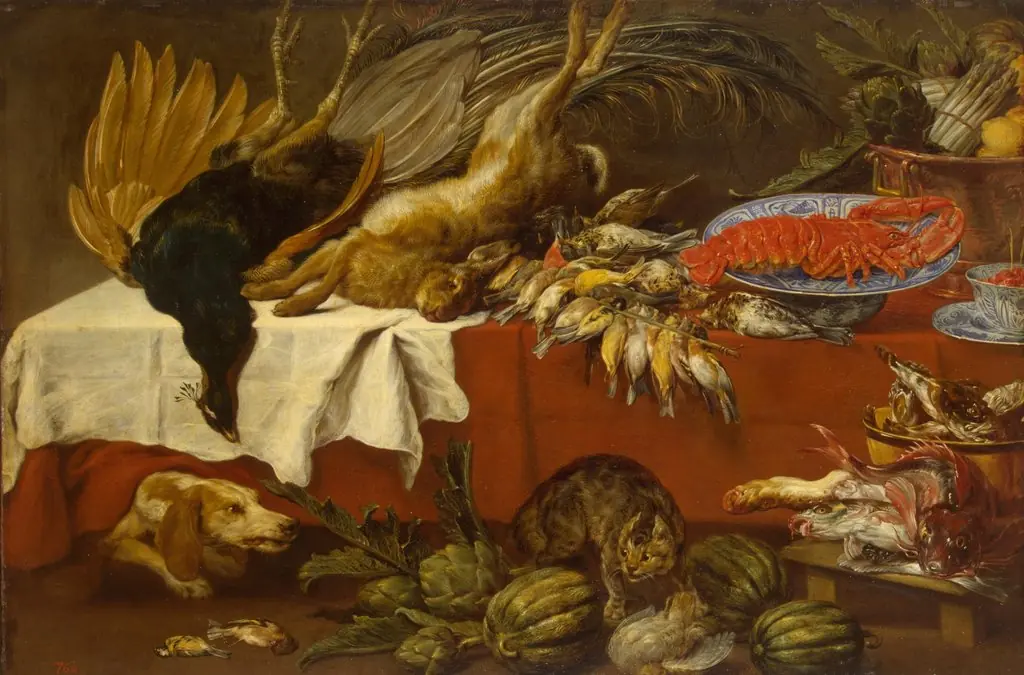
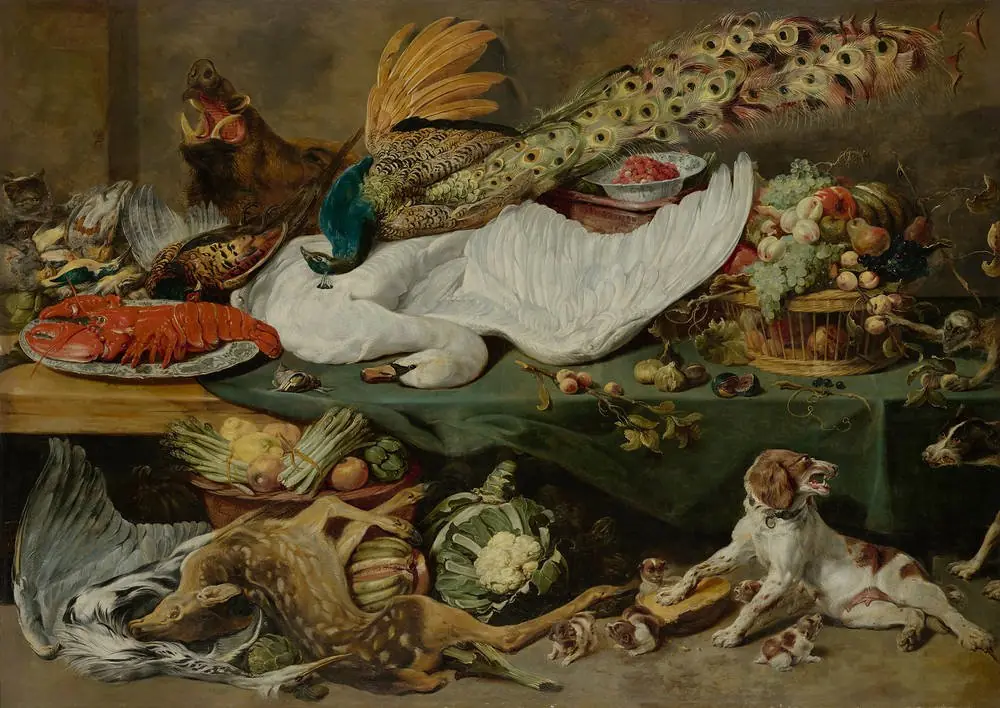
The composition features a dead red deer, or daguet, alongside a hanging piece of meat, a lobster, and various fruits including grapes, plums, and peaches.
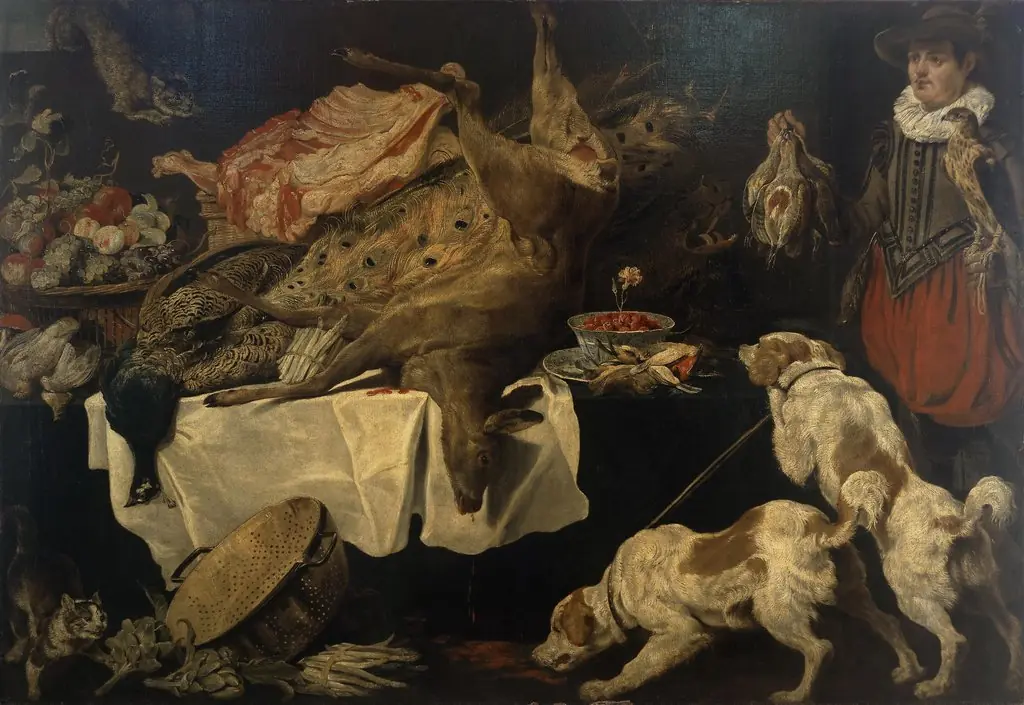
Frans Snyders' Still Life with a Dead Stag centers on the theme of hunting, presenting a lavish display of game and provisions. The composition features a dead red deer, or daguet, alongside a hanging piece of meat, a lobster, and various fruits including grapes, plums, and peaches. These food items are arranged on a table with a platter, a basket of globe artichokes and asparagus, and a parrot perched nearby.
The inclusion of a cat observing the scene adds a dynamic element to the arrangement. Set against a background with a wall and window, the work exemplifies Flemish Baroque still life by combining the spoils of the hunt with an abundance of natural produce.
Technique & Style
The work is an oil painting on canvas measuring 121 cm by 180.3 cm, depicting a hunting scene with a dead stag among other game. Executed in the Dutch Golden Age, the composition showcases a richly detailed still life of food and objects rendered in a naturalistic style characteristic of Flemish Baroque painting. The brushwork emphasizes texture and the play of light on varied surfaces, creating a vivid, lifelike tableau.
History & Provenance
Still Life with a Dead Stag is an oil painting by Frans Snyders dated to 1650. The work passed through the Charles Sedelmeyer collection before entering the holdings of the Mauritshuis, where it is currently located. No further details of commission, intermediate ownership, or acquisition circumstances are documented in the available sources.
The painting was produced in 1650, the inception year recorded for the work, and is executed in oil paint on canvas. Beyond its association with Sedelmeyer and the Mauritshuis, the provenance chain is not elaborated in the consulted records.
Frans Snyders' painting Still Life with a Dead Stag is held in the collection of the Mauritshuis in The Hague. The work was previously part of the Charles Sedelmeyer collection before entering the museum's holdings. While the specific inventory or accession number is not detailed in the available records, the painting is cataloged as a significant example of Flemish Baroque still life within the institution.
The provided sources do not contain information regarding a specific exhibition history for this artwork, listing only its current location and prior collection ownership.
Overview
Created circa 1650 by the Flemish painter Frans Snyders, this oil on canvas presents a meticulously arranged still life. The composition centers on a freshly killed stag, accompanied by a lobster, assorted fruit, and various kitchen items, all set against a richly draped table. The work exemplifies the dramatic vigor typical of Snyders’ mature period and remains in the collection of the Mauritshuis in The Hague.
Context
Snyders’ work helped define the genre of animal still life in the Low Countries, influencing contemporaries such as Jan Fyt and later Dutch painters. By integrating game, seafood, and fruit within a single, cohesive setting, he expanded the visual vocabulary of still‑life painting, a legacy that continues to inform scholarly discussions of Baroque material culture.
Own this work as a print
Artist & collection
Artist
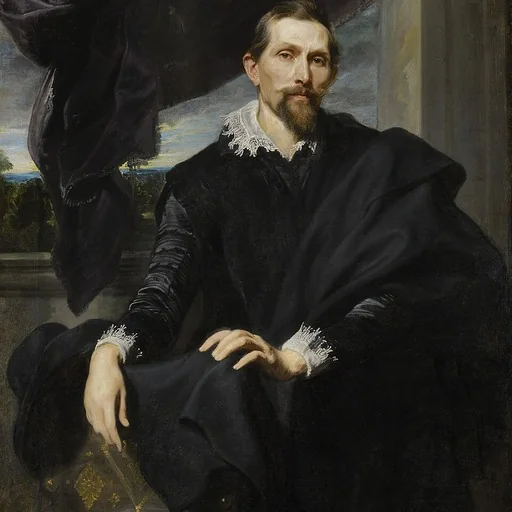
Frans Snyders or Frans Snijders was a Flemish painter of animals, hunting scenes, market scenes, and still lifes.

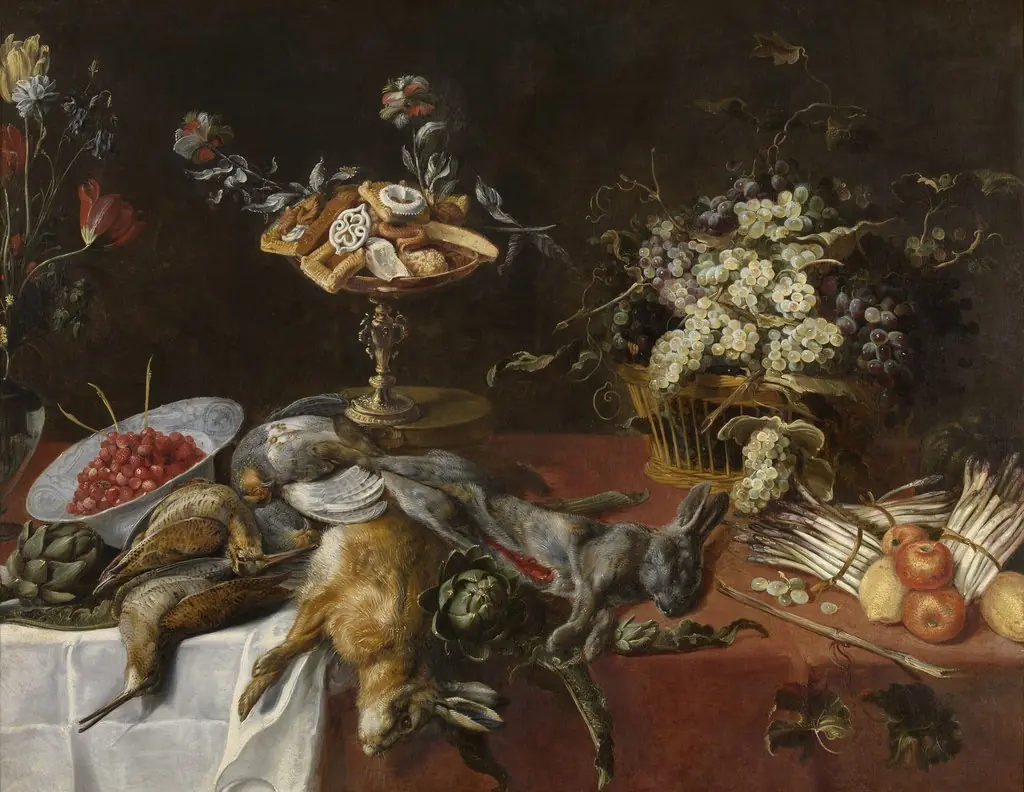
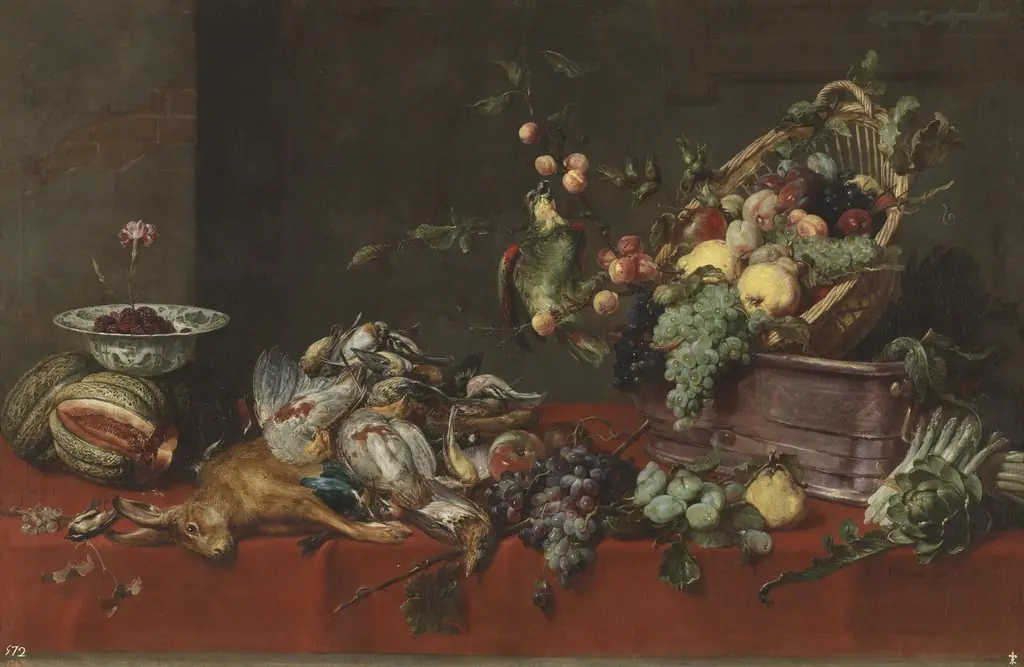
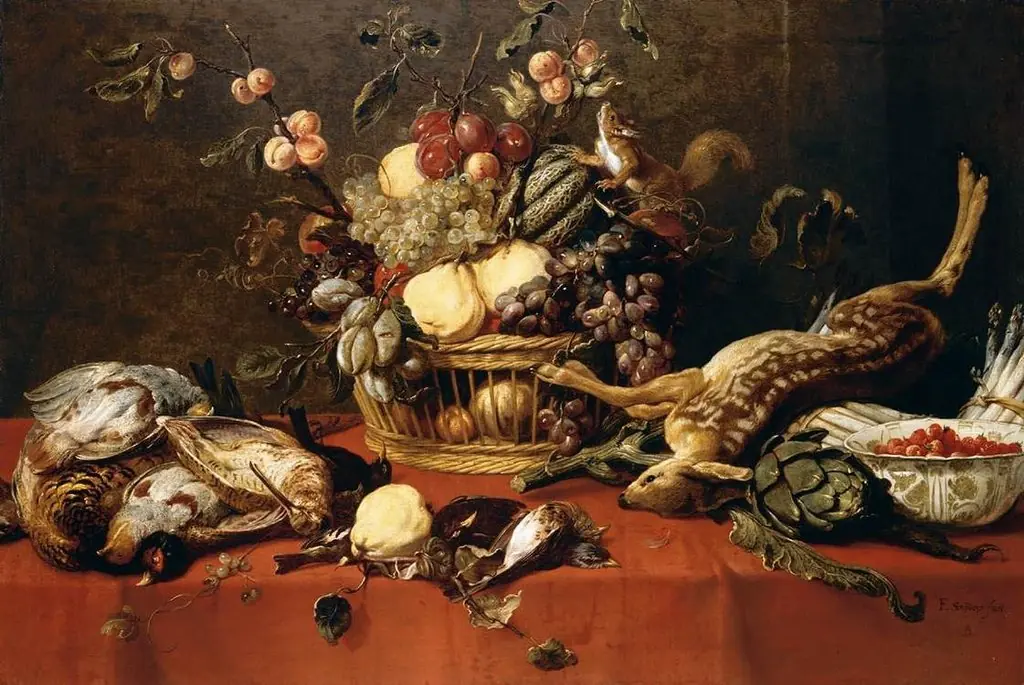 Still life of fruit in a basket together with game, a bowl of fraises-de-bois, artichokes, asparagus and a squirrel upon a table draped with a red cloth
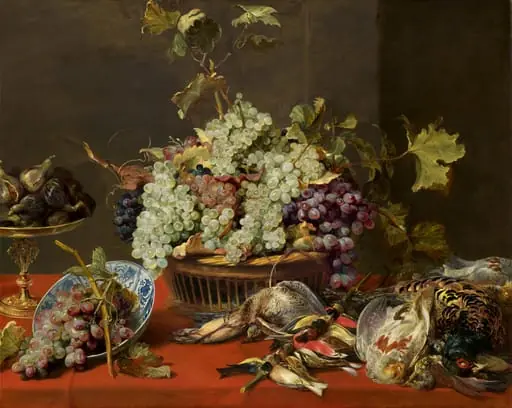 Still Life with Grapes and Game
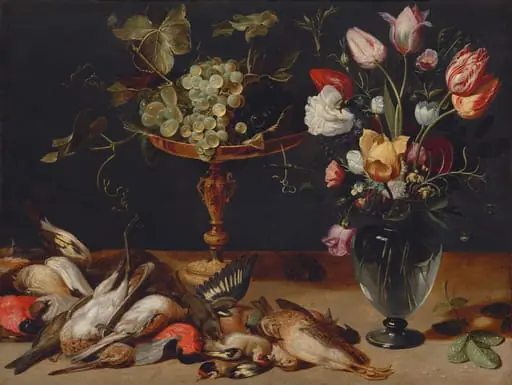 Still Life with Flowers, Grapes, and Small Game Birds
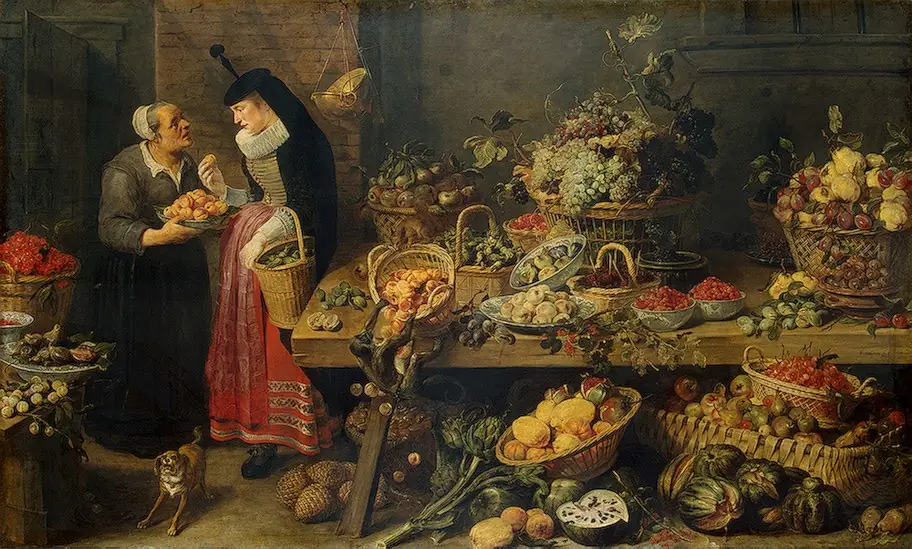 The Fruit Shop
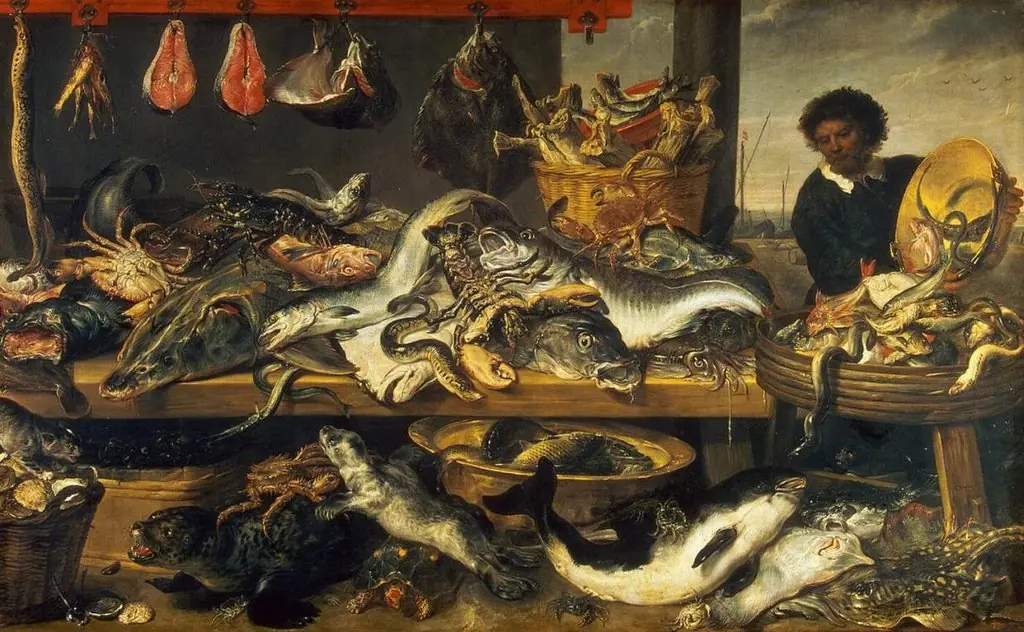 Fish Market
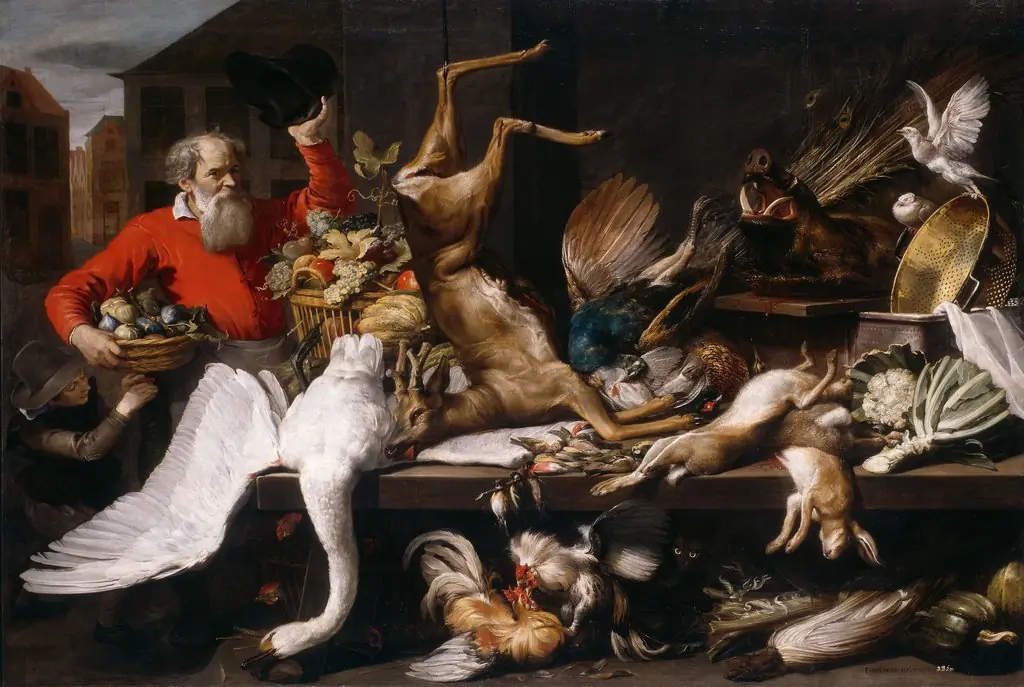 Still Life with Dead Game, Fruits, and Vegetables in a Market
 Larder Still life
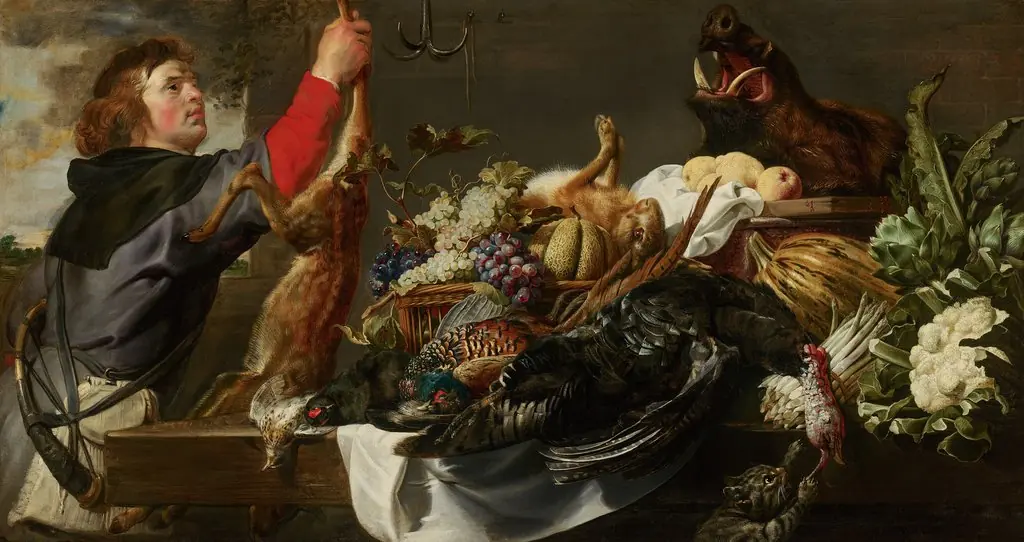 Still Life with Huntsman