Artwork
Landscape with the Holy Family and St. Anthony of Padua
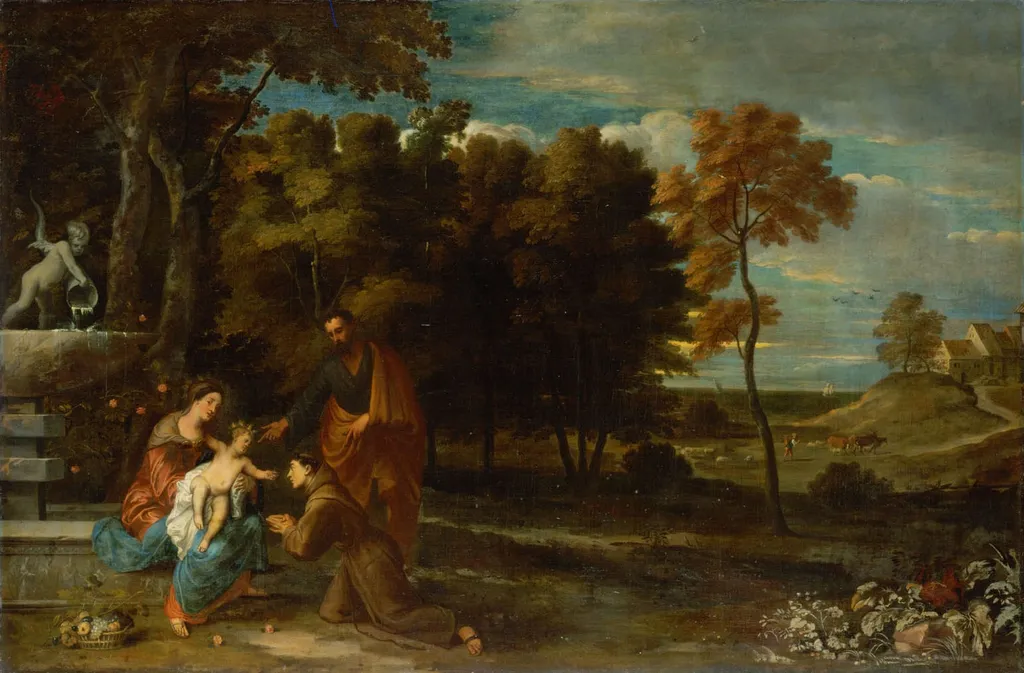
Landscape with the Holy Family and St. Anthony of Padua is an oil painting by the Flemish Baroque painting artist Frans Wouters. It dates from 1648 and is held in the collection of the Kunsthistorisches Museum.
About this work
Subject & Meaning
The composition features the Holy Family, identified as the Virgin Mary, Joseph, and the Christ Child, gathered alongside Saint Anthony of Padua.
Painted in 1648, this work combines the genres of landscape and religious art to depict a specific sacred assembly within a natural setting. The composition features the Holy Family, identified as the Virgin Mary, Joseph, and the Christ Child, gathered alongside Saint Anthony of Padua. By placing these revered figures together outdoors, the painting integrates devotional iconography with a detailed environmental backdrop, characteristic of the artist's approach to merging narrative subjects with scenic elements.
Technique & Style
Landscape with the Holy Family and St. Anthony of Padua is an oil painting executed on canvas, a support that accommodates the work's broad horizontal format of 139.5 by 92.5 centimeters. Dated to 1648, the picture is classified as a landscape painting with religious subject matter, integrating the Holy Family and Saint Anthony of Padua into a naturalistic outdoor setting. The combination of oil paint and canvas is consistent with mid-seventeenth-century Flemish practice, allowing for layered, atmospheric handling suited to the landscape genre.
No specific information on the artist's handling, surface condition, or stylistic qualities beyond the landscape and religious classification is documented in the available sources.
History & Provenance
The work Landscape with the Holy Family and St. Anthony of Padua was created in 1648 by Frans Wouters as an oil painting on canvas, measuring 92.5 cm by 139.5 cm. It portrays the Christ Child, Mary, Joseph, and Saint Anthony of Padua within a religious landscape composition. The painting is held in the collection of the Kunsthistorisches Museum, Vienna; according to the Wikidata record it forms part of the museum's holdings, though no specific inventory or accession number is provided in the available sources, and no exhibition history is documented.
Context
The work is recognized as a mature example of seventeenth-century Flemish religious landscape painting, where the integration of devotional imagery within a naturalistic setting reflects Counter-Reformation artistic aims. Scholarship highlights its compositional balance and the subtle modeling of figures within an idealized environment, situating it within Wouters' broader development alongside contemporaries such as Rubens and van Dyck. The painting's presence in a major institutional collection underscores its significance as a representative piece of the period's devotional art.
Overview
Created in 1648, this oil painting by Flemish artist Frans Wouters presents a tranquil forest scene in which the Holy Family is accompanied by Saint Anthony of Padua. The composition is set on a stone ledge beneath a canopy of tall trees, with a distant village visible on the horizon under a clear sky. The work is part of the Kunsthistorisches Museum’s collection.
Artist & collection
Artist
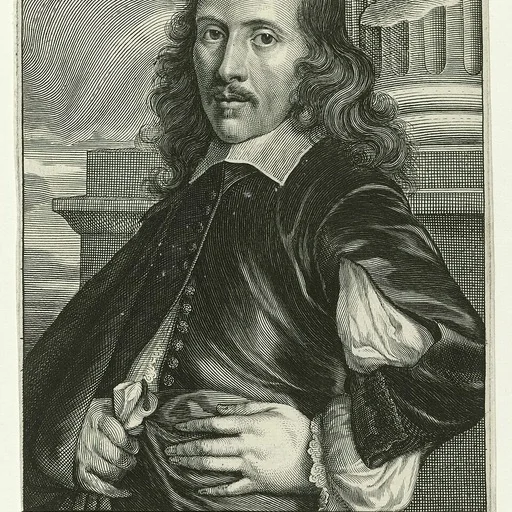
Frans Wouters (1612–1659) was a Flemish Baroque painter who translated the monumental Baroque style of Peter Paul Rubens into the small context of cabinet paintings.

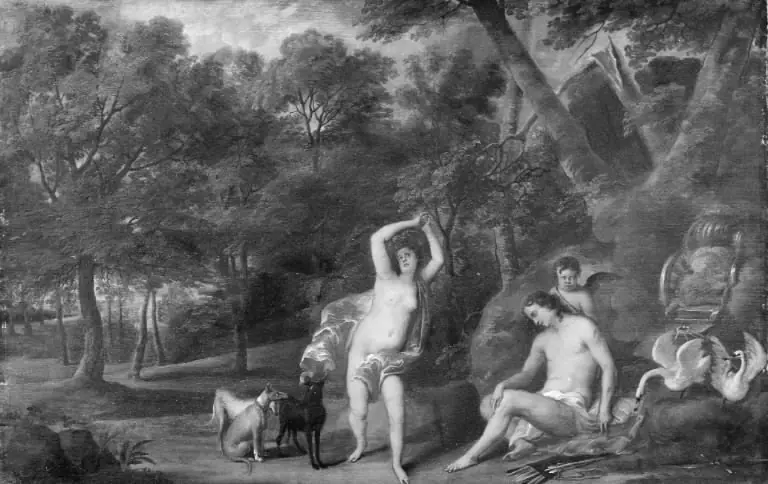
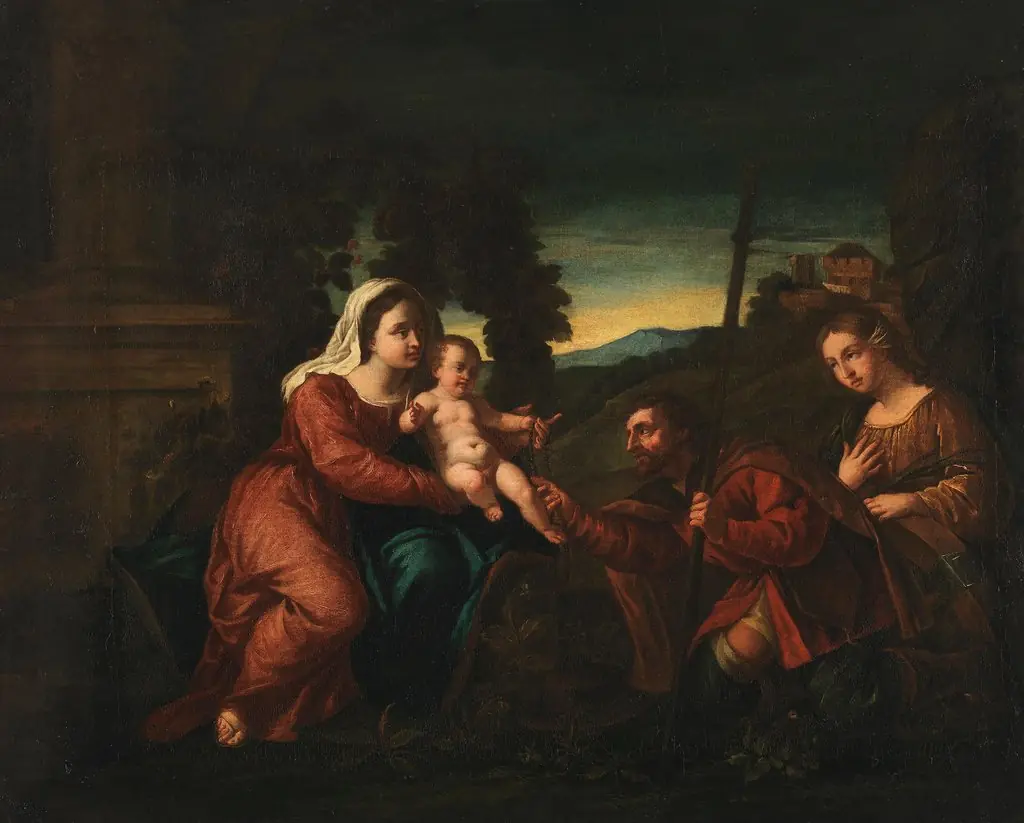
- Madonna and Child with Saints Roche and Mary Magdalene
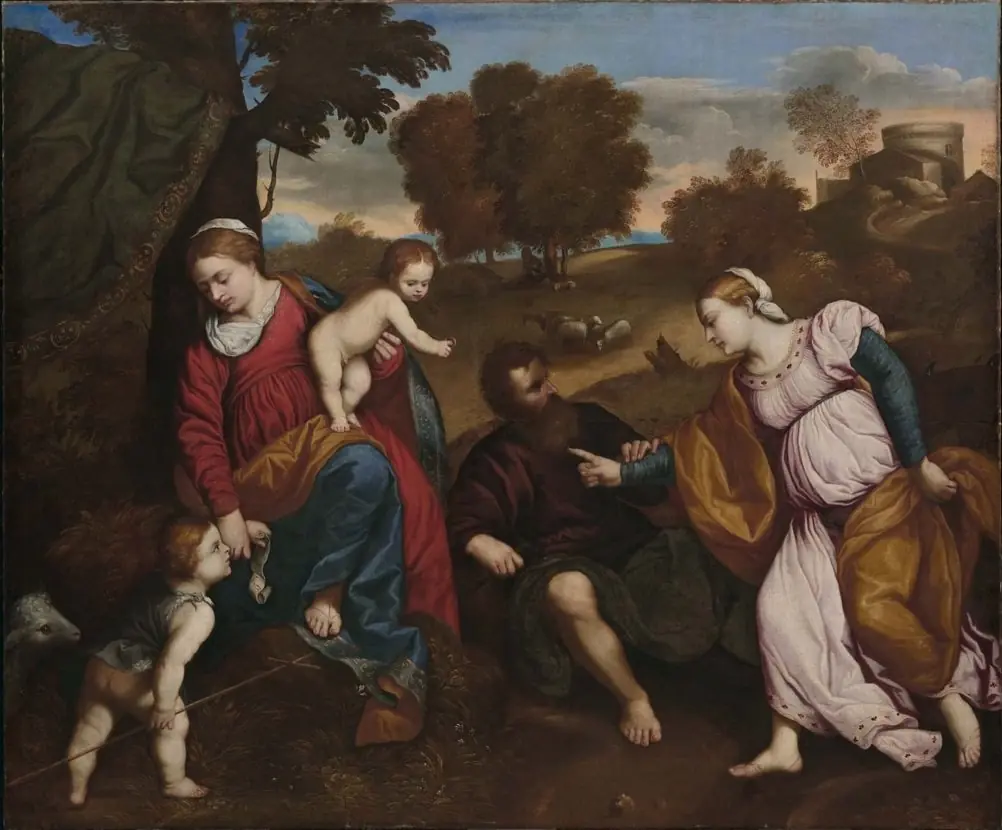 The Mystic Marriage of Saint Catherine
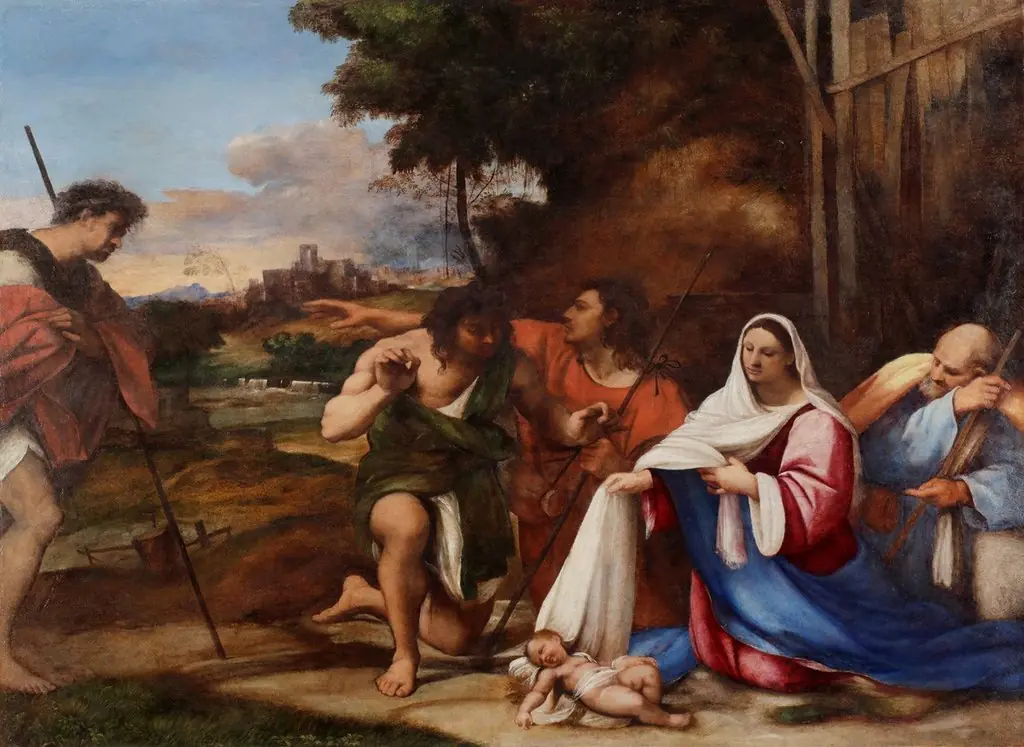 Adoration of the Shepherds
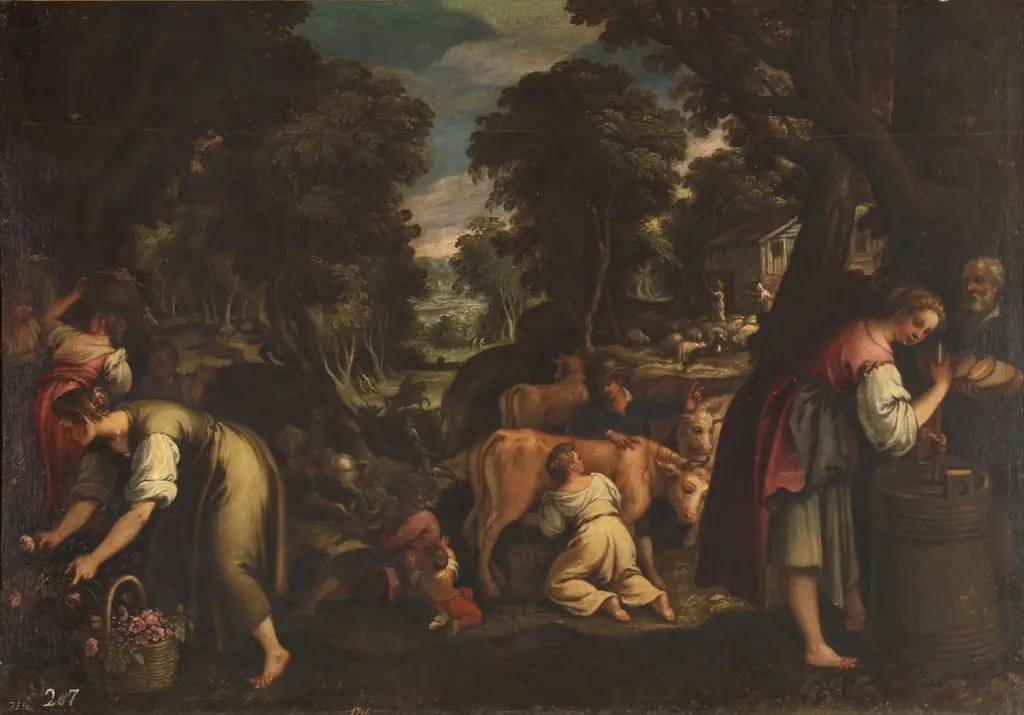 Rural labours or Spring
 Johannes Kastaja kerää kukkia vanhemmilleen
 Feeding of the Five Thousand
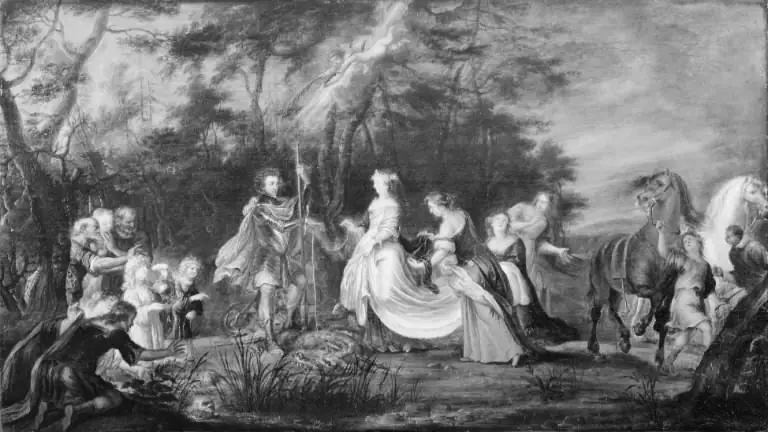
 Childhood of King Cyrus
 The Holy Family with the Infant St John
 Tobias and the Angel
 Jacob and Rachel
 Johannes Kastaja saarnaa
 The Finding of Moses