Artwork
The golden lotus, or the deformation of the foot, (From a Chinese painting) signed by M. Rapine
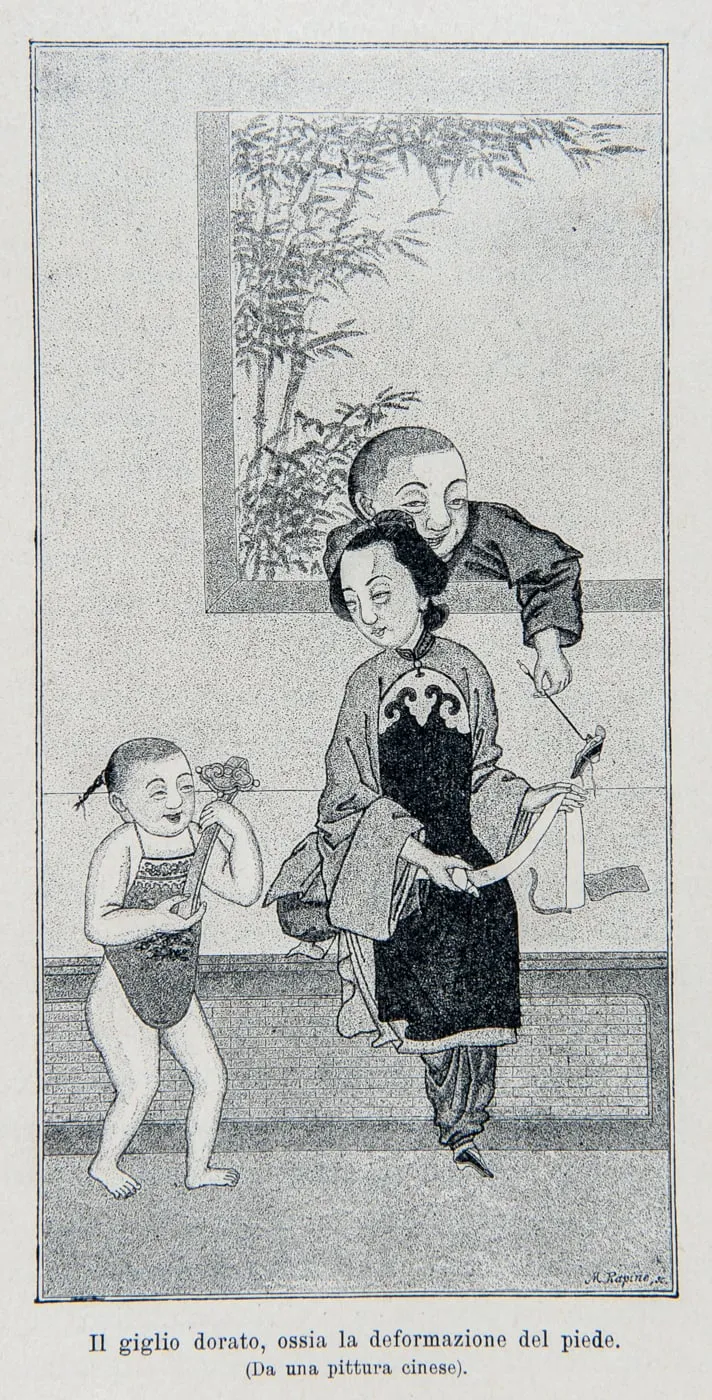
The golden lotus, or the deformation of the foot, (From a Chinese painting) signed by M. Rapine is an unspecified painting by Fratelli Treves Editori. It dates from 1900 and is held in the collection of the Promoter Digital Gallery.
About this work
Overview
It depicts bound feet beside a golden lotus, serving as a visual anchor for the book’s ethnographic aims and its engagement with Chinese social customs.
This engraving appears in the 1876 travelogue 'Viaggio in Cina,' a visual record of China compiled by Scottish photographer John Thomson and French sinologist Gabriel Devéria, who wrote under the pseudonym T. Choutzé. The image reproduces Thomson’s photographic documentation, translated into printed form for European audiences. It depicts bound feet beside a golden lotus, serving as a visual anchor for the book’s ethnographic aims and its engagement with Chinese social customs.
Subject & Meaning
The composition juxtaposes the ornamental golden lotus, a symbol of purity and elegance in Chinese culture, with the physically deformed feet of a woman subjected to foot-binding. This contrast underscores the cultural idealization of small feet as a mark of beauty and status, while silently acknowledging the enduring physical cost. The image does not glorify but documents, inviting viewers to confront the dissonance between aesthetic aspiration and bodily sacrifice.
Technique & Style
Rendered as a line engraving, the image employs fine, controlled strokes to render texture and form with precision. The delicate rendering of the lotus petals mirrors the fragile contours of the bound feet, creating a visual parallel that emphasizes symbolic connection over literal representation. The style reflects 19th-century European printmaking conventions, adapted to convey ethnographic detail with clinical neutrality rather than emotional dramatization.
History & Provenance
The engraving originates from 'Viaggio in Cina,' published in 1876, based on photographs taken by John Thomson during his travels in southern China between 1868 and 1872. Gabriel Devéria contributed linguistic and cultural commentary. The work entered the Museum of Ethnography’s collection as part of a broader 19th-century effort to classify and preserve visual records of non-European societies, reflecting colonial-era scholarly practices.
Context
Foot-binding, practiced for nearly a millennium among elite Han Chinese women, was still widespread in the 19th century despite growing internal criticism. Western travelers like Thomson documented the practice as both curiosity and moral concern. This image emerged during a period of increasing global scrutiny of Chinese customs, contributing to shifting perceptions that would eventually fuel reform movements in the early 20th century.
Legacy
As a visual artifact of colonial ethnography, the engraving preserves a record of a now-abolished practice, offering insight into how foreign observers interpreted Chinese traditions. While its framing reflects period biases, it remains a primary source for understanding the material and symbolic dimensions of foot-binding. Its presence in museum collections continues to prompt critical reflection on representation, power, and cultural memory.
Artist & collection
Artist
This was a Milanese publisher with a knack for turning imported curios into local hits.
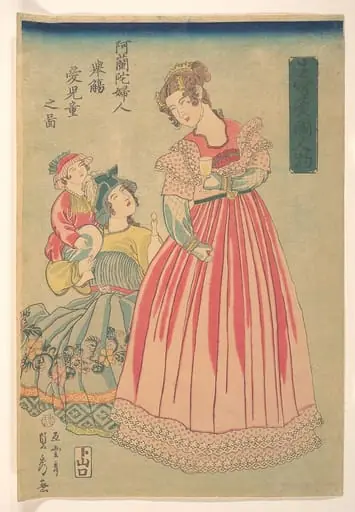 歌川五雲亭貞秀画 『生写異国人物 阿蘭陀婦人舉觴 愛児童之図』|Dutch Woman and Child (Seisha ikoku jinbutsu Oranda fujin aijidō no zu)
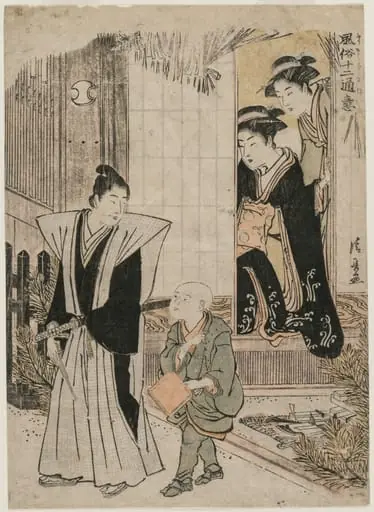 The First Month (from the series Popular Presentations)
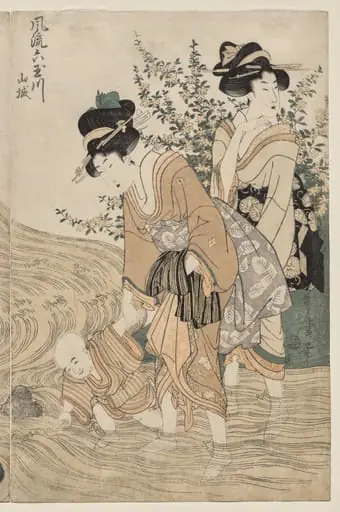 Yamashiro Province from the series Fashionable Six Jewel Rivers (Furyu Mu Tamagawa)
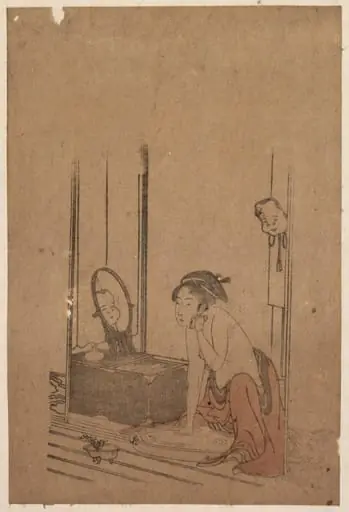 Woman Bathing
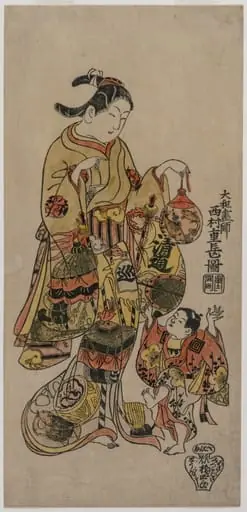 Child Reaching for a Fishbowl
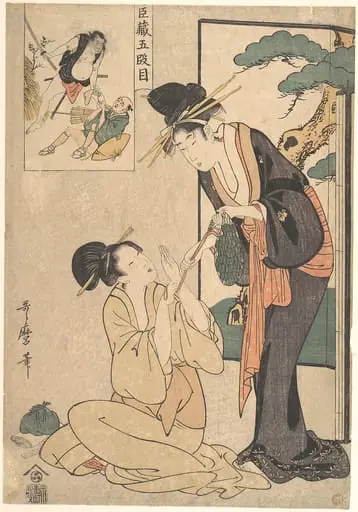 忠臣蔵五段目|A Woman Snatching a Bag of Sweetmeats from Her MotHer
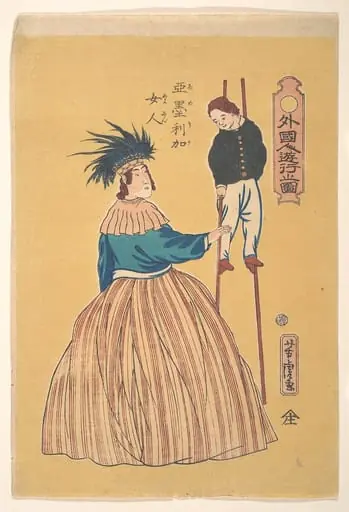 Amerika nyōjin|American Woman with Her Child on Stilts
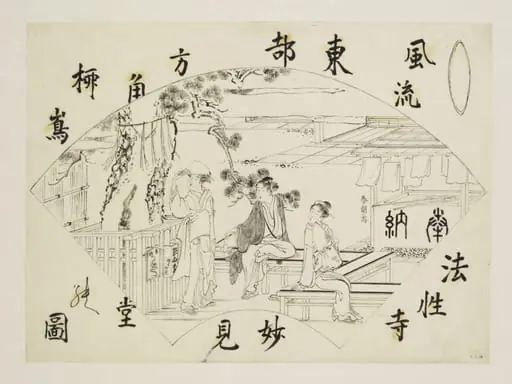 The Myoken Hall of the Hosshoji Temple at Yanagishima
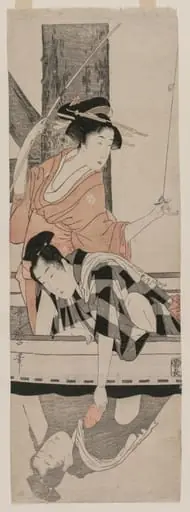 Couple in a Boat
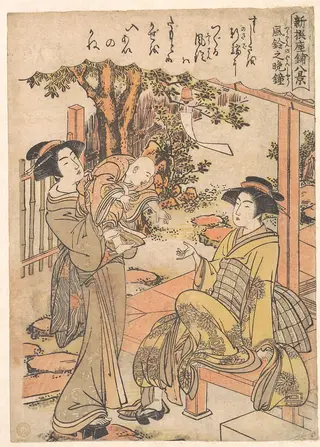 Untitled
 Untitled
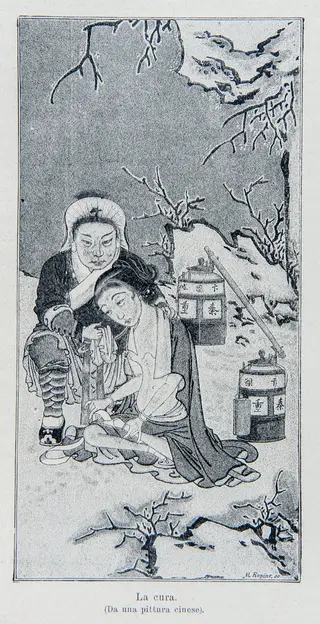
- The treatment, (From a Chinese painting) signed by M. Rapine