Subject
Family
Family is a subject in art. The gallery holds 200 works in this subject in art, including works by Paolo Veronese, Jacques-Louis David and Édouard Manet.
Family is among the most enduring subjects in Western art, but it has never been a single tradition so much as several. One strand is moral and narrative: drawing on scripture and antiquity, painters used the family unit to embody virtue, sacrifice, or catastrophe. Ercole de' Roberti's small tempera panel The Wife of Hasdrubal and Her Children (c. 1490–93, National Gallery of Art) belongs to a series of famous women of antiquity, probably made for the Ferrarese court of Eleanor of Aragon. It depicts the wife of the Carthaginian commander who, when his army fell, chose to fling herself and her children into a burning temple rather than submit to dishonour—family as an exemplum of honour surpassing her husband's.
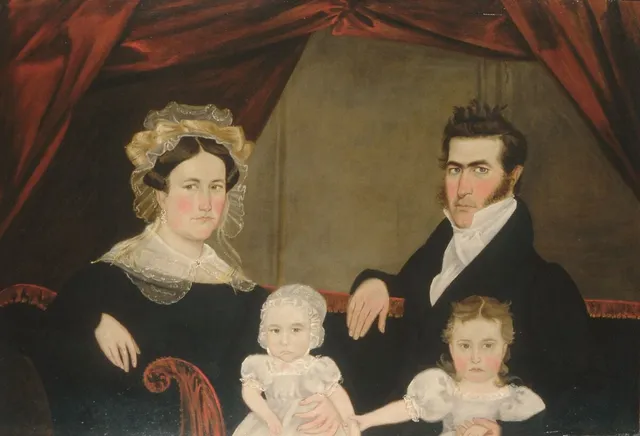
The other, more familiar strand is the family portrait, which crystallised in the Renaissance. Hans Holbein the Younger's lost group portrait of Sir Thomas More and his household (c. 1527) was a landmark of the type north of the Alps. By the early eighteenth century the genre had loosened into the "conversation piece"—an informal, small-scale group portrait of a family at ease in a domestic interior or garden. Rooted in seventeenth-century Flemish and Dutch prototypes by painters such as Gerard ter Borch and Gabriel Metsu, it was introduced to Britain around 1725 by Philip Mercier, popularised by William Hogarth, and made fashionable by Johan Zoffany. Francis Wheatley's The Saithwaite Family (c. 1785) exemplifies the English version: a couple and their daughter posed amid the costume and comfort that signalled their station.
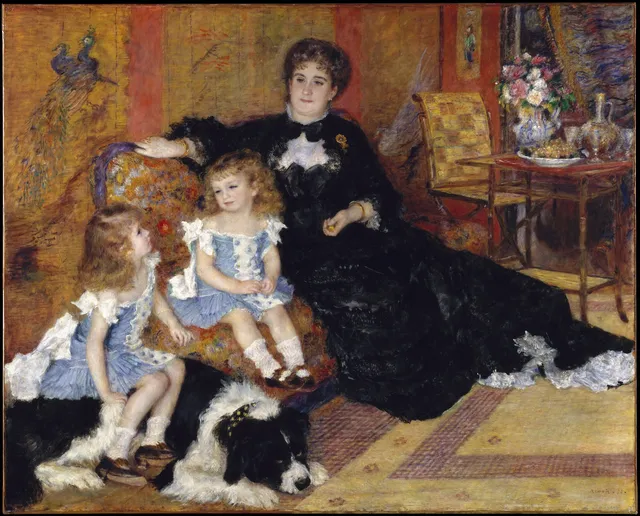
The genre's hallmarks are consistent—affectionate gesture and quiet hierarchy, children and pets, and furnishings that broadcast status. Seymour Joseph Guy's The Contest for the Bouquet: The Family of Robert Gordon in Their New York Dining-Room (1866) sets the financier's children squabbling over a corsage amid Renaissance Revival furniture. Pierre-Auguste Renoir's Madame Georges Charpentier and Her Children (1878), shown at the 1879 Salon, brought Impressionist warmth to the form, capturing what Proust called "the poetry of an elegant home." Joshua Johnson, the earliest documented professional African American painter, produced family groups in Baltimore between 1795 and 1824.
Across these works the family theme bridges portraiture and genre painting, and its history tracks a widening circle of patronage—from dynasties and courts to a confident merchant class—anticipating the intimate domesticity that Impressionism and modern art would make central.
Key artists

Overview
The family is a taxonomic rank in biological classification situated between order and genus. It groups together genera that share a relatively recent common ancestor, demonstrating significant phylogenetic proximity. A family may contain only a single genus and species, such as Ginkgoaceae which contains solely Ginkgo biloba, or it can encompass thousands of species, as seen in Piperaceae. The rank serves as a valuable unit for evolutionary, paleontological, and genetic studies because it offers greater stability compared to lower taxonomic levels like genera and species. It also provides an efficient framework for teaching taxonomy, grouping organisms with general similarities while remaining specific enough for identification.
Iconography & meaning
The nomenclature of families is strictly codified by international bodies, with suffixes indicating the rank and biological kingdom. In botanical, algal, and fungal nomenclature, family names end in the suffix -aceae, derived from the Latin plural feminine of -aceus, indicating resemblance. Zoological family names end in -idae, a Latinization of the Greek word eidos, meaning form or appearance. Virological families use the suffix -viridae. In zoology, the family group encompasses intermediate ranks: superfamily ends in -oidea, subfamily in -inae, and tribe in -ini. Botanical subfamilies end in -oideae. Under the principle of coordination in zoology, a name established at any of these ranks can move to another rank while retaining its original authorship and date, requiring only a suffix change.
Across movements & periods
The concept and standardization of the family rank developed gradually across centuries and scientific movements. The term familia was first used by French botanist Pierre Magnol in 1689 to group plants, though he conceptualized it differently than modern taxonomy, speaking of uniting families into larger genera. Carl Linnaeus employed the term in 1751 for broad plant groups based on morphology. Michel Adanson defined the first 58 plant families in 1763, and in French botany, the word famille was used as an equivalent of the Latin ordo (ordo naturalis) until the late nineteenth century. Antoine Laurent de Jussieu divided plants into 100 natural orders in 1789, many corresponding to modern families. In zoology, Pierre Andre Latreille introduced the rank between order and genus in 1796. William Kirby established the -idae suffix for animal families in 1813. By the mid-nineteenth century, the rank standardized across biology as many of Linnaeus's broad genera were elevated to family status.
Notable depictions
Notable historical exceptions to standard taxonomic nomenclature represent some of the most widely recognized and canonical family names in biology. In botany, eight historic names based on morphological features are conserved alongside their standardized -aceae forms due to their entrenched use in scientific literature. These include Palmae alongside Arecaceae, Gramineae alongside Poaceae, Cruciferae alongside Brassicaceae, Leguminosae alongside Fabaceae, Guttiferae alongside Clusiaceae, Umbelliferae alongside Apiaceae, Labiatae alongside Lamiaceae, and Compositae alongside Asteraceae. In zoology, family names are typically formed from the stem of a type genus, such as Felidae from Felis and Canidae from Canis. If a valid zoological family name is based on a genus later found to be a junior synonym, the family name may be maintained for stability if it was established before 1960.
Legacy
The delineation of what constitutes a family remains an active area of debate, as there are no strict regulations for outlining or acknowledging one. Taxonomists frequently hold varying perspectives on these descriptions, leading to a lack of widespread consensus within the scientific community for extended periods. In botany, classifications often rely on both vegetative and reproductive characteristics of plant species. New family descriptions are relatively rare in taxonomy, occurring in fewer than one in a hundred taxonomic publications. Such descriptions typically result from the discovery of organisms with unique combinations of characters that do not fit existing families, or from phylogenetic analyses that reveal the need for reclassification, ensuring the rank remains a dynamic and foundational element of biological systematics.
Works
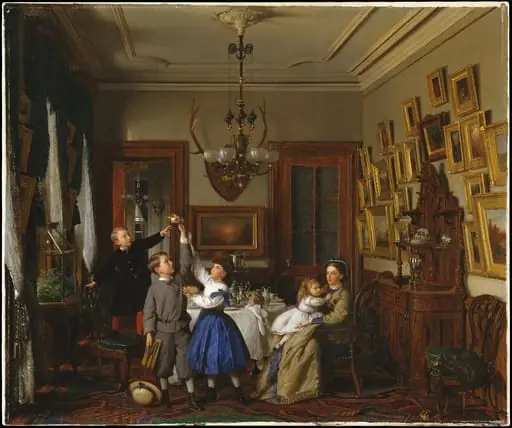 The Contest for the Bouquet: The Family of Robert Gordon in Their New York Dining-Room
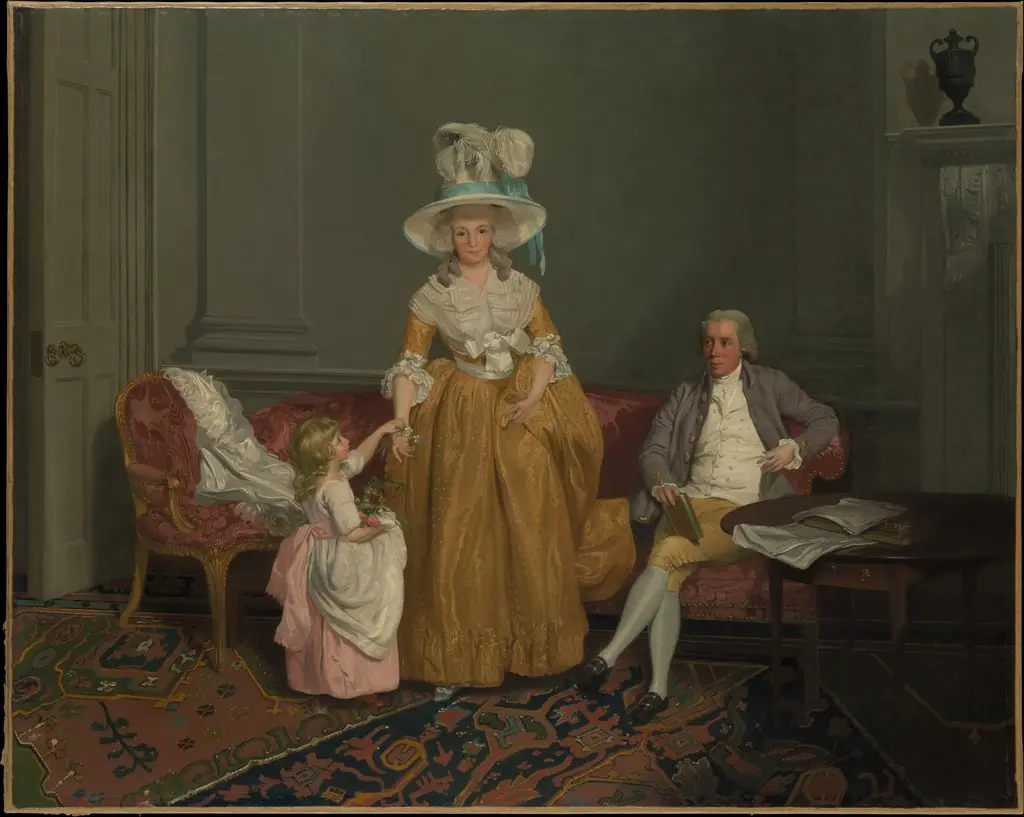 The Saithwaite Family
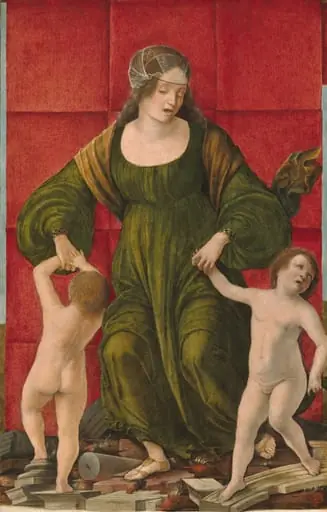 The Wife of Hasdrubal and Her Children
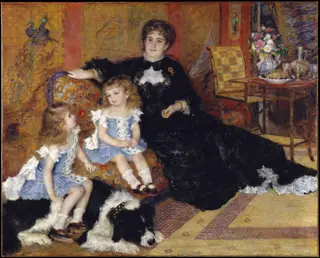 Madame Georges Charpentier and her Children
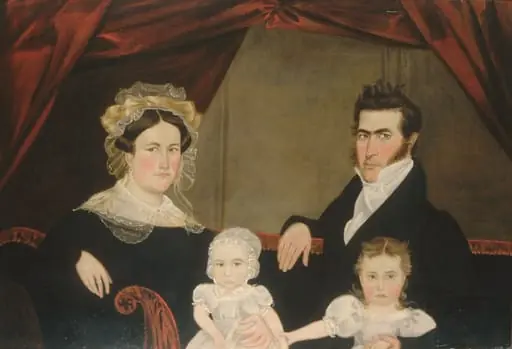 Family Group of Four on Sofa
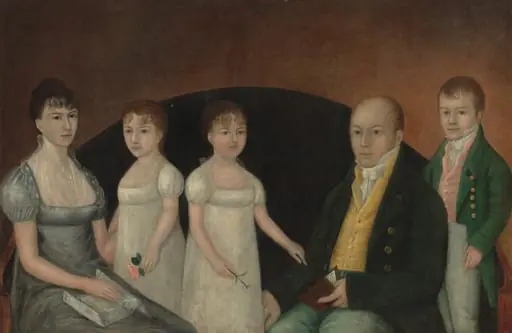 Family Group
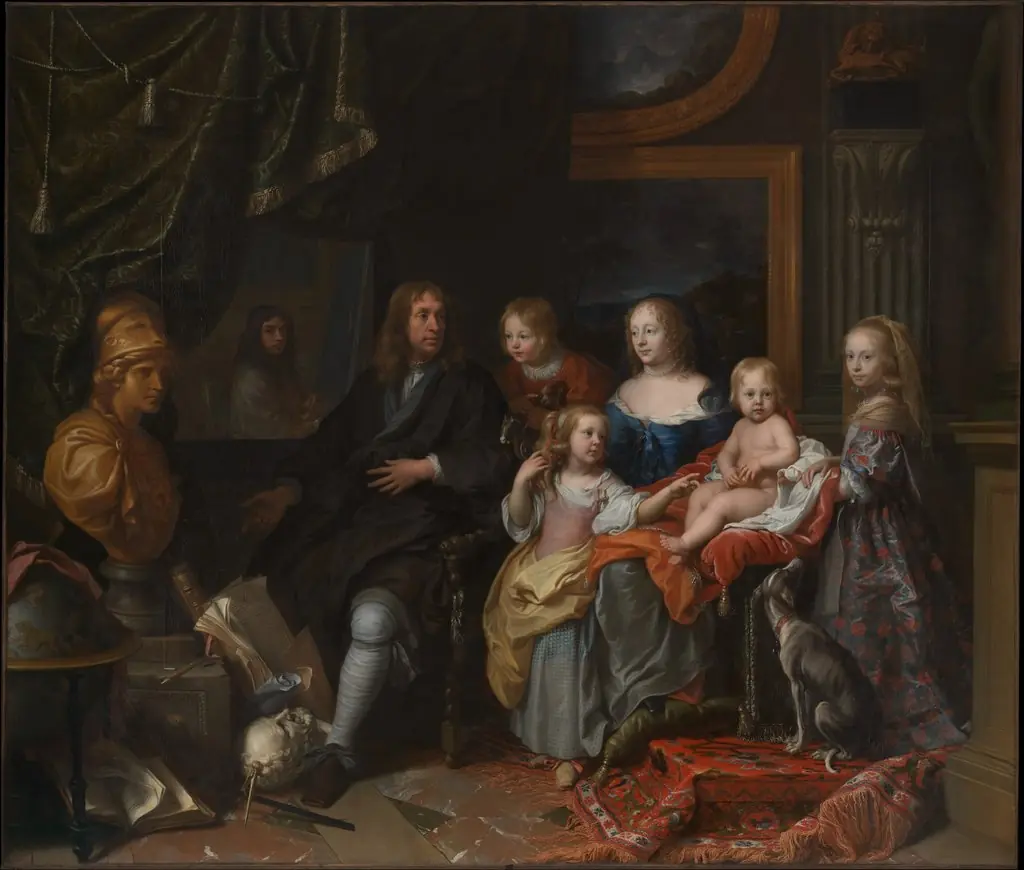 Everhard Jabach (1618–1695) and His Family
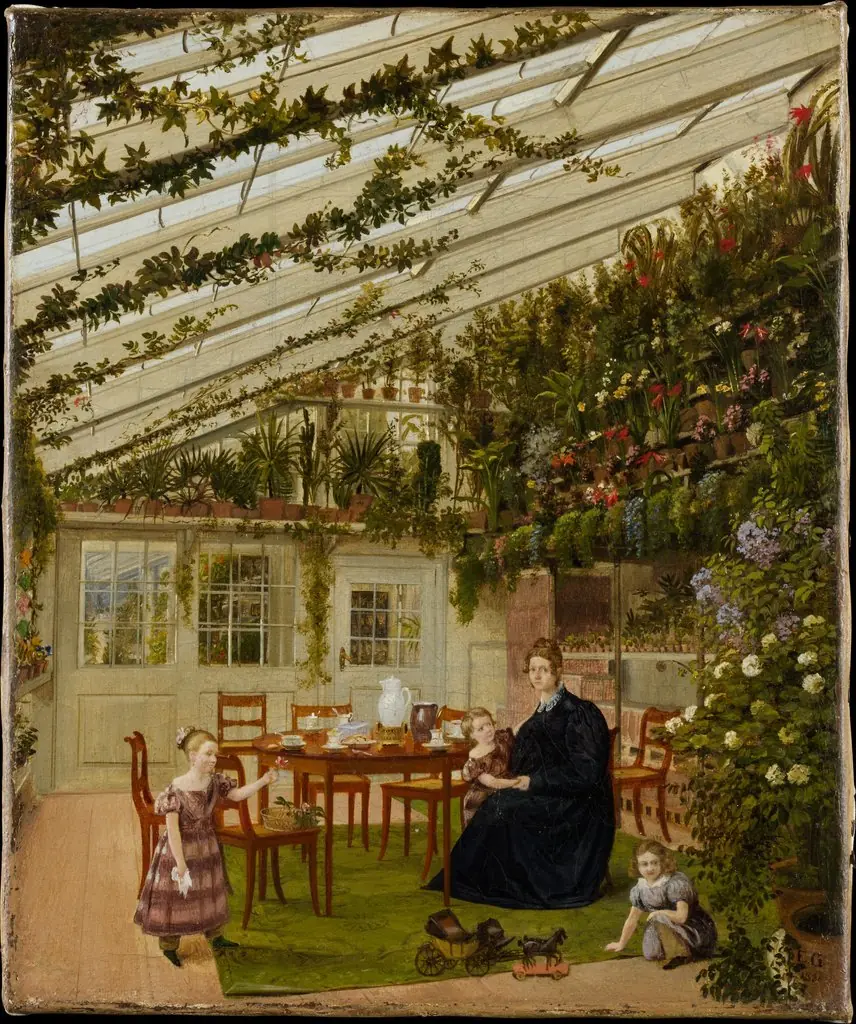 The Family of Mr. Westfal in the Conservatory
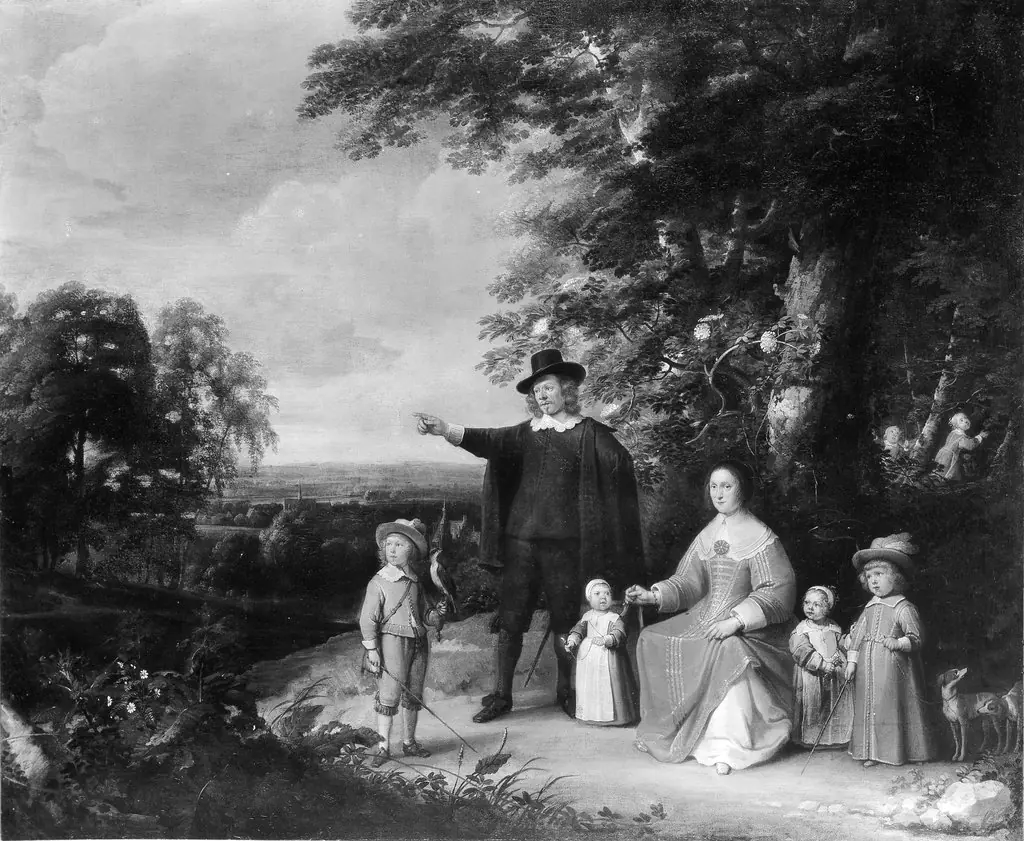 Family Group in a Landscape
 Charles IV of Spain and His Family
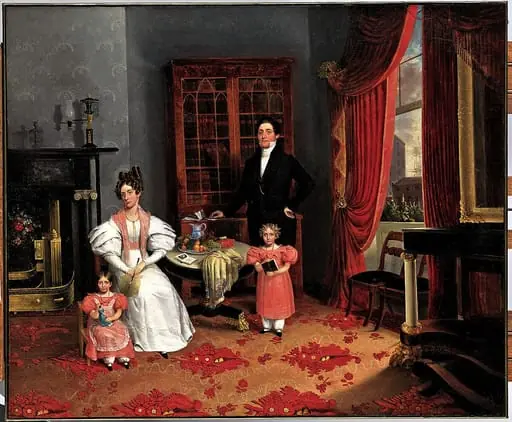 The Family of John Q. Aymar
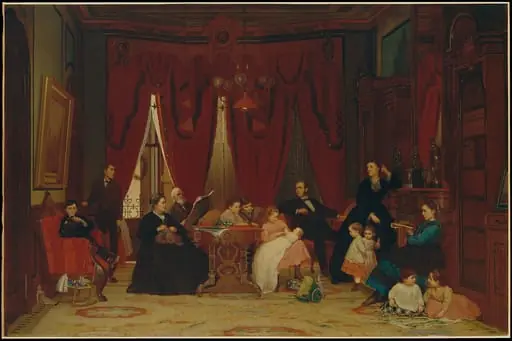 The Hatch Family
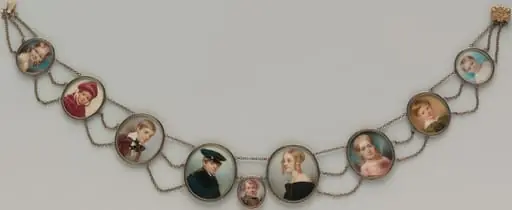 A Mother's Pearls
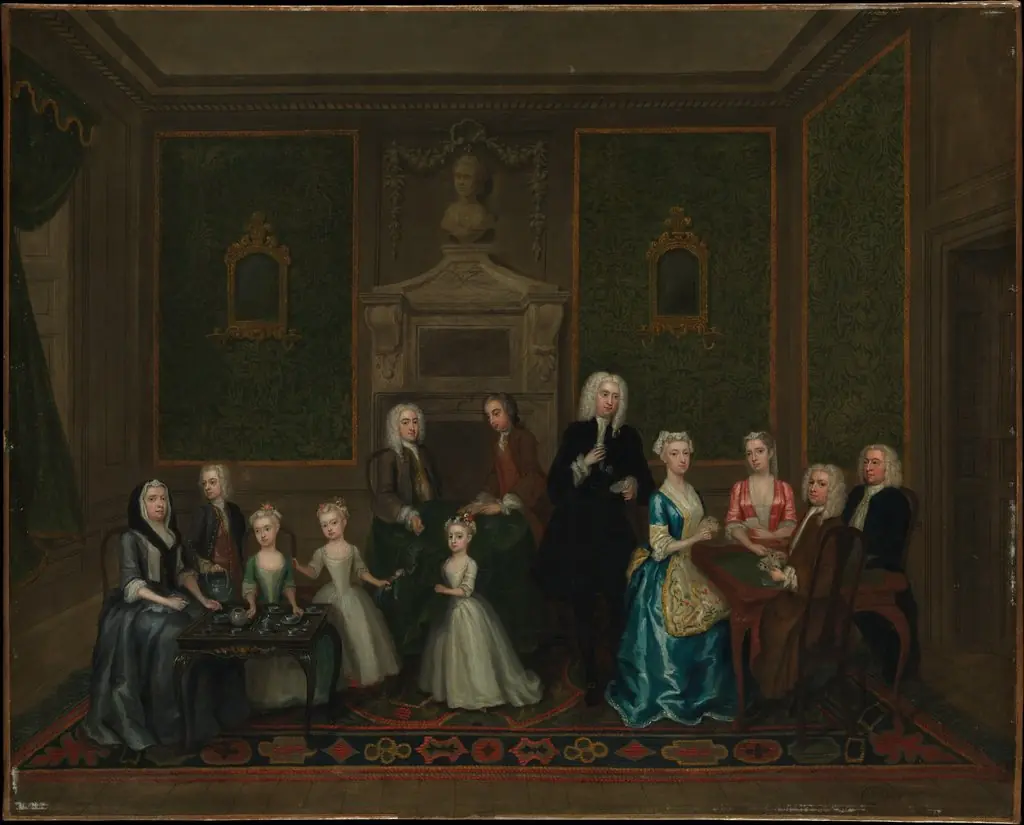 The Strong Family
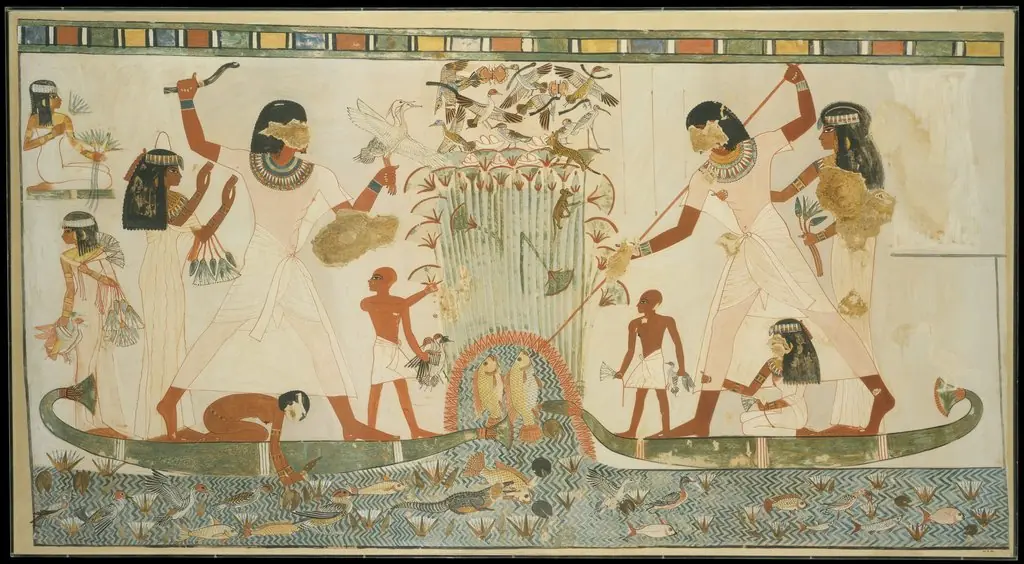 Menna and Family Hunting in the Marshes, Tomb of Menna
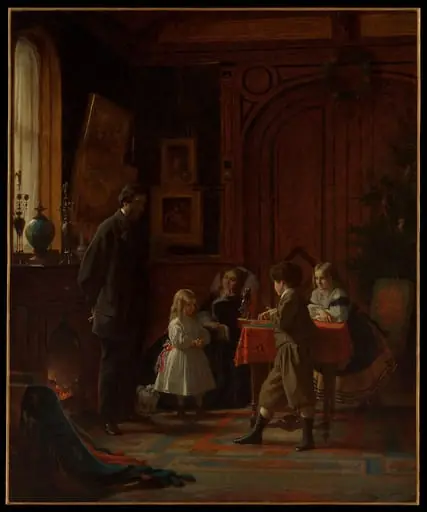 Christmas-Time, The Blodgett Family
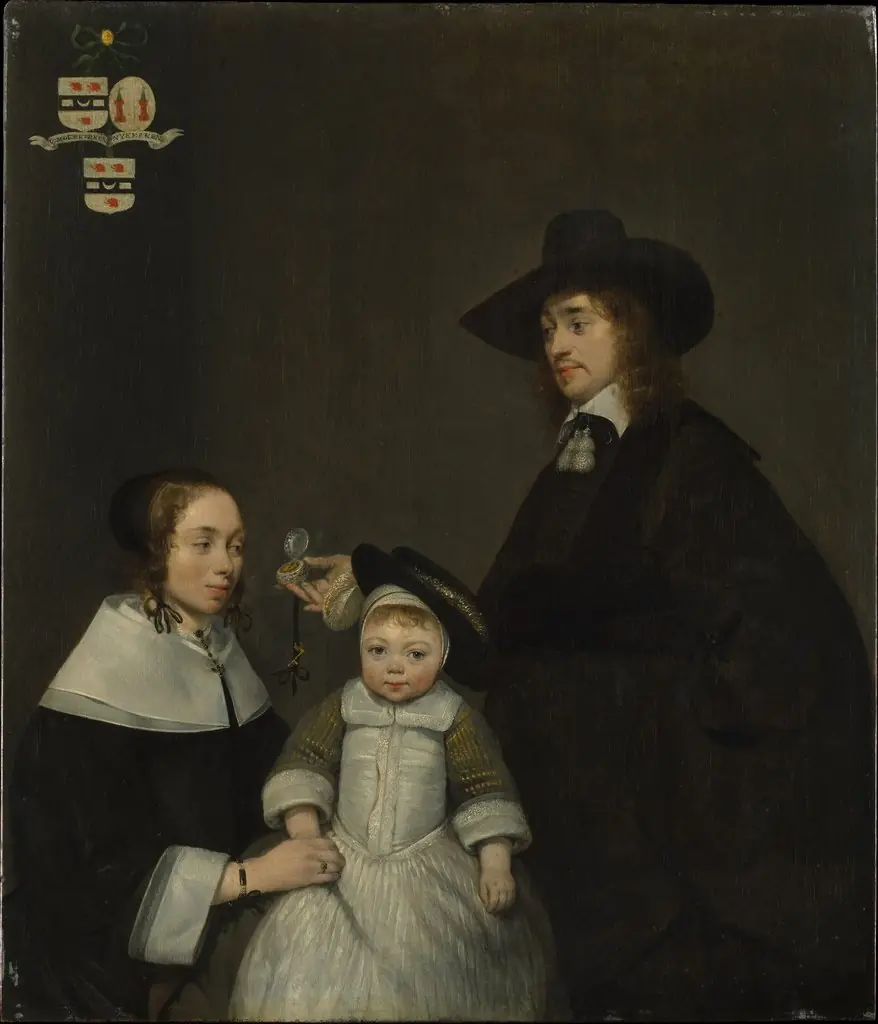 The Van Moerkerken Family
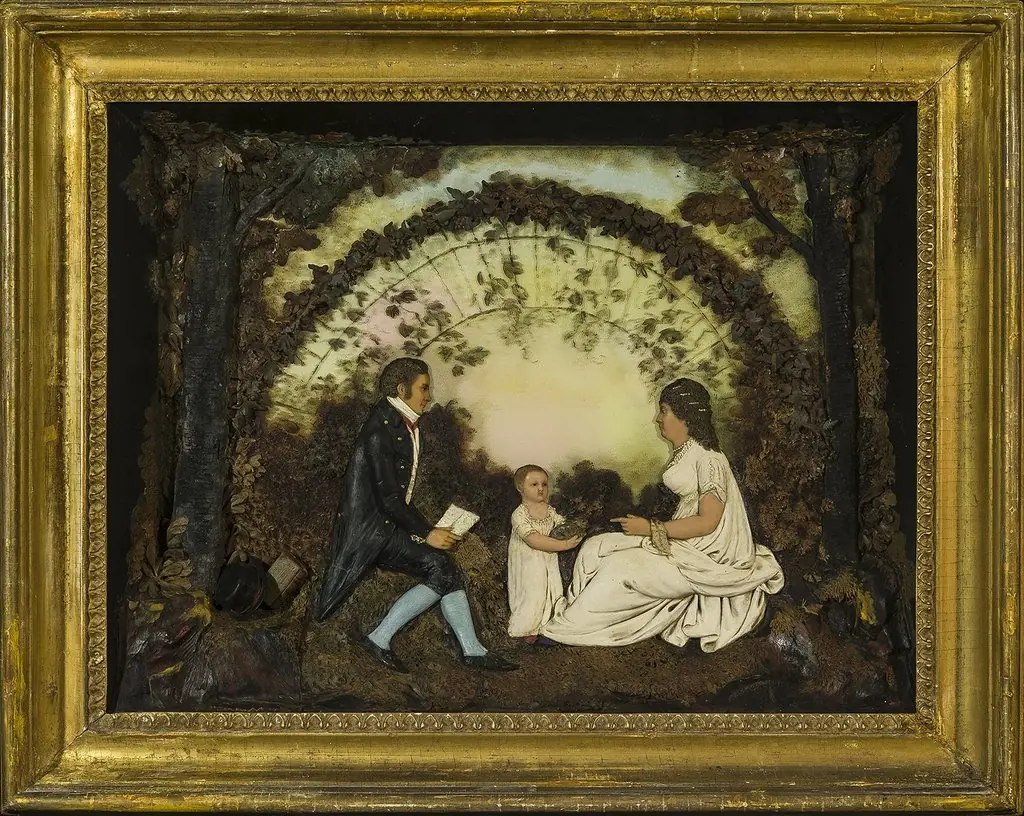 Father, Mother, and Child in a Park
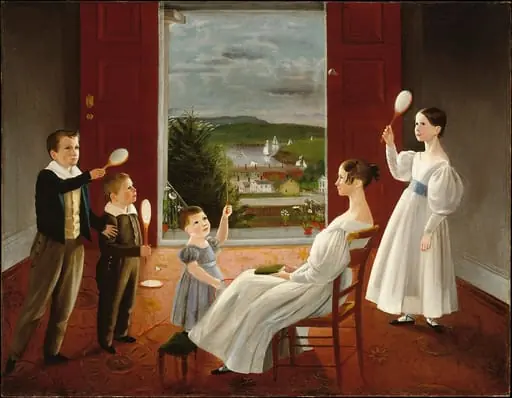 The Children of Nathan Starr
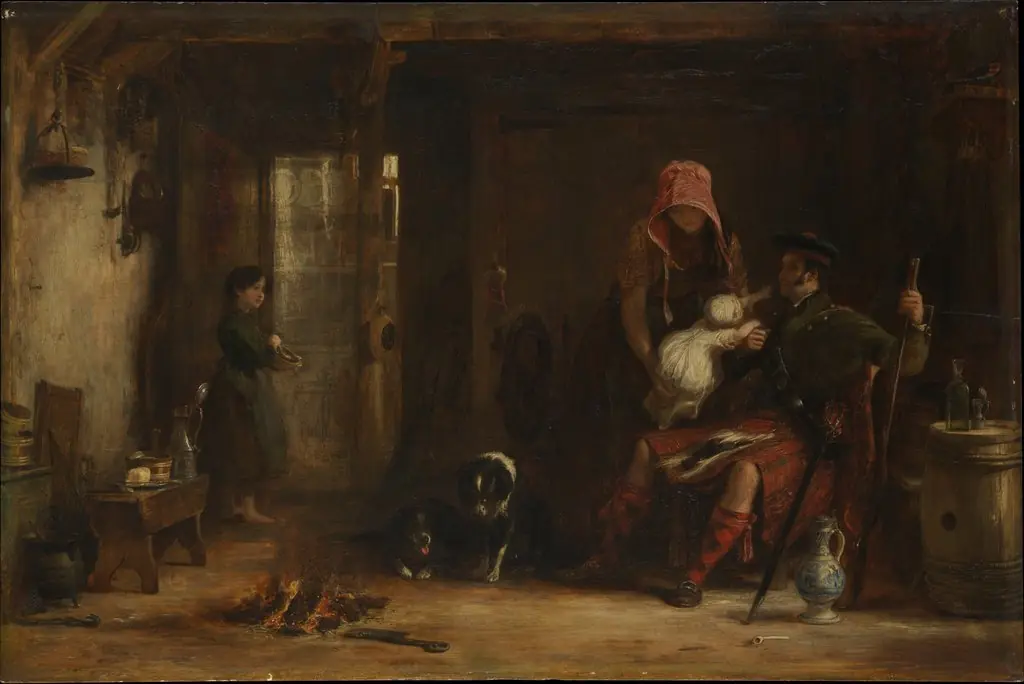 The Highland Family
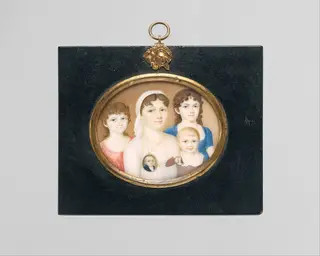 The Artist's Family
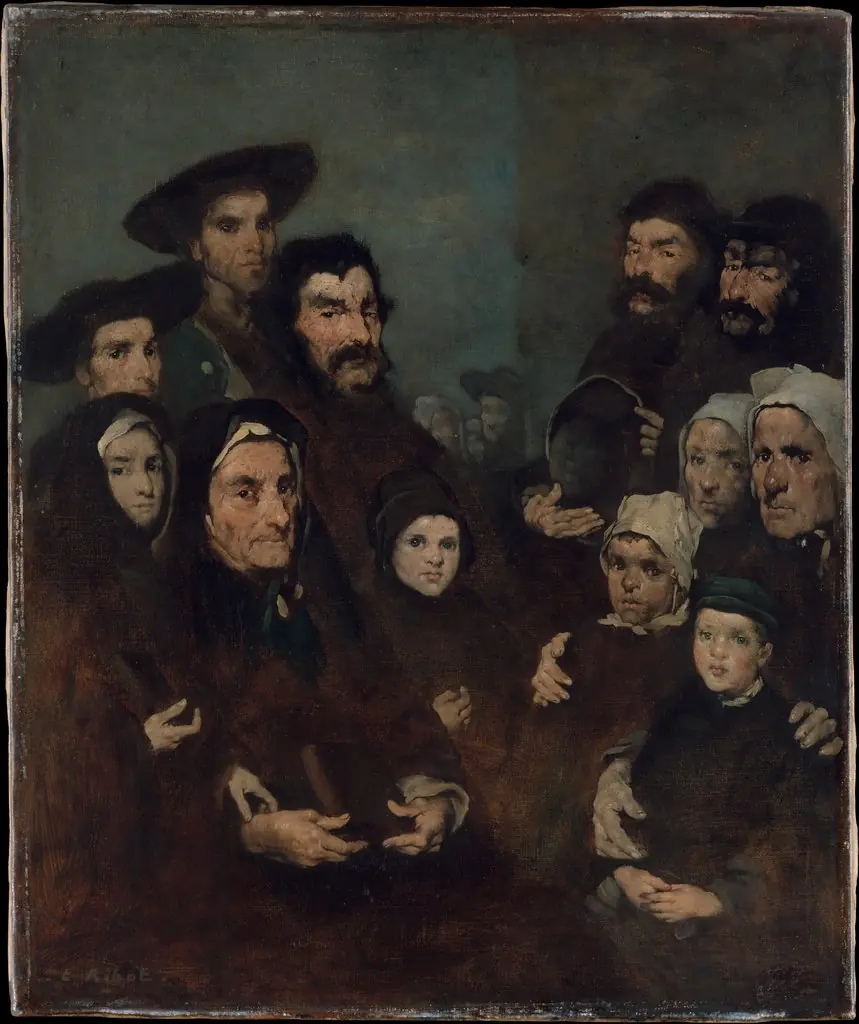 Breton Fishermen and Their Families
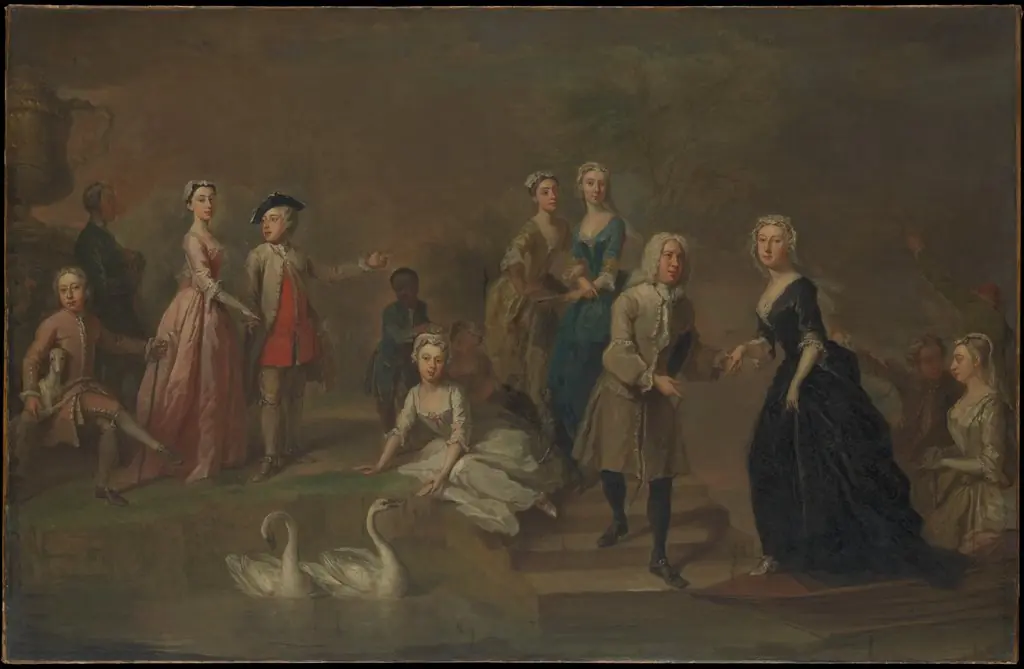 Uvedale Tomkyns Price (1685–1764) and Members of His Family
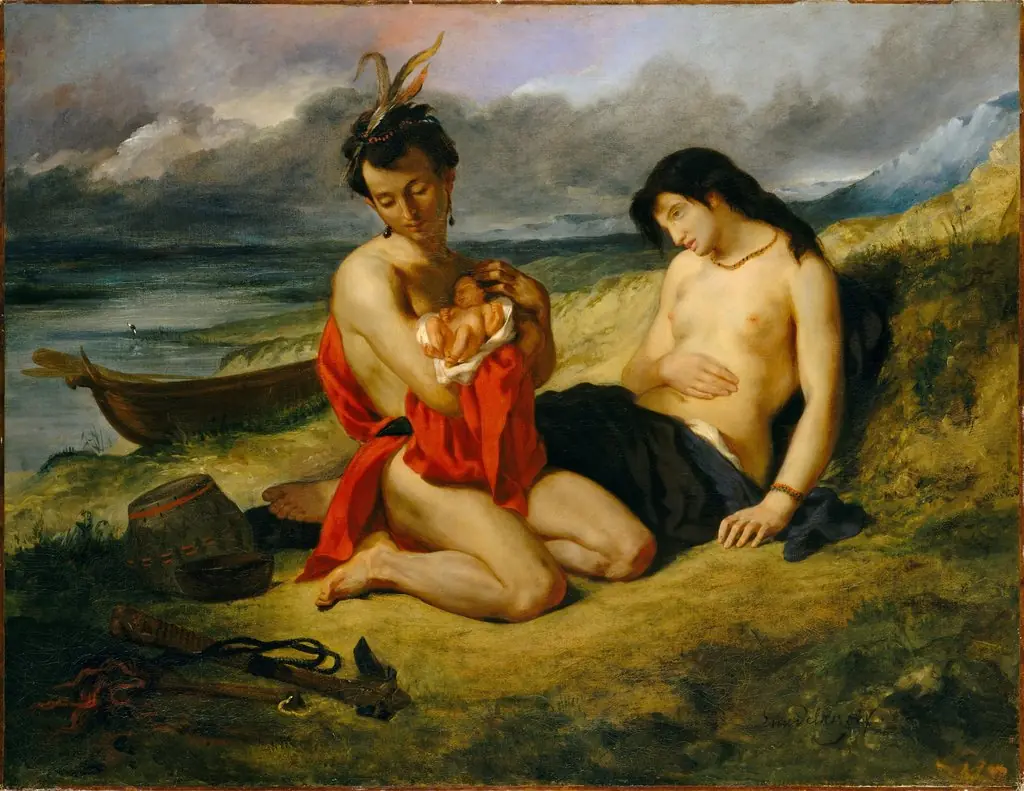 The Natchez
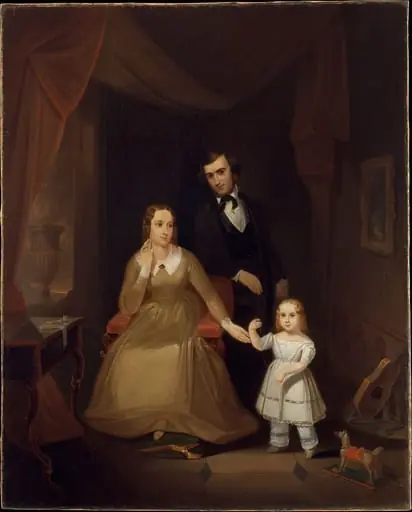 The Williamson Family
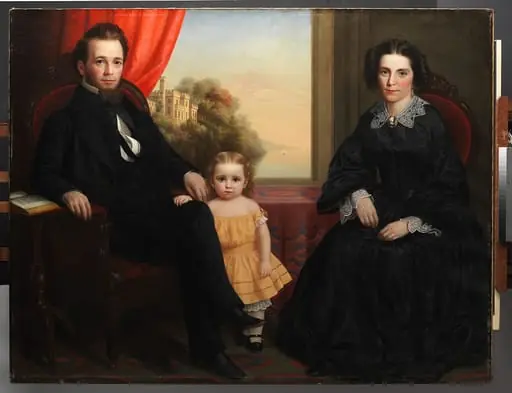 A Family Group
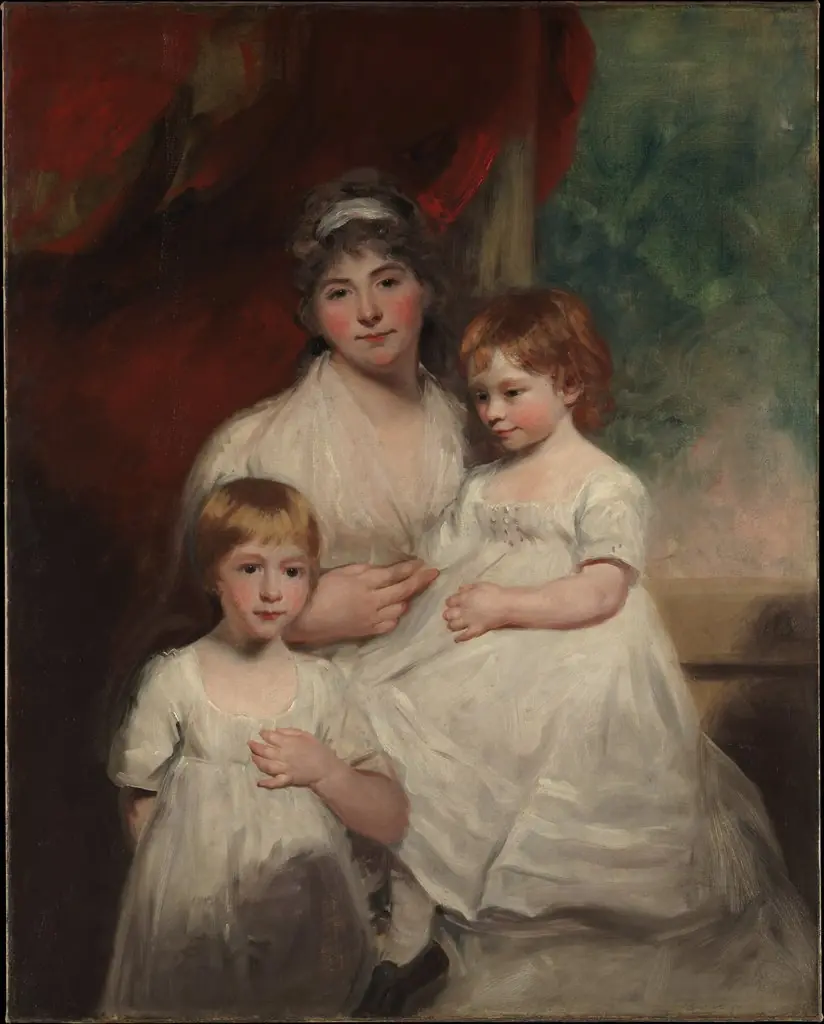 Mrs. John Garden (Ann Garden, 1769–1842) and Her Children, John (1796–1854) and Ann Margaret (born 1793)
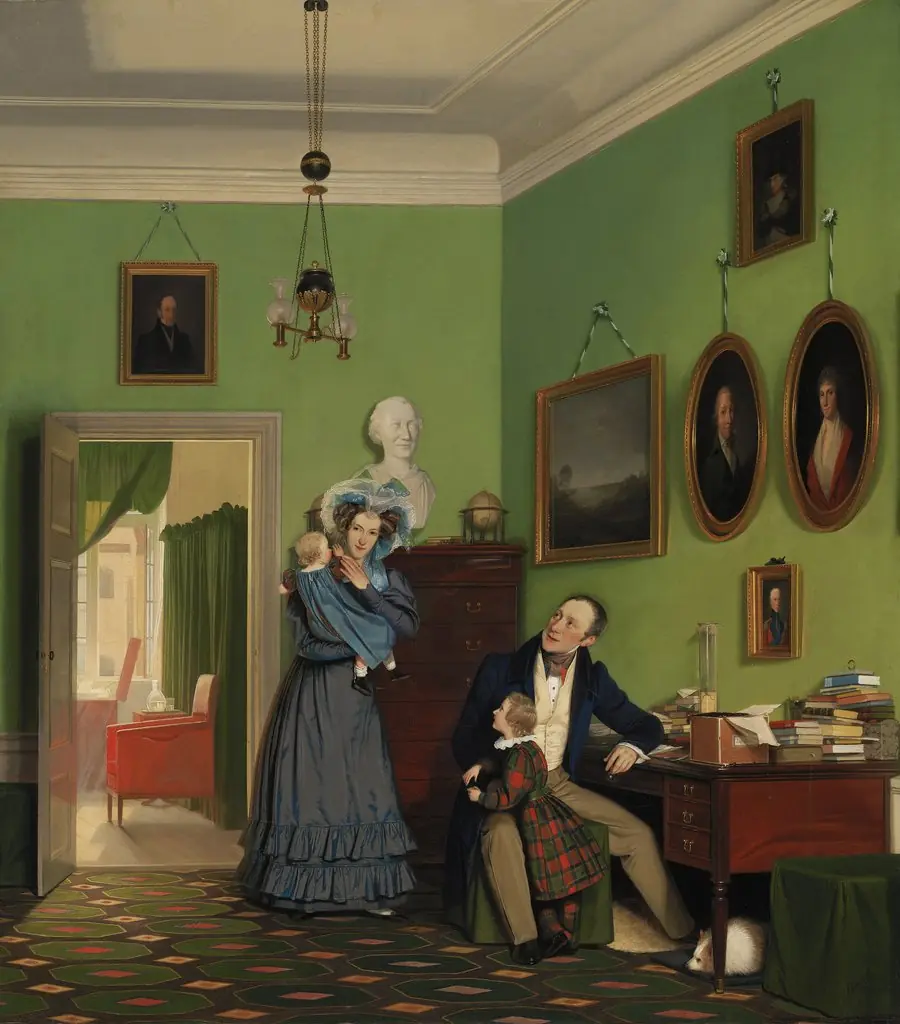 Familien Waagepetersen
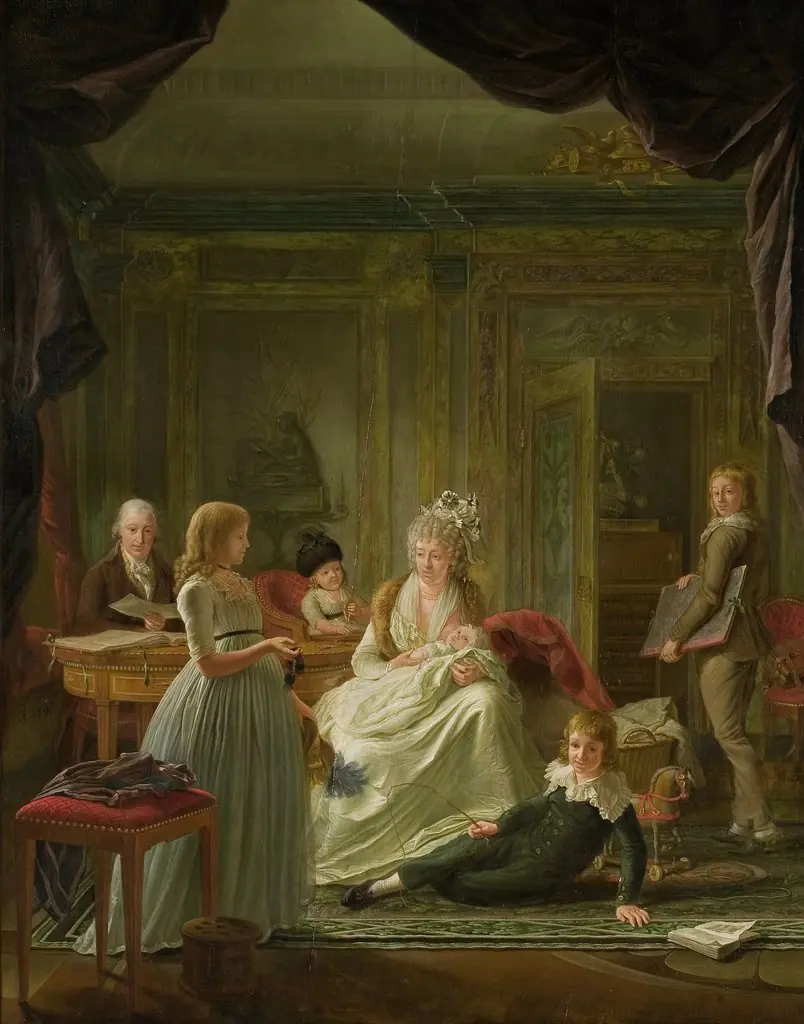 Portrait of Aernout van Beeftingh, his Wife Jacoba Maria Boon and their Children
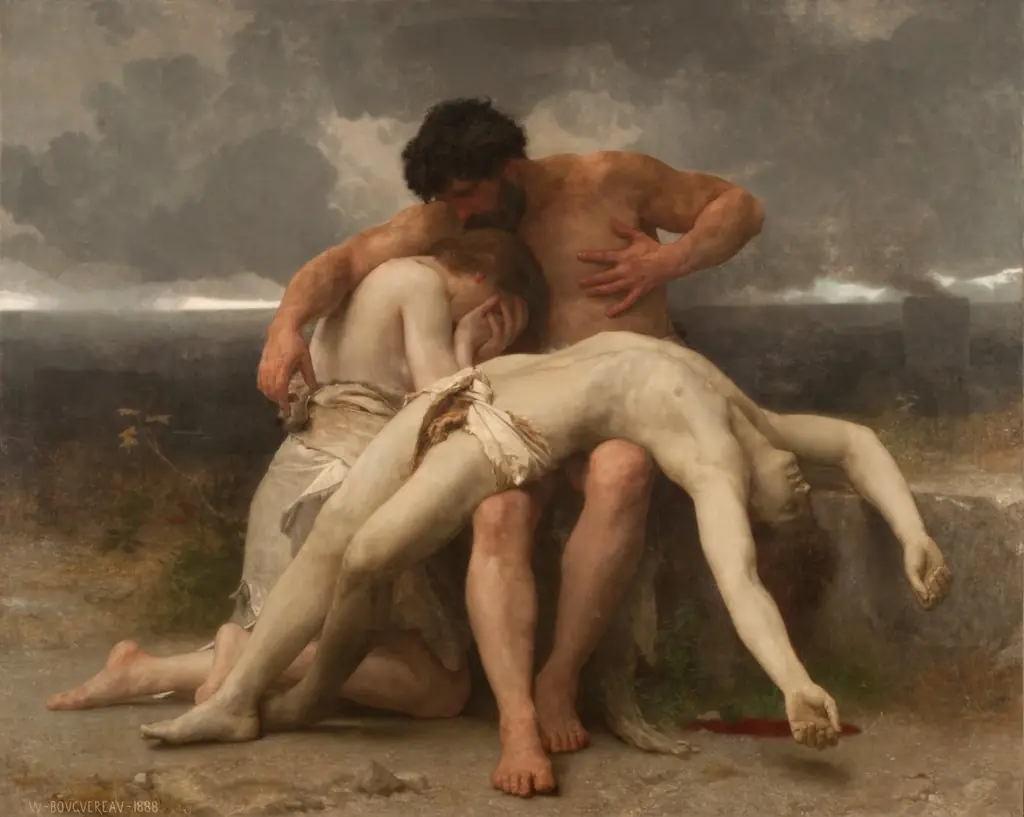 The First Mourning
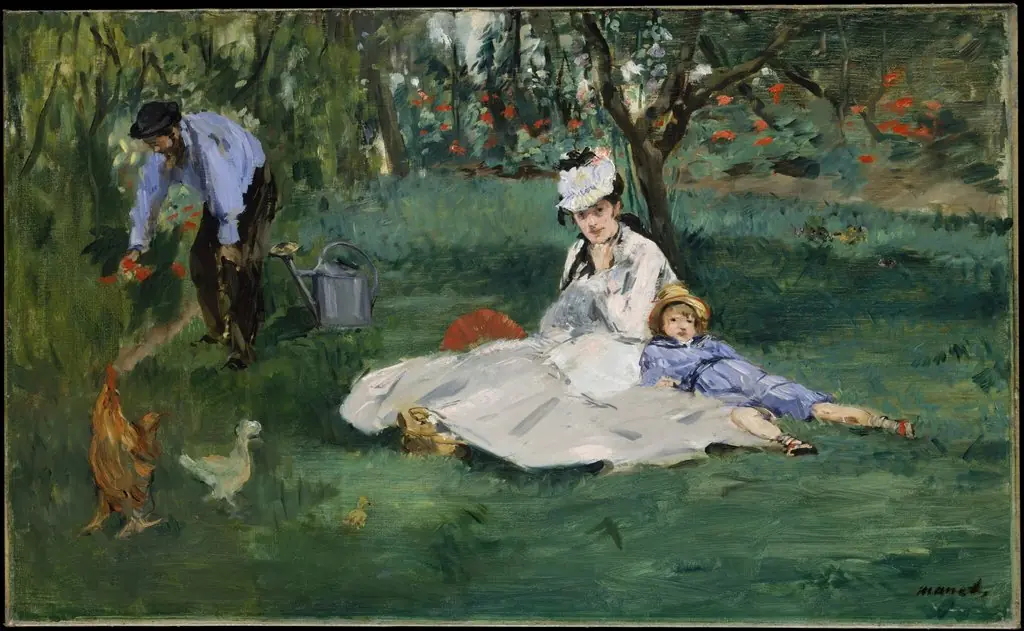 The Monet Family in Their Garden at Argenteuil
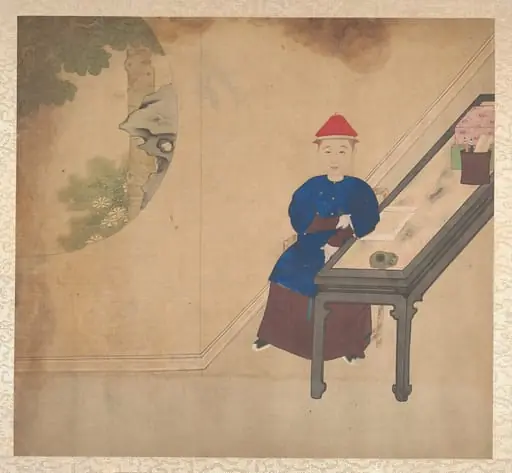 Untitled
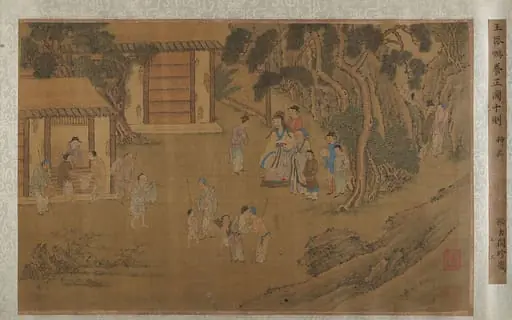 明/清 佚名 舊傳王振鵬 養正圖 卷|Family Training
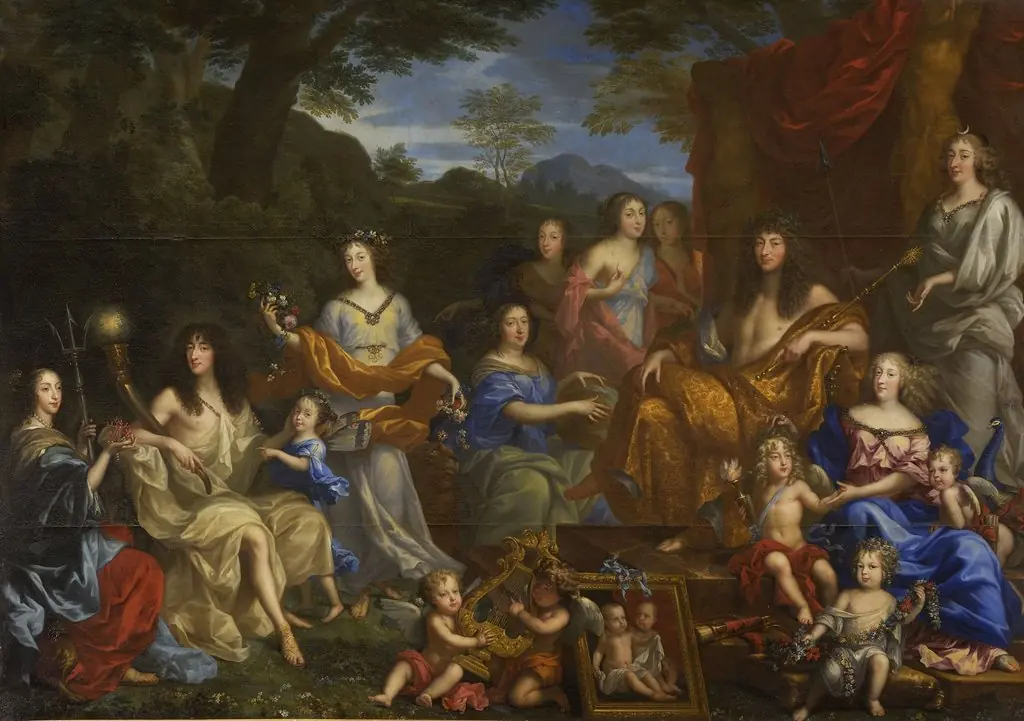 Mythological portrait of Louis XIV and the royal family
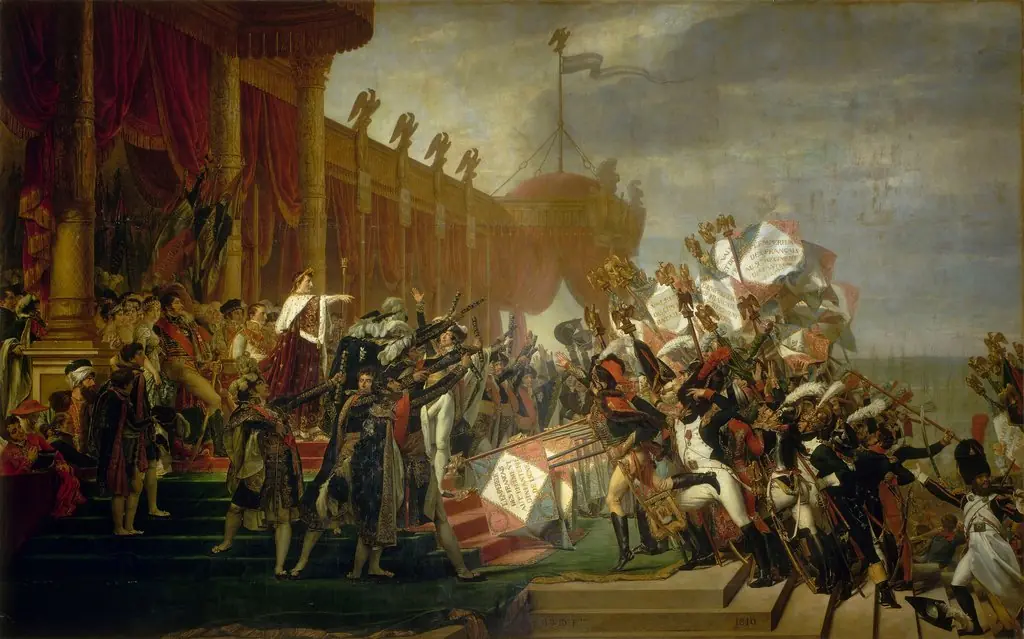 The Distribution of the Eagle Standards
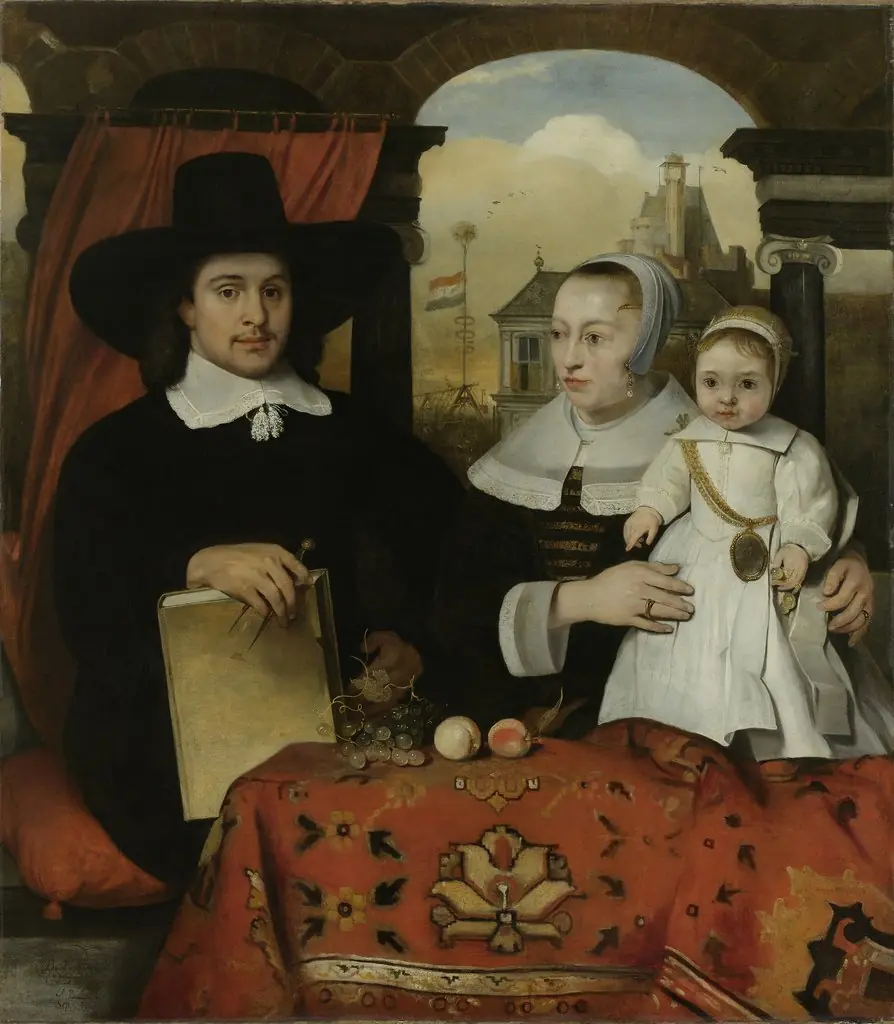 Willem van der Helm (ca 1625-75). Municipal architect of Leiden, with his wife Belytgen Cornelisdr van de Schelt and their son Leendert
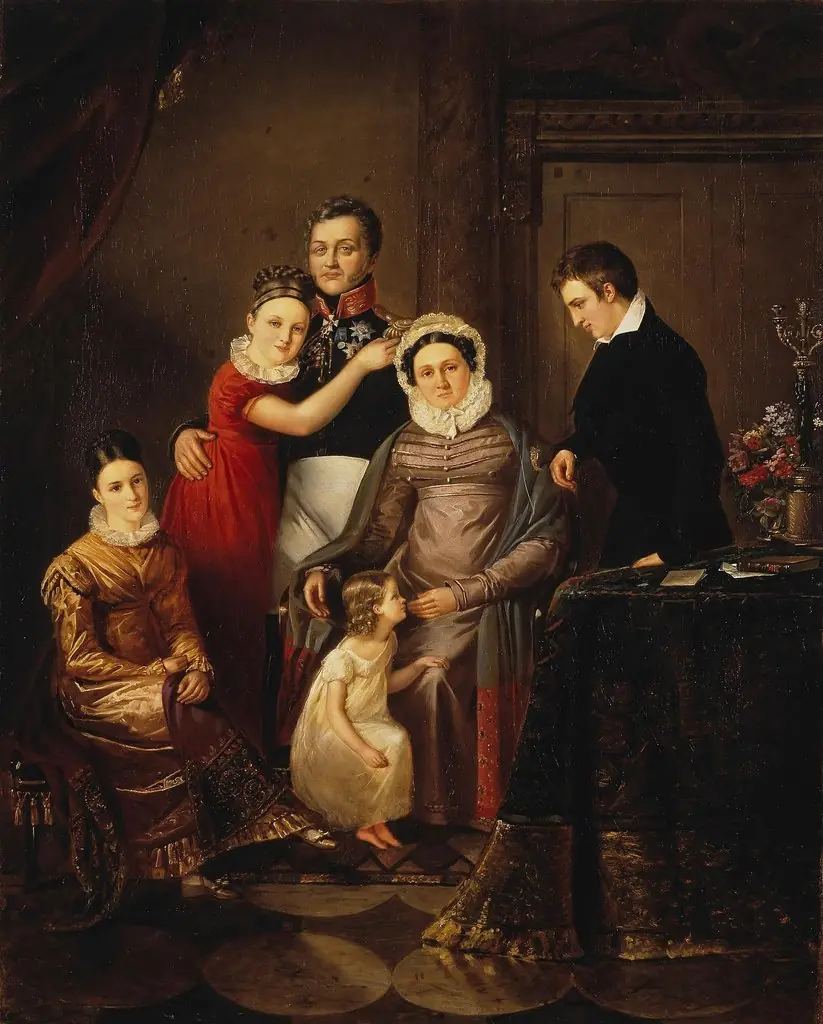 Portrait of Count Nikolai Repnin-Volkonsky with His Family
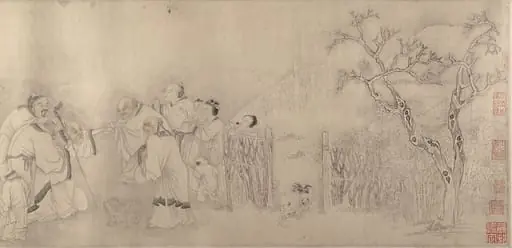 明/清 佚名 人物故事圖 卷|Family Visit
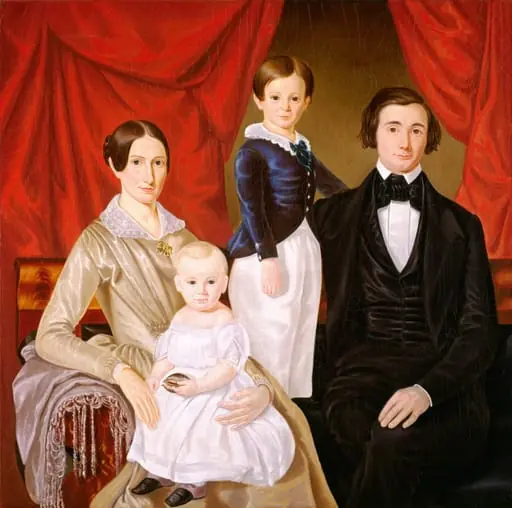 The Gage Family
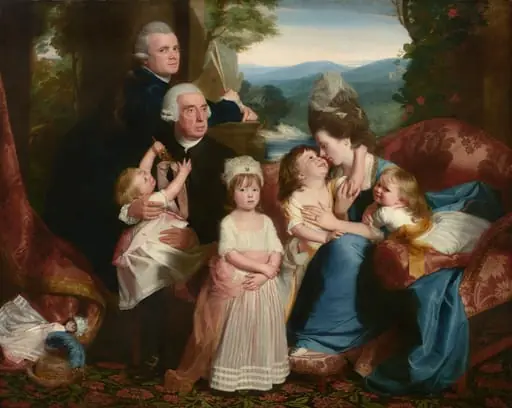 The Copley Family
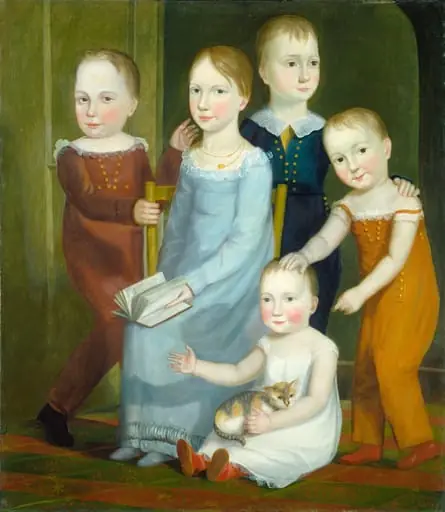 Five Children of the Budd Family
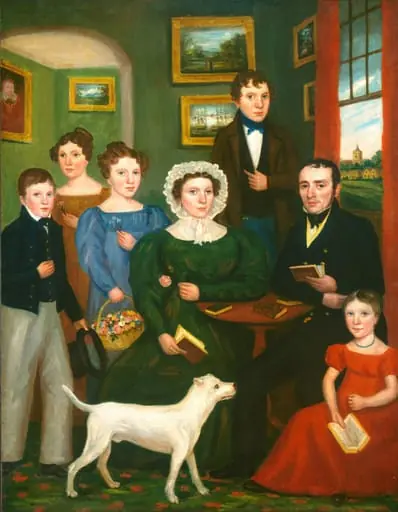 Portrait of an Unknown Family with a Terrier
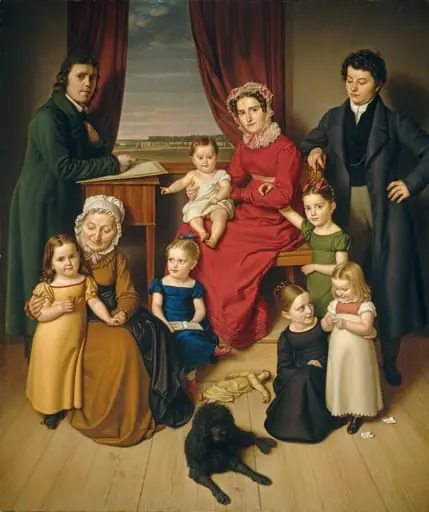 An Artist and His Family
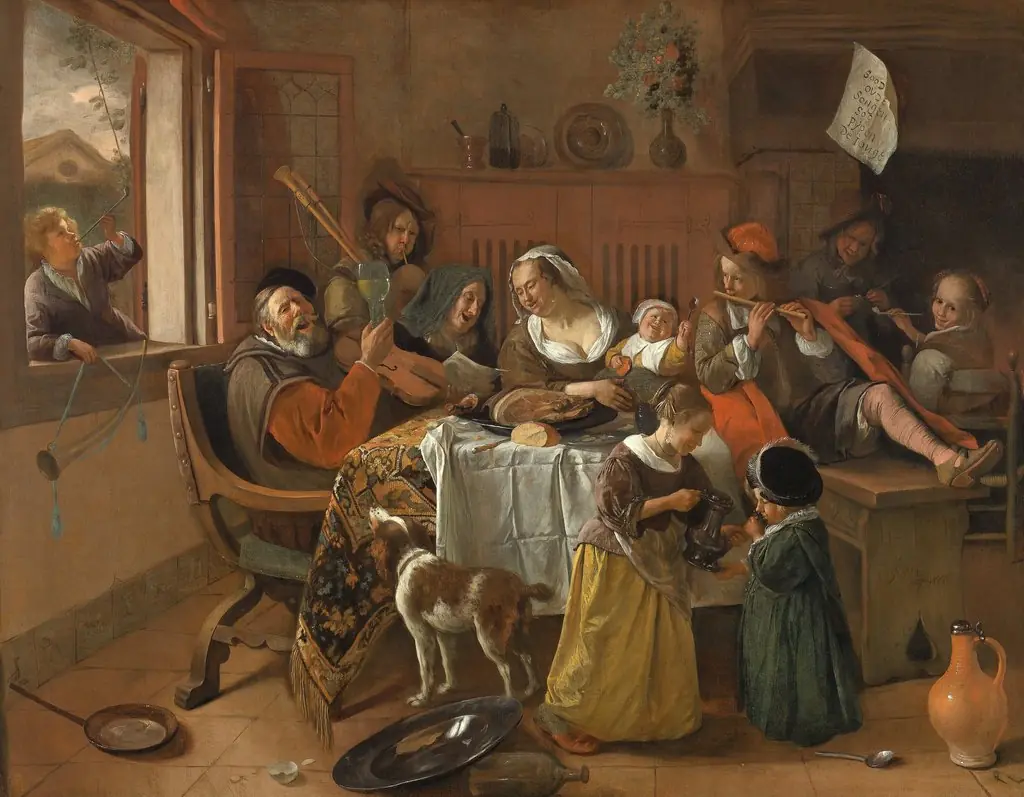 The Happy Family
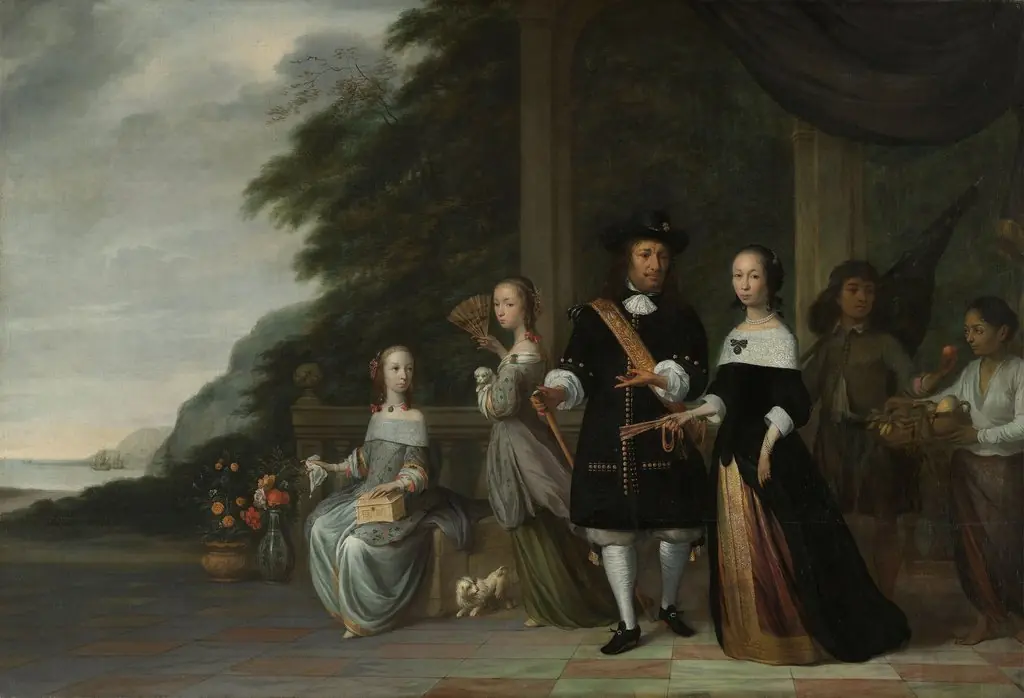 Pieter Cnoll, Cornelia van Nijenrode, their Daughters and Two Enslaved Servants
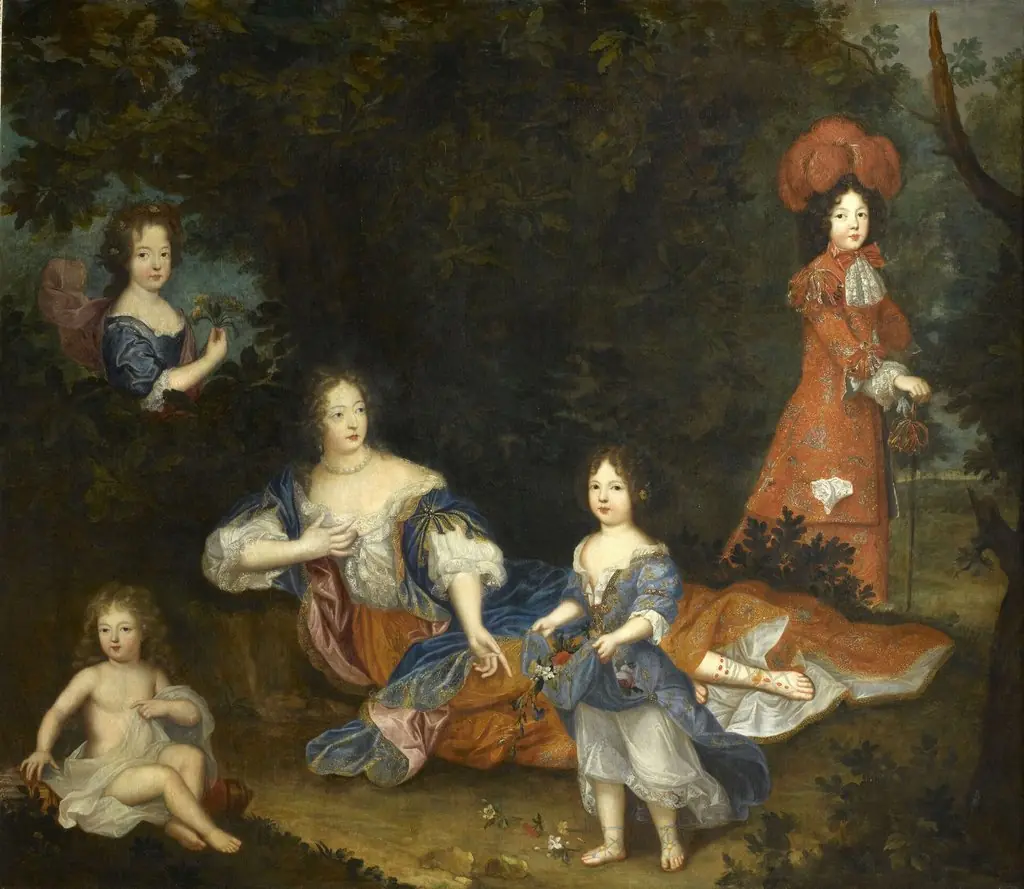 Françoise-Athénaïs de Rochechouart, Marquise de Montespan and her children
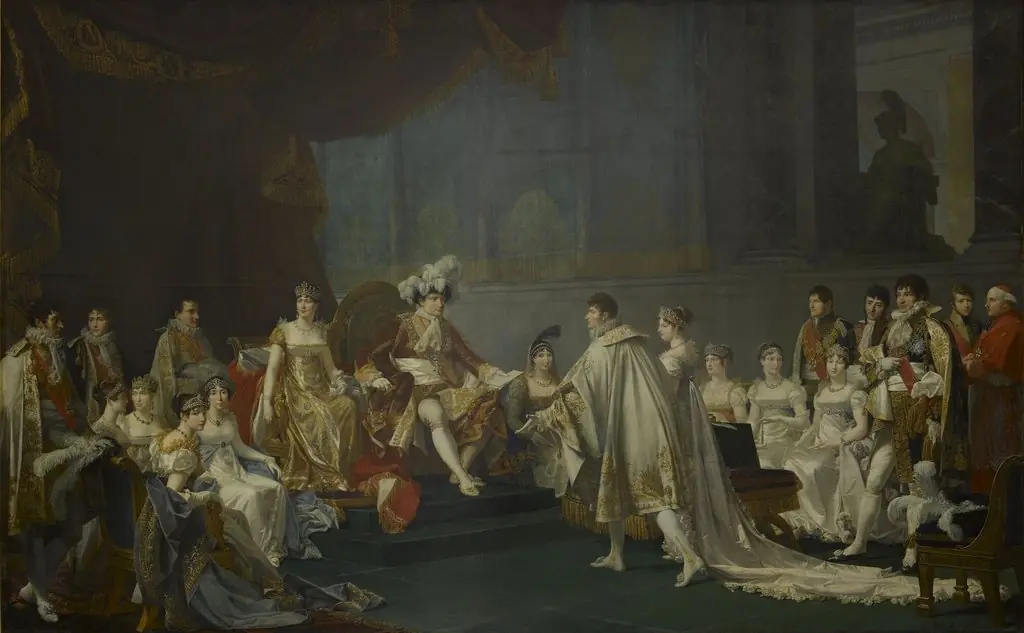 Wedding of Prince Jérôme Bonaparte and Princess Frédérique-Catherine of Wurtemberg, August 22, 1807
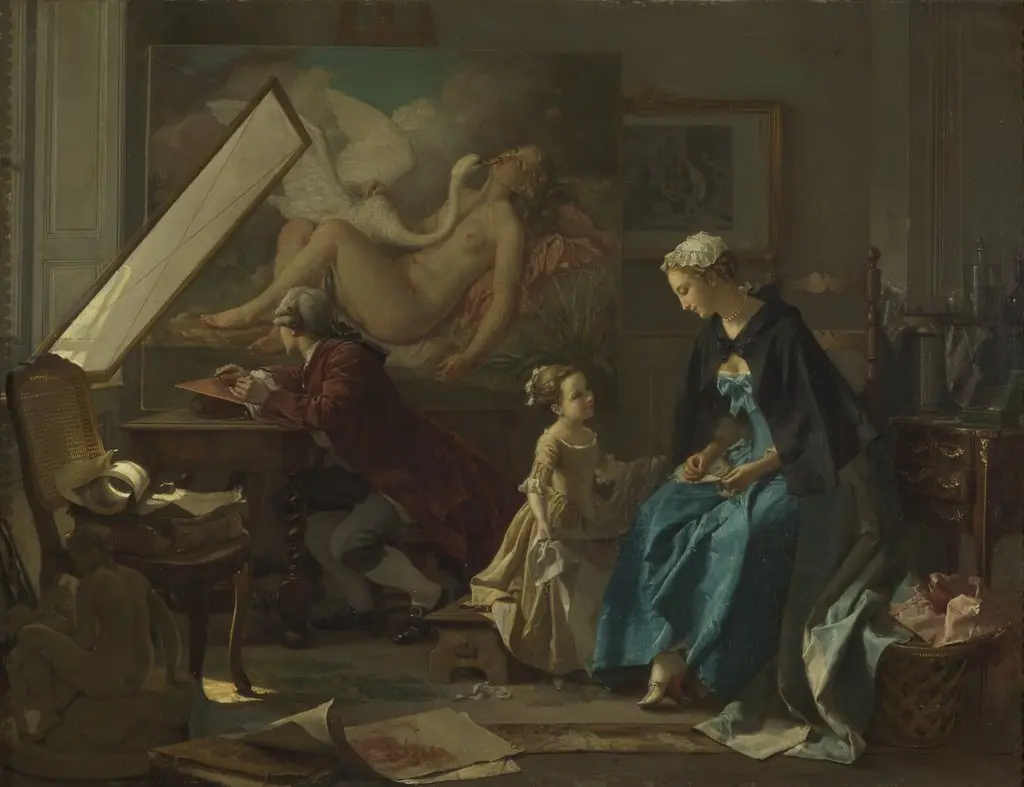 The Studio of the Engraver
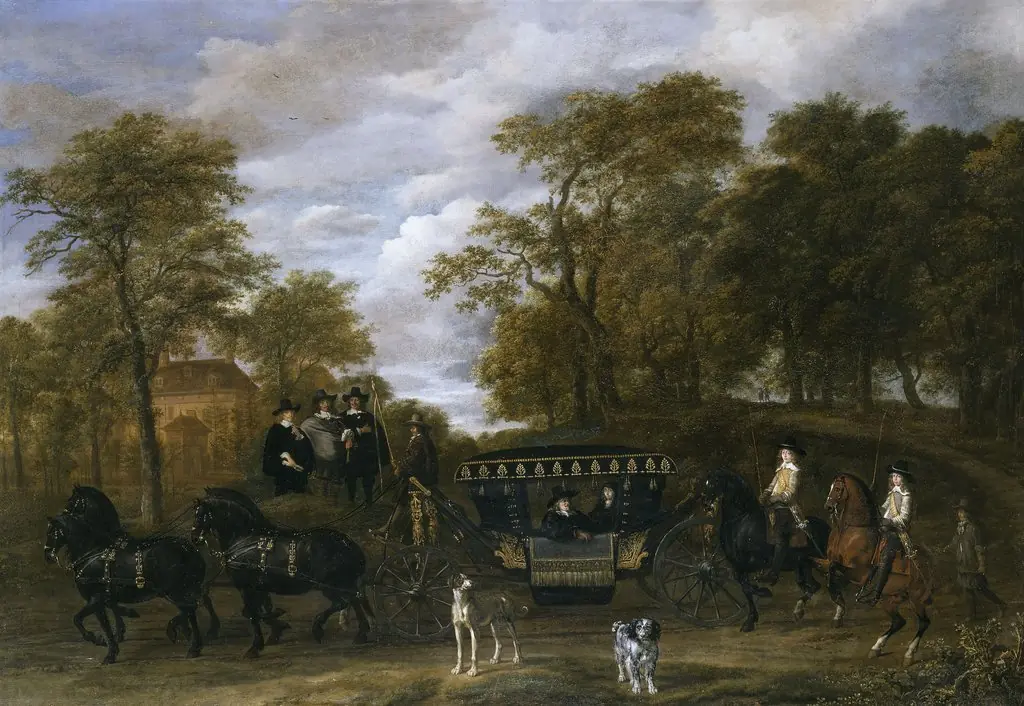 Cornelis de Graeff with his Wife and Sons
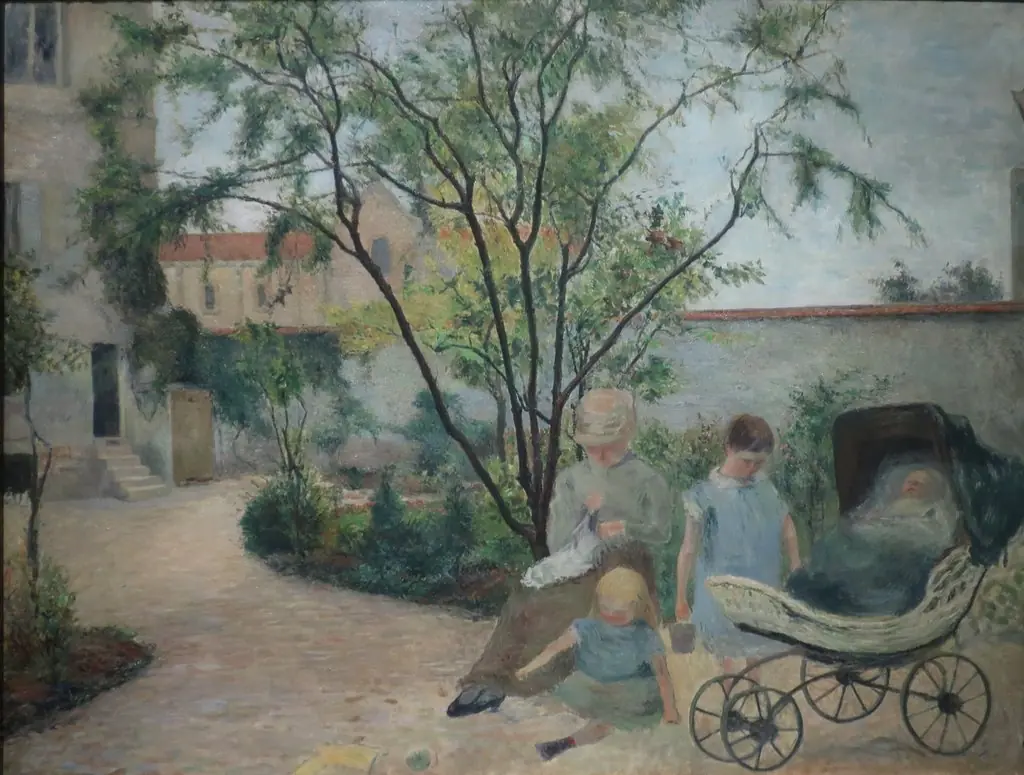 Figures in a Garden
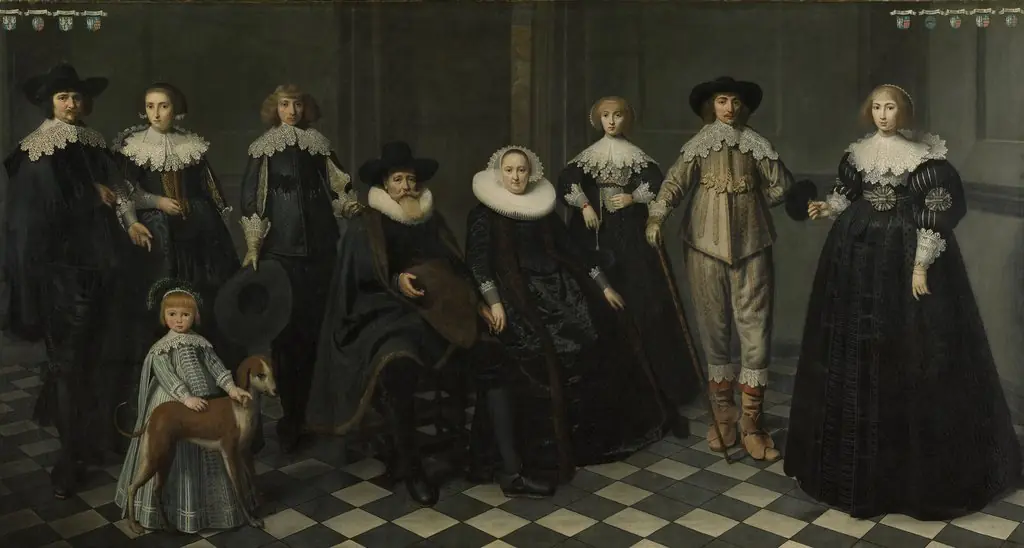 The family of Dirck Bas Jacobsz, burgomaster of Amsterdam
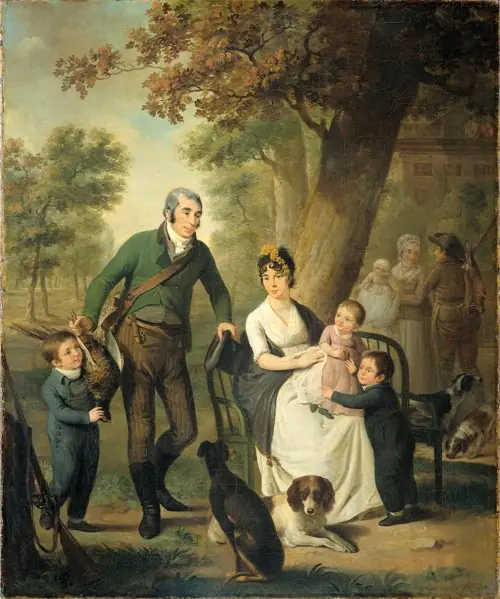 Family Portrait of Jonkheer Gysbert Carel Rutger Reinier van Brienen van Ramerus, his Wife and four of their Children at his Estate of Crailo
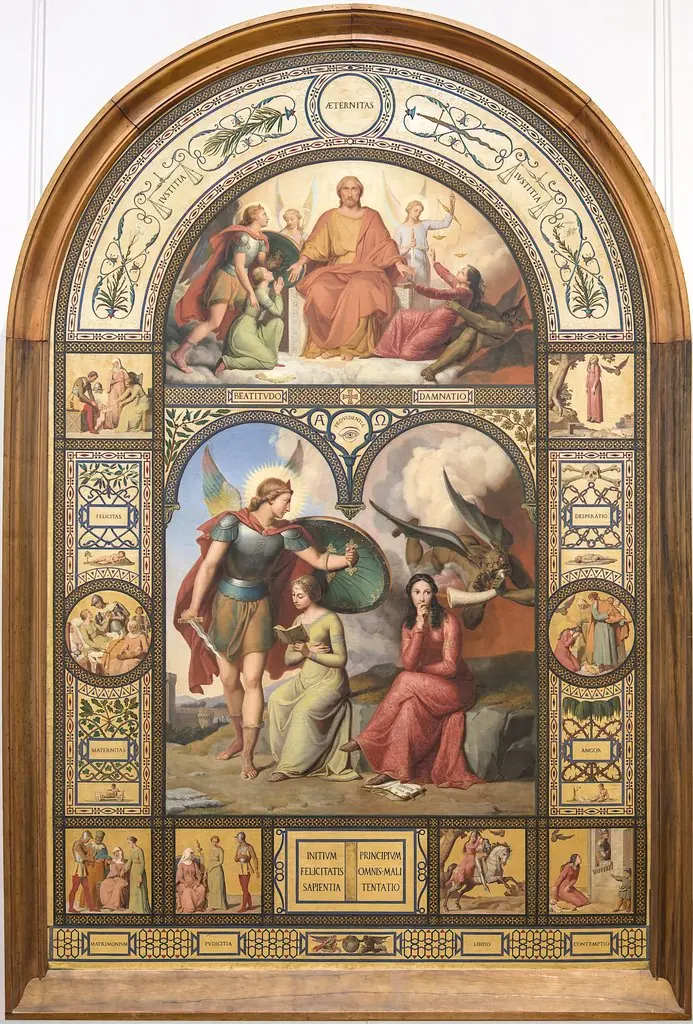 Good and Evil
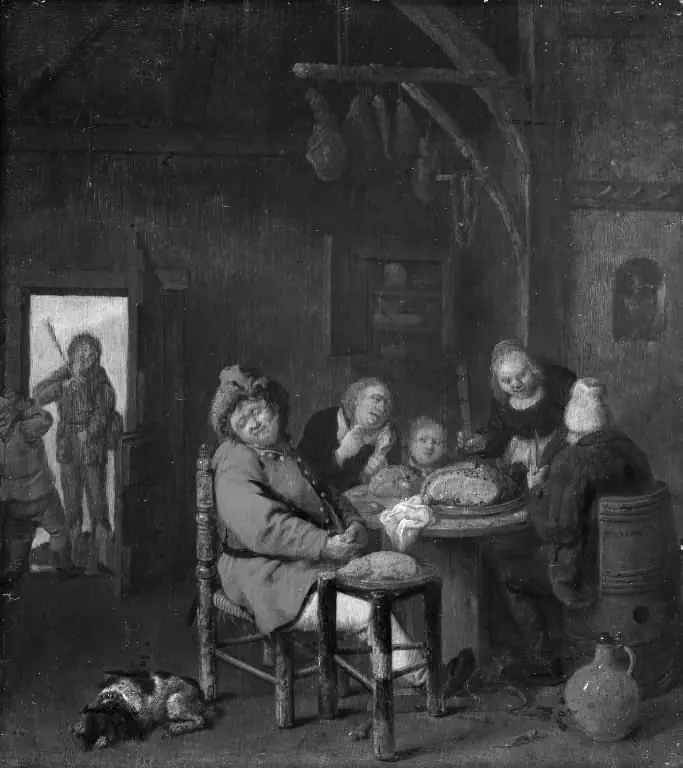 Peasant Family
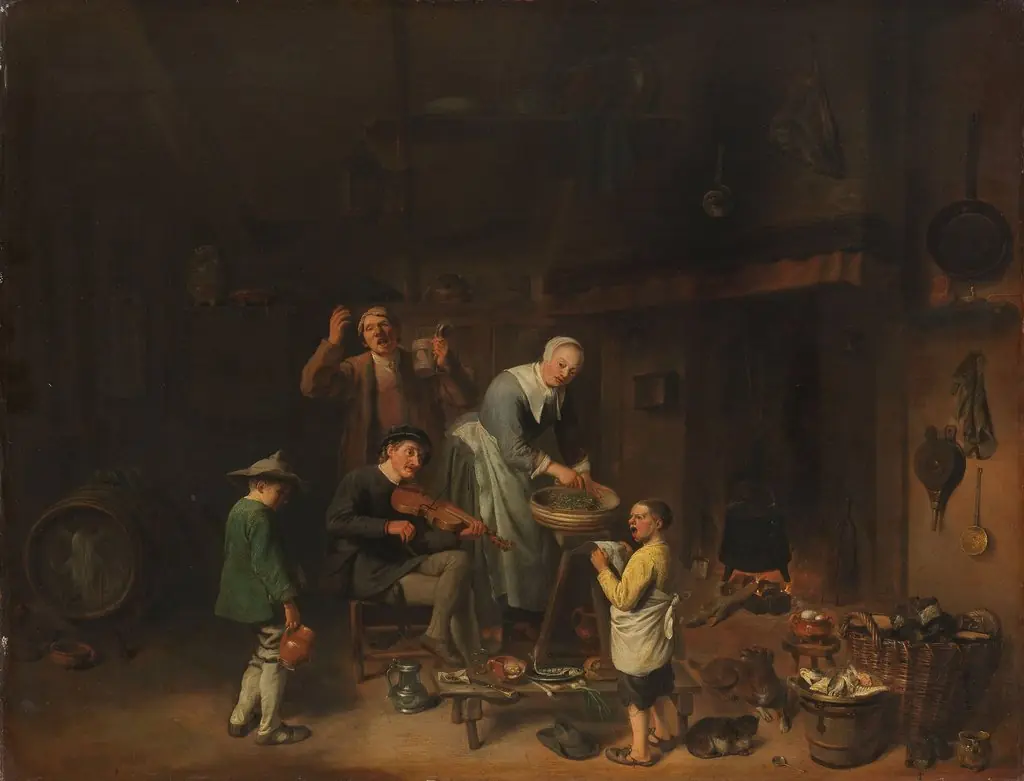 Peasant Family Singing
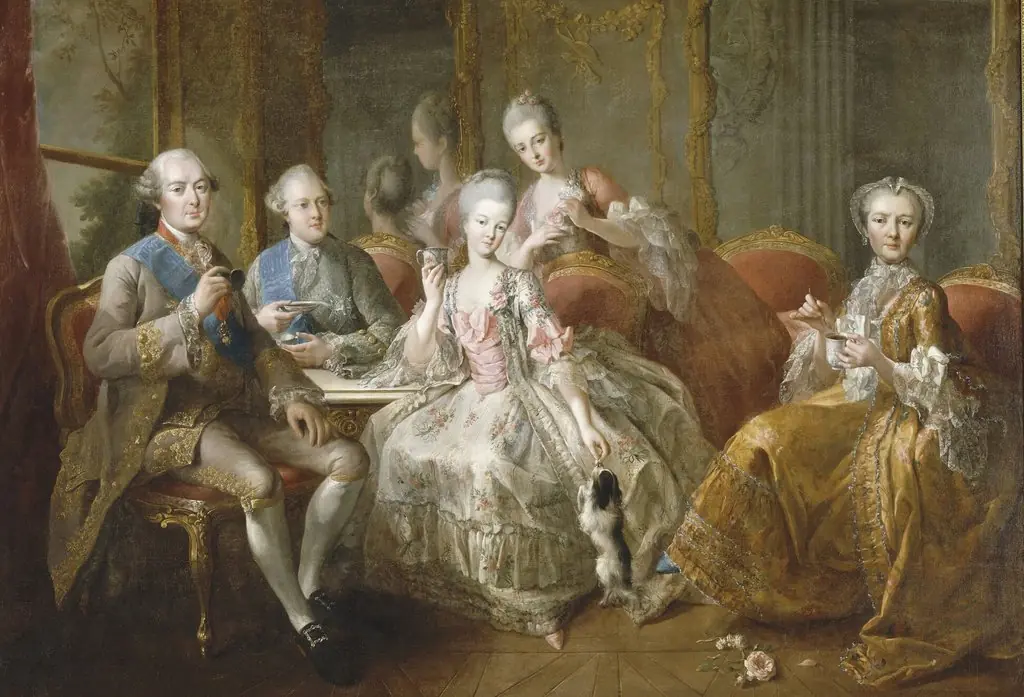 The family of the Duke of Penthièvre called la tasse de chocolat
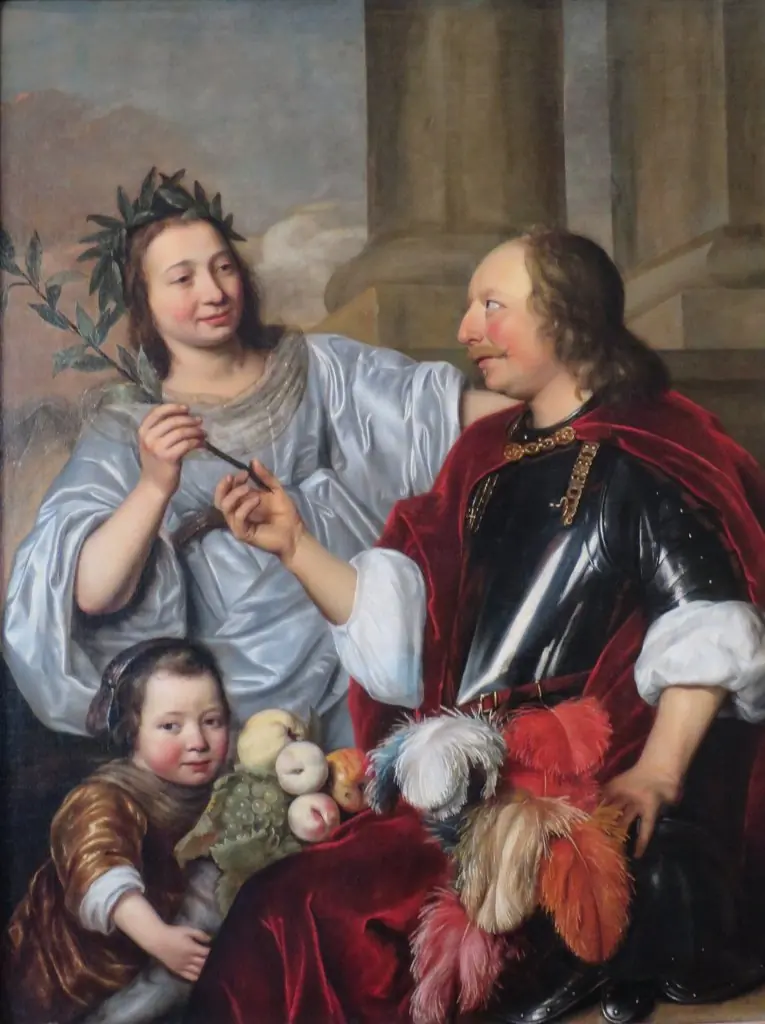 Allegorical Family Portrait
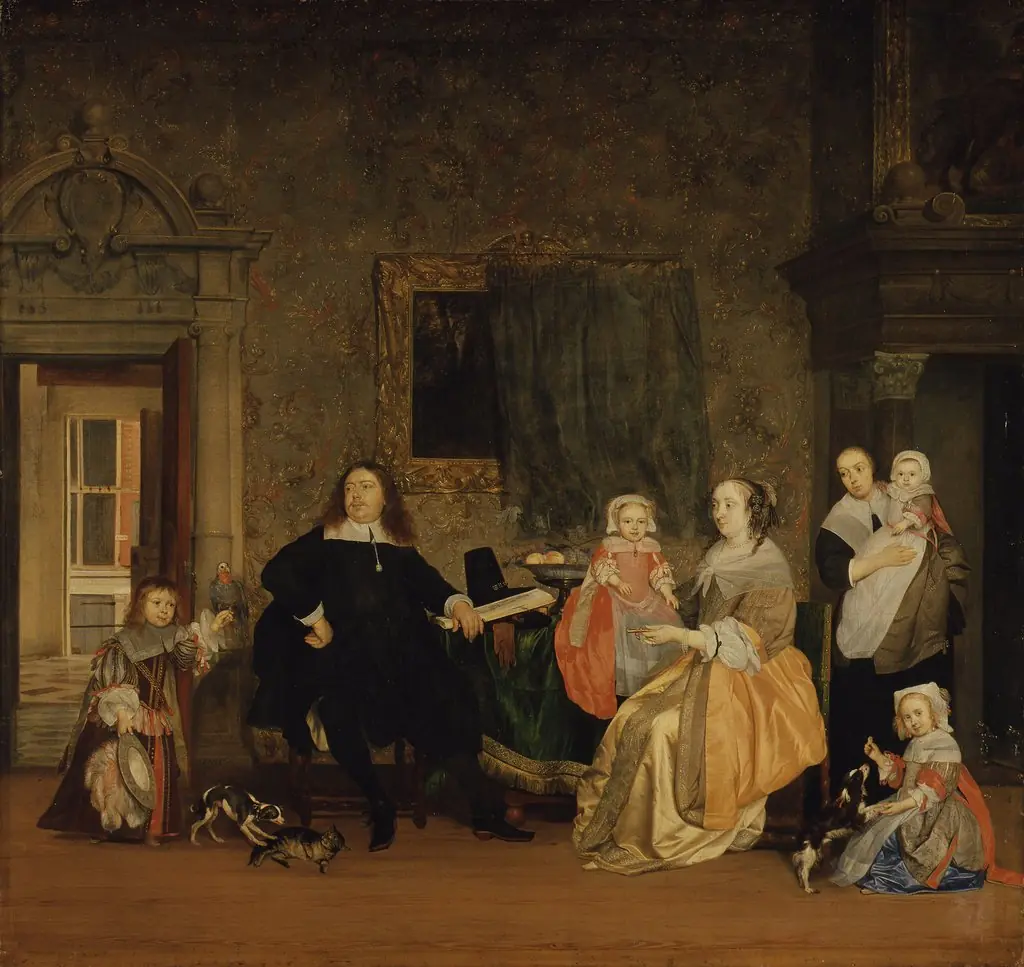 Portrait of the Family Hinlopen
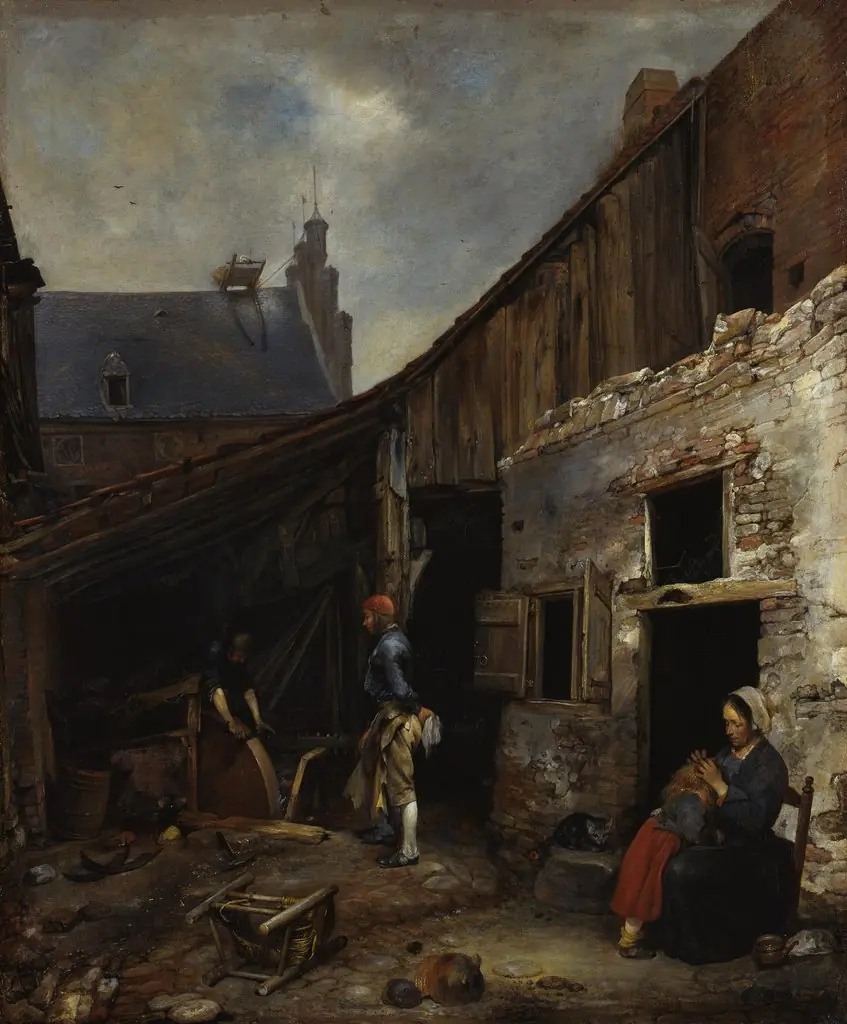 The Knife-Grinder's Family
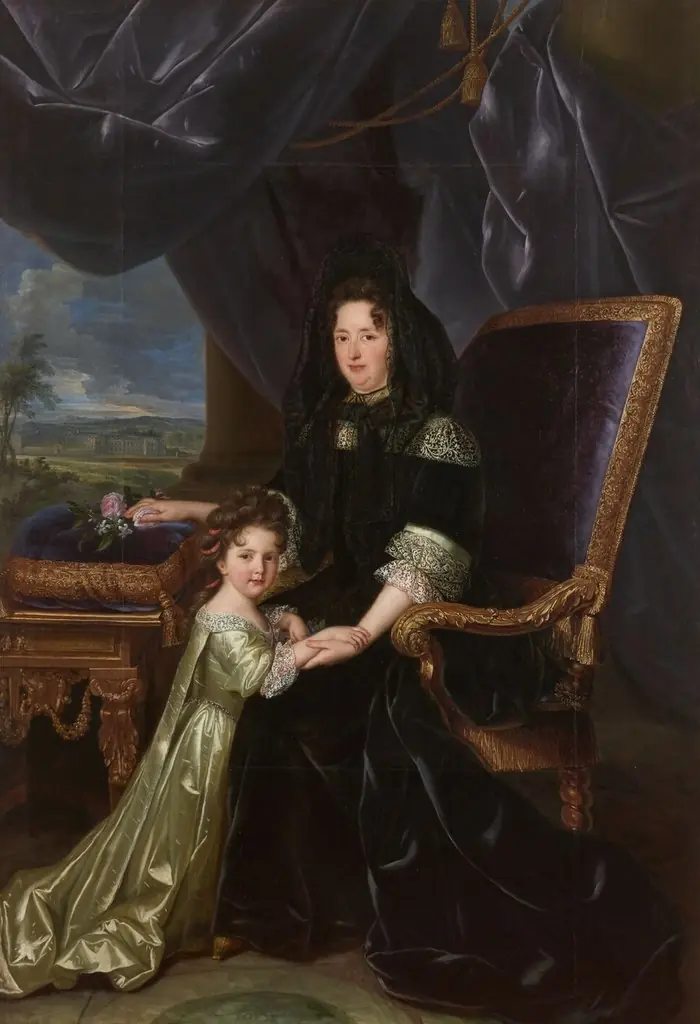 Françoise Charlotte d'Aubigné with her aunt Madame de Maintenon.
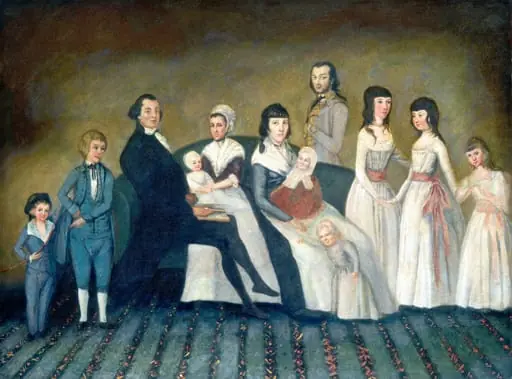 The Cheney Family
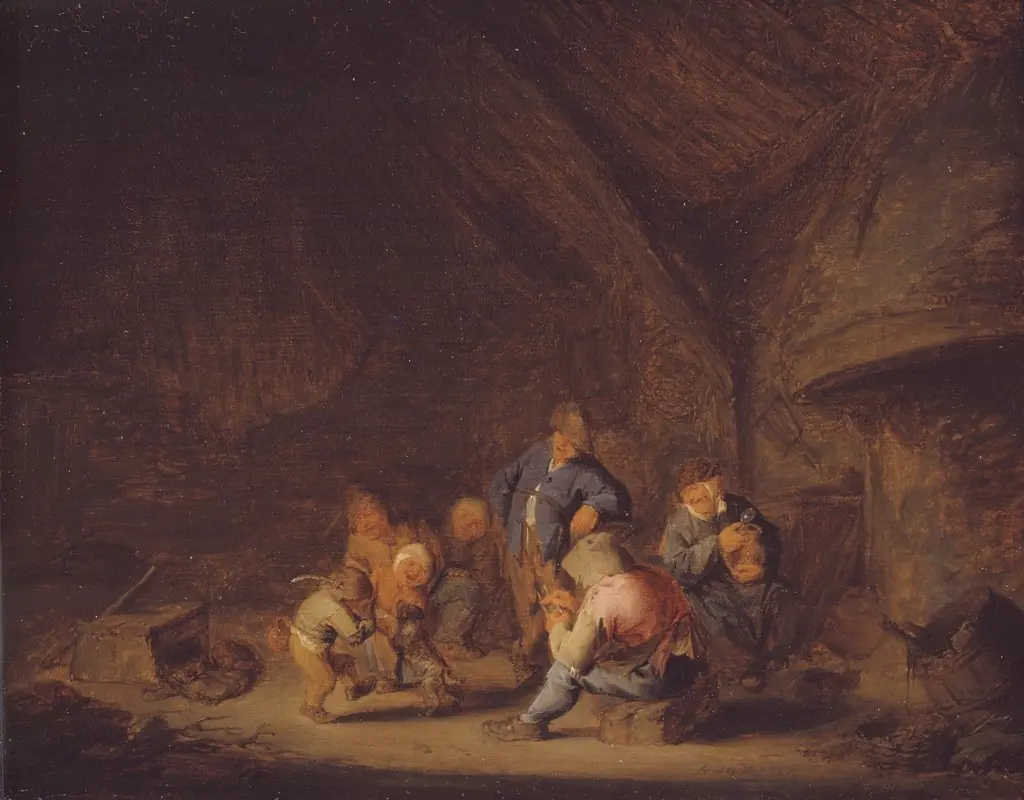 A Room in a Cottage
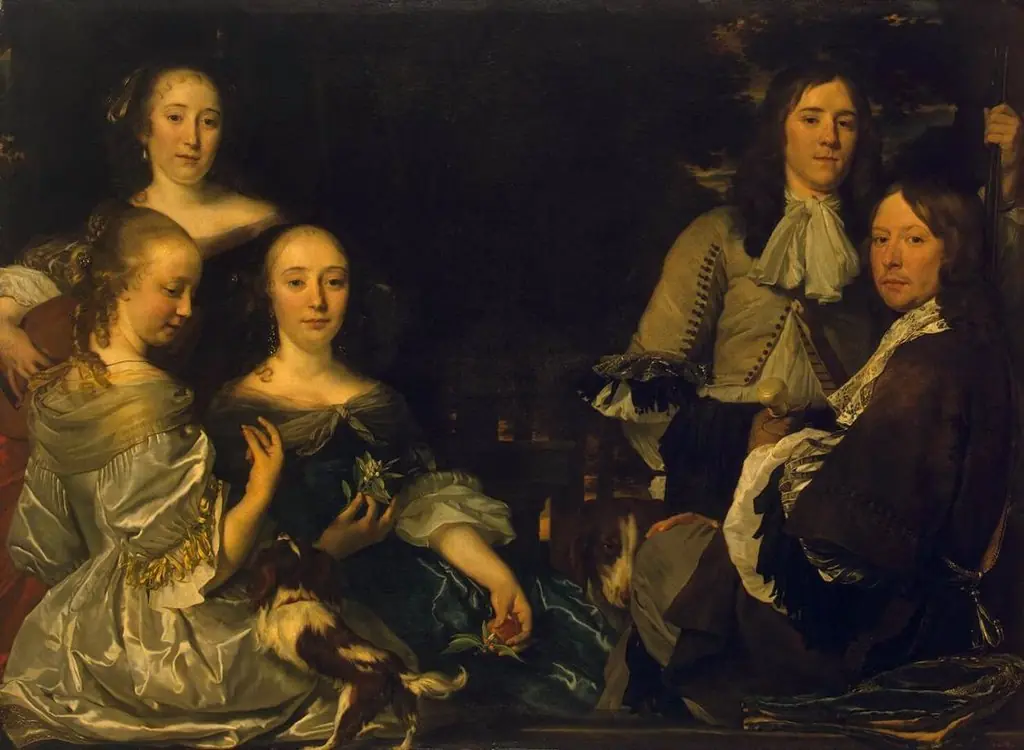 Family Portrait
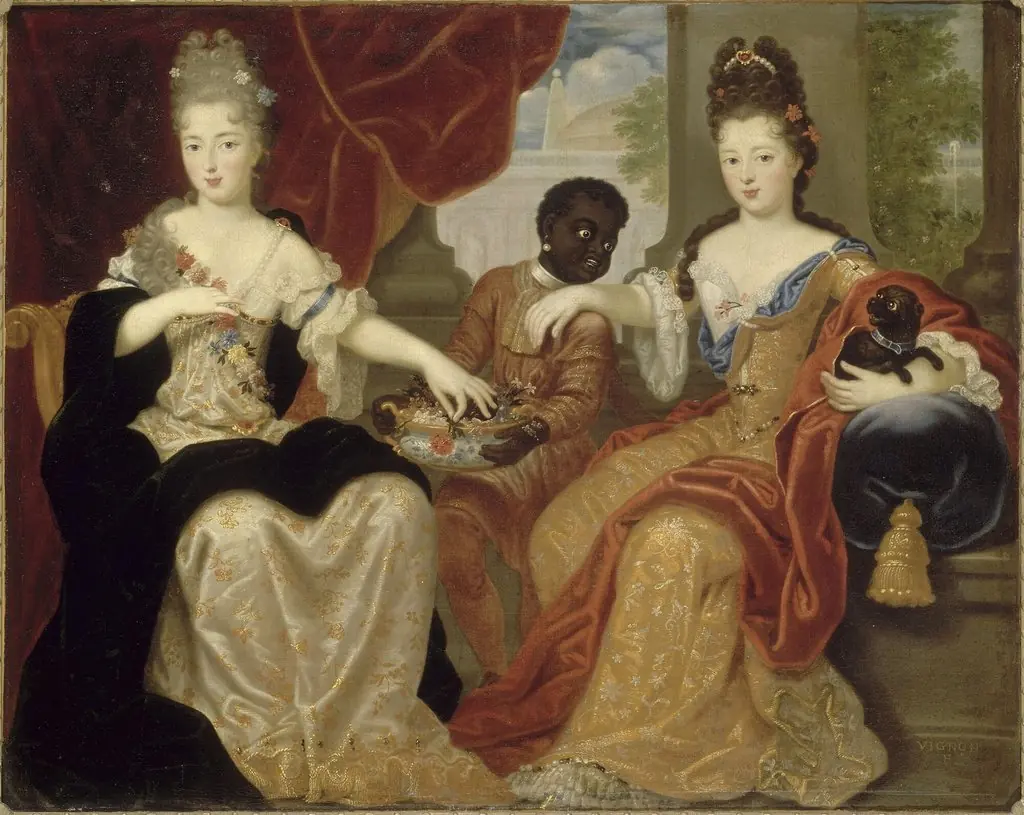 Françoise-Marie de Bourbon known as Mademoiselle de Blois and Louise-Françoise de Bourbon known as Mademoiselle de Nantes
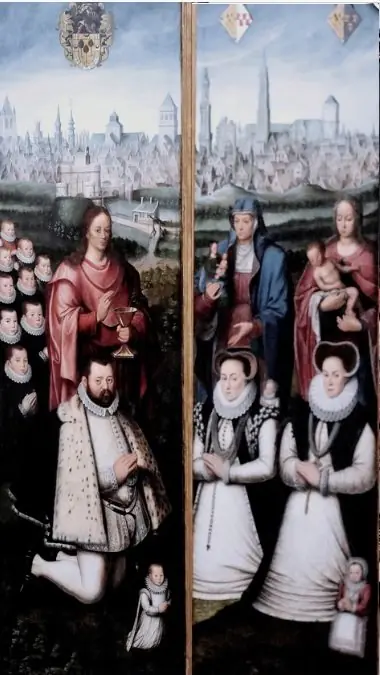 Portraits of Juan II Pardo and his Wives Anna Ingenieulandt and Maria Ancheman
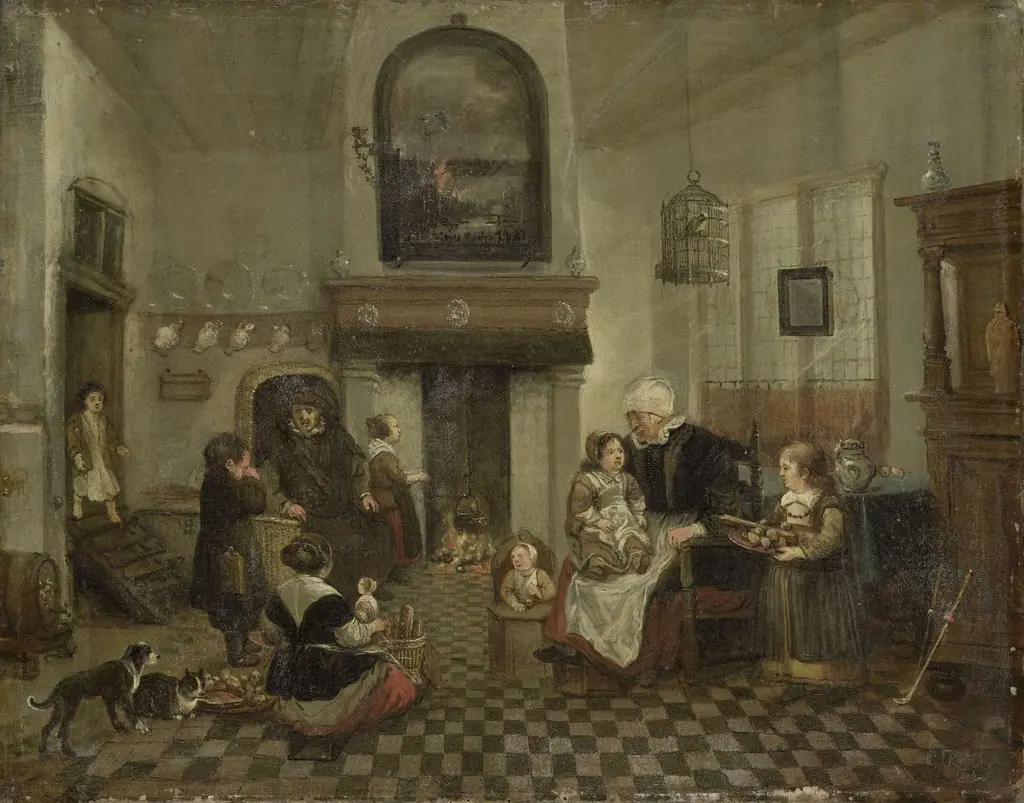 Sint Nicolaasfeest
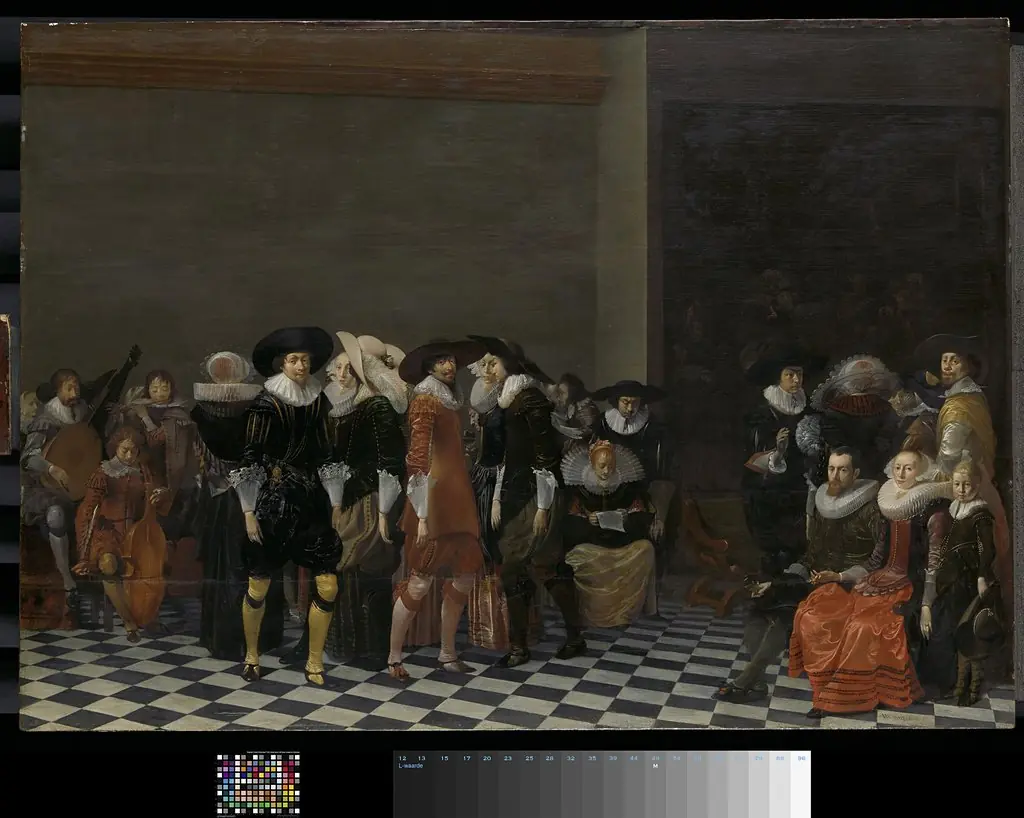 A wedding feast, traditionally called 'The wedding of Adriaen Ploos van Amstel and Agnes van Bijler', 1616
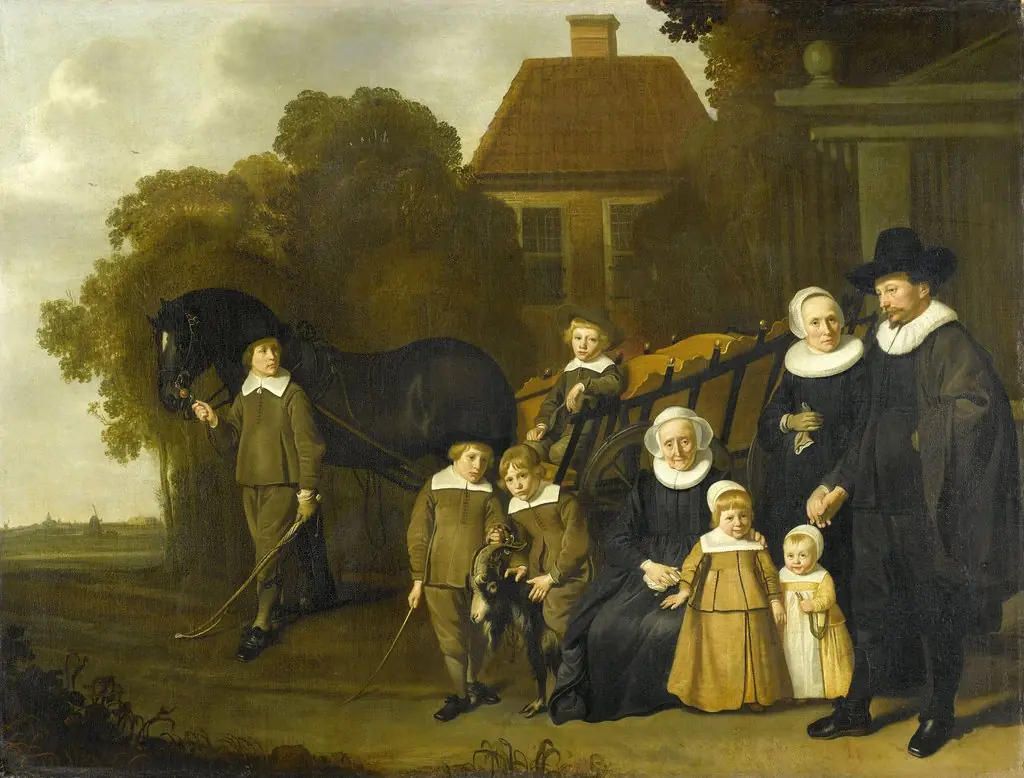 The Meebeeck Crywagen family near the gate of their country home on the Uitweg near Amsterdam
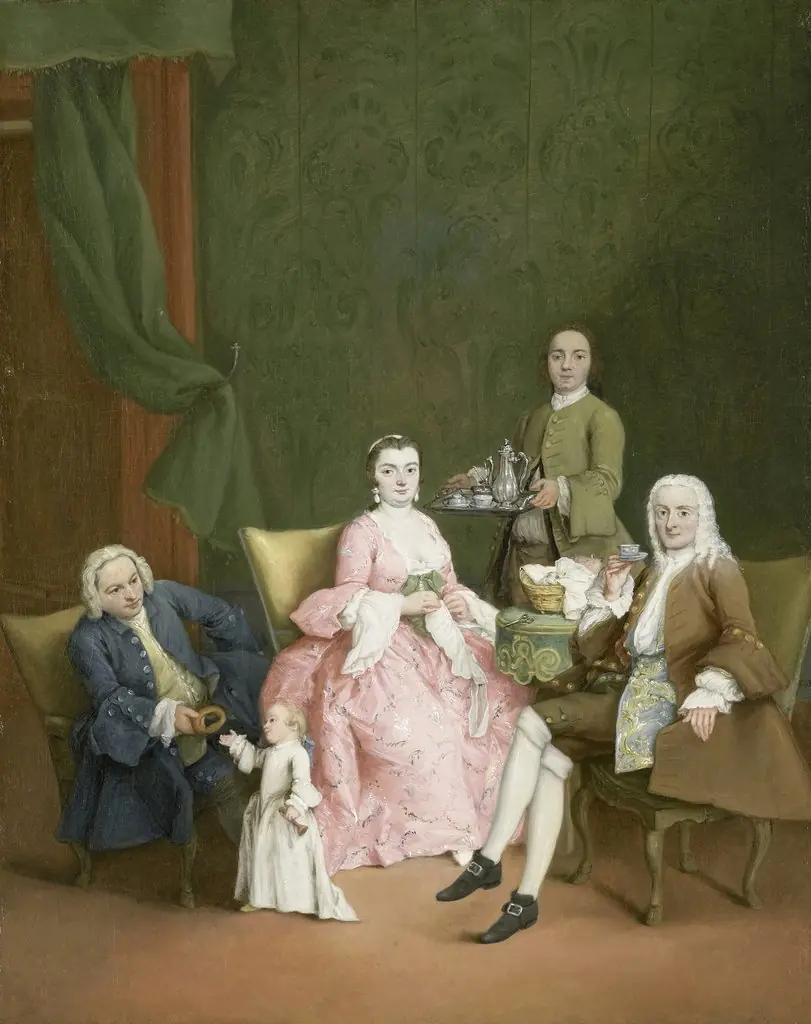 Portrait of a Venetian Family with a Manservant Serving Coffee
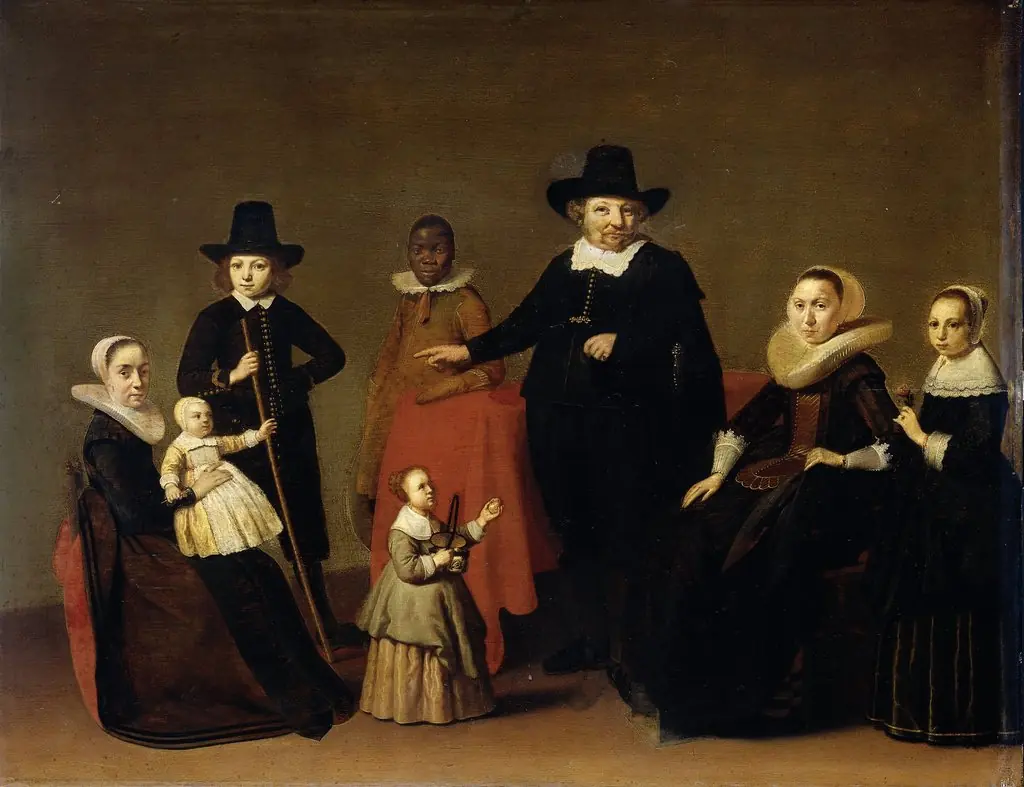 Family group with a black man
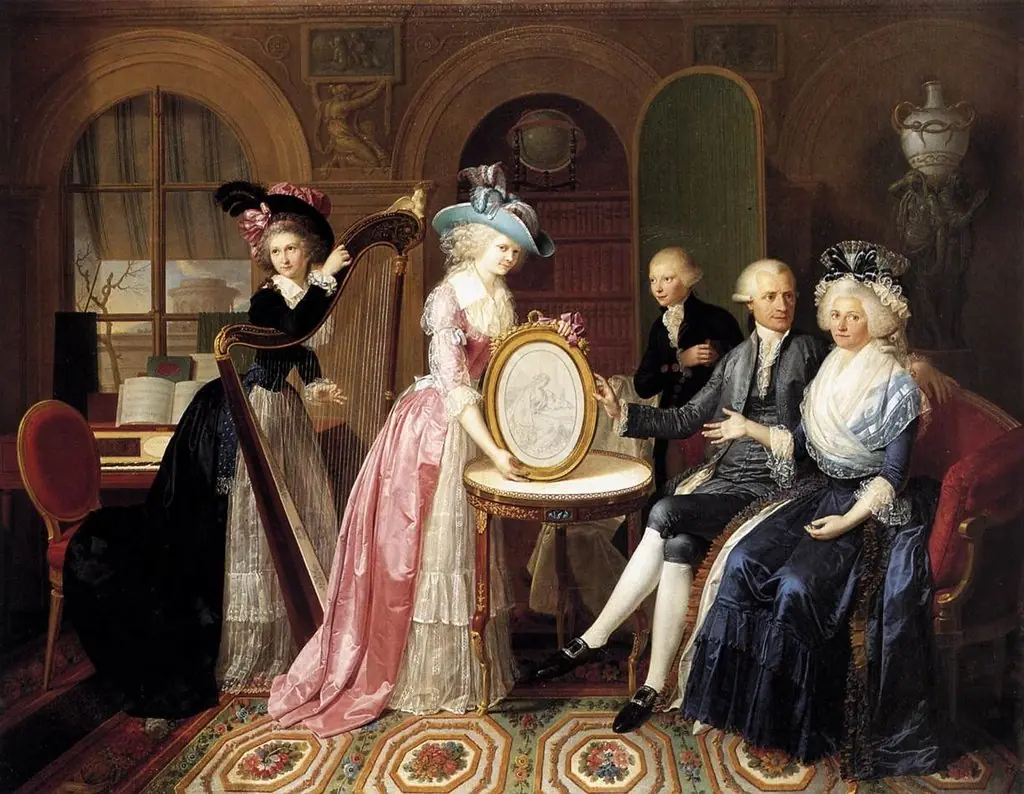 Portret van de familie Villers
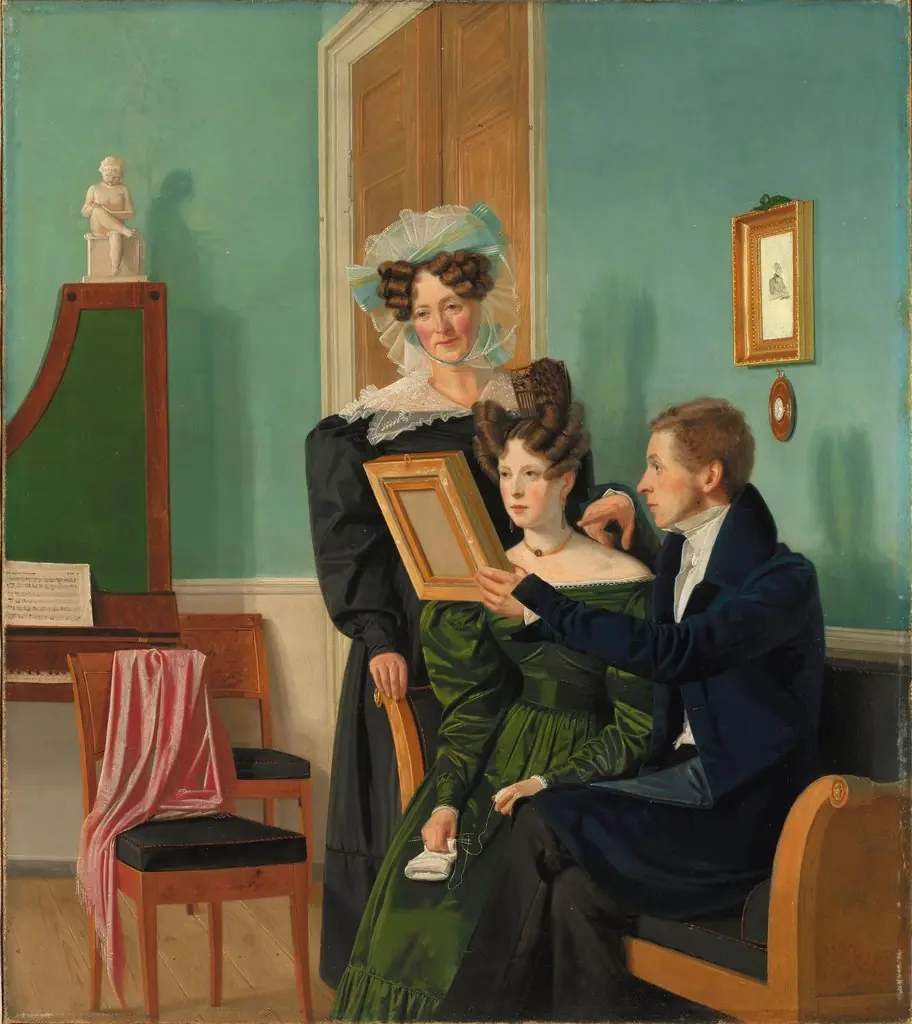 The Raffenberg Family
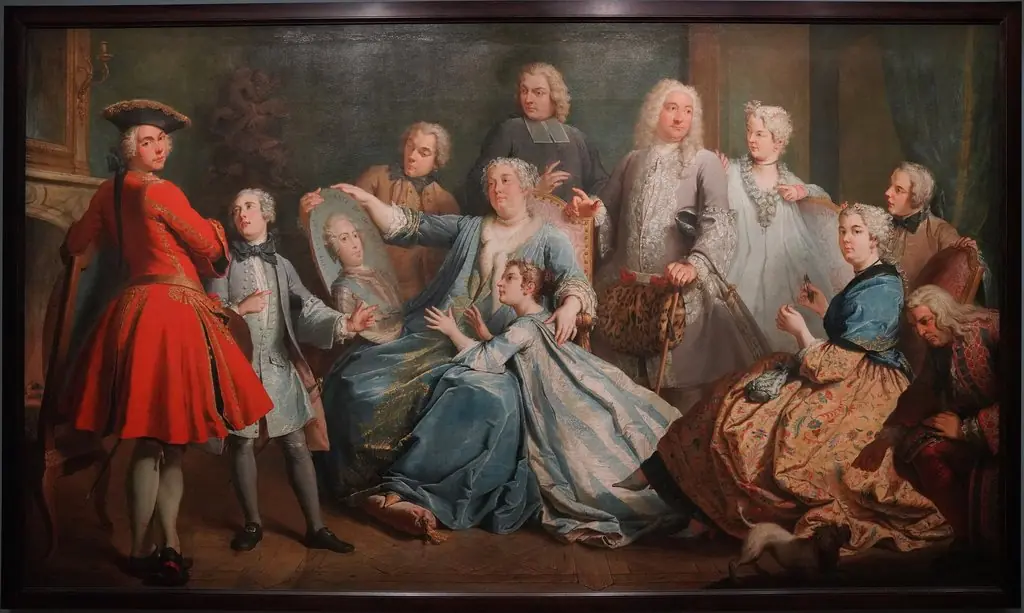 Madame Mercier entourée de sa famille
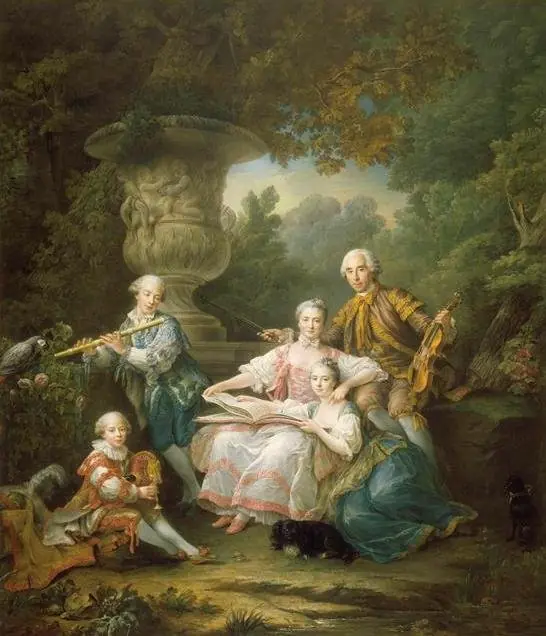 The Sourches family
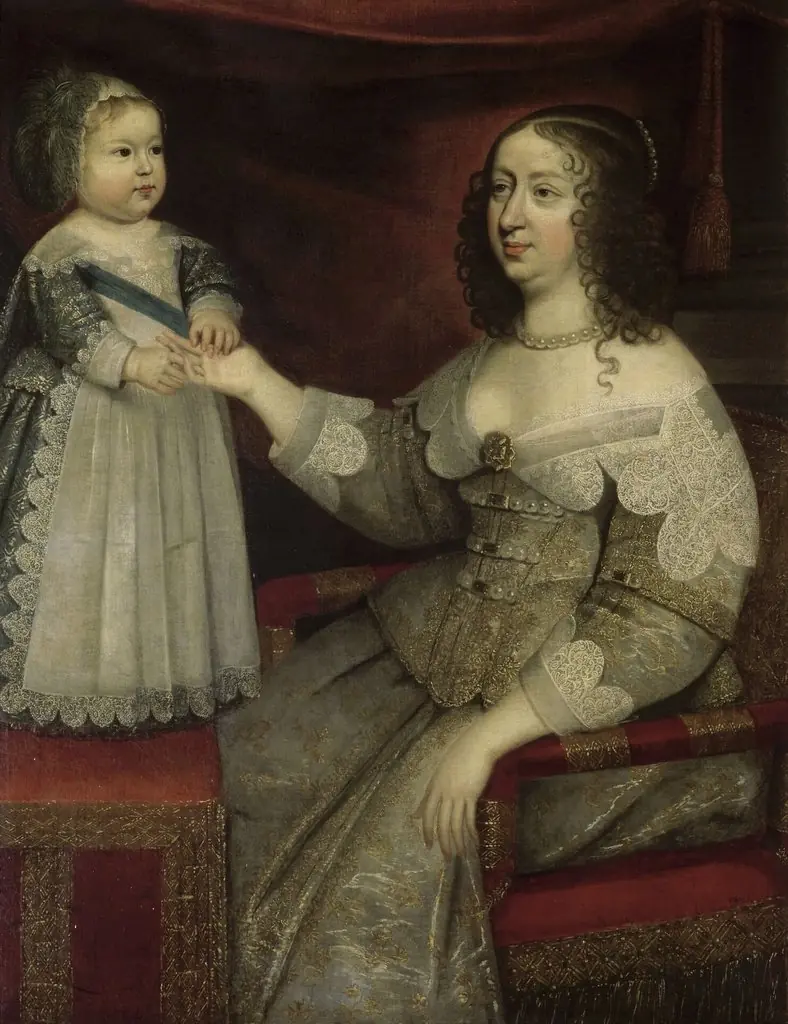 Louis XIV and Anne of Austria
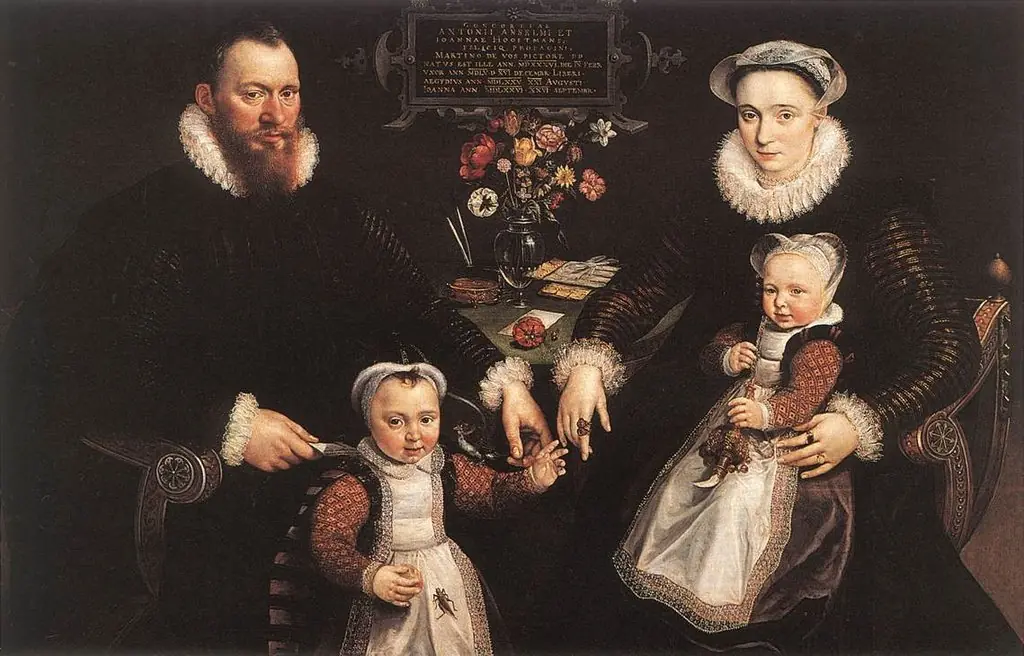 Portrait of Antonius Anselmus, His Wife and Their Children
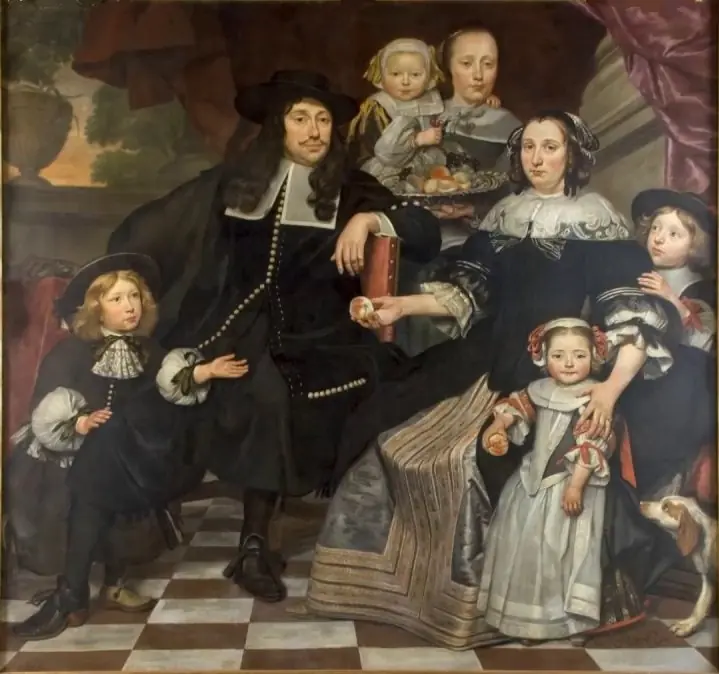 A family on the terrace of a country house
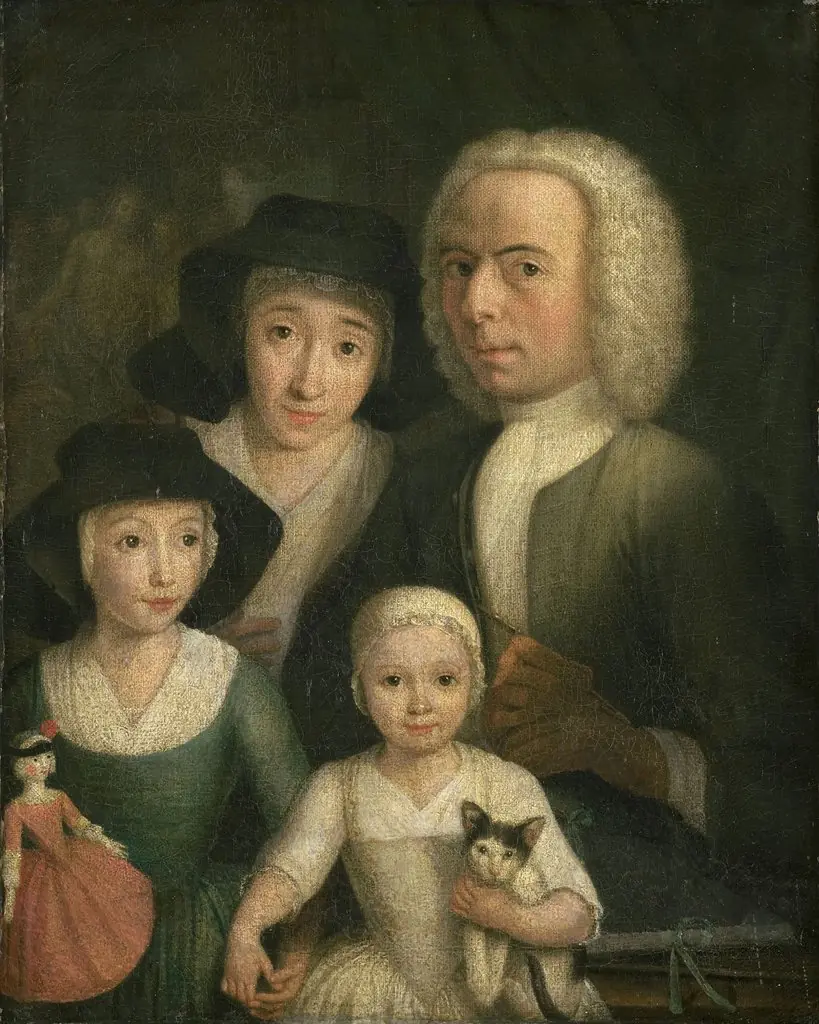 Self Portrait with his Wife Sanneke van Bommel and their two Children
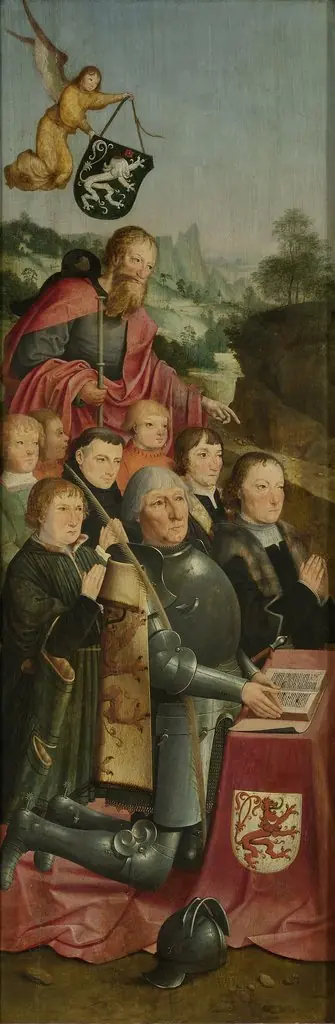 Memorial Panel with Eight Male Portraits, probably Willem Jelysz van Soutelande and Family, with Saint James the Greater and the Van Soutelande Family Crest, inner left wing of an altarpiece
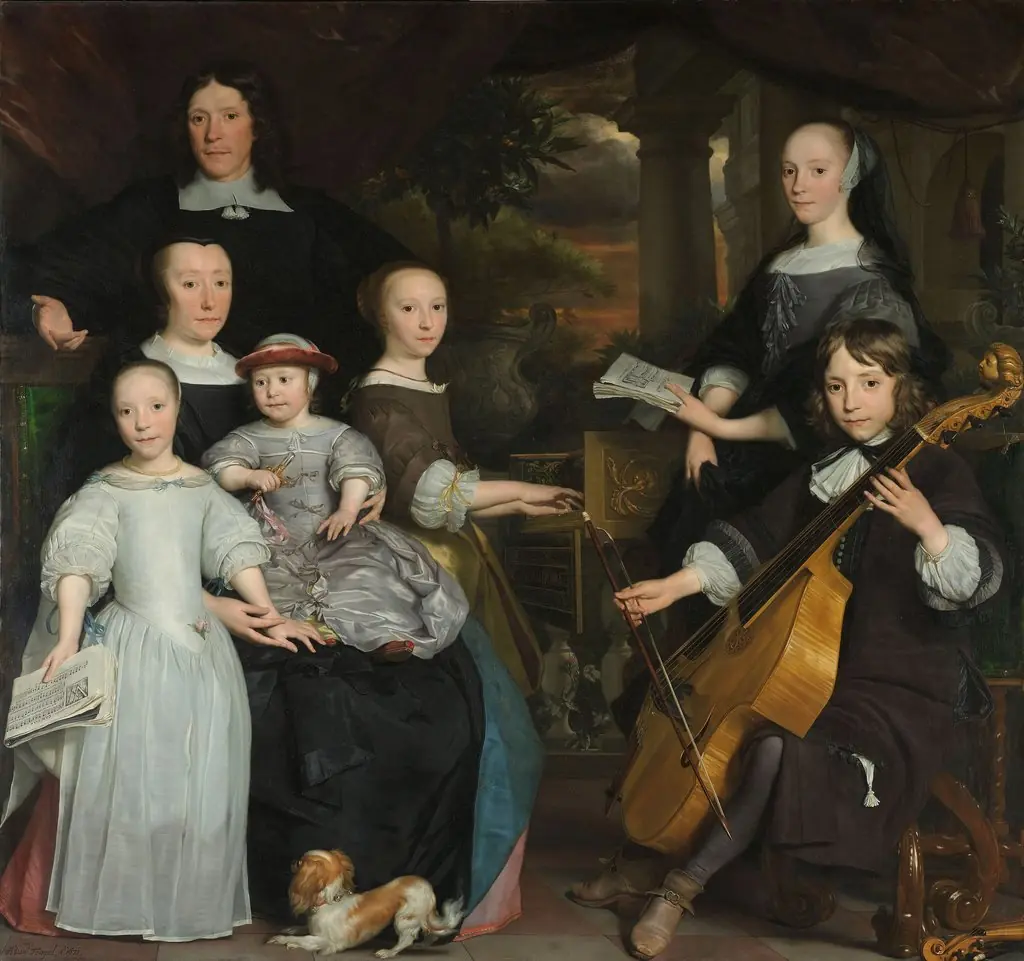 David Leeuw with his Family
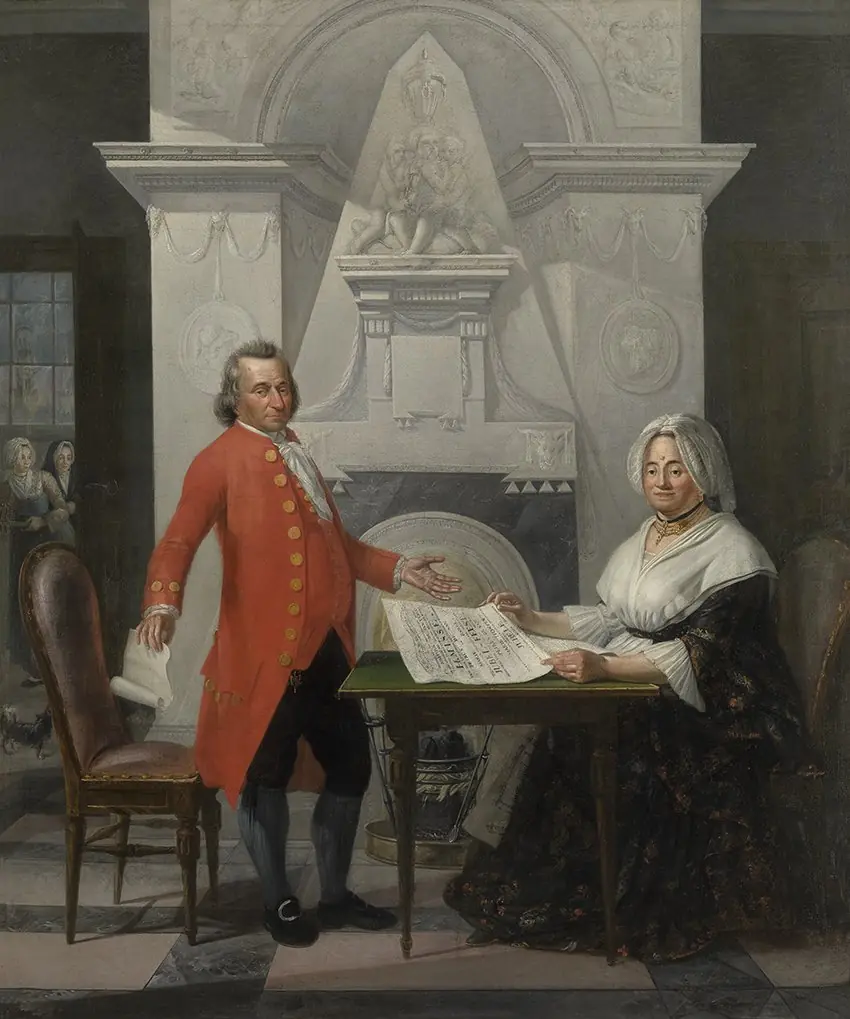 Jubileumportret van de familie De San
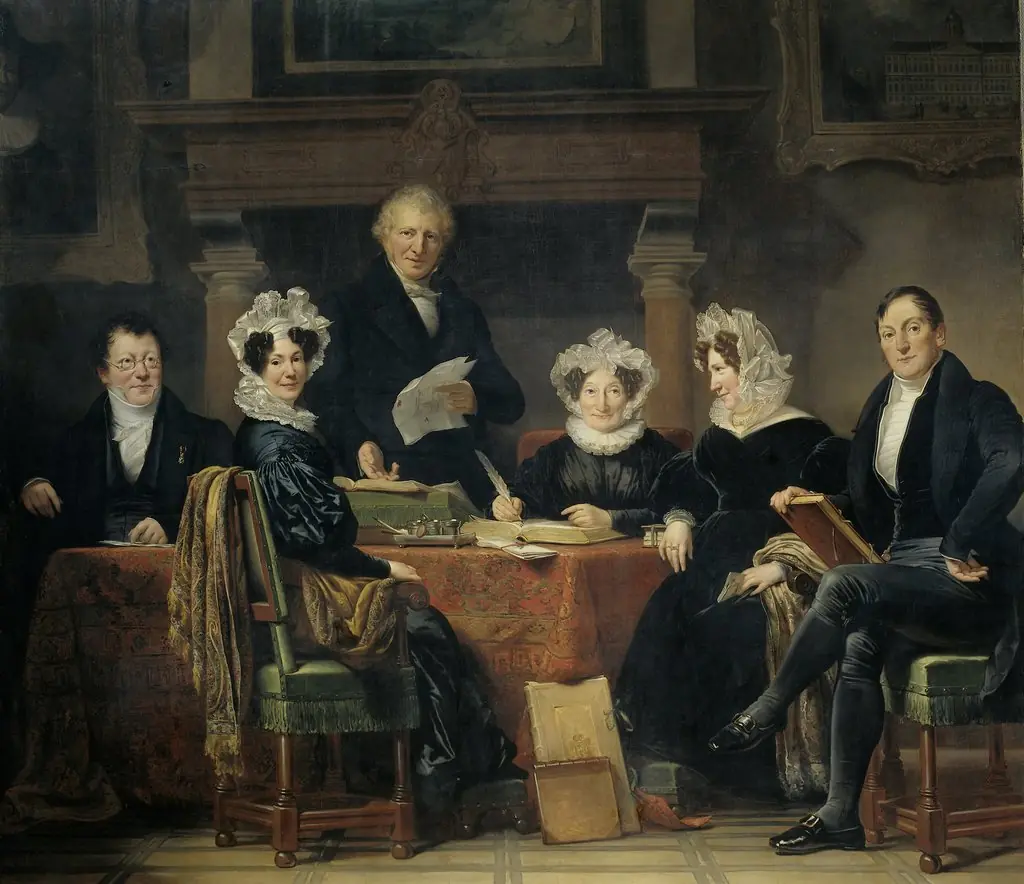 Regents and Regentesses of the Lepers' Asylum, Amsterdam, 1834-35
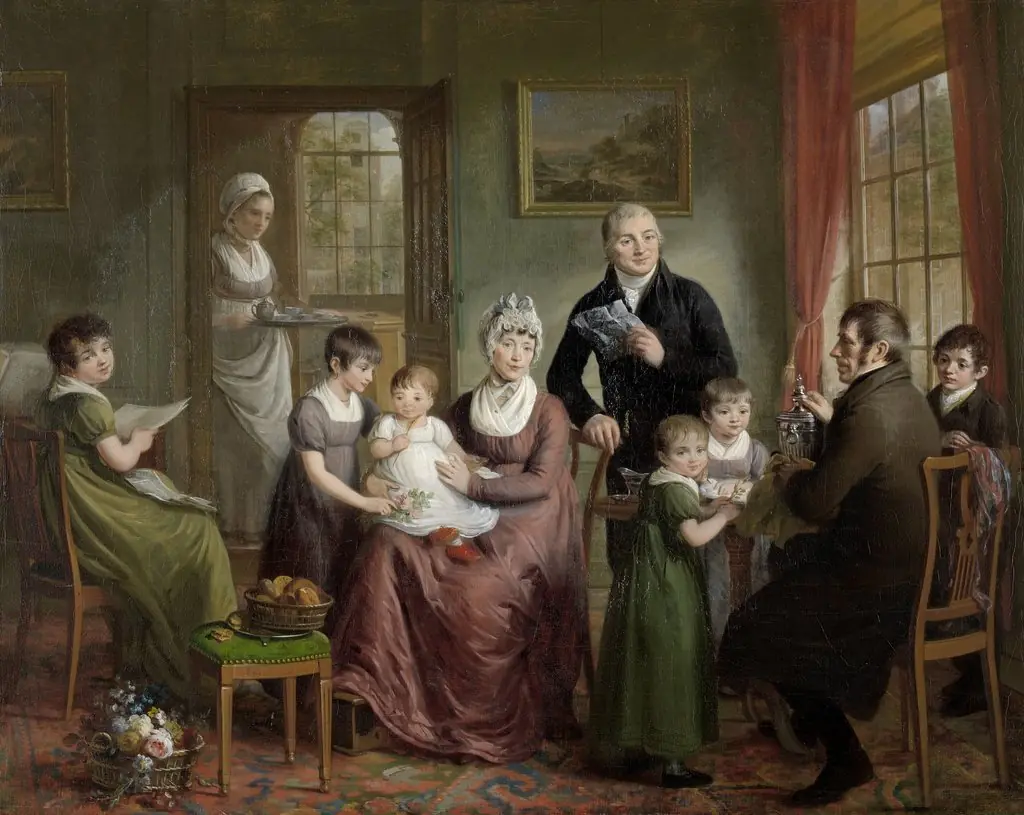 Portrait of the Family of Adrianus Bonebakker with Dirk L. Bennewitz
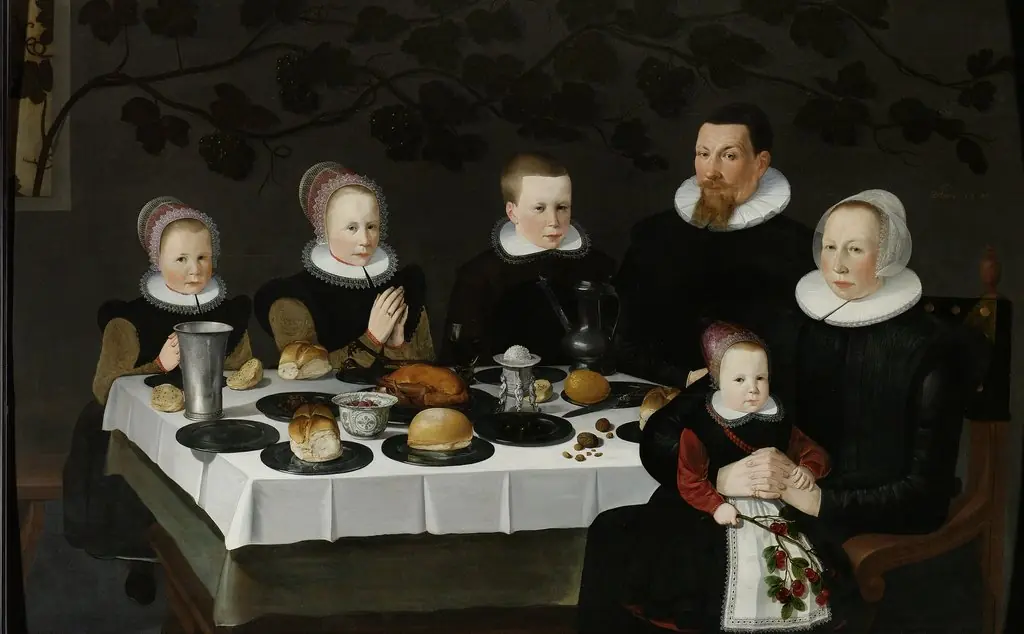 Family portrait
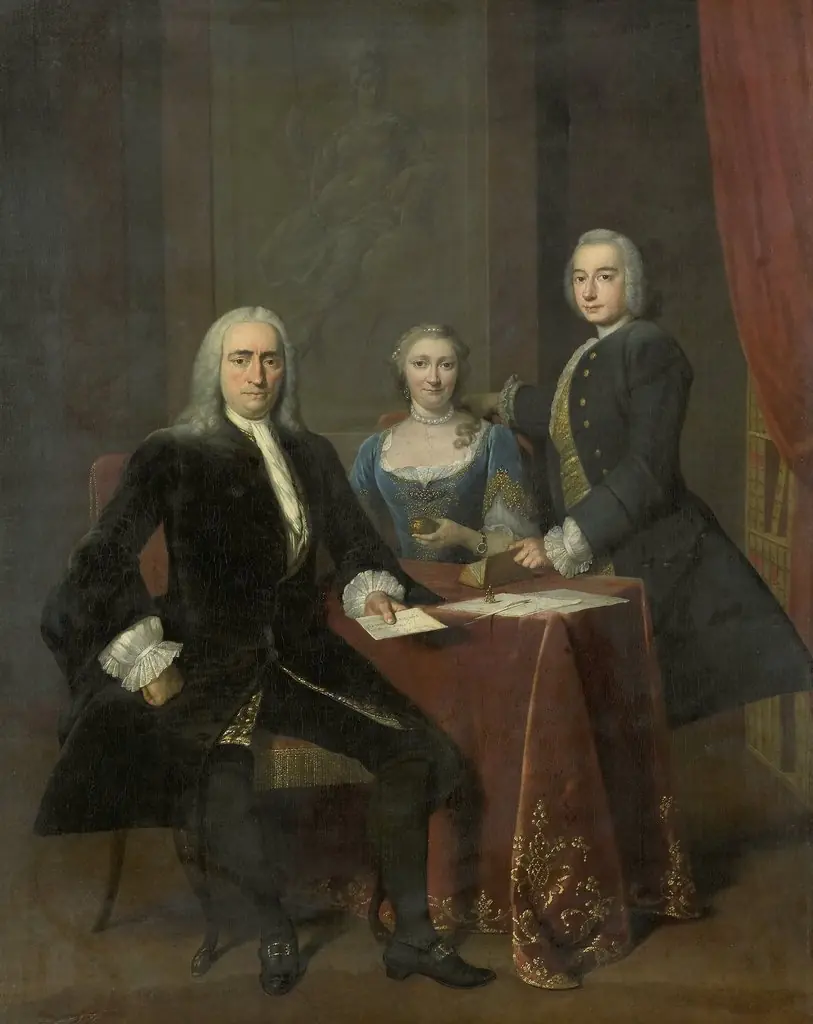 Family Group in an Interior
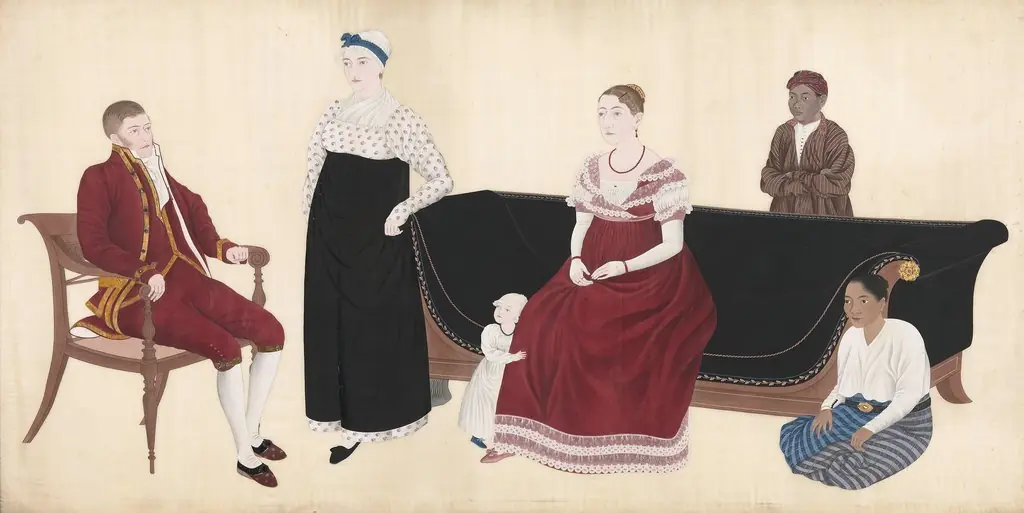 Portrait of the Cock Blomhoff Family
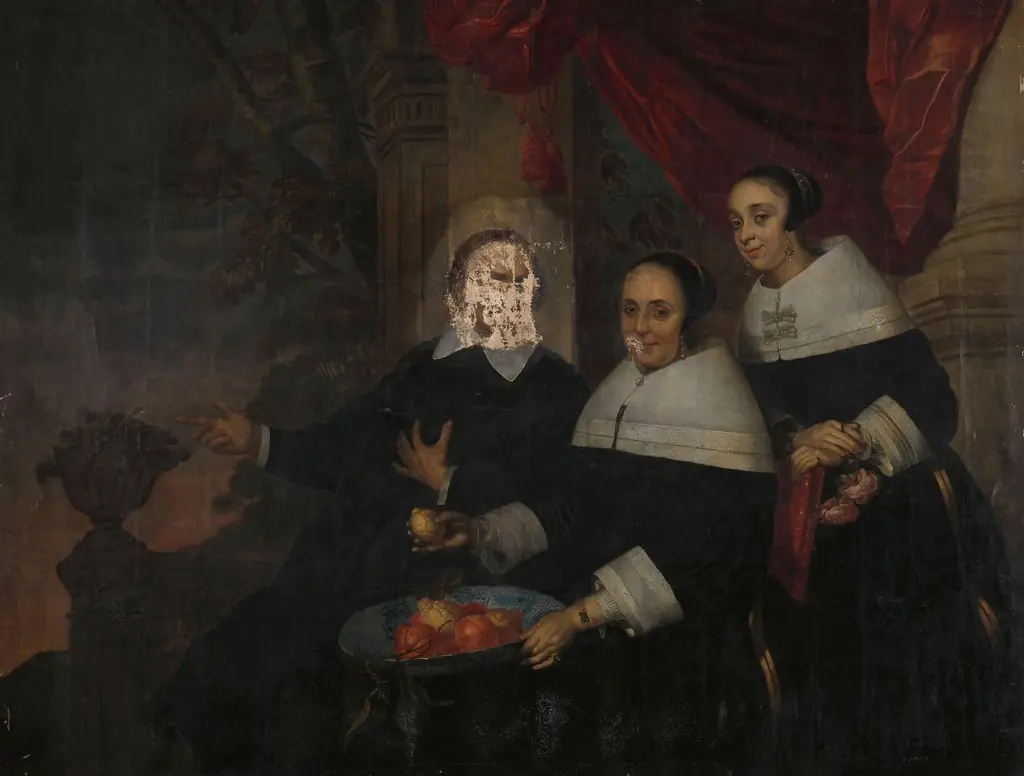 Family portrait
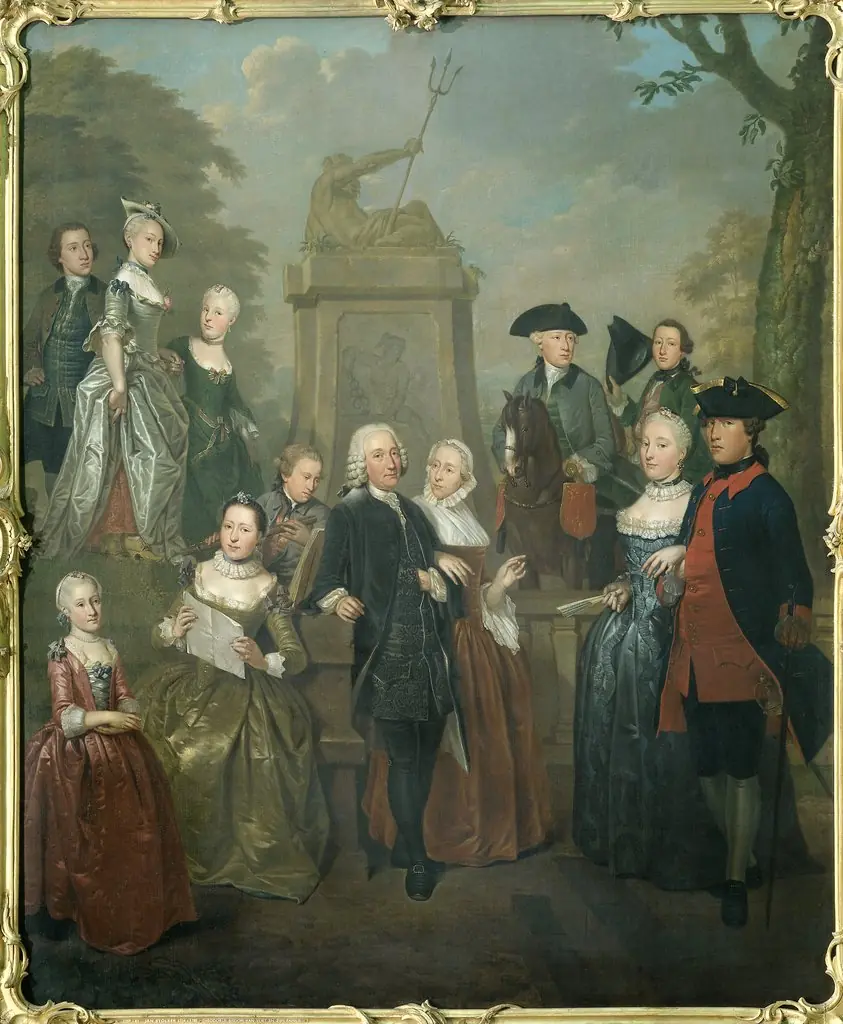 Portrait of Theodorus Bisdom van Vliet and his Family
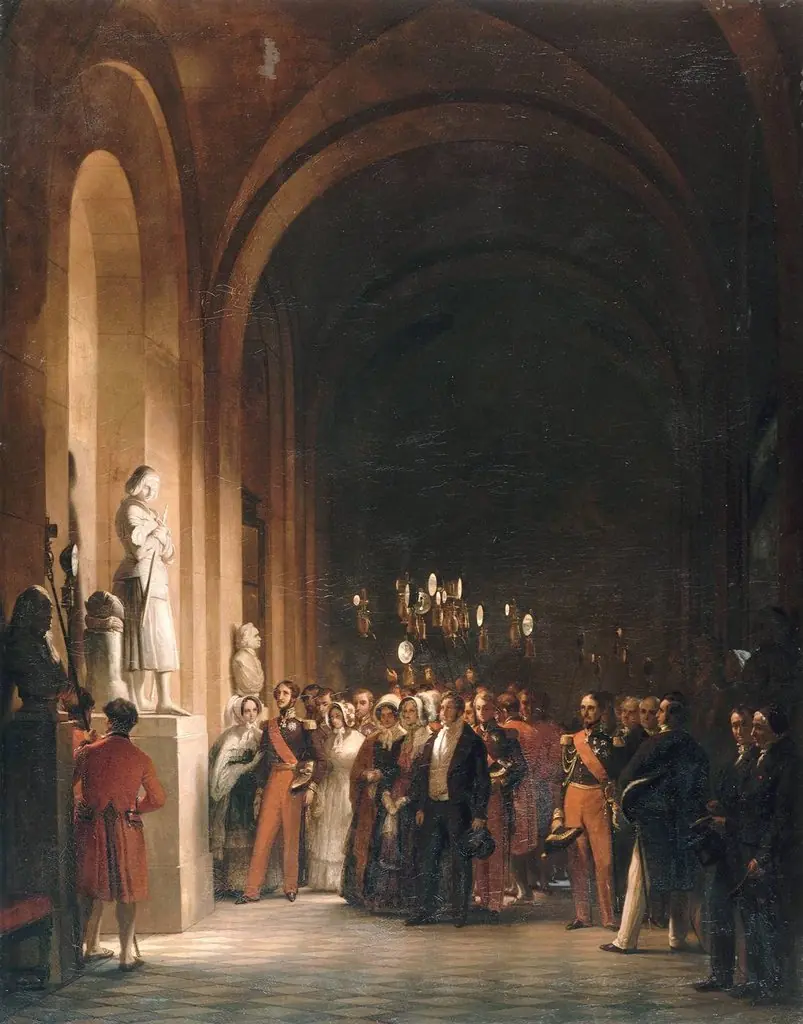 Louis-Philippe and the royal family visit the Historic Galleries of Versailles
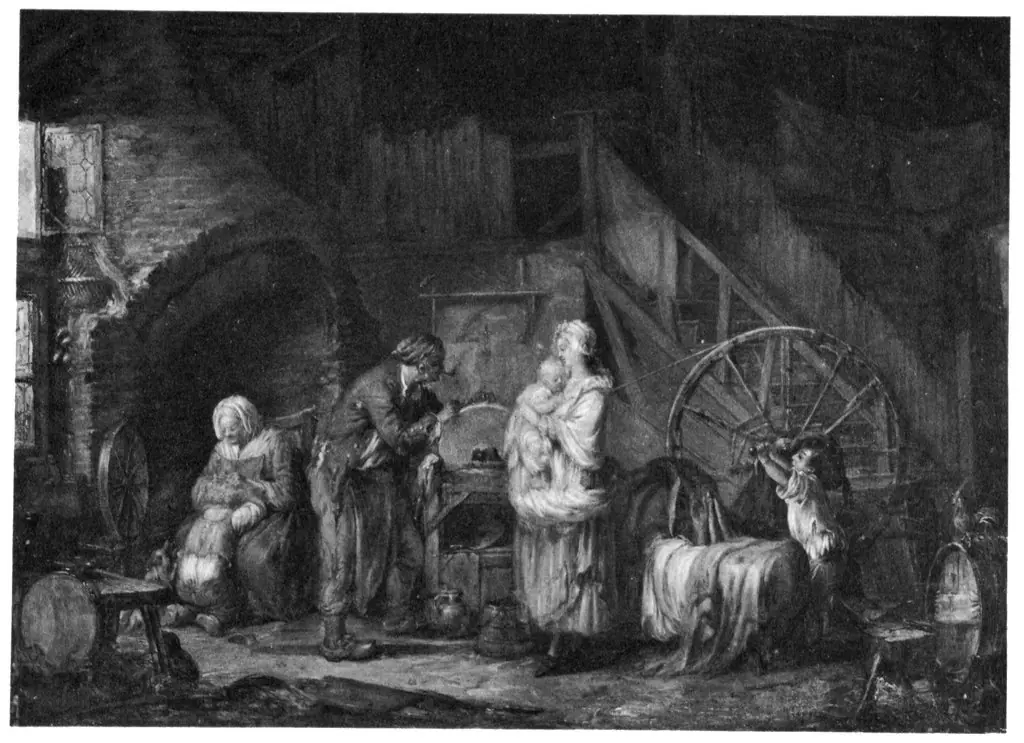 The Knife Grinder and his Family
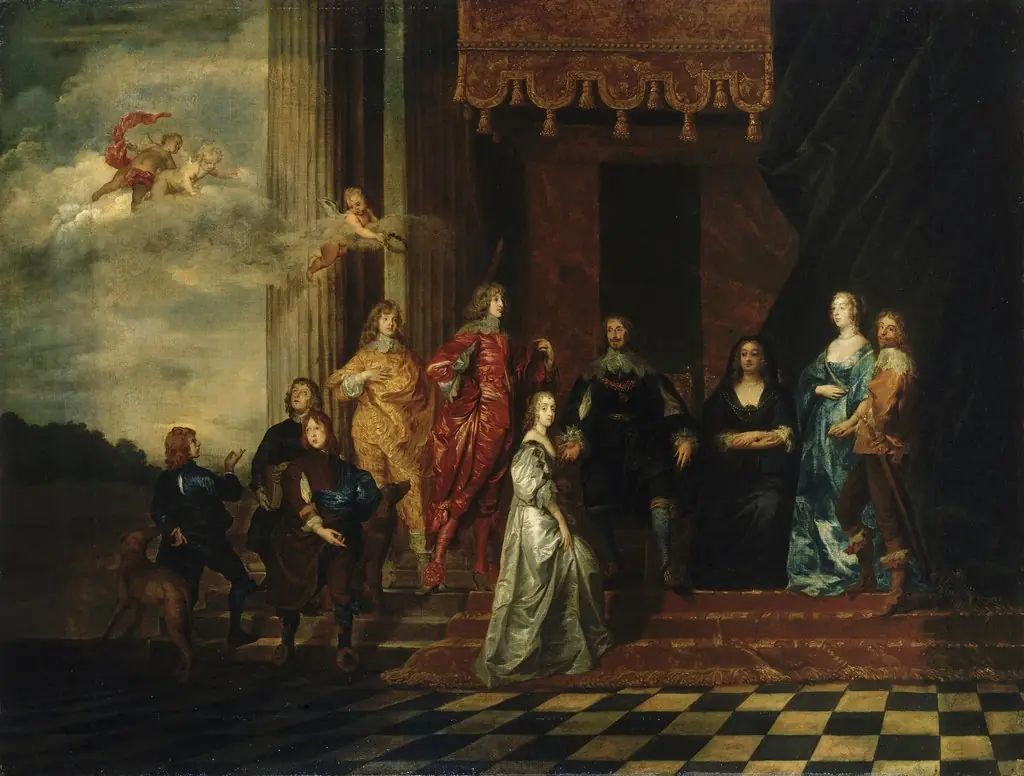 Portrait of the Earl of Pembroke with His Family (copy)
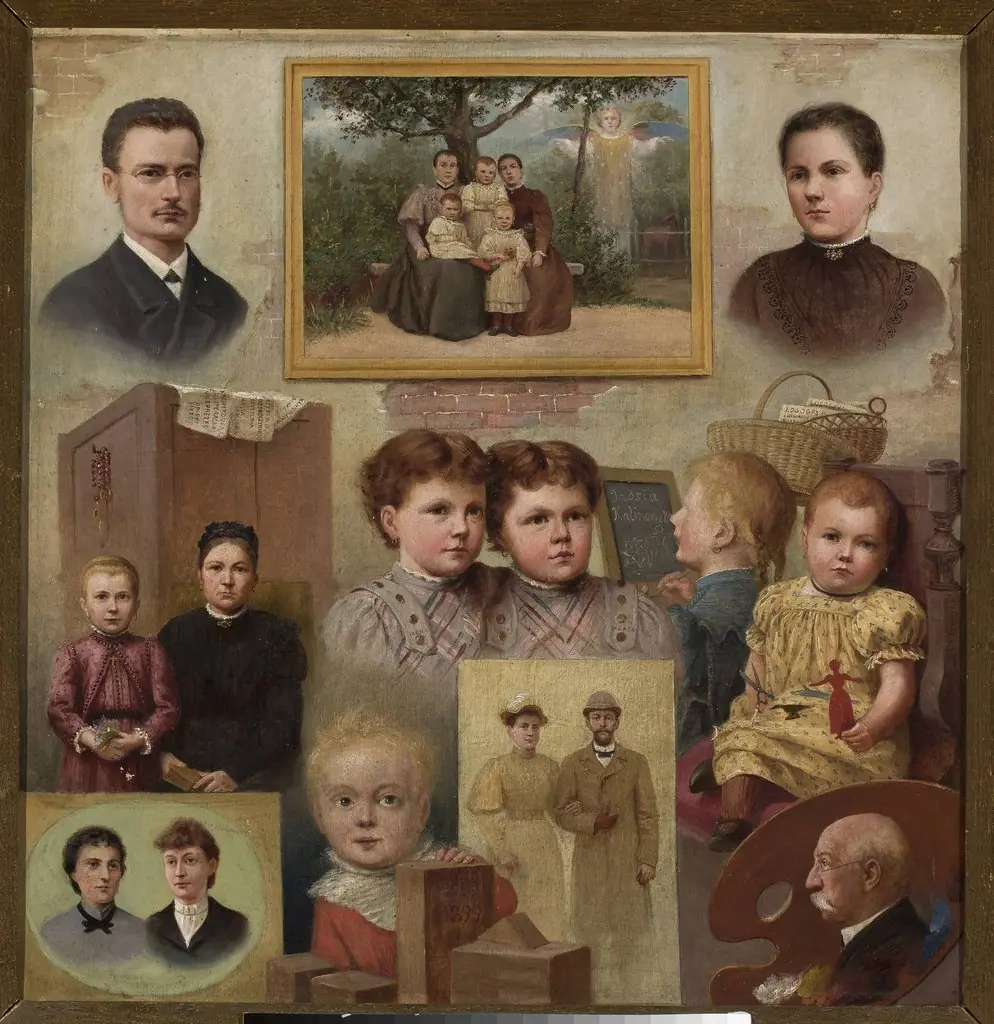 Collective portrait of the Kalinowski family with the painter's self-portrait
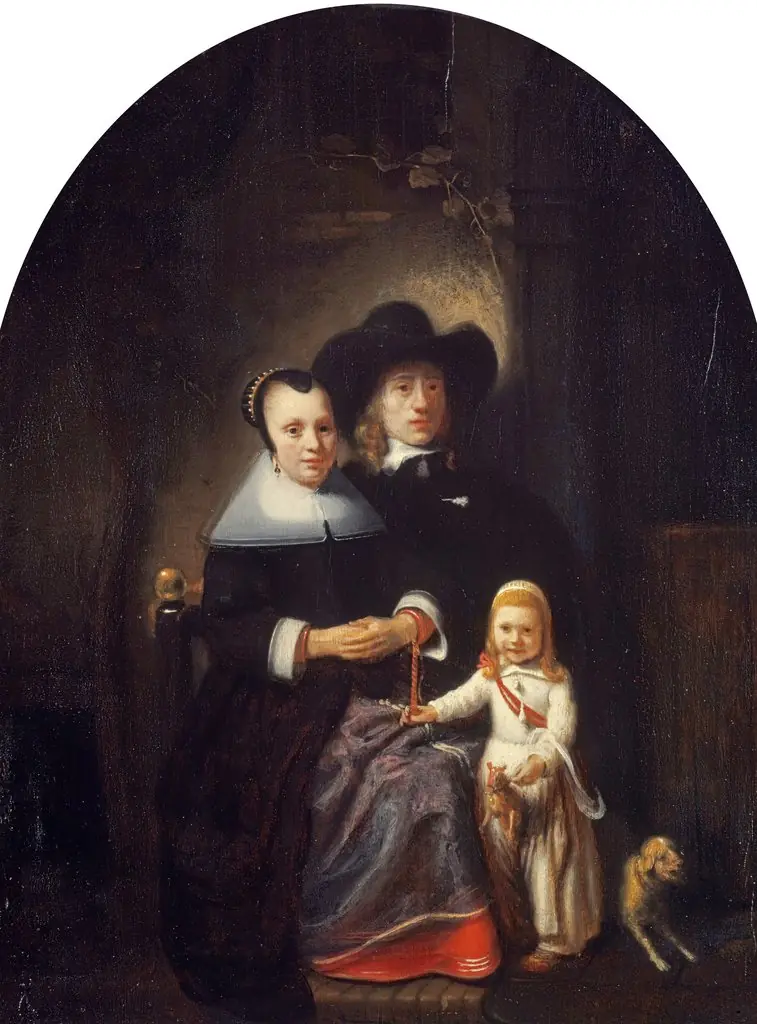 A Dutch Family Group
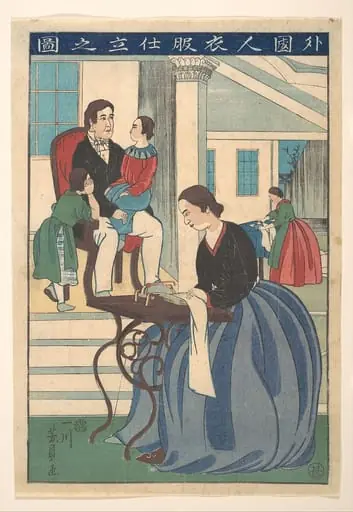 歌川芳員画 『外国人衣服仕立之図』|Foreign Family with Wife Making Clothes (Gaikokujin ifuku shitate no zu)
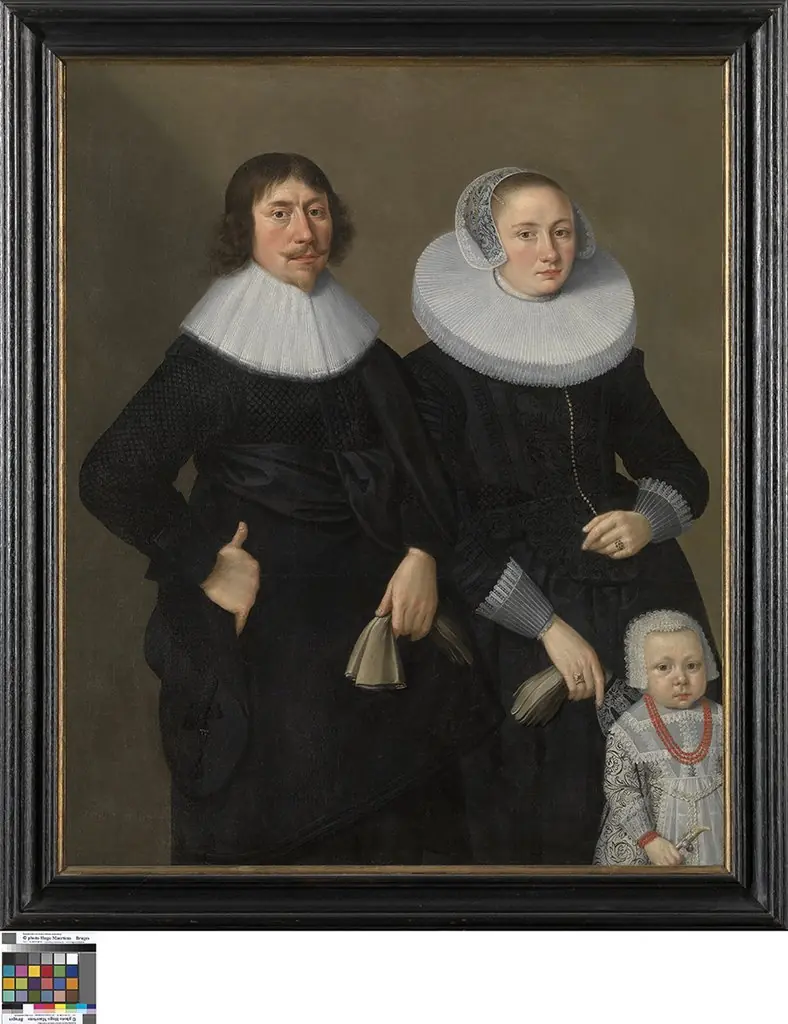 family portrait
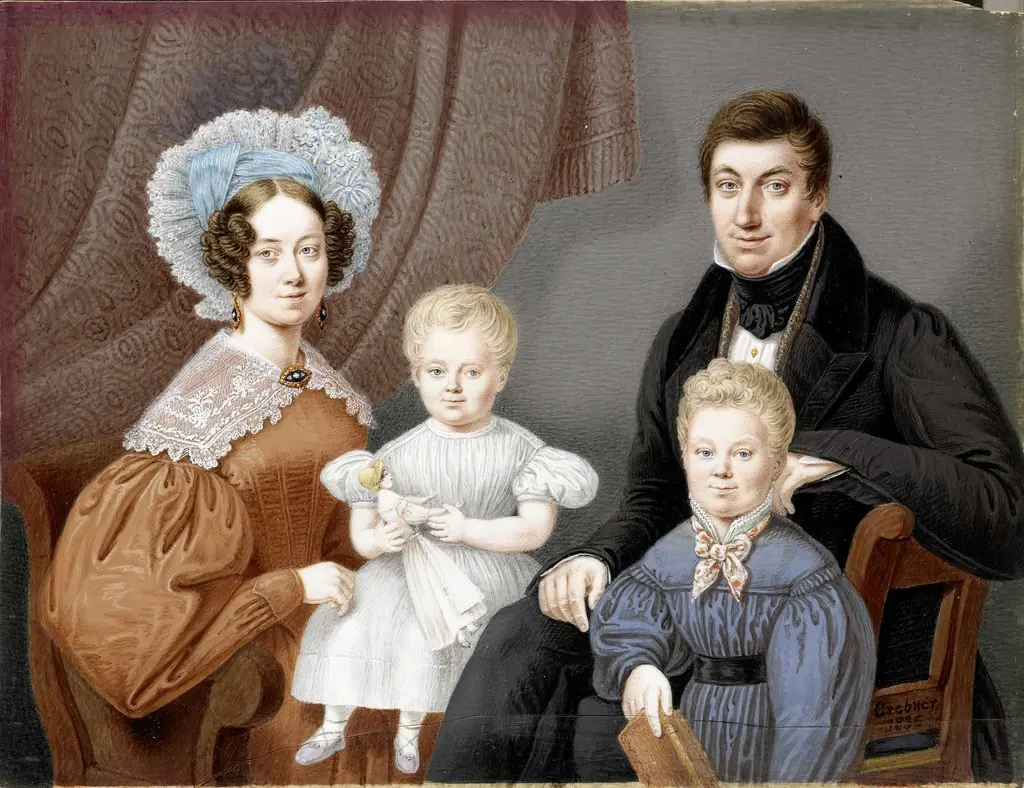 the Diederichs family
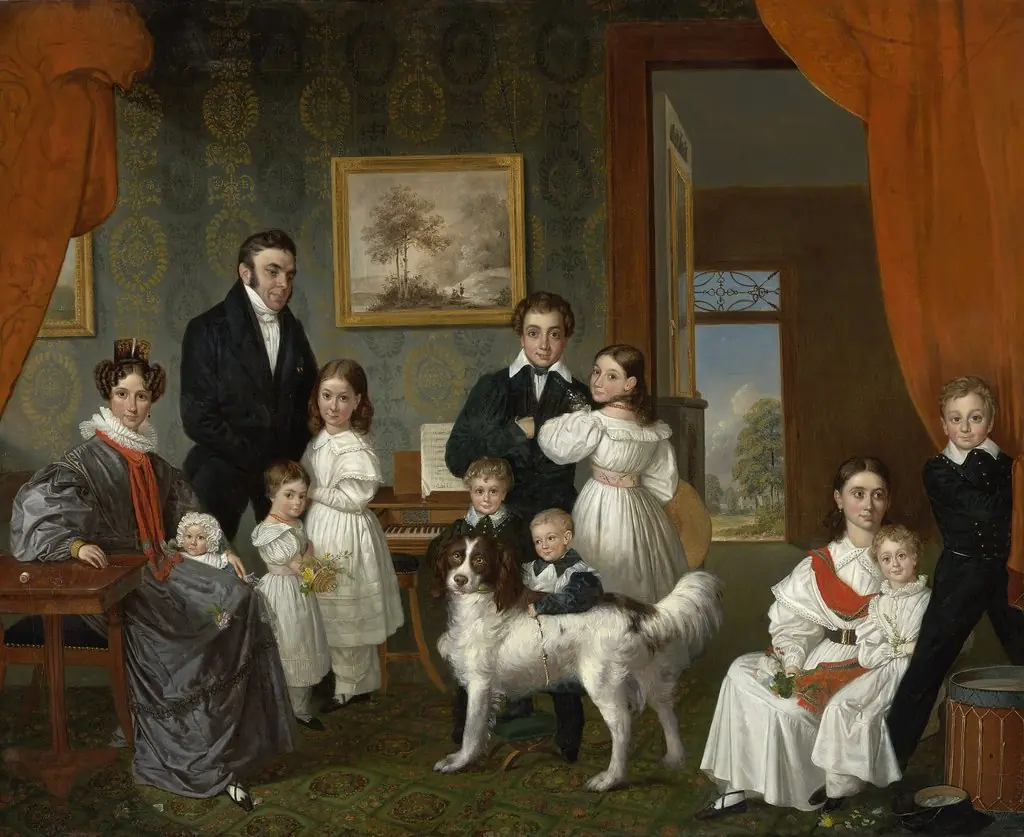 Portrait of the Baud family in their country house in Voorburg
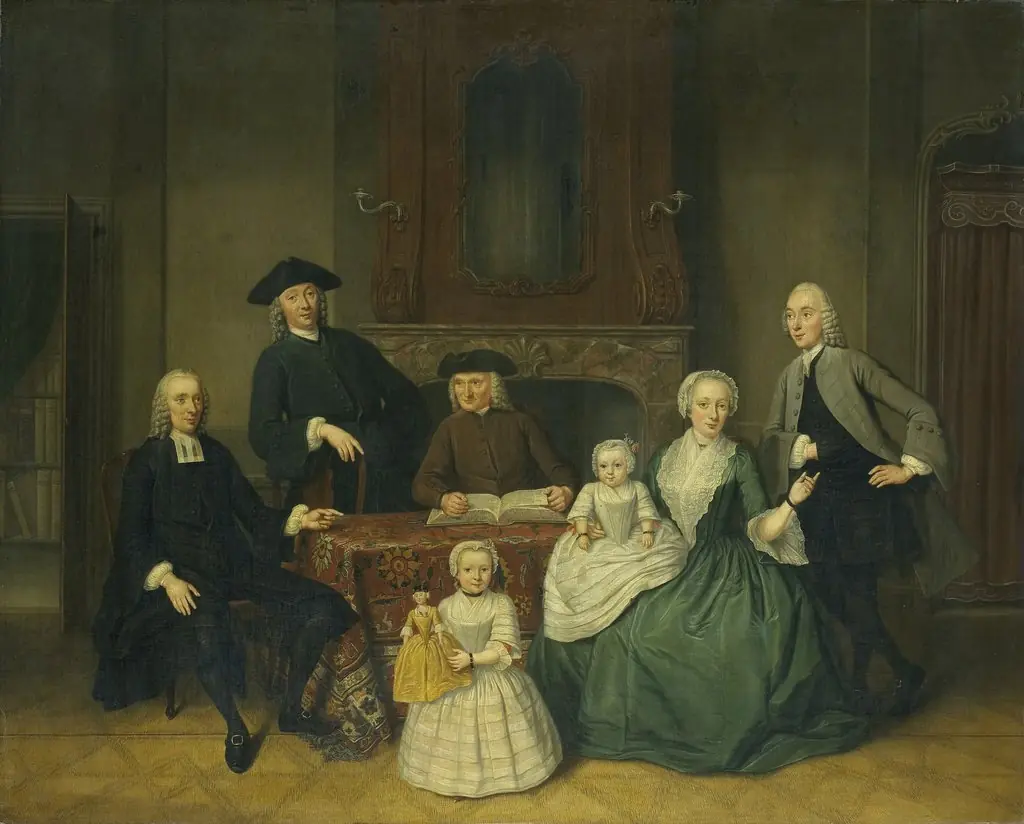 Portrait of the Brak Family, Amsterdam Mennonites
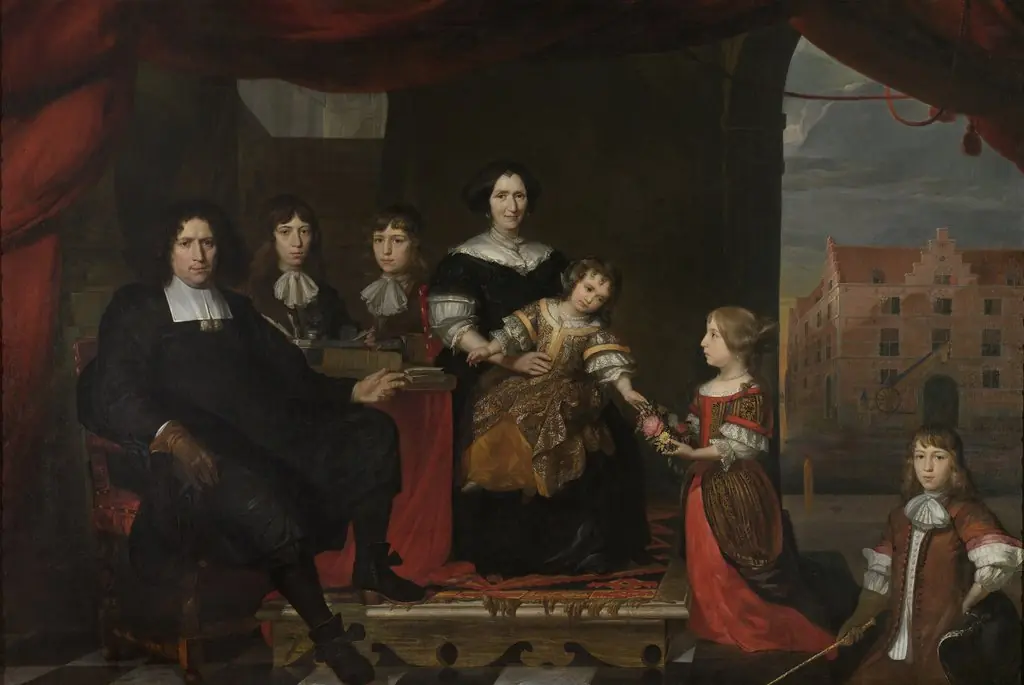 Reyer Reyersz van der Burch (1630-95), ammunition officer attached to the arsenal of the states-general, Delft, with his wife Geertruid Graswinckel and their children
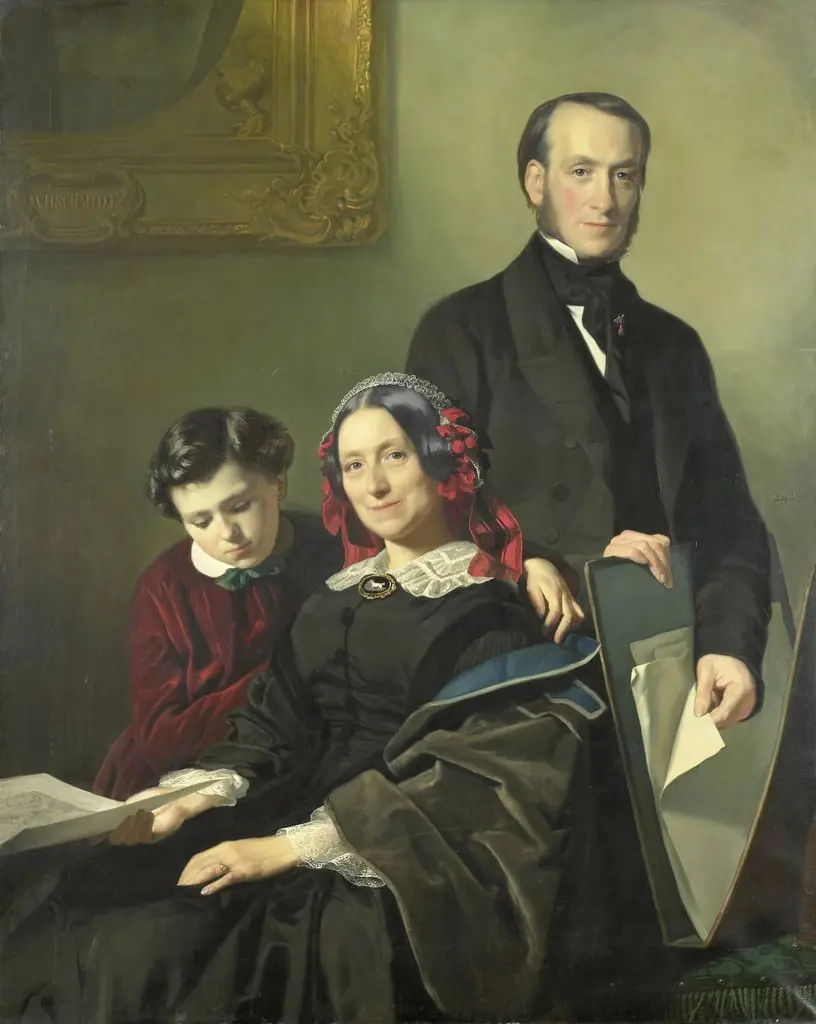 Mrs A J Schmidt Keiser, widow of the painter Willem Hendrik Schmidt (1809-49), the teacher of Jacob Rinse with her brother Y N Keiser and her ten-year-old son
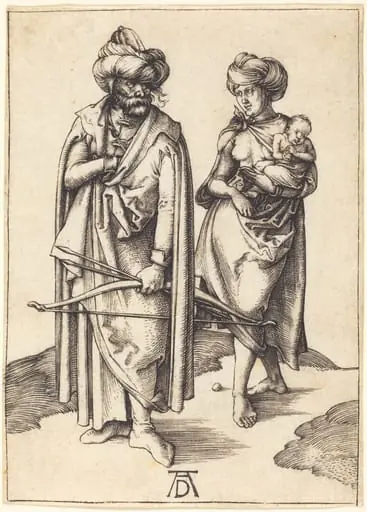 The Turkish Family
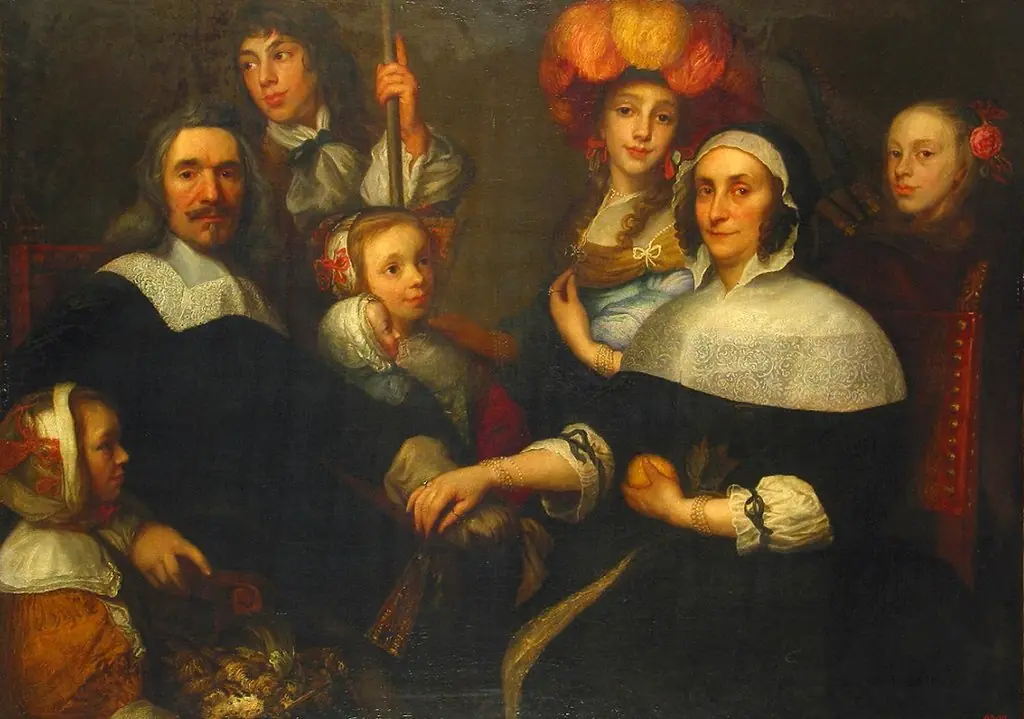 Family Portrait
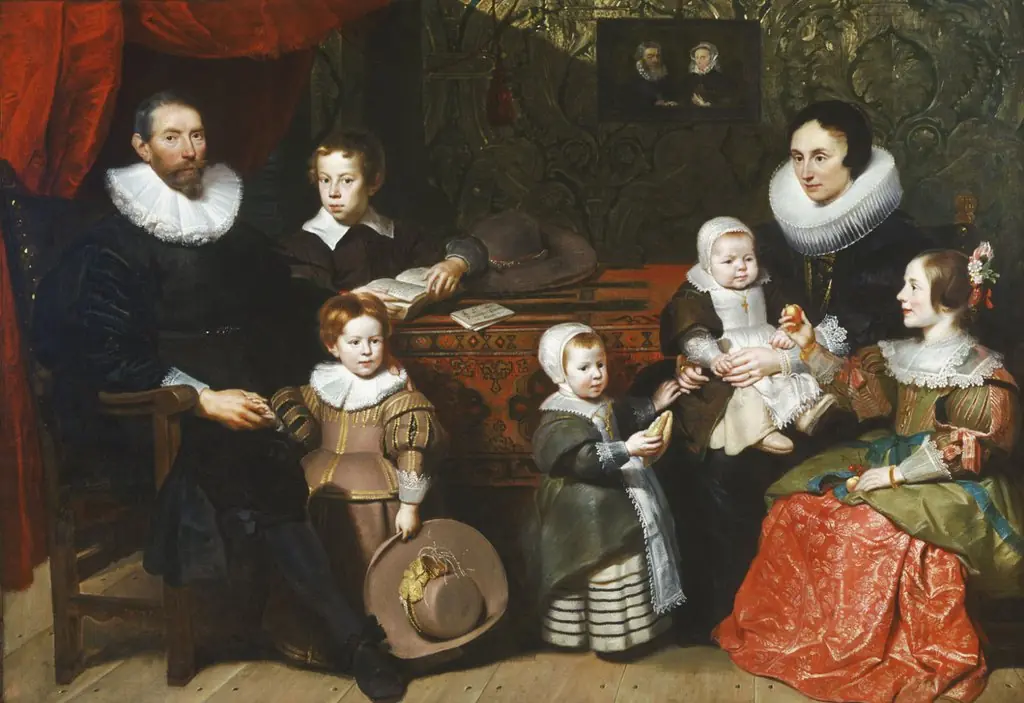 Portrait of Anthony Reyniers and His Family
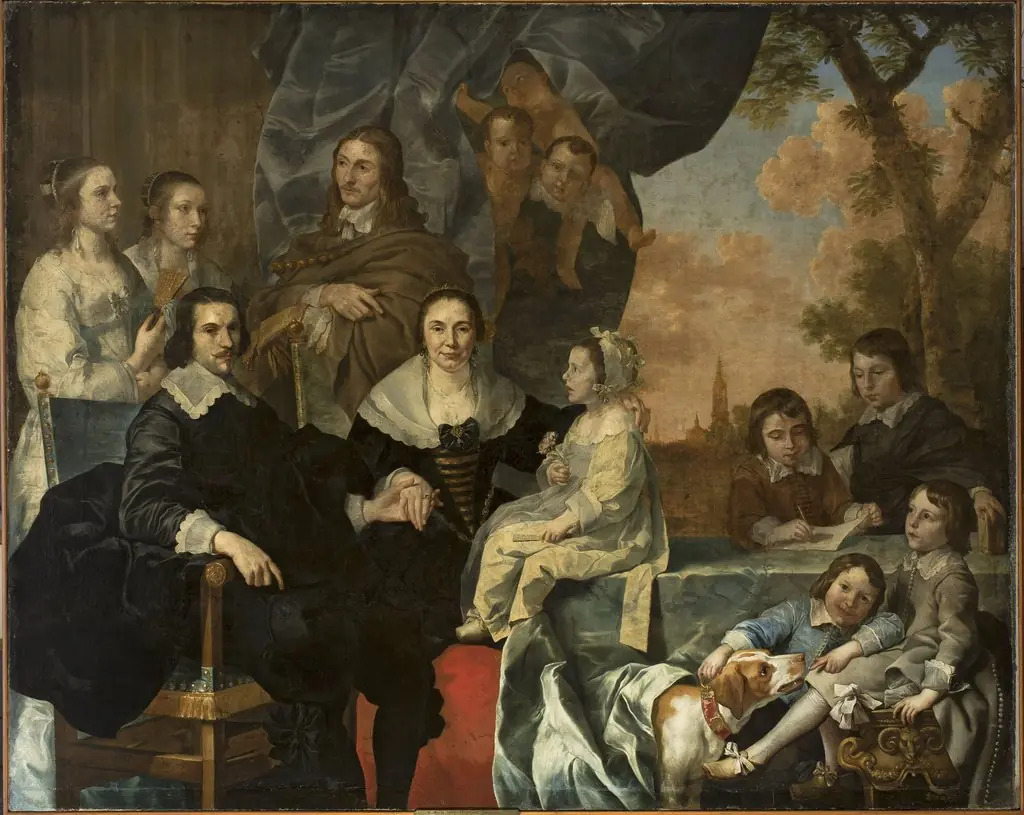 Self-portrait with the family
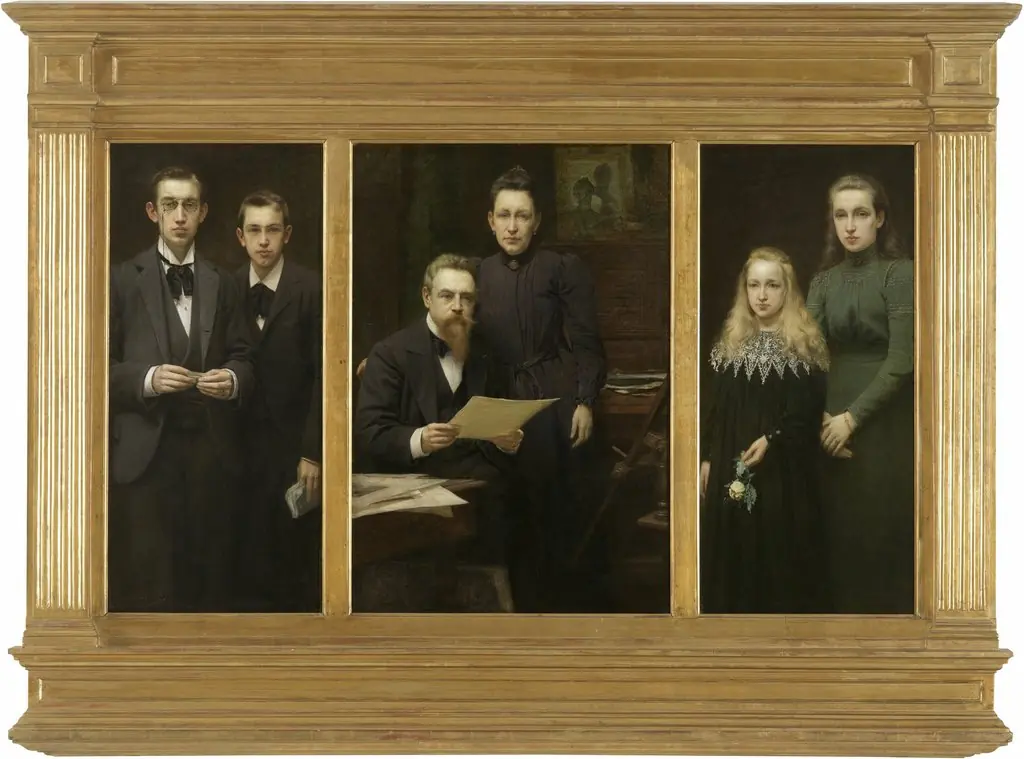 Portrait of the Artist and his Family
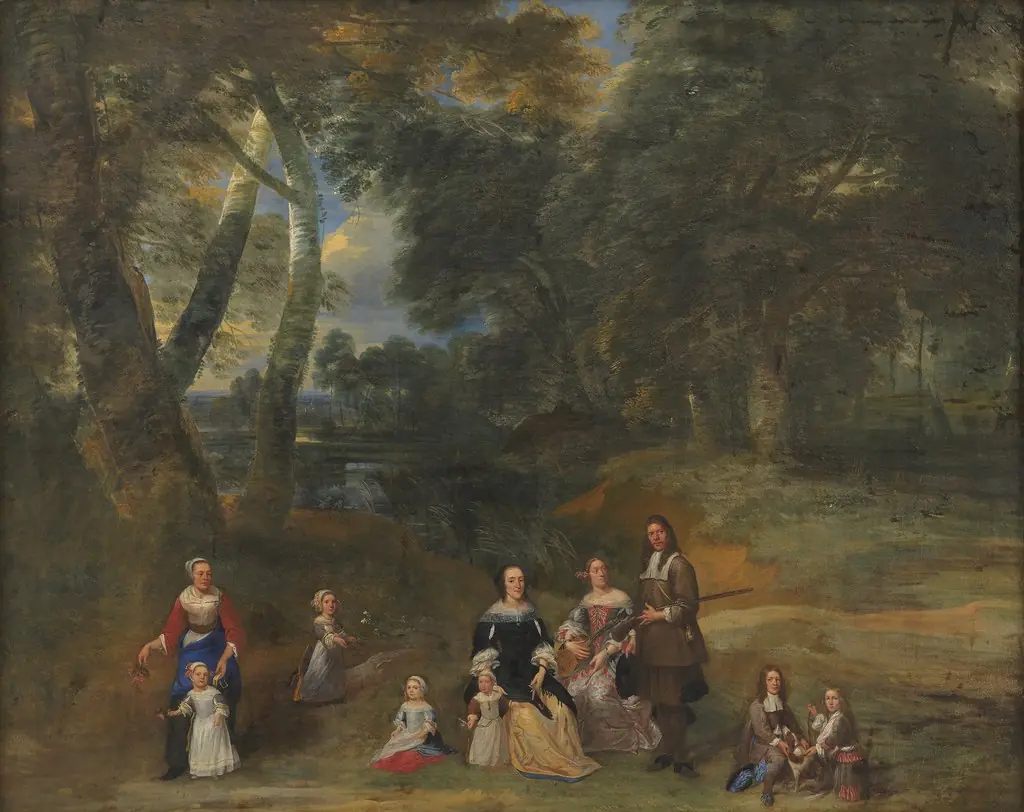 Family Group in a Landscape
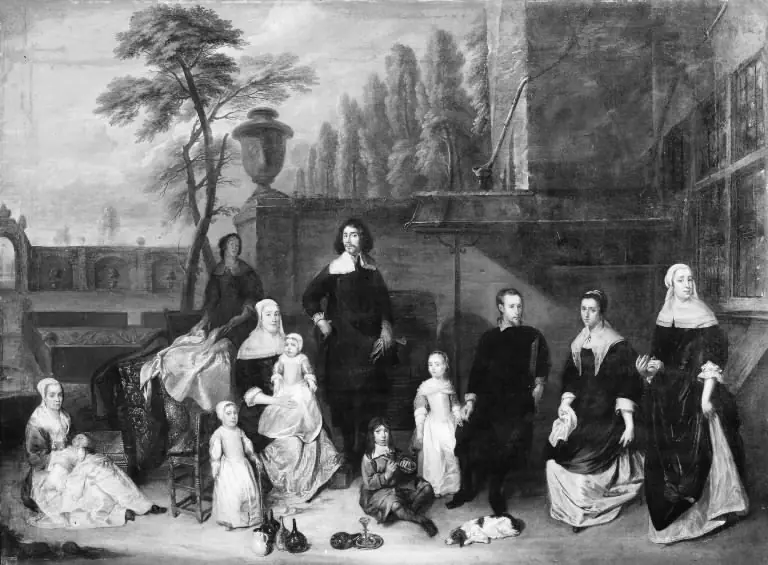 Family Group on a Garden Terrace
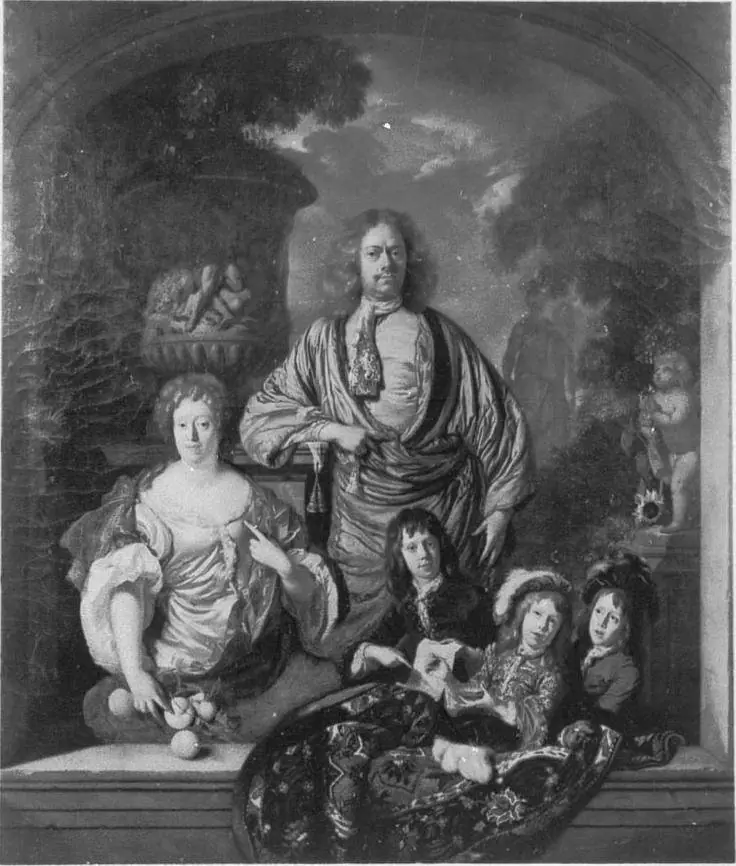 Portrait of a family
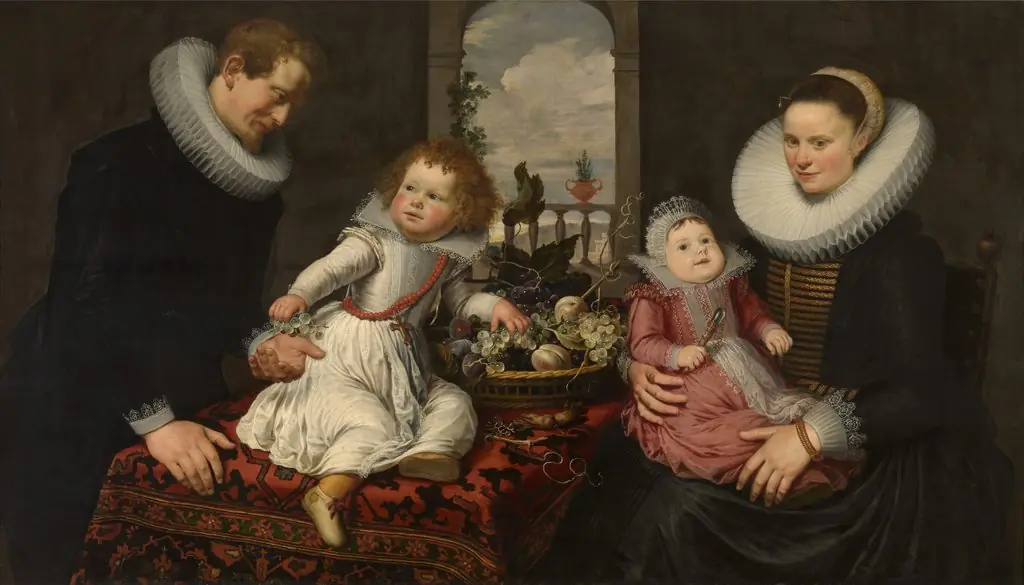 Portrait of a Family
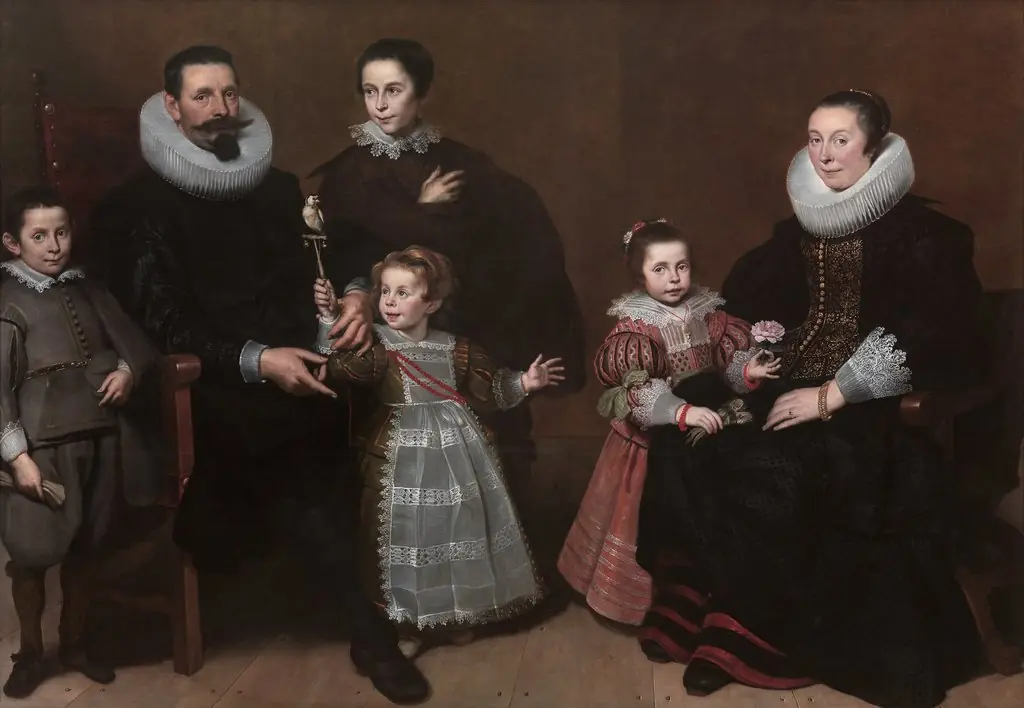 Portrait of a Family
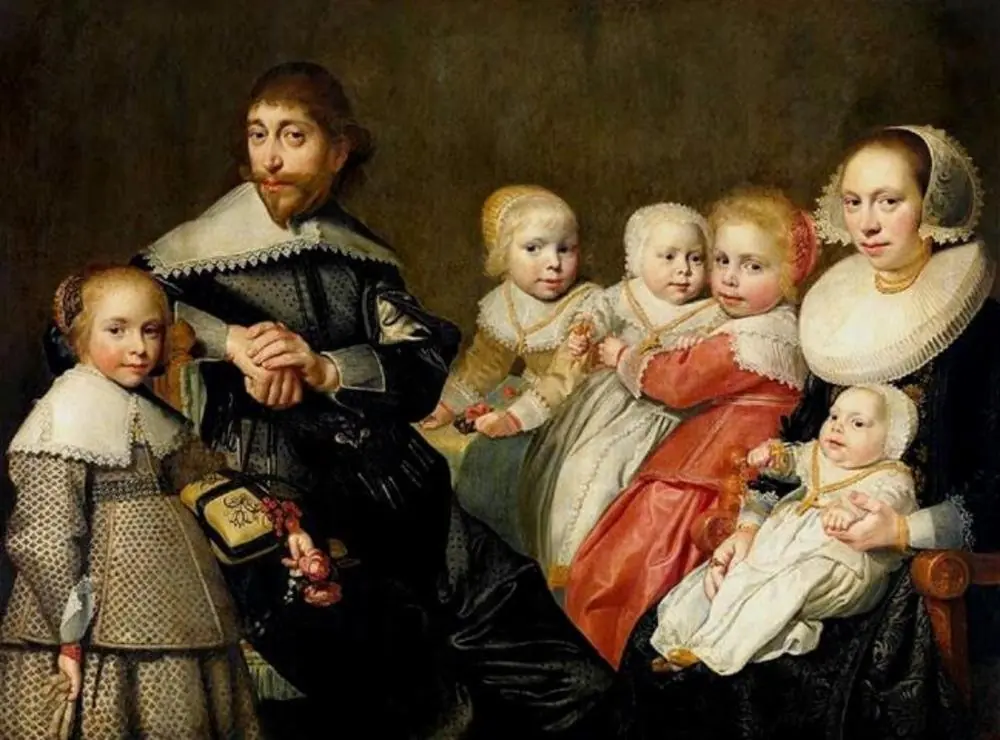 Portrait of Cornelis van der Heijde, his wife Ariaentgen de Buijser and their five children
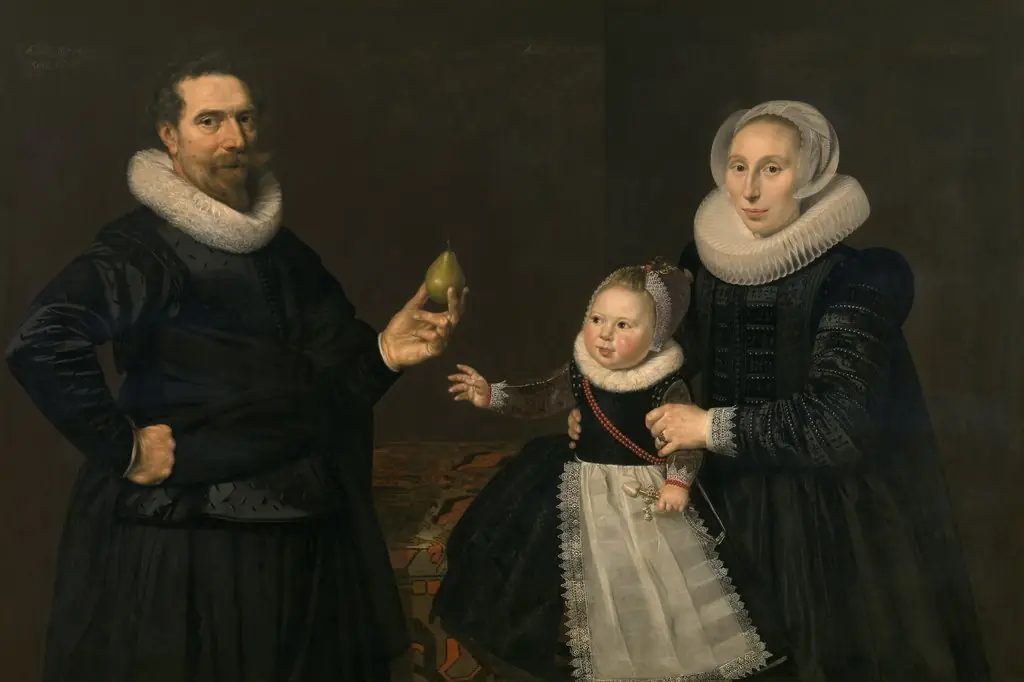 Portrait of a 43-year old man with wife and child
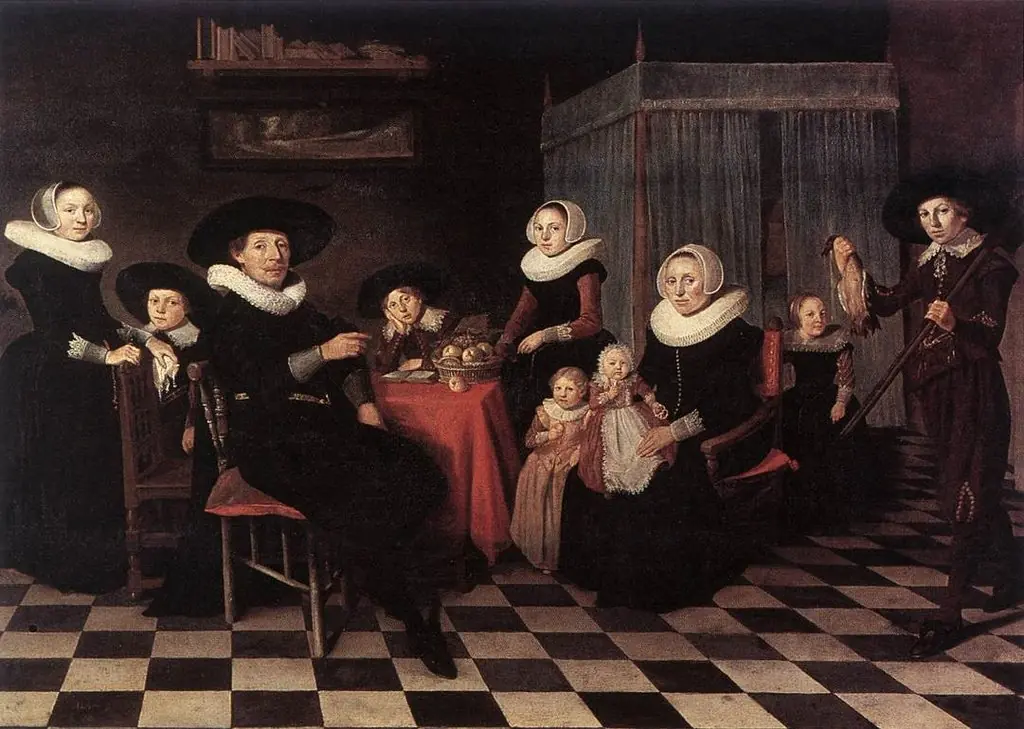 Portrait of a Family
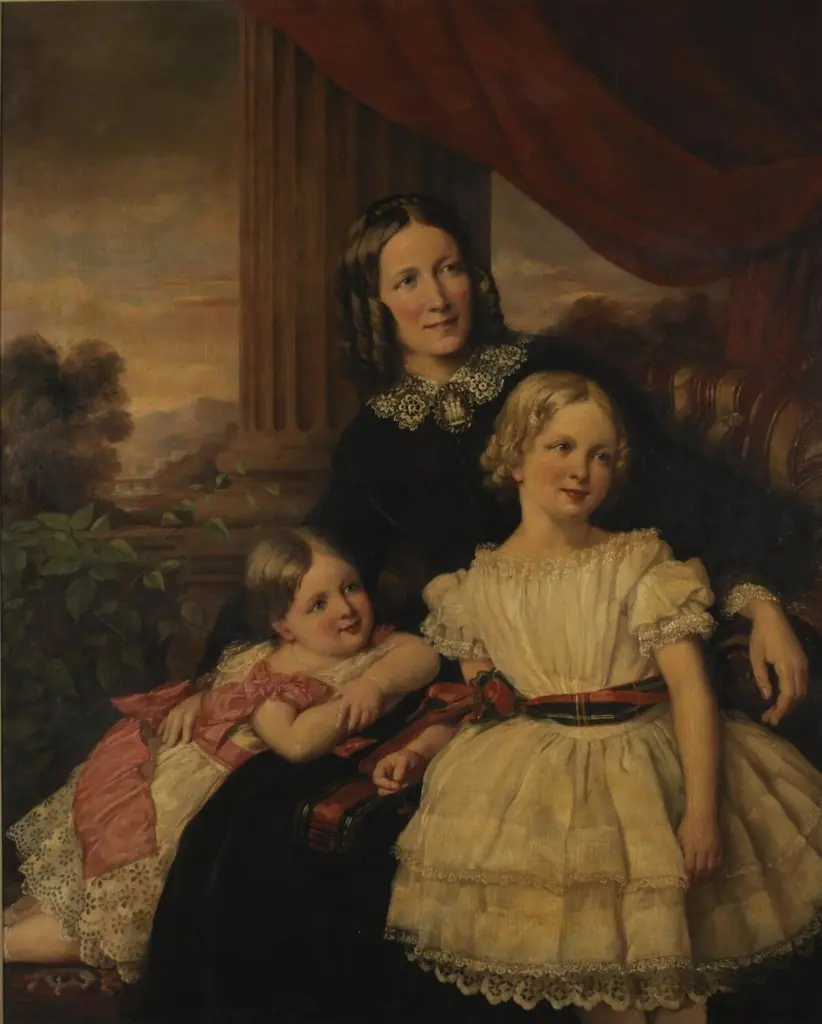 Group portrait of mother & two daughters
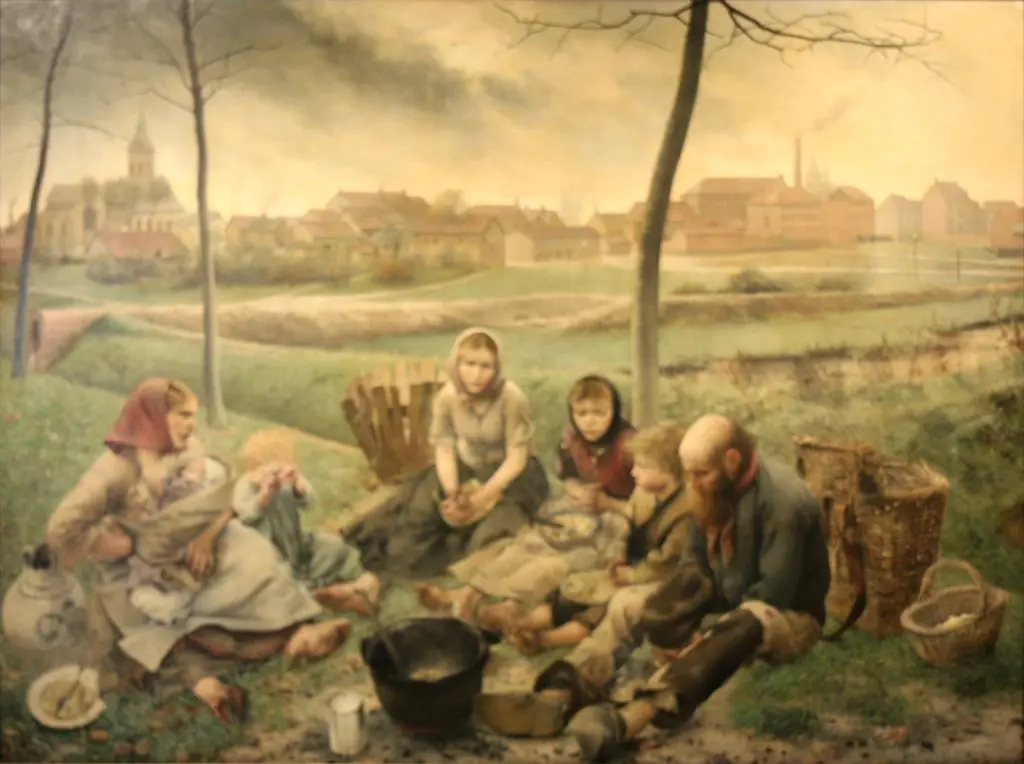 The chalk sellers-At Noon
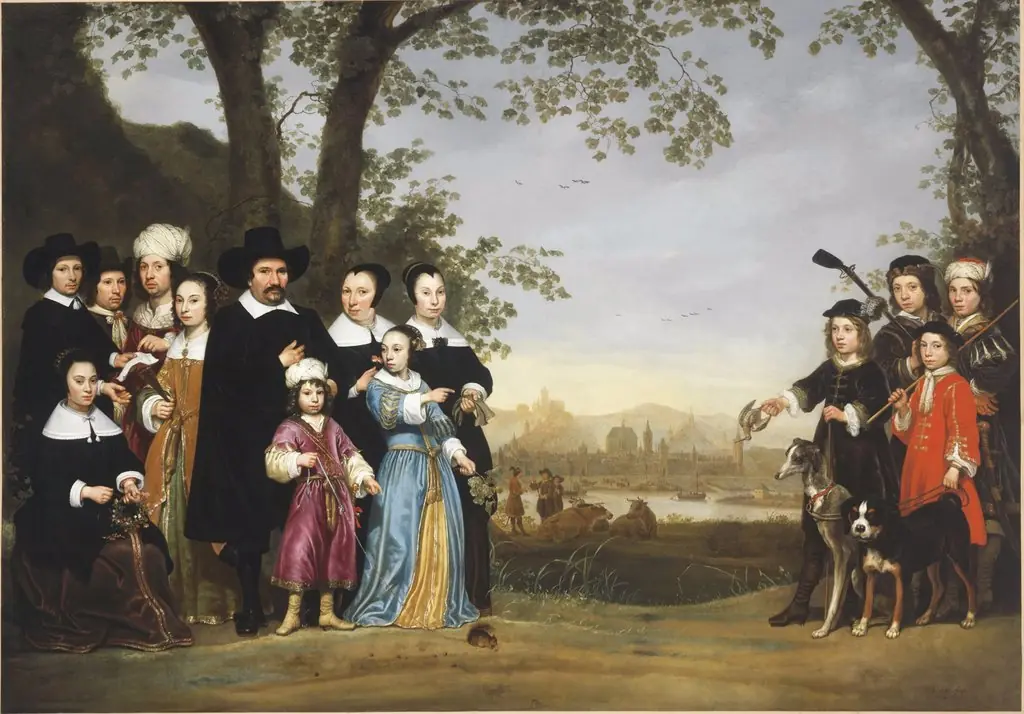 Portrait of the Sam Family
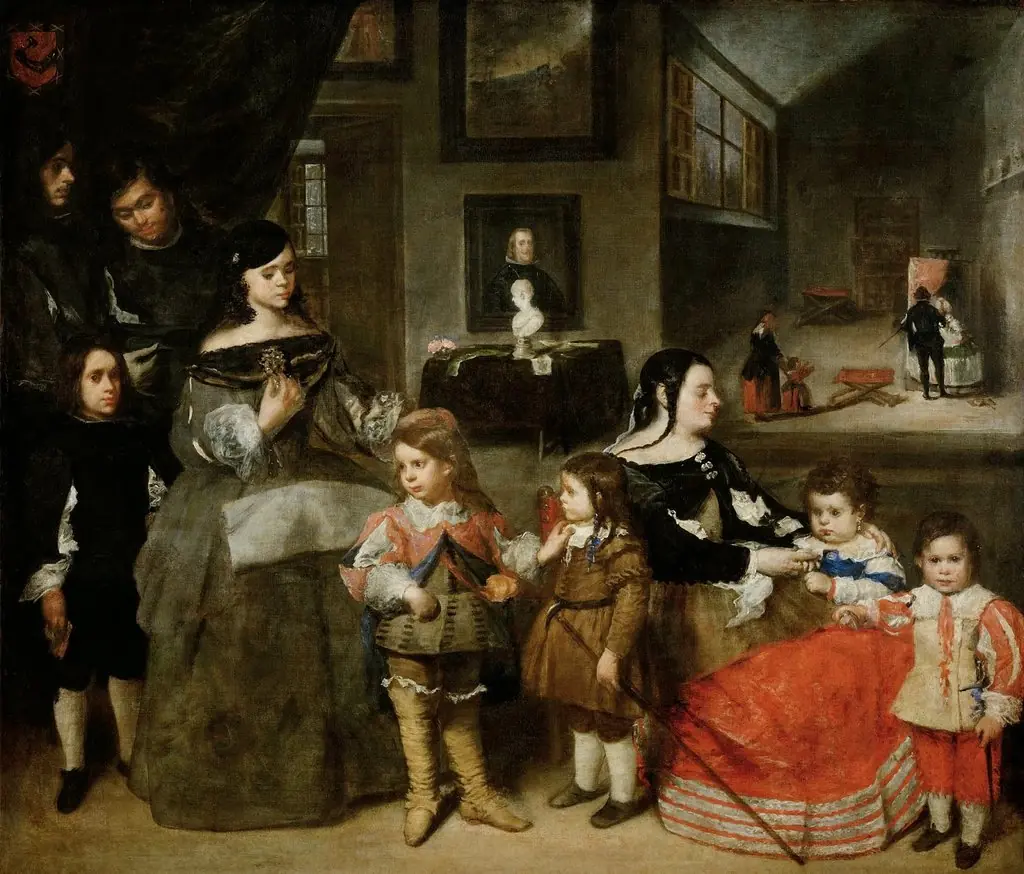 The Artist's Family
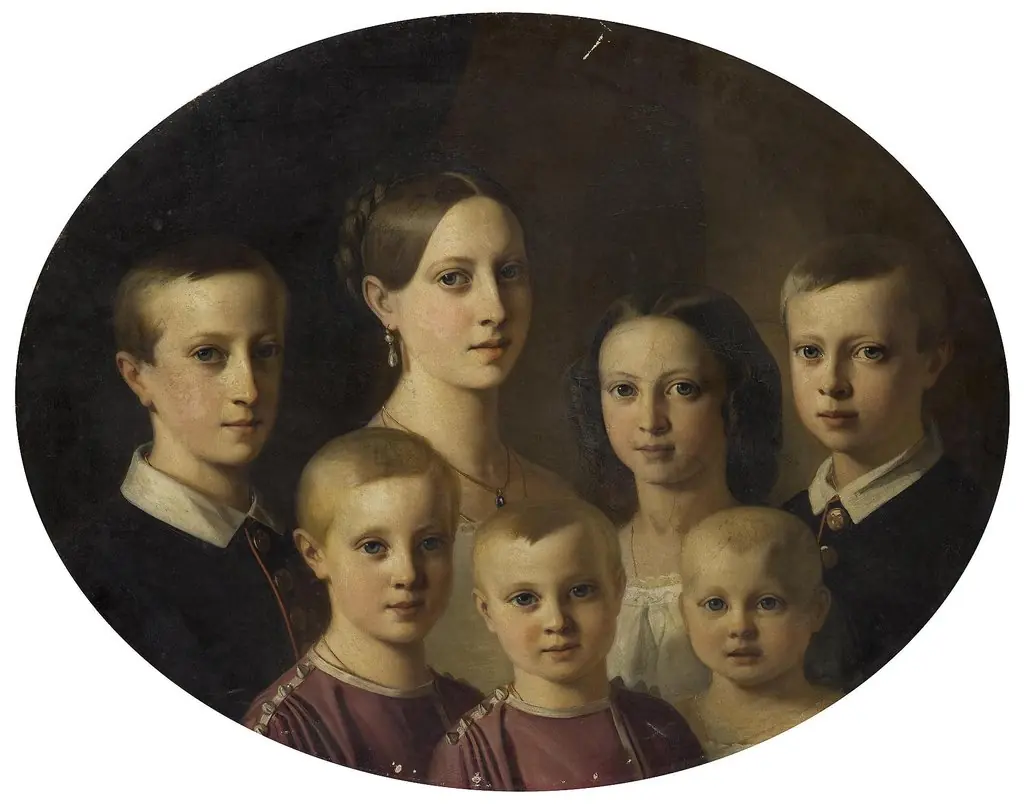 Portrait of the Oldenburg Children
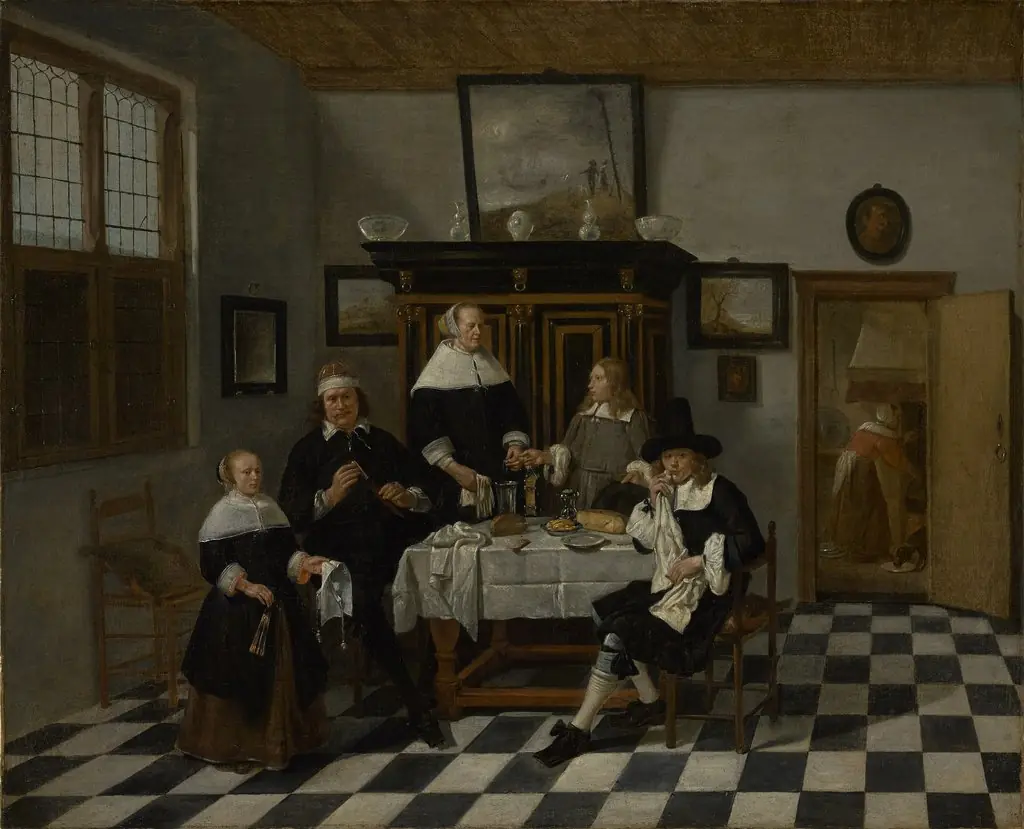 Family Group in an Interior
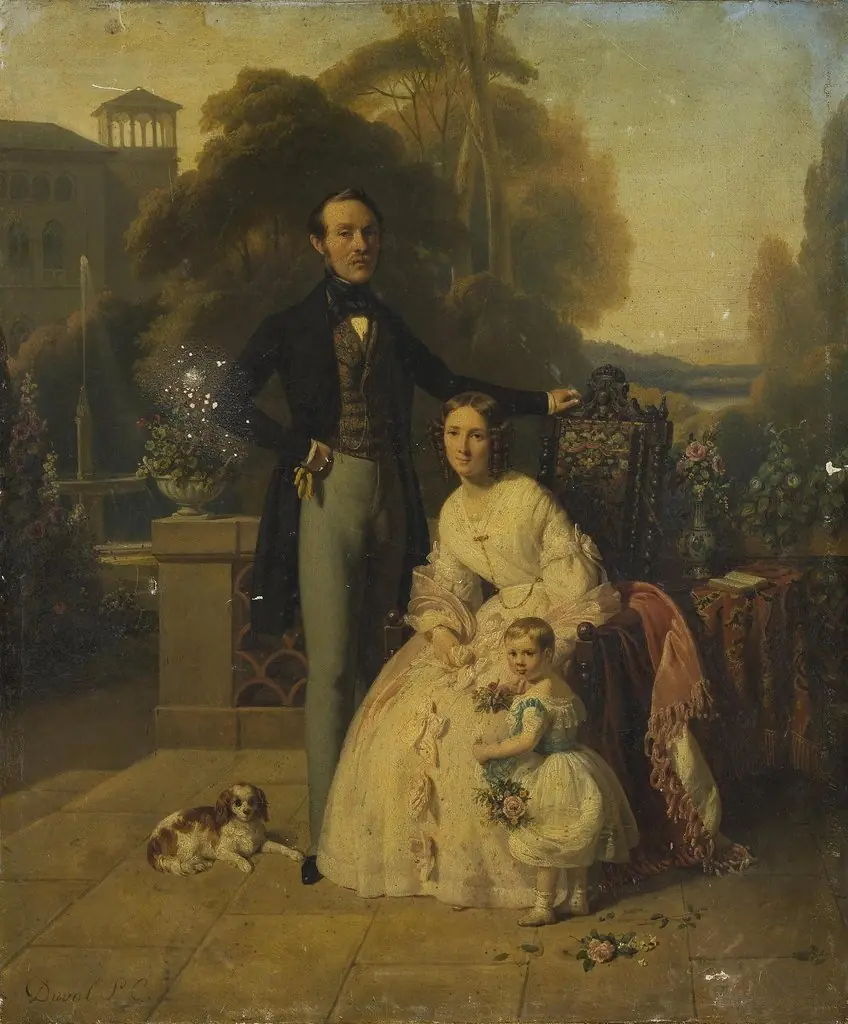 Family Portrait
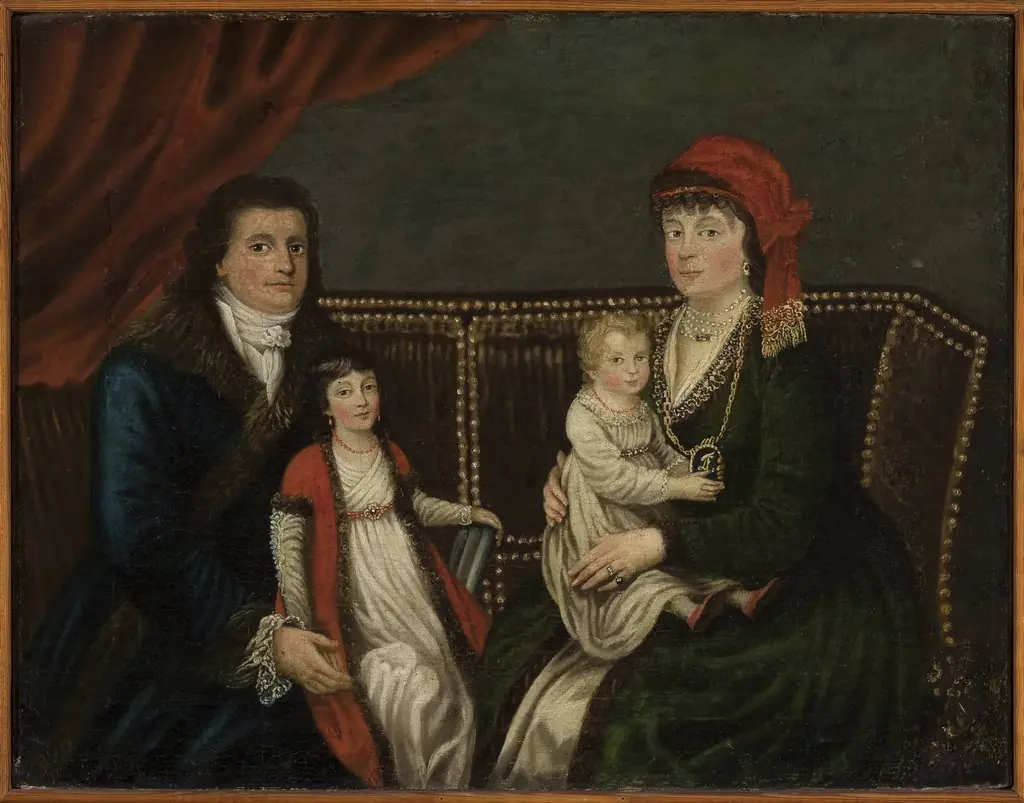 Portrait of the Lafontaine family, Leopold (1756–1812), surgeon, with his wife Teresa née Korneli (1768–1827) and daughters, Zofia (?–1831) and Wiktoria (1800–1849)
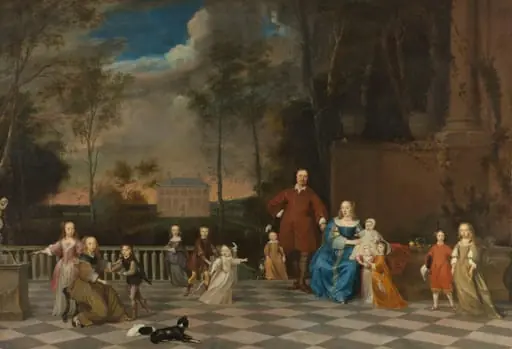 The Amsterdam Merchant Jeremias van Collen (1608-1676), with his Wife and their Twelve Children
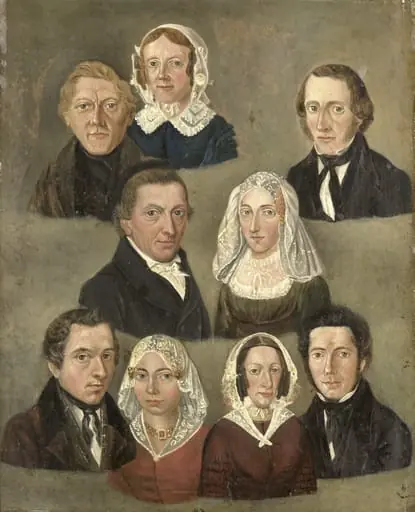 Portrait of the Artist's Parents, Douwe Martens Teenstra and Barber Hindriks Siccama with Members of the Family
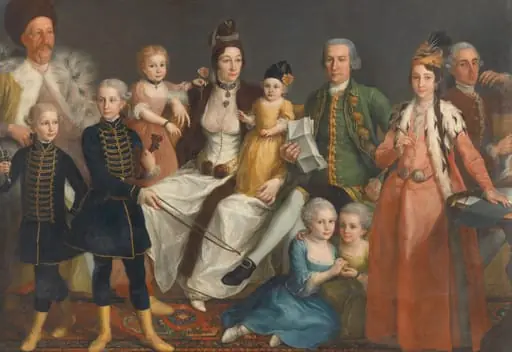 Portrait of the Van Lennep Family, a Merchant Family in Izmir
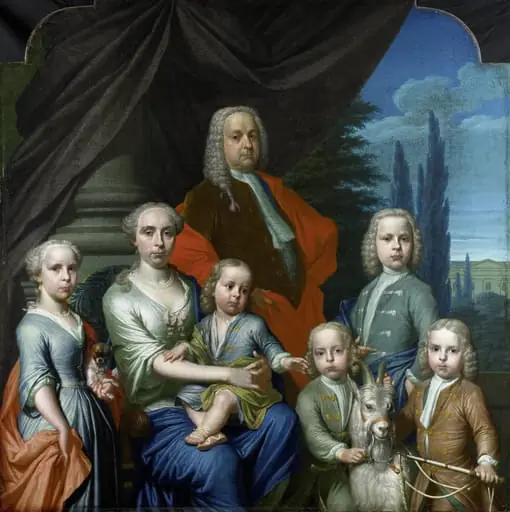 Willem Philip Kops (1695-1756), with his Wife and Children
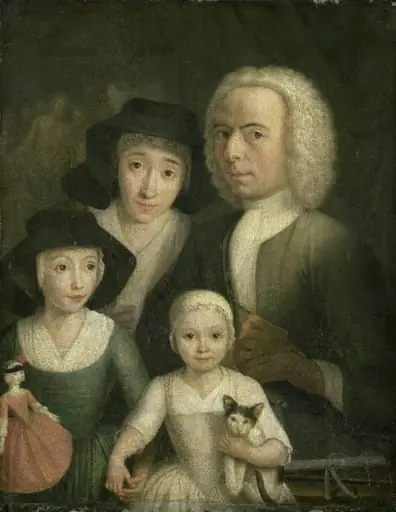 Self Portrait with his Wife Sanneke van Bommel and their two Children
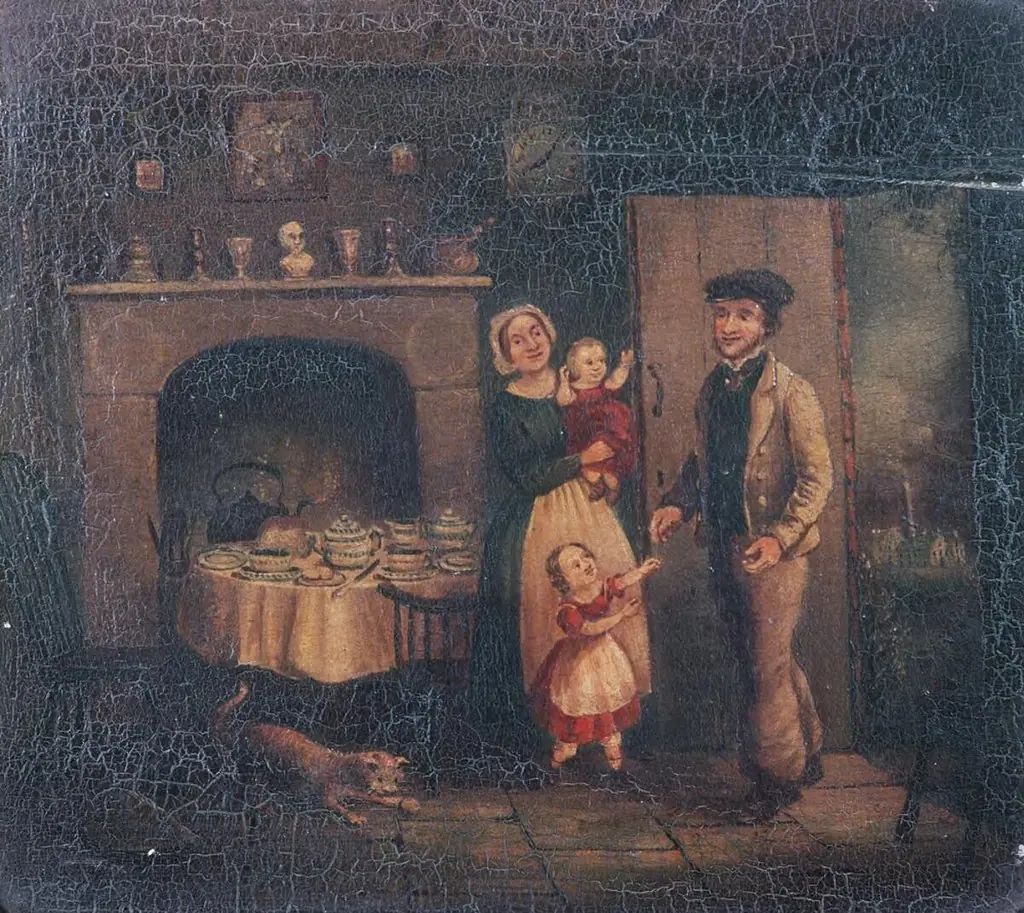 Tea time - end of shift
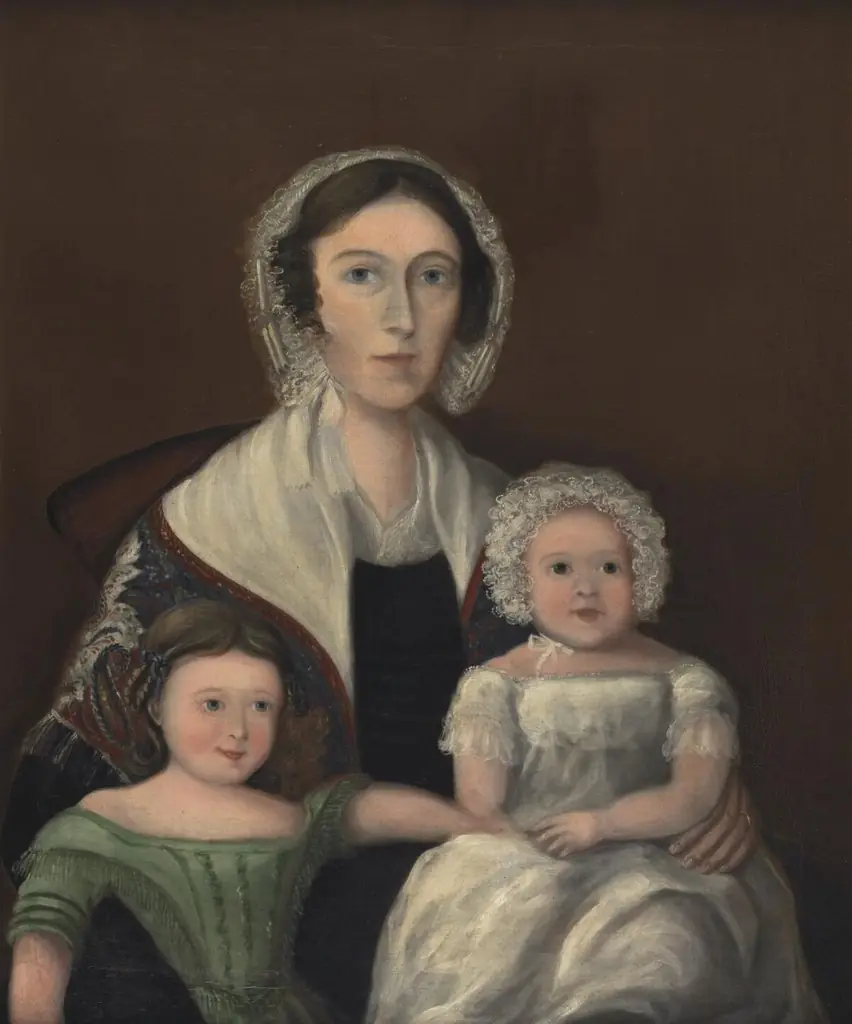 Margaret Rowlands & her children
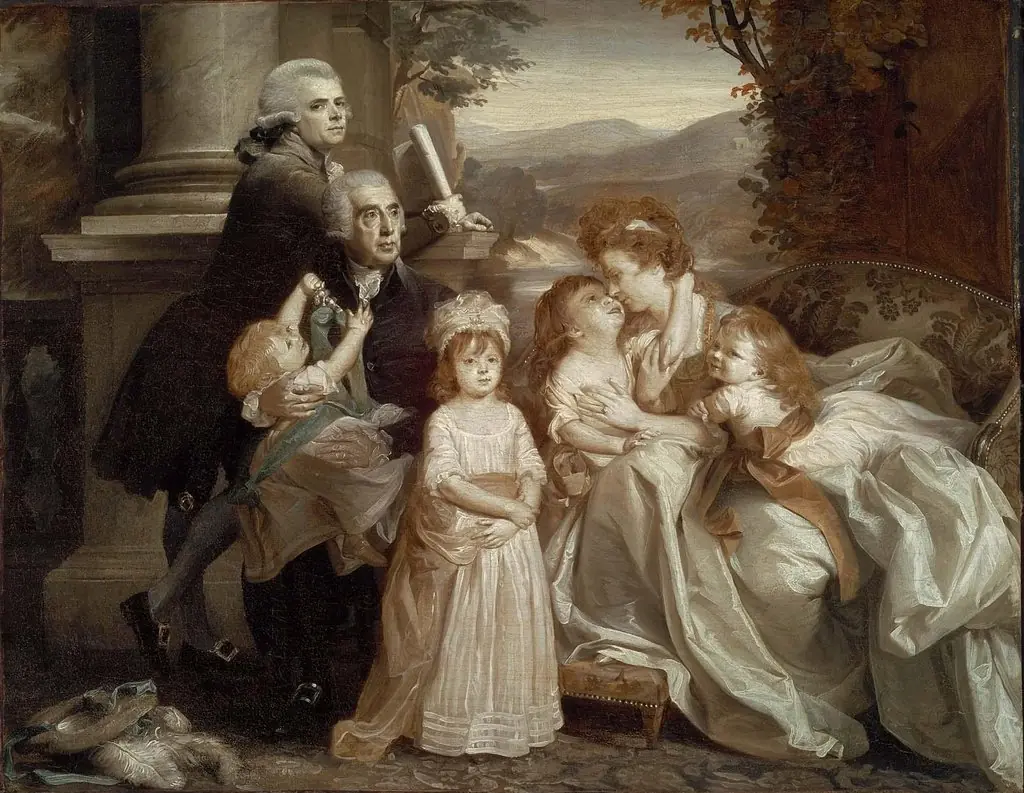 The Copley Family
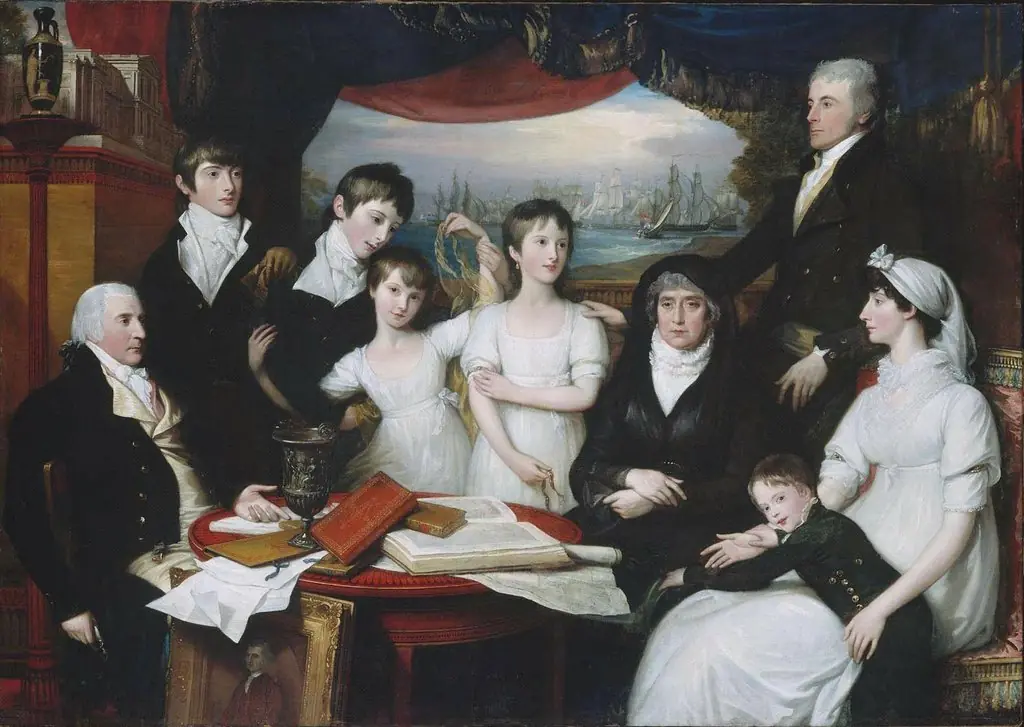 The Hope Family of Sydenham, Kent
 The chalk sellers-In the morning
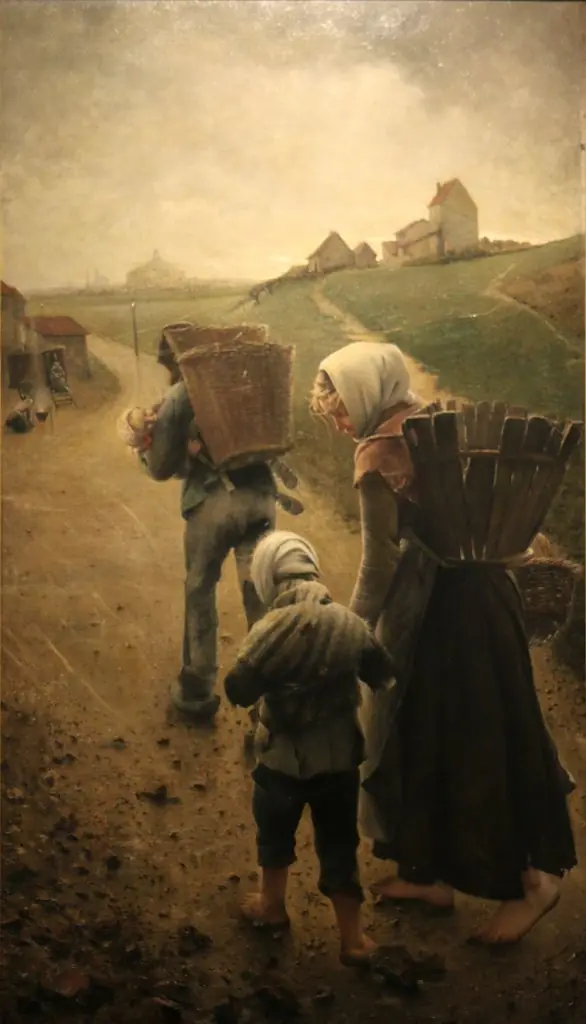 The chalk sellers-In the evening
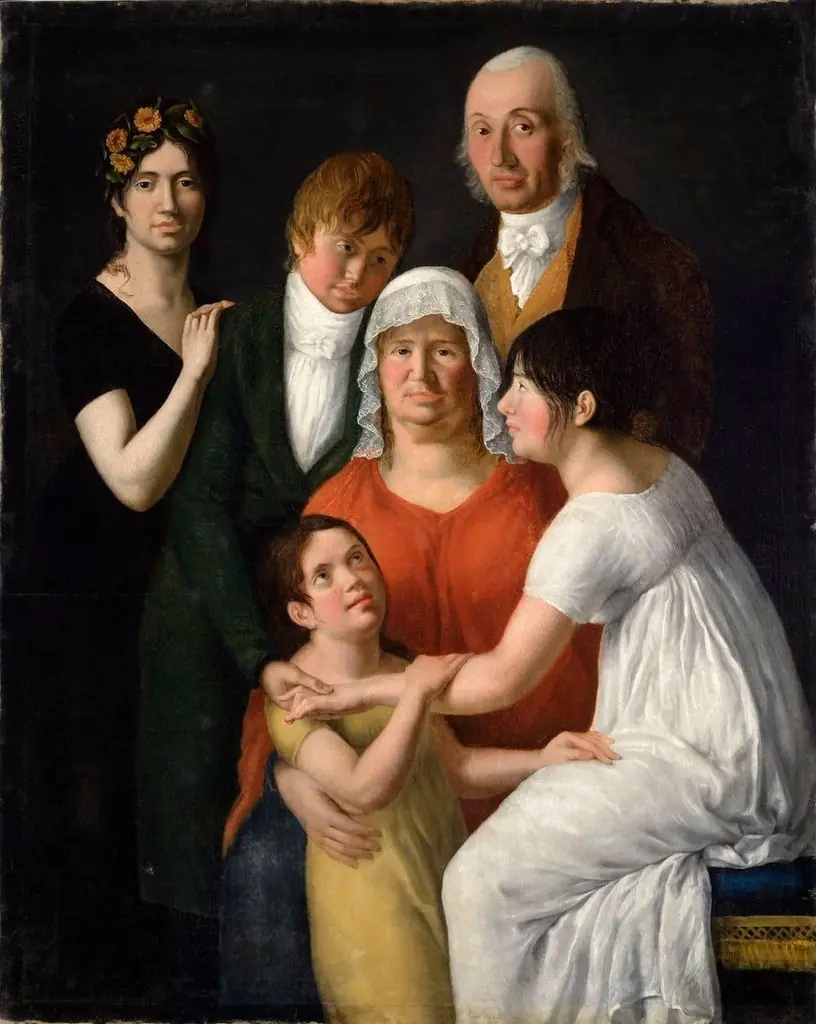 The Messageot Charve Family
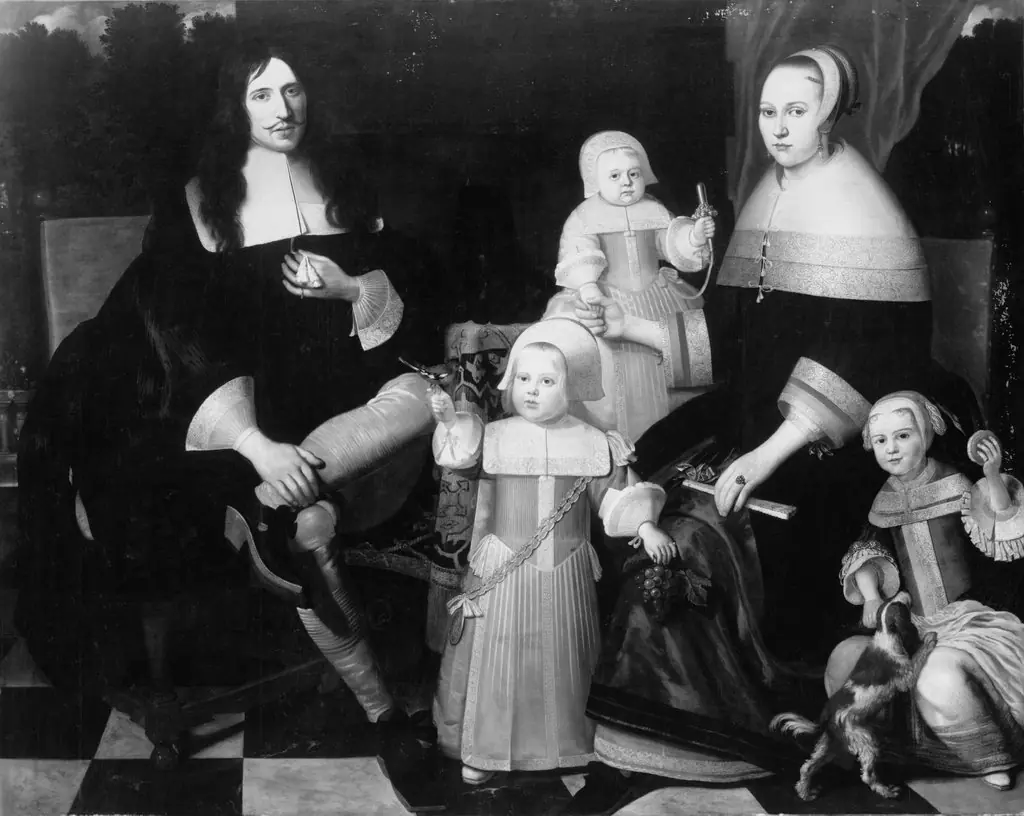 Family Portrait
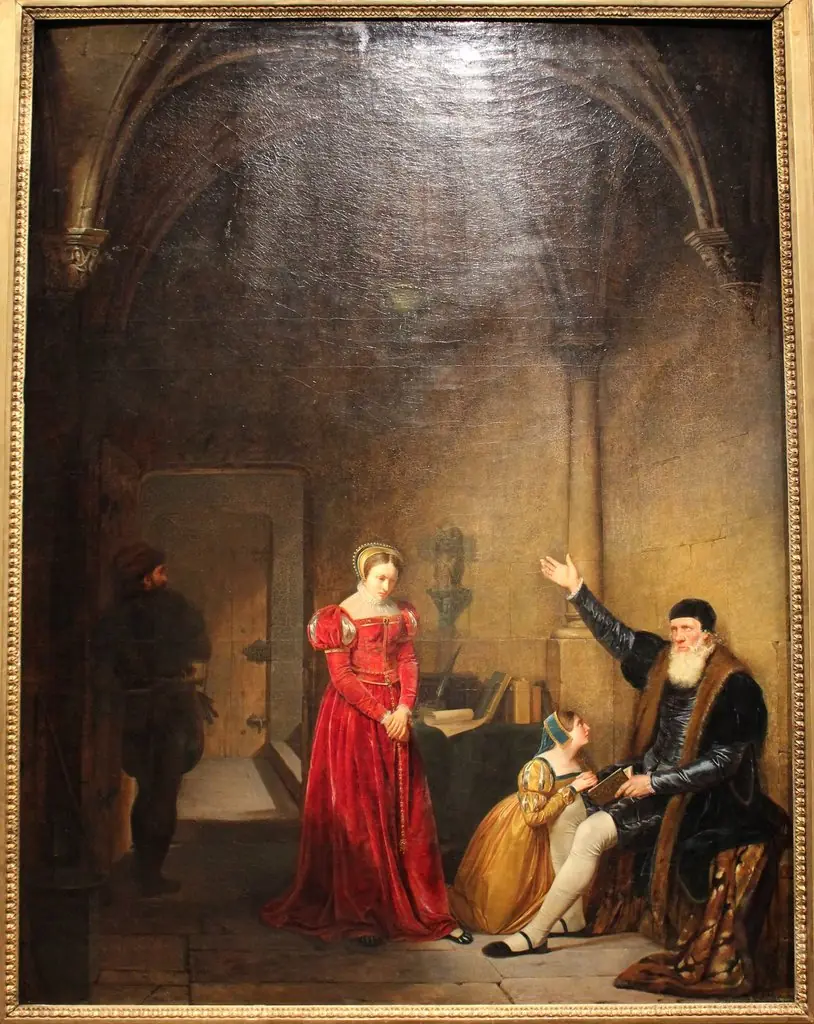 Thomas More, Lord High Chancellor of England
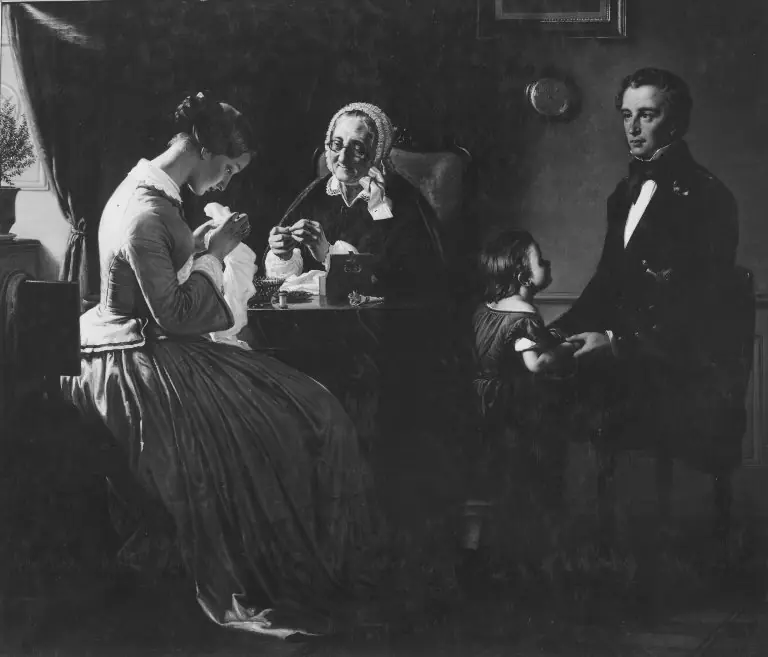 Frierens besøg
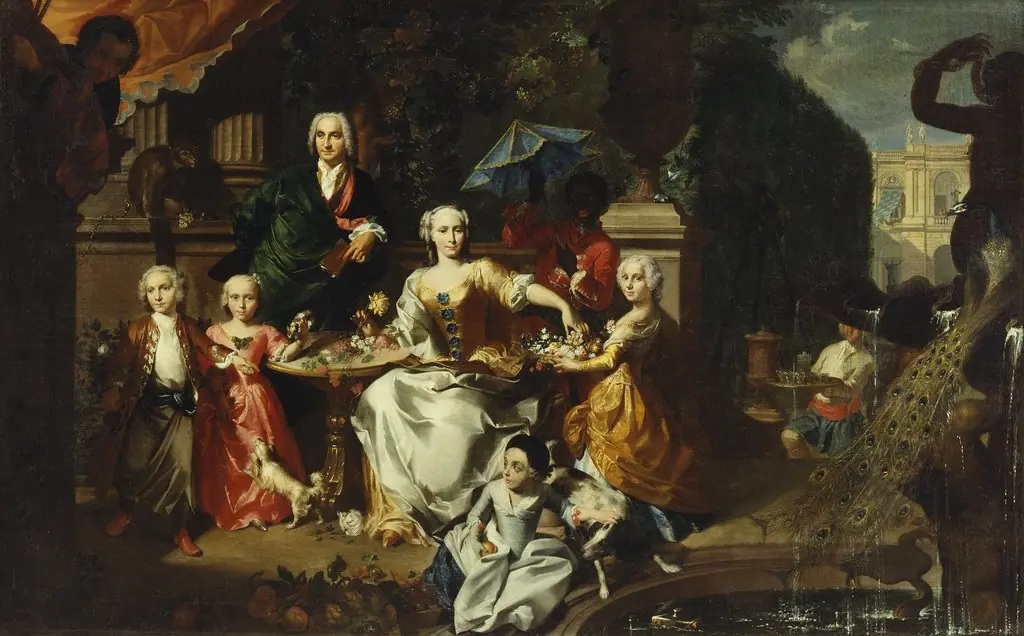 A Family Group on a Terrace in the Grounds of a Villa. Possibly the English Businessman George Jackson and his Family
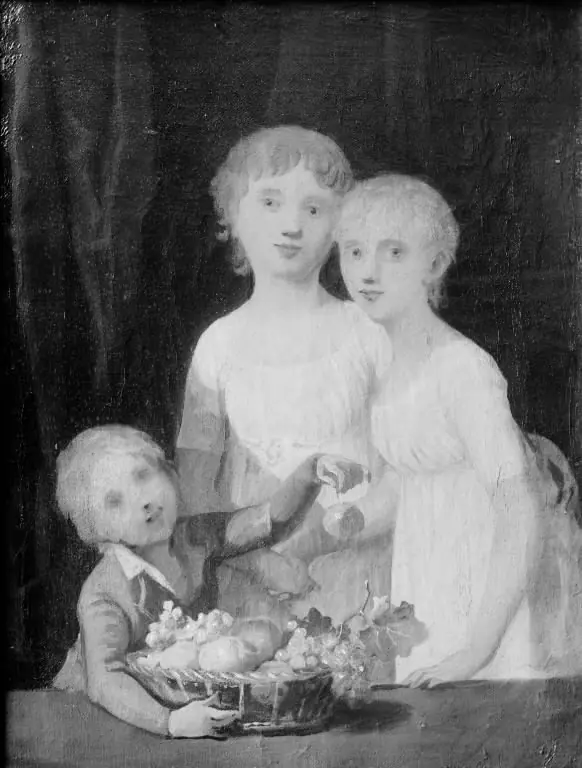 Gruppebillede af kunstnerens børn
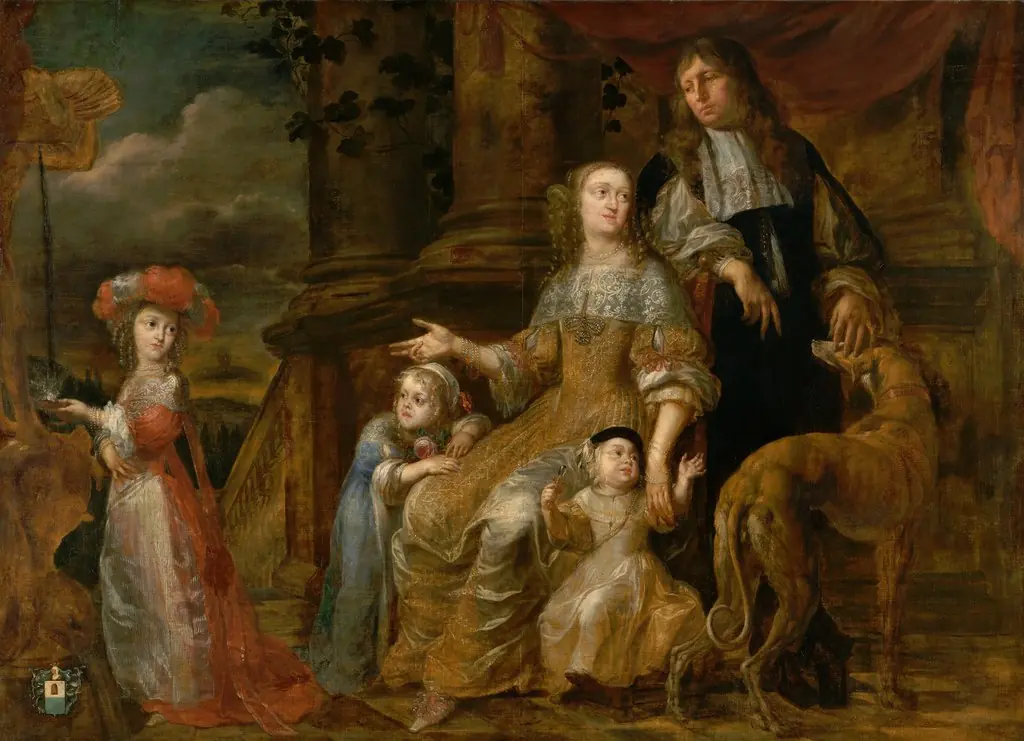 Portrait of the Family de Bie
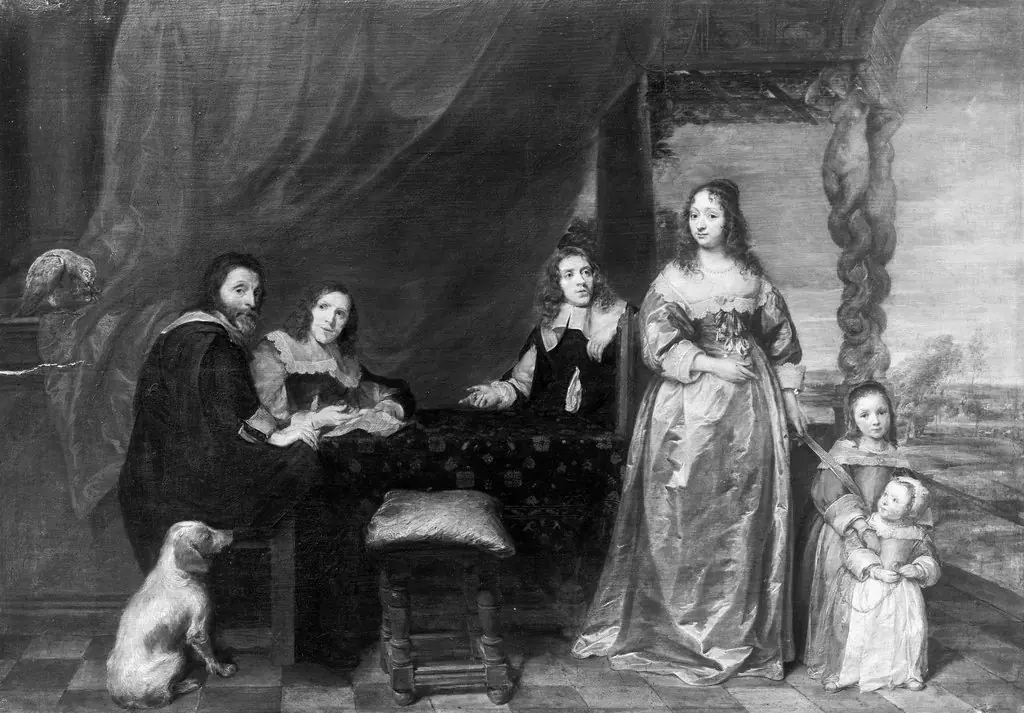 Portrait of a family on the terrace
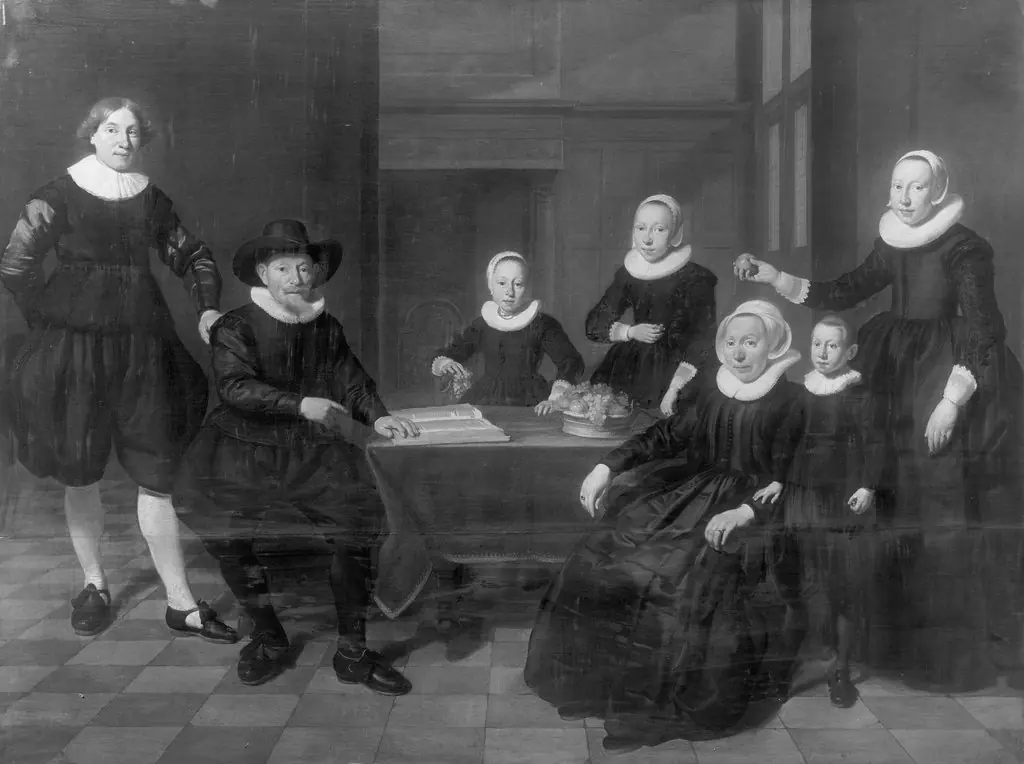 Family portrait
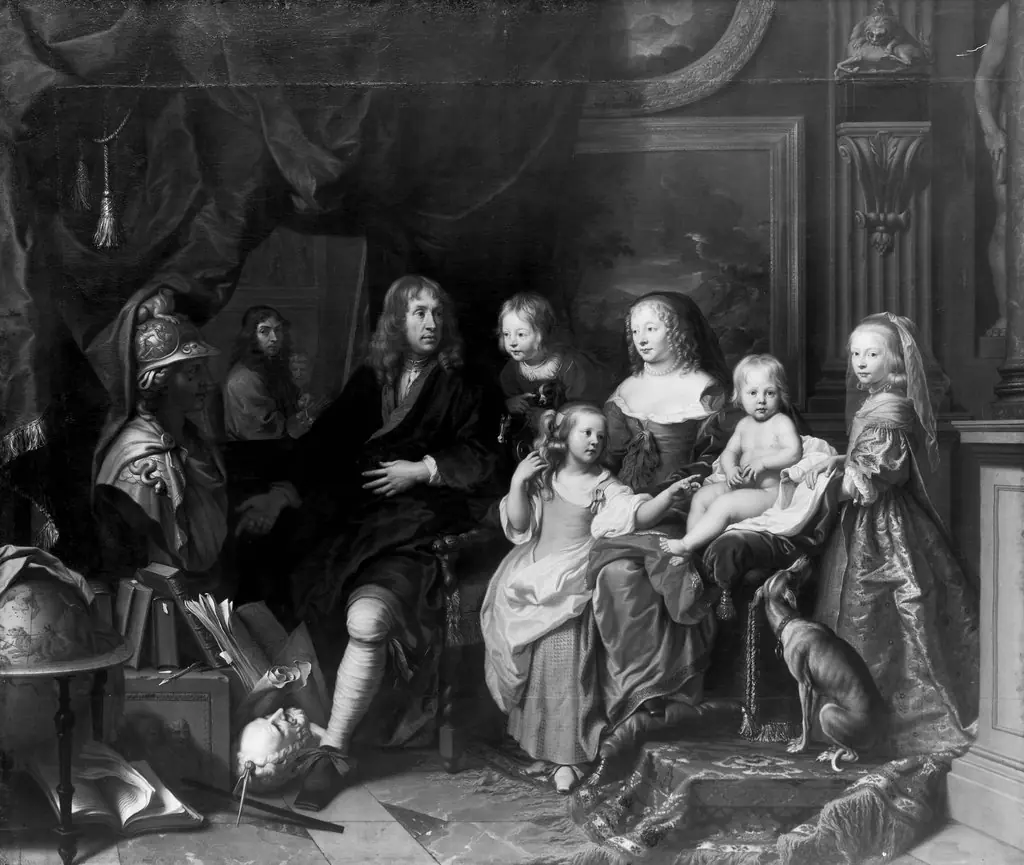 Portrait of the Cologne banker and collector Everhard Jabach with his family
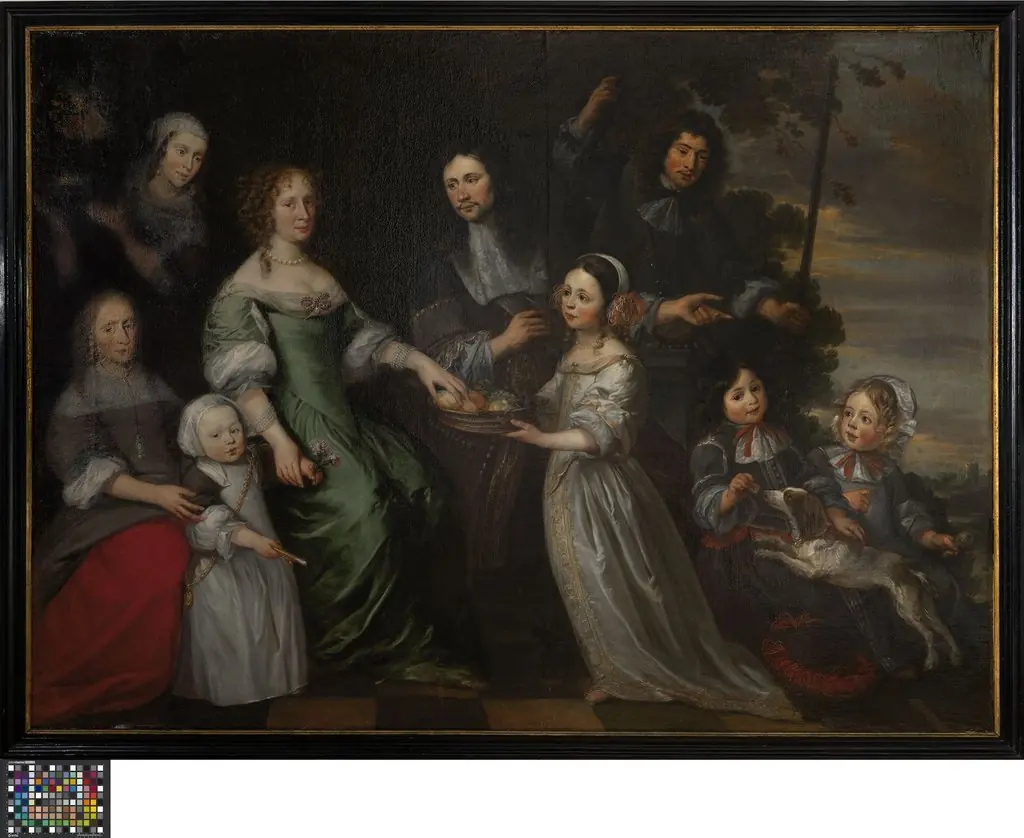 Portrait of Albert de Grass and Marie-Anne Pardo with their family
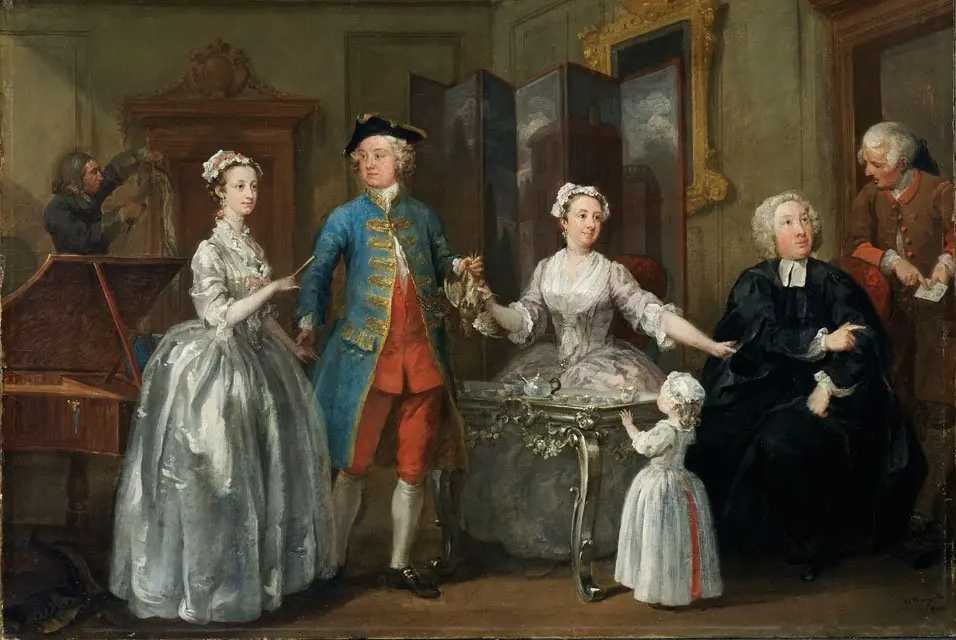 The Western Family
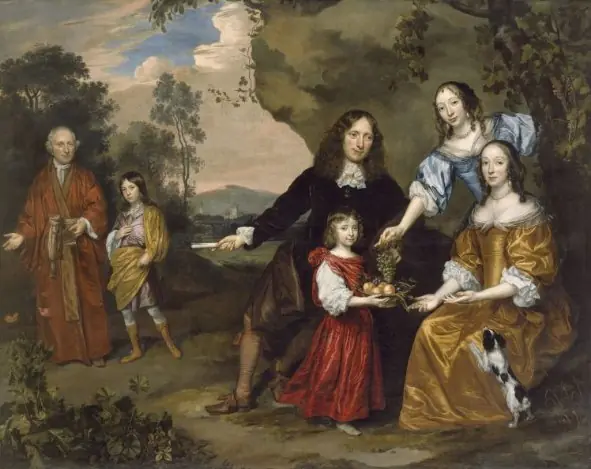 A Family Group
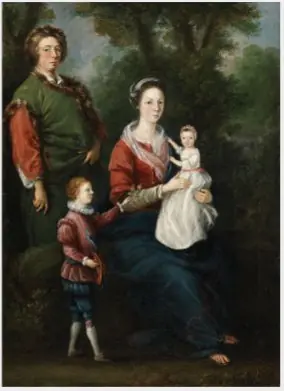 Portrait of Joseph Leeson, 1st Earl of Milltown with his Third Wife Elizabeth, their Daughter Cecilia and his Grandson Joseph, later 3rd Earl of Milltown
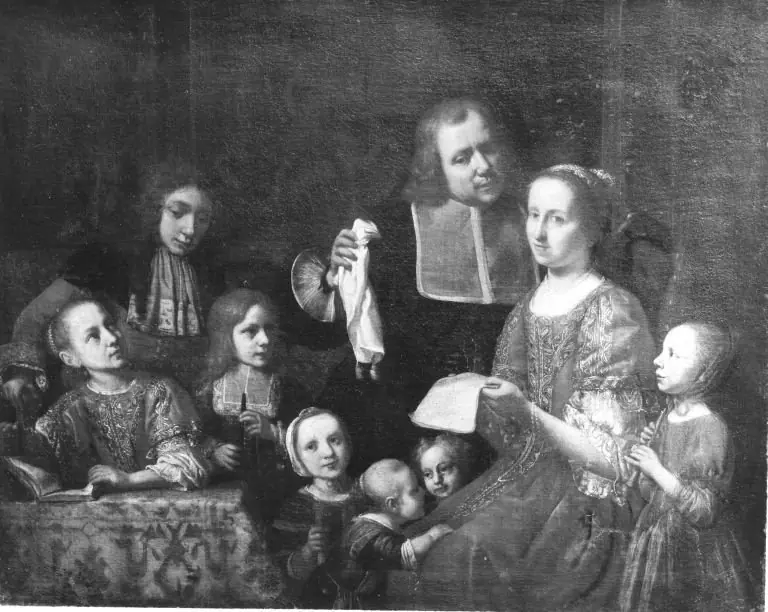 Bildnis der Familie des Künstlers
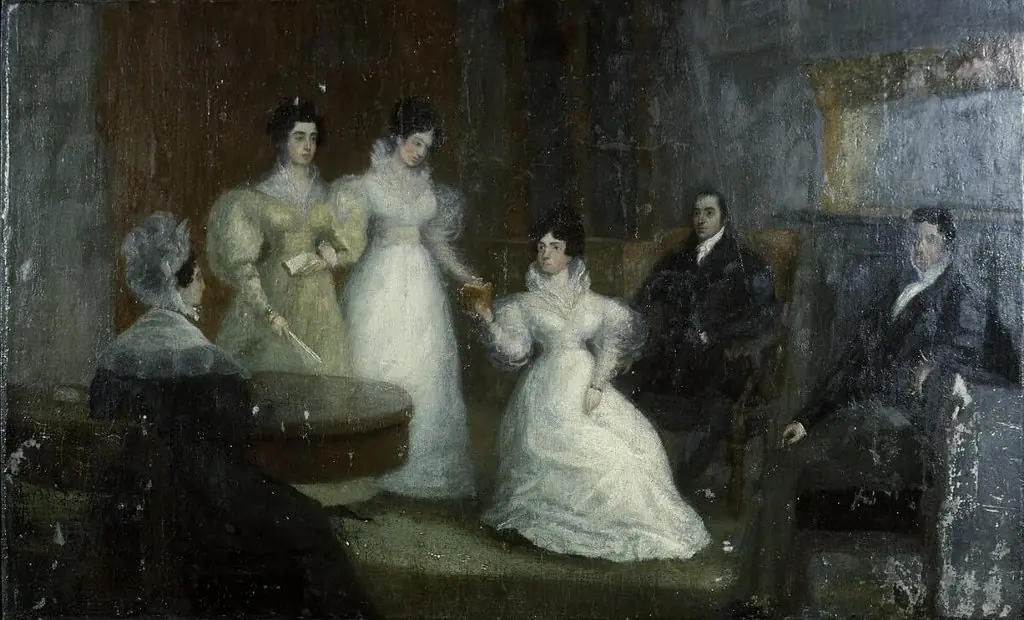 Teulu David Charles
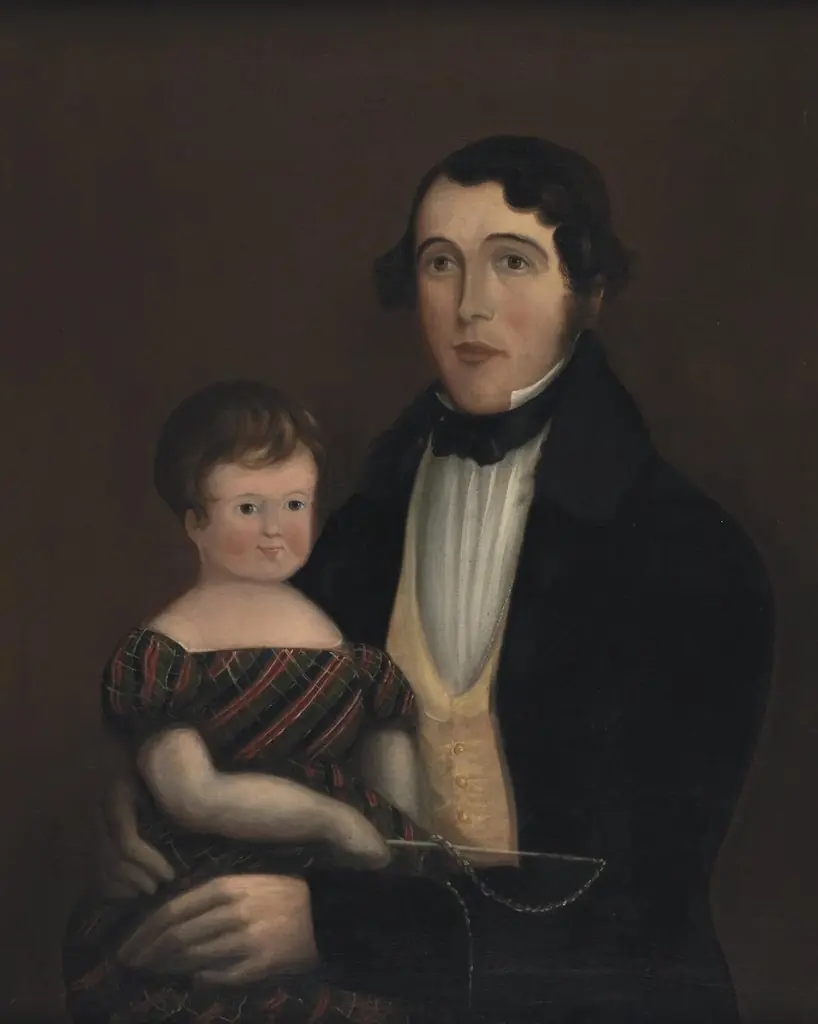 Huw Rowlands & his child
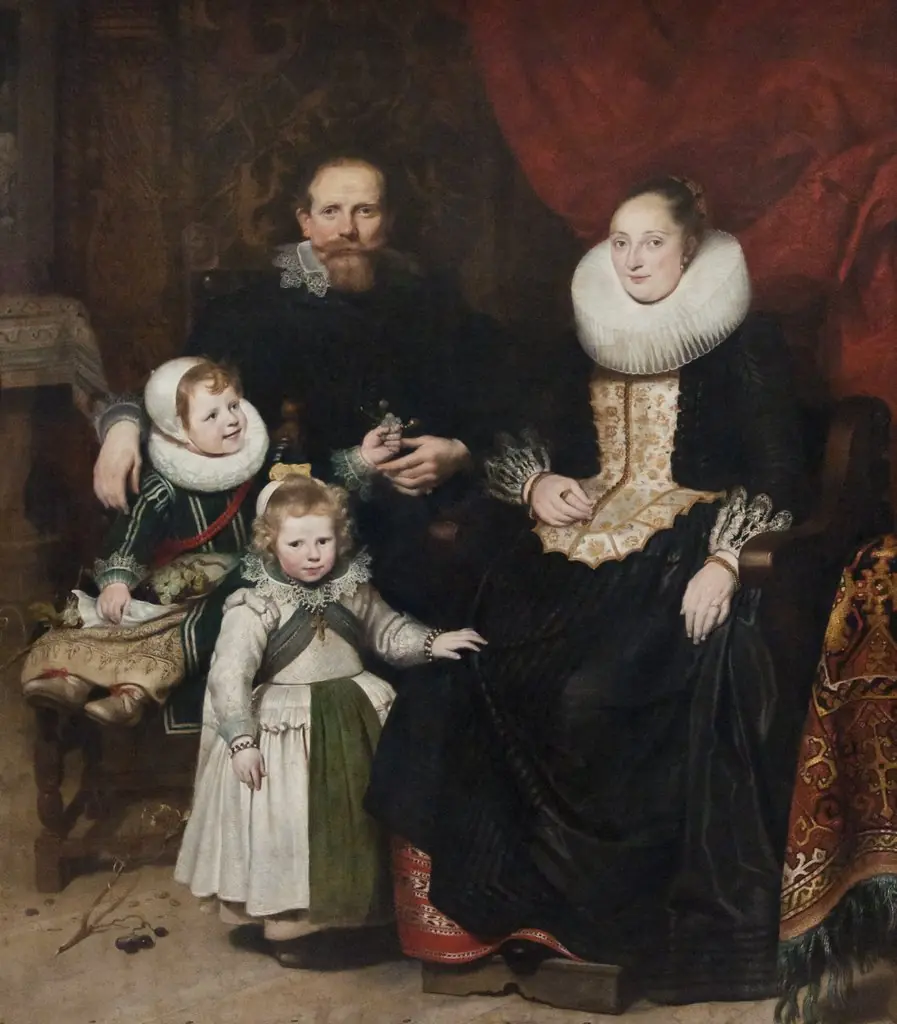 Self-portrait with family
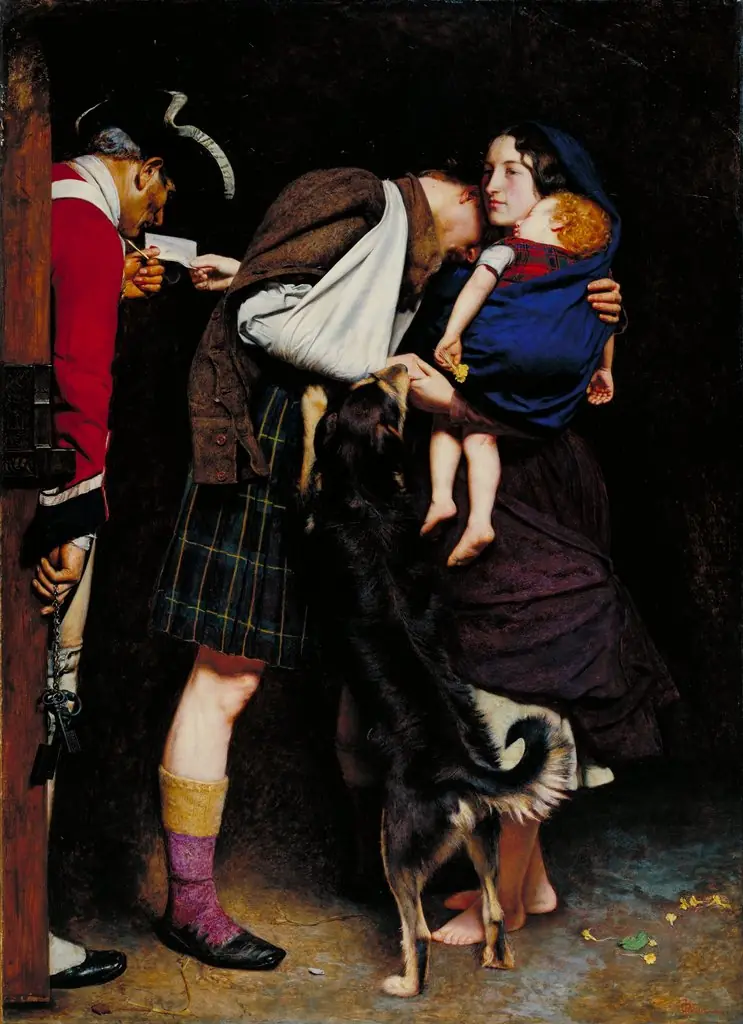 The Order of Release
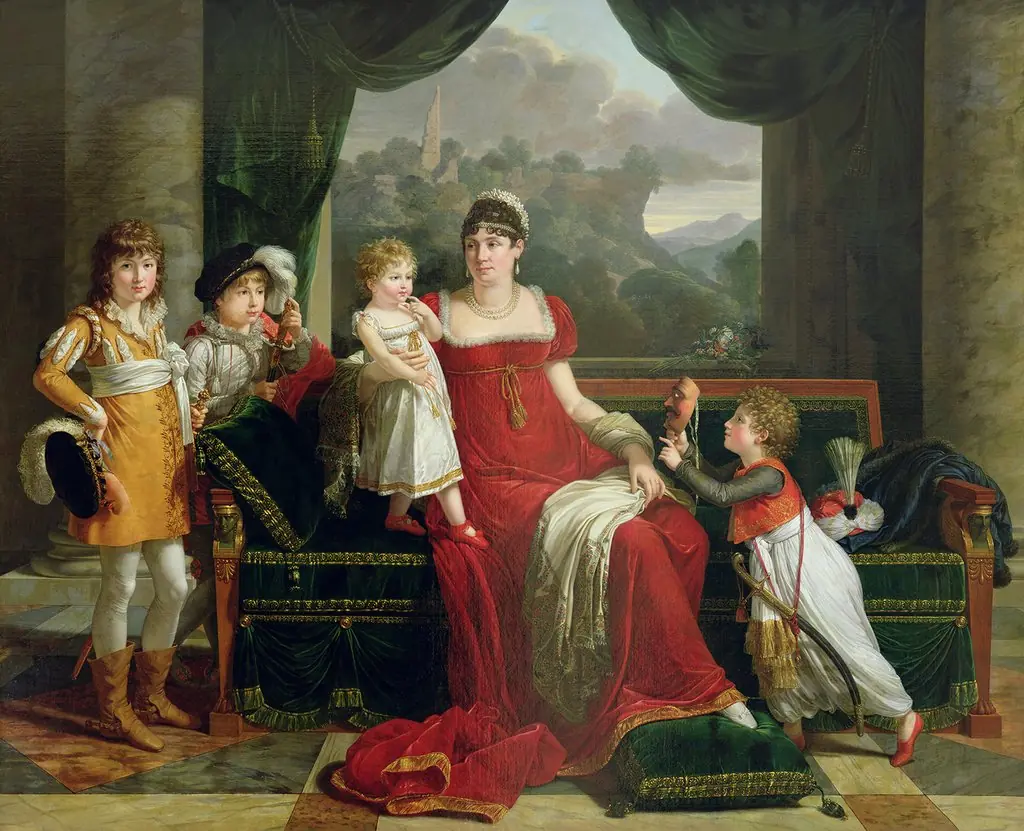 Portrait de la générale Clarke avec ses quatre enfants
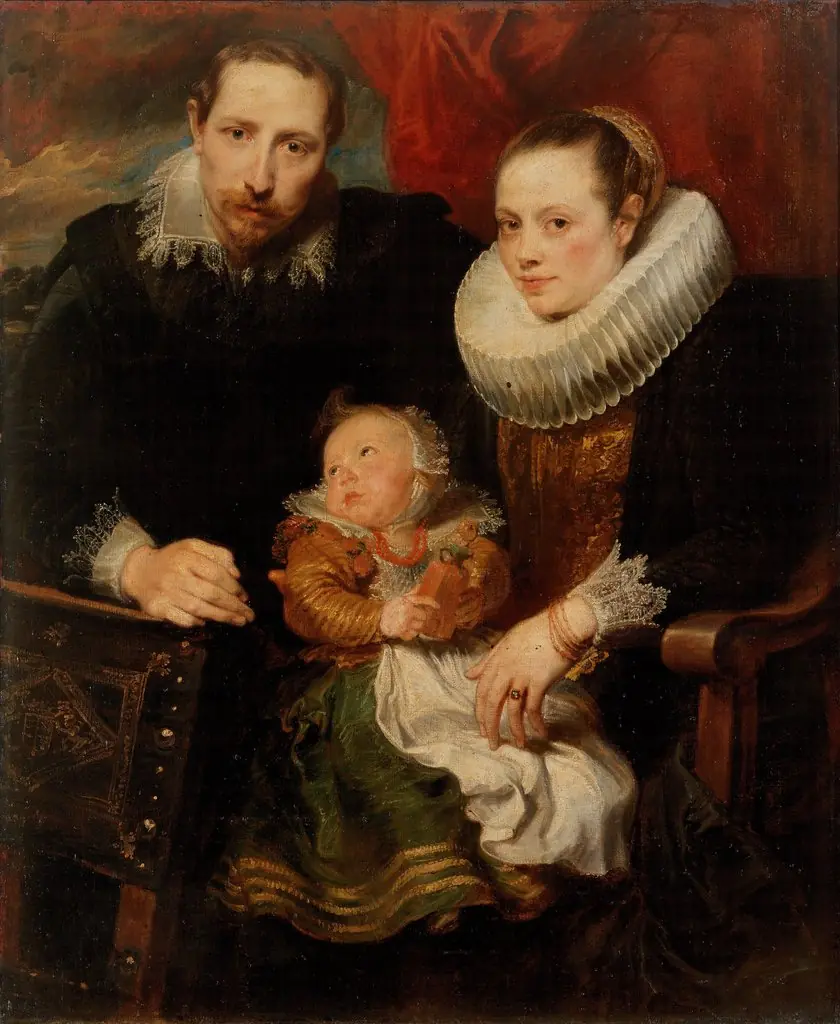 Family Portrait
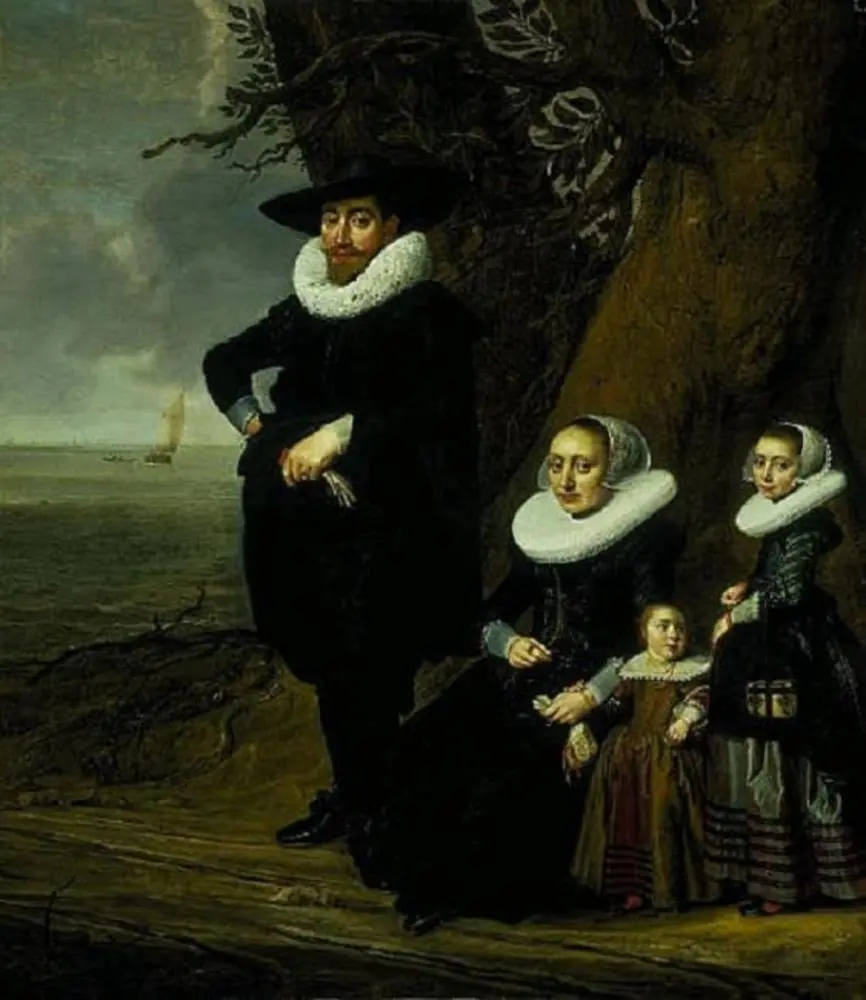 A Dutch Family Group (Portrait of a Man, Woman and Two Girls)
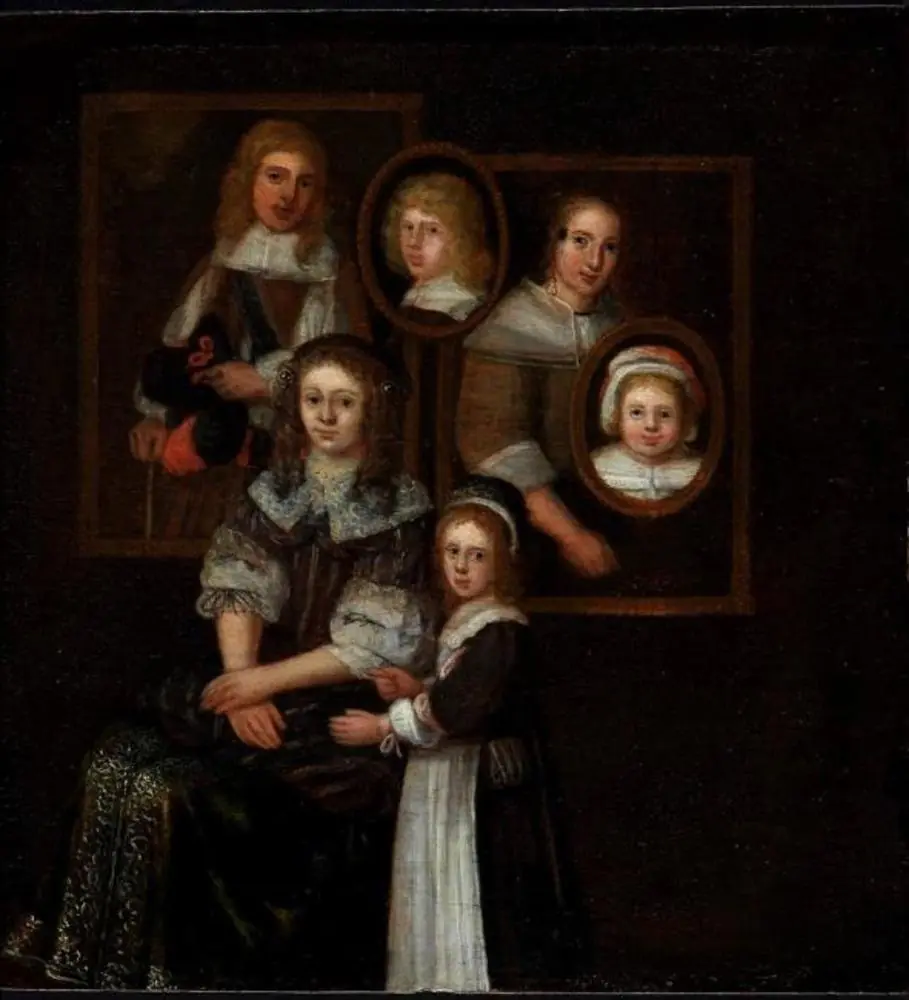 Family group
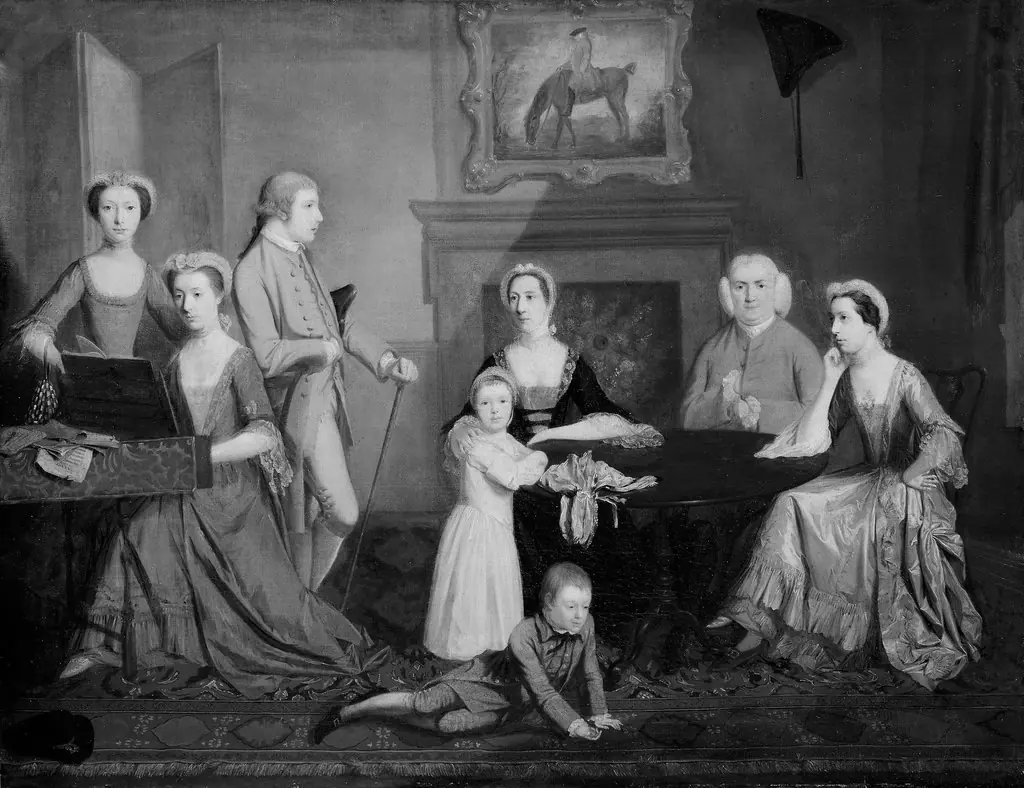 Family in a Room
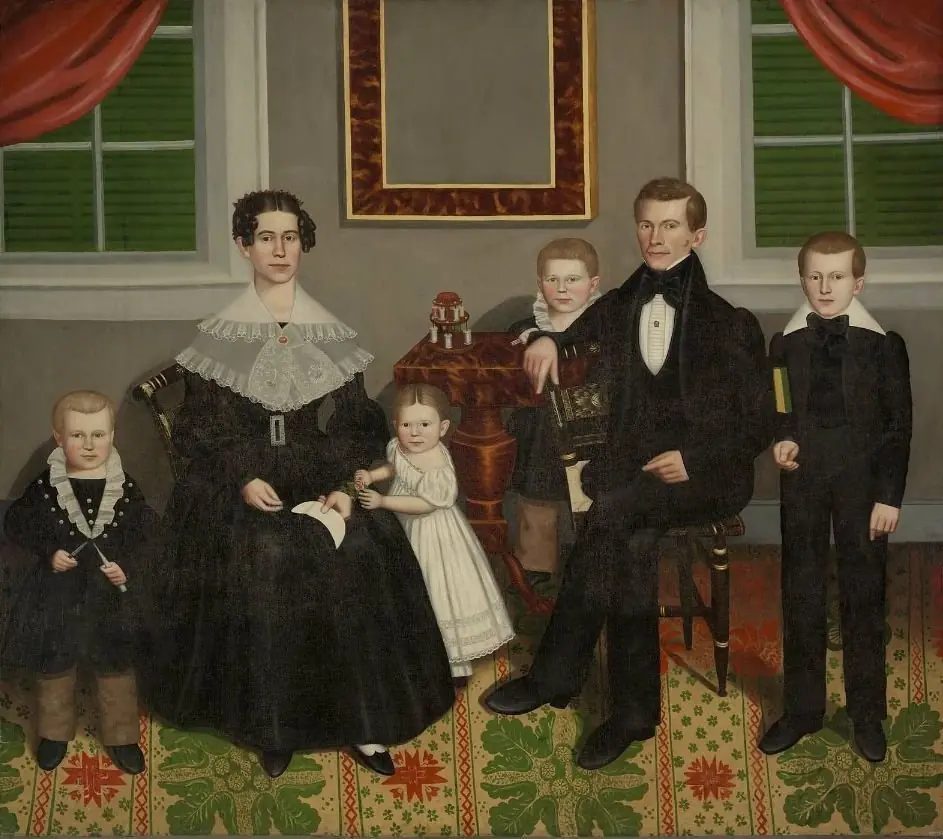 Joseph Moore and His Family
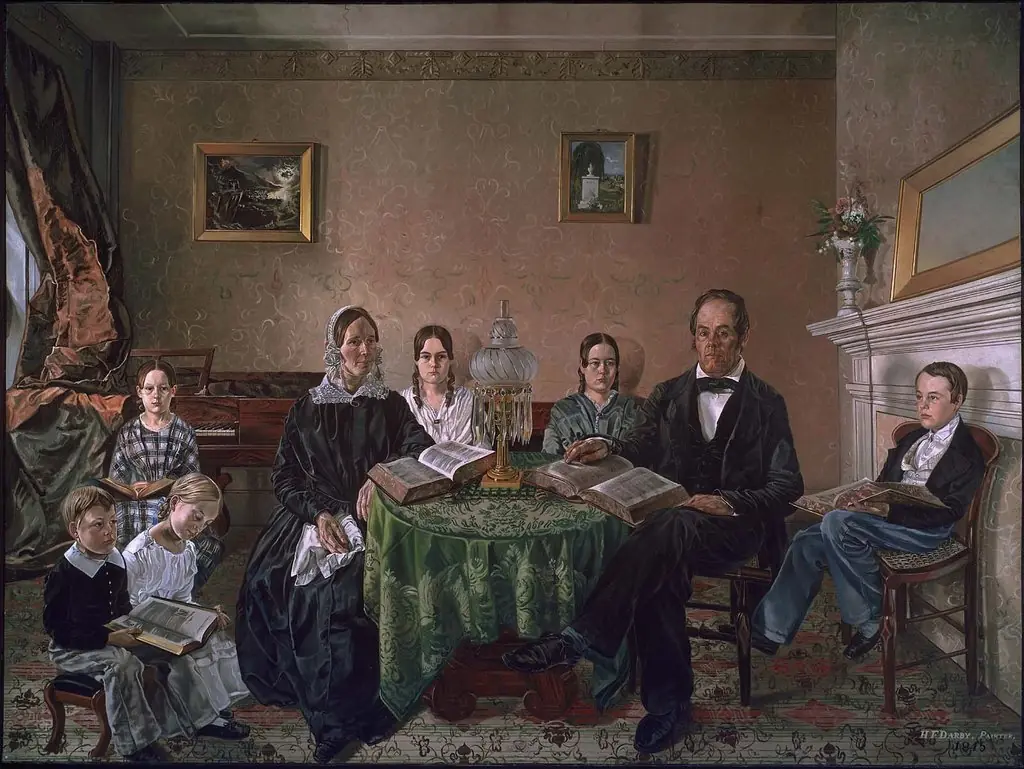 The Reverend John Atwood and His Family
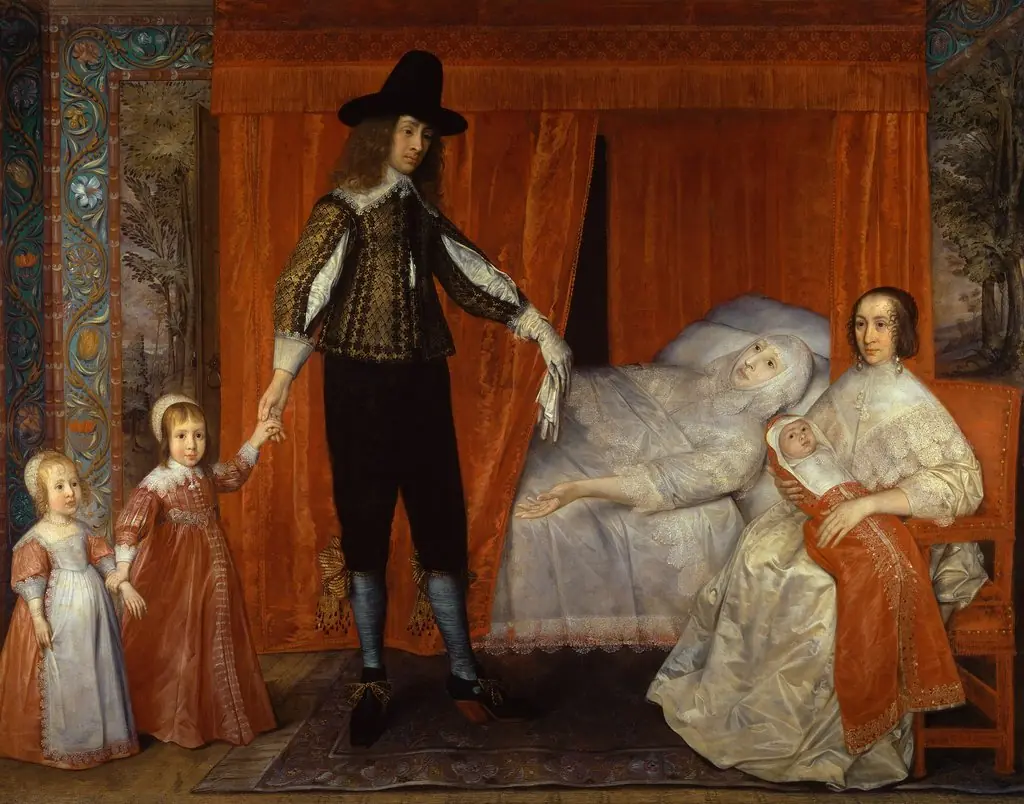 The Saltonstall Family
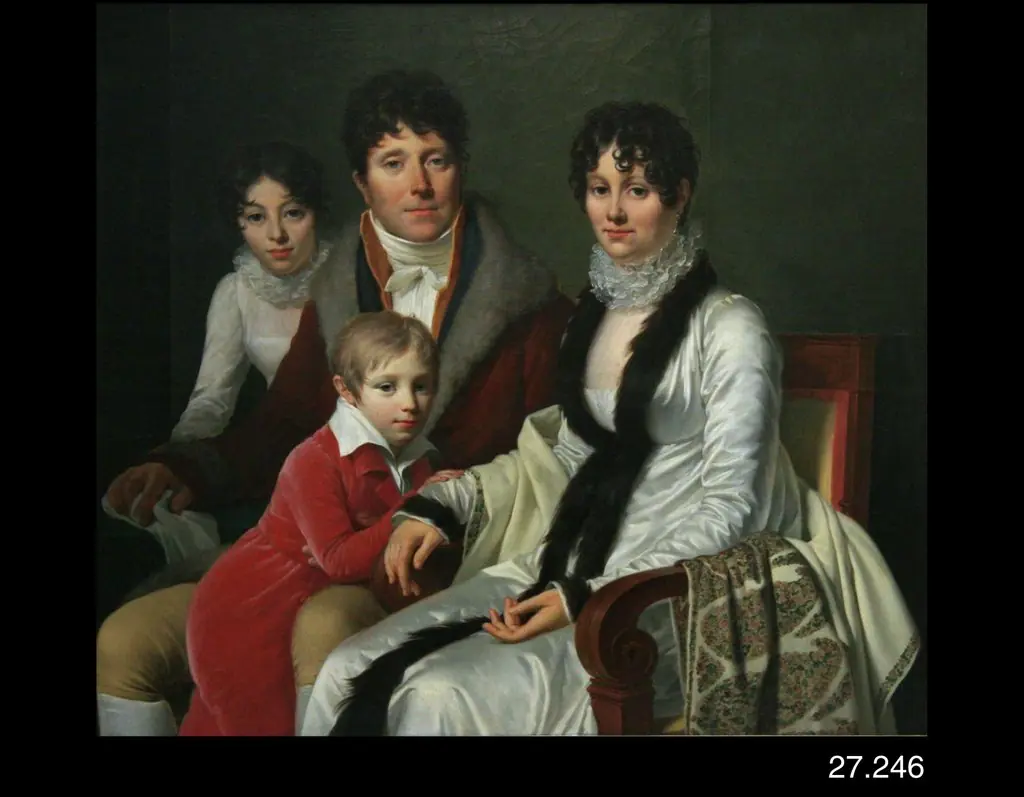 Family Group
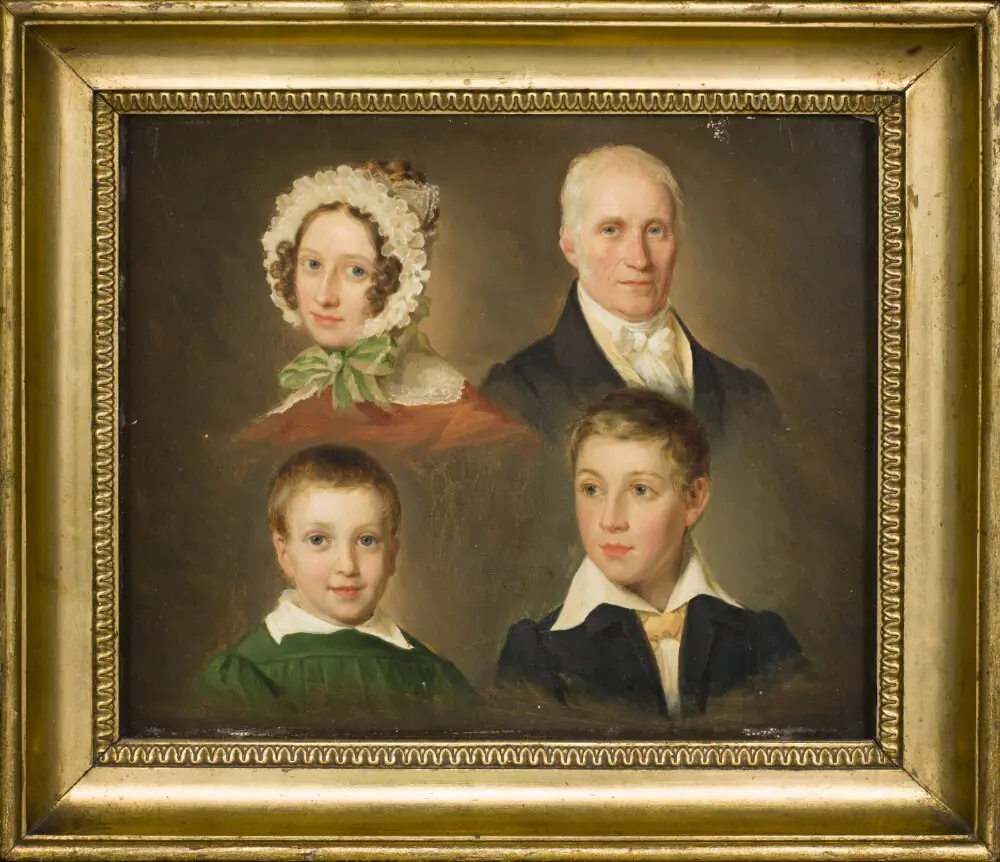 The Artist’s Father, Wife, Son and Foster Son
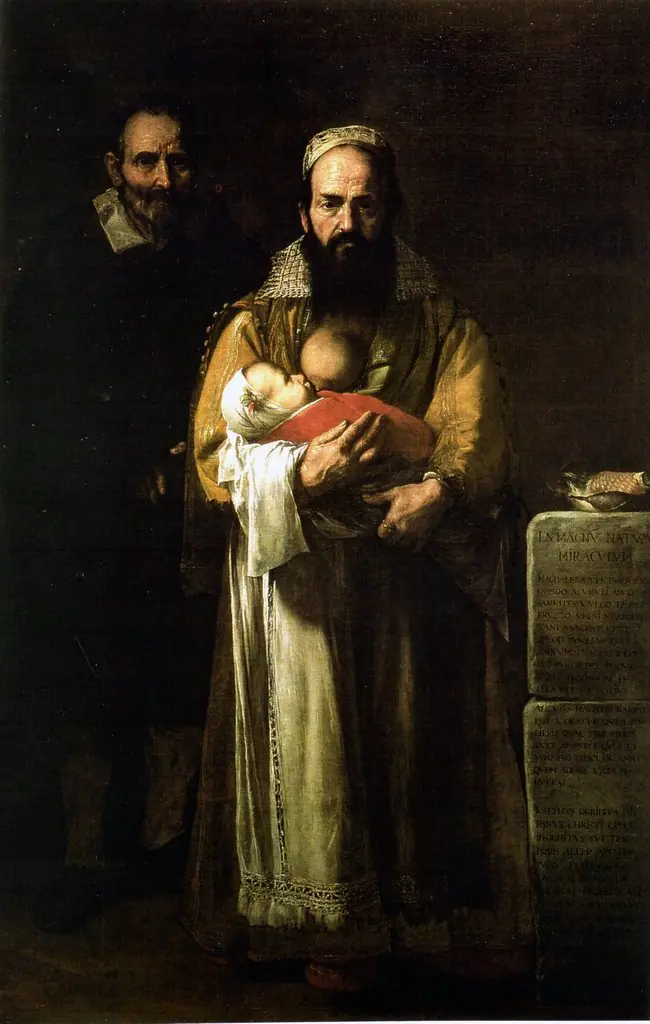 Magdalena Ventura with Her Husband and Son
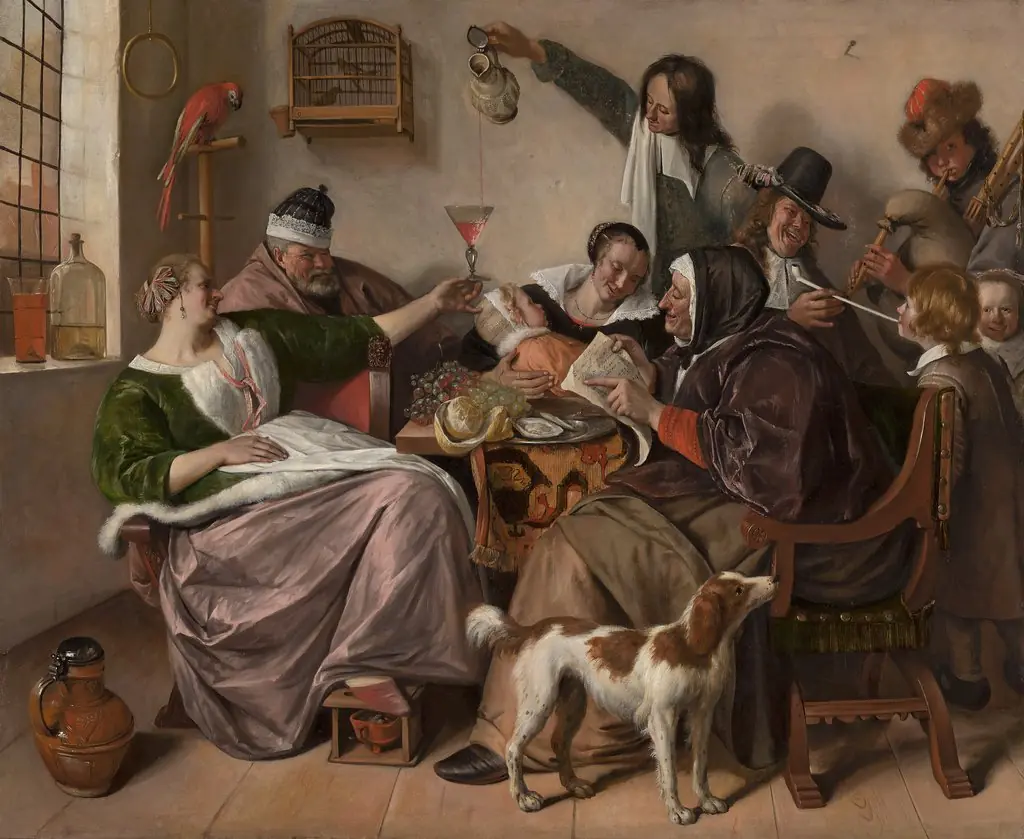 'As the Old Sing, So Pipe the Young'
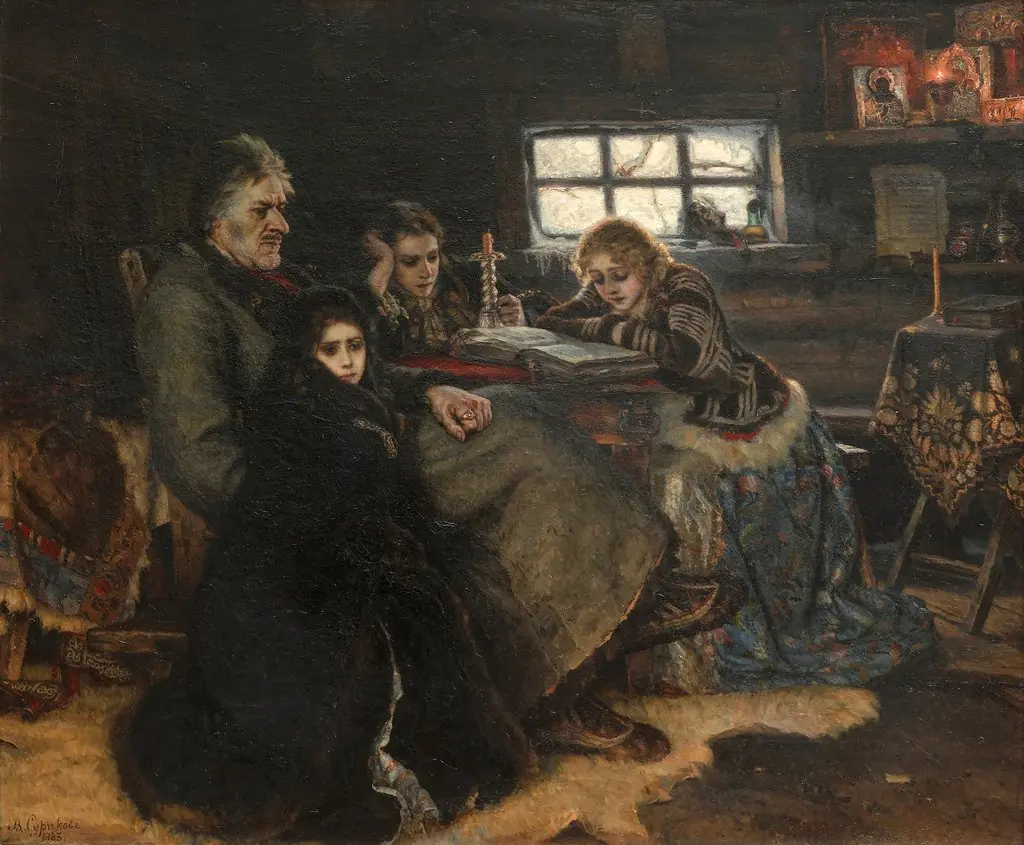 Menshikov in Berezovo
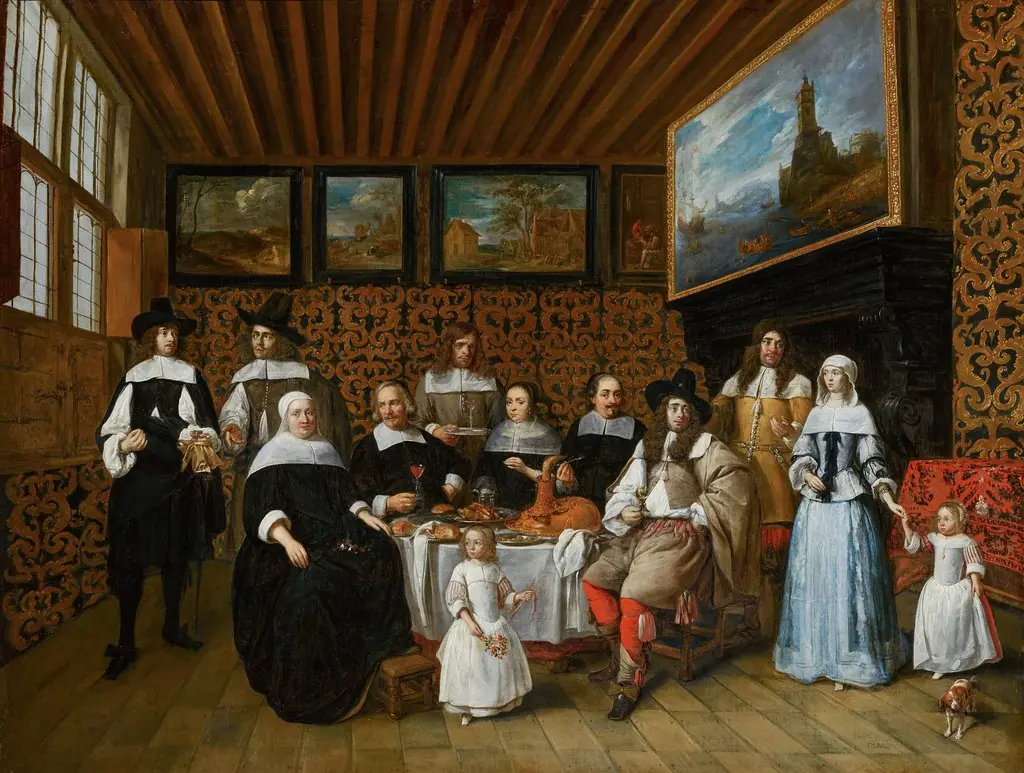 Family Portrait
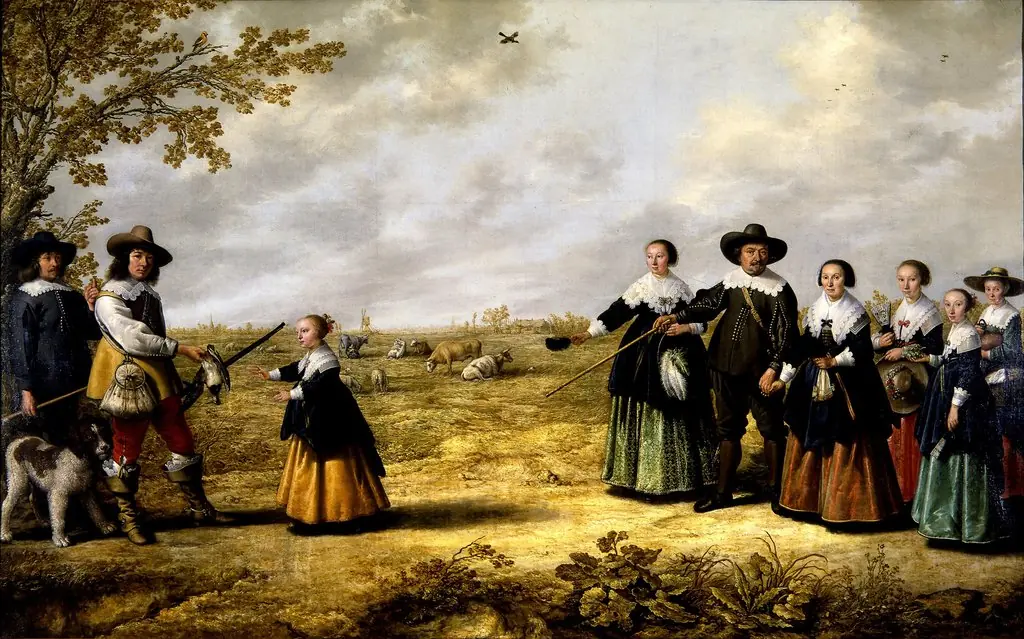 Portrait of a Family in a Landscape
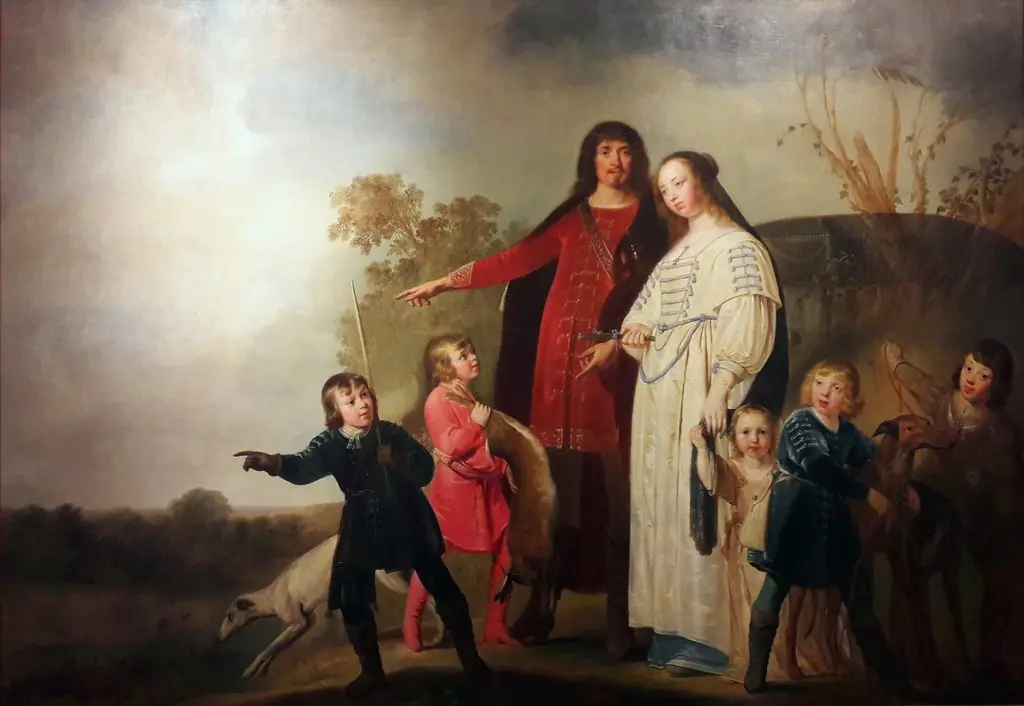 Family portrait in a landscape by Pieter Fransz. de Grebber
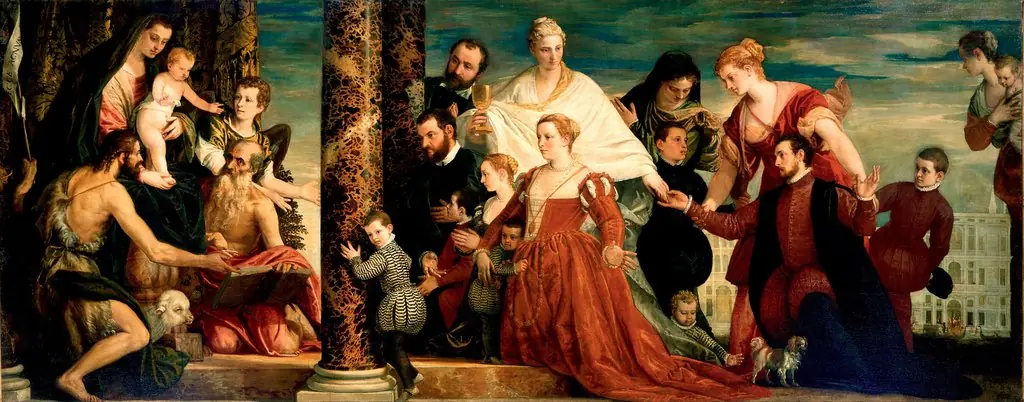 The Madonna of the Cuccina Family
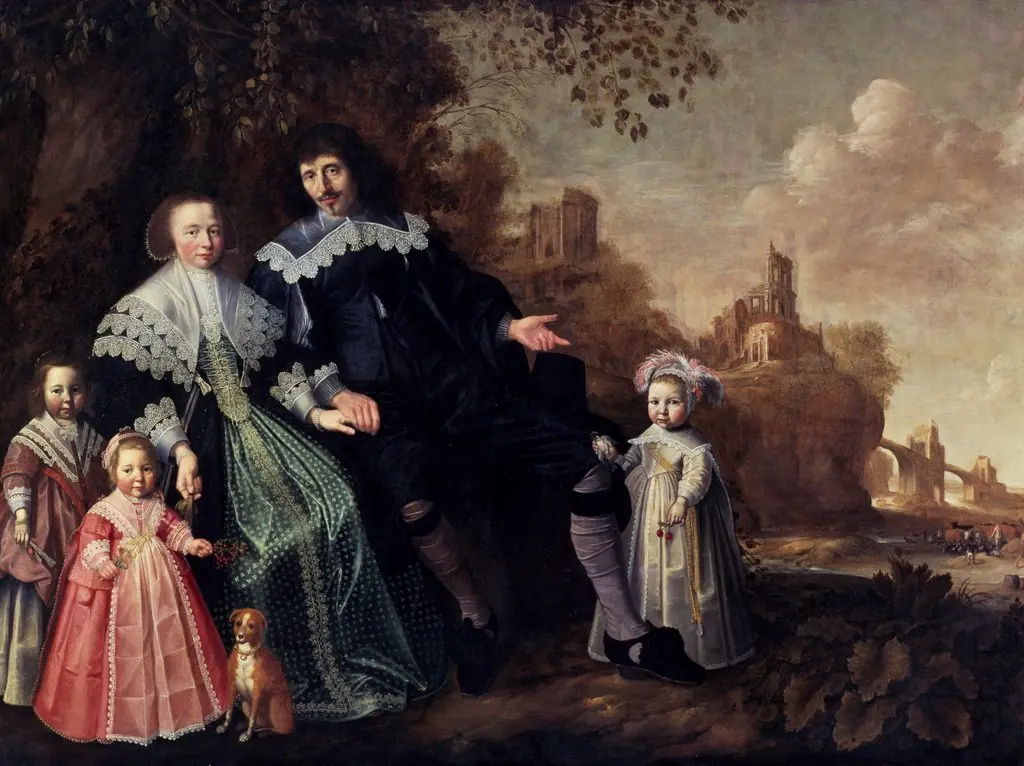 Family Group
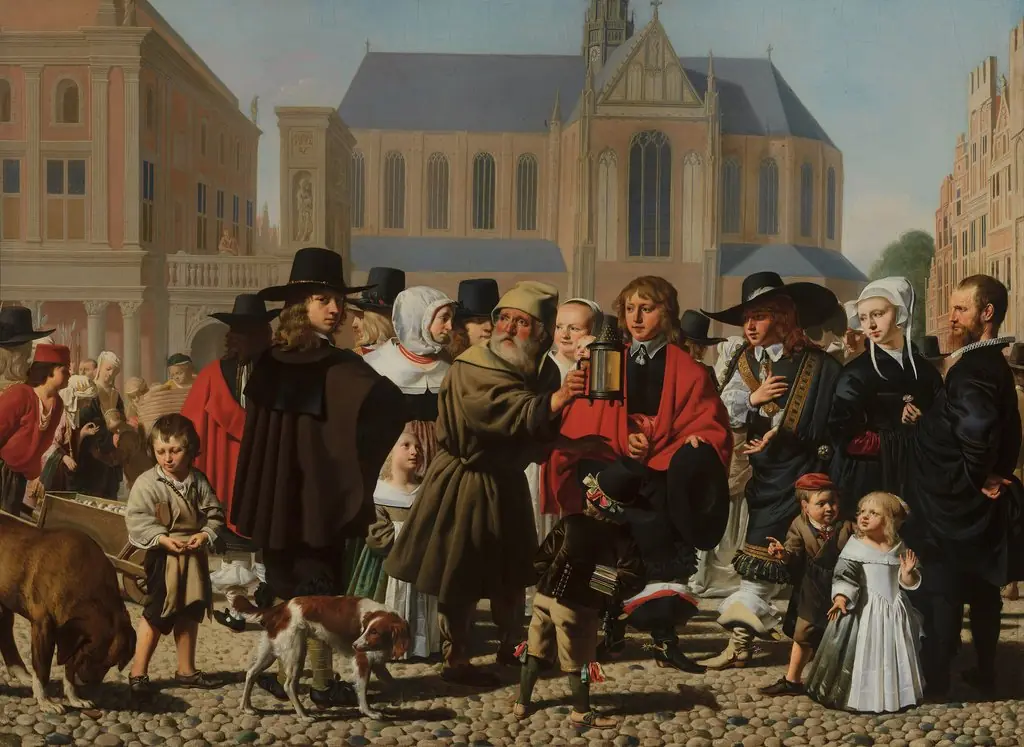 Allegorical portrait of the Steyn family as scene of Diogenes
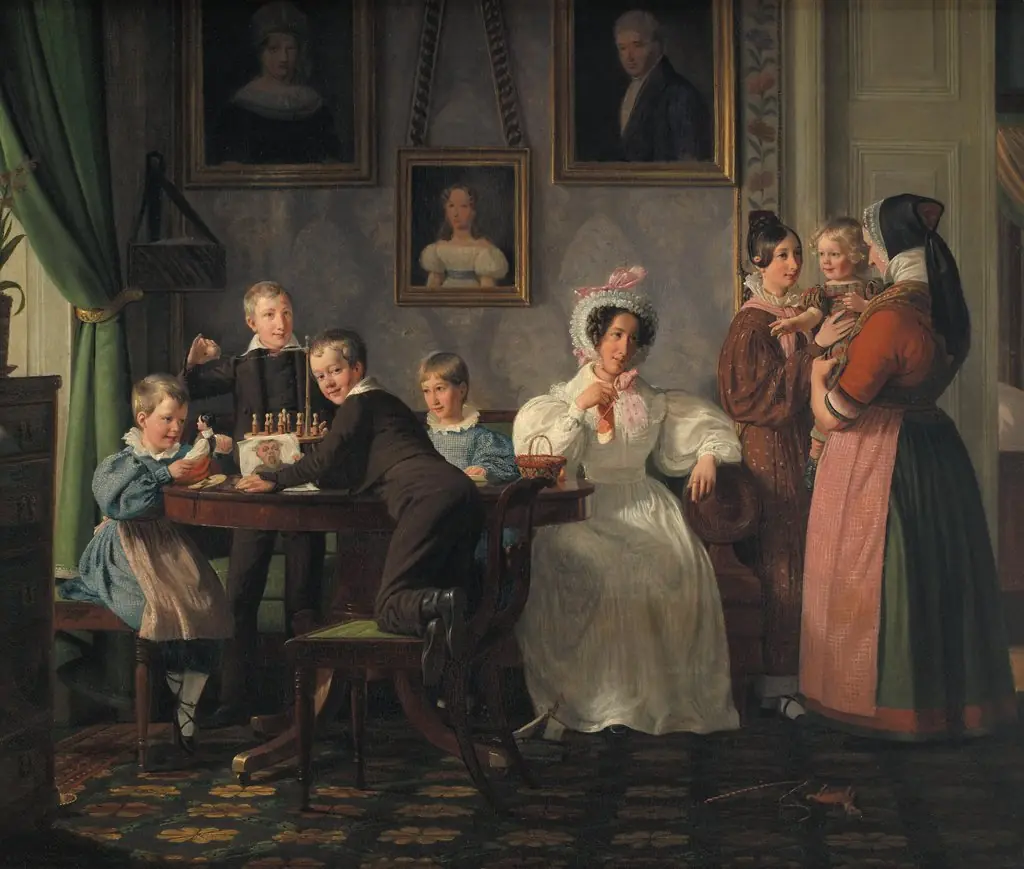 Familien Waagepetersen
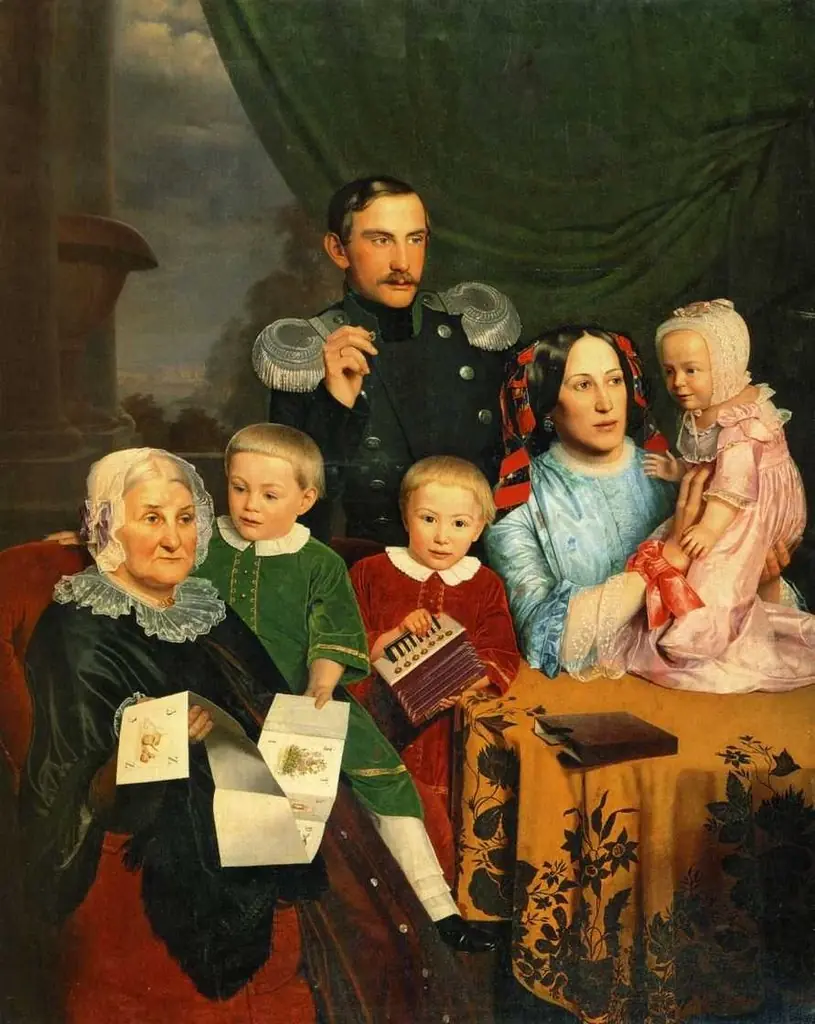 Family portrait
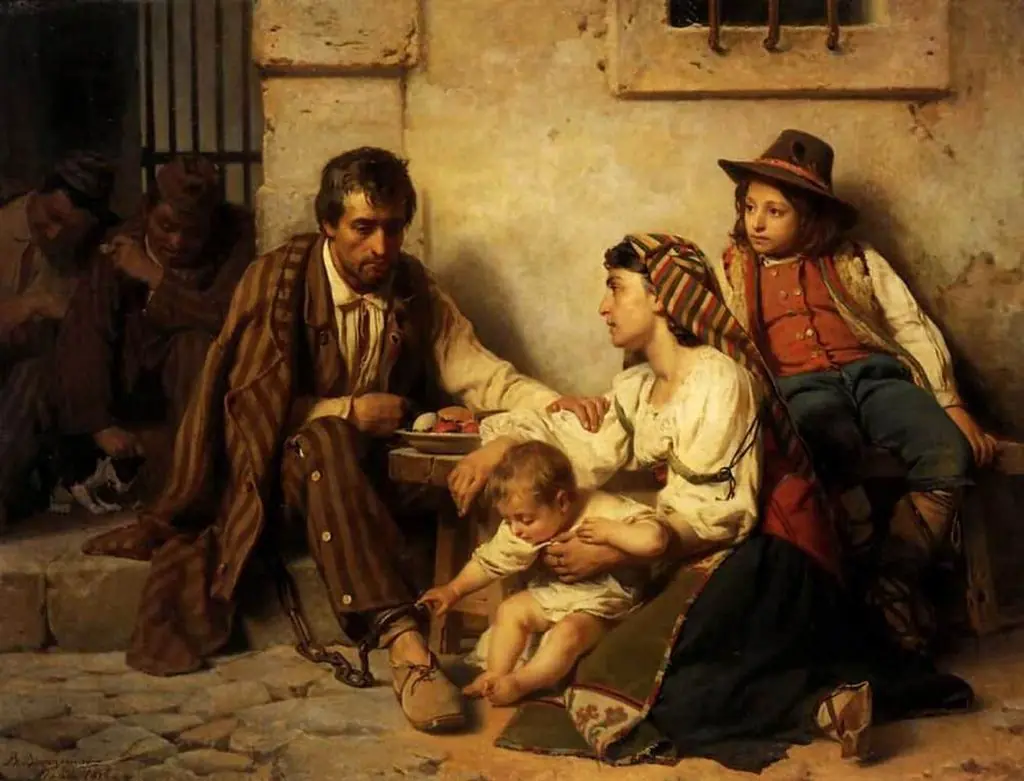 A Prison Visit
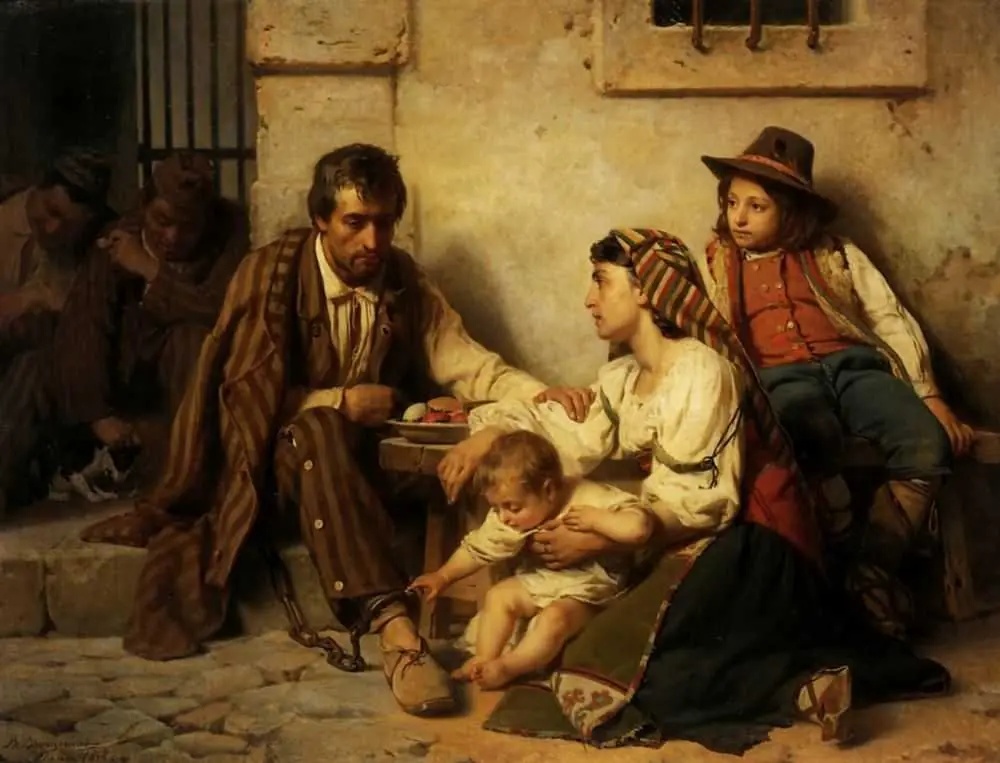 Appointment of a prisoner with his family
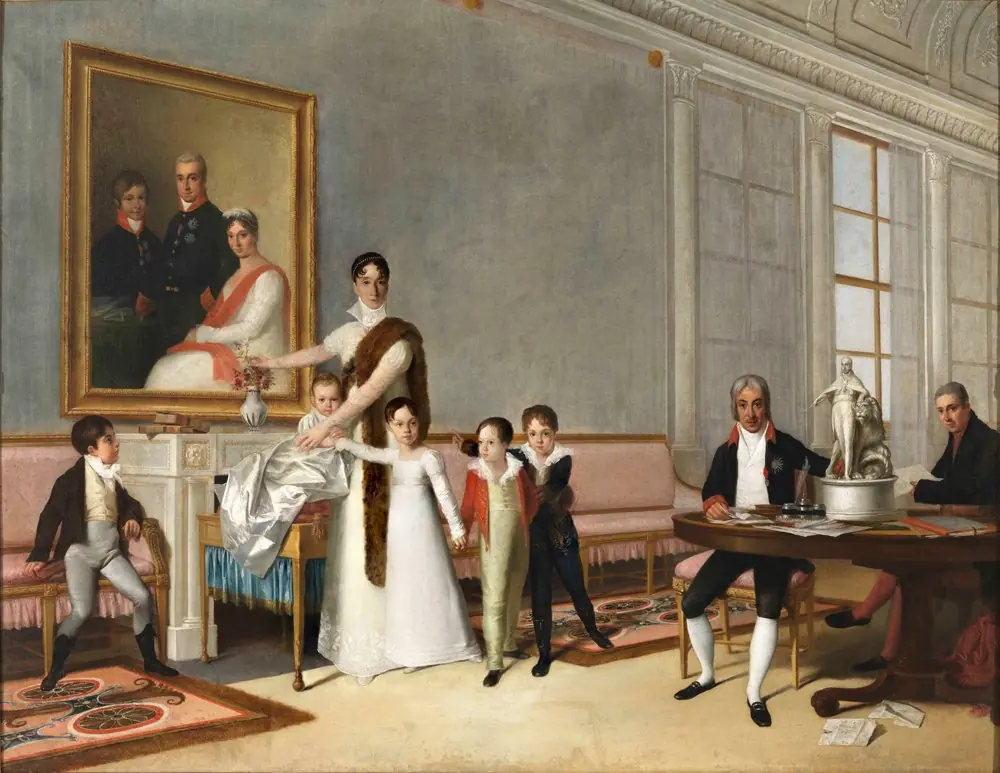 Portrait of the Family of the 1st Viscount of Santarém
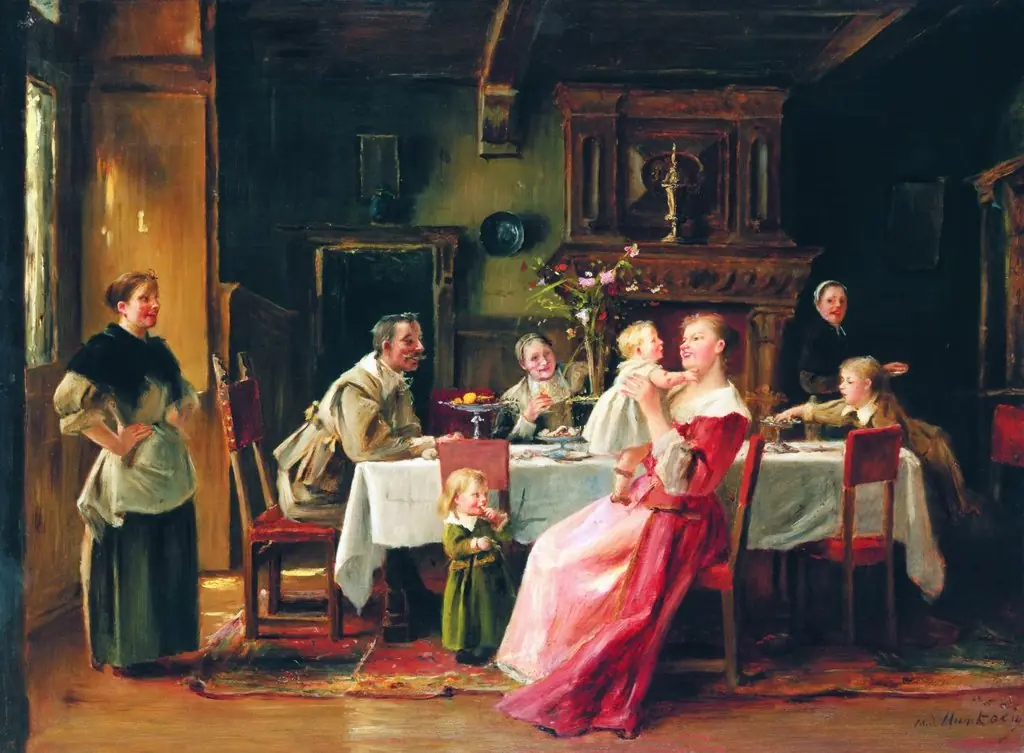 Ebéd után (Anyai boldogság)
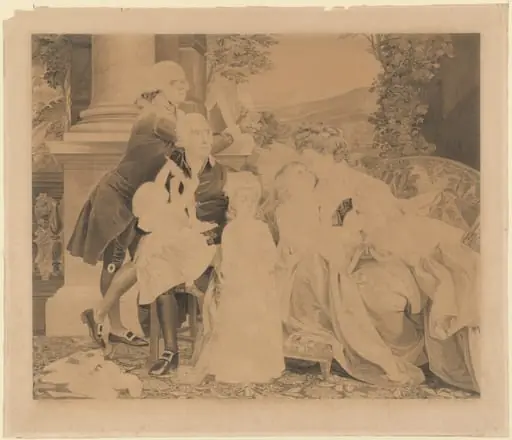 The Copley Family
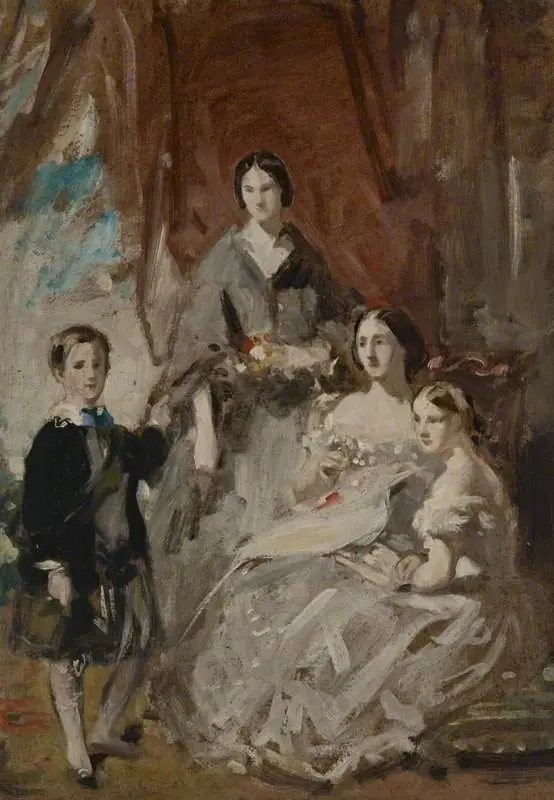 A Portrait Study of Three Ladies and a Boy in Highland Dress in an Interior
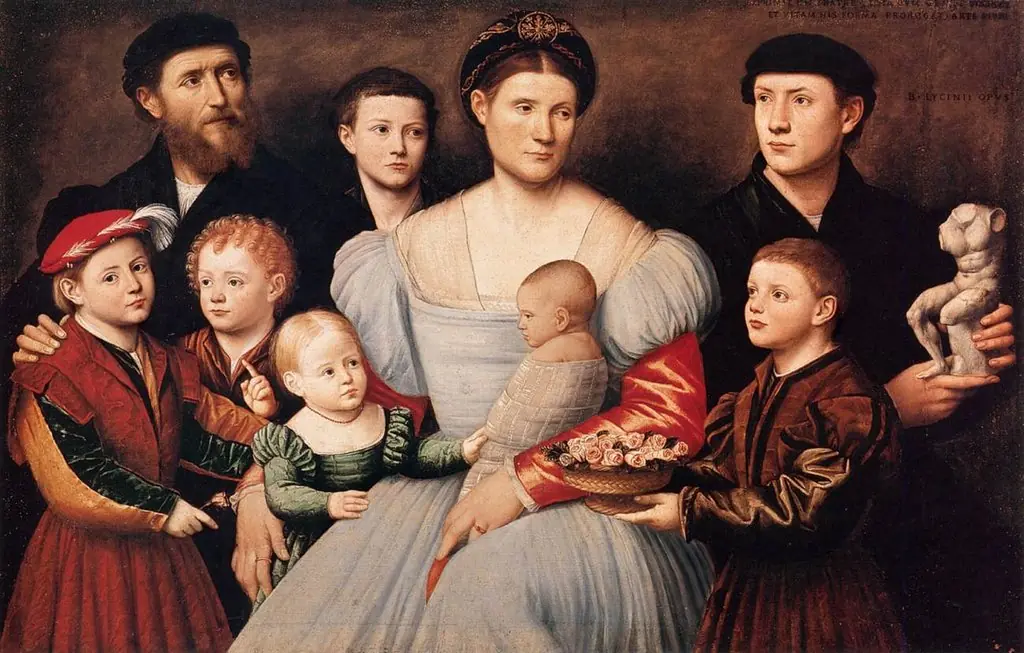 Portrait of Arrigo Licinio and His Family
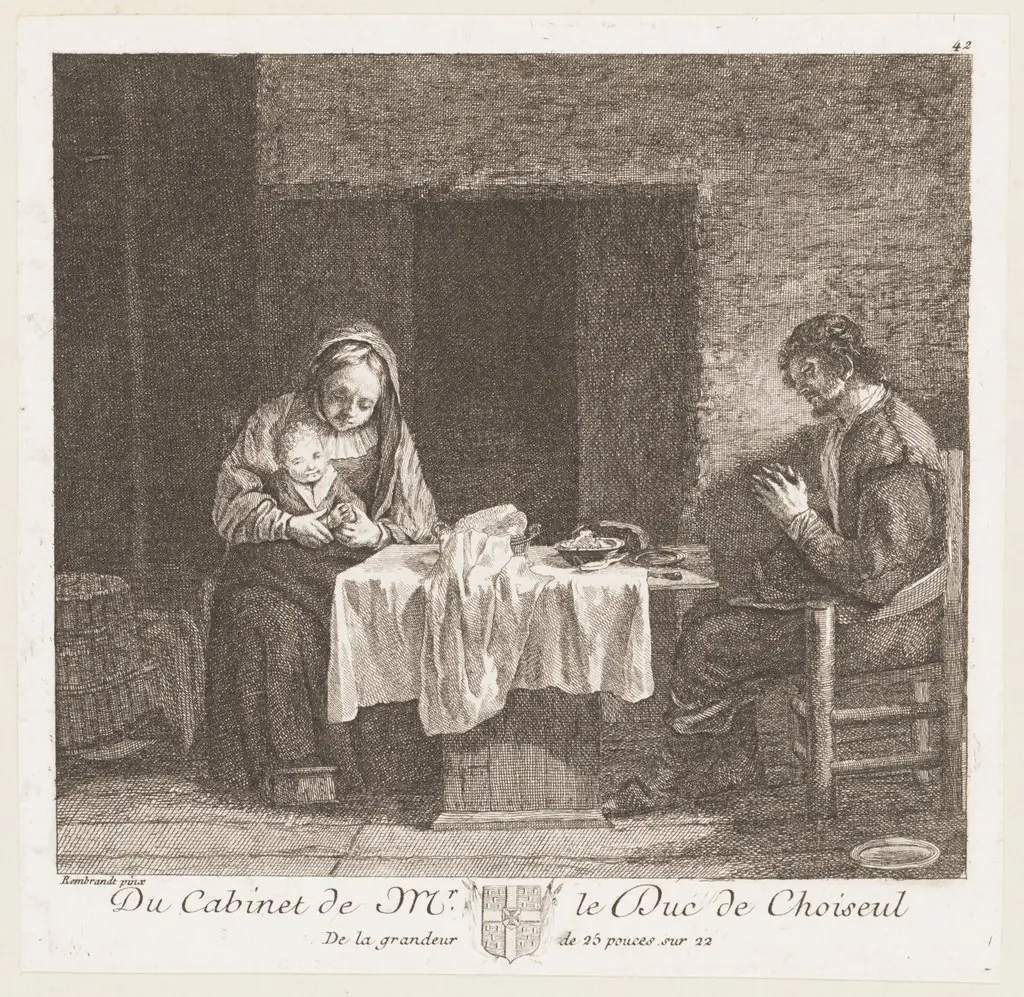 The holy family
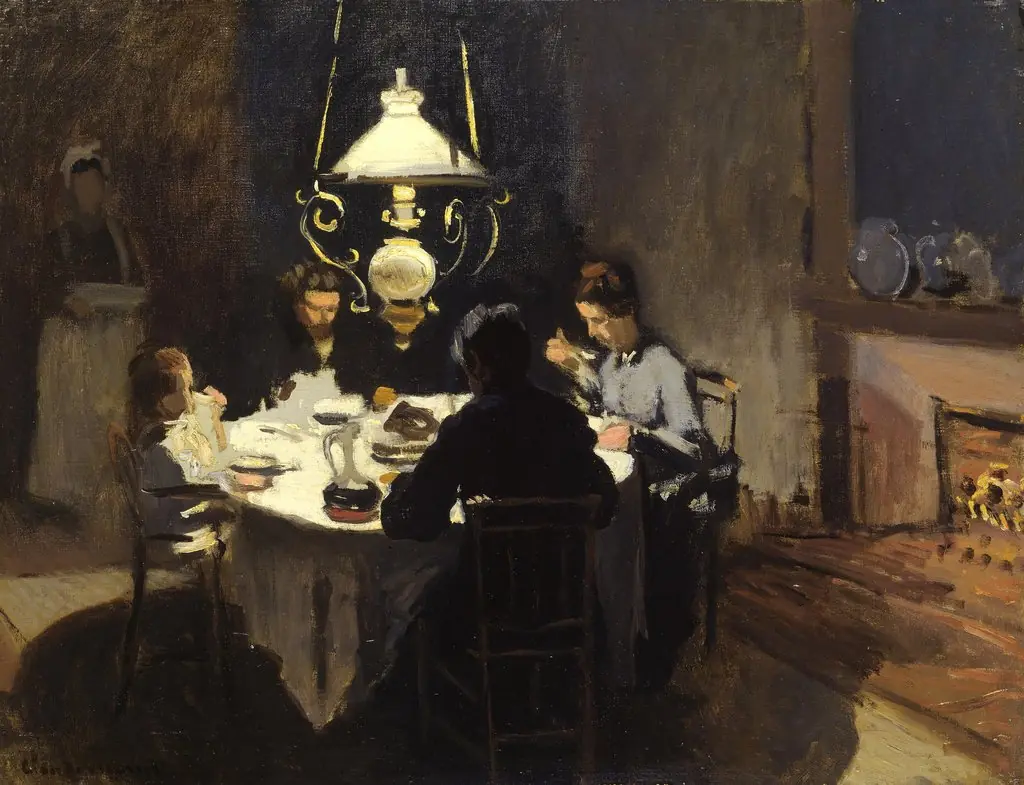 The Dinner
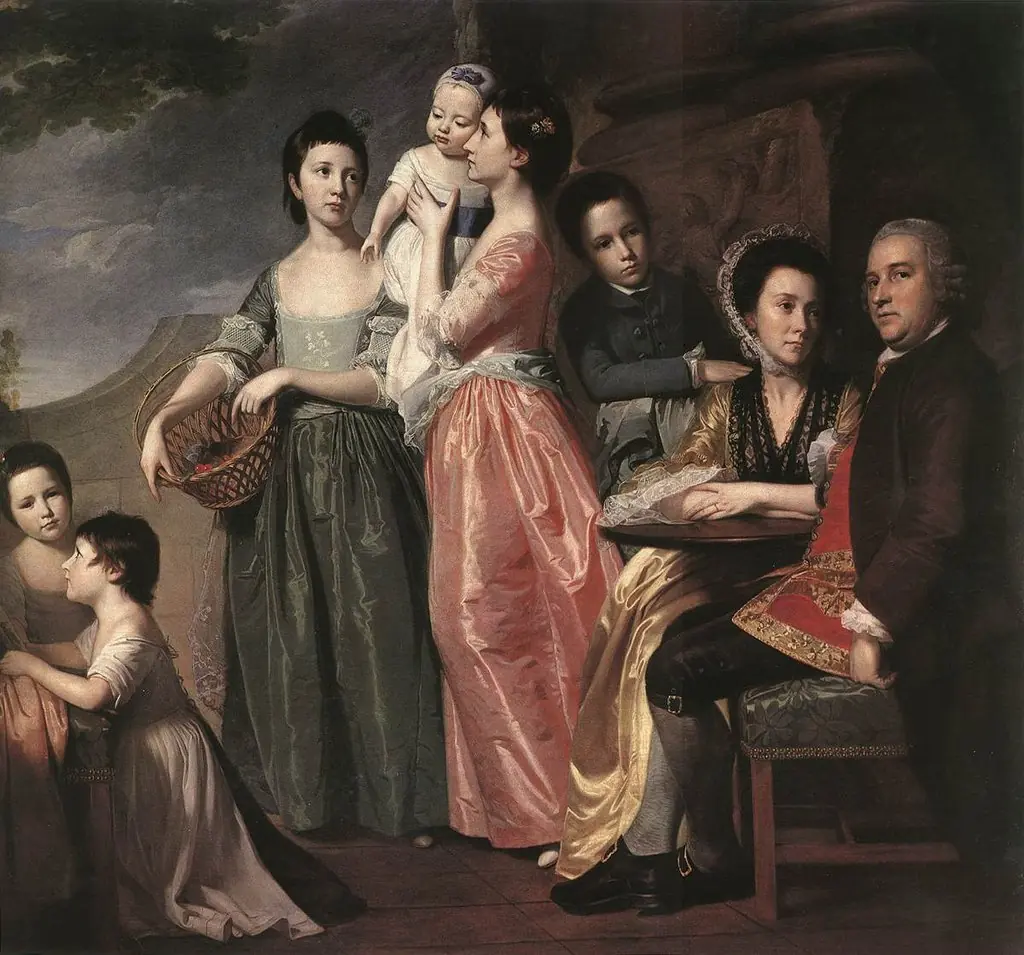 A large family piece
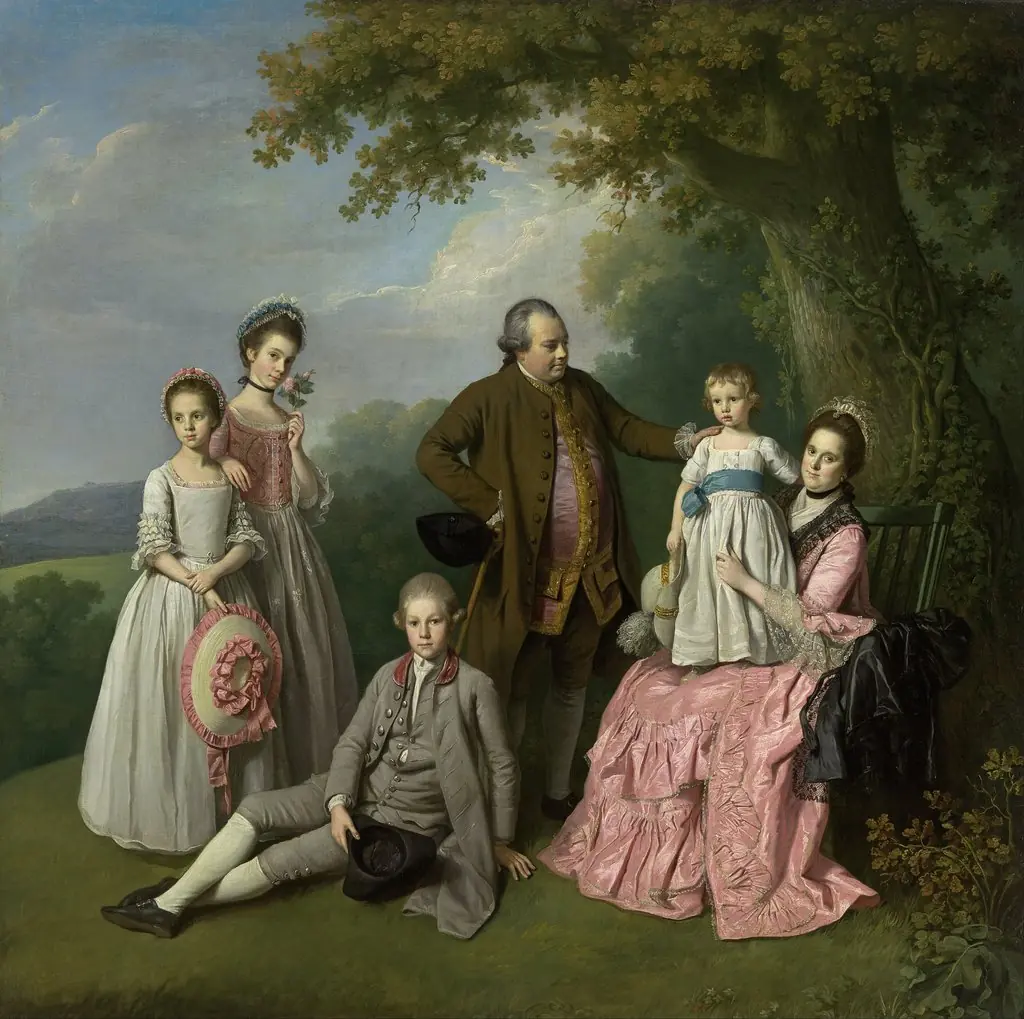 The Pybus family
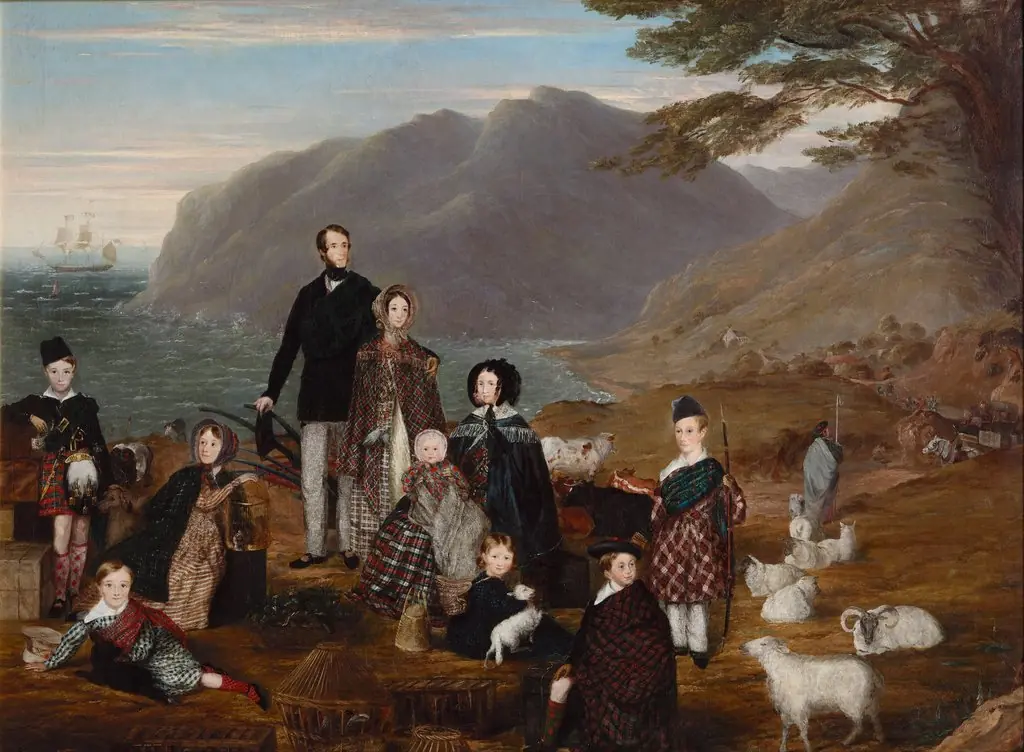 The Emigrants
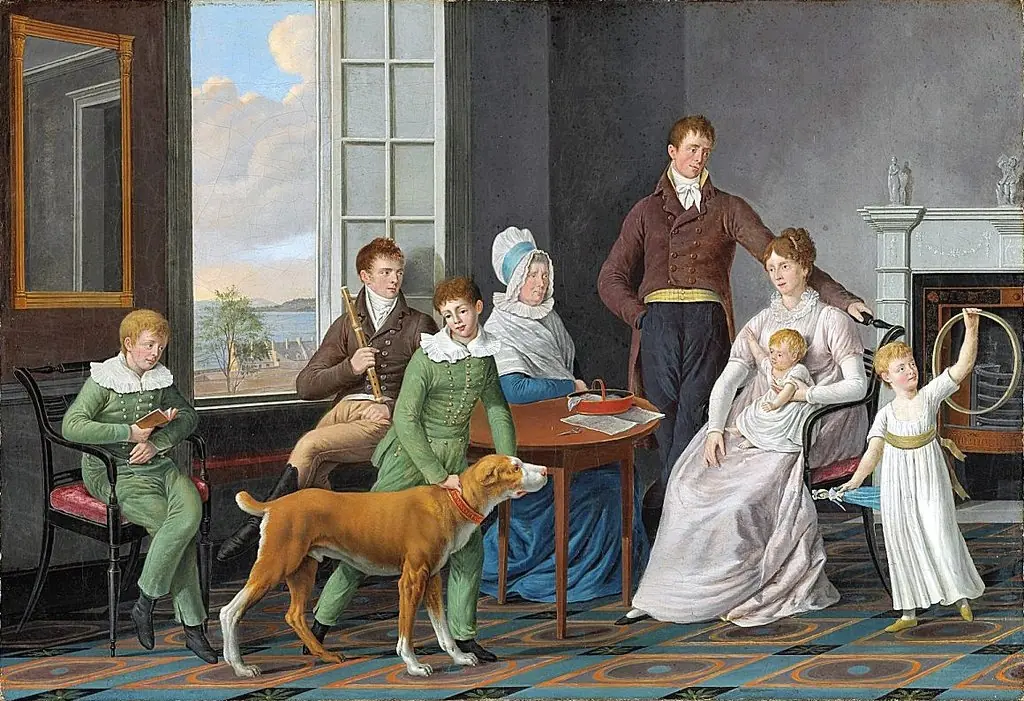 The Woolsey Family
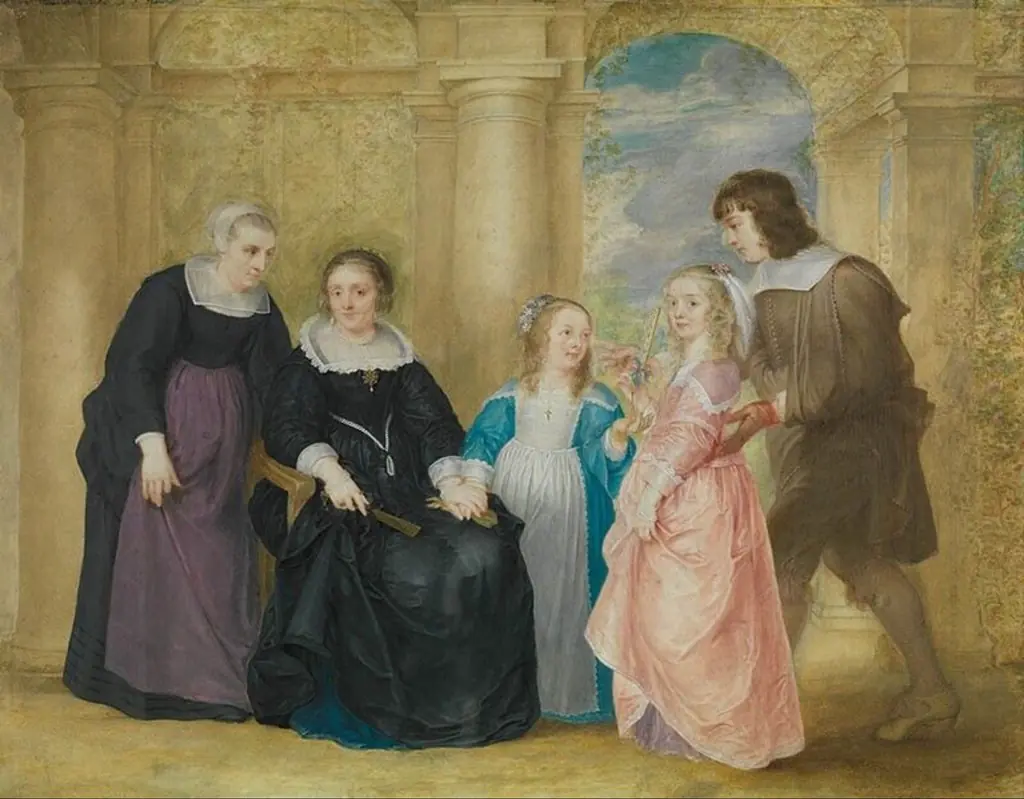 Portrait of a Family
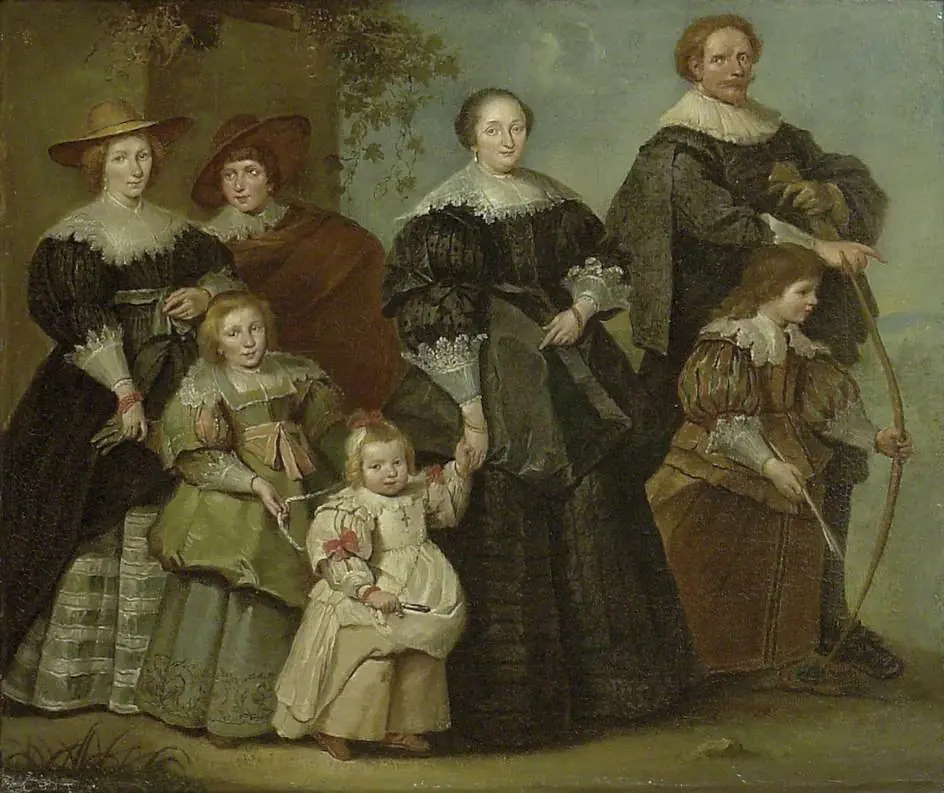 Self-Portrait of the Artist with his Wife Suzanne Cock and their Children
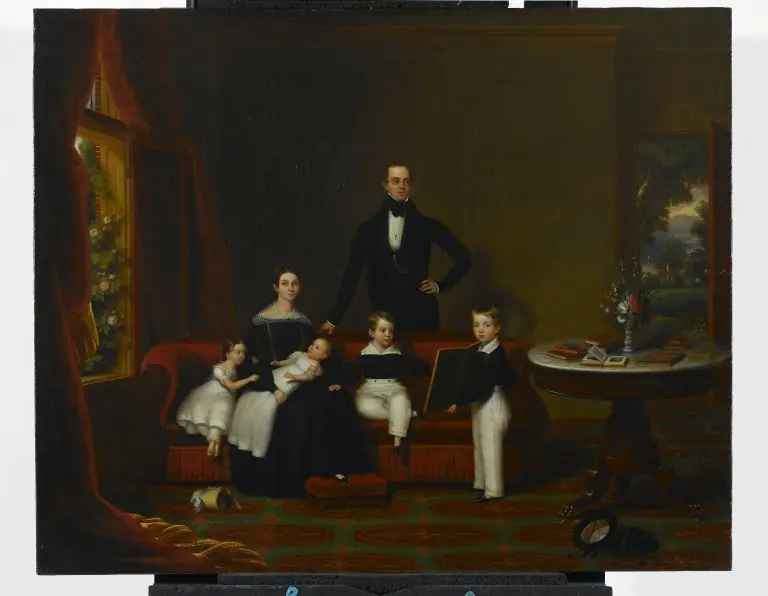 Family Group
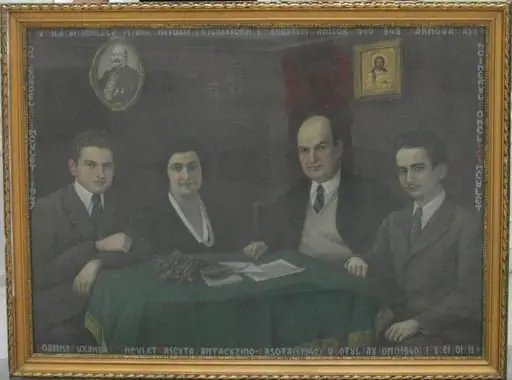 Familia Ion C Inculeț
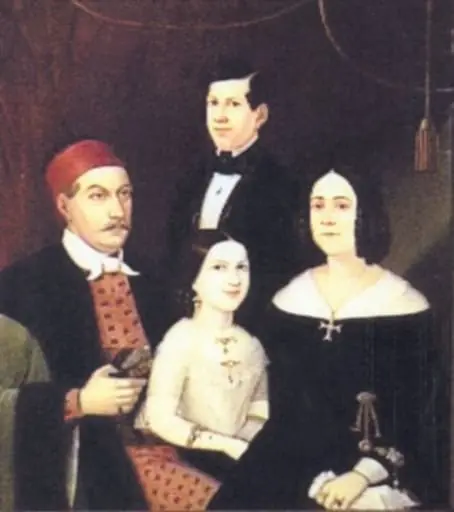 Familia Bucur
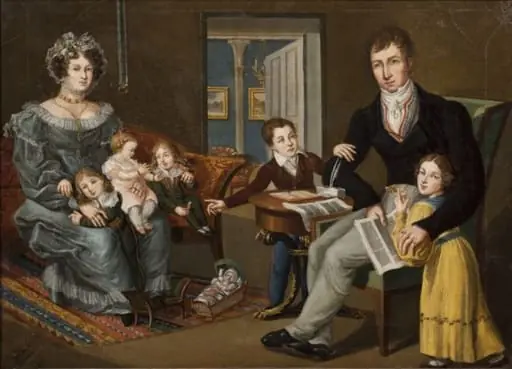 Familia unui librar sas în interior Biedermeier
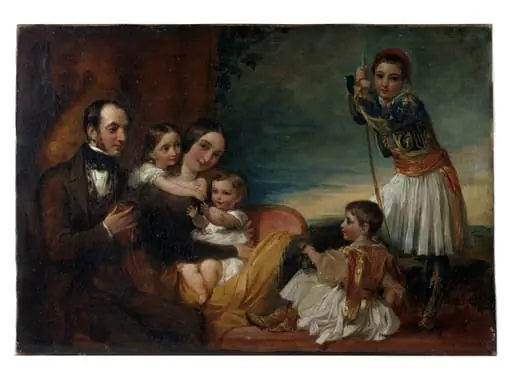 The Family of Alexander Constantine Ionides
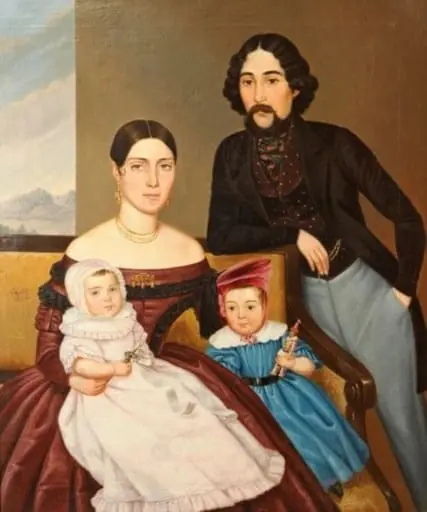 Portret de familie
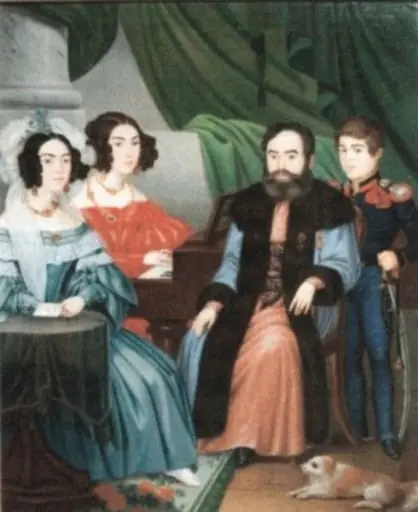 Vornicul Alecsandri cu soția, fiica și fiul său, Iancu
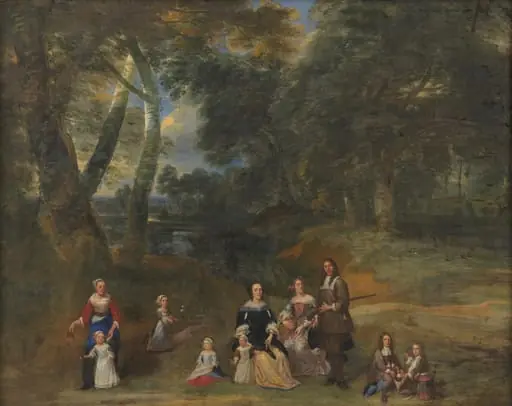 Family Group in a Landscape
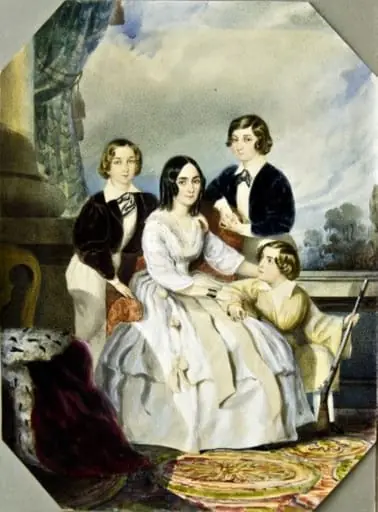 Anica Manu cu copii
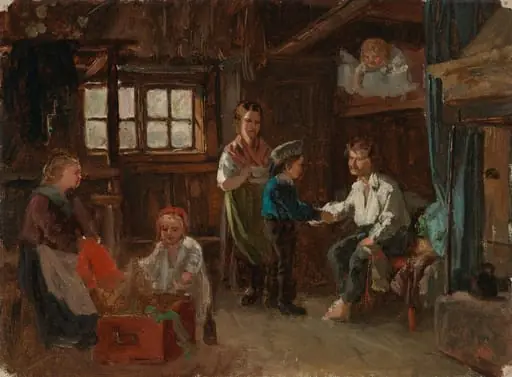 Merimiespojan kotiinpaluu
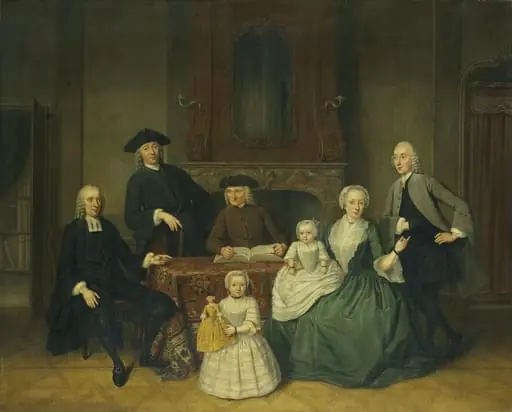 Portrait of the Brak Family, Amsterdam Mennonites
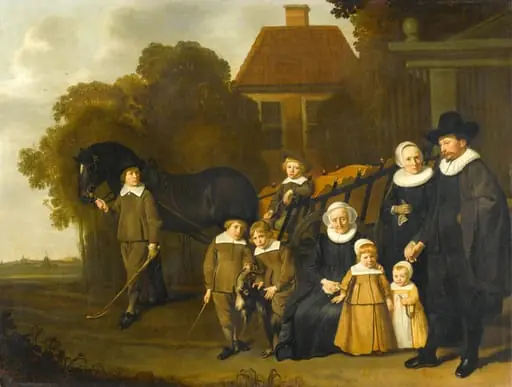 Portrait of the Meebeeck Cruywagen Family near the Gate of their Country Home on Uitweg near Amsterdam
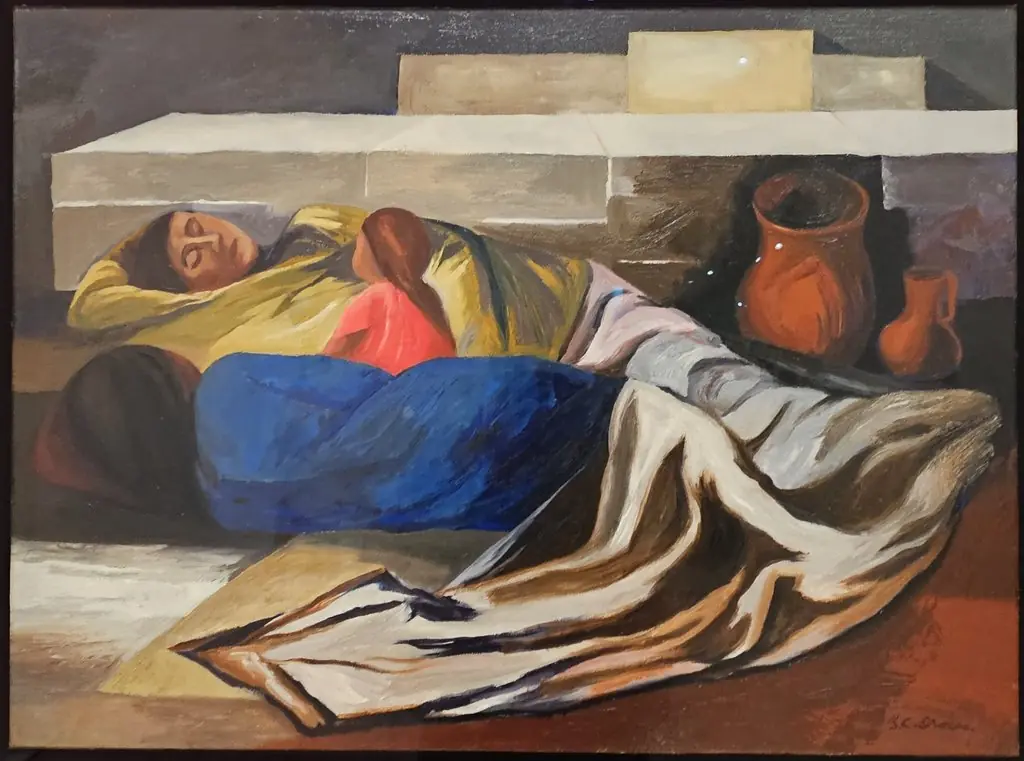 Dormindo
Frequently asked questions
What is Family?
Family (Latin: familia, pl.: familiae) is one of the eight major hierarchical taxonomic ranks in Linnaean taxonomy.
How many Family works does Artifact World Gallery have?
Artifact World Gallery holds 200 public-domain Family works, all free to view and download.
Who are the key Family artists?
Key Family artists in the collection include Paolo Veronese, Jacques-Louis David and Édouard Manet.
Where can I see Family works?
Family works in the collection are held by Rijksmuseum, Metropolitan Museum of Art and Statens Museum for Kunst.