Artwork
Sir James Ramsay
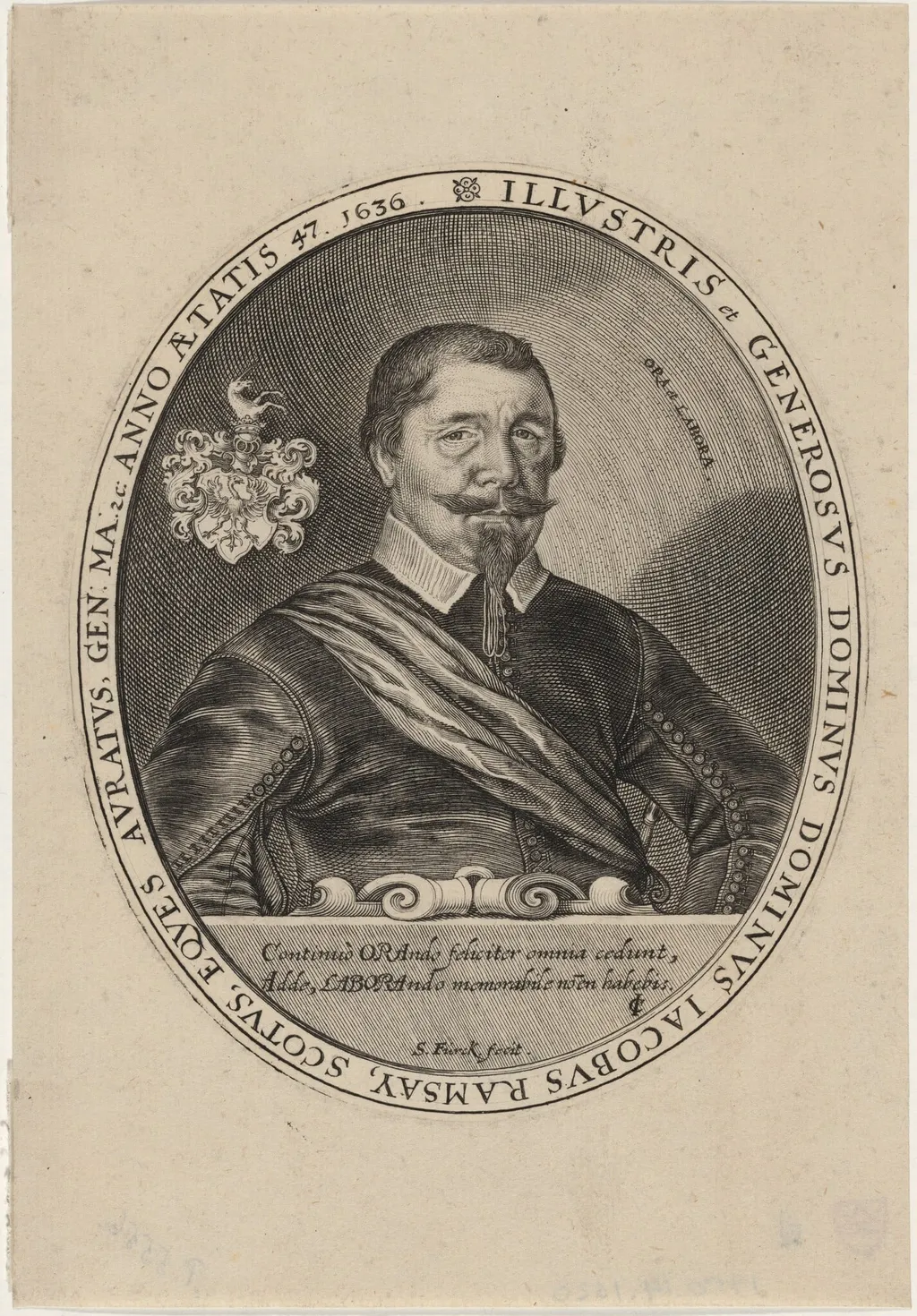
Sir James Ramsay is an ink print by the Baroque artist Sebastian Furck. It dates from 1636 and is held in the collection of the National Gallery of Art.
About this work
The words around the frame say things like “anno 1636” and “Sir James Ramsay,” hinting this is a formal portrait from long ago.
This is a black-and-white portrait of a man with a mustache and short curly hair. He’s wearing a dark, ruffled collar shirt and a fancy coat with buttons down the front. Behind him, a small crest sits on the left side, and the edges of the oval frame have swirly designs.
The words around the frame say things like “anno 1636” and “Sir James Ramsay,” hinting this is a formal portrait from long ago. The lines are all made by etching, which is a way to carve into metal to create prints.
Want to see more? Look up engraving to learn how artists like this made prints.
Overview
Sebastian Furck's 1636 engraving, Sir James Ramsay, is a black-and-white portrait depicting a mustachioed man with short curly hair, attired in a dark, ruffled collar shirt and a buttoned, ornate coat. An oval frame encloses the subject, adorned with swirling designs and a crest on the left rear. Inscriptions, including 'anno 1636' and the sitter's name, emphasize the portrait's formal, historical nature.
Subject & Meaning
The engraving portrays Sir James Ramsay, a figure of sufficient prominence to warrant a formal, commemorated likeness. The inclusion of a crest suggests an emphasis on the subject's lineage or status, while the overall demeanor conveys dignity and refinement.
Technique & Style
Executed through etching, the work features intricate, carved metal lines that define the portrait's details, from the subject's facial hair to the textures of clothing. The swirling frame designs and compact oval composition reflect the stylistic preferences of early 17th-century European portraiture.
History & Provenance
Created in 1636 by Sebastian Furck, the engraving's historical context and subsequent ownership history are not detailed in available information, though its creation date and formal style place it within the artistic traditions of its time.
Context
Sir James Ramsay exists within the broader context of 17th-century European portrait engraving, a medium used to disseminate likenesses of notable individuals across a wider audience than paintings could reach, leveraging the reproducibility of prints.
Legacy
The enduring presence of Sir James Ramsay in archival and reference contexts suggests its value as a historical document of portraiture techniques and sartorial styles of the early 17th century, though its broader artistic or cultural impact is not prominently recorded.
Own this work as a print
Artist & collection