Artwork
Usurer with a Tearful Woman
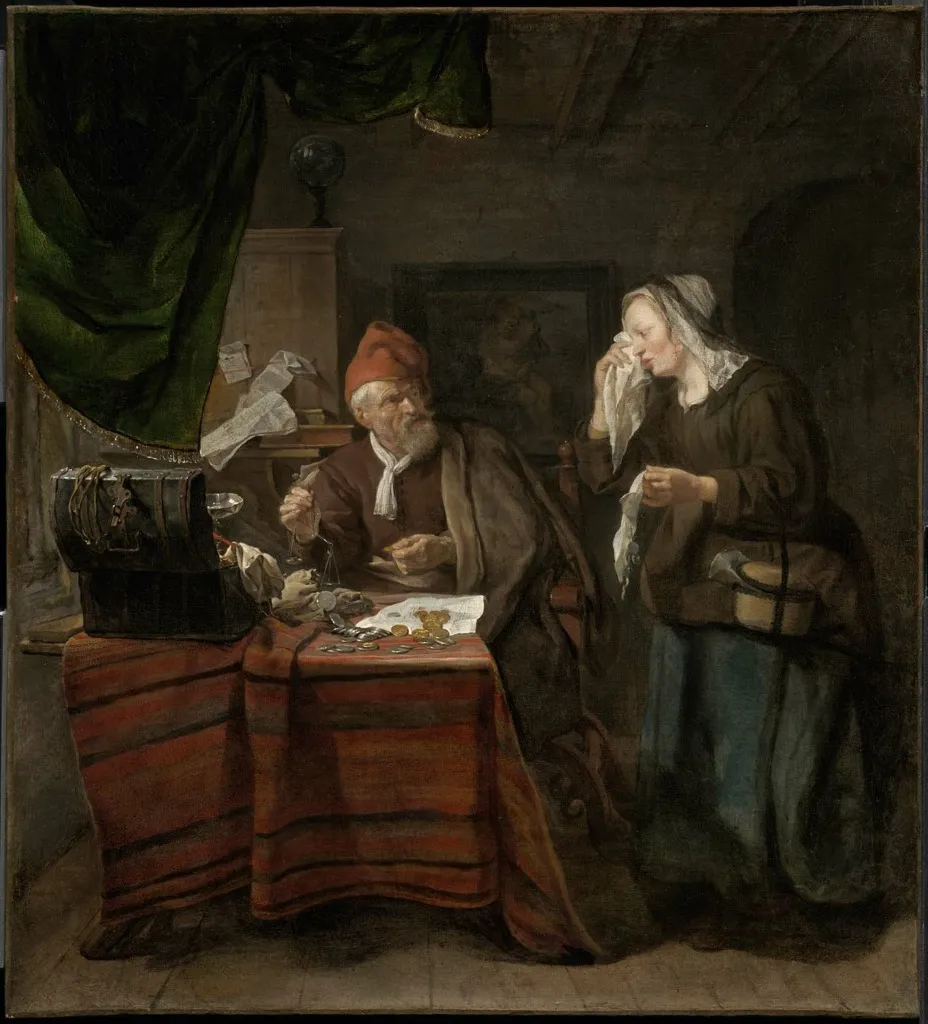
Usurer with a Tearful Woman is an oil painting by the Dutch Golden Age artist Gabriel Metsu. It dates from 1654 and is held in the collection of the Museum of Fine Arts Boston.
About this work
History & Provenance
Gabriel Metsu painted Usurer with a Tearful Woman in 1654, depicting a moneylender, a weeping woman, and a weighing scale.
Gabriel Metsu painted Usurer with a Tearful Woman in 1654, depicting a moneylender, a weeping woman, and a weighing scale. The work is an oil on canvas measuring 74 cm by 67.3 cm. It entered the collection of the Museum of Fine Arts Boston via the Demidov collection. The painting is catalogued in the museum’s records and referenced in scholarly documentation of Metsu’s genre scenes.
The work is held by the Museum of Fine Arts Boston, where it is catalogued under inventory number 1919.1159. It entered the museum’s collection through the Demidov collection. Exhibition history includes its display as part of the museum’s early Dutch genre paintings presentation in 1920 and its inclusion in the 1955 exhibition "Dutch Seventeenth-Century Painting in American Collections".
Overview
Gabriel Metsu’s 1654 oil painting Usurer with a Tearful Woman presents a quiet interior scene in which a middle‑aged man and a younger woman share a table. The man, dressed in a red cap and brown coat, handles a small weighing scale and a handful of coins, while the woman, cloaked in dark fabric, covers her face with a handkerchief. The composition is set in a dimly lit room, its shadows accentuated by a single source of soft light.
Subject & Meaning
The work captures a moment of financial transaction gone awry: the male figure, identified as a moneylender, is absorbed in weighing or counting money, whereas the woman appears distressed, perhaps a debtor or a relative affected by the lender’s demands. By juxtaposing the meticulous calculation with visible sorrow, Metsu comments on the social tensions of a mercantile society where credit and debt could strain personal relationships.
Technique & Style
Metsu employs chiaroscuro to model the figures, allowing the illuminated surfaces of the coins, scale, and the man’s face to emerge from the surrounding gloom. The brushwork is fine and detailed, especially in the rendering of metal objects and the texture of the fabrics. The limited palette of earthy browns, deep reds, and muted grays reinforces the somber mood while highlighting the focal actions at the table.
Artist & collection
Artist
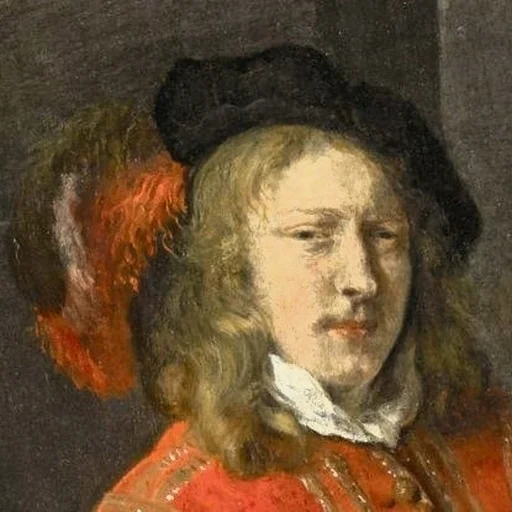
Gabriël Metsu (1629–1667) was a Dutch painter of history paintings, still lifes, portraits, and genre works.

- The Wedding Contract
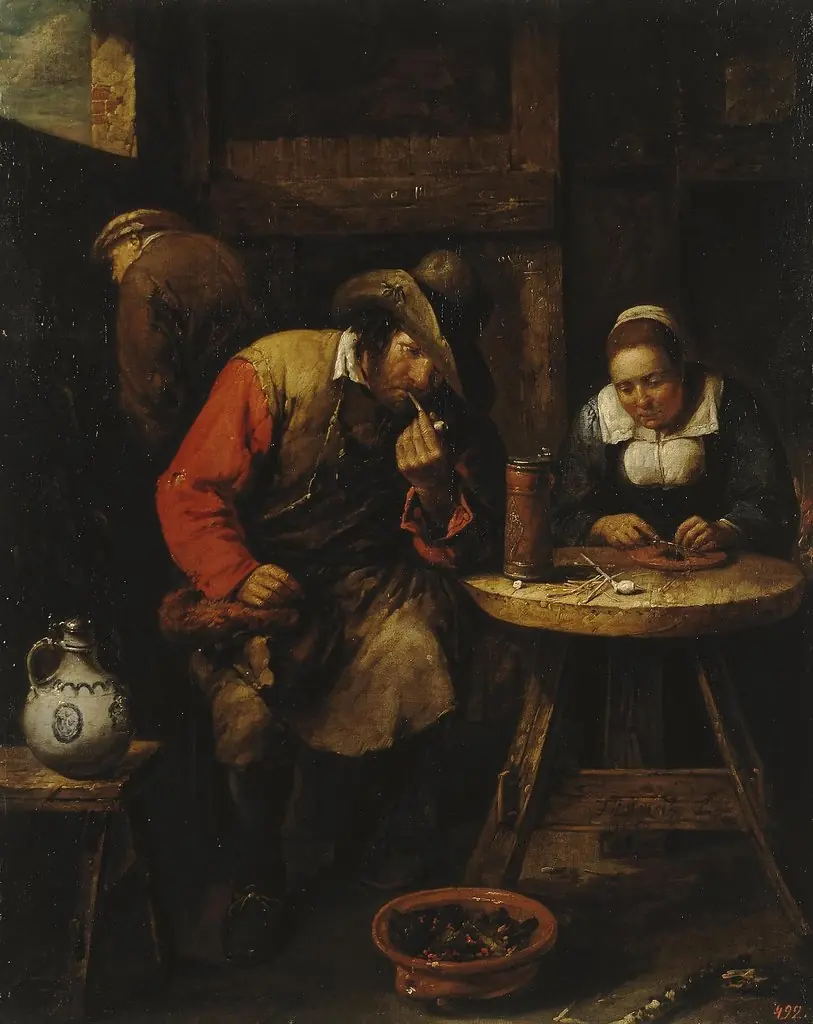 Smoker
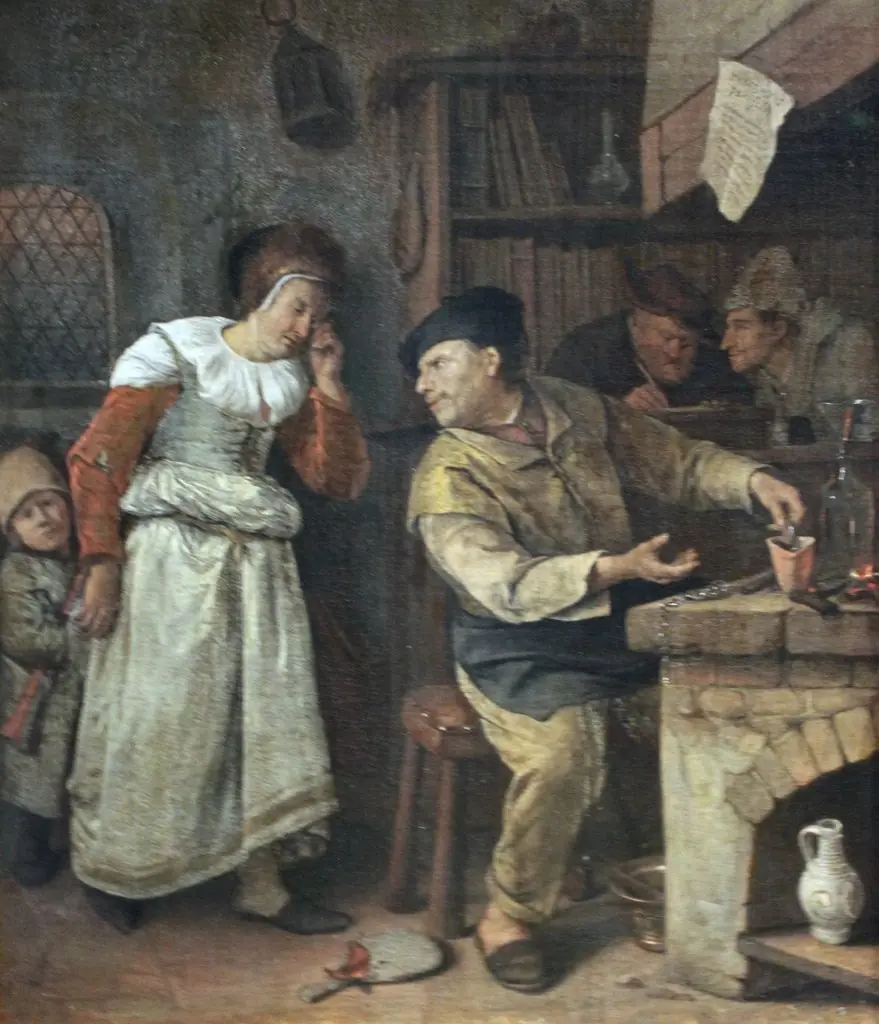 A Goldsmith Melting Down a Woman's Jewellery in the Presence of a Notary, The Alchemist
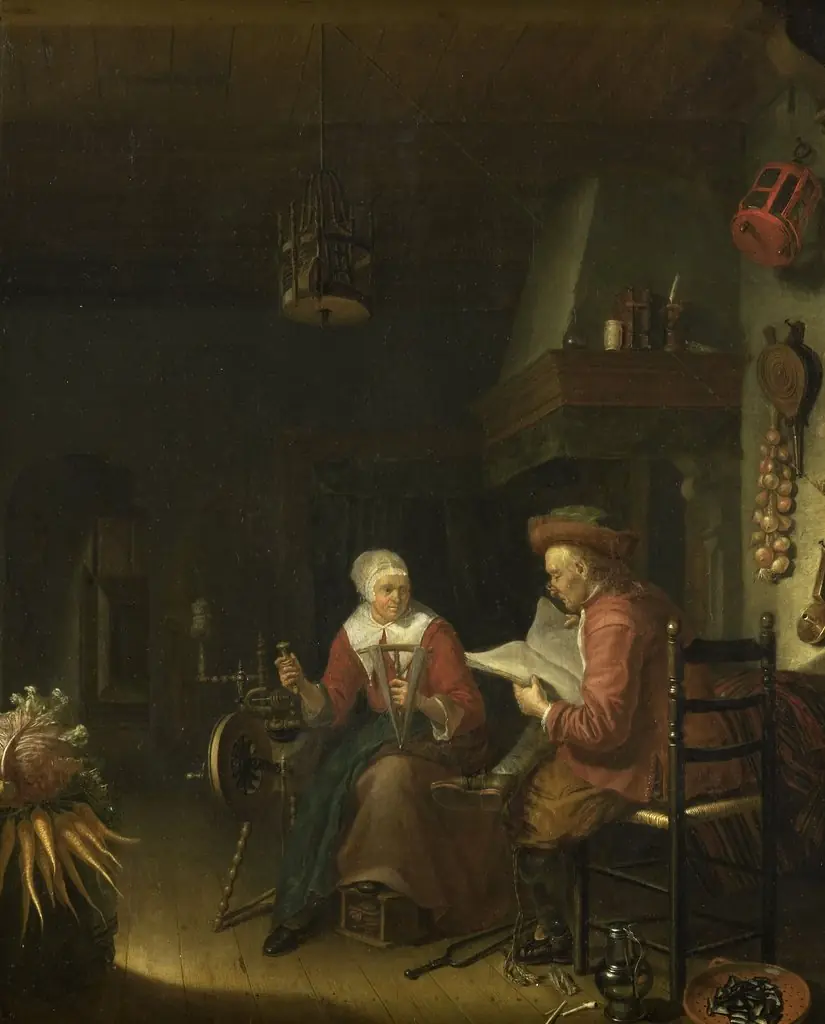 Interior with a man reading and a woman spinning yarn
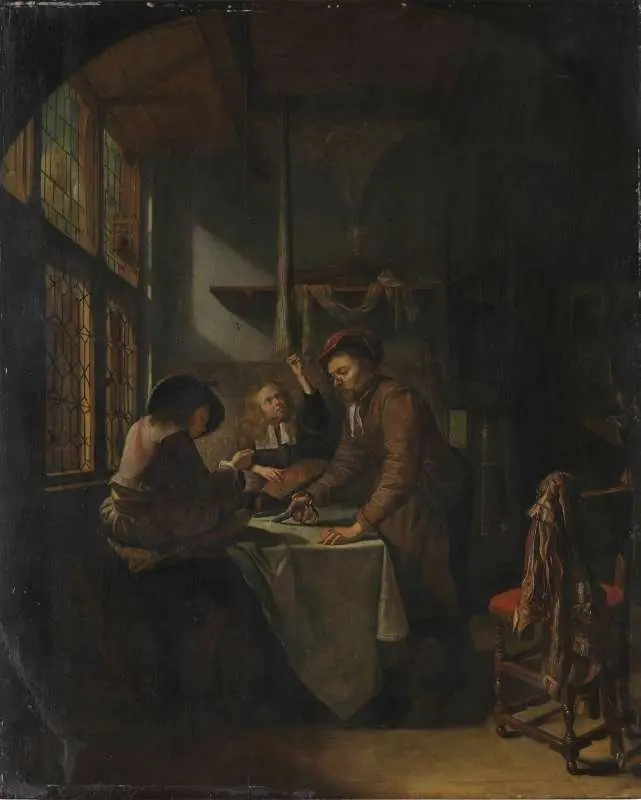 Tailor's Workshop
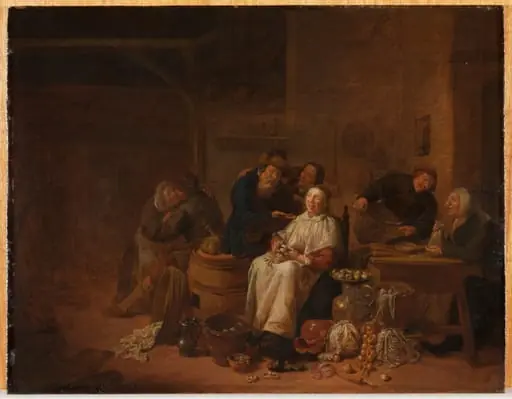 Ungleiche Liebe
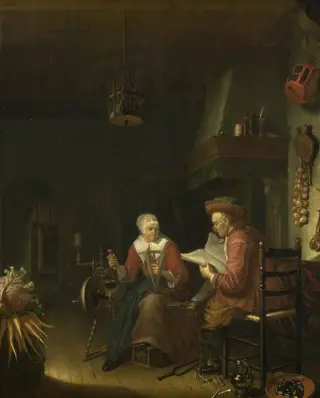 Interior with a man reading and a woman spinning yarn
 Reading aloud
 Blind Tobit and His Wife
 Sick Woman at the Doctor's
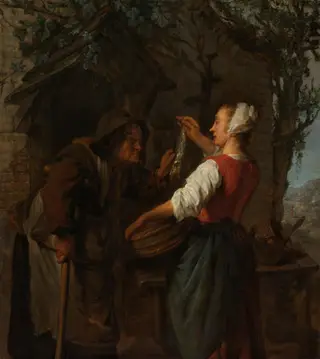 De haringkoopvrouw
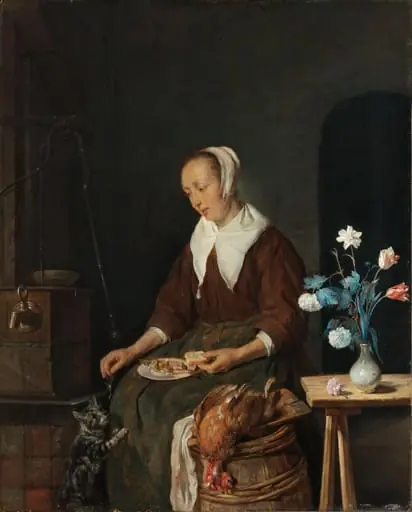
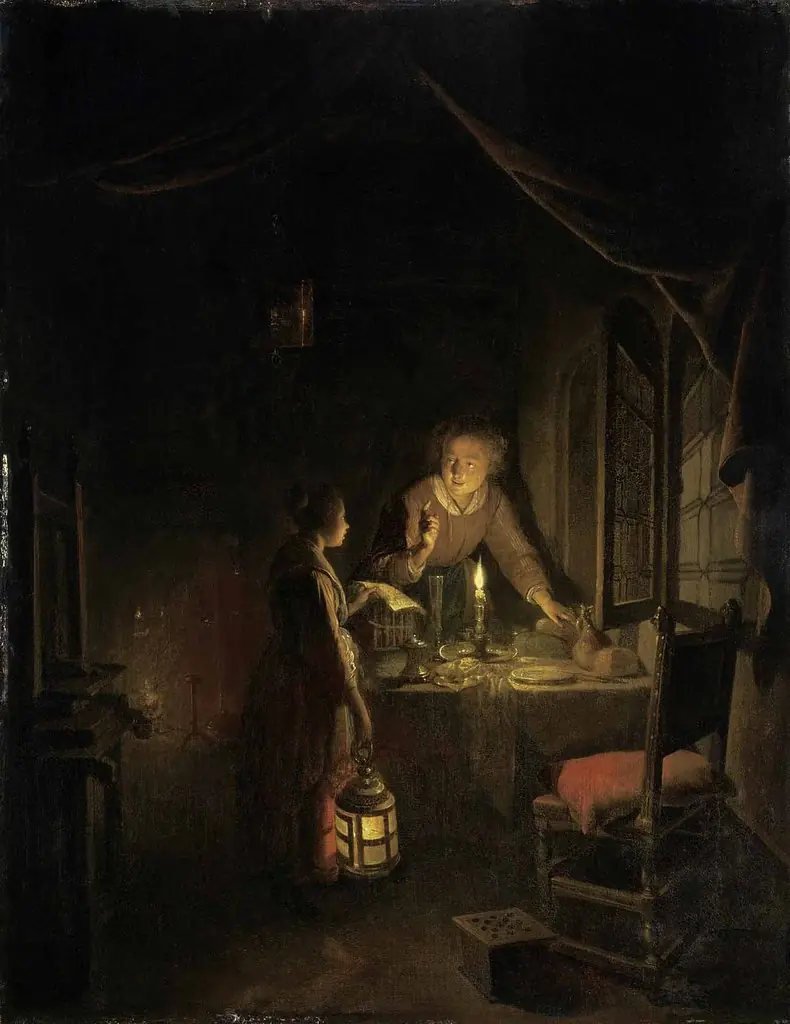 A Young Woman engaged at the Supper-table