Artwork
Sick Woman at the Doctor's
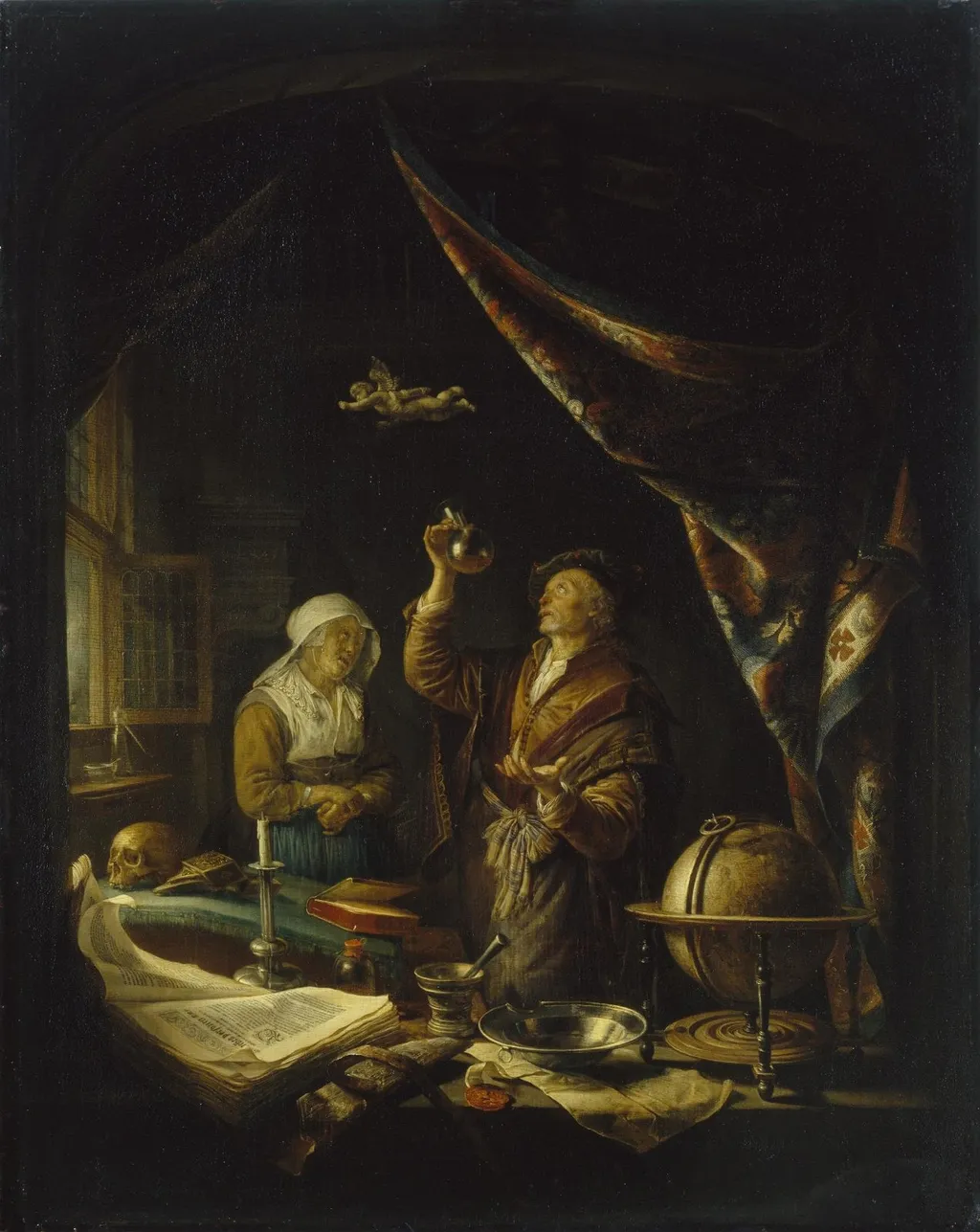
Sick Woman at the Doctor's is an oil painting by the Dutch Golden Age artist Gerrit Dou. It dates from 1665 and is held in the collection of the Hermitage Museum.
About this work
Subject & Meaning
This work represents the detailed observation of everyday life and the specific medical practices prevalent in the Netherlands during the seventeenth century.
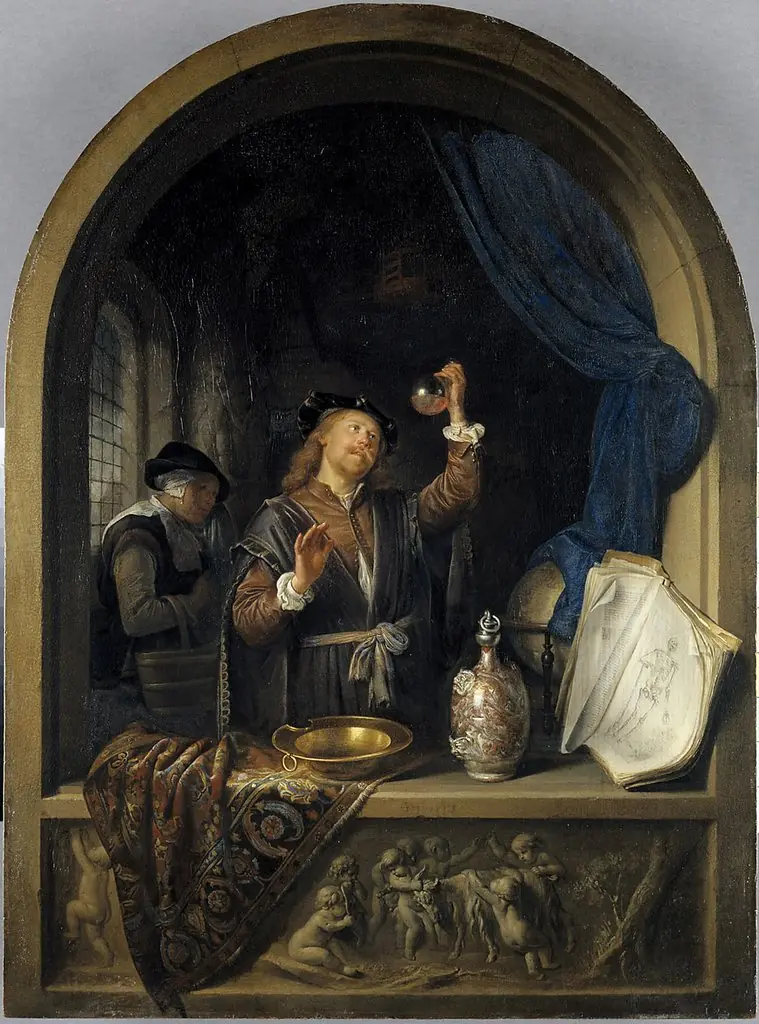
Gerrit Dou's Sick Woman at the Doctor's, painted in 1665, is a genre scene depicting a physician examining a female patient. The central iconographic element is the practice of uroscopy, where the doctor evaluates the patient's health by inspecting a urine flask, a diagnostic method known as Piskijker in the Dutch context. The composition focuses on the interaction between the medical practitioner and the woman, illustrating a common domestic medical consultation of the era.
This work represents the detailed observation of everyday life and the specific medical practices prevalent in the Netherlands during the seventeenth century.
Technique & Style
Gerrit Dou's Sick Woman at the Doctor's, executed in 1665, is an oil painting on a panel support. The work measures 60 cm in height and 48 cm in width. As a genre scene, the composition depicts a physician examining a female patient, with the central subject focusing on the practice of uroscopy.
The painting is currently held in the Hermitage Museum, having entered the collection from the Cabinet de Monseigneur le duc de Choiseul.
History & Provenance
The painting was created by Gerrit Dou in 1665 in the Netherlands. It entered the collection of Étienne François, duc de Choiseul, whose cabinet at the Hermitage housed the work before it was acquired by Catherine II of Russia for the Imperial Hermitage collection. Thereafter it remained in the Hermitage Museum, where it is still displayed.
No documentary evidence of a specific commission has been identified. Executed in oil on panel, the work exemplifies Dou’s fine‑detail genre style.
Gerrit Dou painted Sick Woman at the Doctor's in 1665. The Hermitage Museum, Cabinet de Monseigneur le duc de Choiseul in Saint Petersburg holds the work under inventory number ОЭ-4636. It entered the collection through ownership by Étienne François, duc de Choiseul, and later Catherine II of Russia.
The painting has been displayed in exhibitions at the Hermitage Museum, including the 1999 exhibition Russian Pictures of the 17th Century.
The work measures 60 cm in height and 48 cm in width.
Context
Gerrit Dou painted Sick Woman at the Doctor's in 1665, exemplifying his mastery of genre painting through meticulous detail and psychological depth. The work depicts a woman receiving medical attention, reflecting contemporary interests in uroscopy and domestic interiority. As part of Dou's oeuvre within the Dutch Golden Age, it demonstrates his specialization in small-scale, narrative scenes emphasizing realism and moral nuance.
The painting entered the Hermitage Museum collection through the patronage of Catherine II, who acquired it from duc de Choiseul's collection, establishing its provenance within imperial Russian holdings. Its enduring scholarly attention stems from its technical precision and representation of medical practice in 17th-century Dutch art.
Overview
Gerrit Dou’s oil painting Sick Woman at the Doctor’s (1665) presents a quiet interior scene in which a physician, assisted by a traditional Dutch medical practitioner, examines a female patient. The composition is confined to a modestly sized canvas, typical of the Leiden fijnschilders, whose works are noted for their meticulous attention to surface detail and controlled lighting.
Own this work as a print
Artist & collection
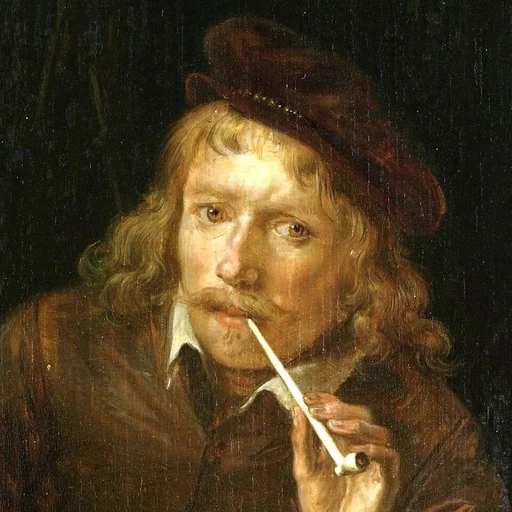
Artist
Gerrit Dou (pronounced; 7 April 1613 – 9 February 1675), also known as Gerard Douw or Dow, was a Dutch Golden Age painter, whose small, highly polished paintings are typical of the Leiden fijnschilders.