Artwork
Vrouw aan de maaltijd, bekend als ‘Het ontbijt van de kat’
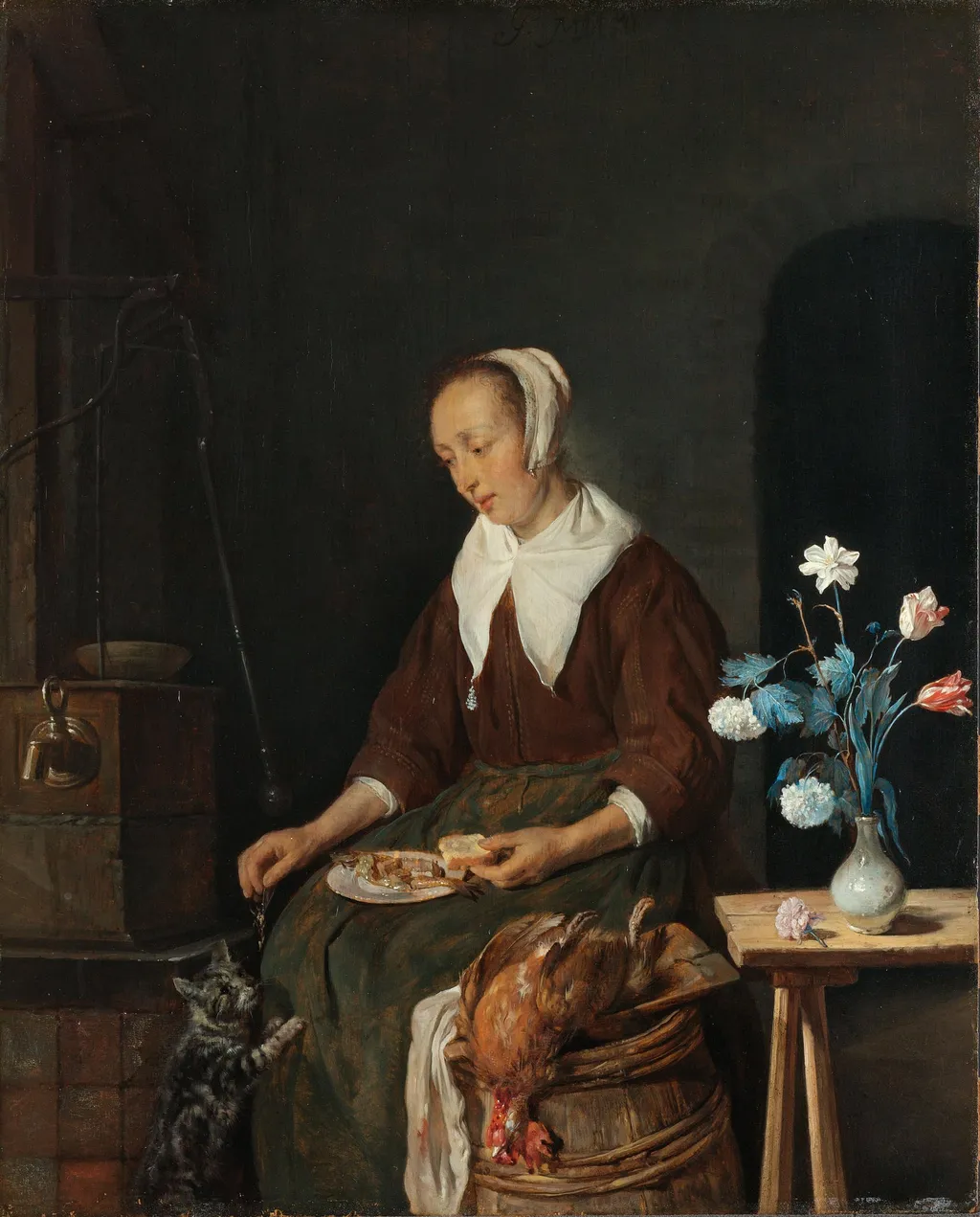
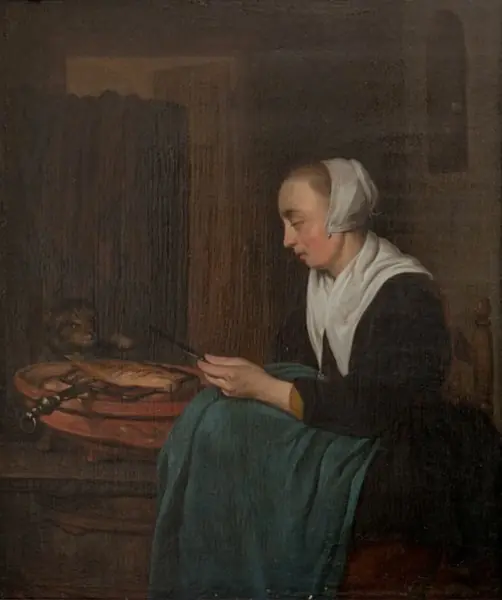
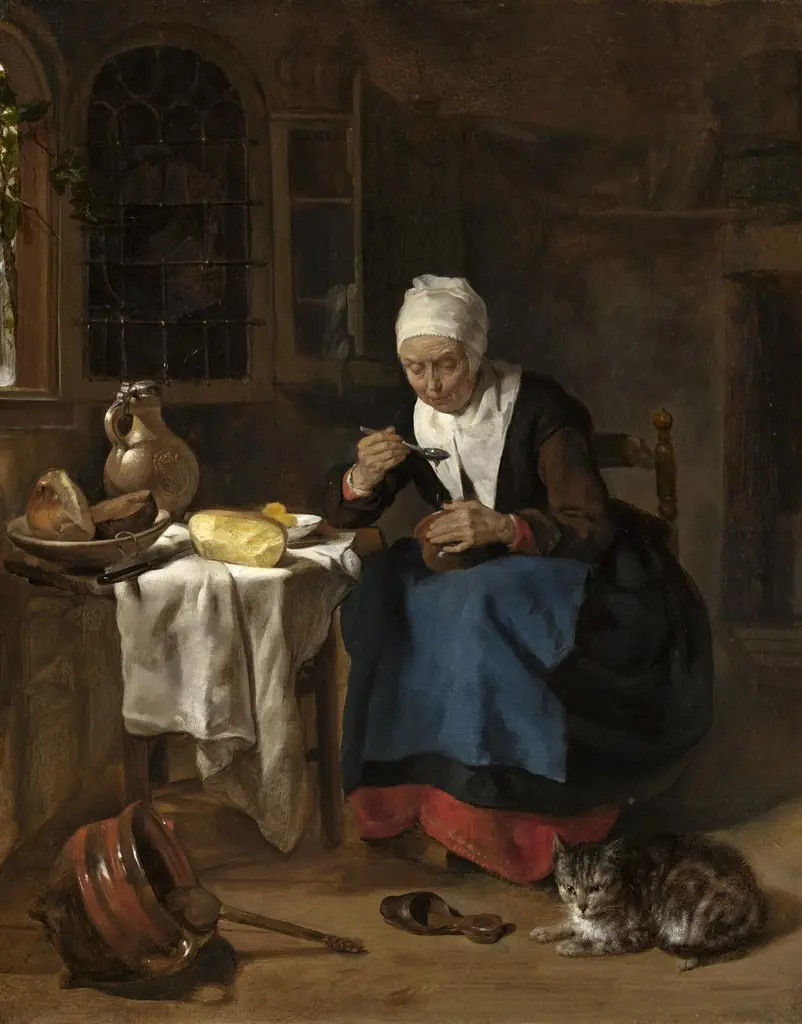
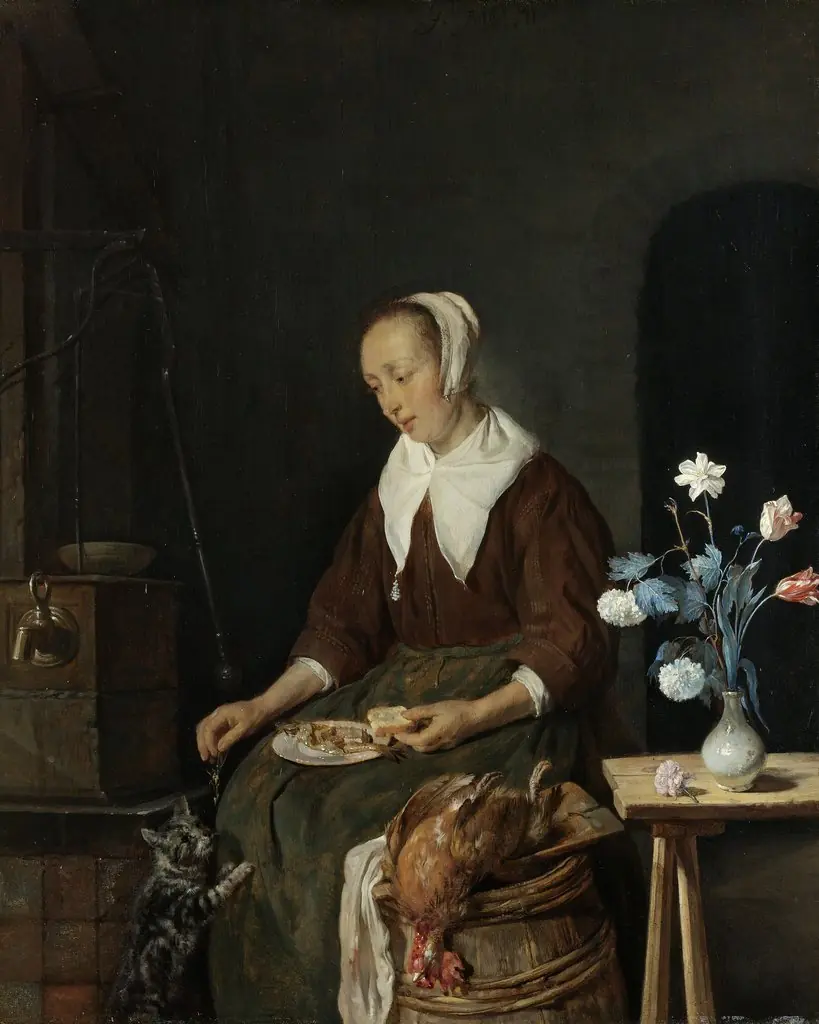
Vrouw aan de maaltijd, bekend als ‘Het ontbijt van de kat’ is an unspecified painting by the Baroque artist Gabriel Metsu. It dates from 1661 and is held in the collection of the Rijksmuseum. This painting captures a domestic scene, showing a woman of modest means seated at a table.
About this work
Subject & Meaning
This fits Metsu’s genre practice of portraying single women engaged in domestic tasks and feeding pets, as noted in.
The work shows a young woman seated at a table during a modest breakfast, a cat present beside her. This fits Metsu’s genre practice of portraying single women engaged in domestic tasks and feeding pets, as noted in. The inclusion of the cat functions symbolically, reflecting contemporary associations of feline companionship with household stability and, in Metsu’s broader oeuvre, with emblematic double meanings that can suggest subtle erotic undertones. The painting thus operates as a genre scene that combines everyday observation with symbolic resonance, embodying the moral and social values of 17th‑century Dutch domestic life.
History & Provenance
Gabriël Metsu executed 'Vrouw aan de maaltijd', also known as 'Het ontbijt van de kat', between approximately 1661 and 1664. This dating aligns with a pivotal shift in the artist's career during the early 1660s, when he moved to Amsterdam and began drawing inspiration from the 'fijnschilders' of his native Leiden. During this period, Metsu cultivated a significant patronage relationship with Jan J. Hinlopen, a wealthy Amsterdam cloth merchant.
Starting around 1661, Hinlopen commissioned multiple works from the painter, including family portraits set within fashionable interiors. While specific ownership records for this particular genre scene prior to the 18th century are not detailed in the available sources, the work emerges from this productive era of Metsu's life, shortly before his death in 1667.
Overview
This painting captures a domestic scene, showing a woman of modest means seated at a table. She shares her simple meal of herring and bread with a cat, which leans in expectantly. The artwork portrays a quiet, unadorned moment of daily life, illuminated by natural light entering through a window. It offers a glimpse into typical 17th-century Dutch home environments.
Technique & Style
The artist employs natural light, depicted as spilling through a window, to highlight key elements such as the bread and the woman's white cap, creating a sense of depth and realism. An interesting material change is visible in the floral arrangement; the yellow pigment used for the flower stems has degraded over time, altering their original green hue to a blue tone. This demonstrates the chemical evolution of historical paint materials.
Context
This painting reflects a broader artistic trend in 17th-century Holland, where artists frequently depicted scenes of daily life, often referred to as genre painting. The subject matter, a modest breakfast of herring and bread, was a common meal for many during this period. Such works provide valuable insight into the customs and domestic environments prevalent in the Dutch Golden Age, aligning with the detailed realism characteristic of the Baroque era.
Own this work as a print
Artist & collection
Artist
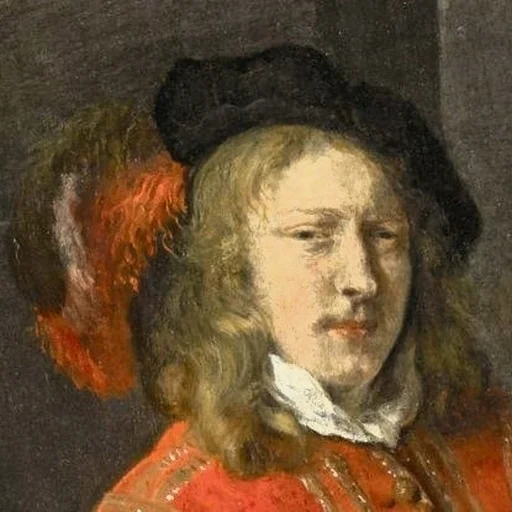
Gabriël Metsu (1629–1667) was a Dutch painter of history paintings, still lifes, portraits, and genre works.