Artwork
Chinese Servant Walking in the Rain
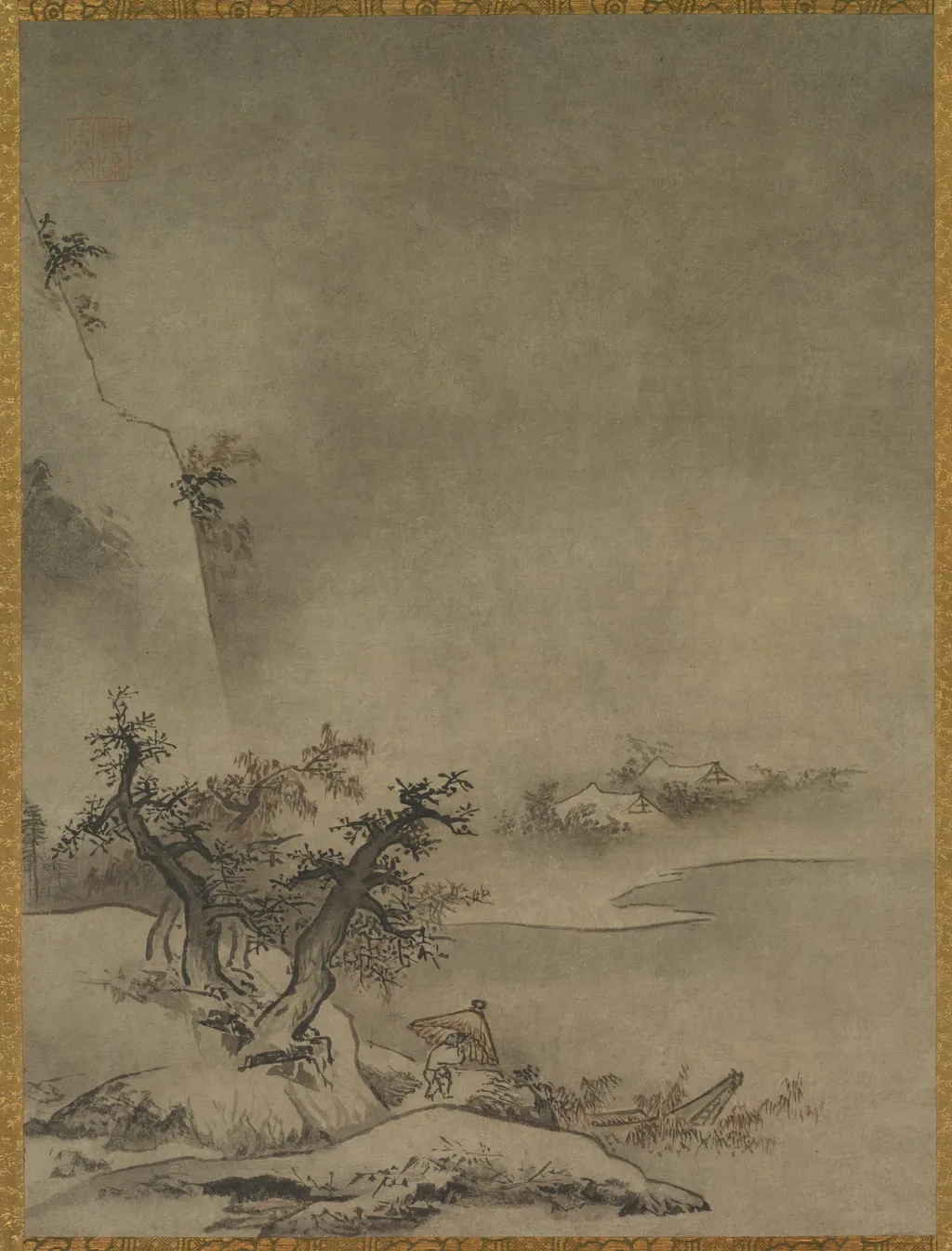
Chinese Servant Walking in the Rain is an unspecified painting by the Nanga artist Gakuō Zōkyū. It dates from 1504 and is held in the collection of the Cleveland Museum of Art.
- Accession no.
- 2015.512
- Credit line
- Gift from the Collection of George Gund III
About this work
Overview
The work, titled Chinese Servant Walking in the Rain, is an ink painting that depicts a lone figure moving through a light drizzle. The servant, dressed in a simple robe and a bamboo hat, lifts his sleeve to shield his face, creating a moment of quiet concentration. The composition is restrained, focusing on the solitary presence against a minimal background.
Subject & Meaning
The painting captures a fleeting, everyday scene rather than a narrative episode, emphasizing the humility and perseverance of a common laborer. The subtle gesture of shielding the face suggests a contemplative response to the weather, resonating with Zen themes of mindfulness in ordinary tasks.
Technique & Style
Executed with loose yet deliberate brushwork, the artist renders the figure and surrounding rain with a few confident strokes. Fine droplets are suggested by minimal marks, allowing the viewer’s eye to fill in the drizzle. The controlled spontaneity reflects a Zen aesthetic that values simplicity and the suggestion of form over detailed realism.
History & Provenance
A seal resembling that of the prominent Shōkokuji monk‑painter Tenshō Shūbun appears on the work, though it is considered a later addition.
The painting is attributed to Gakuō, a 15th‑century painter linked to the Zen circles of Kyoto. A seal resembling that of the prominent Shōkokuji monk‑painter Tenshō Shūbun appears on the work, though it is considered a later addition. Gakuō’s origins are thought to be Ise in present‑day Wakayama, and his career is documented mainly through inscriptions that connect him with leading Zen monasteries.
Context
During the Muromachi period, ink painting was a primary medium for Zen monks and their associates, who used it to convey spiritual insight through everyday subjects. The depiction of a servant in rain aligns with contemporary interests in portraying the mundane as a vehicle for meditation, situating the work within the broader tradition of Japanese Zen art.
Own this work as a print
Artist & collection

 Landscape
 Searching for Plum Blossoms
 Birds in a Grove in a Mountainous Winter Landscape
 Waiting for the Ferry on an Autumn River
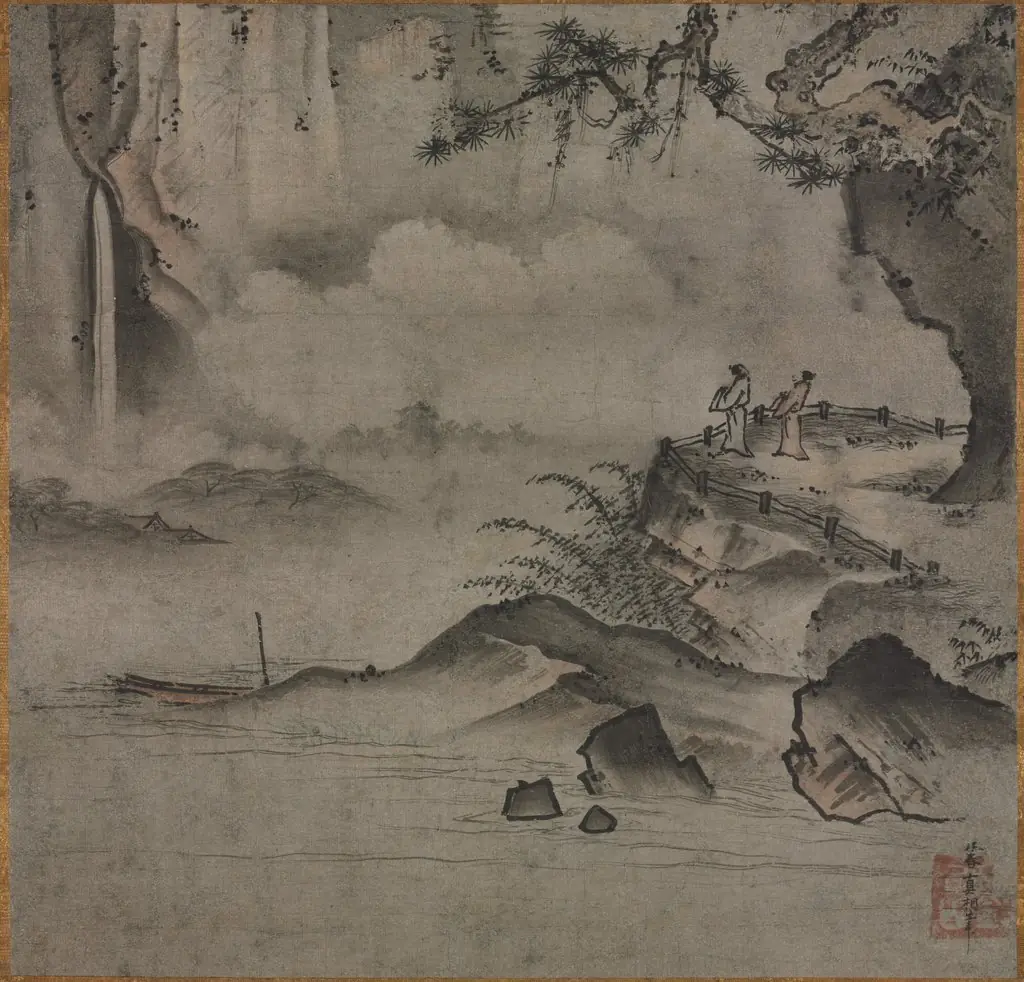 Gazing at a Waterfall
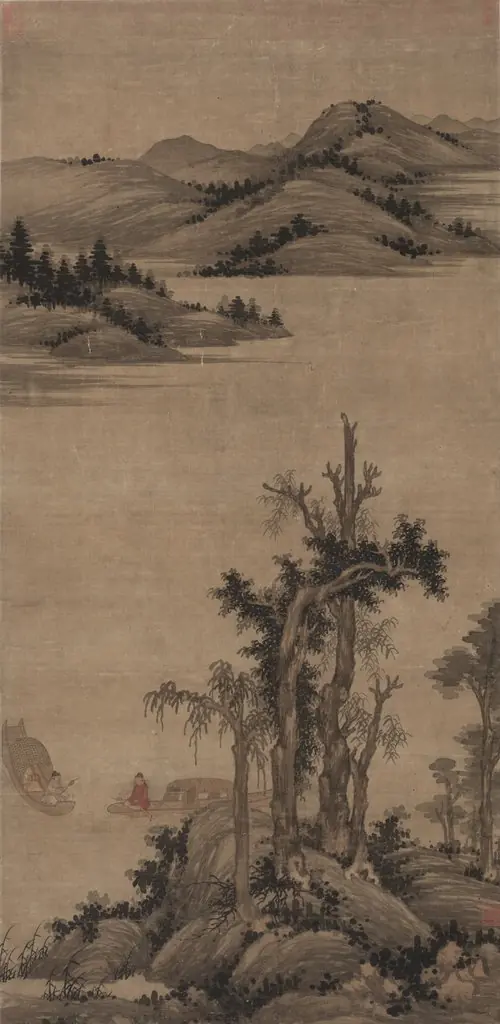 Fishermen-Hermits in Stream and Mountain
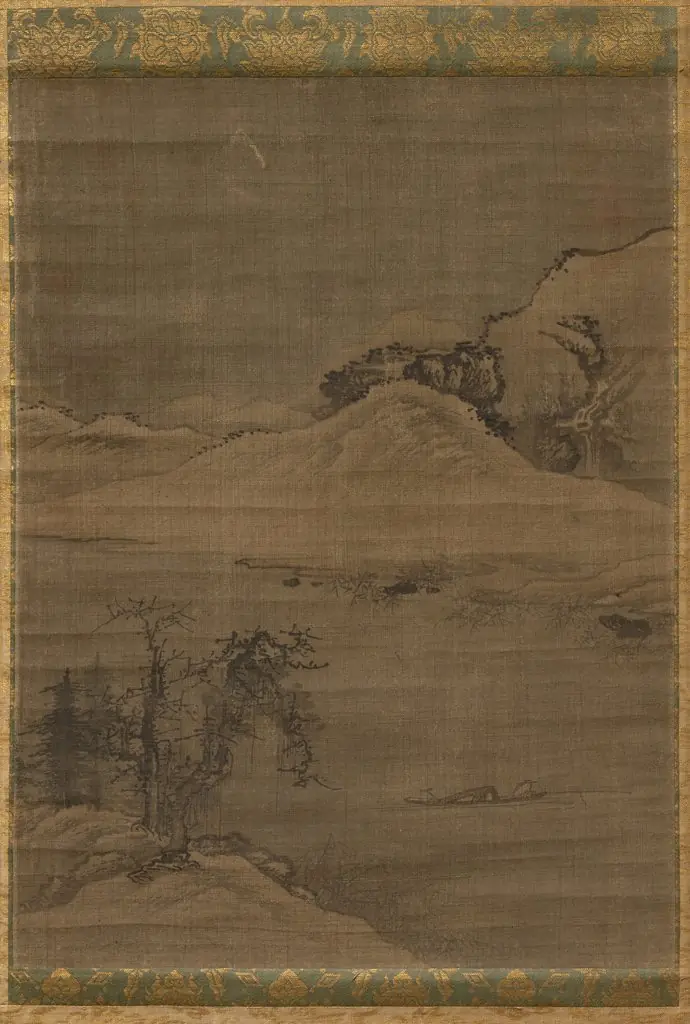 Landscape with Fishermen
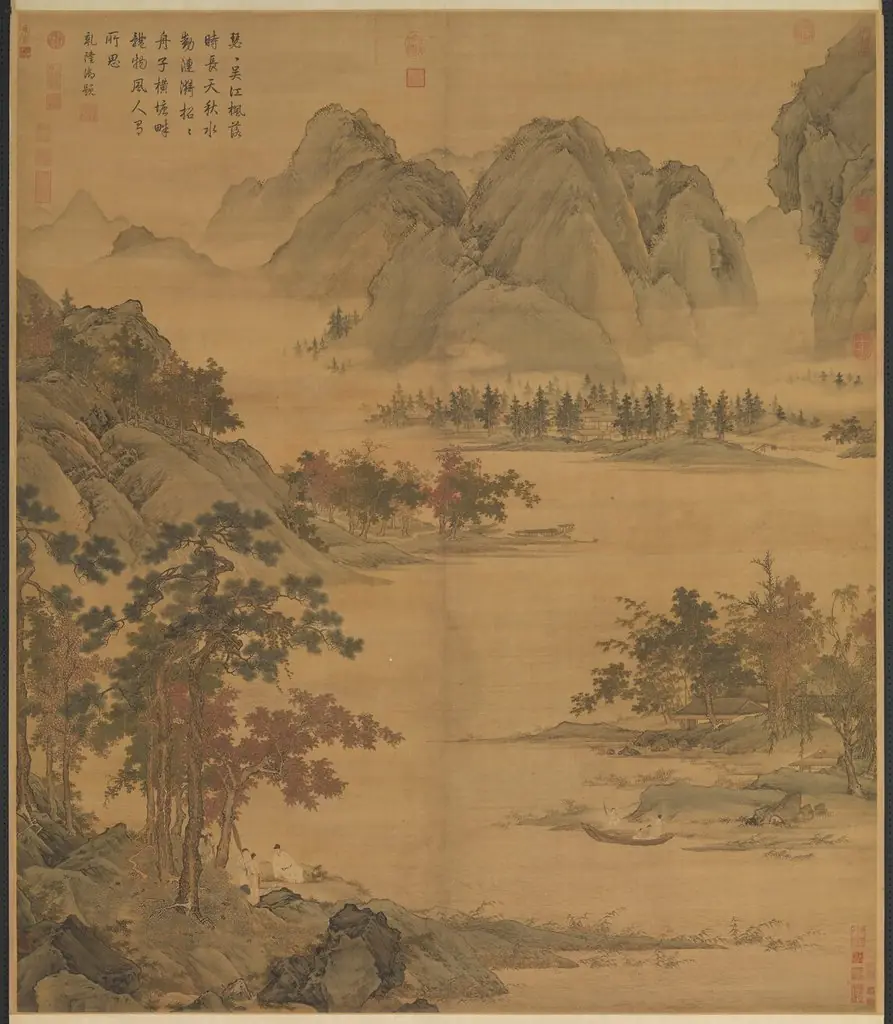 明仇英秋江待渡 軸
 狩野元信周辺 伯牙鍾子期図|Bo Ya Plays the Qin as Zhong Ziqi Listens
 Fishing Boat on a Wintry River
 名繪集珍 冊 五代黃筌雪竹文禽