Artwork
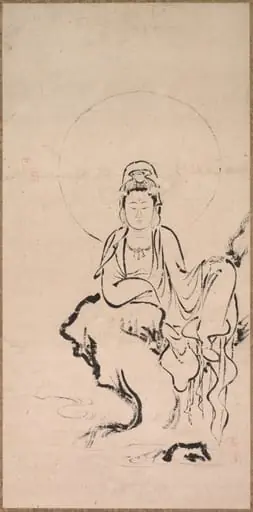
Willow-and-Moon Kannon (Yōryū Kannon)
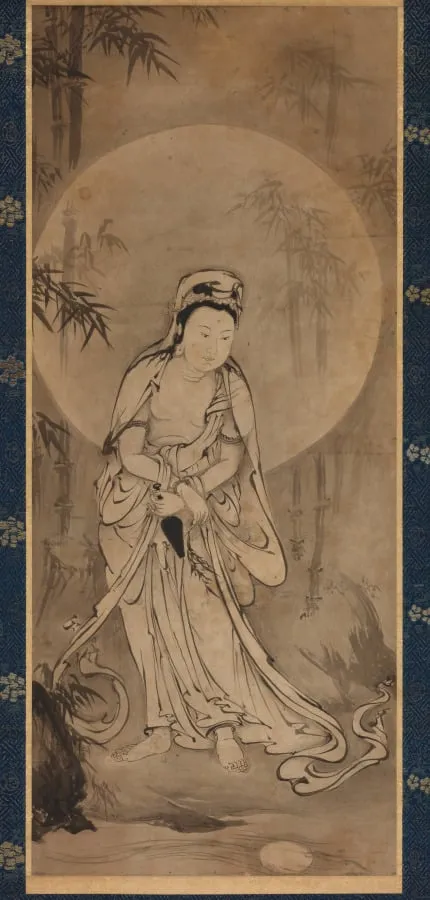
Willow-and-Moon Kannon (Yōryū Kannon) is an unspecified painting by the Joseon dynasty painting artist Gakuō Zōkyū. It dates from 1500 and is held in the collection of the Cleveland Museum of Art.
- Accession no.
- 1985.110
- Credit line
- John L. Severance Fund
About this work
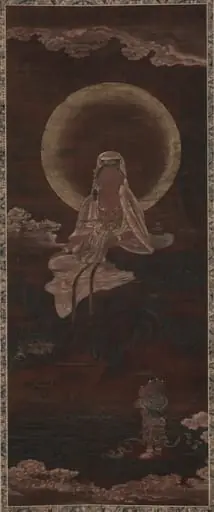
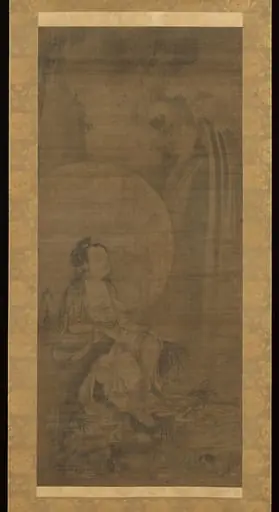
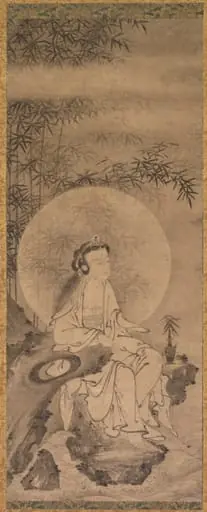
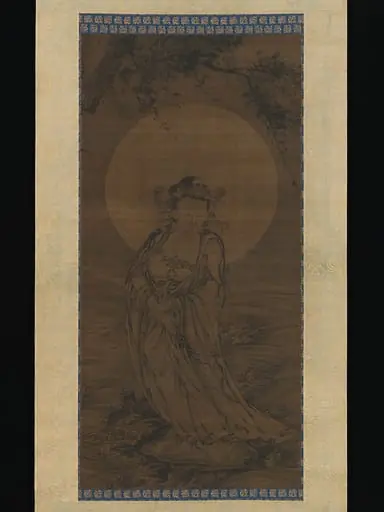
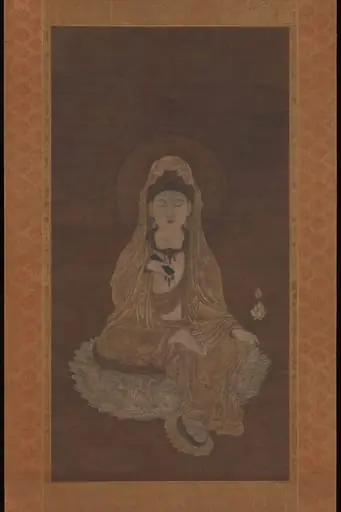
A slender figure in flowing robes stands by a willow tree, holding a branch and a small vase while gazing at the moon’s reflection in dark water.
A slender figure in flowing robes stands by a willow tree, holding a branch and a small vase while gazing at the moon’s reflection in dark water.
This is Kannon, the Buddhist goddess of mercy. The willow and vase symbolize healing, while the moon’s fleeting reflection hints at life’s impermanence, a quiet moment of Zen wisdom. The artist, a Zen monk himself, painted this with simple ink, letting empty space speak as much as the brushstrokes.
For more paintings like this, look up the muromachi period (1392–1573).
Overview
The work portrays Kannon, the Buddhist figure associated with compassion, positioned beside a willow tree and gazing at the moon’s reflection on water. The composition is rendered in monochrome ink, emphasizing the figure’s slender form, the delicate branch, and a small vase, while large areas of empty space frame the scene.
Subject & Meaning
Kannon holds a willow branch and a water vase, traditional symbols linked to healing and purification in Buddhist iconography. The reflected moon serves as a visual reminder of transience, suggesting the fleeting nature of existence that Zen practice seeks to acknowledge.
Technique & Style
Attributed to the Zen monk Gakuō Zōkyū, the painting employs the ink wash techniques characteristic of Muromachi-era Zen art. Brushstrokes are spare and controlled, allowing negative space to convey atmosphere and spiritual depth as much as the depicted forms.
History & Provenance
The piece is linked to the Muromachi period (1392–1573), a time when Zen monks commonly produced ink paintings for devotional and contemplative purposes. Its attribution to Gakuō Zōkyū rests on stylistic analysis and historical records of his artistic activity.
Context
During the Muromachi era, Buddhist visual culture often integrated natural motifs such as willows and moonlit water to illustrate Buddhist teachings on impermanence. This painting reflects that tradition, aligning the compassionate figure of Kannon with the broader Zen emphasis on simplicity and contemplation.
Artist & collection