Artwork
Temperance
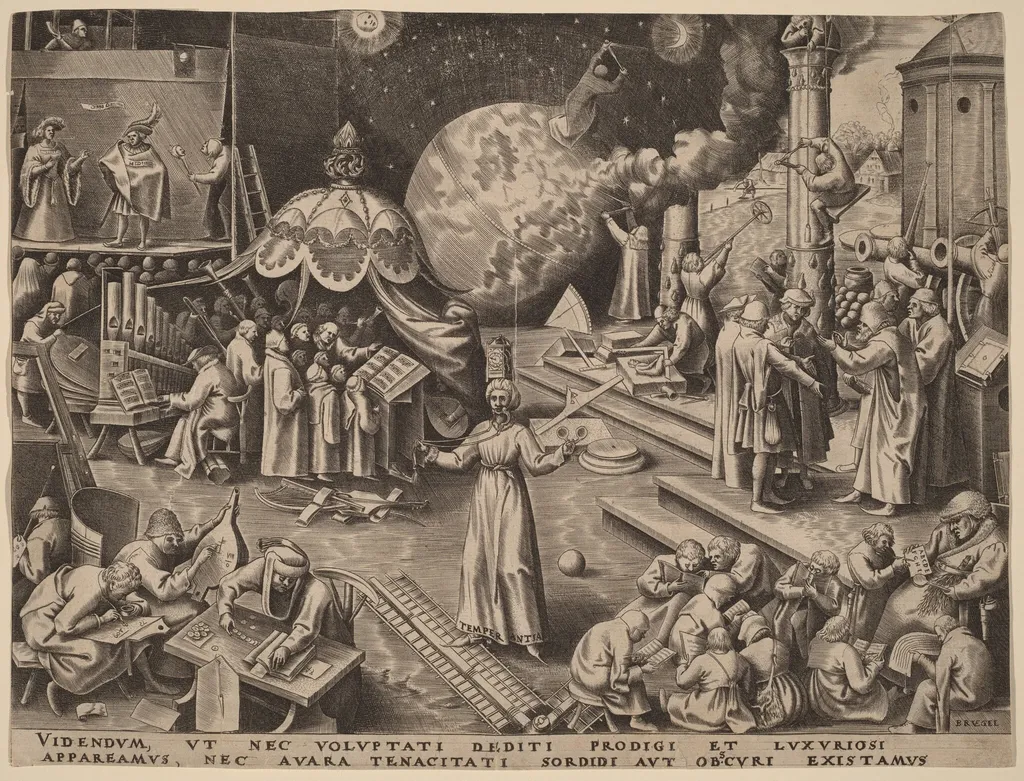
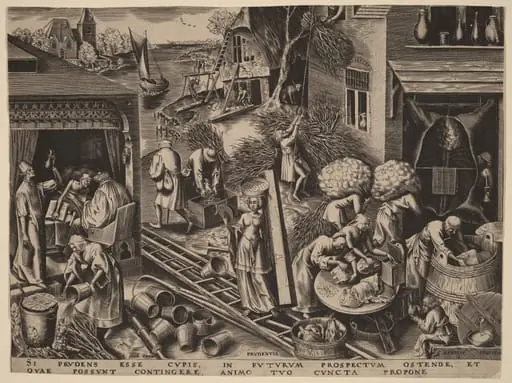
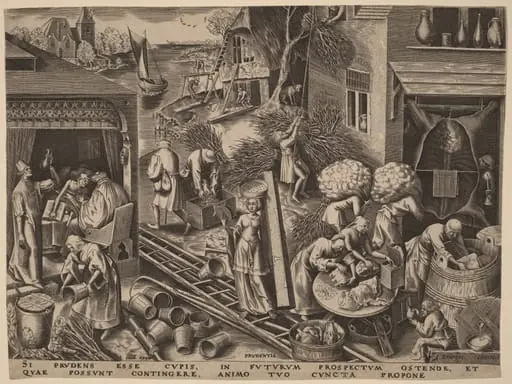
Temperance is an ink print by the Renaissance artist Philip Galle. It dates from 1559 and is held in the collection of the National Gallery of Art.
- Inscription
- Inscribed:lower center, on the hem of the central figure's clothes, in plate: TEMPERANTIA (Temperance); lower right, in image, in plate: BRVEGEL; lower margin, in plate: VIDENDVM, VT NEC VOLVPTATI DEDITI PRODIGI ET LVXVRIOSI / APPAREAMVS, NEC AVARA TENACITATE SORDIDI AVT OBSCVRI EXISTAMVS (We must look to it that, in the devotion to sensual pleasures, we do not become wasteful and luxuriant, but also that we do not, because of miserly greed, live in filth and ignorance) [translation from Nadine Orenstein, ed., Pieter Bruegel the Elder: Drawings and Prints. Exhibition catalogue. New York: Metropolitan Museum of Art, 2001, p. 191.]
About this work
Overview
Created in 1559 by the Dutch engraver and publisher Philip Galle, Temperance is a black‑and‑white print that exemplifies the reproductive engraving tradition of the late Renaissance. The image presents a densely populated interior where a central female figure, identified by an inscription, holds a pair of scales, while surrounding characters engage in various scholarly and mechanical activities.
Subject & Meaning
The central woman, labeled Temperance, embodies the classical virtue of moderation, symbolized by the scales she balances. Encircling her are figures absorbed in study, measurement, and the operation of curious apparatuses, suggesting a harmonious blend of moral restraint with the burgeoning pursuits of science and learning.
Technique & Style
Executed with fine lines and cross‑hatching, the engraving translates the tonal range of an original painting into a monochrome composition. Galle’s meticulous incising captures intricate details, from the texture of fabrics to the complex machinery, while the dense network of shadows creates depth within the crowded scene.
History & Provenance
Philip Galle, active in the latter half of the sixteenth century, specialized in reproducing paintings for a wider audience. Temperance was part of this commercial enterprise, allowing the visual content of a painted source to circulate beyond its original setting through printed copies.
Context
The print reflects the period’s fascination with the integration of moral allegory and emerging scientific inquiry. By placing the virtue of temperance amid a workshop‑like environment, the image mirrors contemporary humanist ideals that linked ethical conduct with intellectual and technical advancement.
Own this work as a print
Artist & collection
Artist
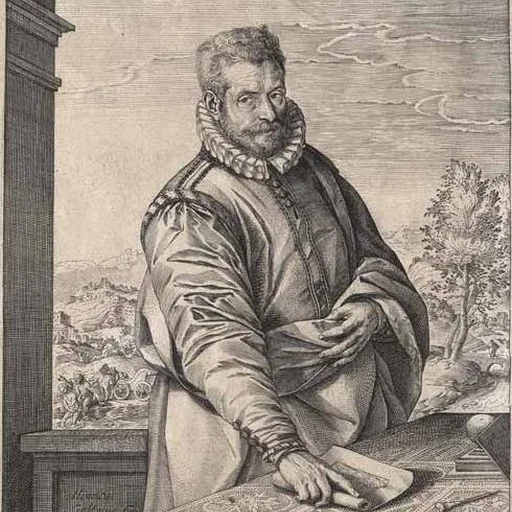
Philip (or Philips) Galle (1537 – March 1612) was a Dutch publisher, best known for publishing old master prints, which he also produced as designer and engraver. He is especially known for his reproductive engravings of paintings.

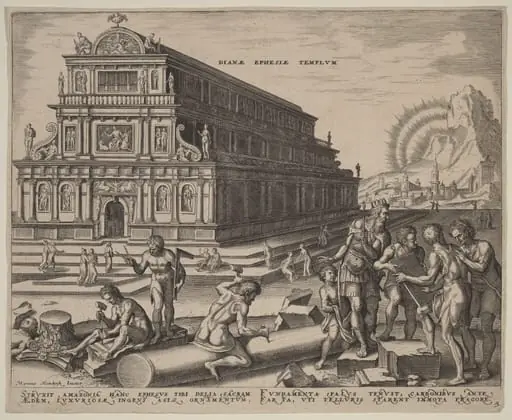 Dianae Ephesiae Templum (The Temple of Diana at Ephesus)
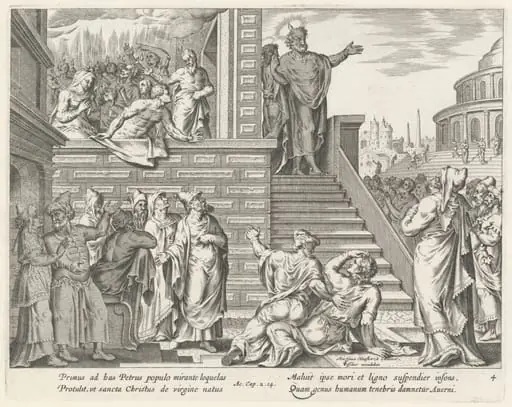 Saint Peter Speaks to the People about Christ
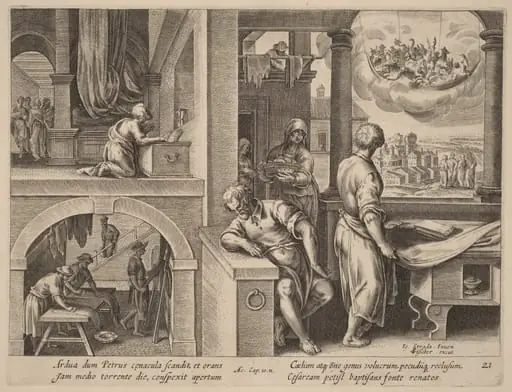 The Vision of Saint Peter
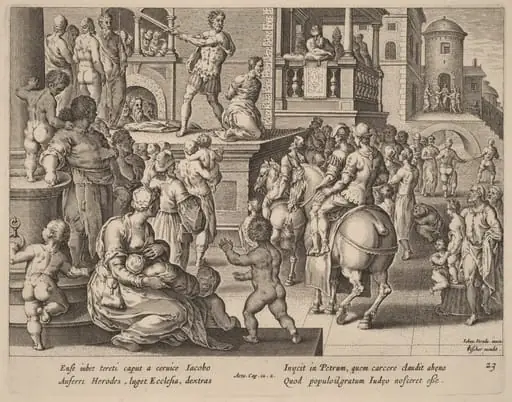 Beheading of Saint James
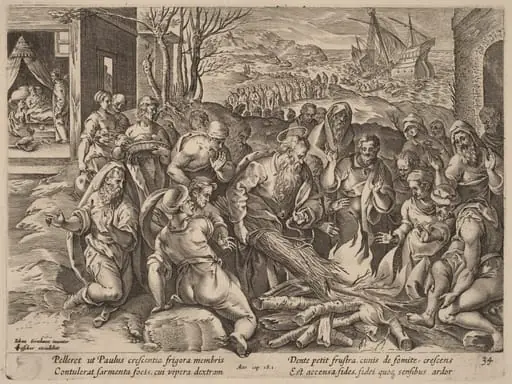 Saint Paul Shipwrecked on the Island of Melita
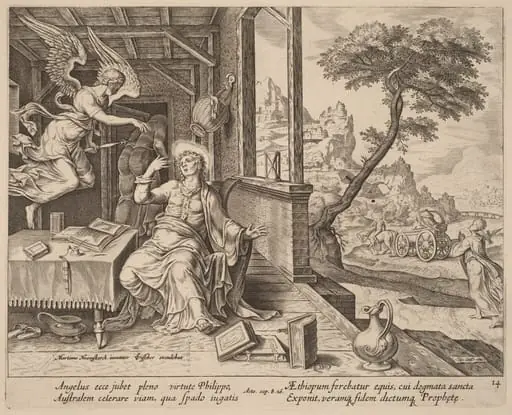 The Angel Orders Saint Philip to Accompany the Ethiopian Eunuch
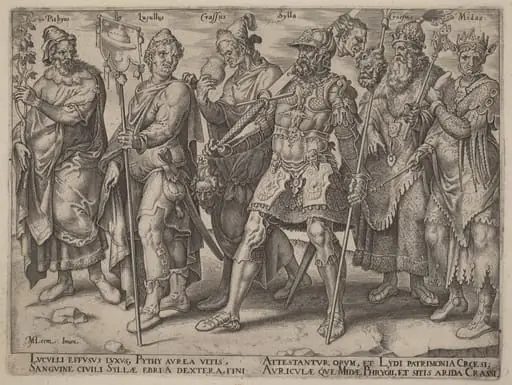 Notorious Examples of Wealth from Antiquity
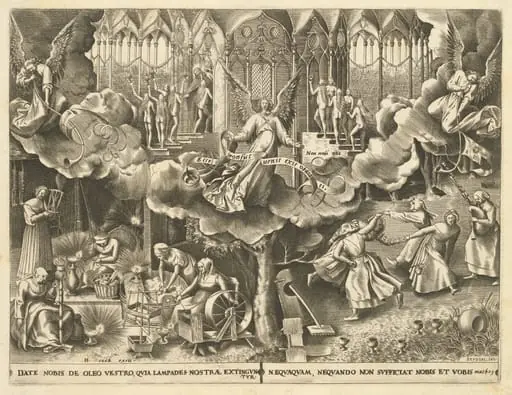 The Parable of the Wise and Foolish Virgins