Artwork
The Parable of the Wise and Foolish Virgins
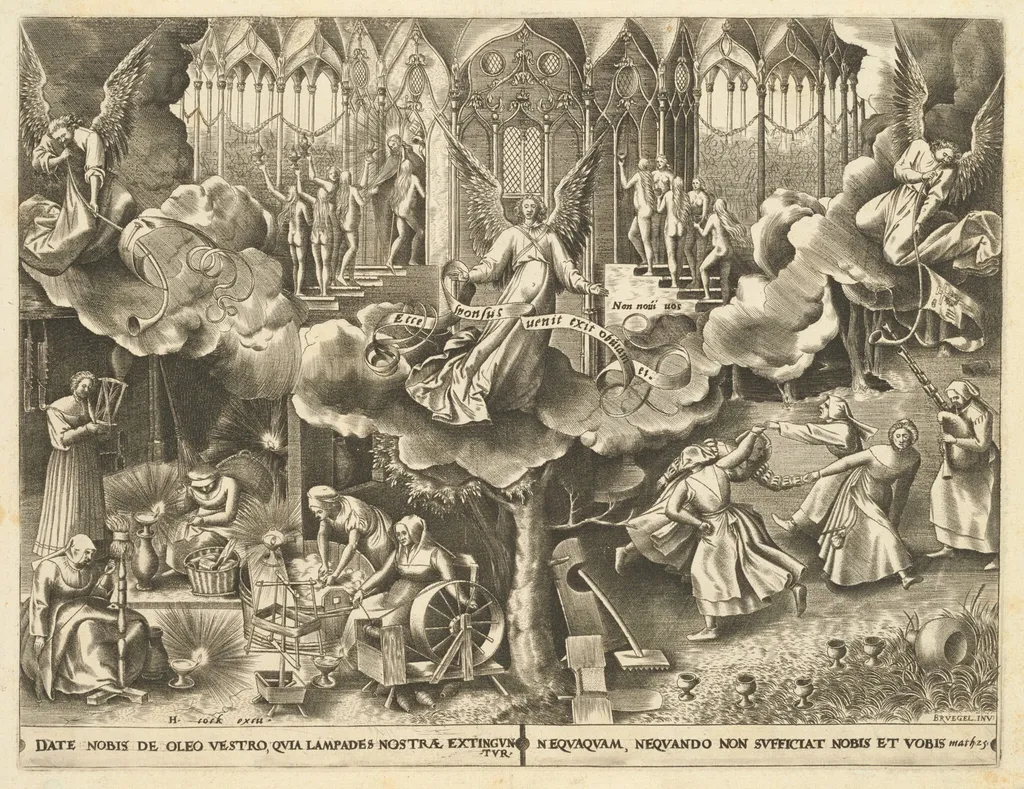
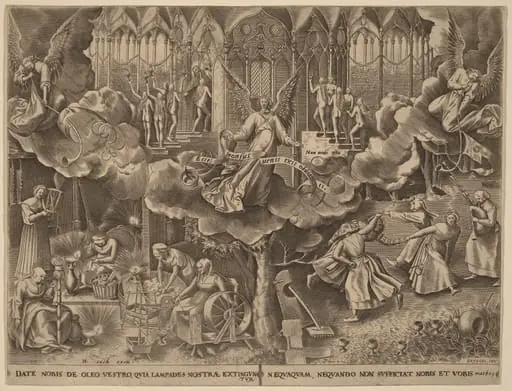
The Parable of the Wise and Foolish Virgins is an ink print by the Renaissance artist Philip Galle. It dates from 1562 and is held in the collection of the National Gallery of Art.
- Inscription
- Inscribed:lower left in image: H. cock excu.; lower right in image: BRVEGEL. INV:; on stairs at upper right: Non noui vos (I know you not); on banderole at center: Ecce sponsus venit exit obviam ei. (Behold, the bridegroom cometh. Go ye out to meet him); lower center, in plate below image: DATE NOBIS DE OLEO VESTRO, QVIA LAMPADES NOSTRAE EXTINGVUN / TVR. / NEQVAQVAM, NEQVANDO NON SVFFICIAT NOBIS ET VOBIS math. 25 ([And the foolish said unto the wise,] Give us of your oil, for our lamps are gone out. [But the wise answered, saying,] Not so, lest there be not enough for us and you. [Matt. 25:8-9]) [translation from Nadine Orenstein, ed., Pieter Bruegel the Elder: Drawings and Prints. Exhibition catalogue. New York: Metropolitan Museum of Art, 2001, p. 208.]
About this work
Overview
Philip Galle’s c. 1562 engraving, titled The Parable of the Wise and Foolish Virgins, presents the New Testament episode from Matthew 25 in which ten women await a bridegroom. Five carry lamps already filled with oil, while the other five hold unlit lamps, illustrating the moral contrast between preparedness and neglect.
Subject & Meaning
The composition divides the narrative into two realms. Above, a celestial figure hovers amid clouds, bearing a placard inscribed with Latin text, evoking divine judgment. Below, a bustling crowd in contemporary dress moves hurriedly, some turning wheels, others clutching lamps or baskets, embodying the anxiety of the unprepared.
Technique & Style
Executed as an engraving on laid paper, the image relies on fine incised lines to render texture, light, and architectural detail. Galle’s hand shows the characteristic clarity of reproductive prints, translating a painted source into a reproducible, monochrome format suitable for wide distribution.
History & Provenance
Philip Galle (c. 1537–1612) was a Dutch publisher and engraver known for reproducing works by earlier masters. This print reflects his commercial practice of disseminating religious narratives through affordable prints, allowing the biblical story to reach a broader audience beyond the confines of painted altarpieces.
Context
The work appears during the Counter‑Reformation, when visual depictions of scriptural lessons were encouraged to reinforce Catholic doctrine. The emphasis on vigilance and moral readiness aligns with contemporary preaching that urged believers to remain spiritually prepared for Christ’s return.
Own this work as a print
Artist & collection
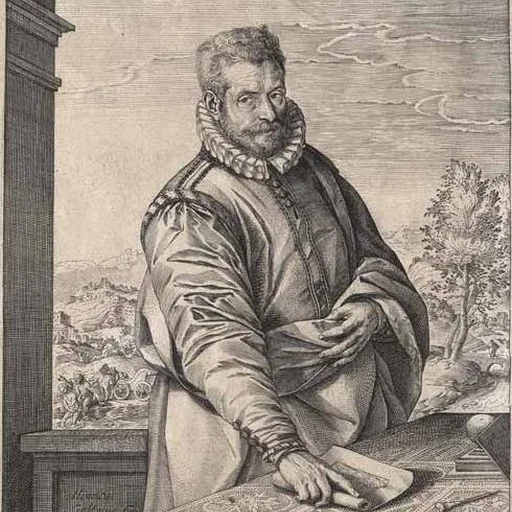
Artist
Philip (or Philips) Galle (1537 – March 1612) was a Dutch publisher, best known for publishing old master prints, which he also produced as designer and engraver. He is especially known for his reproductive engravings of paintings.

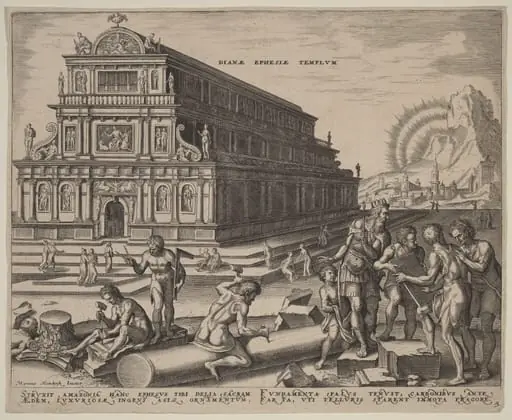 Dianae Ephesiae Templum (The Temple of Diana at Ephesus)
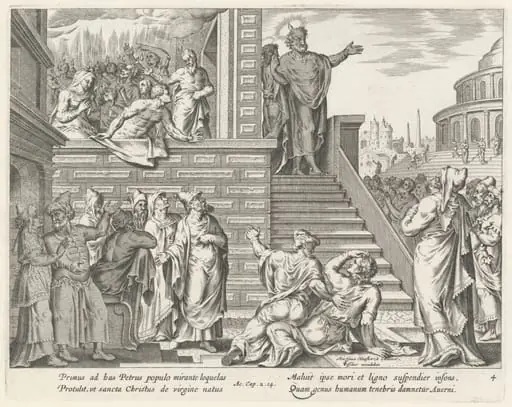 Saint Peter Speaks to the People about Christ
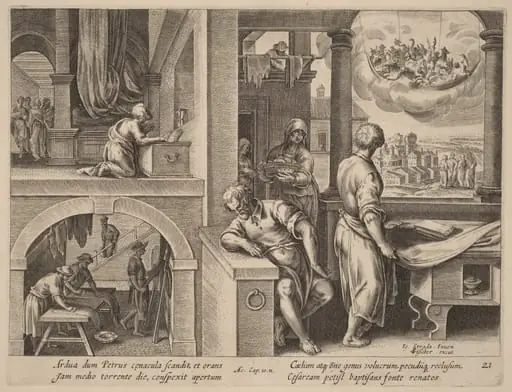 The Vision of Saint Peter
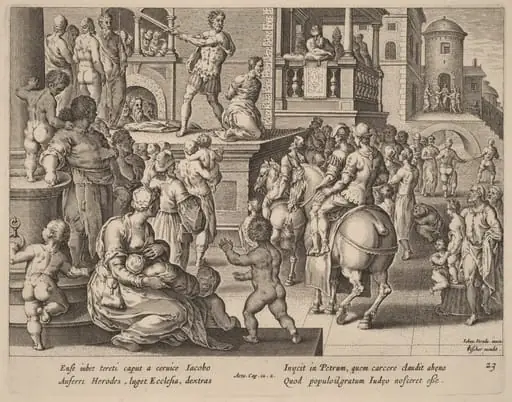 Beheading of Saint James
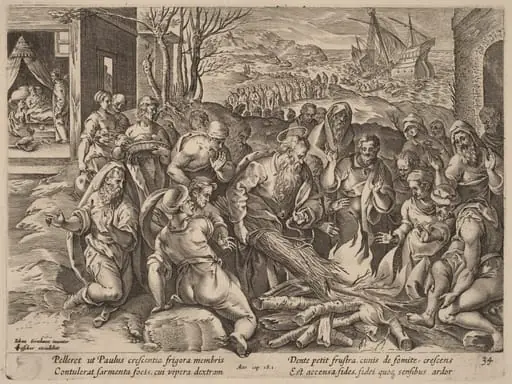 Saint Paul Shipwrecked on the Island of Melita
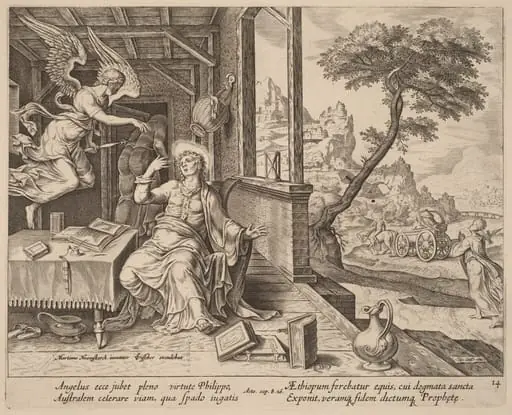 The Angel Orders Saint Philip to Accompany the Ethiopian Eunuch
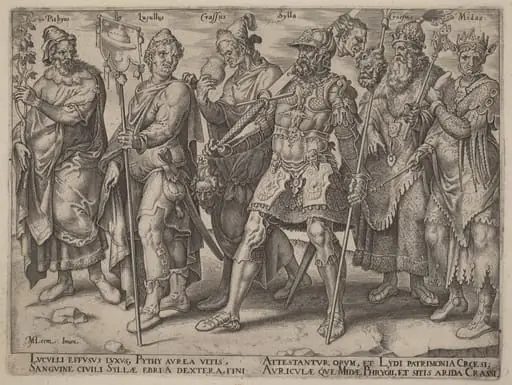 Notorious Examples of Wealth from Antiquity
 The Resurrection