Artwork
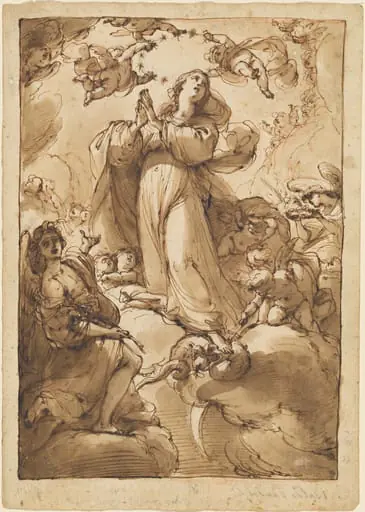
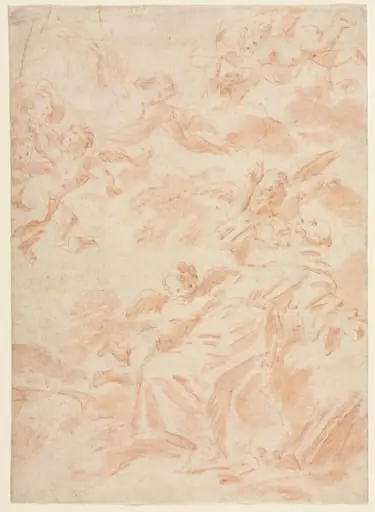
The Apotheosis of San Vitale
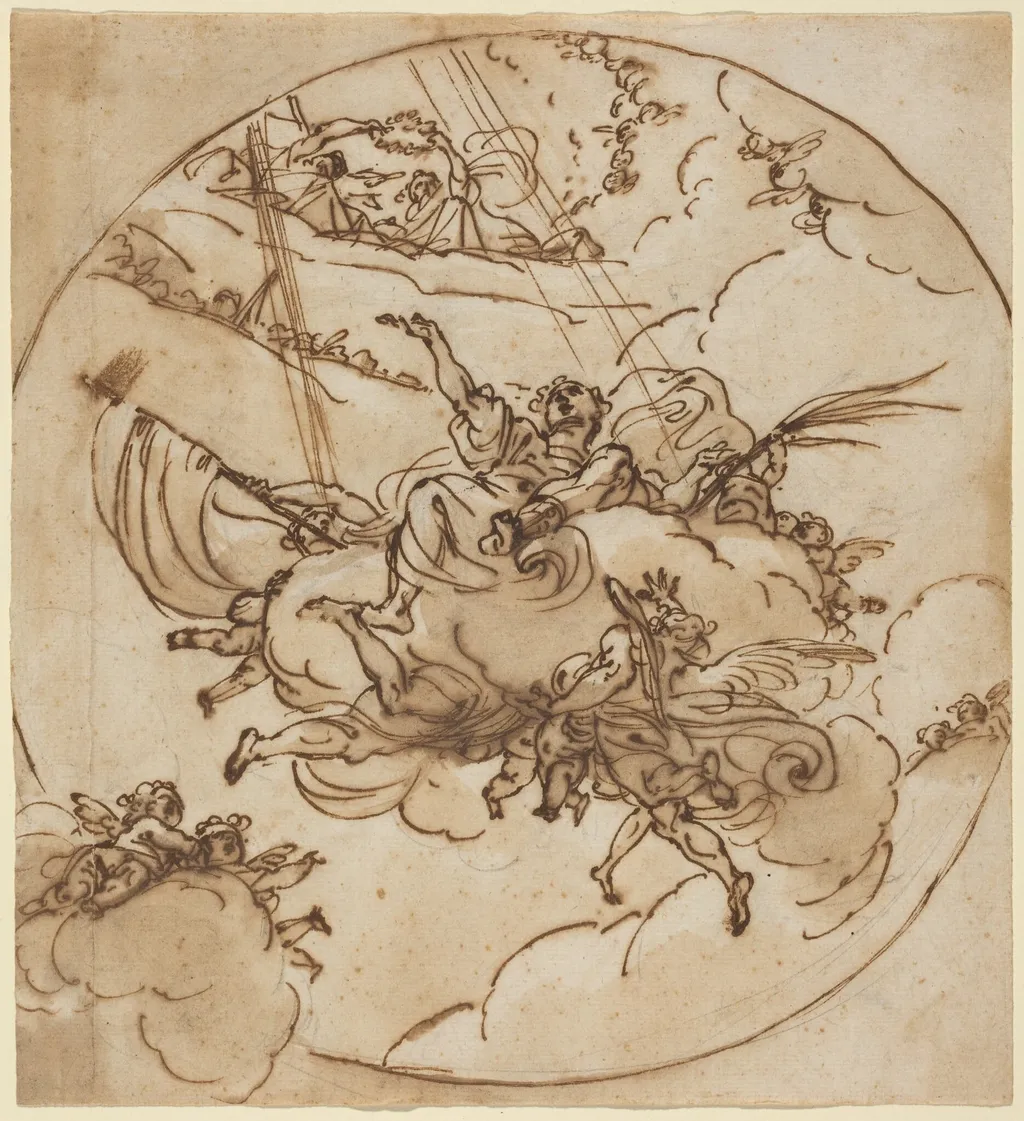
The Apotheosis of San Vitale is a chalk drawing by the Romanticist artist Ubaldo Gandolfi. It dates from 1781 and is held in the collection of the National Gallery of Art.
- Inscription
- Inscribed:lower right verso in graphite: 567 / [illegible]
About this work
The Apotheosis of San Vitale is a drawing made in 1781. It's interesting because it was created during a time when artists were starting to explore new ways of expressing emotion. The fact that it's an allegory suggests that the artist was trying to convey a deeper meaning. You can learn more about this style by looking into the movement: Romanticism.
Overview
The Apotheosis of San Vitale is a drawing created by Ubaldo Gandolfi in 1781 using pen, brown ink, brown wash, and black chalk on laid paper. It exemplifies the artist's skill as a draughtsman during the late-Baroque period.
Subject & Meaning
The drawing depicts the apotheosis of Saint Vitalis, a Christian martyr, conveying a scene of ascension or glorification. This allegorical subject reflects Gandolfi's tendency to explore themes of biblical and Christian significance.
Technique & Style
Gandolfi's use of pen and brown ink with brown wash over black chalk demonstrates his mastery of various mediums and techniques. The work's style is characteristic of the late-Baroque period, with its emphasis on expressive and emotive representation.
Context
Created in 1781, The Apotheosis of San Vitale reflects a transitional period in art, as artists began to explore new ways of expressing emotion, laying groundwork for subsequent artistic movements.
Own this work as a print
Artist & collection
Artist
Ubaldo Gandolfi (1728–1781) was an Italian painter, draughtsman and sculptor of the late-Baroque period, mainly active in and near Bologna.

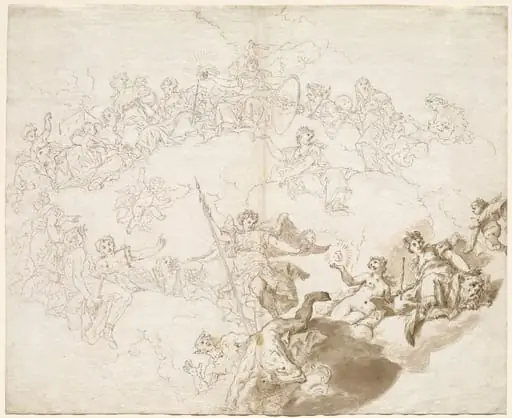 The Triumph of Virtue and Divine Wisdom
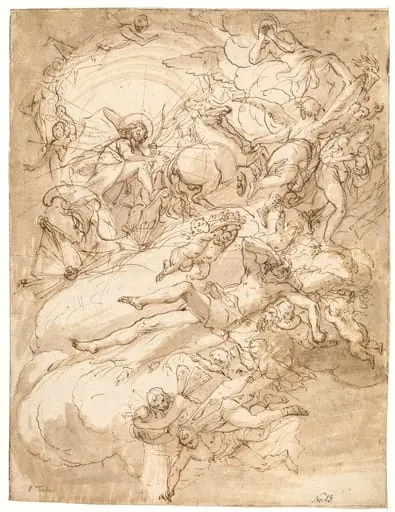 Apollo in his chariot, design for a ceiling painting
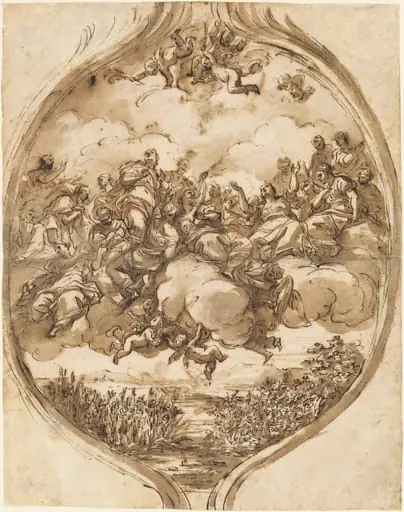 Cloud-Borne Saints above a Lake
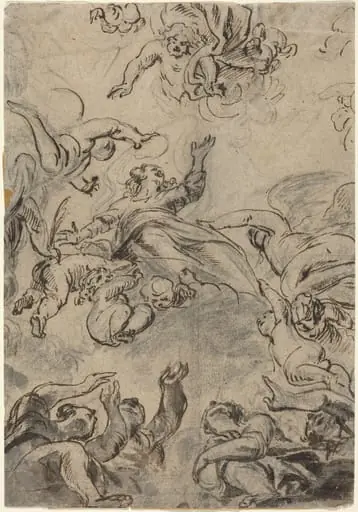 The Assumption of the Virgin
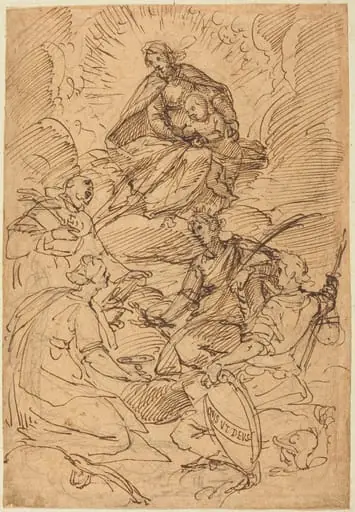 The Madonna and Child in Glory Adored by Saints
![Bradamante Tries to Catch Hold of the Hippogryph [recto], by Jean Honoré Fragonard](https://artifactworldgallery.com/img/jean-honore-fragonard--bradamante-tries-to-catch-hold-of-the-hippogryph-recto--f9c9ee68fd17e997-w320.webp) Bradamante Tries to Catch Hold of the Hippogryph [recto]
Bradamante Tries to Catch Hold of the Hippogryph [recto]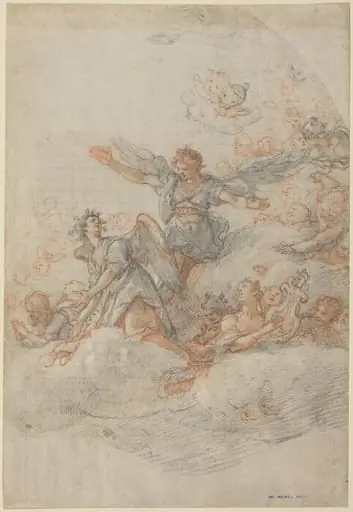 Angels and Putti in the Clouds
 The Stigmatization of Saint Francis
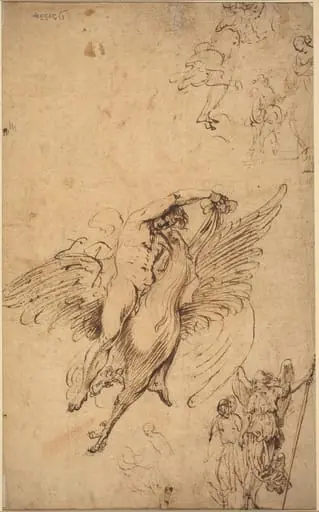 Ganymede