Artwork
Mascarade
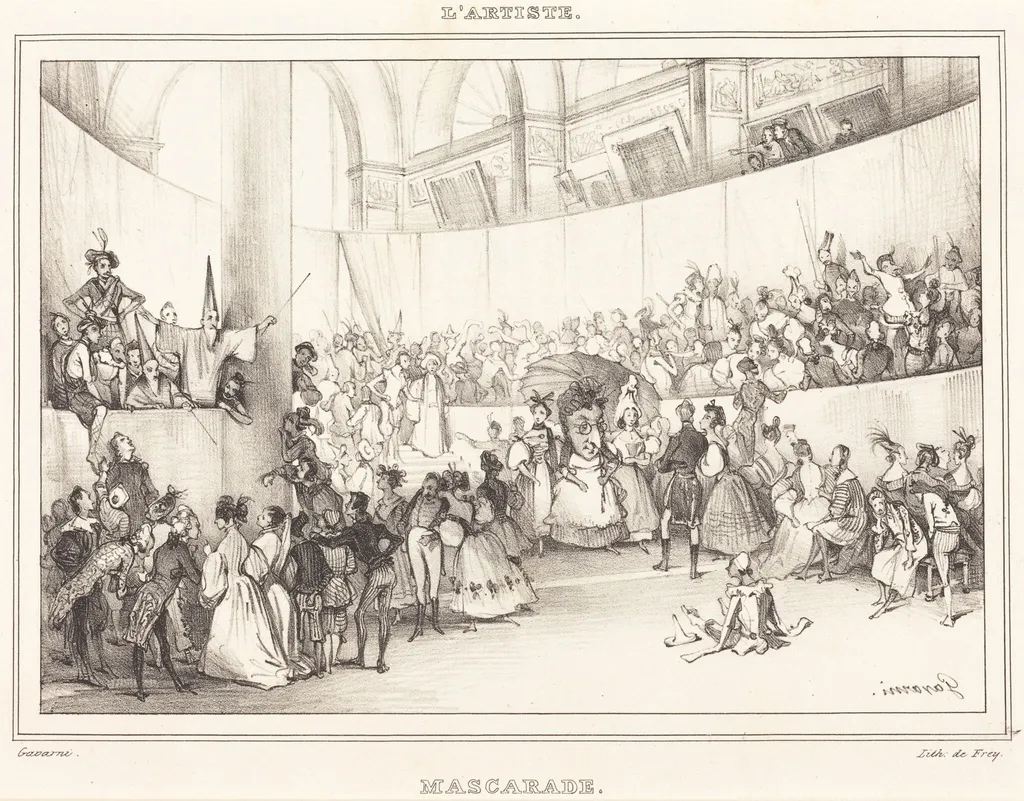
Mascarade is an ink print by the Romanticist artist Paul Gavarni. It dates from 1831 and is held in the collection of the National Gallery of Art.
About this work
Overview
Mascarade is a lithograph created by French illustrator Paul Gavarni (born Sulpice Guillaume Chevalier) circa 1831. The work captures a vibrant, crowded masquerade party within a grand, ornate hall.
Subject & Meaning
The scene likely explores social or theatrical themes, characteristic of Gavarni's focus on urban life and costume during his time. The masquerade setting may comment on or reflect the societal norms and diversities of early 19th-century Paris.
Technique & Style
Executed in lithograph, the piece features quick, expressive lines that convey the dynamism and movement of the party. The style is reminiscent of Gavarni's illustrative approach, emphasizing energy and detail.
History & Provenance
Created around 1831, Mascarade is part of Gavarni's body of work from the early to mid-19th century, for which he was well-known under his pseudonym. Specific provenance details are not provided.
Context
The work reflects Gavarni's engagement with depicting contemporary urban life, likely catering to the public's interest in social scenes and theatrics of the time.
Legacy
While specific legacy details of Mascarade are not provided, it contributes to Gavarni's broader legacy as a prominent French illustrator of his era, known for capturing the essence of urban social life.
Own this work as a print
Artist & collection
Artist
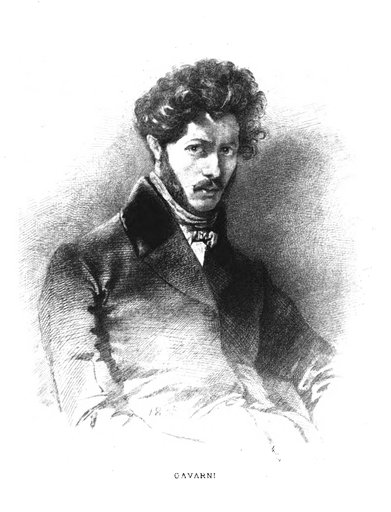
Paul Gavarni was the pen name of Sulpice Guillaume Chevalier, a French illustrator, born in Paris.

- Print Collection
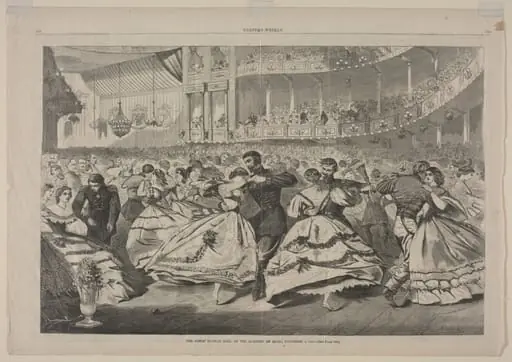 The Great Russian Ball at the Academy of Music, November 5, 1863
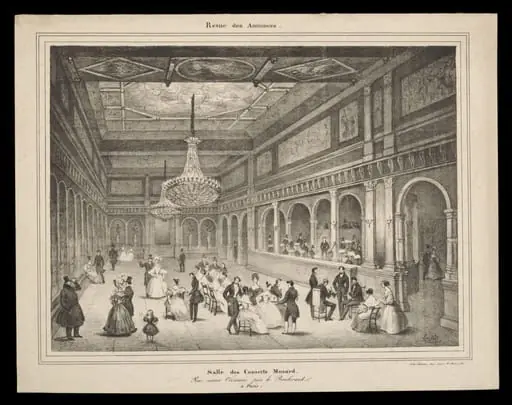 H Beard Print Collection
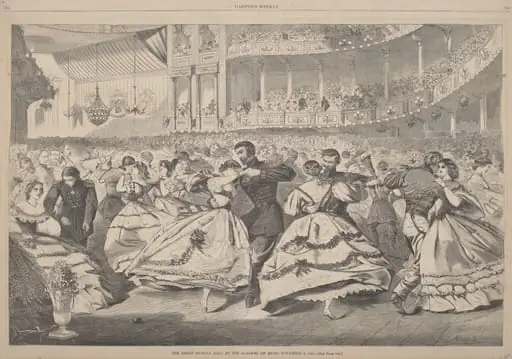 The Great Russian Ball at the Academy of Music, November 5, 1863
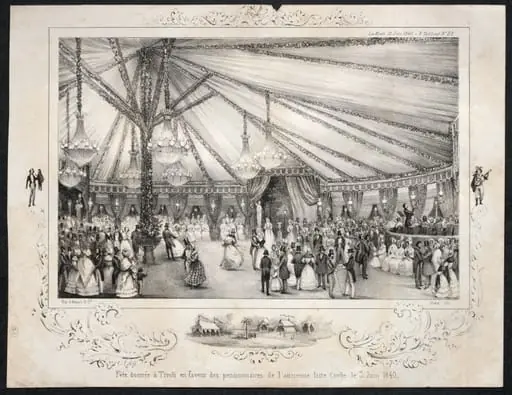 Fête donnée à Tivoli en faveur des pensionnaires de l'ancienne liste civile le 3 Juin 1840
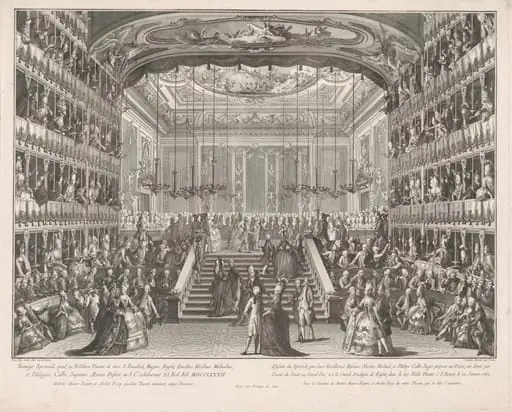 Spectacle in Honor of the Grand Dukes of Russia in the Theater of San Benedetto, 1782
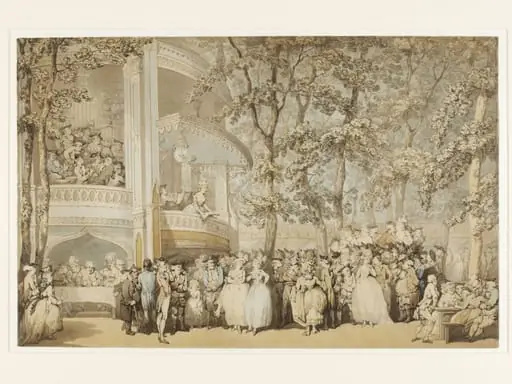 Vauxhall Gardens
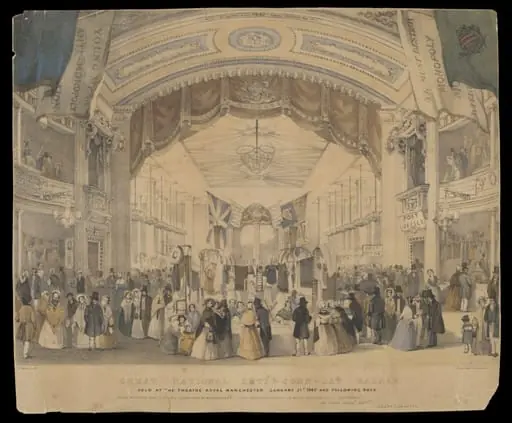 H Beard Print Collection
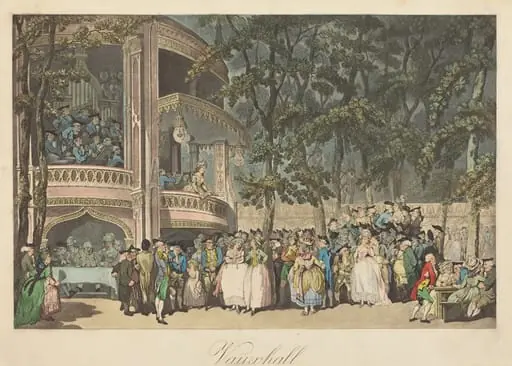 Vauxhall Gardens
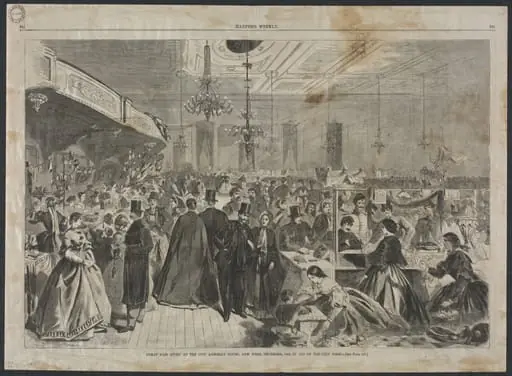 Great Fair Given at the City Assembly Rooms, New York, December, 1861, in Aid of the City Poor
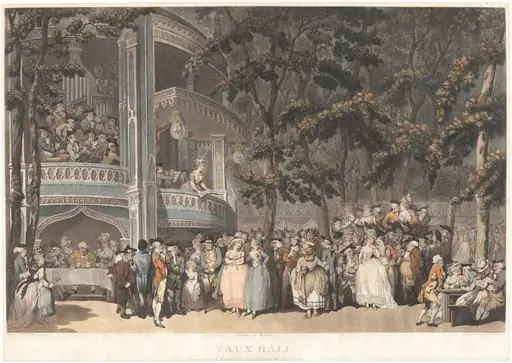 Vauxhall Gardens
 H Beard Print Collection