Artwork
Dealul lui Dobrin
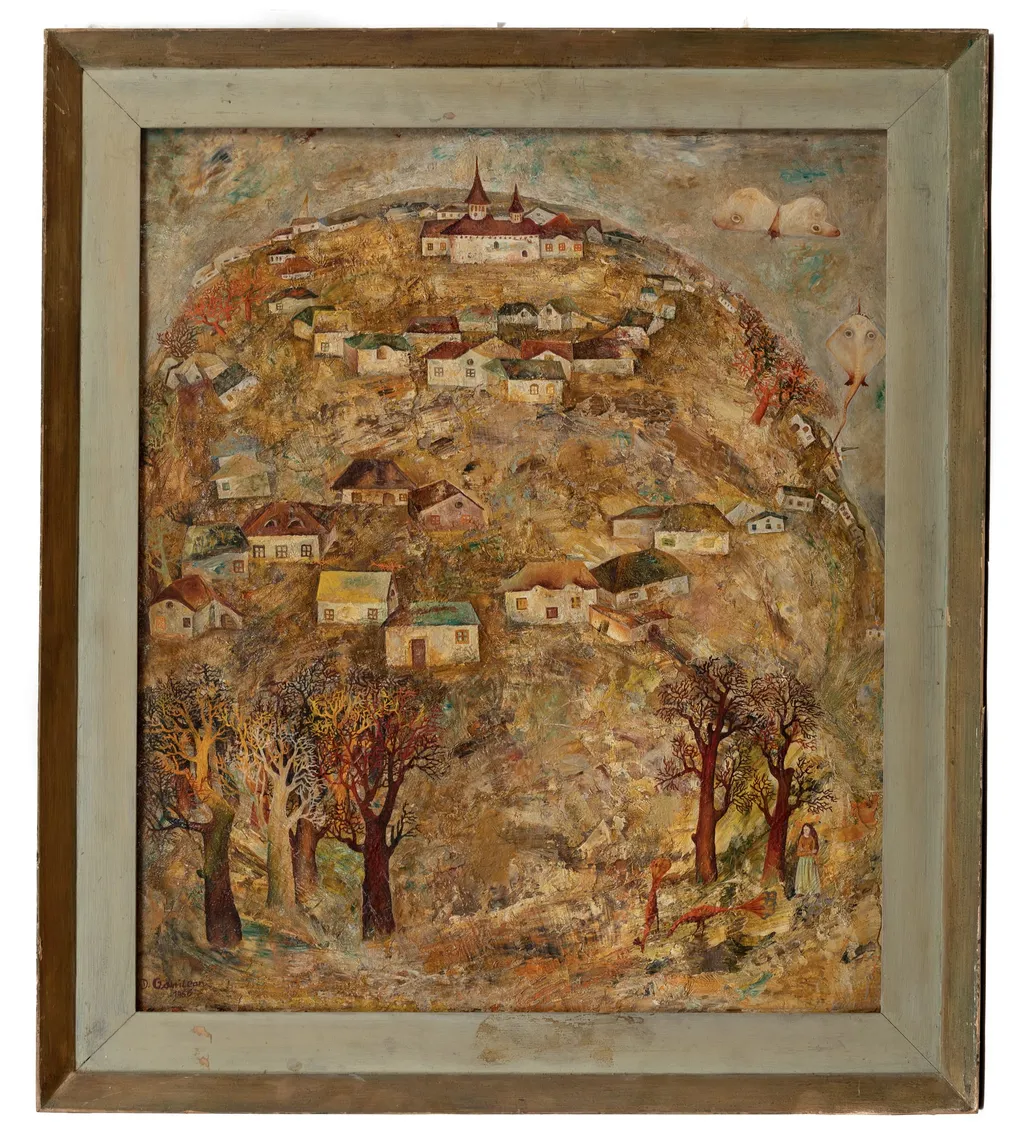
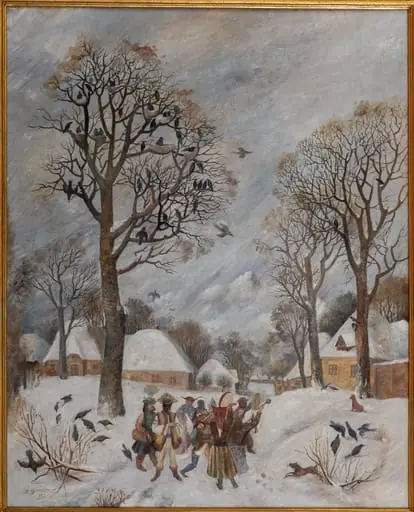
Dealul lui Dobrin is an unspecified painting by Gavrilean Dimitrie. It dates from 1966 and is held in the collection of the Moldova National Museum Complex.
About this work
Overview
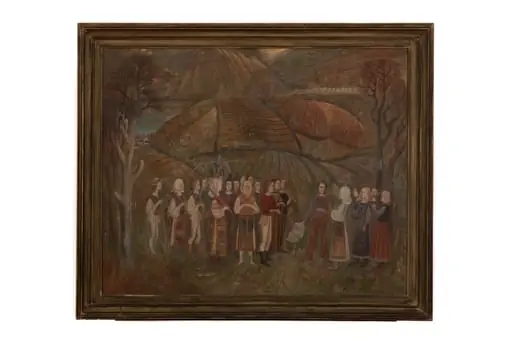
The composition centers on modest dwellings surrounded by vegetation, rendered with a tactile surface that emphasizes physicality over realism.
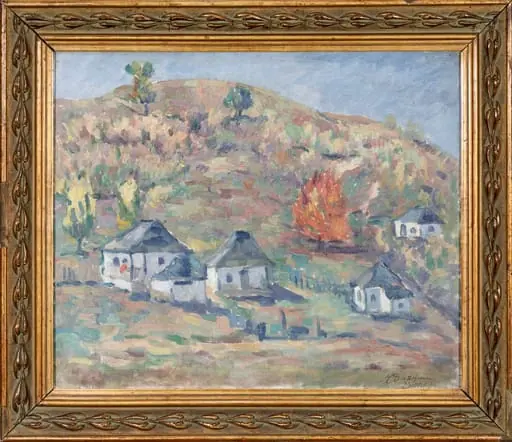
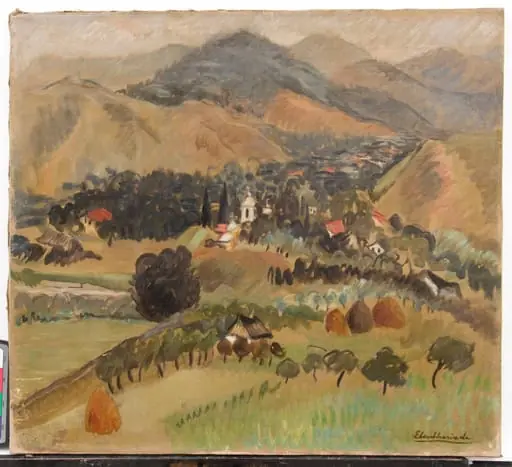
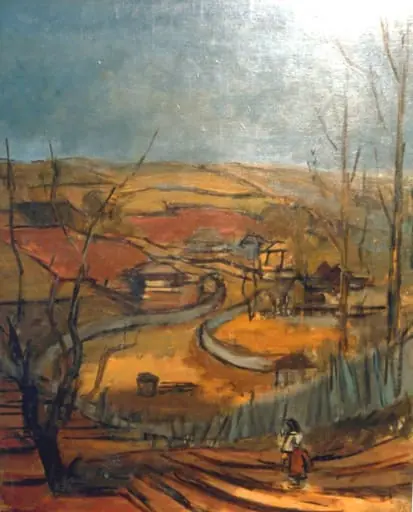
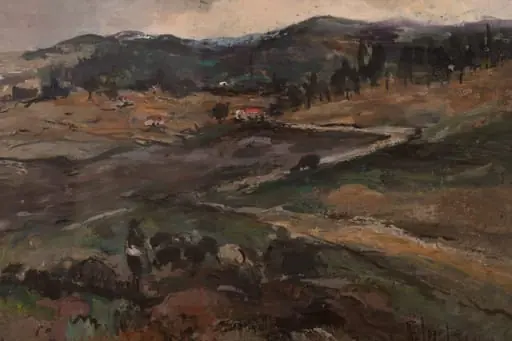
Created in 1966 by Gavrilean Dimitrie, Dealul lui Dobrin is a landscape painting depicting a rural settlement nestled on a sloping terrain. The composition centers on modest dwellings surrounded by vegetation, rendered with a tactile surface that emphasizes physicality over realism. The work stands as a quiet meditation on place, blending observed detail with unconventional elements that disrupt its pastoral tone.
Subject & Meaning
The scene portrays a modest hillside village, its homes clustered among trees in a manner suggesting organic growth rather than planned layout. Two anomalous, eye-like forms hover in the upper right, introducing an enigmatic, almost surreal presence. These elements resist clear interpretation, suggesting inner vision or memory rather than literal representation, subtly challenging the painting’s otherwise grounded subject matter.
Technique & Style
Dimitrie employed impasto to build the terrain and foliage, applying paint thickly with visible brushwork that creates a sculptural surface. The hills and trees emerge through layered ridges of pigment, while the roofs of houses introduce subtle contrasts with brighter hues. This textured approach prioritizes material presence over smooth illusion, aligning the work with expressive, non-idealized traditions of postwar European painting.
History & Provenance
The painting was completed in 1966 during a period of state-sanctioned artistic norms in Romania, yet its idiosyncratic style diverges from official realism. Its early history remains undocumented in public records, and it has not been widely exhibited. The work’s survival and recognition stem largely from private collections and regional archives, where its quiet originality has been preserved outside mainstream narratives.
Context
Produced in mid-1960s Romania, the painting exists in tension with the period’s emphasis on socialist realism. While rural themes were encouraged, the work’s emotional texture and surreal intrusions avoid didacticism. Dimitrie’s approach reflects a personal response to landscape, informed by folk imagery and informal experimentation, offering a subtle counterpoint to state-mandated aesthetics without overt political confrontation.
Legacy
Dealul lui Dobrin has not entered major institutional collections but remains a point of interest among scholars of Romanian modernism. Its combination of regional subject matter with expressive technique has influenced later artists seeking to reconcile local identity with individual vision. The painting endures as a quietly distinctive example of nonconformist practice within a constrained cultural environment.
Artist & collection
Artist
Gavrilean Dimitrie painted scenes of Romanian life in the mid-1900s. His brush captured theaters like Teatrul popular, quiet hills in Dealul lui Dobrin, and printmakers turned to workers and poets such as Tineri…