Artwork
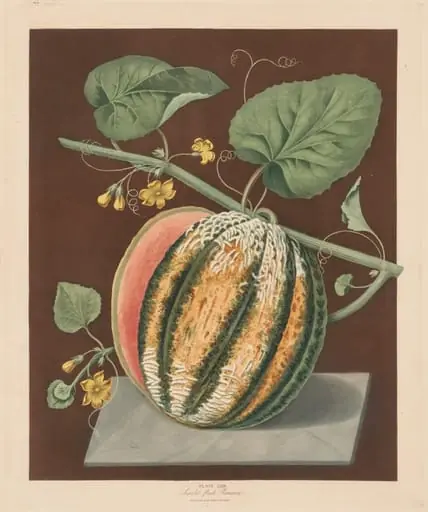
Pomona Britannica: No. 72 - Amicua (Melon)
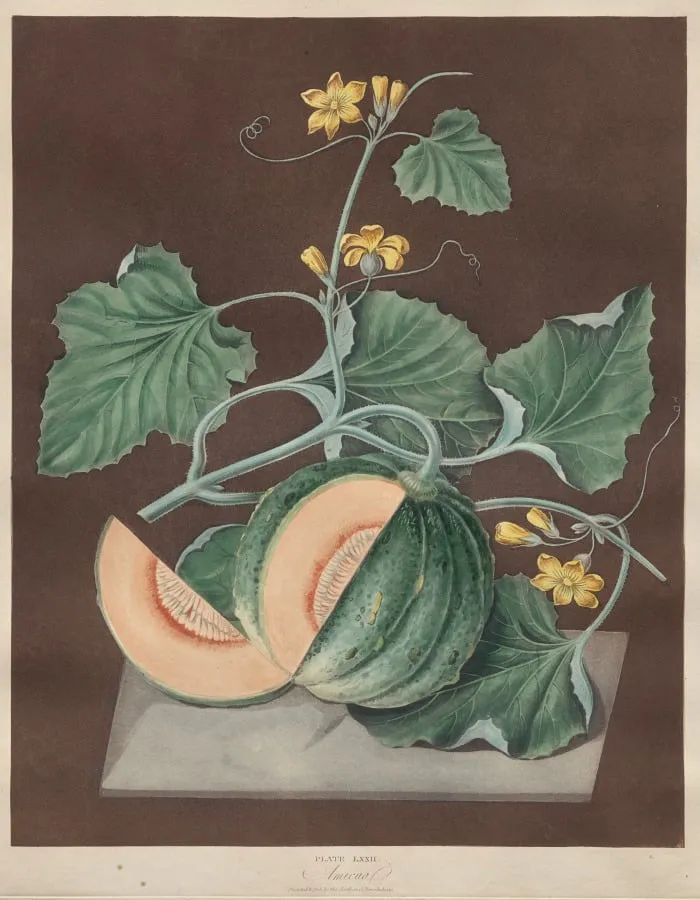
Pomona Britannica: No. 72 - Amicua (Melon) is a print by the Romanticist artist George Brookshaw. It dates from 1812 and is held in the collection of the Cleveland Museum of Art. Pomona Britannica: No.
- Accession no.
- 2020.167
- Credit line
- Nancy F. and Joseph P. Keithley Collection Gift
About this work
Overview
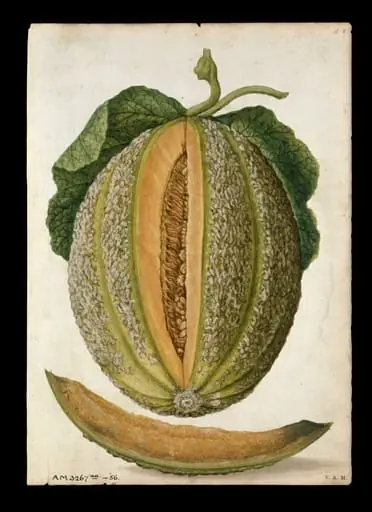
Pomona Britannica: No. 72 - Amicua (Melon) is a color aquatint etching from George Brookshaw’s 1812 publication, an illustrated guide to British fruits. This single plate features a life-sized, detailed representation of a melon, including its flower, leaves, and interior, rendered in precise, lifelike detail.
Subject & Meaning
The subject, a ripe Amicua melon, is depicted sliced, showcasing its orange flesh and seeds. The image served an educational purpose, aiding in the identification and classification of fruits for the English gentry, reflecting the volume’s pomological focus.
Technique & Style
Executed using color aquatint etching with hand-painted highlights, the print exhibits meticulous attention to detail, including the subtle rendering of the melon’s rind veins. The style aligns with realistic botanical illustration, akin to the soft, nuanced effects of sfumato.
History & Provenance
Created for Pomona Britannica in 1812, the melon model was likely sourced from the Royal Gardens at Hampton Court or Kensington Gardens, reflecting Brookshaw’s reliance on these esteemed collections for accuracy.
Context
As part of Pomona Britannica, this print was integral to the libraries of cultured English gentlemen in the early 19th century, catering to their interest in horticulture and scientific classification.
Artist & collection
Artist
George Brookshaw (c. 1751–1823), also known as G. Brown, was an English painter and illustrator from London. His early career was spent as a London cabinet-maker specializing in painted furniture, often with floral…

![The Botanical Magazine or Flower Garden Displayed: Plate 892, Althaea Flexuosa. Seringapatam A Hollyhock . [Althea rosea], by Francis Sansom](https://artifactworldgallery.com/img/francis-sansom--the-botanical-magazine-or-flower-garden-displayed-plate-892--4abb4a5b7cb4bcd5-w320.webp)