Artwork
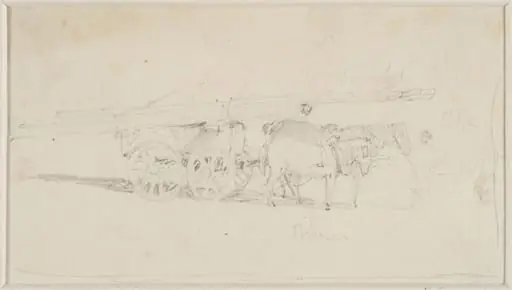
An Indian bullock and cart
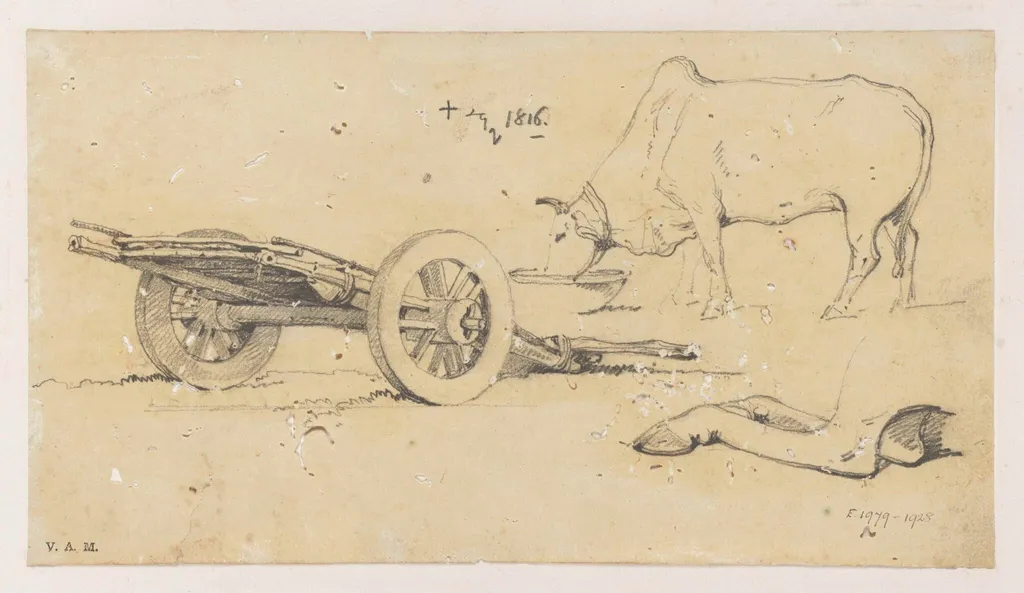
An Indian bullock and cart is a drawing by the Romanticist artist George Chinnery. It dates from 6 and is held in the collection of the Victoria and Albert Museum.
About this work
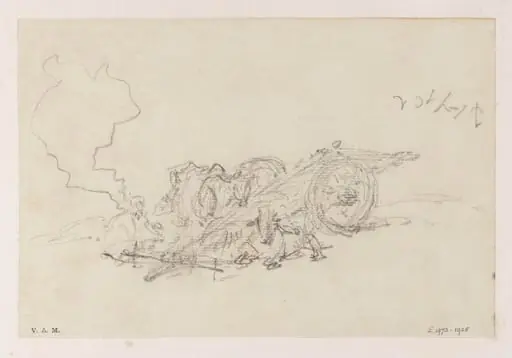
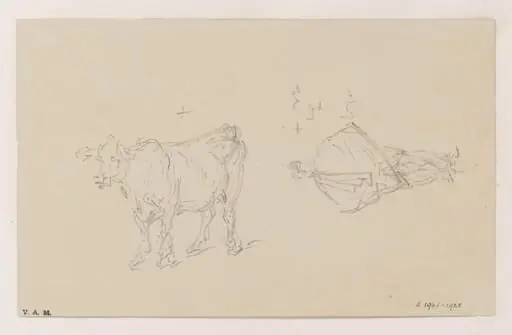
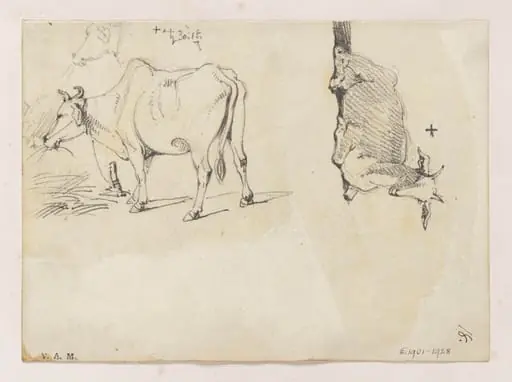
George Chinnery sketched this drawing in 1816. A two-wheeled cart and a bullock drinking from a bowl fill the sheet. Only the bullock’s hind legs show more detail.
Chinnery worked in Macau at the time, far from his usual British subjects. He used Romanticism’s free, quick lines to capture everyday life.
Next time you’re in London, look up the Victoria and Albert Museum.
Overview
This drawing, created by George Chinnery in 1816, depicts a simple rural scene from India. The work showcases Chinnery's ability to capture everyday life using a range of drawing techniques.
Subject & Meaning
The drawing features a two-wheeled cart and a bullock drinking from a bowl, with the animal's hind legs rendered in more detail. The scene is a representation of rural Indian life, observed by Chinnery during his travels.
Technique & Style
Chinnery employed the free and rapid lines characteristic of Romanticism to capture the scene. This style allowed him to convey a sense of spontaneity and movement in his depiction of the cart and bullock.
History & Provenance
The drawing is now part of the collection at the Victoria and Albert Museum in London. Chinnery created it while working in Macau, a location that was distant from his typical British subjects.
Artist & collection
Artist
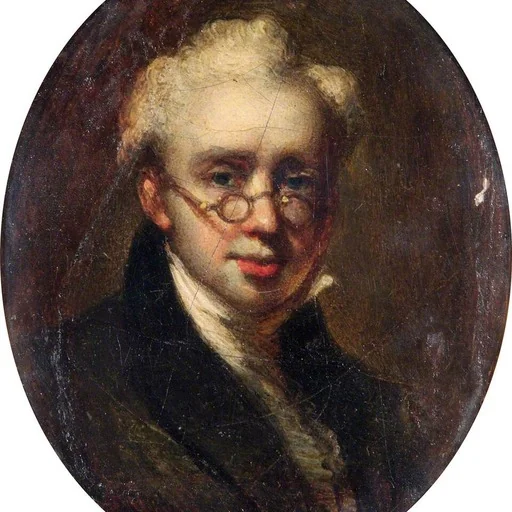
George Chinnery (Chinese: 錢納利; 5 January 1774 – 30 May 1852) was an English painter who spent most of his life in Asia, especially India and southern China.