Artwork
Portrait of Dmitry S. Dokhturov (1756/59-1816)
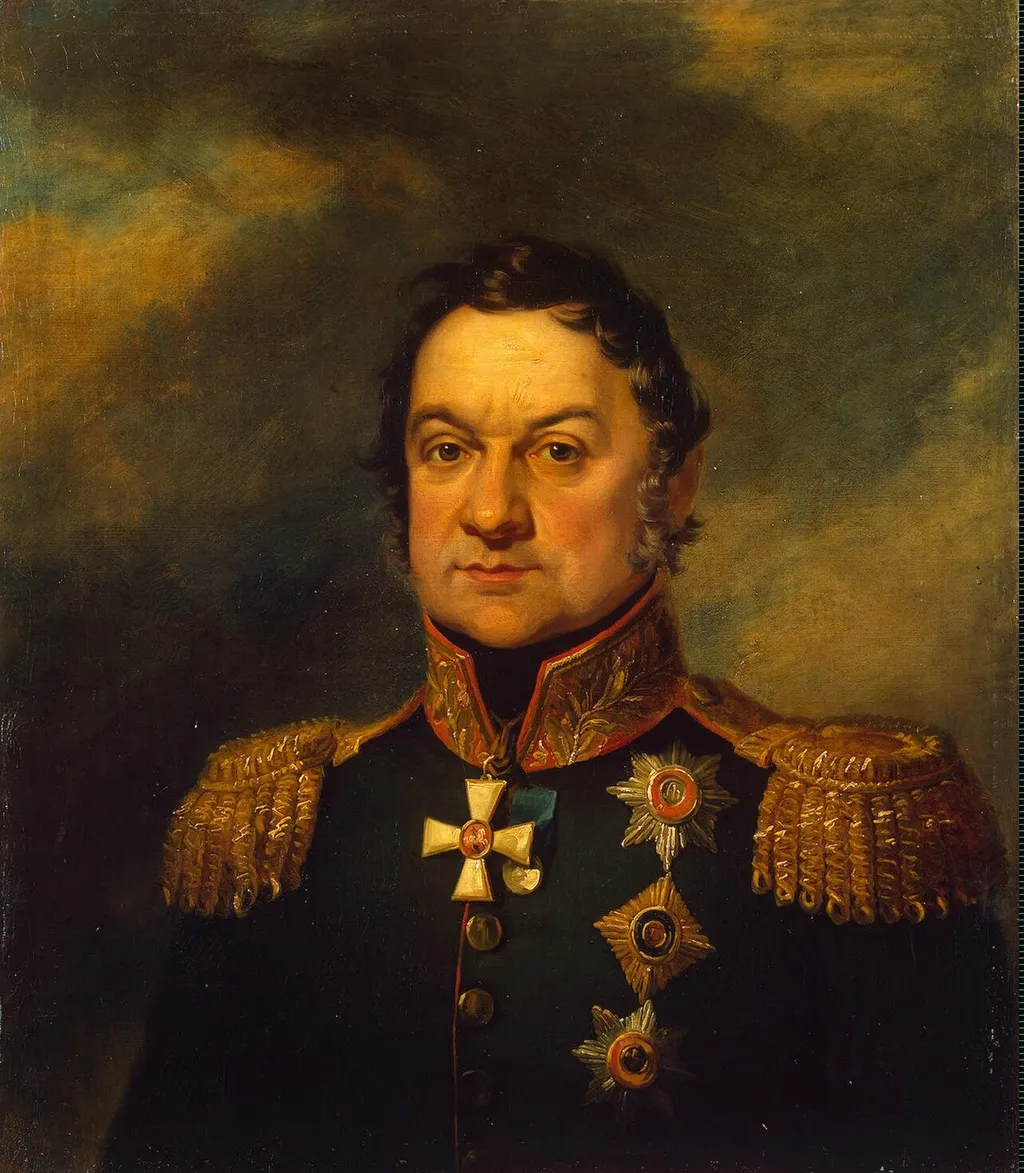
Portrait of Dmitry S. Dokhturov (1756/59-1816) is an oil painting by the British Romanticist artist George Dawe. It dates from 1819 and is held in the collection of the Hermitage Museum. Portrait of Dmitry S.
About this work
Overview
Dokhturov (1756/59-1816) is an oil on canvas painting by George Dawe and his workshop, dated to 1819.
Portrait of Dmitry S. Dokhturov (1756/59-1816) is an oil on canvas painting by George Dawe and his workshop, dated to 1819. The artwork measures 70 by 62.5 centimeters and is classified as a portrait. It is currently held in the State Hermitage Museum in St. Petersburg, where it is cataloged with the accession number 39079. The painting is part of the Military Gallery of the Winter Palace, a significant commission that commemorates Russian military leaders, and it depicts the Russian general Dmitry Sergeyevich Dokhturov.
Subject & Meaning
The painting portrays Dmitry Sergeyevich Dokhturov, a Russian general who lived from 1756 or 1759 to 1816. He is shown as a bust-length figure centered against a dark, atmospheric background, facing forward with his head slightly turned. He wears a dark military coat with a high collar trimmed in red and gold embroidery, large gold epaulettes with fringed detailing, and round buttons down the front. His chest displays several military decorations, including a cross-shaped medal with a blue ribbon at the collar and three star-shaped badges arranged vertically on the left side of his coat. The iconography emphasizes his high military rank and distinguished service through the detailed rendering of his uniform and honors.
Technique & Style
Executed in oil on canvas, the portrait demonstrates a deliberate contrast in brushwork. The face is rendered with smooth and refined handling, allowing for subtle modeling as light falls evenly across the subject's features and chest. In contrast, the background and the metallic elements of the uniform feature more textured handling. The background is indistinct, composed of brown, green, and golden tones with soft transitions between warm and cool dark hues, creating an atmospheric setting that pushes the illuminated figure forward. The material application varies to distinguish the softness of skin from the reflective quality of gold embroidery and epaulettes.
History & Provenance
The portrait was created in 1819, following the death of Dmitry Dokhturov in 1816. Sources indicate the composition was derived from an engraving by Alexei Agapovich Osipov made around 1817. The painting is attributed to George Dawe and his workshop, reflecting the collaborative nature of the broader Military Gallery commission. The work was created no later than 1825 for the Military Gallery of the Winter Palace. It remains in the collection of the State Hermitage Museum in St. Petersburg, maintaining its original institutional context.
Context
The portrait belongs to the Military Gallery of the Winter Palace, a vast project conceived to immortalize the generals who played pivotal roles in the Napoleonic Wars. George Dawe was commissioned to produce this extensive gallery, which necessitated the heavy involvement of his workshop to meet the scale of the project. Because many of the subjects were deceased by the time of the commission, Dawe and his assistants frequently relied on existing engravings and prior portraits as source material, as evidenced by the use of the Osipov engraving for this likeness of Dokhturov. This practice was standard for the gallery's creation.
Artist & collection
Artist
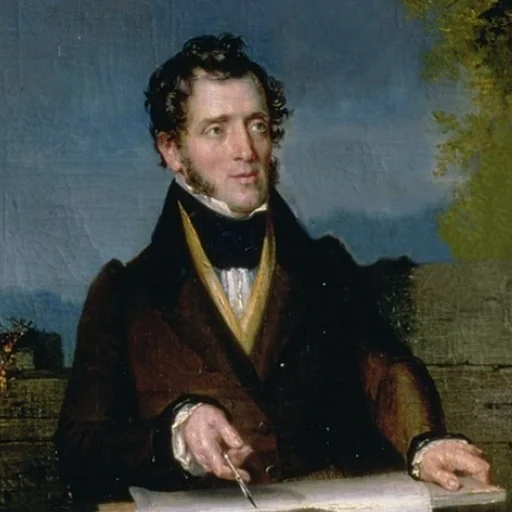
George Dawe (6 February 1781 – 15 October 1829) was an English portraitist who painted 329 portraits of Russian generals active during Napoleon's invasion of Russia for the Military Gallery of the Winter Palace.

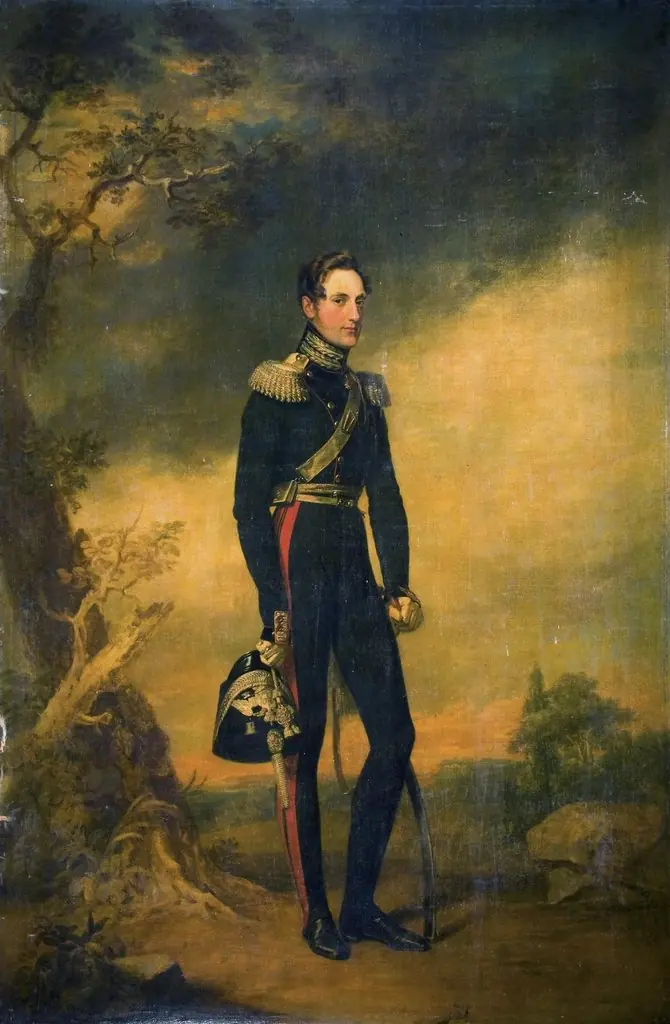 Portrait of Grand Duke Nikolai Pavlovich
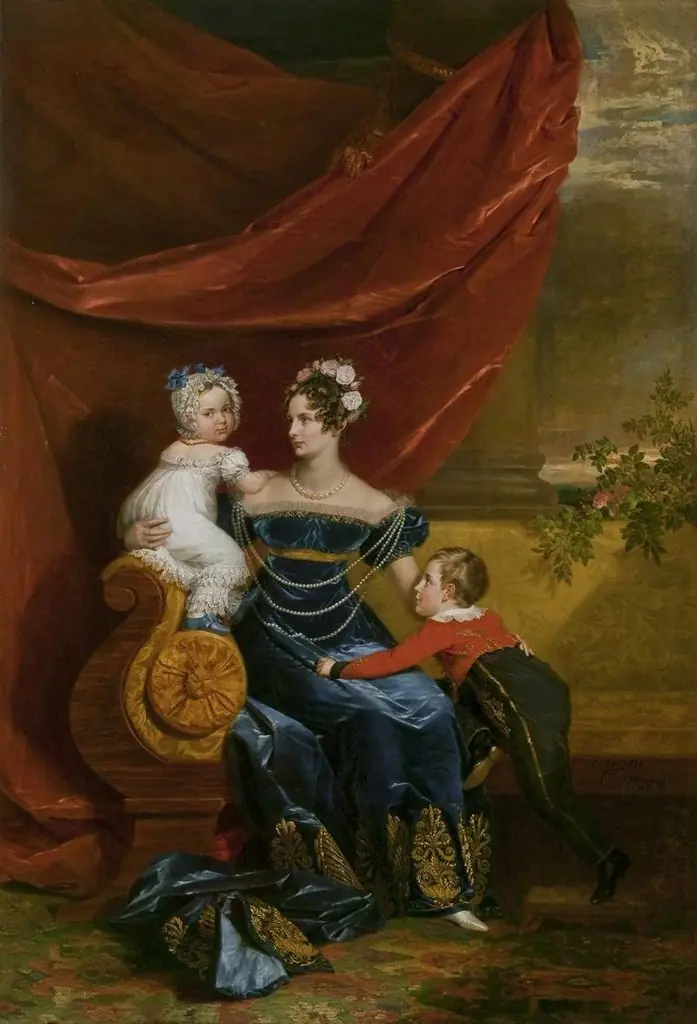 Portrait of Grand Duchess Alexandra Fiodorovna with Children
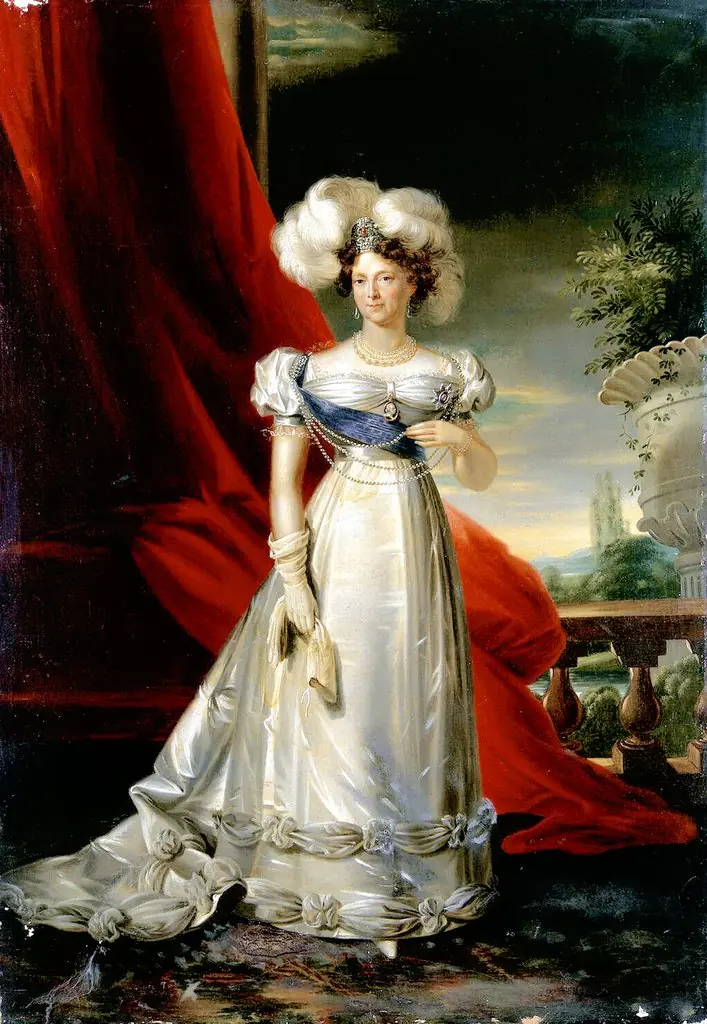 Portrait of the Empress Dowager Maria Feodorovna
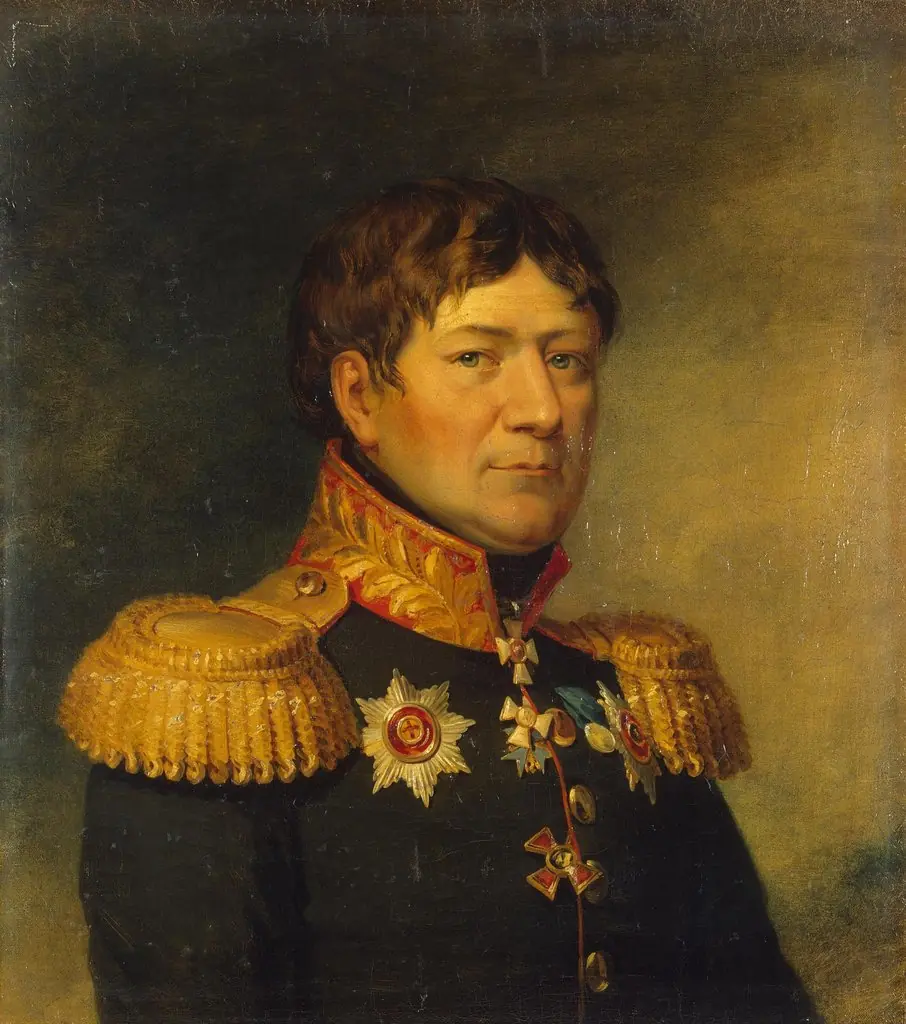 Portrait of Yegor M. Pillar (1767-1830)
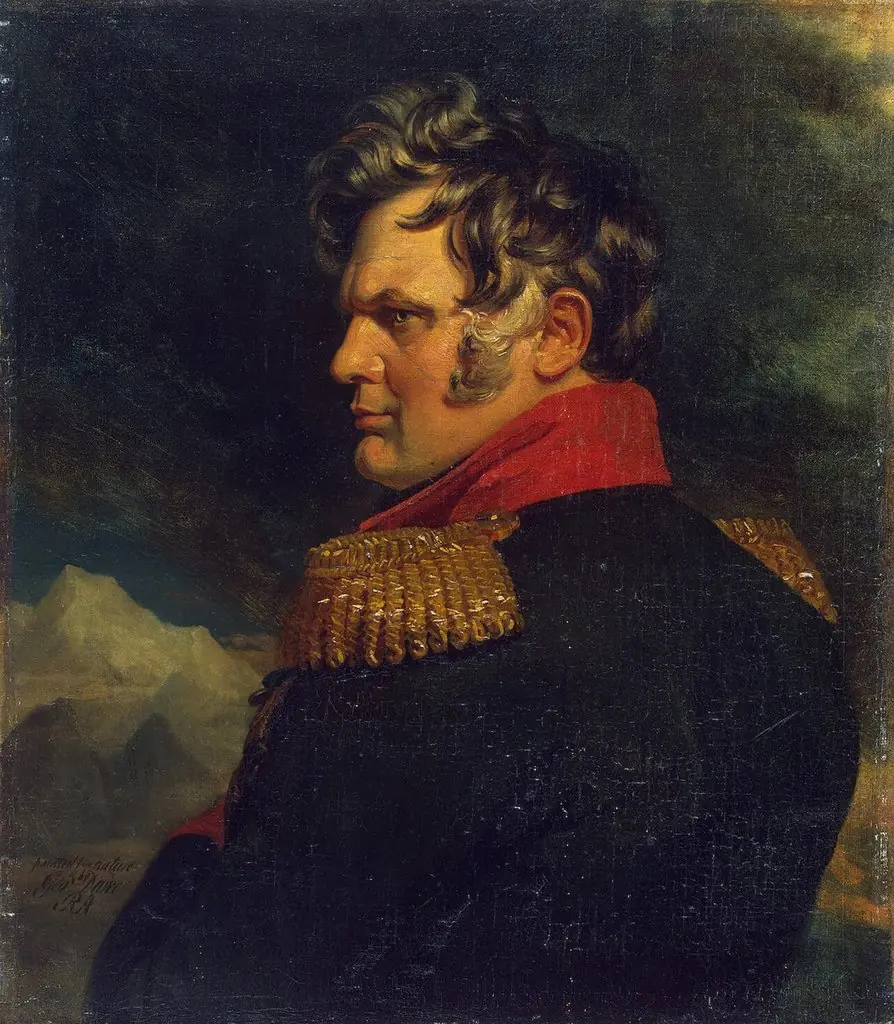 Portrait of Alexei P. Yermolov (1772/77-1861)
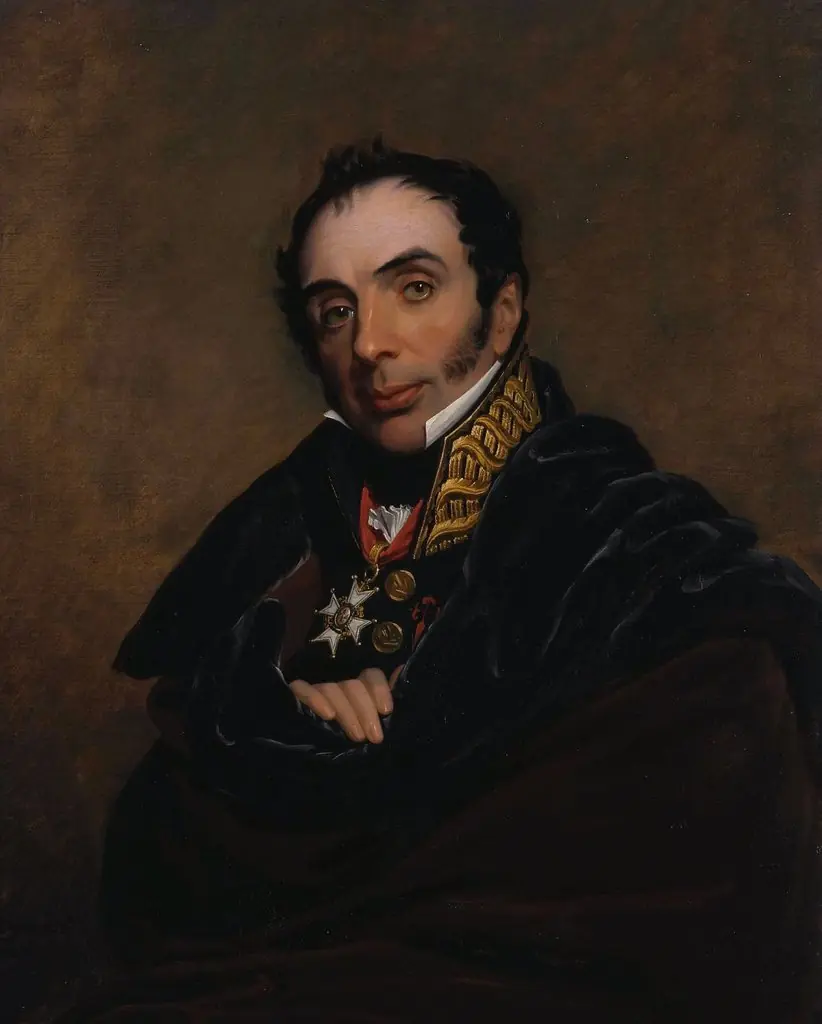 Portrait of Miguel Ricardo de Alava
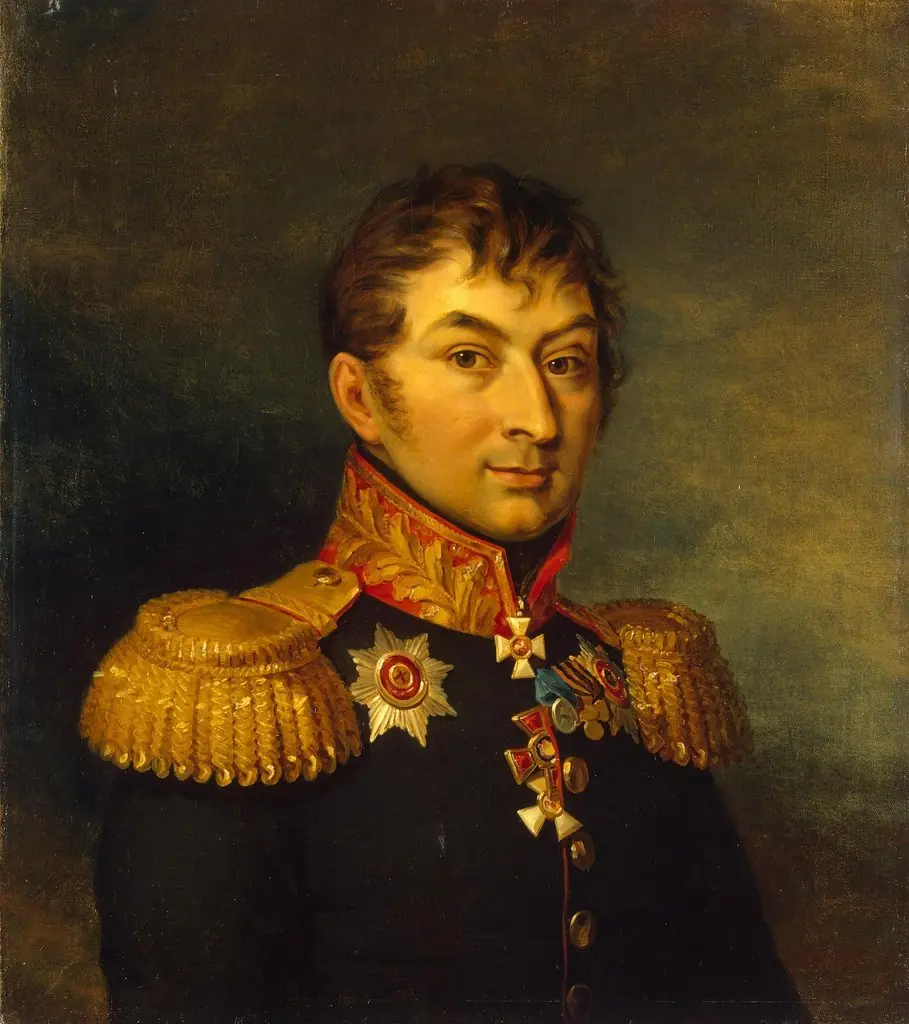 Portrait of Ivan D. Panchulidzev (1759-1815) (1st)
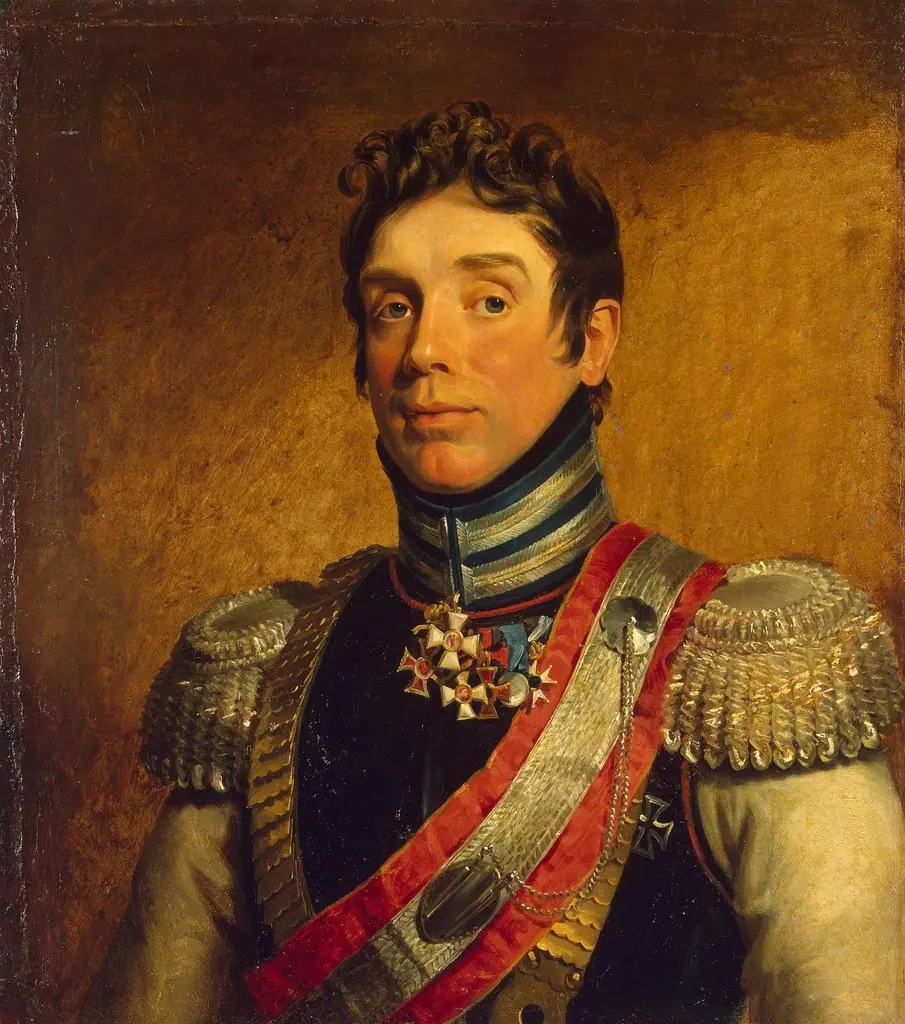 Portrait of Karl V. Budberg (1774-1829)
- Portrait of Vasily S. Rakhmanov (1764-1816)
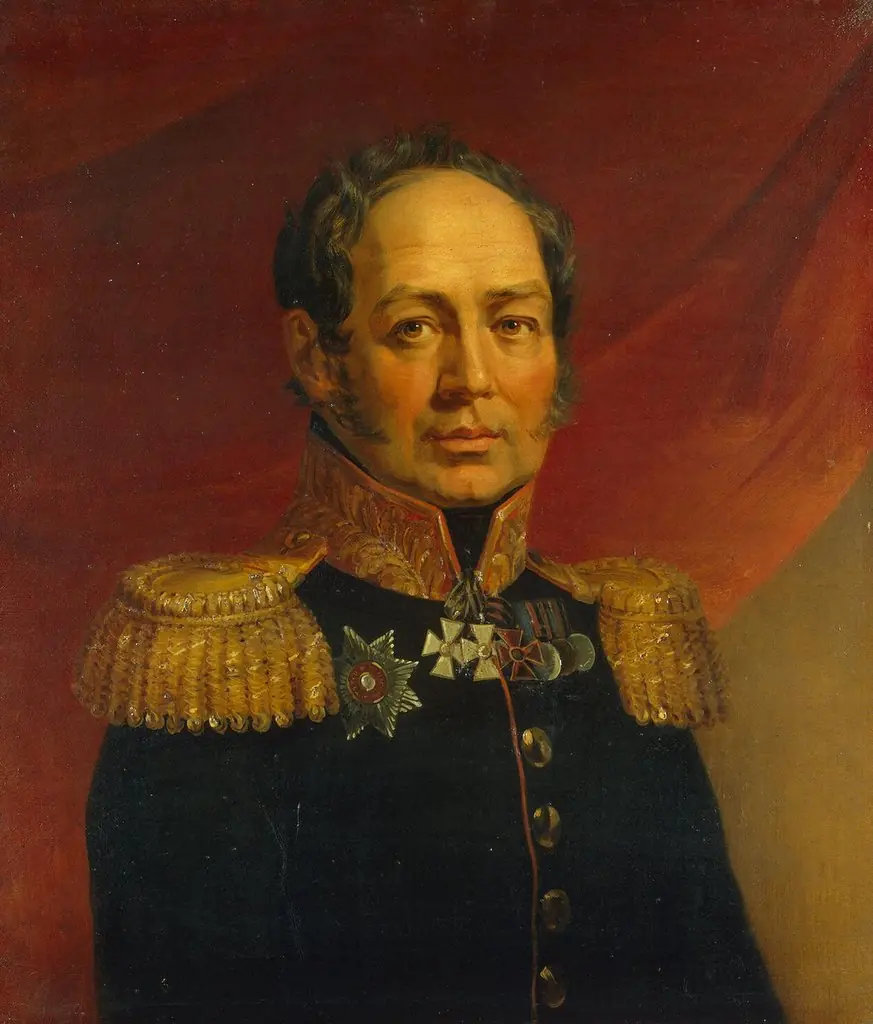 Portrait of Dmitry V. Lyalin (1772-1847/48)
 Portrait of Nikolai V. Dekhteryov (1775-1831)
 Portrait of Mikhail D. Balk (1764-1818)
 Portrait of Andrey I. Gorchakov (1779-1855)
 Portrait of Dmitry L. Ignatyev (1771-1833)
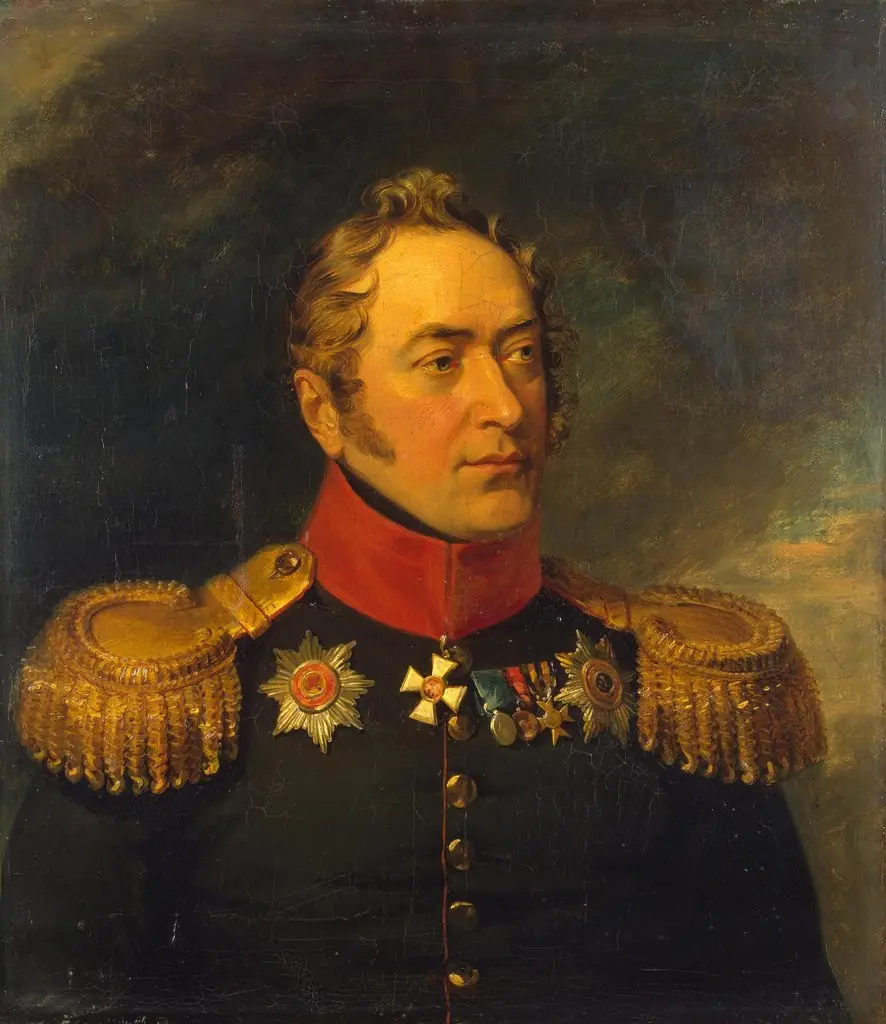 Portrait of Nikolai N. Khovansky (1777-1837)
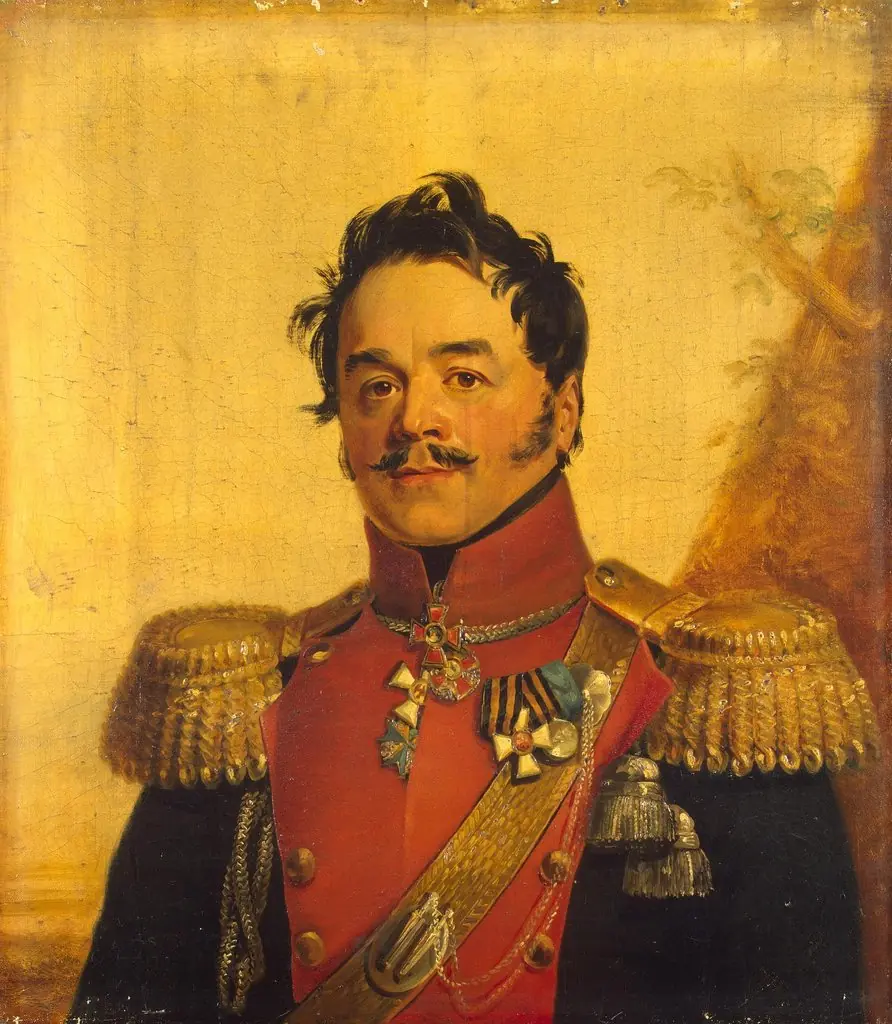 Portrait of Nikolai G. Shcherbatov (1777-1845)