Artwork
Portrait of Nikolai G. Shcherbatov (1777-1845)
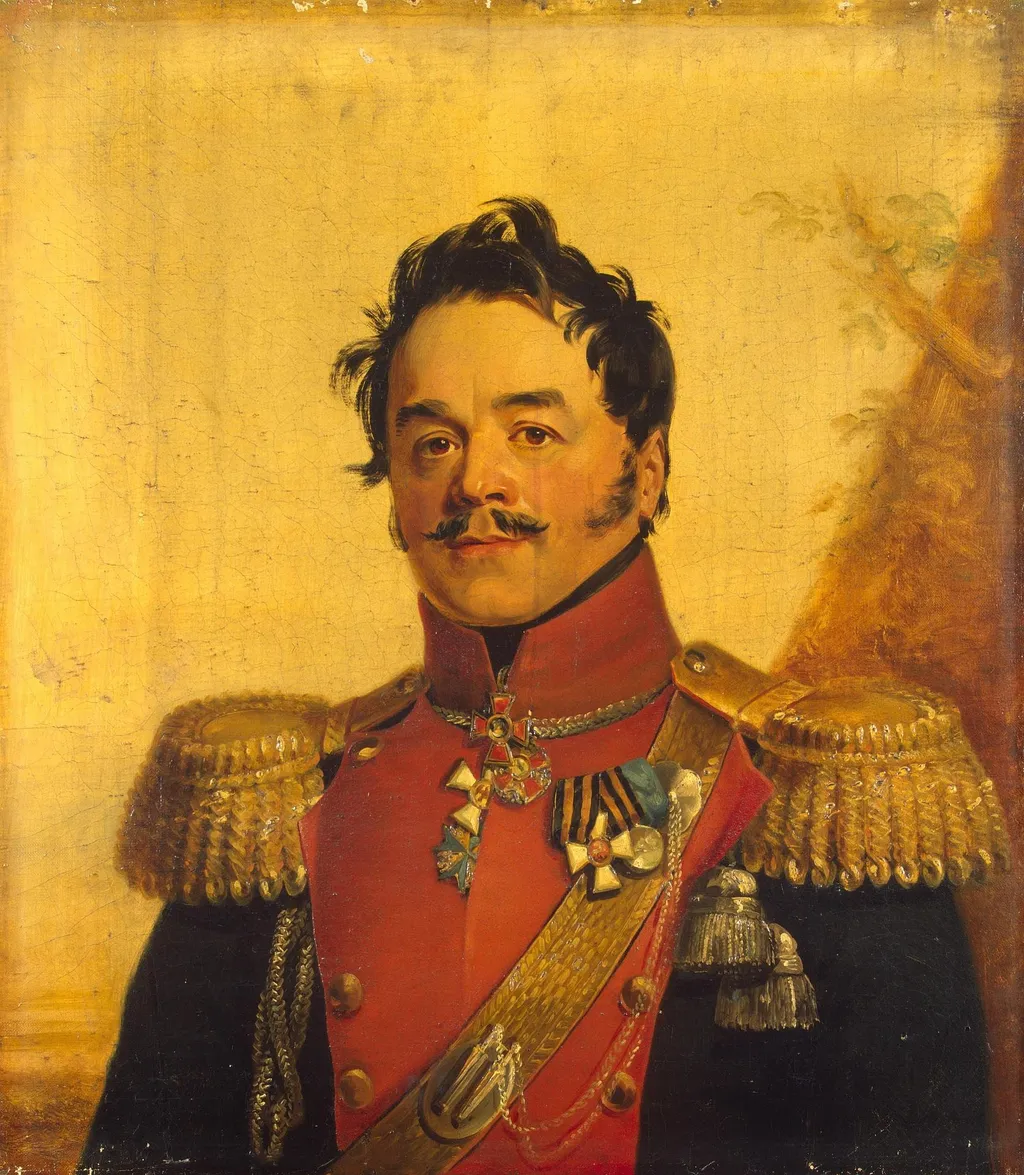
Portrait of Nikolai G. Shcherbatov (1777-1845) is an oil painting by the Neoclassicist artist Unknown. It dates from 1822 and is held in the collection of the Hermitage Museum. The oil painting portrays Nikolai G.
About this work
Overview
Commissioned by Emperor Alexander I, the painting forms part of a monumental gallery project commemorating prominent Russian military commanders.
Portrait of Nikolai G. Shcherbatov (1777-1845) is an oil on canvas painting created circa 1822 by George Dawe and his workshop. Measuring 70 by 62.5 cm, the artwork is part of the Military Gallery of the Winter Palace in the State Hermitage Museum, St. Petersburg, where it holds the inventory number GE-8078. The half-length portrait depicts Prince Nikolai Grigoryevich Shcherbatov, a lieutenant general who served in the Napoleonic Wars, wearing the uniform of the 2nd Ukrainian Uhlan Regiment. Commissioned by Emperor Alexander I, the painting forms part of a monumental gallery project commemorating prominent Russian military commanders.
Subject & Meaning
The painting portrays Prince Nikolai Grigoryevich Shcherbatov as a distinguished military commander, his status communicated through meticulous uniform details and honors. He wears the general's uniform of the 2nd Ukrainian Uhlan Regiment, introduced in 1818, featuring a high red collar, red chest panel, dark sleeves, and gold epaulettes with dense fringe. A gold sash, likely the lanyard or cartridge belt strap, crosses his chest. His decorations underscore his service: at his neck are the crosses of the Order of St. Vladimir, 3rd class, and the Order of St. Anna, 2nd class. Along his coat front are the crosses of the Prussian Order of the Red Eagle, 2nd class, and the Pour le Merite. On his right breast is the cross of the Order of St. George, 4th class, and the silver medal In Memory of the Patriotic War of 1812 on the St. Andrew ribbon. An inscription on the reverse reads Pce Scherbatof, while the frame inscription erroneously identifies his first initial as I instead of G.
Technique & Style
Executed in oil on canvas, the portrait demonstrates the collaborative production methods of Dawe's workshop, which often divided labor between the master and his assistants. The brushwork varies across the composition: smooth and blended handling defines the face, ensuring a lifelike and polished representation of the sitter, while more textured and impastoed brushwork articulates the gold elements, such as the epaulettes, and the fabric fringe, providing a tactile contrast. Light falls evenly from the left, illuminating Shcherbatov's face and chest against a warm, golden background. A draped curtain is visible at the right edge, adding a traditional portrait convention. The surface exhibits extensive craquelure throughout, indicating the painting's age and material history.
History & Provenance
The Committee of the Main Staff approved Shcherbatov for inclusion in the Military Gallery on August 7, 1820, and Alexander I ordered the portrait on March 25, 1822. At the time, Shcherbatov was retired and living in Moscow, and it remains unknown whether he traveled to St. Petersburg to sit for Dawe or sent an existing portrait for copying. Dawe received his payment on April 4, 1824, and the finished canvas was accepted into the Hermitage on September 7, 1825. The painting has remained in the State Hermitage Museum collection since its formal acceptance, where it continues to be housed as part of the Military Gallery.
Context
This portrait belongs to George Dawe's massive commission to paint over 300 portraits of generals who participated in the Napoleonic Wars for the Military Gallery of the Winter Palace. Dawe, a British painter, relied heavily on his workshop to meet the enormous demand of this state project. Shcherbatov's military record justified his inclusion; he began the 1812 campaign as a colonel and chief of the 2nd Ukrainian Regular Cossack Regiment, conducting raids on French rear communications in the Duchy of Warsaw. During the 1813 foreign campaigns, he fought in Poland and Germany, earning promotion to major general for his actions at the crossing of the Bobr River, and participated in the blockades of Dresden and Mainz. In the 1814 campaign in France, he was wounded during the siege of Metz and concluded his service before the walls of Paris.
Artist & collection









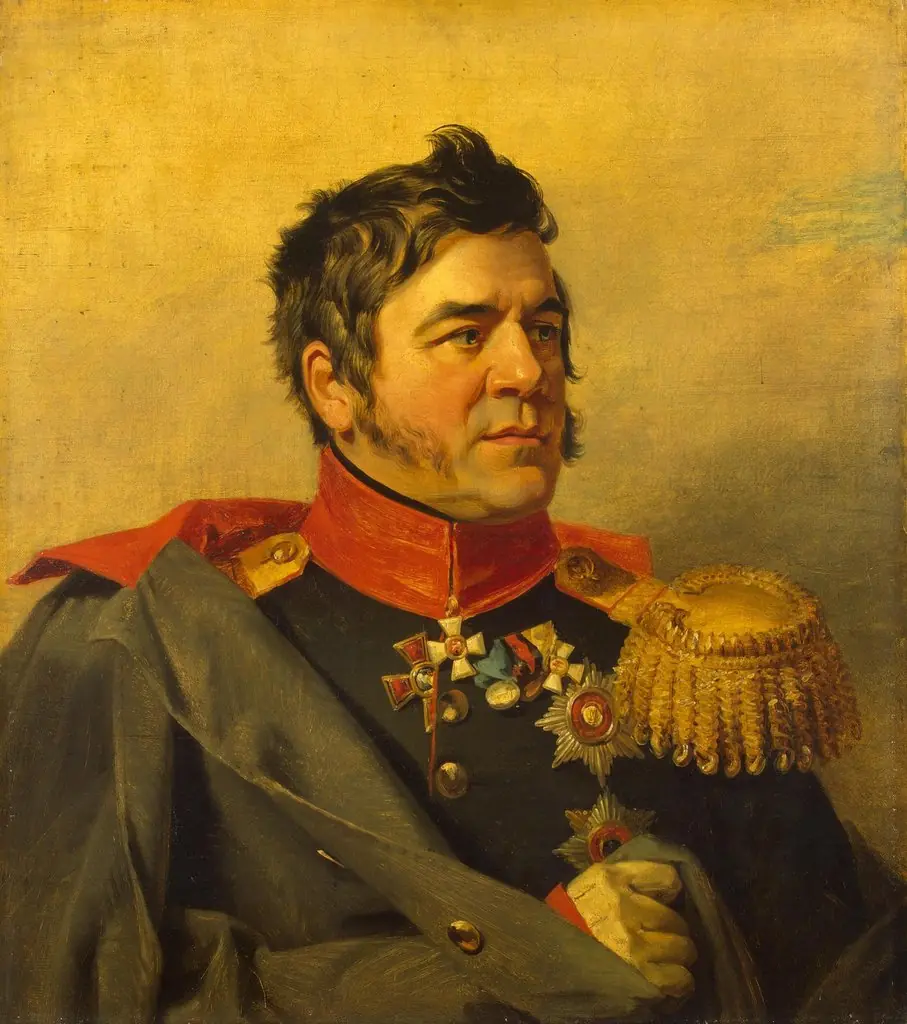
- Portrait of Ivan L. Shakhovskiy (1777-1860)
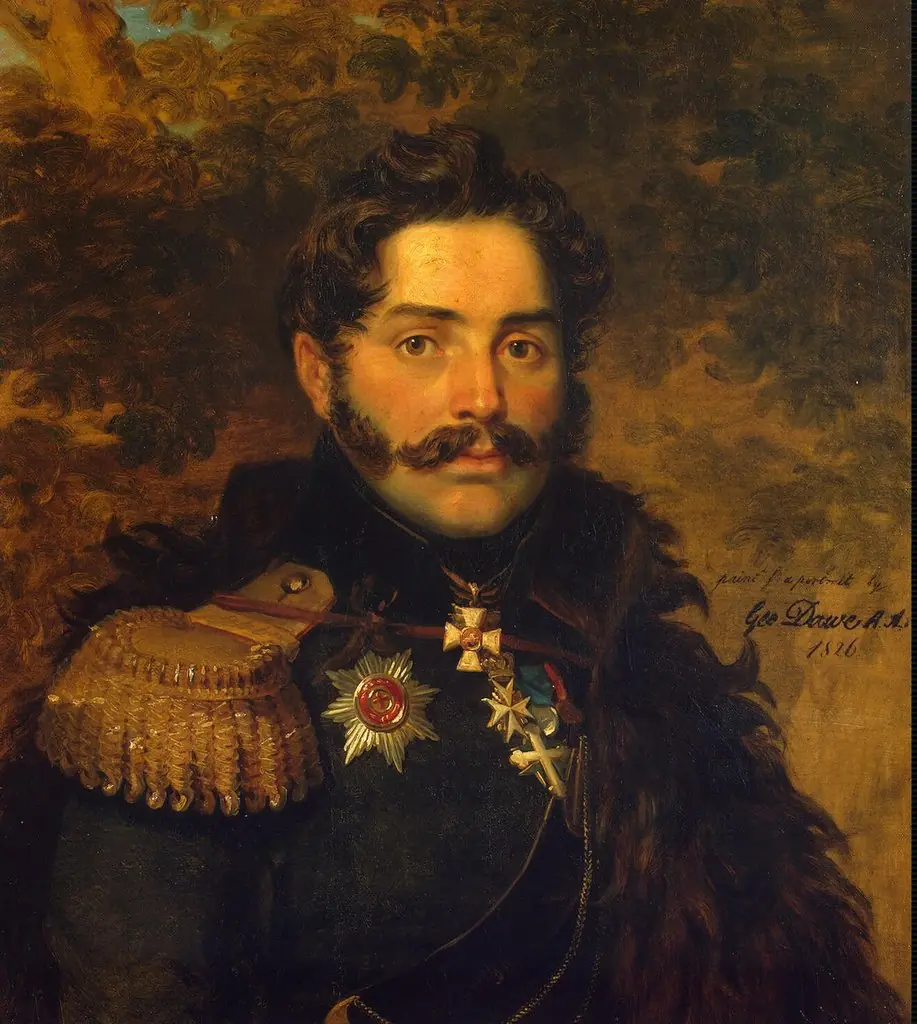 Portrait of Alexander F. Shcherbatov (1773-1817)
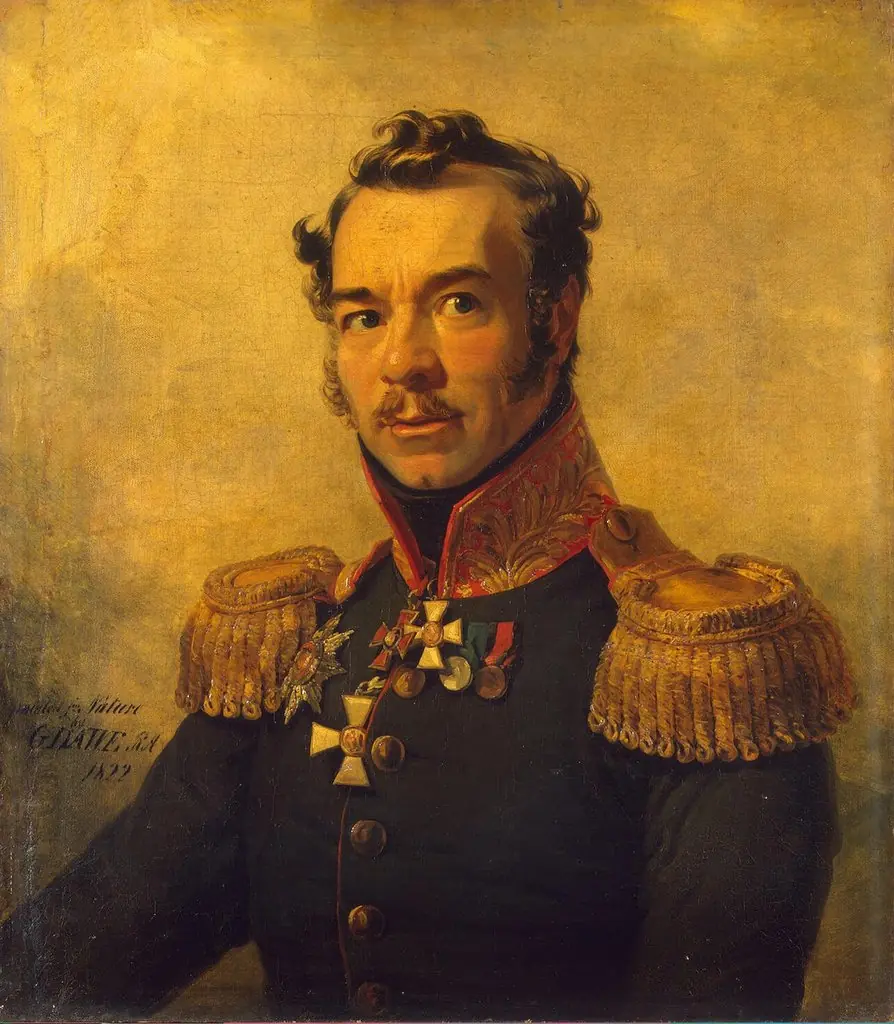 Portrait of Dmitry M. Yuzefovich (1777-1821)
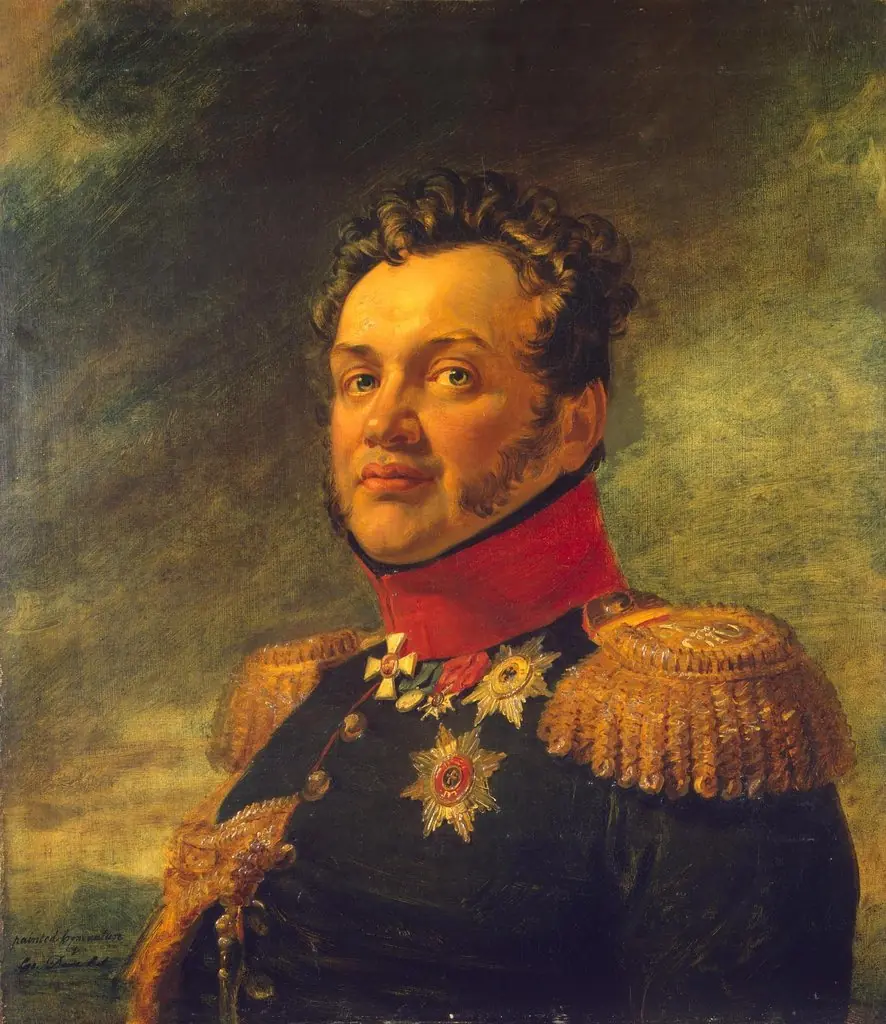 Portrait of Nikolai G. Repnin-Volkonsky (1778-1845)
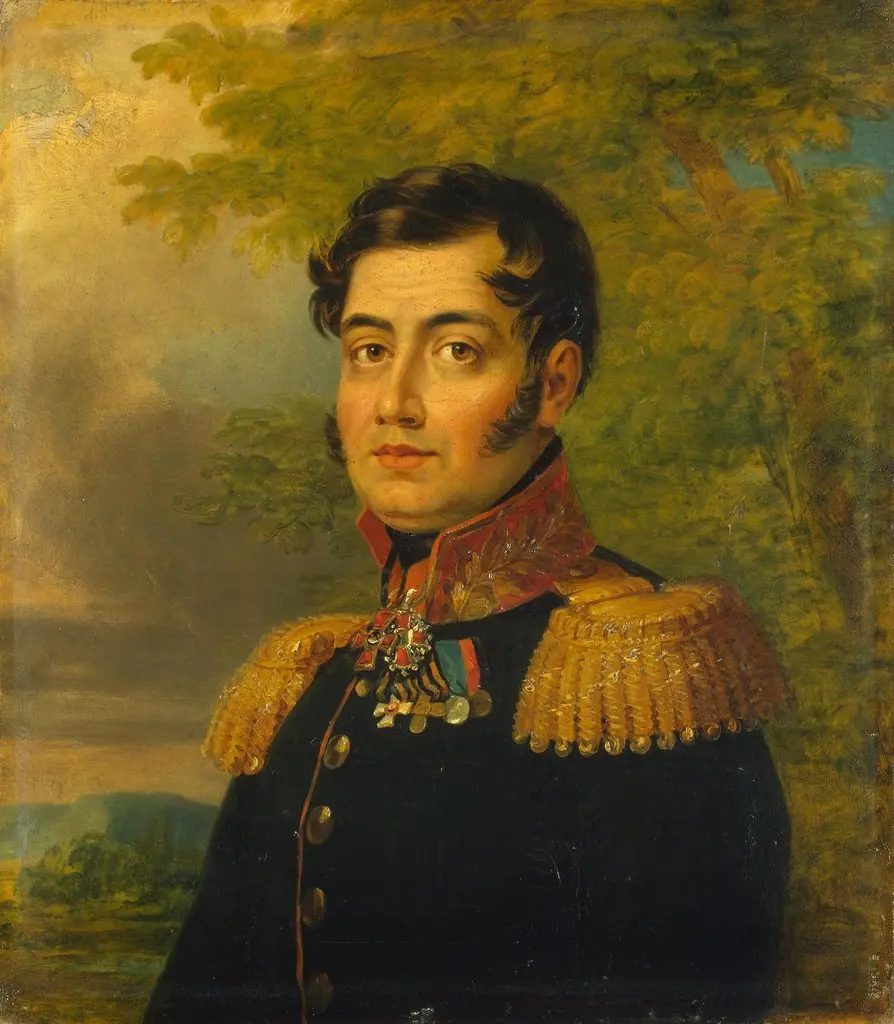 Portrait of Mikhail F. Naumov (1757-1823)
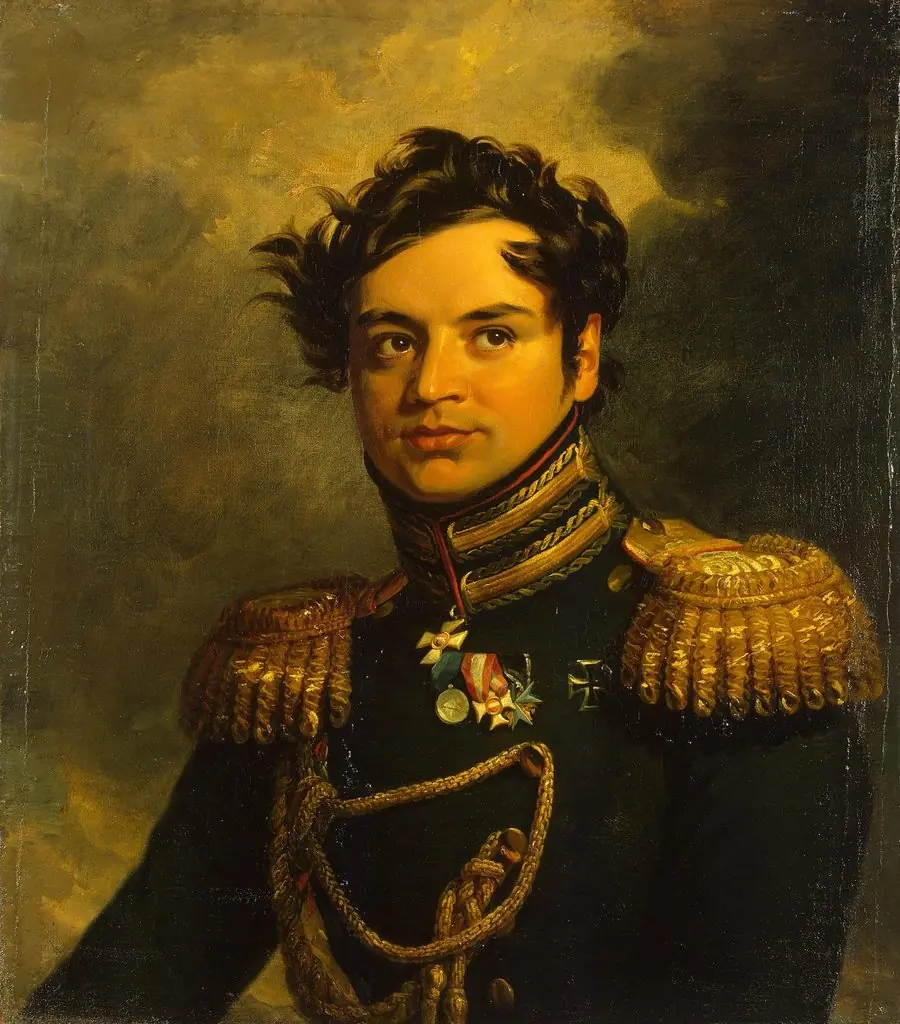 Portrait of Yakov A. Potyomkin (1781-1831)
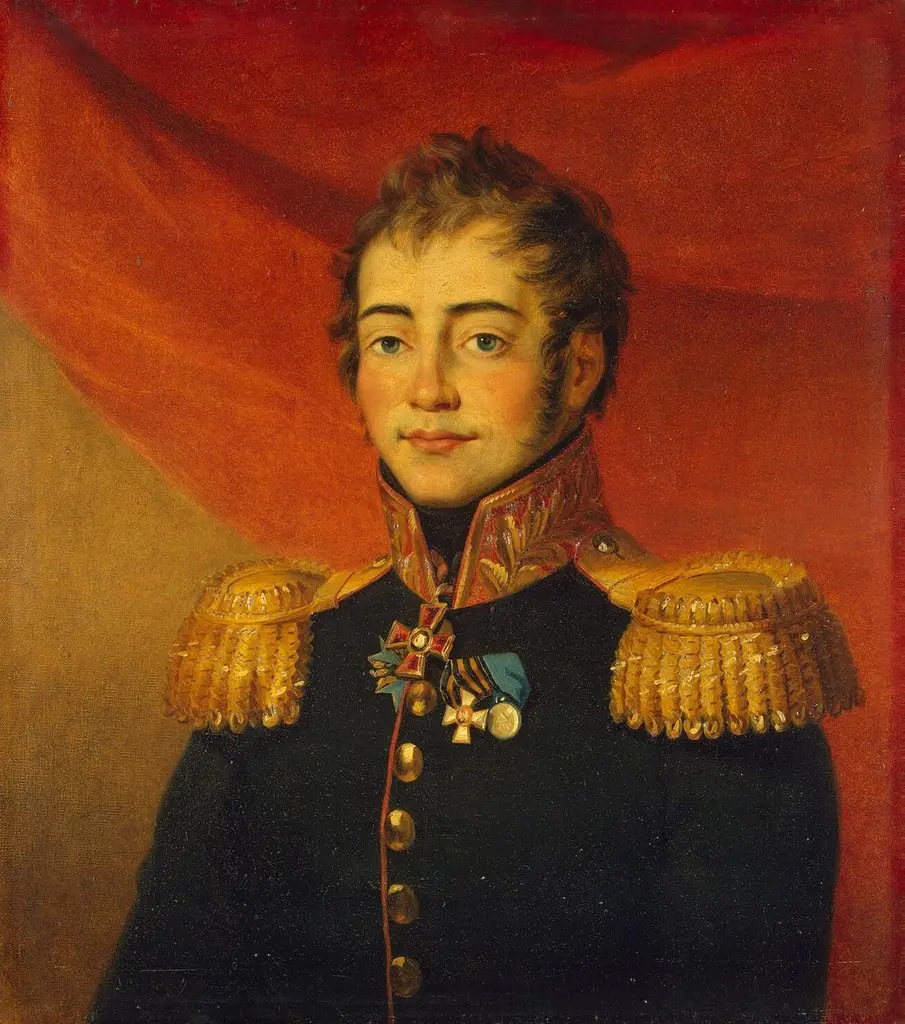 Portrait of Dmitry P. Lyapunov (1775-1821)
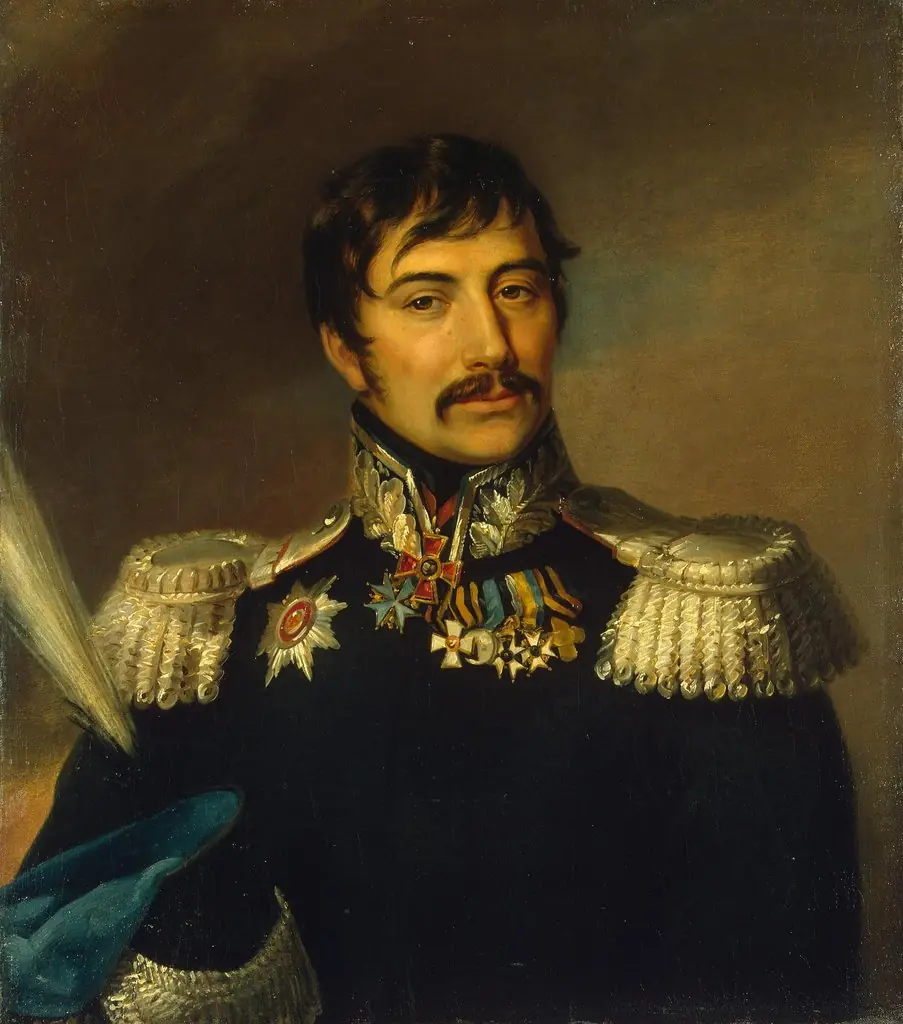 Portrait of Timofey D. Grekov (1770-1831)
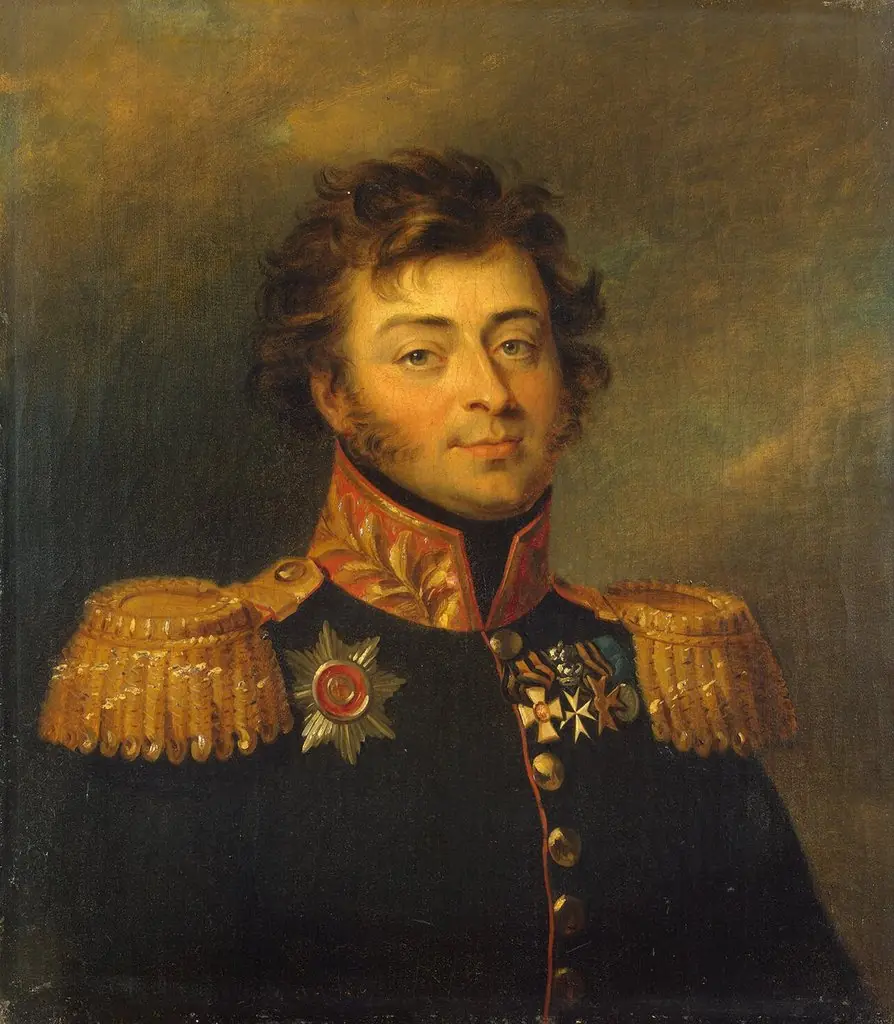 Portrait of Alexander A. Bashilov (1777-1847/49)