Artwork
Portrait of Karl V. Budberg (1774-1829)
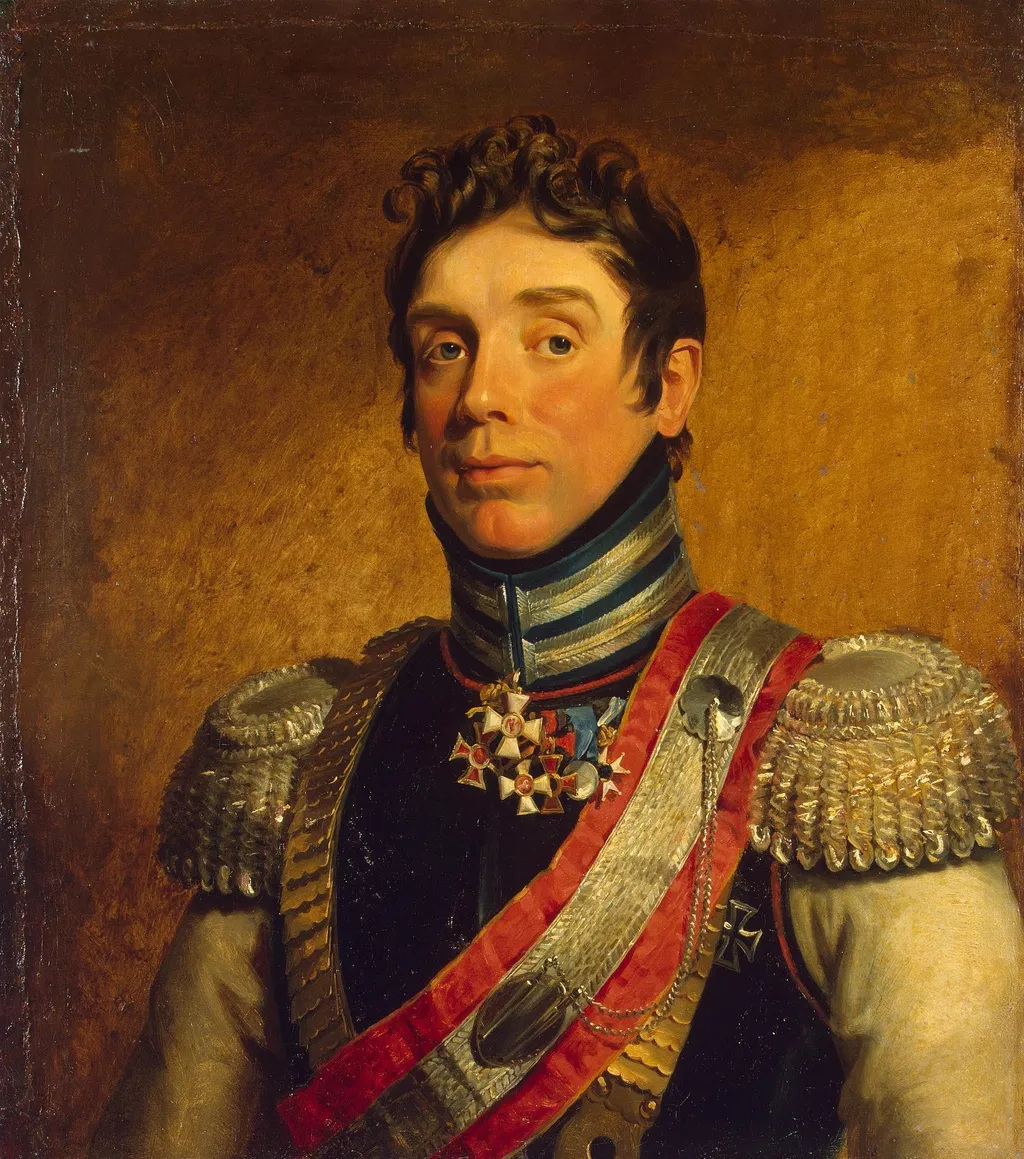
Portrait of Karl V. Budberg (1774-1829) is an oil painting by the British Romanticist artist George Dawe. It dates from 1822 and is held in the collection of the Hermitage Museum.
About this work
Overview
5 centimetres, the bust-length depiction of the Imperial Russian cavalry general is held in the collection of the Hermitage Museum in Saint Petersburg, Russia.
The Portrait of Karl V. Budberg (1774-1829) is an oil-on-canvas portrait painted by the English artist George Dawe in 1822. Measuring 70 by 62.5 centimetres, the bust-length depiction of the Imperial Russian cavalry general is held in the collection of the Hermitage Museum in Saint Petersburg, Russia. The painting belongs to Dawe's celebrated series of portraits of Russian military commanders who had fought against Napoleon's invasion, a body of work that established his reputation as the preeminent portraitist of the Russian imperial elite in the 1820s. As one of over 300 portraits Dawe produced for the Military Gallery of the Winter Palace between 1822 and 1828, this work exemplifies the documentary and commemorative function of state portraiture in post-Napoleonic Russia, while also demonstrating the technical refinement that earned Dawe the position of First Portrait Painter of the Imperial Court in 1828.
Subject & Meaning
The portrait depicts Baron Karl Vasilievich Ludwig von Budberg-Bönninghausen (1775-1829), a German Baltic nobleman who served as a lieutenant general in the Imperial Russian Army. Budberg's military career spanned the Napoleonic Wars and subsequent conflicts; he joined the army at age eleven, fought at the battles of Guttstadt-Deppen, Heilsberg, Friedland, and Eylau during the War of the Fourth Coalition, and distinguished himself at Borodino, Kulm, and Leipzig during the French invasion of Russia and the War of the Sixth Coalition. He was promoted to major general in 1813, commanded the 2nd Hussar Division from 1824, and attained the rank of lieutenant general in 1826 before dying during the Russo-Turkish War of 1828. The portrait's iconography emphasises his martial status through the dark military uniform with high collar trimmed in light blue and silver, the wide red sash with silver edging across his chest, and the large elaborate silver epaulettes with fringed detailing on his shoulders. Multiple medals and orders hang from his neck and chest, including cross-shaped decorations and a black cross lower on the uniform, signifying his receipt of honours such as the Order of St. George, the Order of St. Vladimir, and the Order of Saint Anna. The direct gaze and formal presentation convey the authority and dignity expected of a senior imperial commander, while the absence of any environmental setting focuses attention entirely upon the subject's person and his military decorations as markers of service and rank.
Technique & Style
The portrait is executed in oil paint on canvas, a medium and support standard for Dawe's Russian period. The composition presents Budberg in bust-length format against a warm, muted brown and ochre background, with the figure facing slightly to the left while his gaze meets the viewer directly. The lighting falls from the left, illuminating the face and the metallic elements of the uniform while casting the right side in softer shadow, a conventional arrangement that models the features and creates dramatic emphasis on the reflective surfaces. The brushwork displays the characteristic refinement of Dawe's portraiture: smooth, almost imperceptible handling on the face achieves a polished, idealised likeness, while more textured and visible strokes in the background and on the uniform's decorative elements provide painterly contrast and draw attention to the insignia of rank. The plain, atmospheric background contains no discernible setting or objects, a compositional choice typical of Dawe's military portraits that isolates the subject and universalises the representation beyond any specific moment or location. The overall style aligns with Neoclassicism, the dominant aesthetic of the period, prioritising clarity, order, and dignified restraint over emotional expression or narrative complexity.
History & Provenance
Dawe painted the portrait in 1822, early in his intensive period of work for the Military Gallery of the Winter Palace, which continued from 1822 to 1828. The commission came directly from the Russian imperial court; Tsar Alexander I had engaged Dawe in 1819 to paint portraits of senior military staff who had successfully resisted Napoleon's invasion, and the artist relocated to Saint Petersburg for this purpose. The painting entered the collection of the Hermitage Museum, where it remains today, though the precise date of its accession is not specified in the available sources. The work has been exhibited and documented as part of the Hermitage's holdings of Western European painting, and it appears in the museum's catalog of that collection. Dawe's Russian portraits, including this example, were never intended for private ownership but were conceived from the outset as components of a grand commemorative installation within the Winter Palace, designed to celebrate Russian martial achievement and imperial loyalty.
Context
George Dawe (1781-1829) was an English portraitist whose career illustrates the international circulation of artistic talent in the early nineteenth century. The son of Philip Dawe, a successful mezzotint engraver who had worked with William Hogarth and J.M.W. Turner, George trained initially as an engraver before studying at the Royal Academy of Arts, where he won the Gold Medal in 1803. He was elected an Associate of the Royal Academy in 1809 and a full Academician in 1814, but despite early success with classical subjects, he pursued portraiture for its financial rewards. His direct self-promotion attracted criticism from contemporaries including John Constable, yet his skill brought patronage from the Duke and Duchess of Kent and Princess Charlotte and Prince Leopold. The Russian commission transformed his career and reputation. Working with assistants Alexander Polyakov and Wilhelm August Golicke, he produced over 300 portraits with remarkable efficiency, becoming a celebrity in European artistic circles and receiving complimentary verses from Alexander Pushkin. He was appointed First Portrait Painter of the Imperial Court in 1828. The Portrait of Karl V. Budberg exemplifies the broader project of constructing visual memory of the Napoleonic Wars from the Russian perspective, a propagandistic and commemorative enterprise that occupied Dawe's final years. The Hermitage Museum's continued stewardship of these works reflects their importance as historical documents and artistic achievements, even as Dawe's reputation in England faded after his death.
Legacy
The Portrait of Karl V. Budberg endures primarily as a constituent element of Dawe's monumental series of Russian military portraits, a body of work that remains his most significant artistic legacy. While individual portraits from the series are rarely distinguished in isolation, collectively they constitute a remarkable achievement in documentary portraiture and have preserved the likenesses of a generation of Russian commanders who might otherwise have faded from visual memory. The Hermitage Museum's retention of the complete series ensures its continued accessibility to scholars and the public. Dawe's own posthumous reputation diverged sharply between Russia and Britain: in Russia, where he is still well-known and highly regarded, his imperial commissions secured lasting esteem, whereas in England his popularity did not endure despite his Royal Academy credentials and earlier social connections. The portrait ofLmited edition prints and reproductions of Dawe's Russian portraits, including this depiction of Budberg, have circulated in commercial contexts, indicating a modest continued public interest. For military historians and scholars of Russian nobility, the portrait serves as a primary visual source for the appearance and regalia of an Imperial Russian cavalry commander of the Napoleonic era, while for art historians it represents a characteristic example of the international Neoclassical portrait style adapted to the requirements of state commemoration.
Own this work as a print
Artist & collection
Artist
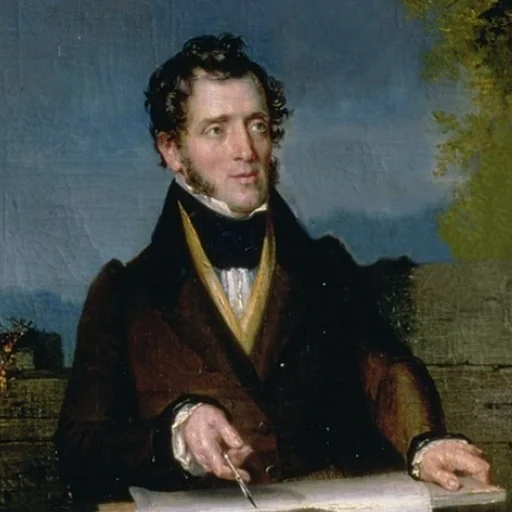
George Dawe (6 February 1781 – 15 October 1829) was an English portraitist who painted 329 portraits of Russian generals active during Napoleon's invasion of Russia for the Military Gallery of the Winter Palace.

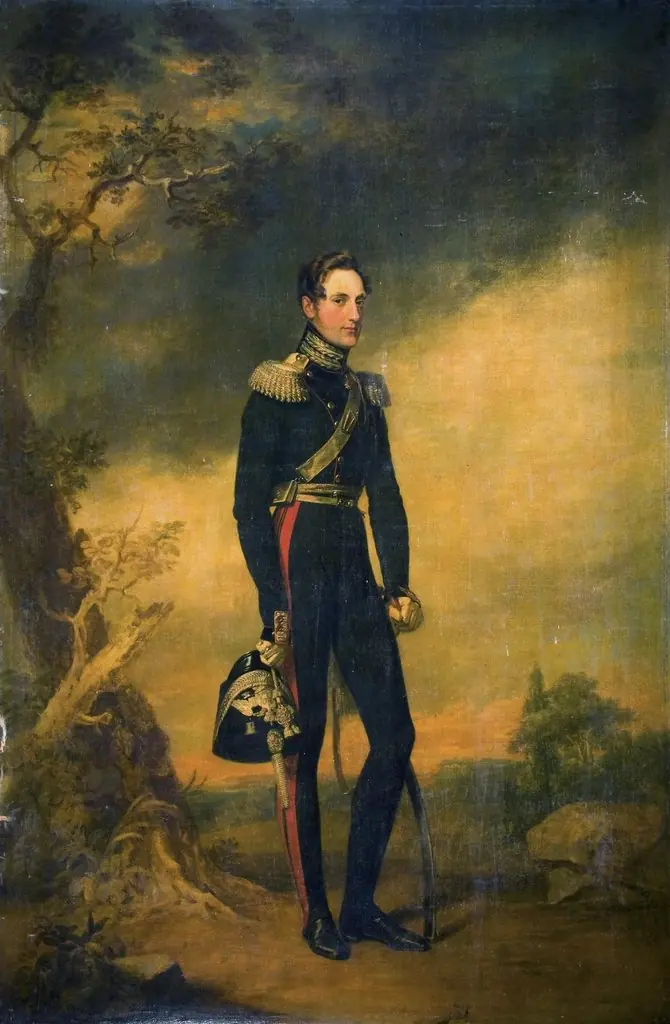 Portrait of Grand Duke Nikolai Pavlovich
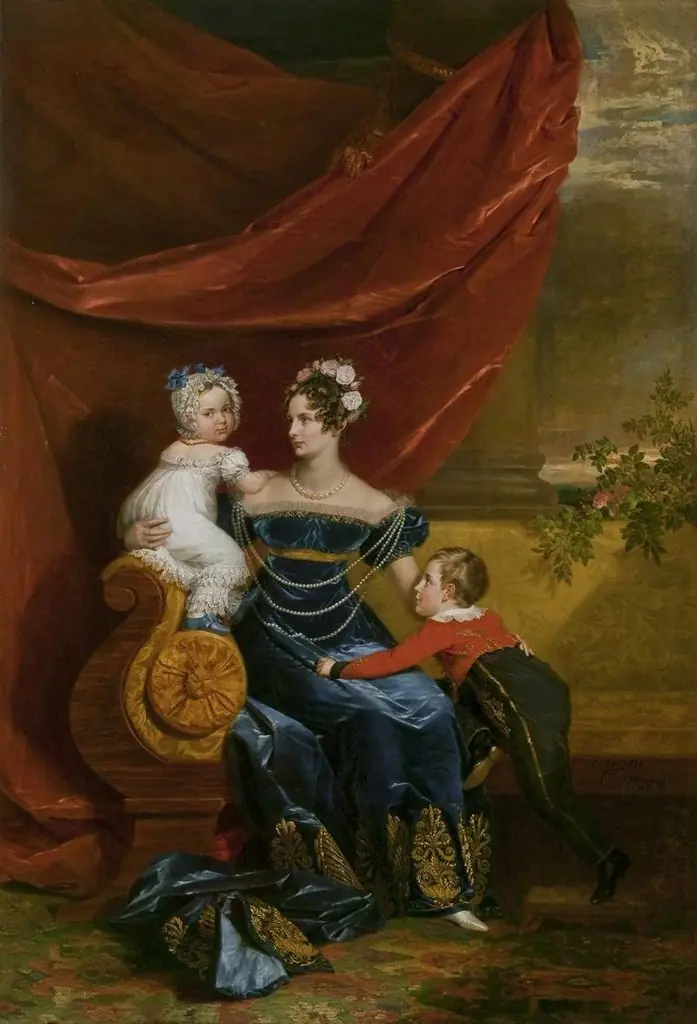 Portrait of Grand Duchess Alexandra Fiodorovna with Children
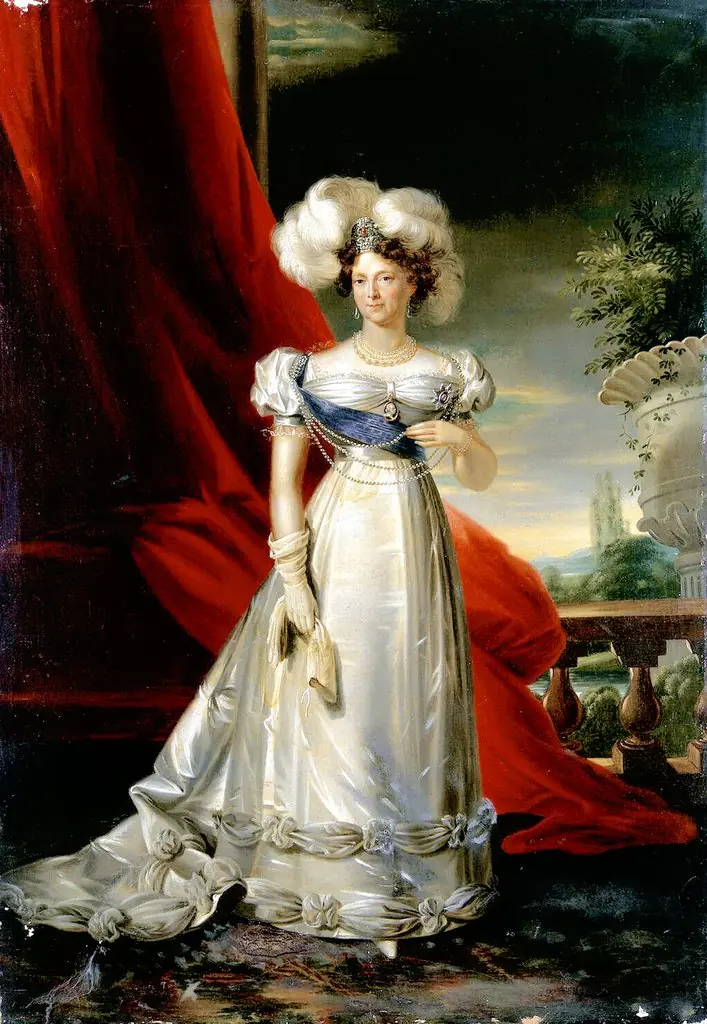 Portrait of the Empress Dowager Maria Feodorovna
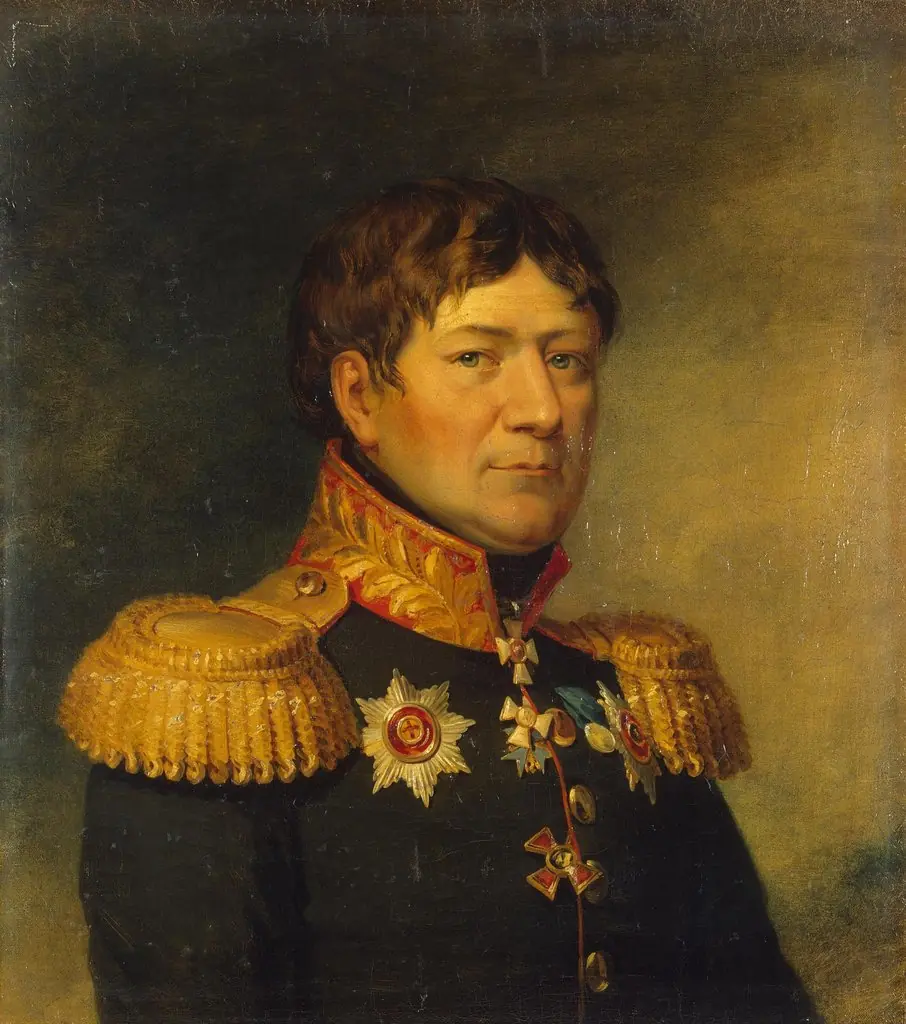 Portrait of Yegor M. Pillar (1767-1830)
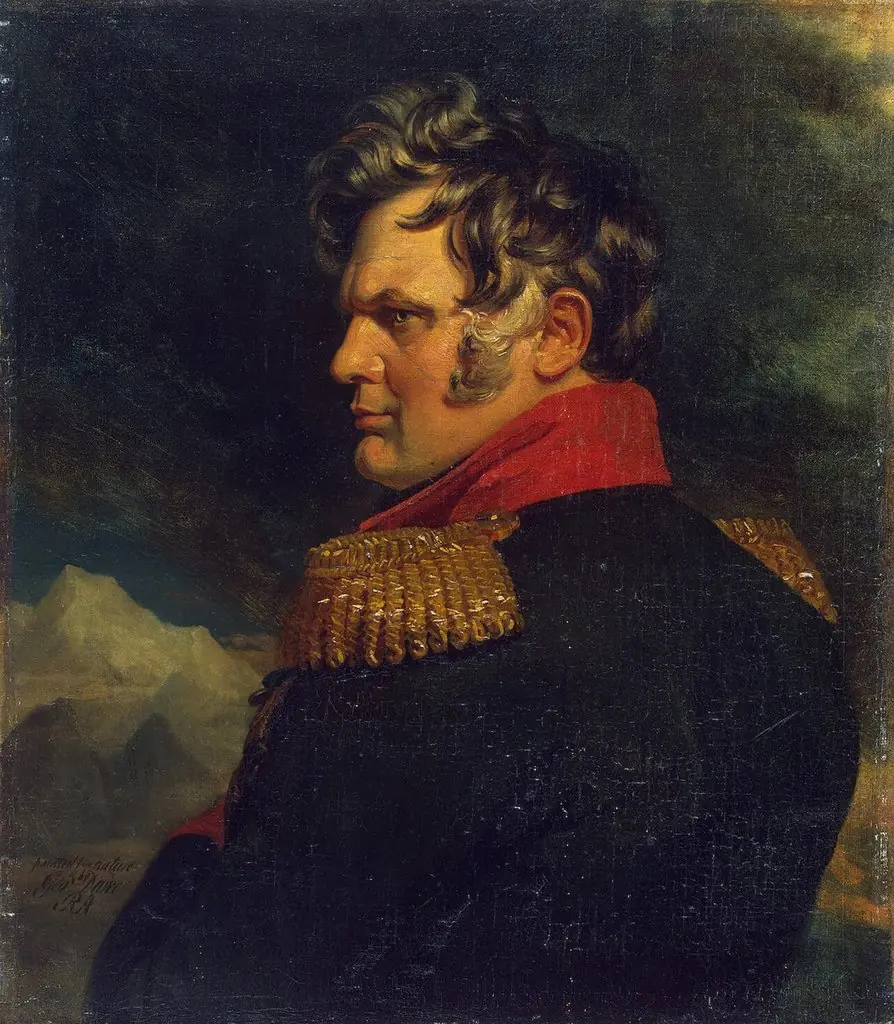 Portrait of Alexei P. Yermolov (1772/77-1861)
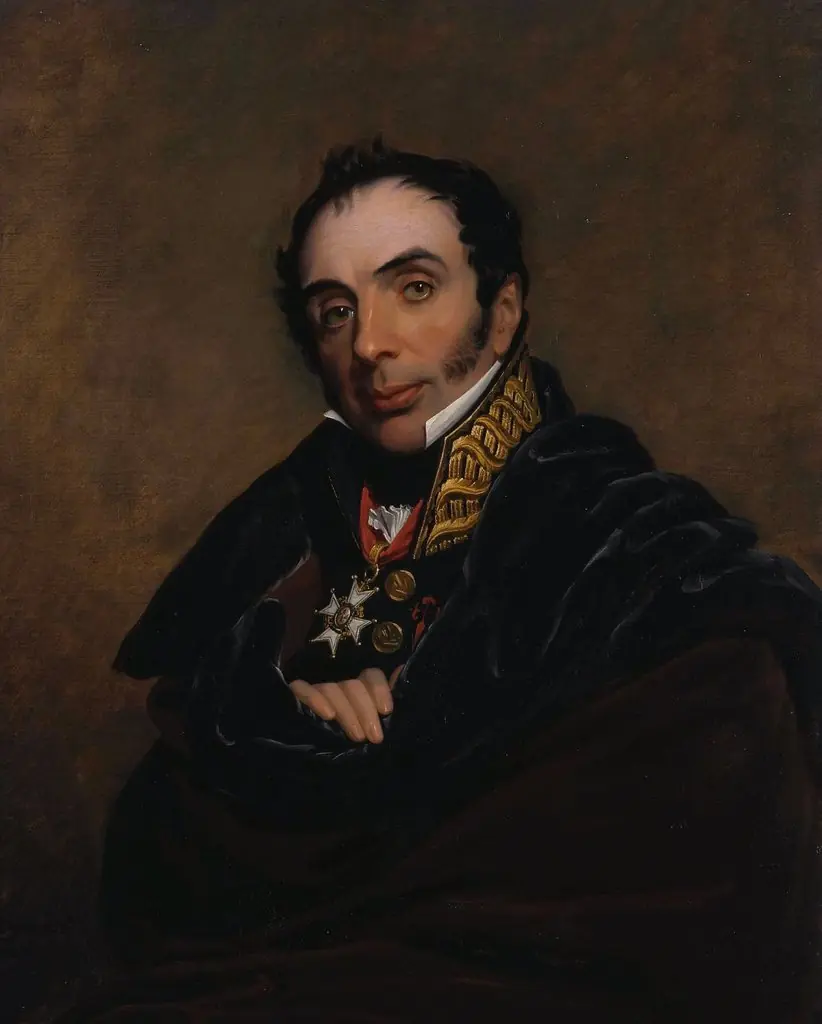 Portrait of Miguel Ricardo de Alava
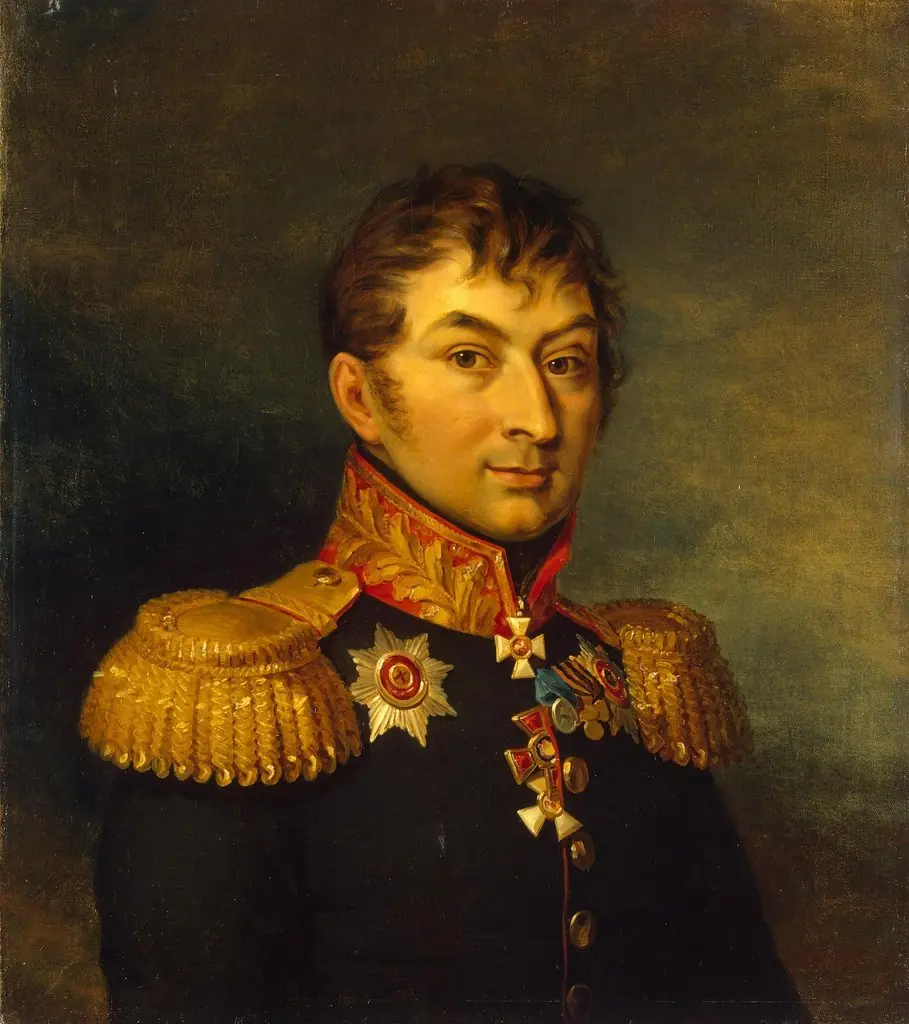 Portrait of Ivan D. Panchulidzev (1759-1815) (1st)
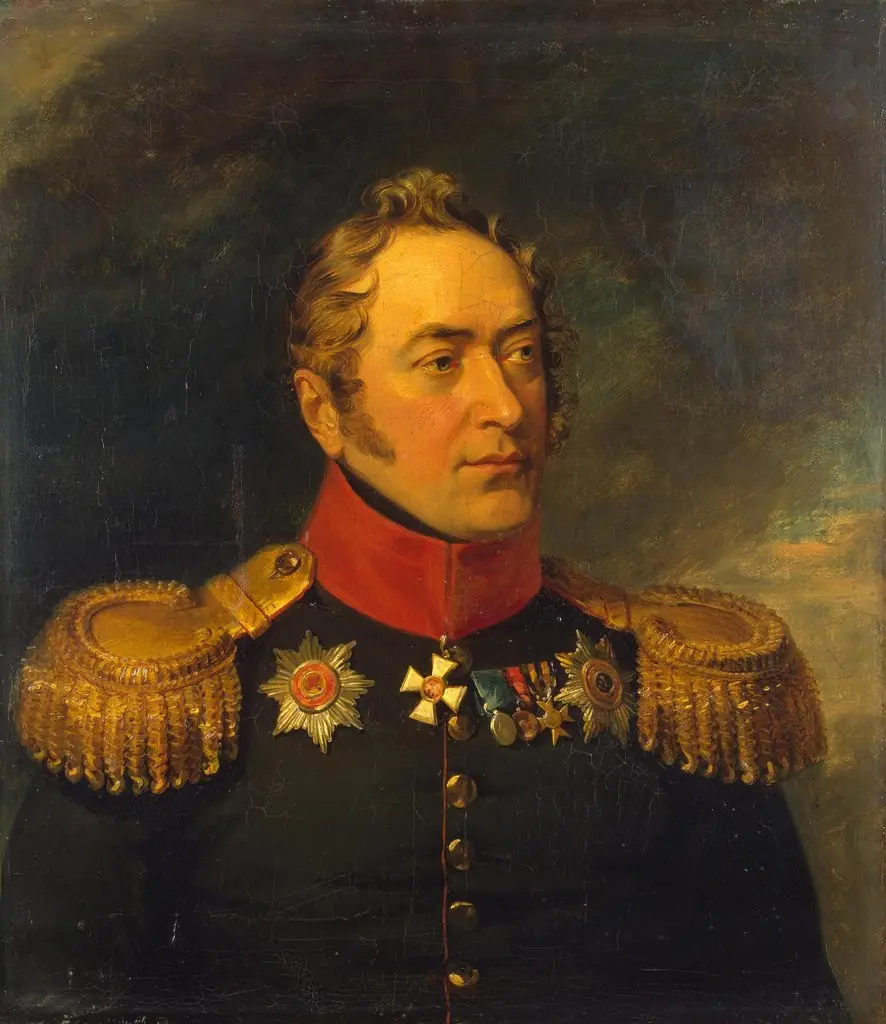 Portrait of Nikolai N. Khovansky (1777-1837)
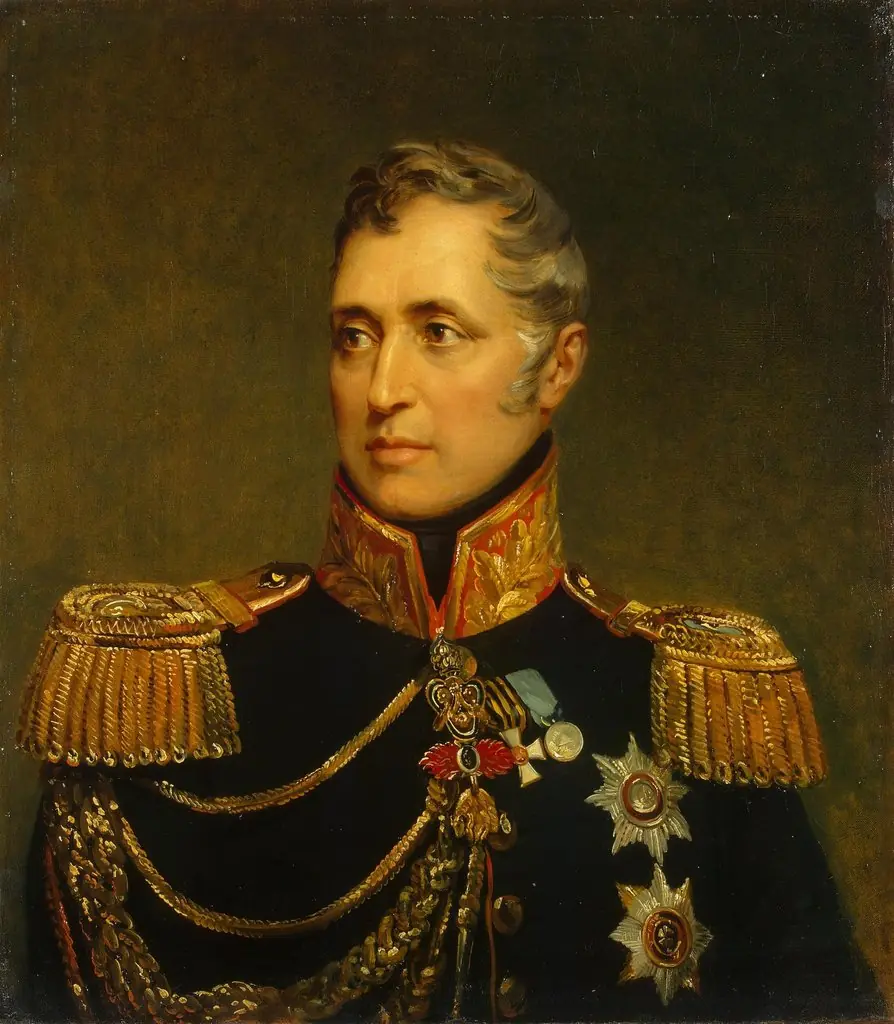 Portrait of Karl O. Pozzo di Borgo (1764-1842)
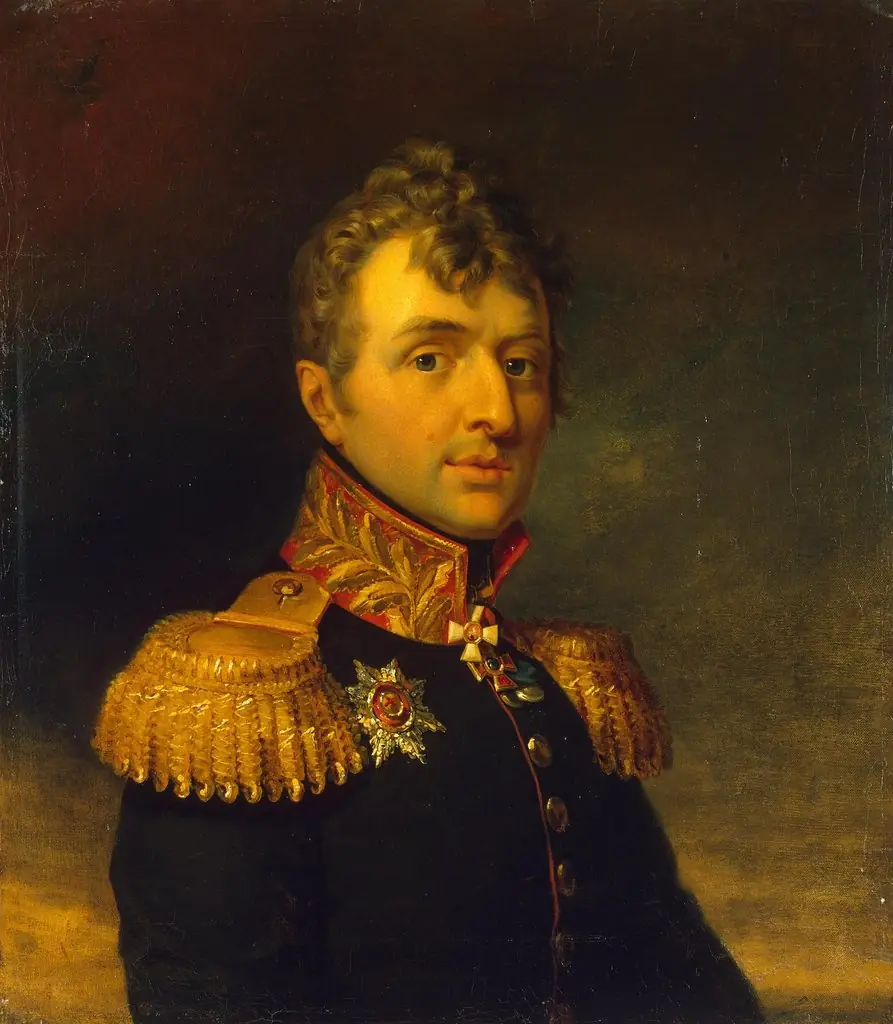 Portrait of Ivan V. Manteuffel (1771-1813)
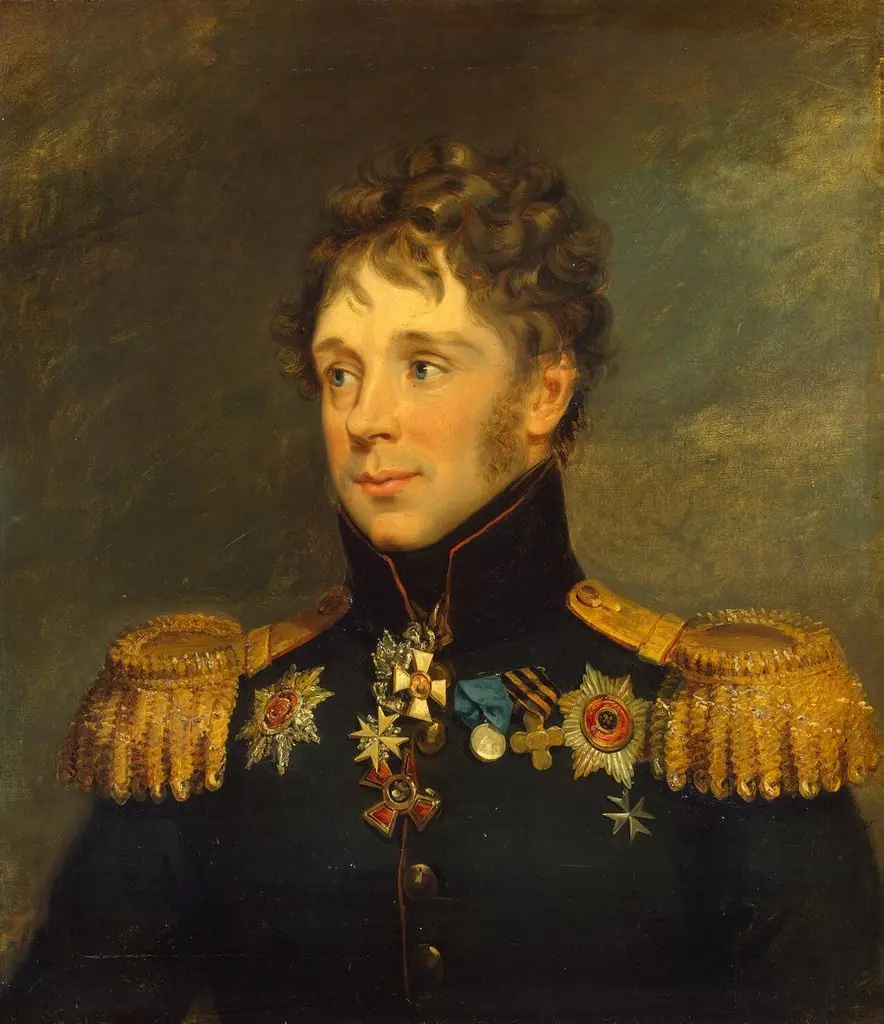 Portrait of Dmitry P. Rezvy (1762-1823)
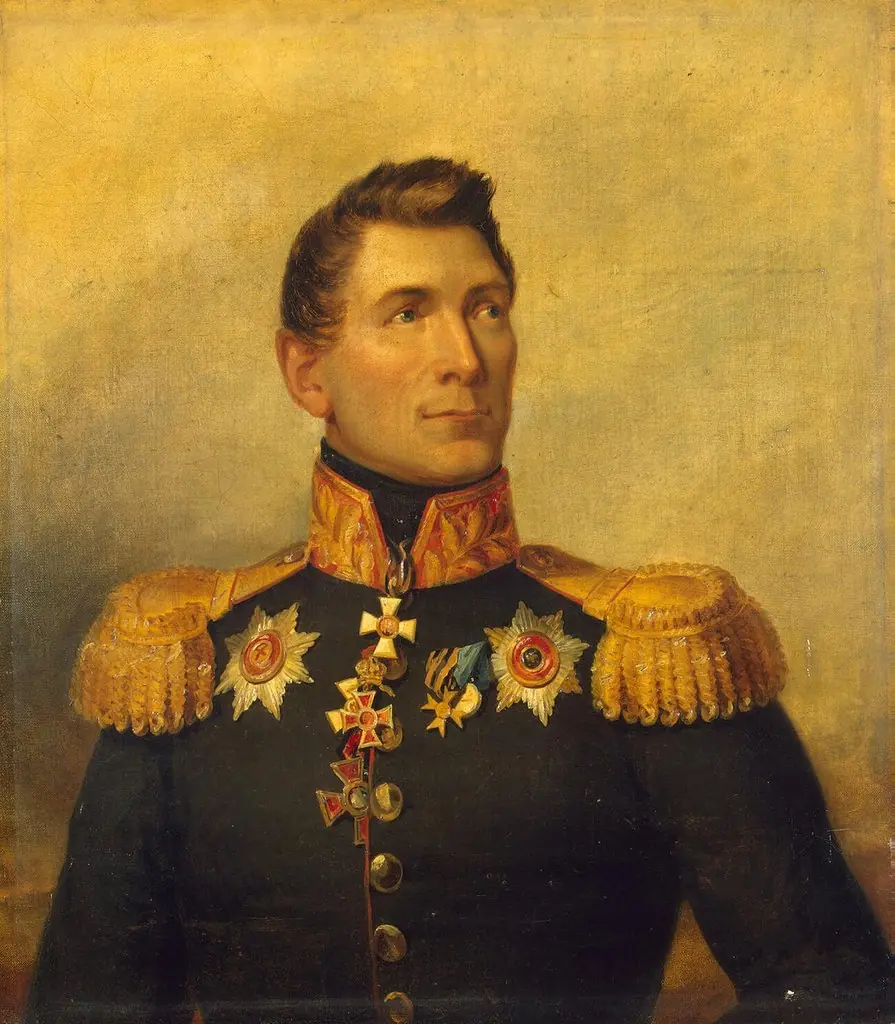 Portrait of Bogdan B. Helfreich (1776-1843)
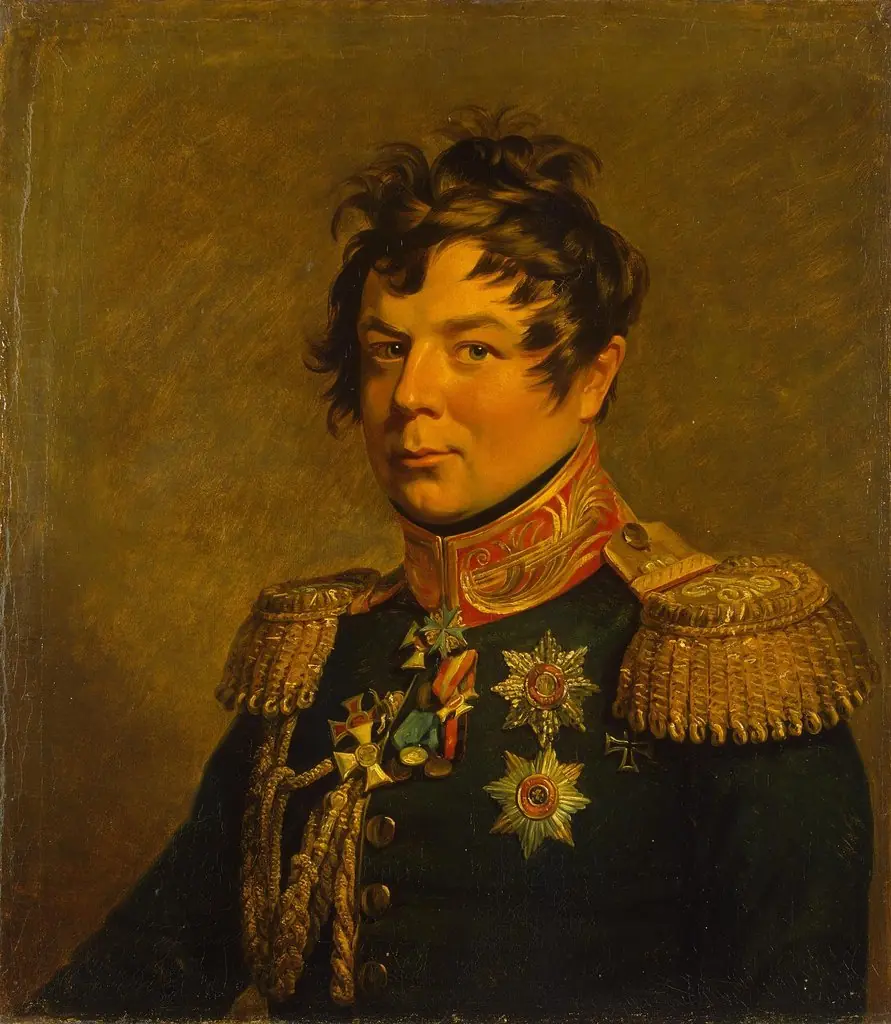 Portrait of Ivan I. Diebitsch-Zabalkansky (1785-1831)
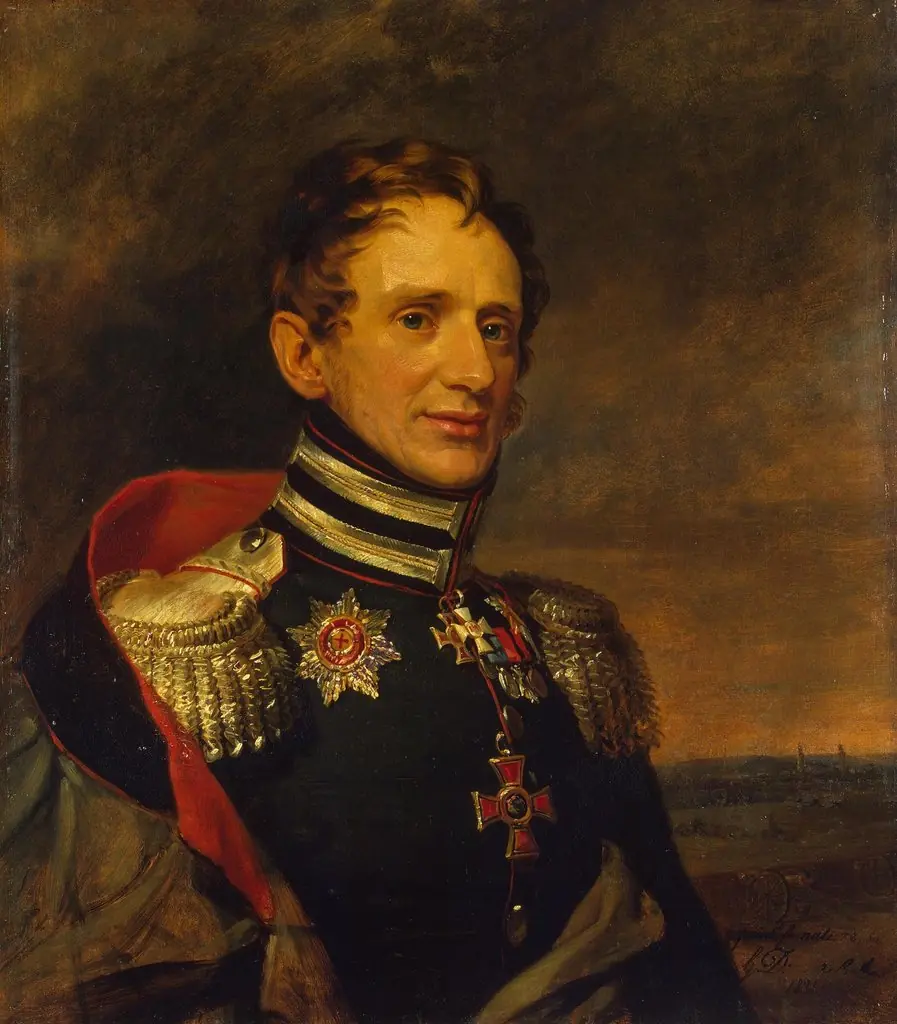 Portrait of Yegor K. Sievers (1779-1827) (3rd)
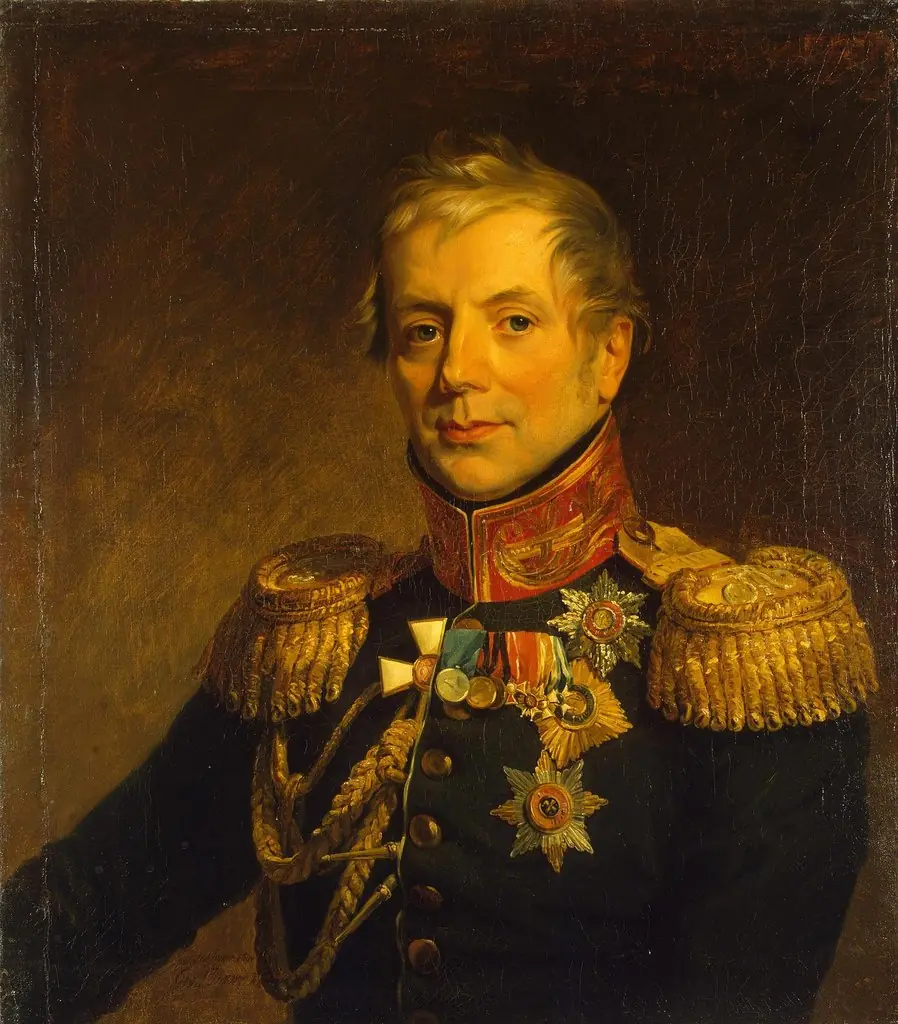 Portrait of Pyotr P. Konovnitsyn (1764-1822) (replica of the 1821 portrait)