Artwork
Portrait of Mikhail A. Arsenyev (1779-1838)
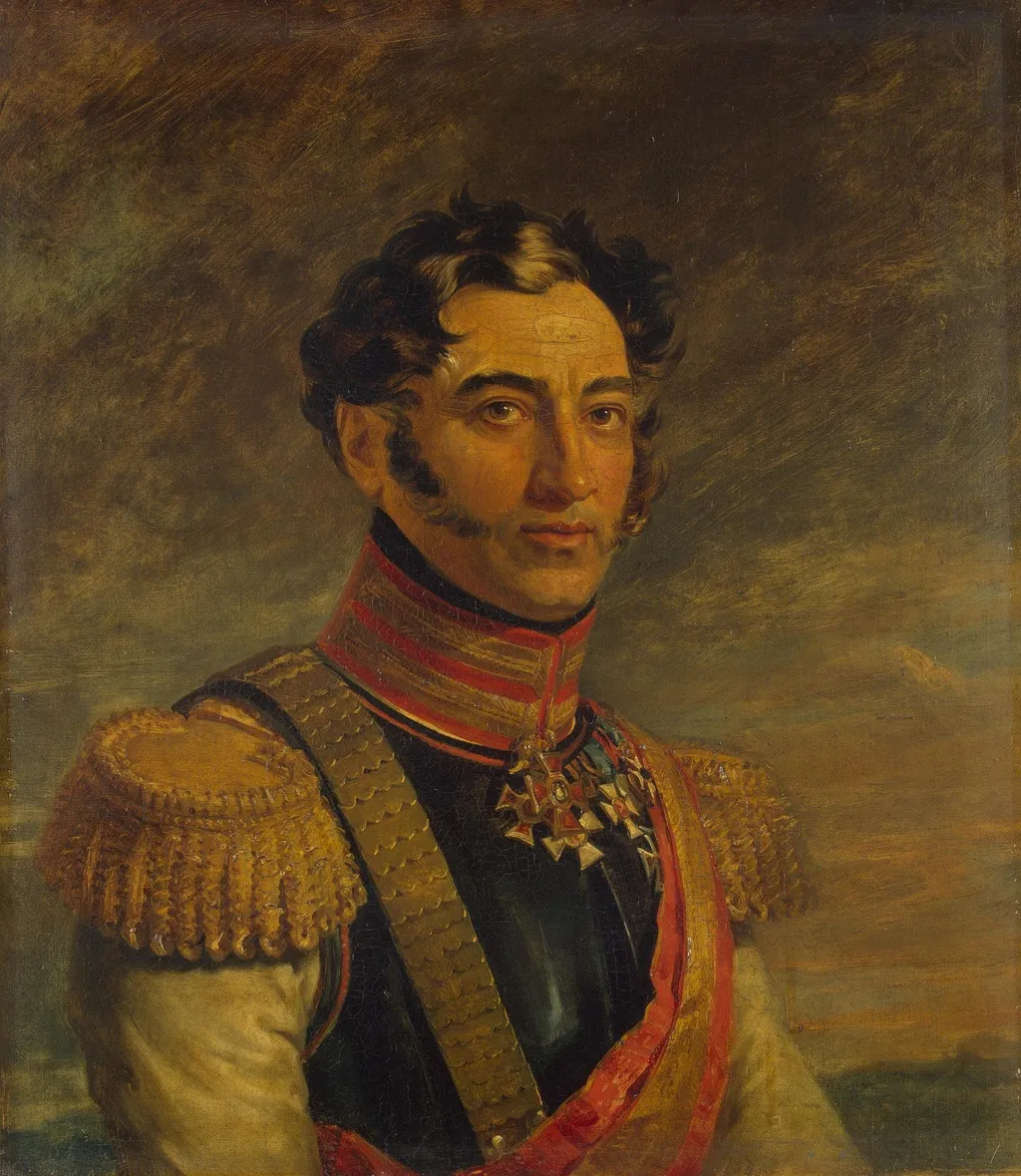
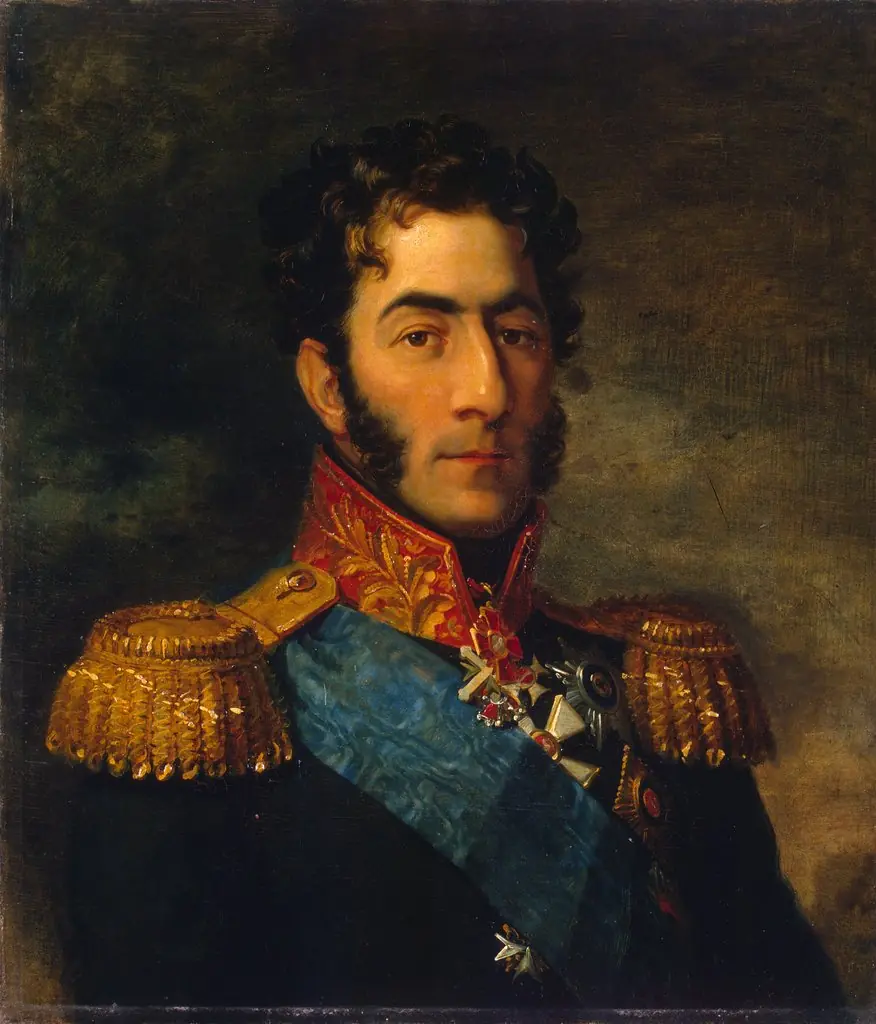
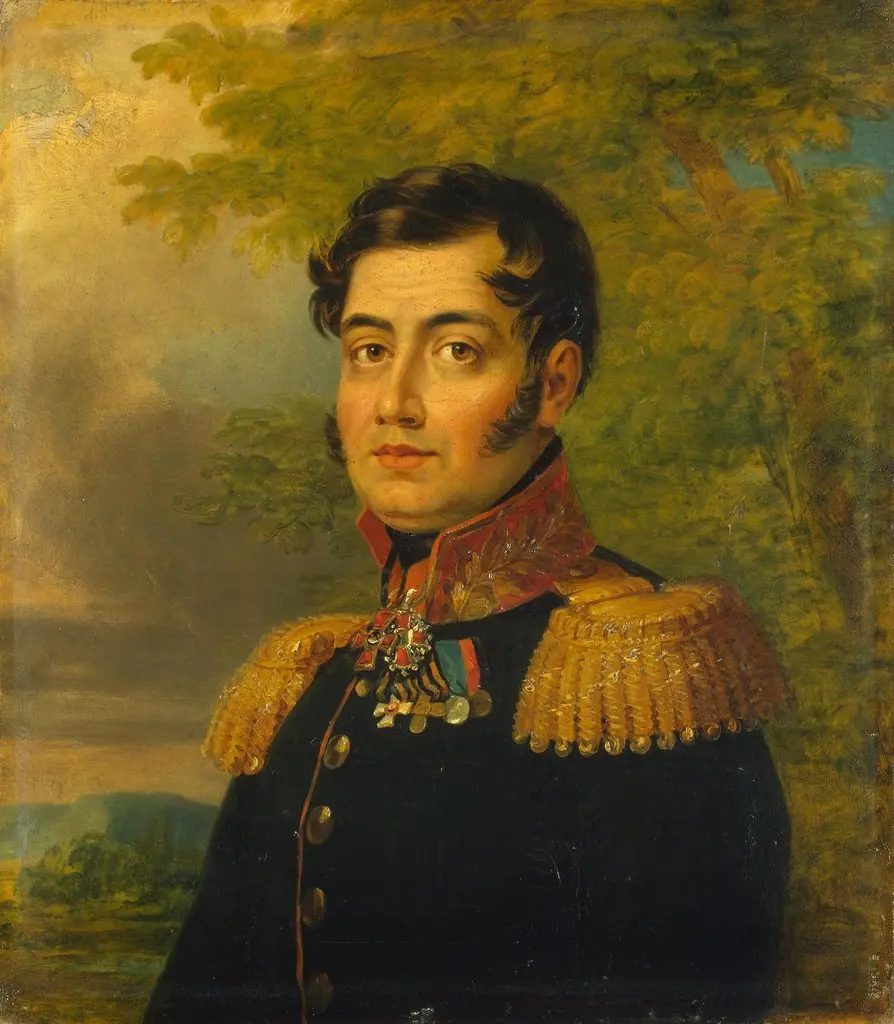
Portrait of Mikhail A. Arsenyev (1779-1838) is an oil painting by the British Romanticist artist George Dawe. It dates from 1825 and is held in the collection of the Hermitage Museum. The Portrait of Mikhail A.
About this work
Overview
5 centimeters, the work depicts a Russian major general who served in the Napoleonic Wars and now resides in the Hermitage Museum in Saint Petersburg.
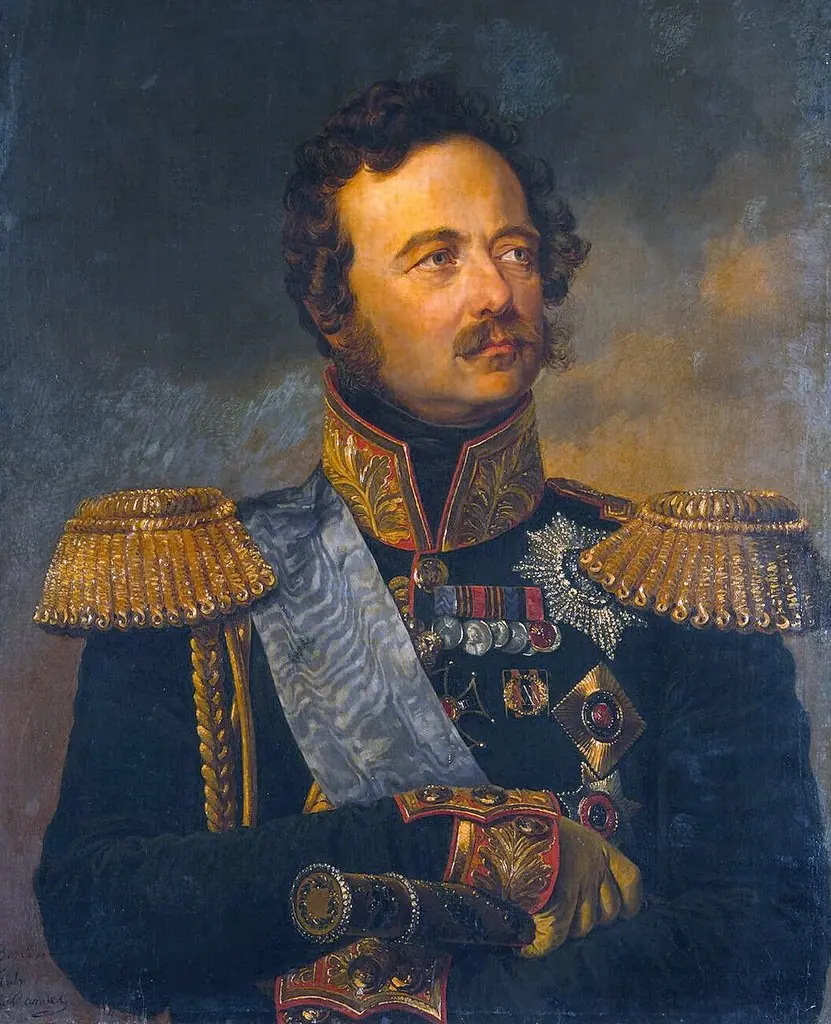
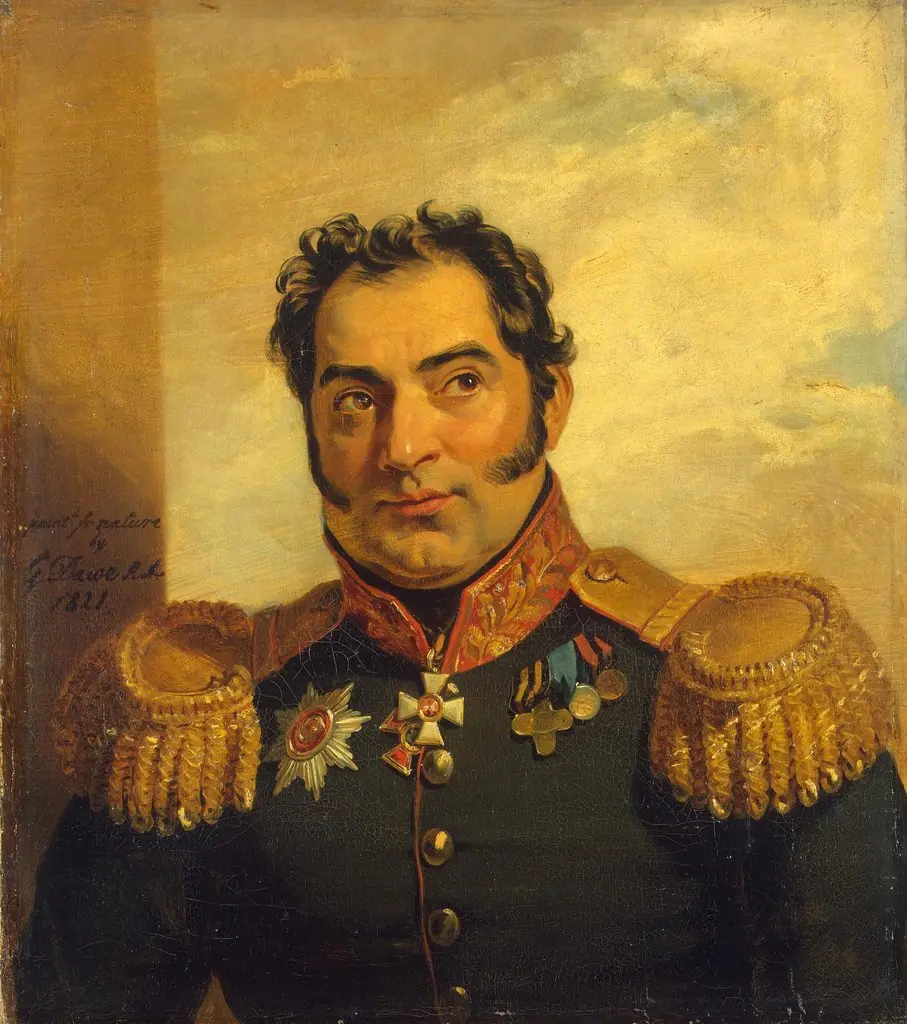
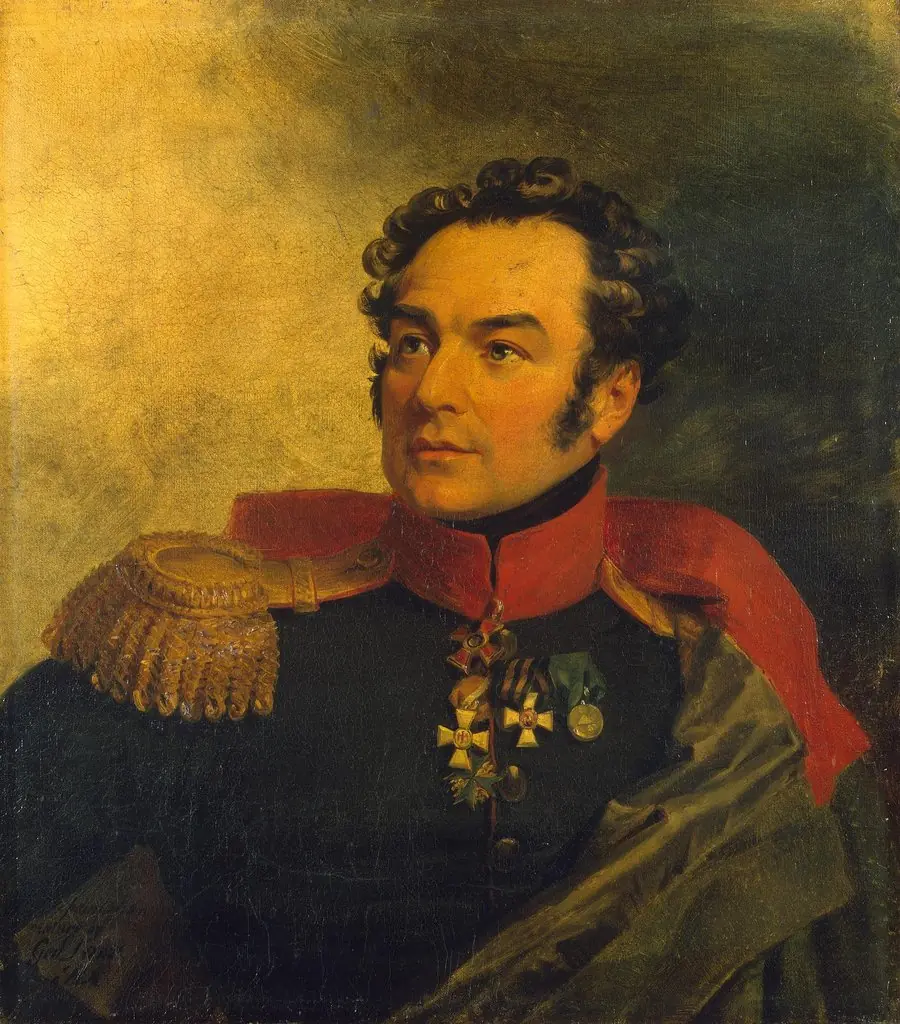
The Portrait of Mikhail A. Arsenyev (1779-1838) is an oil-on-canvas portrait painted by the English artist George Dawe in 1825. Measuring 70 by 62.5 centimeters, the work depicts a Russian major general who served in the Napoleonic Wars and now resides in the Hermitage Museum in Saint Petersburg. The portrait belongs to Dawe's celebrated series of military portraits that documented the commanders of the Patriotic War of 1812, a project that produced over 300 images for the Military Gallery of the Winter Palace. As a key component of this monumental commission, the portrait embodies the visual rhetoric of Russian imperial power in the post-Napoleonic era and represents a significant intersection of British artistic practice and Russian national commemoration.
Subject & Meaning
Mikhail Andreyevich Arseniev (1779-1838) was a career military officer who rose to command the Life Guard Horse Regiment, serving from 1811 to 1813 and participating in both the Patriotic War of 1812 and the War of the Sixth Coalition. The portrait presents him bust-length, facing slightly right with direct engagement of the viewer, a compositional choice that confers authority and presence. His dark uniform with high collar trimmed in red and gold, elaborate gold epaulettes with fringe, and broad gold sash across the chest signal his elevated rank. The red sash and star-shaped medals visible on his chest correspond to his documented awards: the Order of St. George, the Order of St. Vladimir, the Order of Saint Anna, and the Kulm Cross among others. The insignia function as legible codes of military distinction and imperial service. The indistinct background of muted brown and gray tones, rendered with loose atmospheric brushwork, isolates the figure and elevates him toward an iconic status, while the leftward illumination concentrates attention on his face and the gold elements of his regalia. This visual strategy transforms individual likeness into emblematic representation of Russian martial virtue and loyalty to the throne.
Technique & Style
The portrait is executed in oil paint on canvas, a medium that allowed Dawe the flexibility to modulate between precise description and atmospheric effect. The surface exhibits fine craquelure throughout, consistent with its age and medium. The brushwork demonstrates considerable variation: smooth blending characterizes the facial modeling, creating an illusion of living flesh, while more textured strokes animate the background and uniform details. The palette is dominated by warm browns, golds, reds, and dark greens, with light falling from the left to create dramatic emphasis on the face and metallic decorations. This handling aligns with the Neoclassical style attributed to the work, combining clarity of form with dignified restraint. The relatively modest scale, 70 by 62.5 centimeters, suggests a format designed for serial display within the architectural framework of the Military Gallery, where individual portraits would read collectively as a panorama of national heroism rather than as independent monumental statements. The condition of the paint surface, with its network of age cracks, indicates the work has been preserved in relatively stable environmental conditions since its creation.
History & Provenance
George Dawe painted this portrait in 1825 as part of his systematic documentation of generals who had participated in the Patriotic War of 1812. The commission itself was initiated in the aftermath of Napoleon's defeat, when the Russian court sought to commemorate the military leadership that had defended the empire. The portrait entered the collection of the Hermitage Museum, founded by Catherine the Great with a commitment to collecting Western European art, where it remains today. The museum's acquisition or transfer of the work reflects the institutional framework that placed British artists like Dawe within the context of Russian imperial patronage. The portrait's location in the Hermitage positions it within one of the world's most significant repositories of European painting, and its continued presence there permits scholarly access and public viewing alongside the broader ensemble of the Military Gallery portraits. Exhibition history specific to this individual portrait is not documented in the available sources, though it presumably participates in the permanent display of the Military Gallery or related holdings of early nineteenth-century portraiture at the museum.
Context
George Dawe's project of painting over 300 portraits of Russian generals represents one of the most ambitious portrait commissions of the nineteenth century, conceived as an act of national memorialization following the trauma and triumph of the 1812 campaign. The Hermitage Museum, with its origins in Catherine the Great's collecting of Western European art, provided a prestigious context for this British artist's work, integrating Russian-produced imagery into a museum culture otherwise oriented toward imported masterpieces. Dawe's portraits offered what has been described as a visual rhetoric of Russian imperial power, converting individual military service into collective national narrative. The critical and scholarly attention to this body of work has focused on its documentary value, its political function in constructing post-Napoleonic Russian identity, and its place within the broader phenomenon of commemorative portraiture in Europe after 1815. The portrait of Arseniev, as a component of this larger enterprise, participates in these interpretive frameworks while also offering specific insight into the representation of cavalry command and the visual language of military distinction in the Russian Empire.
Legacy
The Portrait of Mikhail A. Arsenyev persists as a material record of the broader cultural project through which the Russian state consolidated memory of the Napoleonic Wars into durable visual form. As one of Dawe's hundreds of military portraits, it contributes to an ensemble that has shaped subsequent understanding of Russian military leadership and the iconography of imperial service. The work's residence in the Hermitage Museum ensures its continued visibility and preservation, while its digital documentation and reproduction through platforms such as WikiArt extend its reach beyond the museum's physical boundaries. The portrait's afterlife is thus intertwined with the institutional history of the Hermitage and the ongoing scholarly and public interest in the Patriotic War of 1812 as a foundational episode in Russian national consciousness. For contemporary viewers, it offers access to the specific physiognomy and decorated appearance of a figure whose historical significance derives from his role in events that continue to occupy a central place in Russian historical memory.
Own this work as a print
Artist & collection
Artist
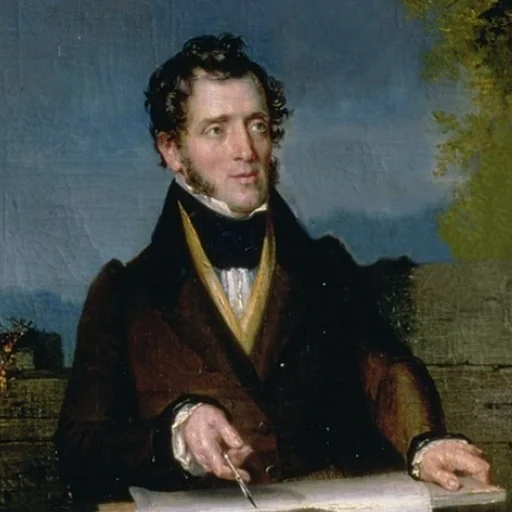
George Dawe (6 February 1781 – 15 October 1829) was an English portraitist who painted 329 portraits of Russian generals active during Napoleon's invasion of Russia for the Military Gallery of the Winter Palace.

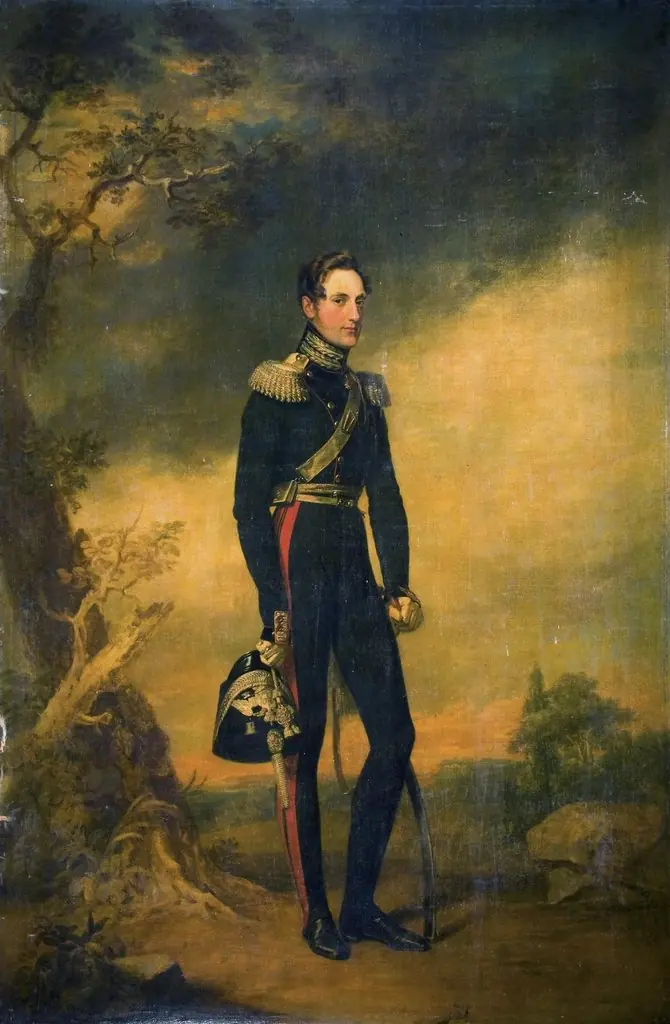 Portrait of Grand Duke Nikolai Pavlovich
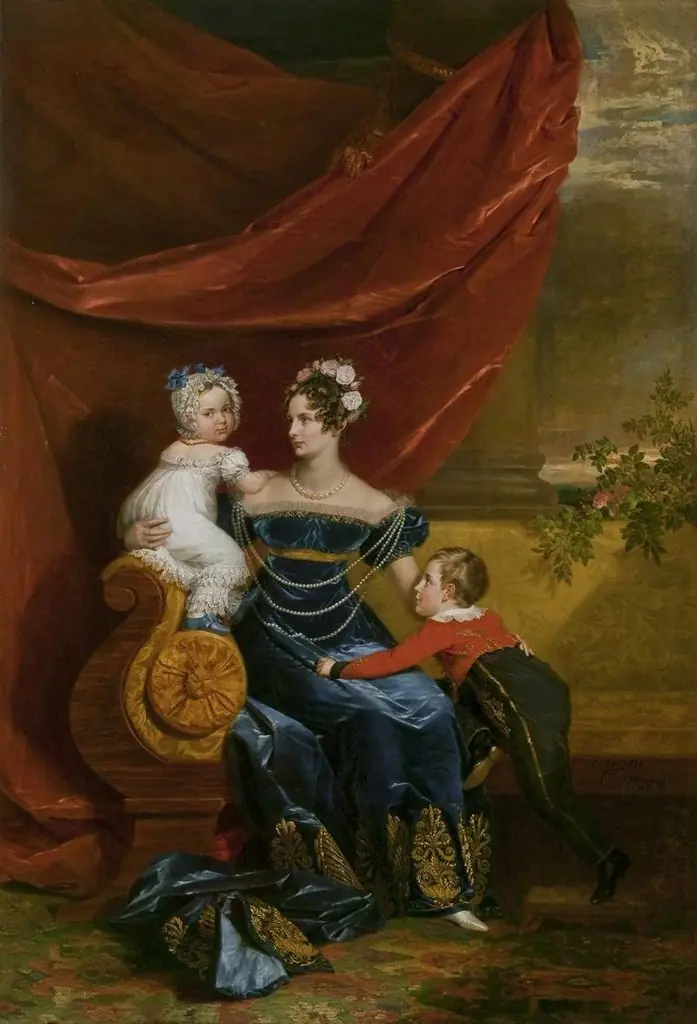 Portrait of Grand Duchess Alexandra Fiodorovna with Children
 Portrait of the Empress Dowager Maria Feodorovna
 Portrait of Yegor M. Pillar (1767-1830)
 Portrait of Alexei P. Yermolov (1772/77-1861)
 Portrait of Miguel Ricardo de Alava
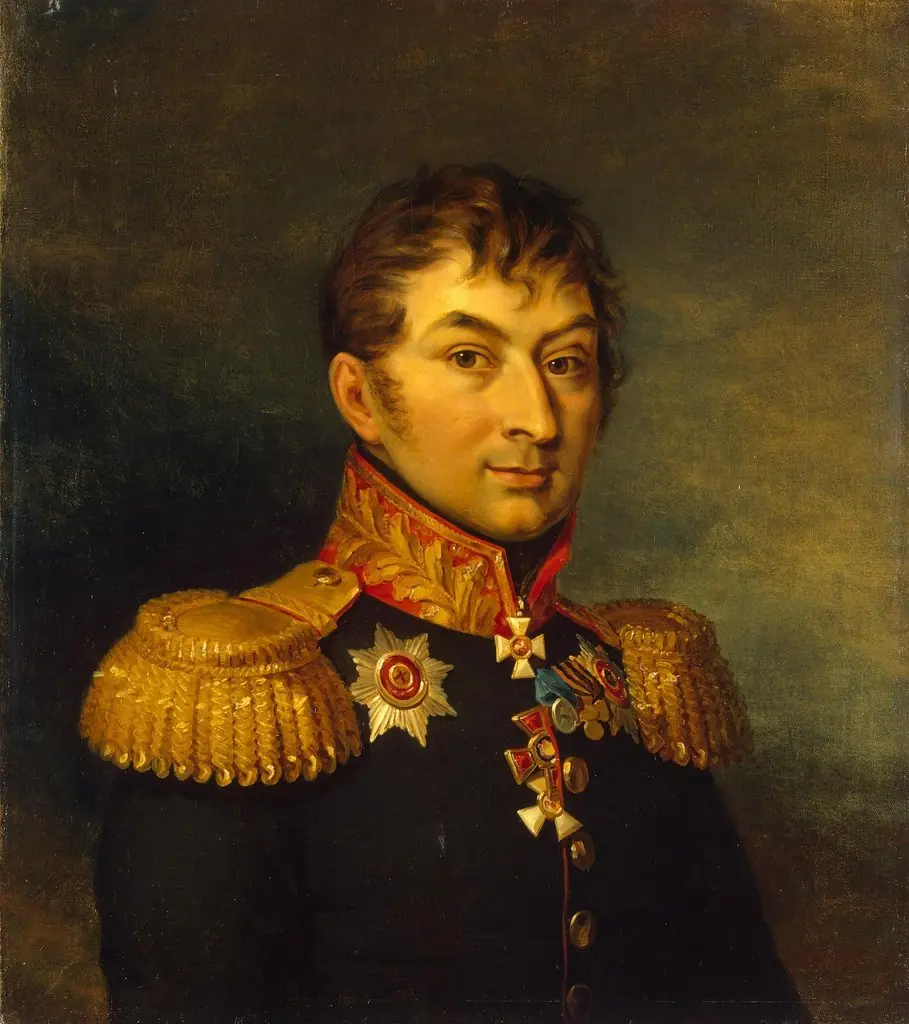 Portrait of Ivan D. Panchulidzev (1759-1815) (1st)
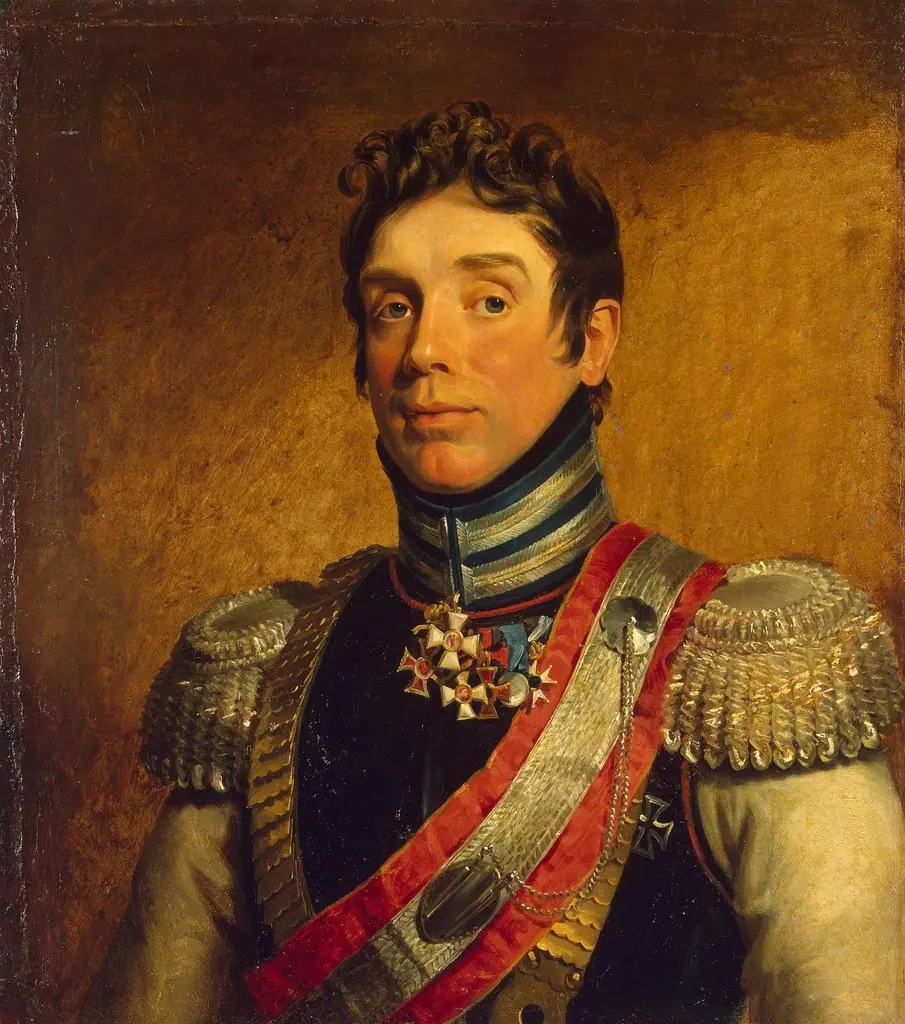 Portrait of Karl V. Budberg (1774-1829)