Artwork
Nydia
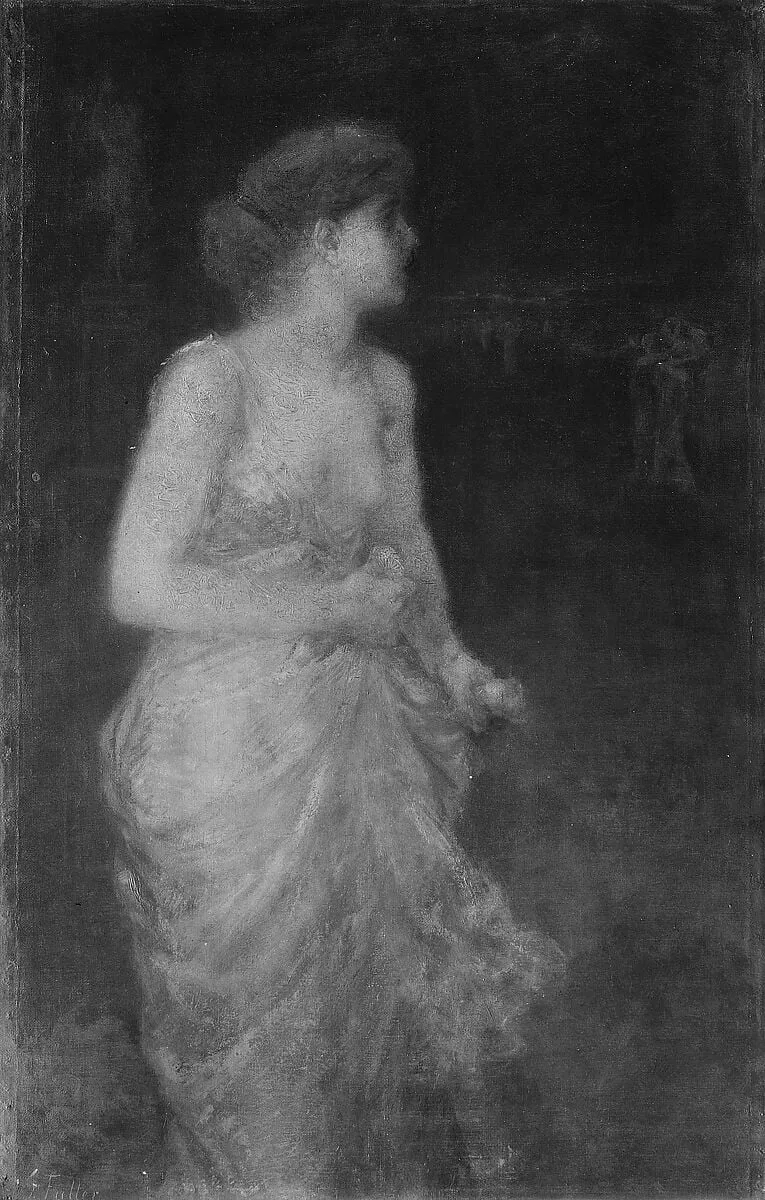
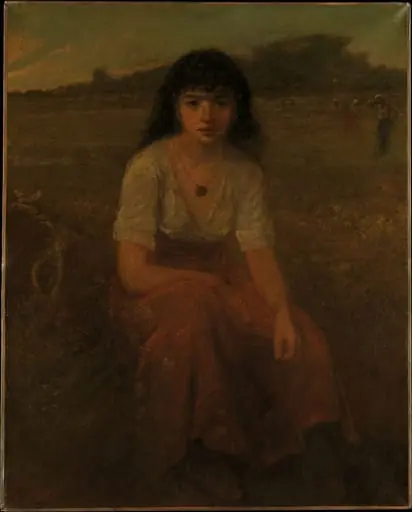
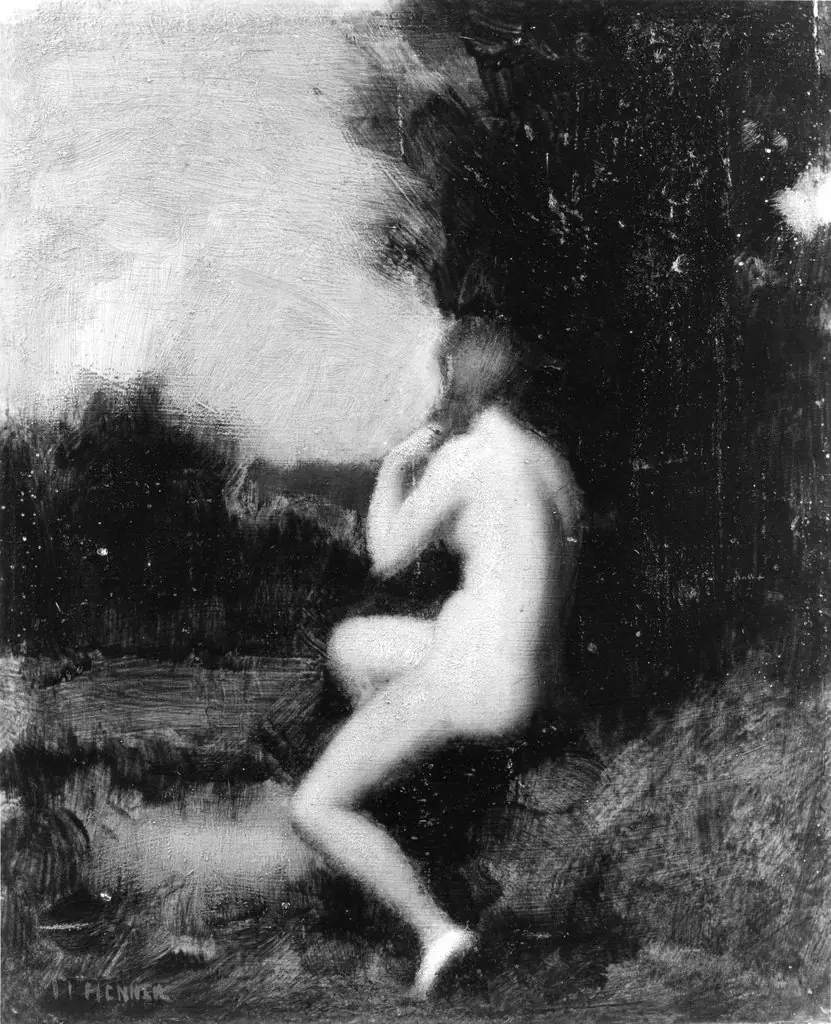
Nydia is an oil painting by the American Impressionist artist George Fuller. It dates from 1882 and is held in the collection of the Metropolitan Museum of Art.
- Accession no.
- 87.8.10
- Credit line
- Gift of George I. Seney, 1887
About this work
Subject & Meaning
George Fuller's 1882 oil painting Nydia depicts a solitary woman, a subject that aligns with the work's classification as a history painting.
George Fuller's 1882 oil painting Nydia depicts a solitary woman, a subject that aligns with the work's classification as a history painting. The title references the blind flower girl from Edward Bulwer-Lytton's novel The Last Days of Pompeii. The available sources do not detail specific iconographic elements, symbolic attributes, or the narrative meaning intended by the artist beyond the representation of a solitary female figure.
Technique & Style
Nydia is executed in oil paint on a stretched canvas support, standard for 19th-century American history painting. The composition employs a muted, earth-tone palette and a restrained background, allowing the subject to dominate the picture plane. The work's linear outlines and subtle tonal gradations reflect the academic realism prevalent in late-19th-century American art, while the intimate scale invites close visual scrutiny.
History & Provenance
Nydia is an oil on canvas history painting created by George Fuller in 1882, measuring 127 cm in height and 81.9 cm in width. The work is classified within the Metropolitan Museum of Art's American Wing and represents a notable example of 19th-century American narrative painting. Specific commission circumstances and early ownership details prior to the museum's acquisition are not documented in the available sources.
Overview
George Fuller's Nydia (1882) is an oil-on-canvas history painting depicting the blind flower girl Nydia, a central character in Edward Bulwer-Lytton's 1834 novel The Last Days of Pompeii. The composition focuses on the young woman navigating a dark, wooded landscape, illuminated by a soft, diffused light that separates her figure from the surrounding shadows. She wears a simple, flowing dress and leans on a long staff, her head tilted slightly as if listening to her environment, emphasizing her reliance on senses other than sight.
Fuller, known for his psychological depth and tonalist approach, renders the scene with a muted palette and loose brushwork characteristic of his later career. Painted in 1882, the work reflects the artist's interest in literary subjects and his ability to convey introspection and vulnerability. As a history painting rooted in 19th-century literature rather than classical antiquity, Nydia exemplifies Fuller's unique position in American art, bridging the gap between narrative illustration and the emerging atmospheric sensibilities of the Tonalist movement.
Context
Created during the late‑19th‑century American academic tradition, the work reflects contemporary interest in literary subjects and the romanticization of historical narratives. The choice of a literary blind heroine aligns with the period’s fascination with moral and sentimental storytelling.
Artist & collection