Artwork
Ships in the Ice
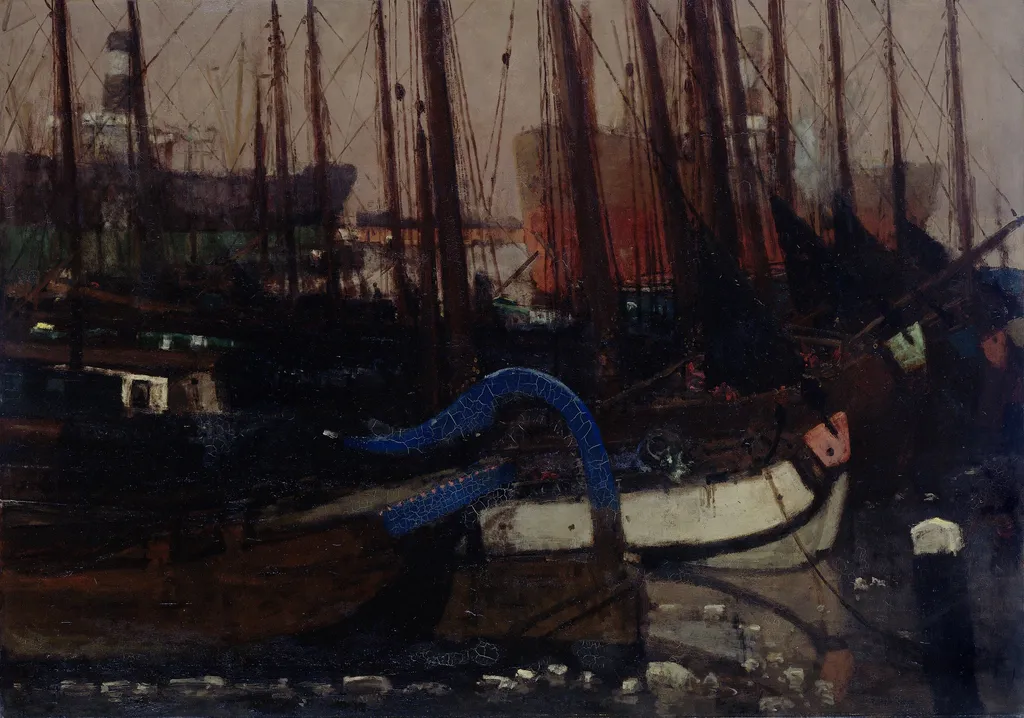
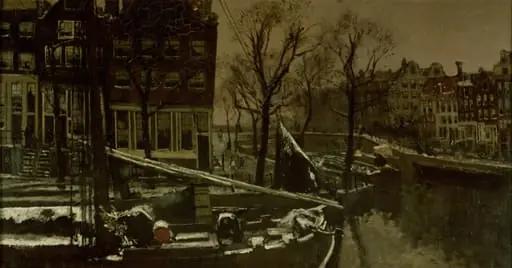
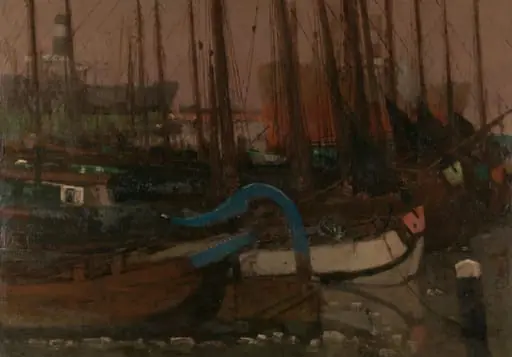
Ships in the Ice is an oil painting by the Impressionist artist George Hendrik Breitner. It dates from 1901 and is held in the collection of the Rijksmuseum.
About this work
Subject & Meaning
These vessels, described as having a somewhat stifled quality with a distinctive blue rudder, represent an era nearing its end.
Ships in the Ice depicts a harbor scene near the Prinseneiland in Amsterdam, illustrating the transition between traditional and modern maritime life around 1900. The composition features robust wooden fishing boats with masts and furled sails frozen in the ice, rendered in thick, dark layers of paint that convey a sense of permanence yet also obsolescence. These vessels, described as having a somewhat stifled quality with a distinctive blue rudder, represent an era nearing its end.
In the background, modern steel steamships appear in lighter, almost transparent colors, navigating open water. This visual contrast highlights the coexistence of old and new technologies in the harbor at the turn of the century. The work exemplifies the artist's shift toward more tranquil scenes with a muted palette, characterized by a masculine grandeur where tenderness remains unspoken.
Technique & Style
Executed in 1901, this cityscape is an oil painting on canvas measuring 115 by 163 centimeters. The work exemplifies Breitner's shift toward more tranquil scenes with a muted color palette following the turn of the century. The artist applied thick layers of dark paint to render traditional wooden fishing boats frozen in the ice, emphasizing their robust forms through vertical mast lines that evoke a forest.
In contrast, modern steel steamships appearing in the background are depicted using lighter, almost transparent hues while navigating open water. This stylistic divergence highlights the tension between old and new maritime eras, with the foreground vessels possessing a somber quality against the warmer tones characteristic of the artist's mature period.
History & Provenance
Ships in the Ice was painted by George Hendrik Breitner in 1901, executed in oil on canvas and measuring 115 by 163 centimeters. The work depicts a harbor scene near Prinseneiland in Amsterdam and is regarded as a characteristic example of his later, more subdued style.
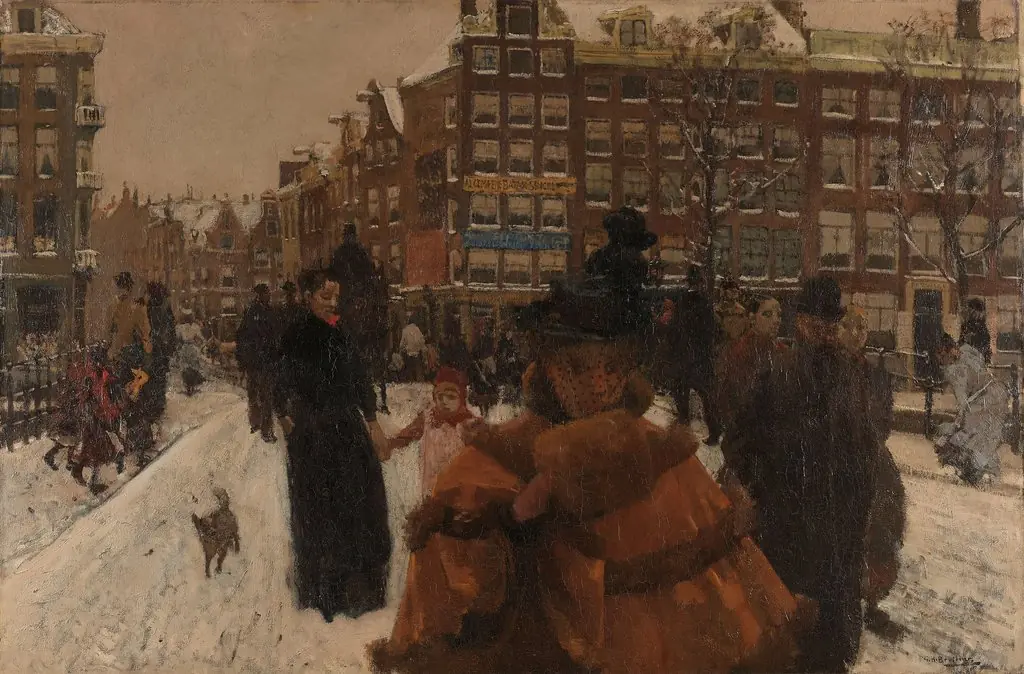
Despite later being considered one of Breitner's finest late-period works, the painting was notably absent from a large retrospective of his oeuvre organized by Arti et Amicitiae in 1901–1902. Possibly even before that exhibition, the picture was acquired directly from the artist by the Amsterdam dealer Van Wisselingh. In 1912 the gallery resold it, together with Breitner's Singelbrug bij de Paleisstraat, to the collectors Drucker-Fraser.
In 1919 both paintings entered the Rijksmuseum as part of a larger collection of modern works that the couple initially placed on loan and subsequently bequeathed to the museum, where the painting has remained in the collection ever since.
Ships in the Ice has been held by the Rijksmuseum in Amsterdam since 1919, when it entered the museum as part of a larger collection of modern paintings placed on loan and later bequeathed by the collectors Drucker-Fraser. Before that, the painting had been acquired directly from Breitner by the Amsterdam art dealers Van Wisselingh, who in 1912 resold it, together with Breitner's Singelbrug bij de Paleisstraat, to the Drucker-Fraser couple. Notably, the work was not included in the large retrospective survey of Breitner's oeuvre organized by Arti et Amicitiae in 1901–1902, even though it dates from 1901. No further exhibition history is documented in the available sources.
Context
Art historian Bram Hammacher characterizes George Hendrik Breitner's post-1900 output as a shift from dynamic urban scenes to stiller compositions marked by muted colors and a search for formal stability. This evolution reflects a return to seventeenth-century tranquility while retaining a masculine grandeur. Ships in the Ice exemplifies this mature phase, contrasting traditional frozen sailing vessels with modern steamships rendered in translucent tones to symbolize the transition between eras.
Although now regarded as a premier work from Breitner's later period, the painting was notably absent from his major 1901–1902 retrospective organized by Arti et Amicitiae. Scholars identify the piece as a definitive illustration of the artist's refined approach to light and form during the early twentieth century.
Legacy
Schepen in het ijs is currently regarded as one of George Hendrik Breitner's finest works from his later period, exemplifying his shift toward more tranquil scenes with a muted color palette after the turn of the century. Art historian Bram Hammacher noted that these quieter canvases retain a masculine grandeur while approaching the serenity of seventeenth-century art. Despite being considered a masterpiece of his mature style, the painting was notably excluded from the major retrospective of Breitner's work organized by Arti et Amicitiae in 1901–1902.
Its enduring reputation is anchored by its permanent home at the Rijksmuseum in Amsterdam, where it has resided since 1919 after being bequeathed by the collector couple Drucker-Fraser.
Overview
Ships in the Ice, a 1901 oil painting by George Hendrik Breitner, captures a frozen harbor scene. Characteristic of Breitner's Amsterdam Impressionist style, the work conveys the harsh realities of winter's grip on maritime activity.
Own this work as a print
Artist & collection
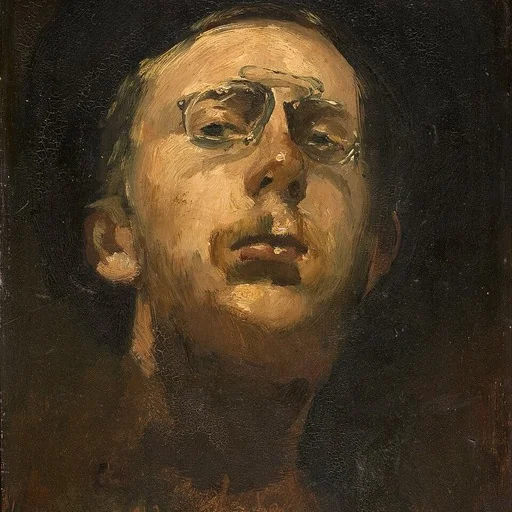
Artist
George Hendrik Breitner (12 September 1857 – 5 June 1923) was a Dutch painter and photographer.